Focus on the manufacturing and export of functional sofas
-
 +86 18257273741
-
 [email protected]

 English
 Español
Wang Qian — After-Sales Support Manager
 Home / Author / Wang Qian — After-Sales Support Manager / Classic Manual Recliner Chair: Comfort, Durability, and Custom Manufacturing Excellence
 Classic Manual Recliner Chair: Comfort, Durability, and Custom Manufacturing Excellence
 2026.08.31
 Wang Qian — After-Sales Support Manager
Content
- 1 Product Overview
- 2 Traditional Design with Broad Interior Appeal
- 3 Comfort Engineering for Everyday Relaxation
- 4 165-Degree Reclining Function
- 5 Frame Strength and Structural Reliability
- 6 Advantages Over Basic Recliner Alternatives
- 7 Applications Across Residential and Commercial Spaces
- 8 Manufacturing and Product Development Strengths
- 9 Quality Control and International Market Readiness
- 10 Customization and OEM/ODM Potential
- 11 Material Care and Ownership Guidance
- 12 Installation, Placement, and Daily Use
- 13 Commercial Value for Buyers and Distributors
- 14 Logistics and Export Cooperation
- 15 Why the Product Is a Practical Competitive Choice
- 16 Recommended Buyer Checklist
- 17 Frequently Asked Questions
- 17.1 What type of chair is this product?
- 17.2 Does the chair require electricity?
- 17.3 What is the standard upholstery color?
- 17.4 What are the chair’s dimensions?
- 17.5 What is the stated weight capacity?
- 17.6 How far does the chair recline?
- 17.7 How should the footrest be retracted?
- 17.8 What material is used for the upholstery?
- 17.9 Is the chair suitable for a home theater?
- 17.10 Can the chair be used in a bedroom or nursery?
- 17.11 What makes the frame different from a basic chair?
- 17.12 Can the manufacturer provide other furniture products?
- 17.13 Does the manufacturer support international orders?
- 17.14 What manufacturing capabilities support this product?
- 18 Conclusion
- 19 References
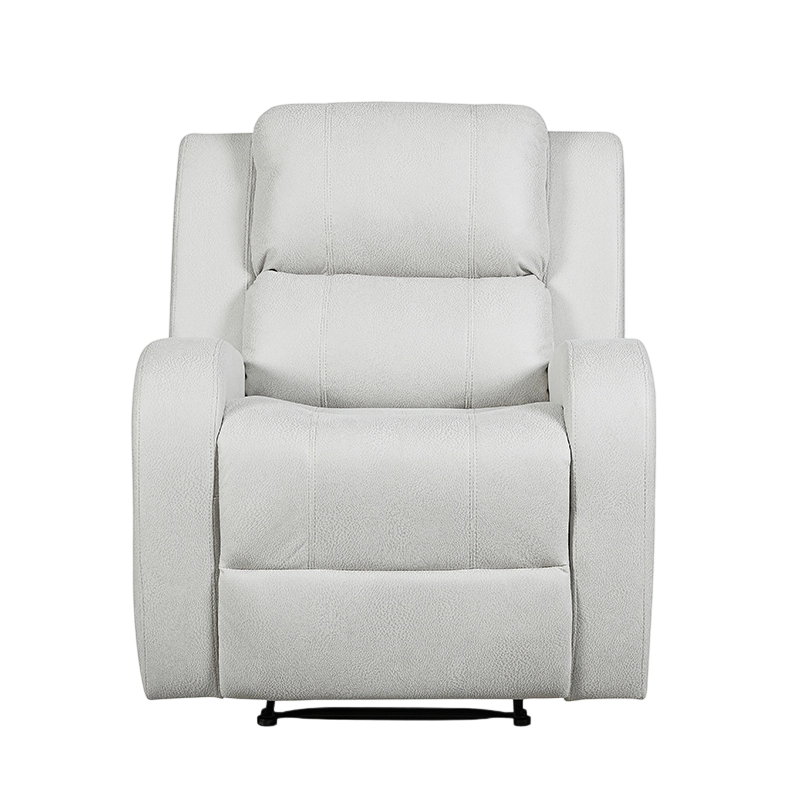
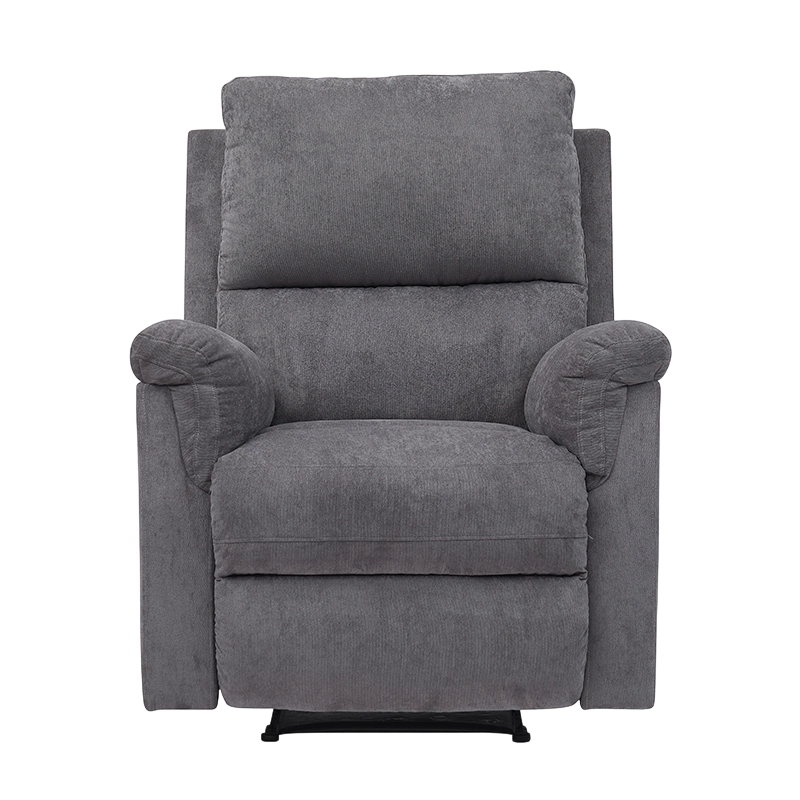
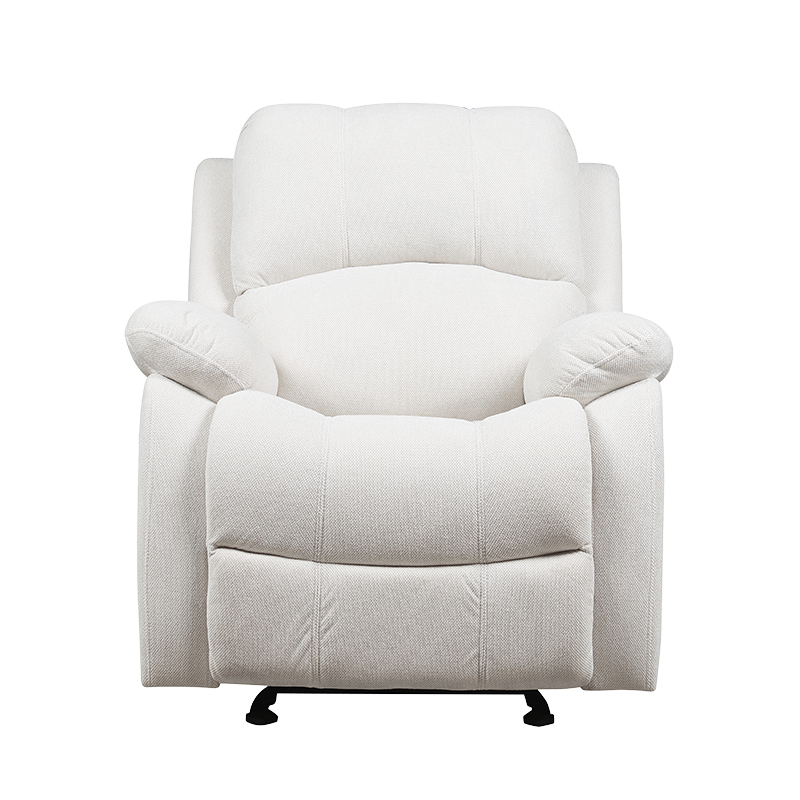
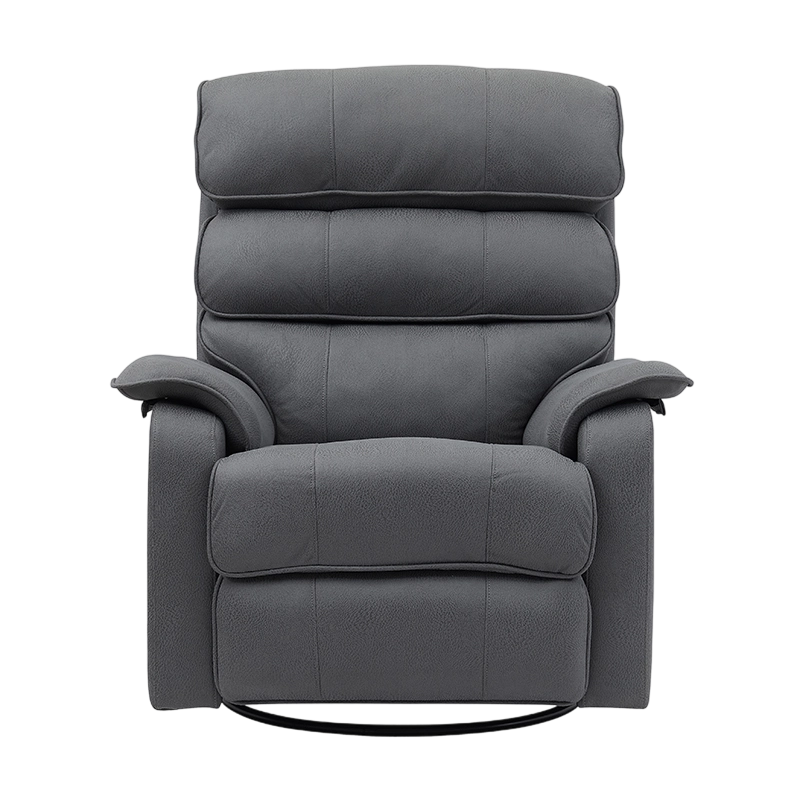
- 20 Product: Classic and Traditional Manual Recliner Chair with Overstuffed Arms and Back
A well-designed recliner chair can transform an ordinary living space into a more comfortable, functional, and inviting environment. The Classic and Traditional Manual Recliner Chair with Overstuffed Arms and Back is designed for people who value dependable relaxation, supportive seating, durable construction, and timeless appearance. Combining a generously padded silhouette with a strong metal structure, microfiber upholstery, and a full 165-degree reclining position, this chair is suitable for daily use in living rooms, home theaters, bedrooms, nurseries, studies, and meeting areas.
Unlike many lightweight occasional chairs or entry-level recliners that prioritize appearance over long-term performance, this model is built around a heavy-duty steel-reinforced frame and a sturdy metal reclining structure. Its wide overstuffed arms, supportive backrest, soft seat, and adjustable footrest are intended to provide comfort during reading, television viewing, conversation, relaxation, and rest. The traditional Americana styling also allows the chair to coordinate naturally with a broad range of interior designs.
Behind the finished product is a manufacturing system focused on product development, industrial design, material coordination, quality control, and export production. Anji Xuanbo Household Co., Ltd. operates in Anji County, Zhejiang Province, an area internationally recognized for its chair manufacturing heritage. The company combines furniture research and development with large-scale production, independent marketing, technical services, and integrated supply capabilities. This enables the manufacturer to support standard orders as well as customized color, upholstery, and production requirements.
Product Overview
The chair is a manually operated recliner designed to offer a comfortable transition from an upright seated position to a deeply reclined resting position. Its full 165-degree lay-flat position gives users more freedom to adjust their posture, whether they are sitting upright for conversation, leaning back to watch television, reading with their feet elevated, or resting for an extended period.
The product is supplied as one complete reclining chair. It is available in brown as a standard color, while custom color options can be discussed for projects that require coordination with a particular furniture collection, interior design scheme, hospitality environment, or retail program.
With dimensions of approximately 32.7 inches in width, 37 inches in depth, and 39.8 inches in height, the chair offers a substantial seating experience without requiring the footprint of a large sofa. Its listed weight capacity is 350 pounds, making it appropriate for a wide range of users when placed on a suitable, level floor and operated according to the intended use instructions.
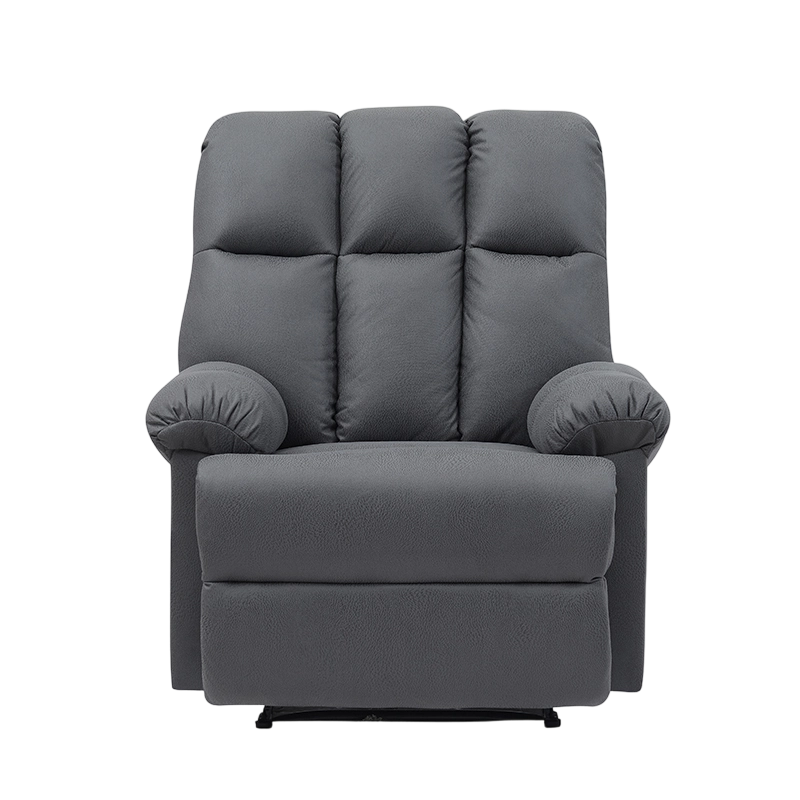
The chair’s principal features include a heavy-duty steel-reinforced frame, soft and supportive seat and back construction, comfortable microfiber fabric, overstuffed arms, a manually adjustable footrest, and classic traditional styling. These details work together to create a product that is both visually familiar and functionally versatile.
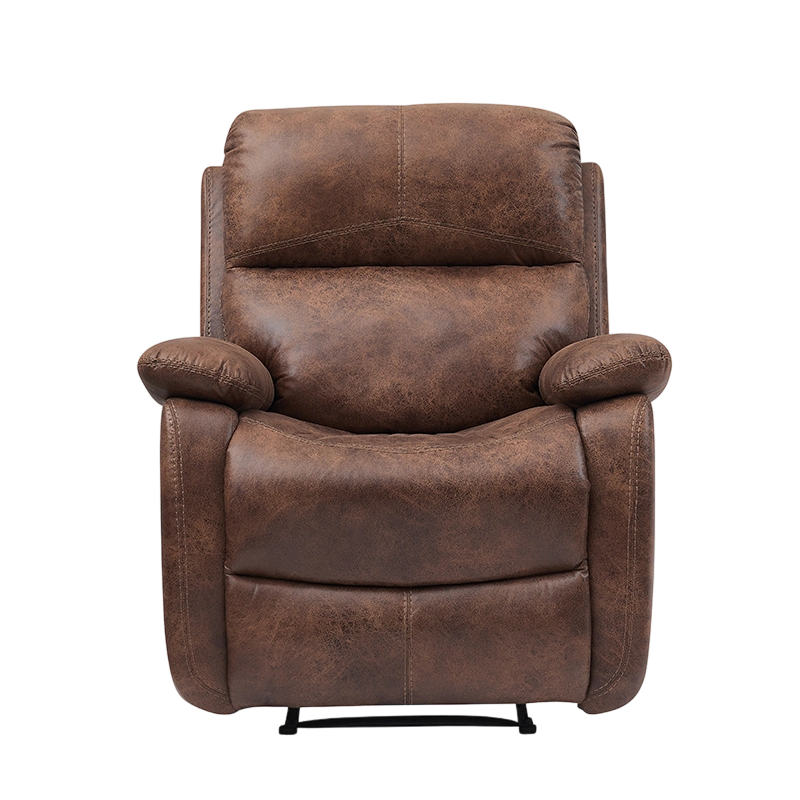
Classic and Traditional Manual Recliner Chair with Overstuffed Arms and Back
Traditional Design with Broad Interior Appeal
The visual character of this recliner is based on classic and traditional Americana styling. Rather than relying on highly experimental shapes or short-lived decorative details, it uses a familiar upholstered form that can remain attractive through changing interior trends. This makes it suitable for residential furniture programs, rental properties, home theaters, senior living environments, guest rooms, and selected commercial spaces.
The overstuffed arms give the chair a welcoming appearance while also contributing to everyday comfort. Broad armrests provide a natural place to rest the arms and help create a sense of enclosure around the user. The generously padded back adds visual softness and supports the upper body during extended sitting. In a living room, the chair can serve as an individual relaxation seat. In a home theater, it can function as a personal viewing station. In a bedroom or study, it can provide a comfortable location for reading, phone calls, or quiet rest.
The brown upholstery option offers a warm, adaptable appearance. Brown can coordinate with wood furniture, neutral textiles, traditional cabinetry, and darker entertainment units. For customers developing a coordinated collection, custom colors may help the recliner match sofas, love seats, corner sofas, accent chairs, or other upholstered products.
A major advantage of a traditional design is its ability to serve multiple market segments. Some recliners are created for highly specific settings and may appear out of place when moved to another room. This model has a more flexible visual identity. Its shape is comfortable enough for a home theater but refined enough for a study, meeting room, or guest area. The result is a product with broad merchandising and project application potential.
Comfort Engineering for Everyday Relaxation
Comfort is not produced by one feature alone. It comes from the relationship between seat depth, back support, arm height, padding, upholstery feel, reclining angle, and the stability of the underlying frame. This recliner addresses these factors through a combination of soft cushioning, supportive shaping, a substantial backrest, overstuffed arms, and a manually adjustable footrest.
Supportive Backrest and Seat
The backrest and seat are designed to provide softness without abandoning support. Excessively soft furniture can allow the body to sink too deeply, making it difficult to change position or stand up. Conversely, overly firm furniture may feel uncomfortable during long periods of use. A balanced seat and back structure can provide a more stable sitting experience while still maintaining a pleasant, padded feel.
The supportive backrest is especially important when the chair is used for television viewing, reading, or conversation. As the recliner moves backward, the backrest helps distribute pressure across the upper and middle areas of the body. When the footrest is extended, the user can shift into a more relaxed posture without needing to place the legs on a separate ottoman.
Overstuffed Arms
Overstuffed arms add both comfort and visual substance. They offer padded support for the elbows and forearms and help reduce the hard, exposed appearance found on some compact recliner designs. The arm profile also contributes to the traditional character of the chair, giving it a substantial presence that works well with classic residential furniture.
Microfiber Upholstery
Microfiber is selected for its soft hand feel and comfortable contact surface. It can provide a smooth, pleasant upholstery experience for daily sitting and is often chosen for furniture that must balance comfort with a practical appearance. The fabric’s texture also supports the warm, upholstered character of the chair.
Fabric care is important for maintaining the appearance and serviceability of the product. The supplied care guidance recommends cleaning with dry-cleaning solvent only and avoiding saturation with water. If the fabric has a pile, gentle brushing may be required to restore its appearance. These instructions should be followed carefully, and any cleaning product should be tested in an inconspicuous area before broader application.
165-Degree Reclining Function
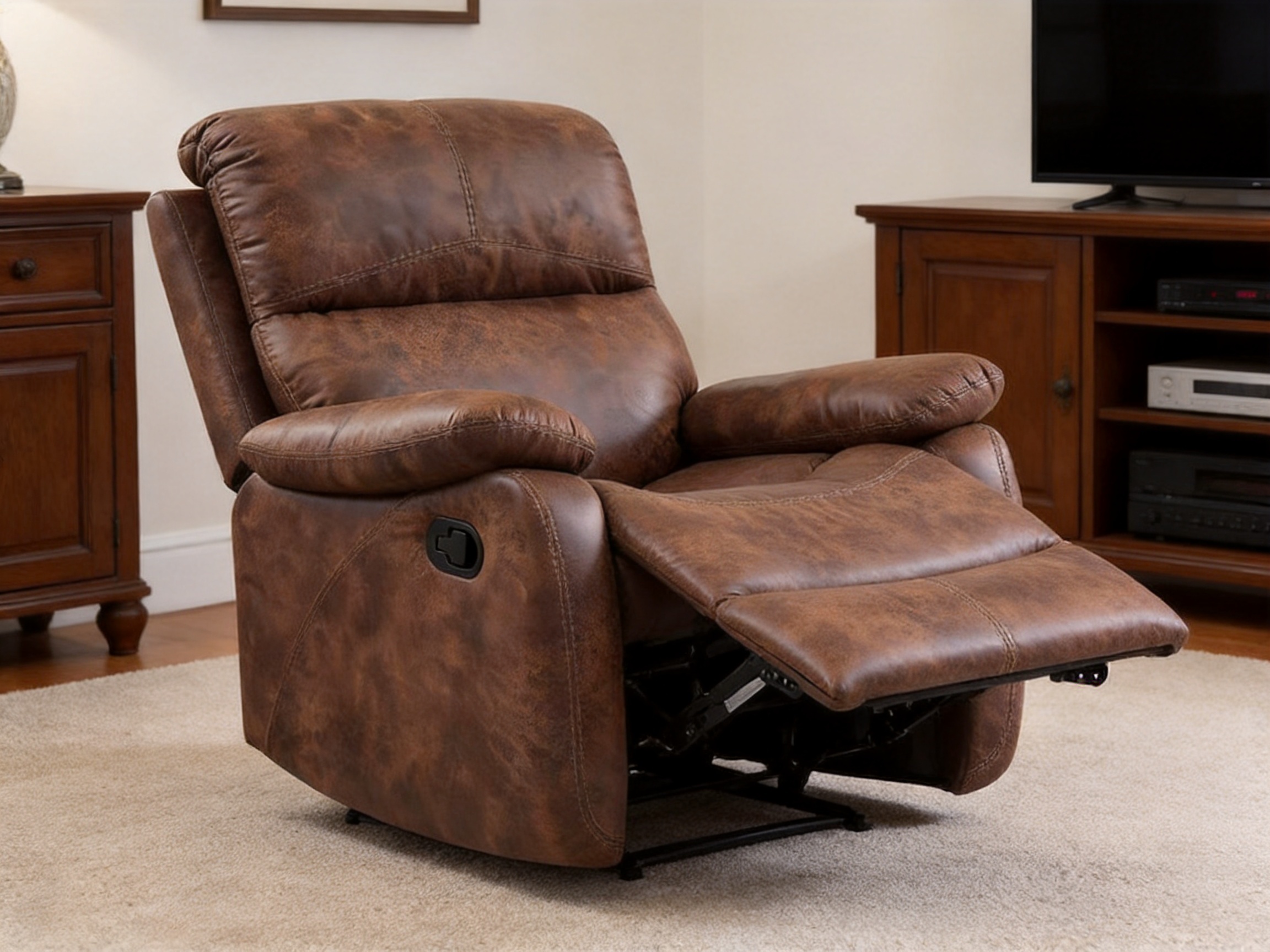
The chair provides a full 165-degree lay-flat position, giving users a wide range of posture options. A more upright position is suitable for conversation, reading, working on a tablet, or watching television. A moderately reclined position can reduce the feeling of pressure associated with sitting upright for long periods. A deeper reclining position is suitable for relaxation and rest.
The manual mechanism offers a straightforward user experience. It does not require electrical power, a motor, a remote control, or a nearby outlet. This can simplify placement and reduce dependence on electrical components. The chair can be positioned in a living room, bedroom, study, or home theater without planning for a power connection.
Manual operation may also appeal to buyers who prefer mechanical simplicity. In comparison with powered recliners, a manual chair generally avoids motor noise, control-panel maintenance, and power-cord management. For certain consumers, hospitality operators, and furnishing projects, this simplicity can be a practical advantage.
The adjustable footrest allows users to find a preferred leg position for reading, television viewing, or full rest. Correct operation is important for smooth retraction. To retract the footrest, the user should sit forward, lean forward, and use the heels to press against the middle of the footrest. This labor-saving method helps return the footrest without forcing the mechanism from an awkward position.
Frame Strength and Structural Reliability
One of the product’s major advantages is its sturdy metal frame with heavy-duty steel reinforcement. The frame is the foundation of a recliner, supporting the seat, back, arms, and moving mechanism. If the structural system is insufficient, even attractive upholstery and soft padding cannot ensure long-term performance.
Steel reinforcement helps the chair withstand the repeated forces associated with sitting, reclining, returning to an upright position, and extending or retracting the footrest. The listed weight capacity is 350 pounds, subject to proper assembly, placement, and use. A reinforced structure also contributes to a more secure feeling when the user changes position.
Compared with lighter chairs made primarily for occasional use, a heavy-duty frame can offer a stronger foundation for everyday relaxation. This is particularly valuable in rooms where the chair may be used frequently by different household members or in commercial settings where furniture experiences more regular turnover.
Structural quality also affects perceived comfort. A chair that flexes excessively, shifts on the floor, or feels unstable can reduce user confidence. A firm, well-supported frame helps the cushioning perform more effectively because the seat and back are held in a controlled position. This combination of structural stability and soft upholstery is an important part of the overall product experience.
Advantages Over Basic Recliner Alternatives
The market includes many types of recliners, from compact chairs designed for limited spaces to powered models with multiple electronic functions. This manual recliner distinguishes itself through a practical balance of traditional appearance, reclining capability, structural strength, comfort, and customization potential.
| Feature | This Manual Recliner | Basic Occasional Chair | Powered Recliner |
|---|---|---|---|
| Reclining function | Manual reclining with a 165-degree lay-flat position | Usually fixed or non-reclining | Motorized reclining, generally requiring power |
| Frame construction | Sturdy metal frame with heavy-duty steel reinforcement | May use a lighter structural system | May combine a metal mechanism with electrical components |
| Comfort features | Supportive seat and back, overstuffed arms, adjustable footrest | Basic cushioning with limited adjustment | Powered adjustment with varying levels of padding |
| Placement flexibility | No electrical outlet required | Highly flexible but usually without reclining | Requires consideration of cord and outlet placement |
| Maintenance profile | Mechanical operation with microfiber upholstery care | Simple but may offer less functionality | Includes upholstery and electrical or motor components |
| Design character | Classic and traditional Americana style | Often limited to basic decorative styles | Available in various styles but may appear more technical |
The comparison shows why this model can be attractive to customers who want more than a fixed accent chair but do not need the complexity of a powered recliner. It provides genuine reclining functionality while keeping operation direct and infrastructure requirements minimal.
Compared with some narrow contemporary recliners, the overstuffed arms and substantial padding create a more generous, traditional seating impression. Compared with large reclining sofas, the individual chair requires less room and allows a user to create a personal relaxation zone. Compared with fixed lounge chairs, it adds a footrest and reclining angle without sacrificing a familiar upholstered appearance.
Applications Across Residential and Commercial Spaces
Living Rooms
In a living room, the recliner can be used as a standalone feature chair or placed beside a sofa and love seat. Its brown upholstery can complement wood tones, neutral rugs, and warm lighting. The chair gives one household member an individualized seating position while preserving the shared functionality of the room.
Home Theaters
The 165-degree reclining function makes the product suitable for home theater environments. Users can adjust their posture for movie viewing, sports programs, gaming, or extended entertainment sessions. The manual mechanism also eliminates the need to route power cords across a theater layout, which can make installation simpler.
Bedrooms and Nurseries
A recliner can provide useful seating in a bedroom or nursery. In a bedroom, it may serve as a reading chair or a place to rest before sleep. In a nursery, the padded arms and supportive back may be appreciated during feeding, soothing, or quiet nighttime routines. The placement should allow sufficient clearance behind and in front of the chair for safe reclining and footrest operation.
Studies and Reading Areas
In a study, the chair offers a more relaxed alternative to a conventional desk chair. It can be used for reading printed materials, listening to music, reviewing documents, or taking breaks. The reclining range enables the user to move between an upright posture and a deeper rest position.
Meeting Rooms and Hospitality Projects
The product information identifies meeting rooms as one potential application. In selected hospitality, waiting, or executive environments, its traditional upholstery and substantial form can create a more comfortable seating option. Project buyers may also benefit from the ability to discuss custom colors and coordinated production requirements.
Manufacturing and Product Development Strengths
The performance of an upholstered recliner depends not only on its visible appearance but also on the consistency of its manufacturing process. Anji Xuanbo Household Co., Ltd. integrates research and development, industrial design, large-scale manufacturing, independent marketing, and technical services. This integrated structure supports closer coordination between product concept, material selection, production engineering, inspection, and customer service.
Established in 2021, the company is located in Anji County, Huzhou City, Zhejiang Province, a region widely known as the “Capital of Chair Industry.” Its factory covers approximately 8,000 square meters and employs more than 100 people. This combination of regional furniture expertise, dedicated production space, and a professional workforce provides a foundation for developing and manufacturing upholstered seating products for international markets.
Research and Development
Research and development is important for recliners because the product must unite comfort, appearance, movement, and structural reliability. A successful design must consider the relationship between the frame, cushioning, upholstery, arm shape, back angle, footrest travel, and user operation. The company’s R&D and design capabilities support the development of functional sofas, fixed sofas, corner sofas, lounge chairs, recliner sofas, love seats, leisure chairs, and individual recliners.
Product development can also respond to customer requirements. Buyers may need specific dimensions, upholstery colors, packaging arrangements, market adaptations, or coordinated products. A manufacturer with in-house design and technical capabilities is better positioned to evaluate these requirements than a trading organization that relies entirely on external production resources.
Integrated Material and Production Capabilities
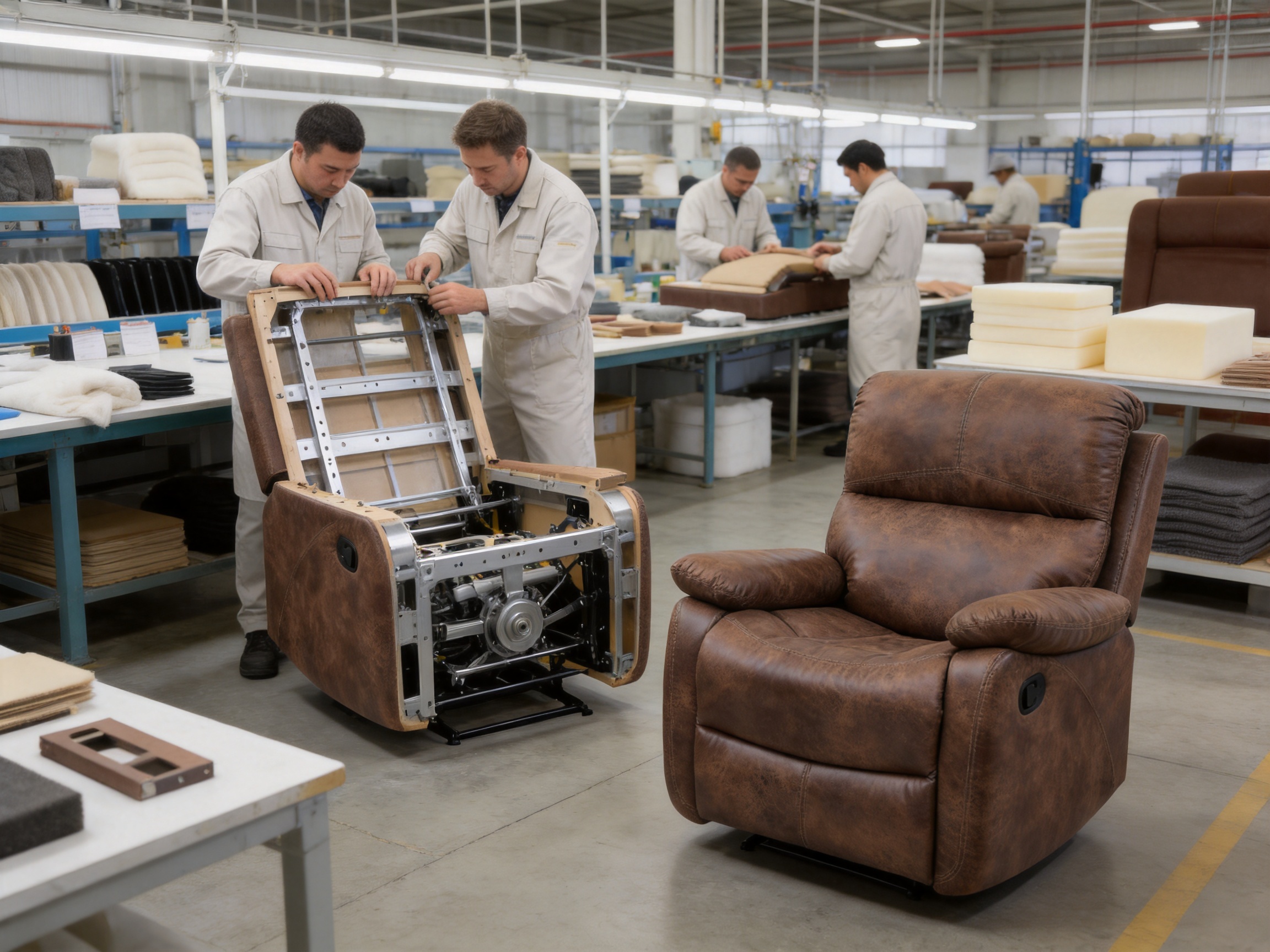
The company’s advantages include its own wooden frame factory and sponge processing plant. These facilities help provide full-chain control over important cost, capacity, and material factors. Although the featured recliner uses a heavy-duty metal-reinforced structure, integrated furniture manufacturing knowledge remains valuable because upholstered seating often requires coordination among frames, padding, fabrics, mechanisms, and finishing components.
Control over key production stages can improve communication between departments and reduce uncertainty during product development. It may also help the manufacturer coordinate production schedules, respond to design changes, and maintain consistency across larger orders. For international buyers, this type of internal capability can support more predictable project planning.
Quality Control and International Market Readiness
Quality control is especially important for a manual recliner because the product combines upholstery with moving structural components. The finished chair must present a consistent appearance while also providing reliable reclining movement and stable support. The company describes a strict multi-stage quality inspection system designed to support product consistency and compliance with international market requirements.
Quality inspection may involve reviewing raw materials, structural components, upholstery workmanship, seams, padding, mechanism installation, dimensions, appearance, packaging, and final product condition. Each stage contributes to the final user experience. A visually attractive chair with poor stitching is not satisfactory, and a well-sewn chair with an unreliable footrest mechanism is equally unsuitable.
International customers often require products that meet the expectations of different markets. The company states that its products comply with international standards and certifications. Buyers should confirm the specific standards, test reports, labeling requirements, and certification documents applicable to their intended destination and product configuration before placing an order.
The company exports products to North America, Europe, the Middle East, and other regions. Experience across different markets can help a manufacturer understand variations in packaging, logistics, product documentation, customer expectations, and import procedures. This international orientation is relevant for distributors, wholesalers, furniture retailers, hospitality suppliers, and project contractors.
Customization and OEM/ODM Potential
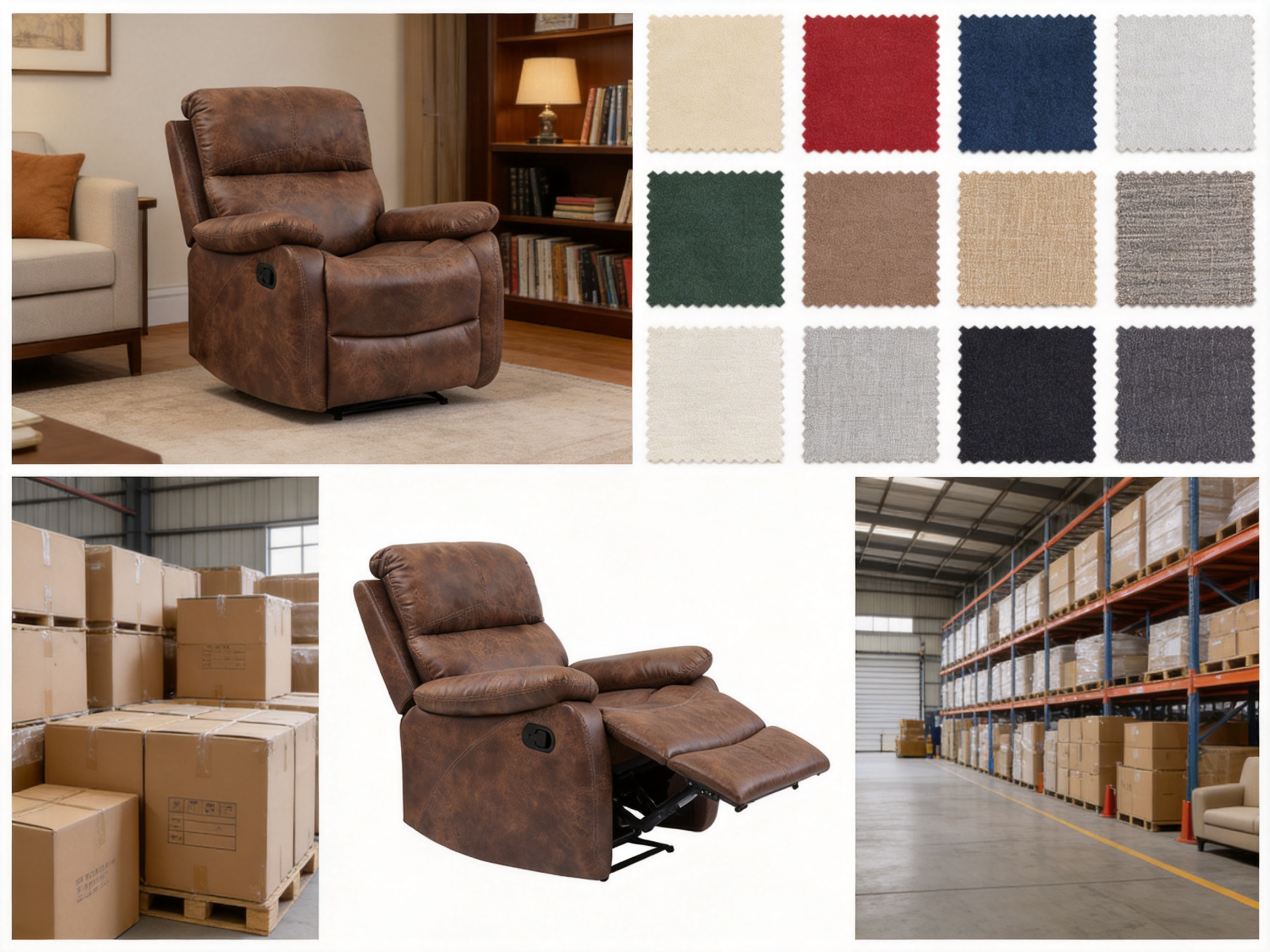
Customization is a major consideration for professional furniture buyers. Retailers may want a particular upholstery color, while hospitality groups may require a coordinated palette across multiple seating categories. Interior designers may need the recliner to fit an established design concept. The product is offered in brown and supports custom color requests, creating a starting point for broader project cooperation.
Custom color development should be managed through clear sample approval. The buyer and manufacturer should confirm the fabric type, color reference, surface texture, production tolerance, minimum order quantity, lead time, and care requirements. Lighting conditions can affect the perceived appearance of upholstery, so physical samples are preferable to relying only on digital images.
Customization may also involve packaging, labeling, carton marks, instruction sheets, collection coordination, and order scheduling. A manufacturer with independent marketing and technical service capabilities can help clarify these requirements before mass production. Early communication reduces the possibility of mismatched materials or incomplete documentation.
For distributors and furniture brands, this recliner can be positioned as part of a wider upholstered seating collection. It may be paired with fixed sofas, corner sofas, love seats, lounge chairs, or leisure chairs. A coordinated collection can help retailers create room settings rather than selling a single isolated product.
Material Care and Ownership Guidance
Proper care helps preserve the chair’s appearance and comfort. The recommended fabric care instructions specify the use of dry-cleaning solvent only and advise users not to saturate the microfiber upholstery with water. Excess moisture can affect the appearance of the fabric, padding, seams, and internal materials.
Routine maintenance should begin with gentle removal of dust and loose debris. Abrasive brushes, harsh household cleaners, excessive rubbing, and unapproved chemicals should be avoided. If a spill occurs, the user should follow the fabric supplier’s instructions and seek professional cleaning advice when necessary.
Pile fabrics may show directional shading or temporary pressure marks. Gentle brushing in the appropriate direction may help restore the surface appearance. Users should avoid placing sharp objects, rough materials, or heavy concentrated loads on the upholstery.
The reclining mechanism should be operated smoothly rather than forced. The footrest should be extended and retracted using the intended movement method. The chair should be placed on a stable, level surface with enough clearance for the back and footrest. Children should not operate the mechanism without appropriate supervision, and users should keep hands, feet, and objects away from moving areas.
Installation, Placement, and Daily Use
Before placing the chair, buyers should measure the intended room and confirm that the product dimensions are suitable. The chair measures approximately 32.7 inches wide, 37 inches deep, and 39.8 inches high in its standard configuration. Additional clearance may be needed behind the chair when reclining and in front of the chair when the footrest is extended.
The chair should not be positioned where the reclining back could strike a wall, window, shelving unit, lamp, or another piece of furniture. Adequate side clearance is also useful for cleaning, upholstery inspection, and comfortable entry and exit. In a home theater, the distance between rows should account for the extended footrest.
When sitting down, the user should place weight centrally on the seat rather than dropping heavily onto the arms or footrest. The armrests are designed for comfortable support, but they should not be used as steps or as lifting points. The 350-pound listed weight capacity should not be exceeded.
During daily use, users should avoid standing on the footrest, sitting on its extended edge, or placing excessive objects on it. These actions may create forces different from those expected in normal reclining use. Careful operation supports the long-term performance of the frame and mechanism.
Commercial Value for Buyers and Distributors
For commercial buyers, product value includes more than the initial purchase price. It also involves reliability, serviceability, order consistency, packaging, lead-time management, customization support, and the ability to build a repeatable product line. This recliner offers several characteristics that can be useful in a professional purchasing program.
Its traditional styling can appeal to a broad customer base. A classic form is generally easier to place in showrooms, catalogs, online collections, and room displays because it does not depend on a highly specialized decorative theme. The brown option provides a ready-to-market neutral choice, while custom colors create opportunities for private-label or project-specific programs.
The manual mechanism can also reduce infrastructure concerns. Retailers do not need to demonstrate electrical functions, and consumers do not need to consider motorized controls or power outlets. For hospitality and contract applications, a mechanical recliner may be preferred where simple operation and reduced electrical dependence are important.
The product can be marketed around several clear benefits: deep reclining comfort, supportive construction, overstuffed arms, microfiber upholstery, a 350-pound weight capacity, and a full 165-degree lay-flat position. These benefits are easy for sales teams to communicate and easy for customers to understand in a showroom demonstration.
As a manufacturer of multiple upholstered categories, Xuanbo can support buyers seeking a broader supplier relationship. The company’s product range includes functional sofas, fixed sofas, corner sofas, lounge chairs, recliner sofas, love seats, and leisure chairs. This creates the possibility of consolidating related products through one experienced production partner.
Logistics and Export Cooperation
Export logistics are a practical part of furniture procurement. Upholstered seating requires careful packaging to protect fabric, frame edges, arms, backrests, mechanisms, and finished surfaces during handling and transportation. Packaging specifications should be confirmed according to the buyer’s market, container plan, storage conditions, and distribution method.
The company identifies convenient export logistics near Ningbo Beilun Port as one of its advantages. Access to an established export port can support international shipment planning and provide a practical connection to overseas markets. Buyers should still confirm the precise shipping terms, packaging dimensions, loading quantity, production lead time, documentation, and destination requirements for each order.
Long-term cooperation also depends on communication. Product drawings, upholstery samples, inspection standards, packing lists, carton markings, and approval procedures should be documented before production begins. Clear records help align the manufacturer, importer, retailer, and final customer.
For large orders, buyers may benefit from discussing forecast planning and phased production. A manufacturer with its own production resources and more than one hundred employees can organize capacity around confirmed requirements, but lead times will depend on order quantity, customization, material availability, and shipping schedules.
Why the Product Is a Practical Competitive Choice
The strongest competitive position of this recliner comes from balance. It is not limited to one selling point. It combines a traditional appearance with modern manufacturing support, soft upholstery with structural reinforcement, manual simplicity with a deep reclining angle, and individual-chair flexibility with the potential for coordinated collection purchasing.
Some competing chairs may be less expensive because they use lighter frames, thinner padding, fewer adjustment options, or fixed seating. Other products may offer powered movement but involve greater complexity, additional components, and dependence on electrical connections. This model occupies a practical middle position for buyers who want dependable reclining comfort without unnecessary technical complexity.
The overstuffed arms and supportive back create a more substantial comfort profile than many minimalist recliners. The steel-reinforced frame supports daily use, while the microfiber surface delivers a soft contact experience. The brown color is suitable for immediate use, and custom color support allows the product to participate in broader furniture programs.
Manufacturing strength further improves the product’s commercial value. The company’s R&D resources, industrial design capabilities, integrated production structure, quality inspection procedures, international market experience, and proximity to export logistics provide support beyond the physical chair itself.
Recommended Buyer Checklist
Before ordering, buyers should confirm the required quantity, upholstery color, fabric specifications, dimensions, packaging details, destination market, applicable compliance documents, and delivery schedule. If a custom color is requested, a physical sample should be approved before mass production.
Buyers should also evaluate the intended usage environment. A residential customer may focus on comfort and appearance, while a retailer may prioritize display appeal, carton dimensions, and repeat availability. A hospitality or contract buyer may need additional information about cleaning, durability, inspection, labeling, and project coordination.
For product demonstrations, the chair should be placed where customers can safely test the upright, partially reclined, and deeply reclined positions. Sales staff should explain the correct footrest retraction method and provide fabric care instructions. Clear demonstration can reduce misuse and help customers appreciate the chair’s functional advantages.
For international orders, purchasers should request all relevant technical and commercial documents before final confirmation. These may include product specifications, material information, inspection arrangements, packing details, loading plans, and market-specific compliance records. The exact documentation should be agreed upon by both parties.
Frequently Asked Questions
What type of chair is this product?
This is a manually operated upholstered recliner chair. It is designed with a supportive seat and back, overstuffed arms, a manual footrest, and a reclining range that reaches a full 165-degree lay-flat position.
Does the chair require electricity?
No. The chair uses a manual reclining mechanism and does not require a motor, remote control, or electrical outlet. This makes placement more flexible than many powered recliners.
What is the standard upholstery color?
The standard listed color is brown. Custom color support is available for buyers who need coordination with a specific interior, furniture collection, retail program, or project design.
What are the chair’s dimensions?
The listed dimensions are approximately 32.7 inches wide, 37 inches deep, and 39.8 inches high. Buyers should confirm final packed and assembled dimensions for logistics and installation planning.
What is the stated weight capacity?
The listed weight capacity is 350 pounds. The chair should be placed on a stable, level surface and used according to the manufacturer’s instructions. The footrest should not be used as a seat or standing platform.
How far does the chair recline?
The chair can reach a full 165-degree lay-flat position. Users can select a more upright position for conversation or reading, a partially reclined position for television viewing, or a deeper angle for relaxation.
How should the footrest be retracted?
The recommended method is to sit forward, lean forward, and use the heels to press against the middle of the footrest. This technique is intended to make retraction more correct and labor-saving than forcing the footrest from the side.
What material is used for the upholstery?
The chair uses microfiber fabric. The material is described as comfortable and soft to the touch. Care instructions recommend cleaning with dry-cleaning solvent only and avoiding saturation with water.
Is the chair suitable for a home theater?
Yes. The reclining range and adjustable footrest make it suitable for home theaters, while the manual operation avoids the need for electrical outlets near each chair.
Can the chair be used in a bedroom or nursery?
Yes. The product information identifies bedrooms and nurseries as suitable applications. Users should ensure sufficient clearance for reclining and operate the footrest carefully, especially in environments used by children.
What makes the frame different from a basic chair?
The chair uses a sturdy metal frame and a heavy-duty steel-reinforced structure. This provides a stronger foundation for the reclining function and regular seating compared with many lightweight fixed or occasional chairs.
Can the manufacturer provide other furniture products?
Yes. The company’s product range includes functional sofas, fixed sofas, corner sofas, lounge chairs, recliner sofas, love seats, and leisure chairs. Buyers can discuss coordinated collections or broader sourcing requirements.
Does the manufacturer support international orders?
The company exports to North America, Europe, the Middle East, and other regions. Buyers should discuss destination-specific documentation, packaging, compliance, shipping terms, and lead times for each order.
What manufacturing capabilities support this product?
The company combines research and development, industrial design, large-scale manufacturing, technical services, and independent marketing. It also identifies its own wooden frame factory, sponge processing plant, multi-stage quality inspection, and export logistics near Ningbo Beilun Port as important operational advantages.
Conclusion
The Classic and Traditional Manual Recliner Chair with Overstuffed Arms and Back is designed to deliver comfortable, dependable relaxation in a familiar and adaptable form. Its 165-degree reclining position, adjustable footrest, microfiber upholstery, supportive cushioning, overstuffed arms, and heavy-duty steel-reinforced frame give it a strong combination of comfort and practical performance.
Its advantages become especially clear when compared with fixed occasional chairs or more complex powered recliners. It offers deeper relaxation than a standard lounge chair, greater placement flexibility than an electrically powered model, and a more substantial structure than many lightweight alternatives. Its traditional Americana appearance also supports use in a wide range of residential, hospitality, and commercial environments.
The product is supported by a manufacturer with integrated furniture expertise, R&D and industrial design capabilities, dedicated production facilities, internal frame and sponge processing resources, multi-stage quality inspection, customization support, and experience serving international markets. These strengths make the recliner suitable not only for individual retail sales but also for distributors, furniture brands, interior projects, and coordinated seating collections.
For buyers seeking a manual recliner that combines classic styling, generous comfort, strong structural support, and flexible manufacturing cooperation, this model presents a practical and competitive solution. With appropriate care, correct footrest operation, suitable placement, and clear order specifications, it can serve as a reliable addition to living rooms, home theaters, studies, bedrooms, nurseries, meeting rooms, and other relaxation-focused spaces.
References
1. Product specification sheet for the Classic and Traditional Manual Recliner Chair with Overstuffed Arms and Back, product description 8341.
2. Manufacturer-provided product information covering dimensions, reclining angle, frame construction, upholstery, weight capacity, applications, and care instructions.
3. Company profile of Anji Xuanbo Household Co., Ltd., including manufacturing facilities, product categories, R&D capabilities, export markets, and quality management information.
4. General furniture product-development principles concerning upholstered seating construction, manual reclining mechanisms, frame reinforcement, upholstery maintenance, and commercial furniture procurement.
Product: Classic and Traditional Manual Recliner Chair with Overstuffed Arms and Back

LET'S TALK

Bai Shuiwan Industrial Park, Tian Huangping Town, Anji County, Huzhou City, Zhejiang Province, China
More About Us 
-
+86 18257273741
-
[email protected]
CONTACT US
Copyright © Anji Xuanbo Household Co., Ltd. All Rights Reserved.
Custom Modern Upholstered Sofa Manufacturers


