Focus on the manufacturing and export of functional sofas
-
 +86 18257273741
-
 [email protected]

 English
 Español
Wang Qian — After-Sales Support Manager
 Home / Author / Wang Qian — After-Sales Support Manager / Oversized Manual Recliner Chair for Heavy-Duty Comfort and Everyday Relaxation
 Oversized Manual Recliner Chair for Heavy-Duty Comfort and Everyday Relaxation
 2026.09.02
 Wang Qian — After-Sales Support Manager
Content
- 1 Designed Around the Needs of Larger Adults
- 2 Key Product Advantages
- 3 Manual Reclining for Simple, Independent Operation
- 4 Construction Details and Comfort Engineering
- 5 Manufacturing Strengths Behind the Product
- 6 Customization Opportunities for Global Buyers
- 7 How This Recliner Compares with Common Alternatives
- 8 Installation, Placement, and Everyday Use
- 9 Recommended Buyer Evaluation Checklist
- 10 Why Manufacturer Support Matters
- 11 Commercial Positioning and Retail Presentation
- 12 Frequently Asked Questions
- 12.1 What type of chair is this product?
- 12.2 How wide is the seat?
- 12.3 What are the overall chair dimensions?
- 12.4 What is the weight capacity?
- 12.5 Is the chair powered?
- 12.6 How should the footrest be retracted?
- 12.7 What materials support the chair?
- 12.8 Are the arms padded?
- 12.9 Is the upholstery resistant to scratching?
- 12.10 What color is available?
- 12.11 How should the fabric be cleaned?
- 12.12 Who may be interested in this recliner?
- 12.13 Can the product be customized for a private-label collection?
- 12.14 Where is the product manufactured?
- 12.15 Does the factory export internationally?
- 13 Conclusion
- 14 References
- 15 Product: Oversized Manual Recliner Chair for Heavy Duty Adults 400lbs
Choosing a recliner is not simply a matter of selecting an attractive chair. For many households, a recliner must provide dependable support, generous proportions, smooth manual operation, durable upholstery, and a comfortable place to sit for extended periods. It may serve as a reading chair, television chair, recovery chair, family-room seat, or personal relaxation space. For larger adults, the requirements are even more demanding. A chair that feels comfortable to an average user may feel narrow, unstable, or under-supported when used by someone with a larger body type.
The oversized manual recliner chair described in this article is designed around the need for more room, stronger structural support, and a soft but resilient seating experience. Its spacious silhouette, upgraded 22-inch seat width, overstuffed arm cushions, high-density rebound cotton, durable compression spring, and reinforced internal frame work together to create a practical heavy-duty seating solution. The chair is also designed for straightforward manual reclining, making it suitable for users who prefer a dependable mechanism without the complexity or electrical requirements of a power recliner.
Manufactured by Anji Xuanbo Household Co., Ltd., the chair reflects the capabilities of a specialized sofa and chair producer based in Anji County, Zhejiang Province. The company combines product development, industrial design, frame production, sponge processing, upholstery manufacturing, quality inspection, and export services within an integrated operating model. This structure enables the manufacturer to control important stages of the production process while supporting customization for colors, fabrics, dimensions, and market-specific requirements.
For buyers, importers, wholesalers, hospitality projects, and furniture retailers, the product offers a combination of comfort-focused design and factory-level manufacturing support. It is particularly relevant to customers looking for a wide recliner chair for adults, a large manual recliner for home use, or a customizable upholstered chair suitable for international markets.
Designed Around the Needs of Larger Adults
Many conventional recliners are built with compact proportions. Their seats may be sufficient for short periods of use, but they can feel restrictive when the user wants to shift position, stretch out, or recline for a longer time. Narrow arm areas can also limit comfort, while insufficient cushioning may cause pressure around the hips, back, and shoulders.
This oversized recliner takes a different approach by prioritizing usable space. The upgraded seat width is approximately 22 inches, giving users more lateral room than many standard recliner formats. Additional room is valuable in several ways. It allows the user to settle naturally into the seat, change posture more easily, and enjoy a less confined feeling while reading, watching television, resting, or recovering from a demanding day.
The spacious design is especially beneficial for heavy-duty adult seating applications. A larger chair can help reduce the sense of compression that sometimes occurs in standard models. It can also provide a more welcoming appearance in a family room, home theater, bedroom, rehabilitation area, or private lounge. Instead of appearing like a purely functional piece of medical or utility furniture, the chair retains the familiar upholstered look of a modern home recliner.
Although the chair is designed with larger users in mind, its generous proportions can also appeal to average-size users who prefer a relaxed, lounge-like seat. A wide recliner provides freedom of movement and makes it easier to sit with the legs slightly angled, place a blanket beside the body, or enjoy a comfortable position during extended use.
Balanced Proportions for Seated and Reclined Positions
A recliner must be comfortable in more than one position. A chair that feels pleasant when upright may become uncomfortable when the back moves rearward or the footrest extends. The seat depth, back height, arm placement, footrest position, and internal support must work together throughout the motion range.
The product measures approximately 33.9 inches wide, 38.2 inches deep, and 41 inches high in its upright configuration. These dimensions create a substantial presence without making the chair impractical for most residential interiors. The upright depth is suitable for placement in living rooms, family rooms, bedrooms, and reading areas, while the reclining function provides additional relaxation space when the footrest is extended.
The high-back design supports the upper body and helps create a comfortable resting posture. The overstuffed arm cushions provide a soft area for the forearms and elbows, which is important during long periods of sitting. Rather than relying on a thin layer of decorative padding, the chair uses a fuller cushion profile to promote a more enveloping seating experience.
The result is a recliner that aims to feel stable and supportive while remaining soft enough for everyday relaxation. The chair is not designed merely to look oversized. Its larger dimensions are supported by cushioning, spring construction, and a reinforced internal frame intended to meet the practical demands of frequent use.
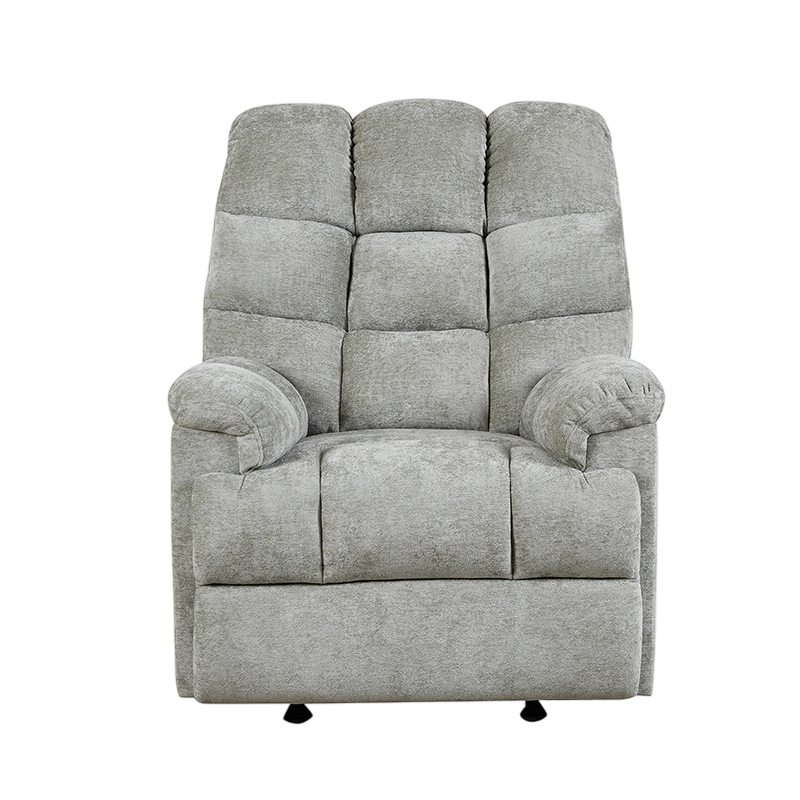
Oversized Manual Recliner Chair for Heavy Duty Adults 400lbs
Key Product Advantages
Generous 22-Inch Seat Width
The upgraded 22-inch seat width is one of the chair’s most noticeable advantages. Seat width affects how freely a person can sit, reposition, and recline. A narrow seat may force the user to remain in one position, while a wider seat provides greater flexibility.
For larger adults, the additional width can make the difference between a chair that is merely usable and one that feels genuinely comfortable. It offers more room around the hips and thighs and reduces the cramped sensation associated with smaller recliners. For households with multiple users, the wide seat can also accommodate a broader range of body types.
Wide seating is valuable in commercial and contract environments as well. Hotels, serviced apartments, senior living spaces, entertainment rooms, waiting lounges, and healthcare-related residential settings may benefit from furniture that is more inclusive and comfortable for different users. The product’s upholstered appearance makes it easier to integrate into interiors that require both practical performance and a home-like atmosphere.
Heavy-Duty Structural Concept
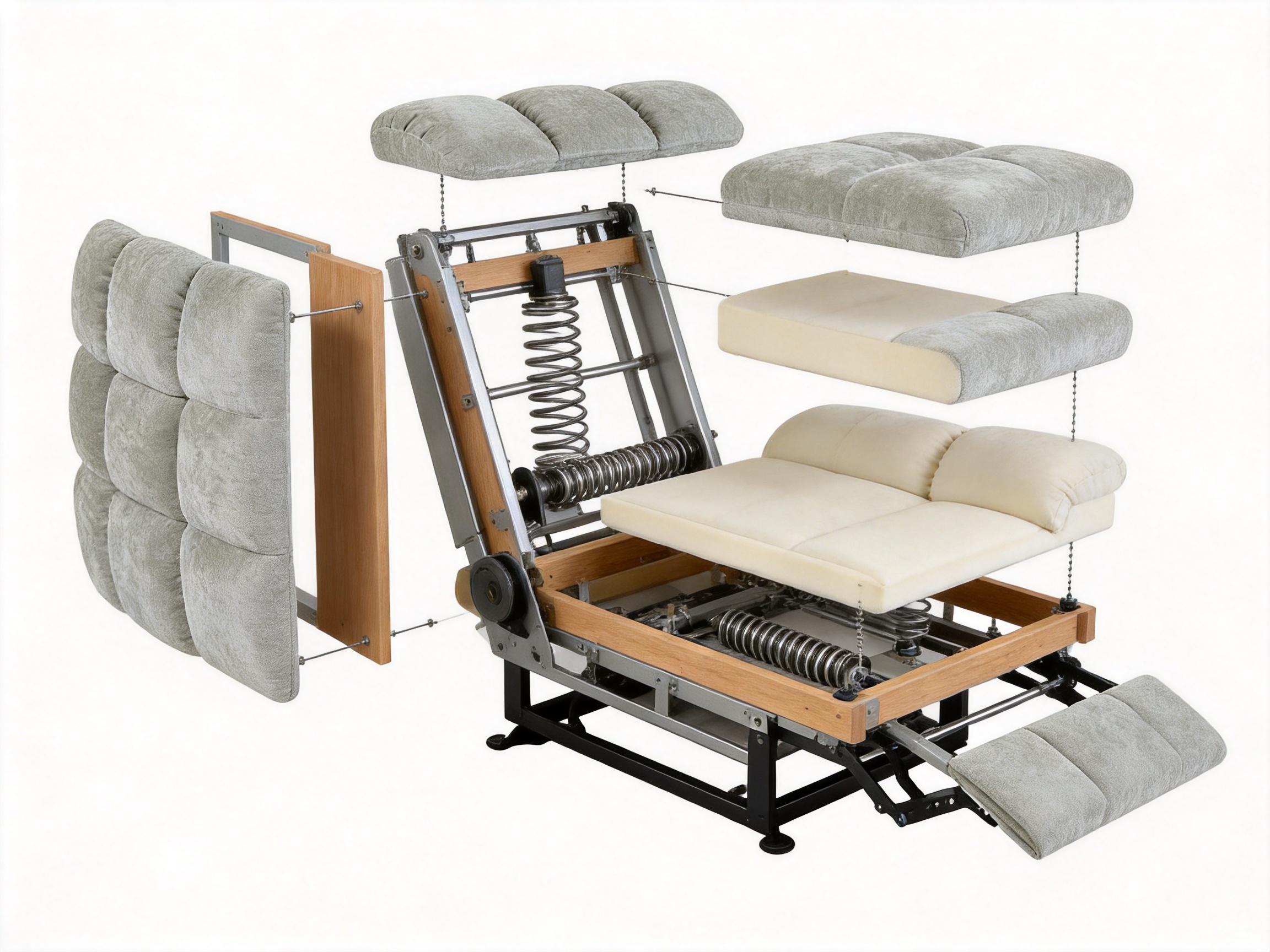
The recliner is built on a metal frame reinforced with solid wood. This combination provides a balance between a strong load-bearing foundation and the familiar manufacturing advantages of wood reinforcement. Metal can contribute rigidity and dimensional stability, while solid wood supports frame construction in areas where reliable fastening and upholstered furniture assembly are important.
A reinforced structure is particularly relevant for an oversized recliner. A larger seat and higher intended user demand place more stress on the frame, reclining mechanism, seat deck, and connection points. The use of a metal frame with solid wood reinforcement demonstrates that the product is designed with structural performance in mind rather than relying only on increased cushion size.
It is important for buyers to review the final technical specification for their intended market. The product title references a 400-pound heavy-duty capacity, while the supplied product information lists a weight capacity of 300 pounds. This discrepancy should be clarified with the manufacturer before publishing retail specifications, preparing packaging, or placing a production order. The correct load rating should always be stated consistently across product pages, labels, manuals, and marketing materials.
High-Density Rebound Cotton
Cushioning materials influence both immediate comfort and long-term usability. The chair uses high-density rebound cotton to provide a soft, resilient cushion feel. The term “rebound” indicates that the material is intended to recover its shape after compression, helping the upholstery maintain a fuller appearance during repeated use.
High-density cushioning can provide a useful middle ground between excessive softness and overly firm support. A cushion that is too soft may allow the user to sink deeply into the chair, making it difficult to change position or exit. A cushion that is too firm may feel rigid and uncomfortable during extended sitting. The rebound cotton construction is designed to support the body while preserving a relaxed, upholstered feel.
The cushion system is further supported by high-resilience foam and inner spring support. This layered approach helps create a structured seat rather than a surface that depends on a single filling material. The foam contributes shape retention and resilience, while the inner springs can help distribute pressure and reinforce the seating platform.
Durable Compression Spring Support
Spring support is an important part of a recliner’s internal comfort system. Durable compression springs are designed to respond to body weight while helping the seat return to its intended shape. They can also contribute to a more consistent seating feel across the cushion area.
For a wide recliner, internal support is especially important because the seat spans a larger area. Without sufficient reinforcement, the center of a wide seat may feel less stable or may lose resilience more quickly. The compression spring system works with the high-resilience foam and rebound cushioning to support a soft yet structured feel.
This construction is advantageous over low-support seating formats that depend primarily on loose fiber or thin foam. A layered system offers a more deliberate balance of comfort and durability. It also gives manufacturers greater control over the finished feel during product development and quality evaluation.
Overstuffed Arm Cushions
Armrests are often overlooked when comparing recliners, yet they have a significant effect on day-to-day comfort. The overstuffed arm cushions on this model create a broader, softer resting area for the arms. They can reduce pressure around the elbows and forearms and provide a more comfortable transition between the seat and the backrest.
Full arm cushioning also enhances the visual character of the chair. The substantial arms make the recliner appear supportive and inviting rather than thin or utilitarian. This is particularly useful for retailers positioning the chair as a premium comfort product for living rooms and family spaces.
Scratch-Resistant Upholstery
The chair uses scratch-resistant fabric intended to improve suitability for active households. Upholstery is exposed to repeated contact from clothing, hands, pets, children, blankets, and everyday movement. A fabric with improved surface resistance can help preserve the appearance of the chair and reduce the risk of visible damage from ordinary use.
The light gray color provides a neutral foundation for a variety of interior styles. It can work with contemporary, transitional, minimalist, Scandinavian-inspired, and casual living-room designs. At the same time, the manufacturer supports custom colors and fabrics, allowing buyers to coordinate the chair with a specific collection, interior project, or regional market preference.
Scratch resistance should not be interpreted as complete immunity from damage. Sharp objects, abrasive surfaces, improper cleaning methods, and rough handling may still affect the fabric. Buyers should follow the supplied care instructions and request a fabric performance report when a particular commercial standard is required.
Manual Reclining for Simple, Independent Operation
Manual reclining remains a practical choice for many furniture buyers. Unlike a power recliner, a manual model does not require a power outlet, motor, control cable, or electrical control panel. This can simplify installation, reduce the number of components that may require service, and make the chair easier to position in rooms where electrical access is limited.
The manual mechanism allows users to control the chair through a straightforward physical movement. This is suitable for reading corners, television rooms, guest rooms, apartments, and other spaces where uncomplicated operation is preferred. It also avoids the standby power consumption associated with some powered furniture.
Manual operation may be particularly attractive to retailers and project buyers seeking a durable product with fewer electronic parts. Electrical components can add convenience, but they may also increase assembly complexity and potential maintenance requirements. A manual recliner focuses on the essential functions of comfortable seating and adjustable leg support.
Correct and Labor-Saving Footrest Retraction Method
Proper footrest operation helps protect the mechanism and improves user convenience. The recommended retraction method is designed to use body positioning and the heels rather than sudden force or excessive pulling.
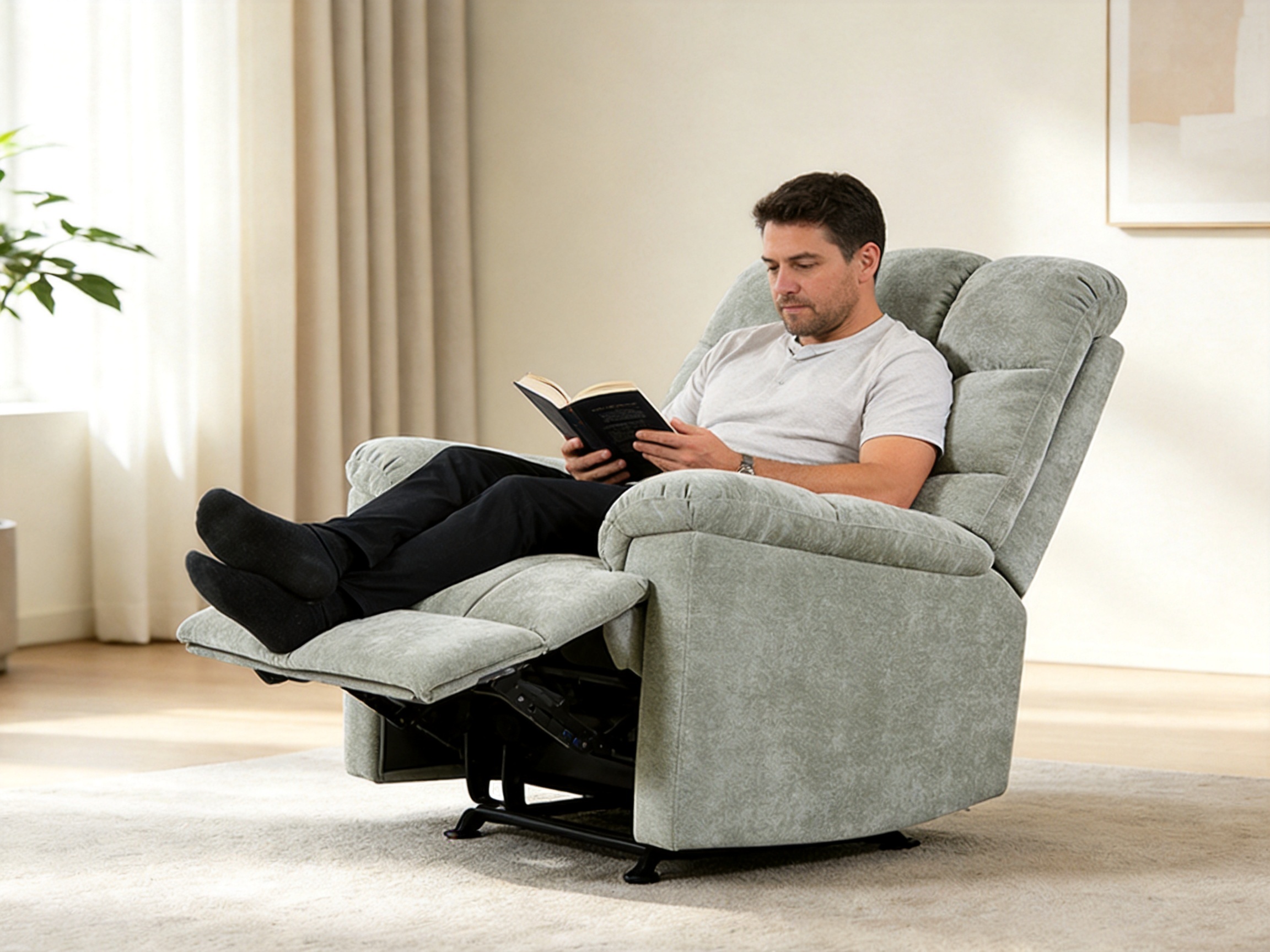
To retract the footrest correctly, sit forward with the body, lean forward, and use the heels to press against the middle of the footrest. This movement helps guide the footrest back into its closed position in a controlled manner. Users should avoid standing on the footrest, pushing only on one side, or applying abrupt force to the edge.
Clear operating instructions are important because incorrect use can place unnecessary stress on the reclining hardware. Retailers should include the method in product documentation, assembly instructions, showroom signage, or customer service materials. Demonstrating the correct motion at delivery can also reduce avoidable complaints and support longer product life.
Construction Details and Comfort Engineering
Metal Frame Reinforced with Solid Wood
The internal frame is a central element of the product’s performance. The use of metal combined with solid wood reinforcement provides a strong foundation for the seat, back, arms, and reclining components. This approach is appropriate for an oversized chair because the frame must support a larger upholstered structure without creating excessive movement or instability.
During production, frame components must be accurately cut, joined, reinforced, and checked before the upholstery stage. Accurate alignment is essential for a recliner because the frame and mechanism must work together. Small dimensional inconsistencies can affect the way the footrest opens, the way the back moves, or the way the chair sits on the floor.
The manufacturer’s own wooden frame factory helps provide greater control over this part of the process. Internal frame capability can reduce dependence on inconsistent external suppliers and make it easier to implement design revisions. It also allows the company to coordinate frame strength, upholstery dimensions, and production planning more efficiently.
Layered Cushion Construction
The chair’s comfort comes from the interaction of several materials rather than one isolated component. High-density rebound cotton contributes softness and recovery. High-resilience foam helps maintain structure. Inner spring support helps reinforce the seat and distribute pressure. Upholstery fabric protects the exterior and determines the surface touch and visual finish.
Layered construction offers manufacturers the ability to tune the product for different market requirements. A buyer may request a firmer seat for commercial use, a softer feel for residential customers, a different fabric hand, or additional performance features. With appropriate sampling and testing, the combination of materials can be adjusted without changing the entire product concept.
This approach also supports consistent quality control. Each material can be evaluated separately before final assembly, while the completed chair can be inspected for cushion recovery, seam appearance, fabric tension, mechanism function, and overall stability.
Ergonomic Support for Extended Sitting
Recliners are often used for longer periods than ordinary dining or occasional chairs. Users may spend an entire evening in the chair, take a nap, watch a film, or sit while recovering from physical exertion. Therefore, comfort must include support as well as softness.
The tall back, wide seat, padded arms, resilient cushion system, and adjustable footrest all contribute to a more relaxed posture. When the footrest is extended, the legs can be supported rather than left hanging. This may reduce the feeling of pressure created by unsupported lower legs during extended sitting.
Every user has different body proportions and comfort preferences. The chair should therefore be evaluated through physical sampling before a large commercial order. Buyers may wish to test seat height, back angle, leg support, arm height, cushion firmness, and exit effort for their specific customer group.
Manufacturing Strengths Behind the Product
The quality of a recliner depends on more than the design shown in a catalog. It depends on the manufacturer’s ability to convert that design into consistent production. Anji Xuanbo Household Co., Ltd. was established in 2021 and operates in Anji County, Huzhou City, Zhejiang Province, an area widely recognized for its chair manufacturing industry.
The company specializes in sofas and chairs and integrates research and development, industrial design, large-scale manufacturing, independent marketing, and technical services. Its product range includes functional sofas, fixed sofas, corner sofas, lounge chairs, recliner sofas, love seats, leisure chairs, and other upholstered furniture formats.
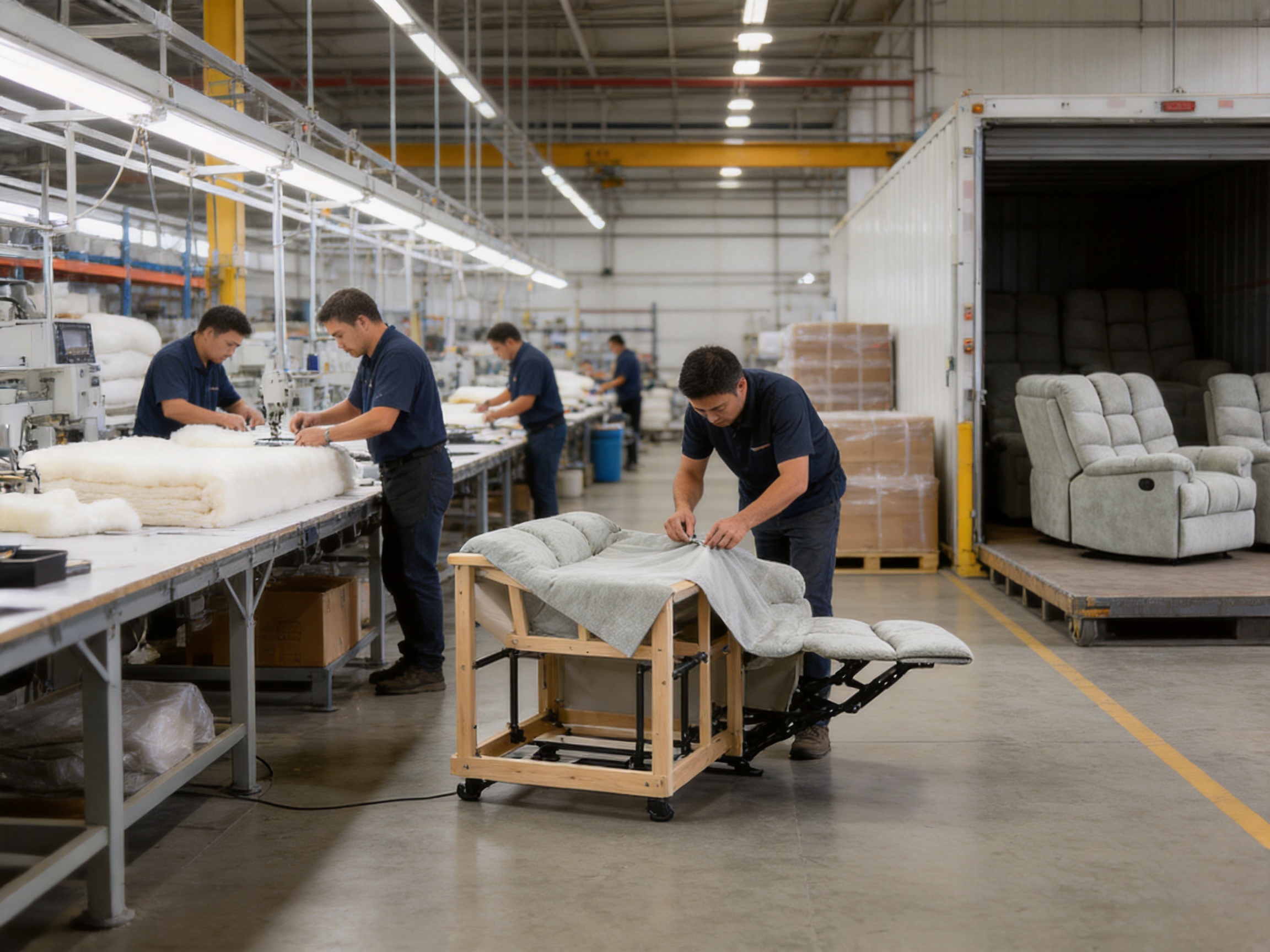
The factory covers approximately 8,000 square meters and employs more than 100 people. This scale provides the organizational foundation for handling product development, material preparation, production scheduling, inspection, packing, and export coordination. It also supports the development of multiple furniture categories while maintaining specialization in upholstered seating.
Integrated Frame and Sponge Capabilities
One of the company’s important advantages is its own wooden frame factory and sponge processing plant. These facilities support full-chain cost and capacity control. Internal control over major components can improve production coordination and help the manufacturer respond more quickly to changes in specifications.
For an oversized recliner, frame and cushioning must be designed together. The frame determines the available internal space, the mechanism position, and the structural foundation. The foam and rebound materials determine the final comfort profile, cushion dimensions, and upholstery tension. When these processes are managed within a coordinated manufacturing system, product development can be more efficient.
Integrated production also supports customization. If a buyer requests a different seat firmness, fabric thickness, frame adjustment, or packaging configuration, the manufacturer can evaluate the effect across related production stages. This is more practical than treating every component as an isolated purchase from unrelated suppliers.
Research, Development, and Industrial Design
The company’s research and development and industrial design capabilities support both original product creation and customer-specific adaptation. Modern furniture buyers often need more than a standard catalog item. They may require a private-label design, a specific color family, a revised arm profile, a regional size, or a product suited to a particular distribution channel.
Design development for a recliner involves more than appearance. It includes the user’s body position, motion clearance, seat-to-back relationship, mechanism integration, upholstery pattern, packing dimensions, and final retail presentation. A strong design team must consider these factors at the beginning of the project rather than attempting to solve them after the prototype is complete.
Product sampling enables the manufacturer and buyer to evaluate the chair before mass production. Samples can be used to review fabric, color, cushion feel, stitching, dimensions, reclining action, footrest retraction, and packaging. This process helps identify potential issues early and reduces the risk of large-scale corrections.
Multi-Stage Quality Inspection
Strict, multi-stage quality inspection is essential for upholstered furniture. A final visual inspection alone may not identify problems hidden inside the frame or mechanism. A comprehensive quality system should examine materials, semi-finished components, assembly processes, and completed products.
Typical inspection points for this recliner may include the following:
● Verification of fabric color, texture, surface condition, and resistance to visible defects.
● Inspection of frame joints, reinforcement points, and dimensional accuracy.
● Confirmation that foam, rebound cotton, and spring components match the approved specification.
● Examination of stitching, seams, piping, panel alignment, and upholstery tension.
● Functional testing of the reclining mechanism and footrest movement.
● Stability checks to confirm that the chair sits securely on the floor.
● Review of cushion recovery and overall appearance after assembly.
● Verification of dimensions, product labeling, packaging, and accessory inclusion.
The exact testing program should be agreed upon for each market and order. Buyers may also request pre-shipment inspection, third-party testing, material declarations, or compliance documentation where required by local regulations or retailer policies.
International Market Experience
The manufacturer exports products to North America, Europe, the Middle East, and other regions. Experience with international markets can help a factory understand the importance of consistent labeling, protective packaging, export documentation, container utilization, and market-specific product requirements.
International distribution also requires attention to transit conditions. Upholstered recliners must be protected from moisture, compression, abrasion, and impact during handling. The packaging design should be matched to the chair’s dimensions and the expected shipping route. Buyers should confirm carton specifications, stacking limits, loading plans, and inspection procedures before shipment.
The company’s location near Ningbo Beilun Port offers a logistics advantage for export orders. Convenient access to an international shipping port can support more efficient container planning and reduce unnecessary inland transportation steps. Freight schedules and costs still vary according to destination, season, container availability, and trade conditions, so buyers should request current shipping information for each order.
Customization Opportunities for Global Buyers
The light gray version provides a neutral starting point, but the manufacturer supports custom colors and fabrics. This is useful for furniture retailers and distributors who want to create a coordinated collection rather than sell a single isolated product.
Fabric and Color Customization
Color affects how a recliner fits into a room and how it is positioned within a retailer’s assortment. Light gray can appeal to customers seeking a calm, contemporary look, while darker gray, beige, taupe, navy, brown, or other colors may be suitable for different interior trends and regional preferences.
Fabric selection also affects touch, durability, care requirements, and visual identity. Buyers may request performance upholstery, textured fabric, soft chenille-like surfaces, woven materials, or other options, subject to sampling and production feasibility. Each proposed fabric should be evaluated for abrasion, colorfastness, seam behavior, cleaning requirements, and compatibility with the chair’s upholstery pattern.
The supplied care instructions specify cleaning with dry-cleaning solvent only and advise users not to saturate the fabric with water. Pile fabrics may require brushing to restore their appearance. These instructions should be printed clearly in care labels or documentation so that customers do not accidentally damage the upholstery through excessive moisture or unsuitable cleaning products.
Private Label and Collection Development
Retailers may use the chair as part of a private-label collection. A private-label project can involve a selected fabric, custom carton markings, product naming, instruction sheets, labels, and coordinated photography. The manufacturer’s design and production resources can help buyers develop a version that matches their brand positioning.
For wholesalers, customization can also help differentiate the product from competing catalog items. A distinct fabric, carefully selected color, or modified comfort profile may create a more recognizable assortment. Before approving modifications, buyers should review the effect on minimum order quantity, sample time, production schedule, cost, and load performance.
Project and Contract Applications
The oversized recliner may be considered for residential developments, senior-oriented living spaces, entertainment venues, hospitality rooms, corporate rest areas, and other projects that require comfortable upholstered seating. Project buyers should evaluate the chair against the intended use intensity and applicable local standards.
For contract applications, factors such as cleanability, fabric performance, replacement availability, packaging, delivery access, and after-sales service are particularly important. The manufacturer can discuss suitable materials and production arrangements for these requirements. A project-specific approval sample is recommended before ordering a large quantity.
How This Recliner Compares with Common Alternatives
Different recliner formats serve different needs. The oversized manual model competes not only with other manual recliners but also with compact recliners, power recliners, stationary lounge chairs, and sofas with integrated reclining seats.
| Comparison Factor | Oversized Manual Recliner | Compact Manual Recliner | Power Recliner | Stationary Lounge Chair |
|---|---|---|---|---|
| Seat space | Generous proportions with approximately 22-inch seat width | Usually narrower and more space-efficient | Varies by model, often available in wide formats | May be wide but lacks reclining adjustment |
| Operation | Manual, straightforward, and independent of electricity | Manual and simple | Motorized with electrical controls | Fixed position |
| Heavy-duty suitability | Reinforced frame and larger seating concept | Depends strongly on construction and rating | Depends on motor, frame, and published rating | Depends on frame but usually lacks footrest mechanics |
| Maintenance complexity | Fewer electronic components | Generally low | Higher because of motors, wiring, and controls | Low but no reclining mechanism |
| Customization | Custom colors and fabrics supported | Varies by supplier | Varies by supplier and electrical configuration | Often available in multiple upholstery options |
| Primary advantage | Spacious comfort with practical manual reclining | Smaller footprint | Convenient powered adjustment | Simple decorative seating |
Compared with a compact recliner, the primary advantage is usable space. The wider seat and fuller cushioning are better suited to customers who do not want to feel confined. Compared with a power recliner, the manual format offers simpler installation and fewer electrical components. Compared with a stationary lounge chair, it adds adjustable leg support and a reclining function.
No single chair is ideal for every application. A compact chair may be preferable where floor space is limited. A power model may be more suitable for users who have difficulty operating a manual mechanism. A stationary chair may be preferred in a formal seating arrangement. The strength of this model lies in its combination of generous proportions, manual reliability, structural reinforcement, and customization potential.
Installation, Placement, and Everyday Use
Before delivery, buyers should measure the intended location and confirm that the chair can pass through doors, stairways, elevators, and corridors. The upright dimensions are approximately 33.9 inches wide, 38.2 inches deep, and 41 inches high, but the reclined position requires additional clearance in front and behind the chair.
The chair should be placed on a stable, level floor. Users should avoid positioning it where the footrest may contact a table, wall, cabinet, radiator, or other obstacle. Adequate clearance allows the mechanism to move smoothly and reduces the risk of accidental impact.
Children should be supervised around the moving footrest and reclining joints. Pets should not be allowed to hide beneath the chair or near the mechanism while it is operating. Users should also keep hands, feet, blankets, and loose objects away from moving parts.
For maximum comfort, the user should sit fully back in the chair rather than placing excessive weight on the footrest alone. The footrest is designed to support the legs in the intended reclining position, not to function as a separate stool. Following the recommended retraction method helps reduce stress on the hardware.
Fabric Care
Proper care can help preserve the appearance and service life of the upholstery. The supplied instructions recommend cleaning with dry-cleaning solvent only and advise against saturating the fabric with water. Pile fabrics may require gentle brushing to restore their original appearance after use or cleaning.
Spills should be addressed according to the approved care label and fabric supplier’s instructions. Users should avoid untested household cleaners, excessive scrubbing, steam saturation, and harsh chemicals. When a stain is difficult to remove, professional upholstery cleaning may be preferable.
Regular light maintenance is usually better than aggressive cleaning after heavy buildup. Vacuuming with a suitable upholstery attachment can help remove loose dust and debris, provided the fabric is not damaged by the tool. Direct, prolonged exposure to intense sunlight should also be considered when planning placement, as some fabrics may fade over time.
Recommended Buyer Evaluation Checklist
Retailers, distributors, and project buyers should evaluate the product using a complete checklist rather than relying only on photographs. A physical sample can confirm whether the chair matches the intended market position.
First, verify the final weight capacity. The supplied information includes both a 400-pound reference in the title and a 300-pound specification in the product information. This must be resolved before publication or purchase. The approved rating should appear consistently on technical sheets, cartons, labels, and online listings.
Second, confirm the seat dimensions and usable clearance. The approximately 22-inch seat width is a key selling point, but buyers should also measure seat height, seat depth, arm height, back height, and fully reclined length.
Third, assess the comfort profile. Sit upright, recline, extend the footrest, and return to the closed position. Evaluate cushion firmness, lumbar support, arm comfort, head support, and ease of exit. Different target groups may prefer different levels of softness.
Fourth, inspect construction quality. Review the underside where accessible, frame stability, mechanism attachment, stitching, fabric tension, seam alignment, and footrest operation. Listen for unusual noise and check whether the chair remains stable during movement.
Fifth, review upholstery and care requirements. If the chair will be sold in a region with specific performance expectations, request relevant test documentation for the selected fabric. Confirm whether custom colors or replacement materials can be supplied for future orders.
Sixth, examine packaging and export readiness. Confirm carton dimensions, protective materials, assembly requirements, loading quantity, shipping marks, and documentation. These details affect landed cost and distribution efficiency.
Finally, establish after-sales procedures. Buyers should know how to report transport damage, request replacement parts, obtain care guidance, and address mechanism or upholstery concerns. A clear communication process can significantly improve the long-term value of the product.
Why Manufacturer Support Matters
A comfortable recliner is only one part of a successful furniture program. Buyers also need dependable communication, realistic lead times, consistent quality, and technical support. A factory with product development, manufacturing, inspection, and export capabilities can provide more coordinated service than a company that only resells finished goods.
Anji Xuanbo Household Co., Ltd. positions quality, service, honesty, practicality, and continuous improvement as guiding principles. These values are relevant to international buyers because upholstered furniture projects often involve repeated orders, custom specifications, and long-term cooperation.
The company’s product positioning covers both functional and fixed seating. This broader category knowledge can help buyers develop coordinated collections that include recliner chairs, recliner sofas, corner sofas, love seats, lounge chairs, and leisure chairs. A coordinated supplier can simplify sourcing and support more consistent styling across a furniture range.
Its location in Anji County also provides access to an established furniture manufacturing ecosystem. A developed regional supply network can support material sourcing, skilled production labor, component coordination, and specialized services. At the same time, the company’s own frame and sponge capabilities provide additional control over key components.
For new product development, buyers can communicate their target price, customer profile, market standard, preferred fabric, comfort level, packaging needs, and delivery plan. The manufacturer can then evaluate the project through sampling and production planning. Clear technical communication at the beginning is essential, especially for heavy-duty furniture where load capacity and structural performance must be precisely defined.
Commercial Positioning and Retail Presentation
The recliner can be presented as a comfort-centered product for customers who want more room than a conventional chair provides. Suggested retail themes include spacious relaxation, heavy-duty support, wide seating, manual simplicity, and customizable upholstery.
Visual merchandising should emphasize the chair’s substantial proportions without making unsupported performance claims. A showroom display can demonstrate the upright position, extended footrest, arm cushioning, and seat width. A sample chair should be placed where customers can sit, recline, and evaluate the mechanism themselves.
Product descriptions should state dimensions, material features, care instructions, operating guidance, and the verified load capacity. If the rating is confirmed at 300 pounds, the listing should use that figure. If testing and documentation confirm a 400-pound rating, all product information should be updated accordingly. Accurate information protects customers and supports responsible retailing.
For online sales, clear images should show the chair from the front, side, rear, and reclined positions. Dimension graphics can help customers understand the seat width and overall footprint. The listing should also explain that the chair requires clearance for reclining and that the footrest should be retracted using the recommended method.
Frequently Asked Questions
What type of chair is this product?
This is an oversized manual recliner chair designed for adults who prefer a wider seating area and supportive upholstered construction. It uses a manual reclining mechanism rather than an electric motor.
How wide is the seat?
The upgraded seat width is approximately 22 inches. Buyers should confirm the final measured seat width on the approved production specification because upholstery thickness and measurement methods can affect usable dimensions.
What are the overall chair dimensions?
The listed upright dimensions are approximately 33.9 inches wide, 38.2 inches deep, and 41 inches high. Additional space is required when the chair is reclined and the footrest is extended.
What is the weight capacity?
The provided materials contain two different references: the product title mentions 400 pounds, while the information section lists 300 pounds. The final capacity must be confirmed with the manufacturer and verified through the appropriate testing or documentation before it is used in sales materials.
Is the chair powered?
No. It is a manual recliner. This means it does not require a power outlet, electrical control, or motorized adjustment system.
How should the footrest be retracted?
Sit forward with the body, lean forward, and use the heels to press against the middle of the footrest. Avoid pushing forcefully on one side, standing on the footrest, or placing excessive weight on the mechanism.
What materials support the chair?
The chair includes high-density rebound cotton, high-resilience foam, inner spring support, durable compression springs, and a metal frame reinforced with solid wood. These components are intended to create a soft yet structured seating experience.
Are the arms padded?
Yes. The chair features overstuffed arm cushions designed to provide a fuller, softer resting area for the arms and elbows.
Is the upholstery resistant to scratching?
The listed fabric is scratch-resistant and intended to provide improved durability for everyday use. However, no upholstery is completely damage-proof. Sharp objects, abrasive contact, and improper cleaning may still cause damage.
What color is available?
The listed color is light gray. Custom colors and fabrics are supported, subject to material availability, sampling, minimum order requirements, and production confirmation.
How should the fabric be cleaned?
The supplied care instructions recommend cleaning with dry-cleaning solvent only and advise against saturating the fabric with water. Pile fabrics may require brushing to restore their appearance. Users should follow the final care label supplied with the selected fabric.
Who may be interested in this recliner?
The chair may appeal to larger adults, households seeking spacious seating, furniture retailers, wholesalers, hospitality buyers, residential project developers, and customers who prefer a simple manual mechanism.
Can the product be customized for a private-label collection?
The manufacturer supports custom colors and fabrics and offers research, development, industrial design, manufacturing, and technical services. Private-label details such as labels, packaging, and collection coordination should be discussed during project development.
Where is the product manufactured?
The product is manufactured by Anji Xuanbo Household Co., Ltd. in Anji County, Huzhou City, Zhejiang Province, China. The company operates an approximately 8,000-square-meter factory and has more than 100 employees.
Does the factory export internationally?
Yes. The company exports furniture products to North America, Europe, the Middle East, and other regions. Export arrangements, product compliance, packaging, and shipping details should be confirmed for each destination.
Conclusion
The oversized manual recliner chair is designed to address a clear market need: comfortable, supportive seating with more usable space for larger adults. Its approximately 22-inch seat width, substantial dimensions, overstuffed arm cushions, rebound cushioning, high-resilience foam, inner spring support, durable compression springs, scratch-resistant fabric, and reinforced metal-and-solid-wood frame provide a strong foundation for everyday relaxation.
Its manual mechanism offers practical advantages for buyers who want straightforward operation without electrical components. The correct footrest retraction method helps users operate the chair more safely and with less effort. The light gray upholstery offers a versatile starting point, while custom colors and fabrics create opportunities for private-label programs, coordinated collections, and project-specific applications.
The product is also supported by the manufacturing strengths of Anji Xuanbo Household Co., Ltd. The company combines research and development, industrial design, frame production, sponge processing, upholstery manufacturing, inspection, technical service, and international export experience. Its integrated capabilities can help buyers control quality, coordinate customization, and develop reliable long-term supply arrangements.
Before final commercialization, buyers should confirm the official weight capacity, approved dimensions, fabric performance, market compliance requirements, packaging details, and after-sales procedures. Once these specifications are verified, the chair can serve as a compelling option for retailers and distributors seeking a spacious manual recliner that combines comfort-focused design with factory-backed customization and production support.
References
1. Product specification sheet for oversized manual recliner chair model 8101.
2. Upholstered furniture design and construction principles, industry reference material.
3. General guidance for furniture upholstery care and solvent-based cleaning procedures.
4. General quality-control practices for upholstered seating and reclining furniture.
5. Manufacturer-provided company profile and production capability information.
6. General ergonomic considerations for residential lounge seating and recliner design.
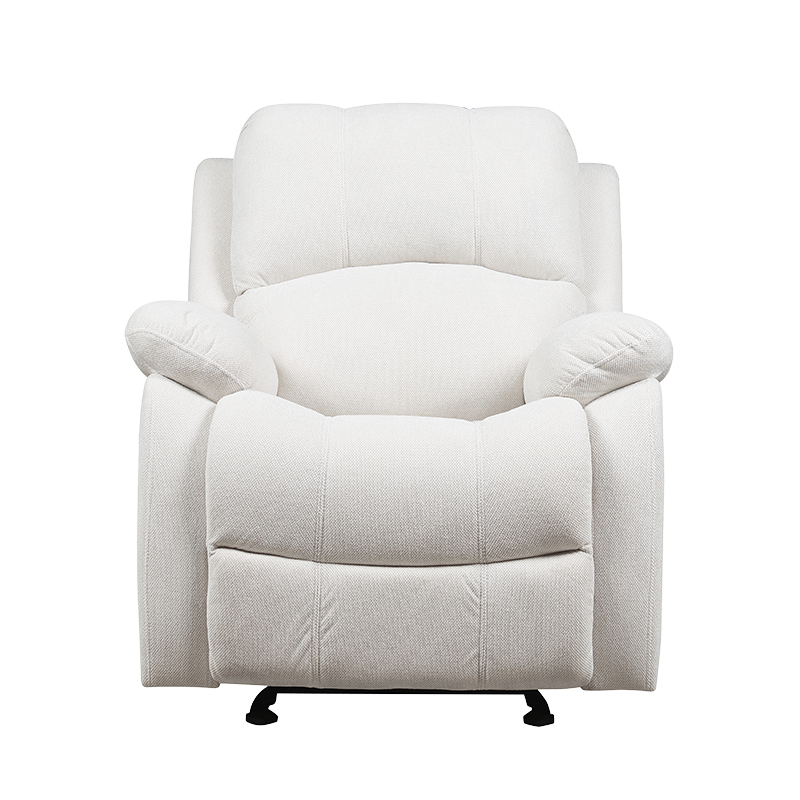
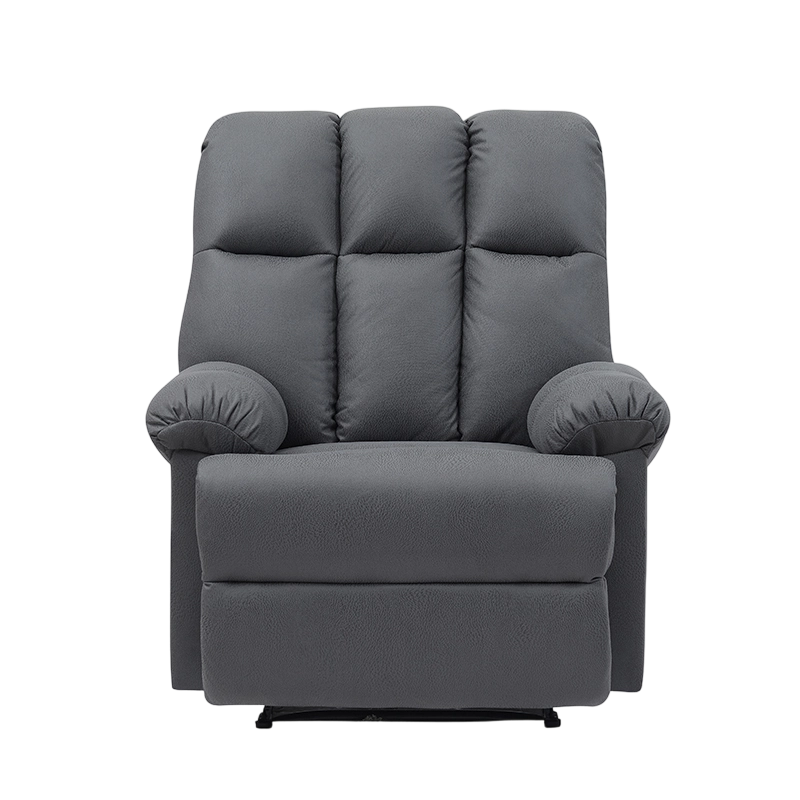
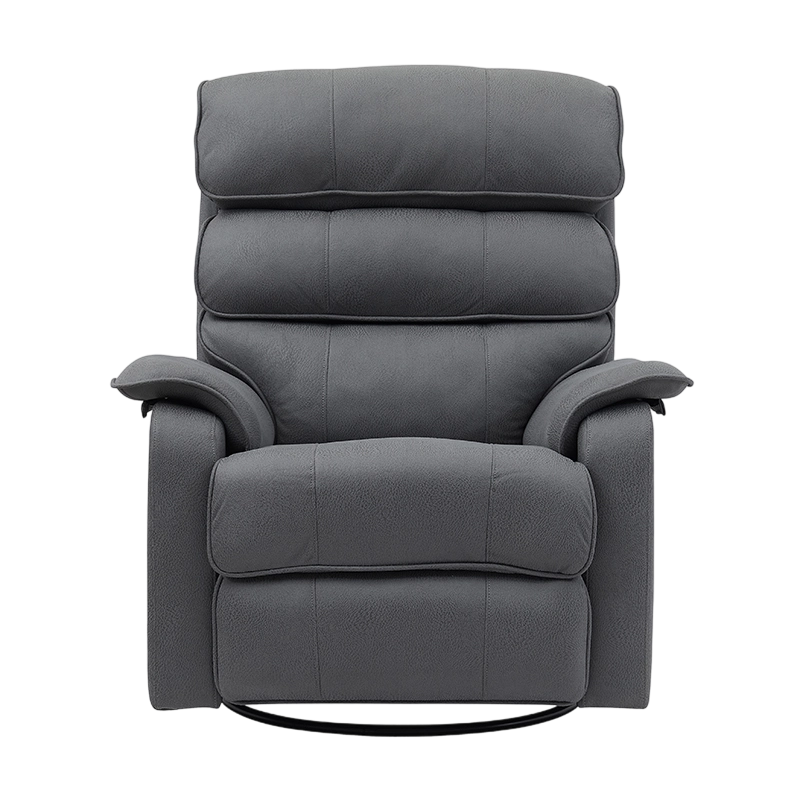
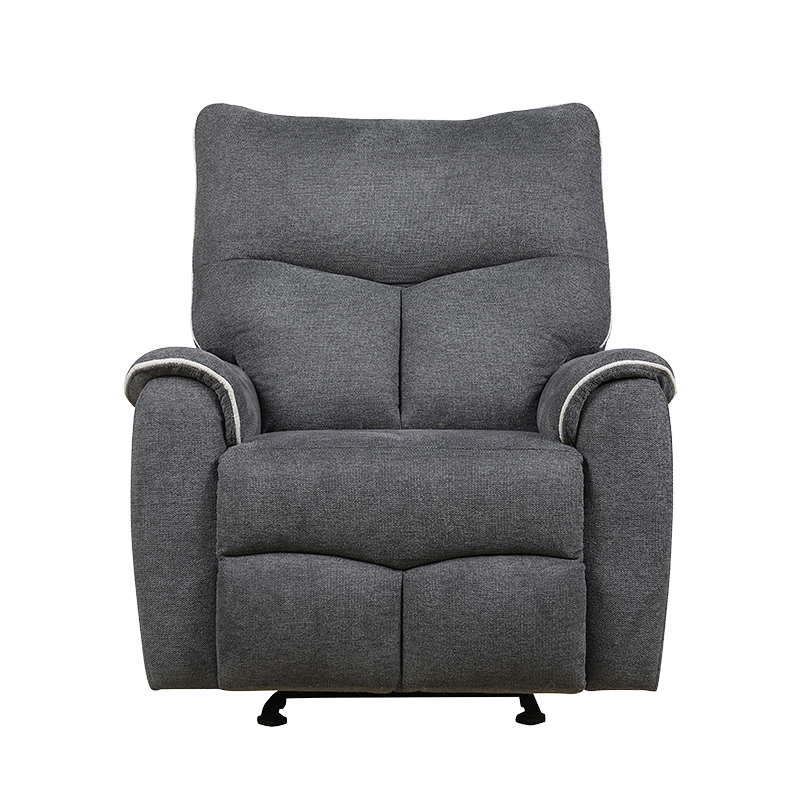
Product: Oversized Manual Recliner Chair for Heavy Duty Adults 400lbs

LET'S TALK

Bai Shuiwan Industrial Park, Tian Huangping Town, Anji County, Huzhou City, Zhejiang Province, China
More About Us 
-
+86 18257273741
-
[email protected]
CONTACT US
Copyright © Anji Xuanbo Household Co., Ltd. All Rights Reserved.
Custom Modern Upholstered Sofa Manufacturers


