Focus on the manufacturing and export of functional sofas
-
 +86 18257273741
-
 [email protected]

 English
 Español
Liu Yiran — After-Sales Service Specialist
 Home / Author / Liu Yiran — After-Sales Service Specialist / Modern Chenille L-Shaped Sectional Recliner with Chaise
 Modern Chenille L-Shaped Sectional Recliner with Chaise
 2026.08.01
 Liu Yiran — After-Sales Service Specialist
Content
- 1 A Contemporary Sectional Designed for Daily Living
- 2 Key Product Advantages
- 3 Design Benefits Compared with Conventional Sofa Options
- 4 Construction Philosophy and Manufacturing Strength
- 5 Quality Control and International Market Readiness
- 6 Customization for Global Buyers
- 7 Room-Planning Applications
- 8 Comfort, Care, and Long-Term Appearance
- 9 Export and Supply-Chain Advantages
- 10 Why Work with an Integrated Sofa Manufacturer?
- 11 Product Specification Overview
- 12 Purchasing Considerations for Distributors and Project Buyers
- 13 Positioning the Sectional in a Furniture Collection
- 14 Manufacturing Values and Long-Term Cooperation
- 15 Frequently Asked Questions
- 15.1 What type of sofa is the 8076C model?
- 15.2 What upholstery material is used?
- 15.3 What type of support is inside the seat cushions?
- 15.4 Are the cushions removable?
- 15.5 Is the sofa suitable for contemporary interiors?
- 15.6 What are the approximate dimensions?
- 15.7 Can the upholstery color be customized?
- 15.8 How should the chenille fabric be cleaned?
- 15.9 What makes the sectional different from a basic foam sofa?
- 15.10 What manufacturing capabilities does the supplier have?
- 15.11 Does the company support export orders?
- 15.12 What should buyers confirm before placing a large order?
- 16 Conclusion
- 17 References
- 18 Product: Modern Chenille L-Shaped Sectional Recliner with Chaise
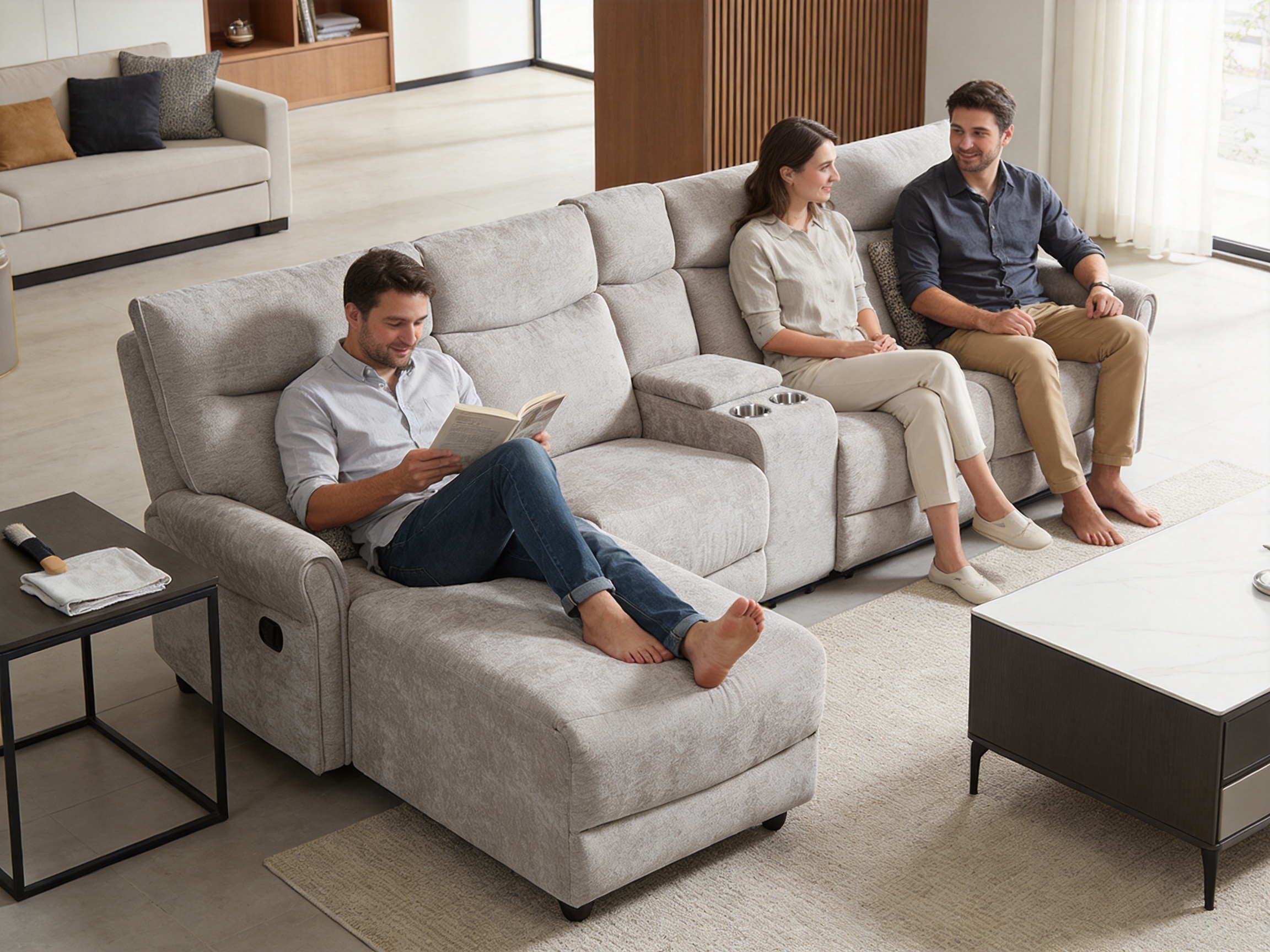
Modern living spaces increasingly demand furniture that combines comfort, visual refinement, practical flexibility, and dependable construction. The Modern Chenille L-Shaped Sectional Recliner with Chaise is designed to meet those expectations in one coordinated seating solution. With its contemporary silhouette, flared armrests, detached cushions, pocket coil seat construction, and generous L-shaped layout, this sectional brings together the qualities commonly sought by homeowners, hospitality projects, furniture retailers, and contract buyers.
More than a large sofa, this model is a carefully considered seating system. Its chaise configuration creates a natural place for stretching out, reading, watching films, or relaxing after a busy day. At the same time, its separate two-seat section supports everyday conversation and flexible room planning. The result is a practical arrangement that can anchor a living room without overwhelming the overall design.
The sectional is identified as model 8076C and is manufactured by Anji Xuanbo Household Co., Ltd., a professional Chinese sofa and chair manufacturer based in Anji County, Huzhou City, Zhejiang Province. The company develops and produces functional sofas, fixed sofas, corner sofas, lounge chairs, recliner sofas, love seats, and leisure chairs for international markets. Its manufacturing capabilities, customization services, material selection, and quality-control procedures support buyers looking for a dependable source of modern upholstered furniture.
A Contemporary Sectional Designed for Daily Living
The strongest advantage of this L-shaped sectional is the way it balances modern style with practical comfort. Many contemporary sofas focus heavily on appearance and may sacrifice sitting depth, cushion resilience, or usable seating capacity. Other large sectional sofas prioritize size but lack the clean lines needed for modern interiors. Model 8076C is intended to occupy the space between these extremes.
Its straight structural lines create a neat architectural profile, while the flared, padded armrests soften the overall appearance. The result is a sectional that can complement contemporary, transitional, and selected minimalist interiors. The form is distinctive without becoming overly decorative, making it easier to coordinate with coffee tables, area rugs, media consoles, accent chairs, floor lamps, and other living-room furnishings.
The L-shaped configuration also uses floor space efficiently. Instead of requiring several individual chairs and sofas to create a complete seating group, the sectional combines multiple seating functions into one coordinated product. The chaise provides a relaxed lounging area, while the adjoining seats maintain a more upright position for conversation and everyday use.
For furniture retailers, this flexibility can make the product appealing to a broad customer base. For residential buyers, it provides a complete seating centerpiece. For interior designers, it offers a strong foundation around which a room can be organized. Its neutral white presentation, together with support for custom colors, allows the design to be adapted to different market preferences and interior palettes.
Key Product Advantages
Generous L-Shaped Layout
The L-shaped layout gives users more than one way to sit. One person can use the chaise in a fully relaxed position while others occupy the adjoining seats. Families can gather together without arranging multiple pieces of furniture, and guests can be seated comfortably during social occasions.
This configuration is particularly useful in open-plan homes. It can define the living-room zone without the need for a tall partition or additional furniture. Positioned with the back toward a dining area or hallway, the sectional can create a subtle visual boundary while preserving a sense of openness.
The two-part arrangement also supports more organized packaging, handling, and room placement than an unusually large single-piece sofa. According to the supplied product dimensions, the complete configuration measures approximately 89.8 by 37/71.2 by 39.8 inches. The one-seat section with ottoman measures approximately 28.8 by 71.7 by 39.8 inches, while the two-seat section measures approximately 61.02 by 37 by 39.8 inches. Buyers should confirm final production dimensions, tolerances, orientation, packaging details, and installation requirements before placing an order.
Chenille Upholstery with a Soft, Textured Appearance
Chenille upholstery is valued for its soft hand feel and subtly dimensional surface. The yarn structure creates a gentle texture that can make a sofa appear warmer and more inviting than a completely flat woven fabric. It also interacts attractively with interior lighting, adding visual depth without relying on complicated patterns.
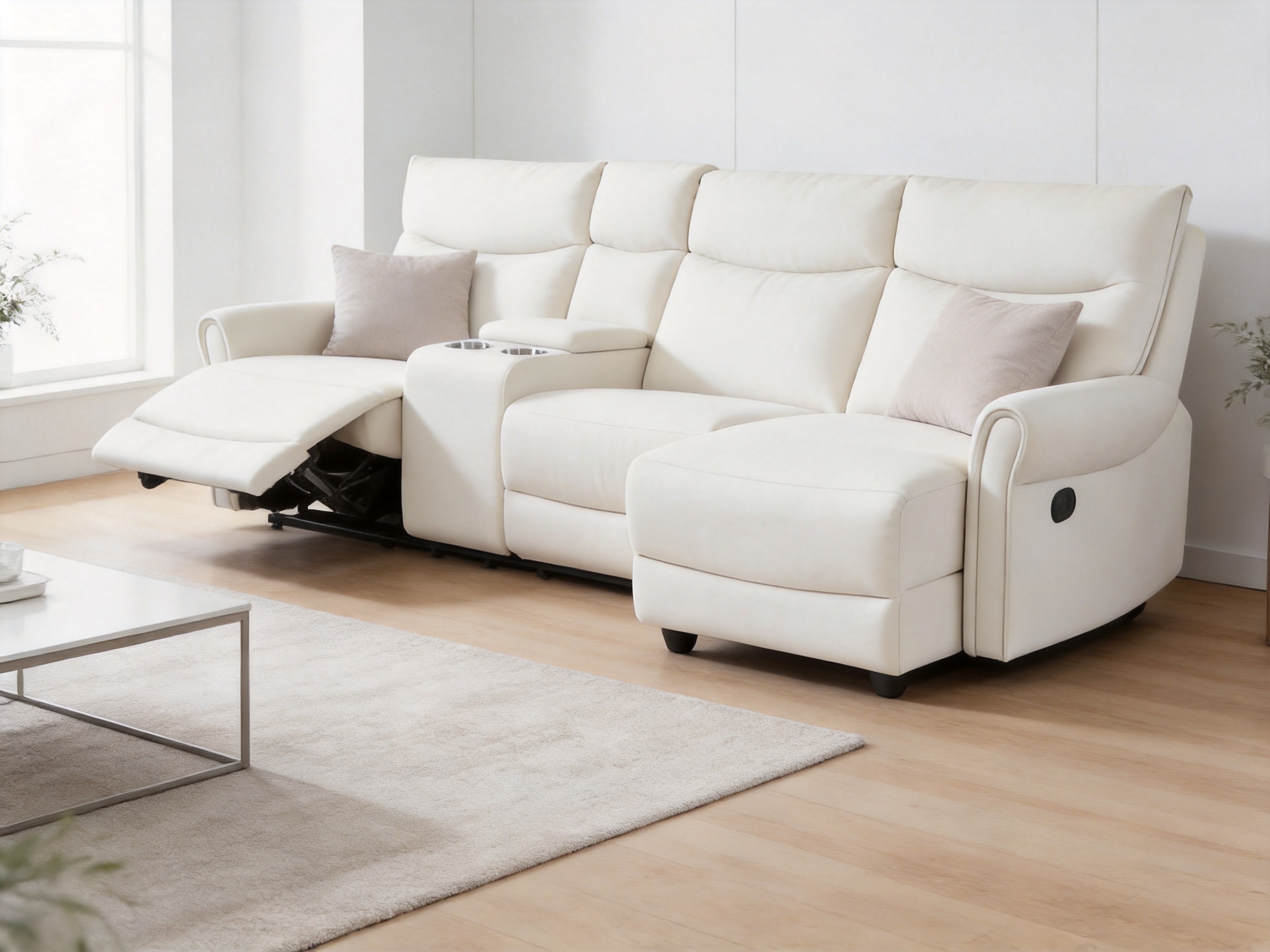
The available white presentation gives the sectional a clean and contemporary look. White upholstery can brighten a living space, emphasize the sofa’s silhouette, and coordinate with neutral, wood-tone, metallic, or boldly colored decorative elements. Since the manufacturer supports custom colors, buyers can also explore other shades for different markets, private-label collections, hospitality projects, or residential design schemes.
Chenille should be selected with an understanding of its care requirements. The supplied care instructions recommend cleaning with dry-cleaning solvent only, avoiding saturation with water, and brushing pile fabrics when necessary to restore their appearance. These instructions are important because excessive moisture, aggressive scrubbing, or unsuitable household cleaners may affect the fabric surface, color, or backing.
Pocket Coil Springs for Consistent Seat Support
One of the most significant functional features is the use of pocket coil springs inside the bottom seat cushions. Pocket coil construction places individual springs within fabric pockets, allowing the cushion to provide responsive support while distributing pressure across the seating area.
Compared with a basic foam-only cushion, a pocket coil cushion can offer a more resilient sitting experience. The springs help the cushion respond to changes in body weight and position, while the surrounding upholstery materials contribute to comfort. The design is intended to provide medium-firm support, a balance that works well for users who want a seat that feels supportive without being excessively rigid.
Another benefit is shape retention. Seat cushions naturally experience repeated compression, especially in the most frequently used seating positions. The pocket coil structure helps the cushion recover and retain its form over a longer period when used and maintained correctly. Cushion performance will still depend on foam density, fabric selection, user weight, usage frequency, climate, and regular rotation or repositioning where applicable.
Foam Upholstery Fill
Foam upholstery fill contributes to the sectional’s comfort and structured appearance. Foam can be shaped to support the seat, back, and arm areas while helping the sofa maintain a clean profile. In this model, foam works together with the pocket coil springs rather than serving as the only internal seating component.
This layered approach is valuable because different materials perform different functions. The spring system provides resilience and distributed support, while foam helps create a smoother seating surface and controlled softness. The upholstery fabric completes the comfort experience through its hand feel and visual texture.
Medium-firm support is also a practical choice for a sofa intended for varied use. A very soft seat may feel comfortable initially but can make it more difficult to stand up and may develop a deeply compressed appearance. A very firm seat may not provide the relaxed experience expected from a chaise sectional. The 8076C configuration is designed to provide a balanced middle ground for everyday sitting and lounging.
Flared, Padded Armrests
The flared armrests are a defining visual characteristic of the design. Their outward movement adds a sense of openness to the sofa and prevents the profile from appearing excessively boxy. Padding improves the tactile experience and provides a comfortable place to rest an arm while reading or watching television.
From a design perspective, flared arms can make a sectional appear more substantial without depending on heavy ornamentation. They create a transition between the back and seat while helping the sofa retain a clear contemporary identity. This detail may appeal to buyers who want more personality than a completely square-arm sofa but still prefer a clean, modern product.
Detached Fitted Seat and Back Cushions
Detached fitted seat and back cushions offer practical benefits in daily use. Separate cushions can be adjusted, removed, and handled more easily than permanently fixed cushions. They also make it possible to clean around the upholstery, inspect seams, and perform routine maintenance with greater convenience.
Fitted construction helps the cushions remain visually organized within the frame. The cushions are designed to sit neatly in their intended positions while retaining the relaxed comfort associated with loose seating components. Buyers should follow the manufacturer’s handling and care recommendations to preserve cushion alignment and fabric appearance.
Design Benefits Compared with Conventional Sofa Options
Compared with a conventional straight sofa, the L-shaped sectional provides a more complete seating arrangement. A straight sofa may occupy less floor space, but it often requires an additional ottoman, lounge chair, or matching loveseat to create a similarly flexible seating environment. The sectional combines several functions in one coordinated design.
Compared with a basic corner sofa, this model introduces a more deliberate balance between formal seating and relaxed lounging. The chaise extends the usable surface, making it suitable for people who enjoy reclining informally without requiring a separate recliner chair. This is especially useful in rooms where buyers want a comfortable resting position but prefer a unified contemporary appearance.
Compared with a traditional loose-cushion sofa, the combination of fitted cushions and pocket coil springs offers a more structured seating experience. The cushions remain visually tidy, while the internal support system is intended to reduce premature sagging and maintain medium-firm comfort.
Compared with a highly decorated classic sofa, the 8076C model is easier to coordinate with changing interior trends. Its straight lines and restrained detailing can work with modern wood furniture, polished metal accents, textured rugs, neutral walls, and contemporary lighting. This adaptability can extend the product’s appeal across different retail collections and design projects.
| Feature | Modern Chenille L-Shaped Sectional | Typical Straight Sofa | Potential User Benefit |
|---|---|---|---|
| Configuration | L-shaped with chaise | Linear seating | Supports both conversation and extended lounging |
| Seat construction | Pocket coil springs with foam upholstery fill | May use foam-only or basic webbing support | Provides resilient, medium-firm support |
| Arm design | Flared and padded | Often square or narrow | Adds comfort and distinctive contemporary styling |
| Cushion format | Detached fitted seat and back cushions | May be fixed or loose | Supports easier adjustment and maintenance |
| Fabric option | Chenille with custom color support | Varies by supplier | Allows a soft texture and collection customization |
| Room planning | Defines a seating zone | Requires more companion pieces | Creates a coordinated living-room centerpiece |
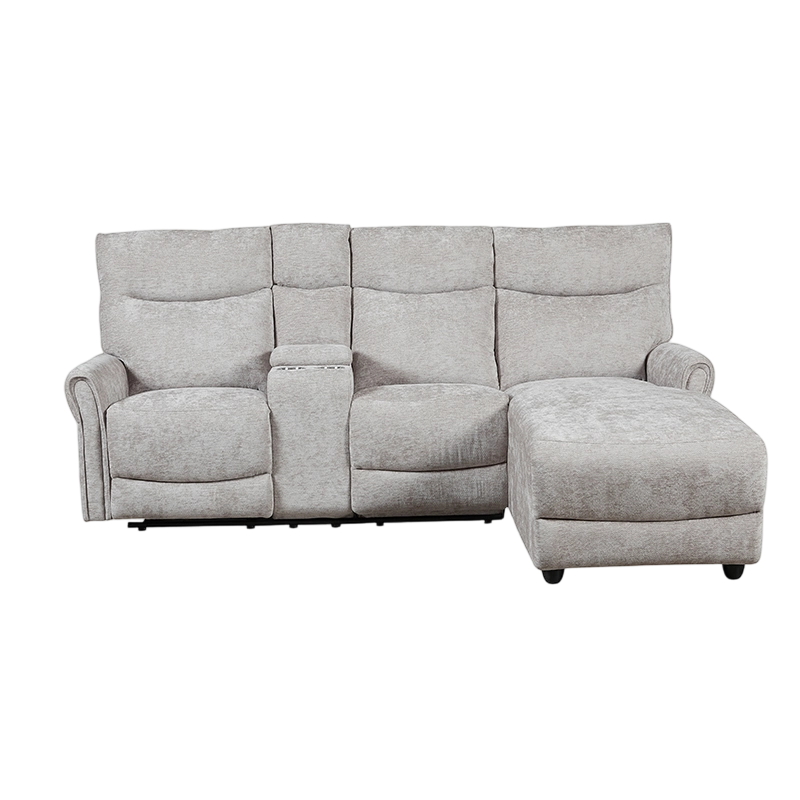
Modern Chenille L-Shaped Sectional Recliner with Chaise
Construction Philosophy and Manufacturing Strength
A finished upholstered sofa is the visible result of many separate manufacturing stages. A dependable product requires more than an attractive exterior. The frame, filling materials, spring system, fabric, stitching, assembly, inspection, packaging, and logistics must work together. Anji Xuanbo Household Co., Ltd. presents itself as an integrated manufacturer with capabilities extending from product development to large-scale production, marketing, technical services, and export support.
The company was established in 2021 and operates in Anji County, Huzhou City, Zhejiang Province, an area widely recognized as the “Capital of Chair Industry.” This regional manufacturing environment provides access to an established furniture supply chain, skilled labor, component resources, upholstery expertise, and transportation networks.
The factory covers approximately 8,000 square meters and employs more than 100 people. This scale supports coordinated manufacturing while remaining suitable for customized product development. A factory of this type can organize dedicated areas for raw-material preparation, frame production, foam processing, upholstery, assembly, inspection, finished-goods storage, and export packing.
Independent Wooden Frame Production
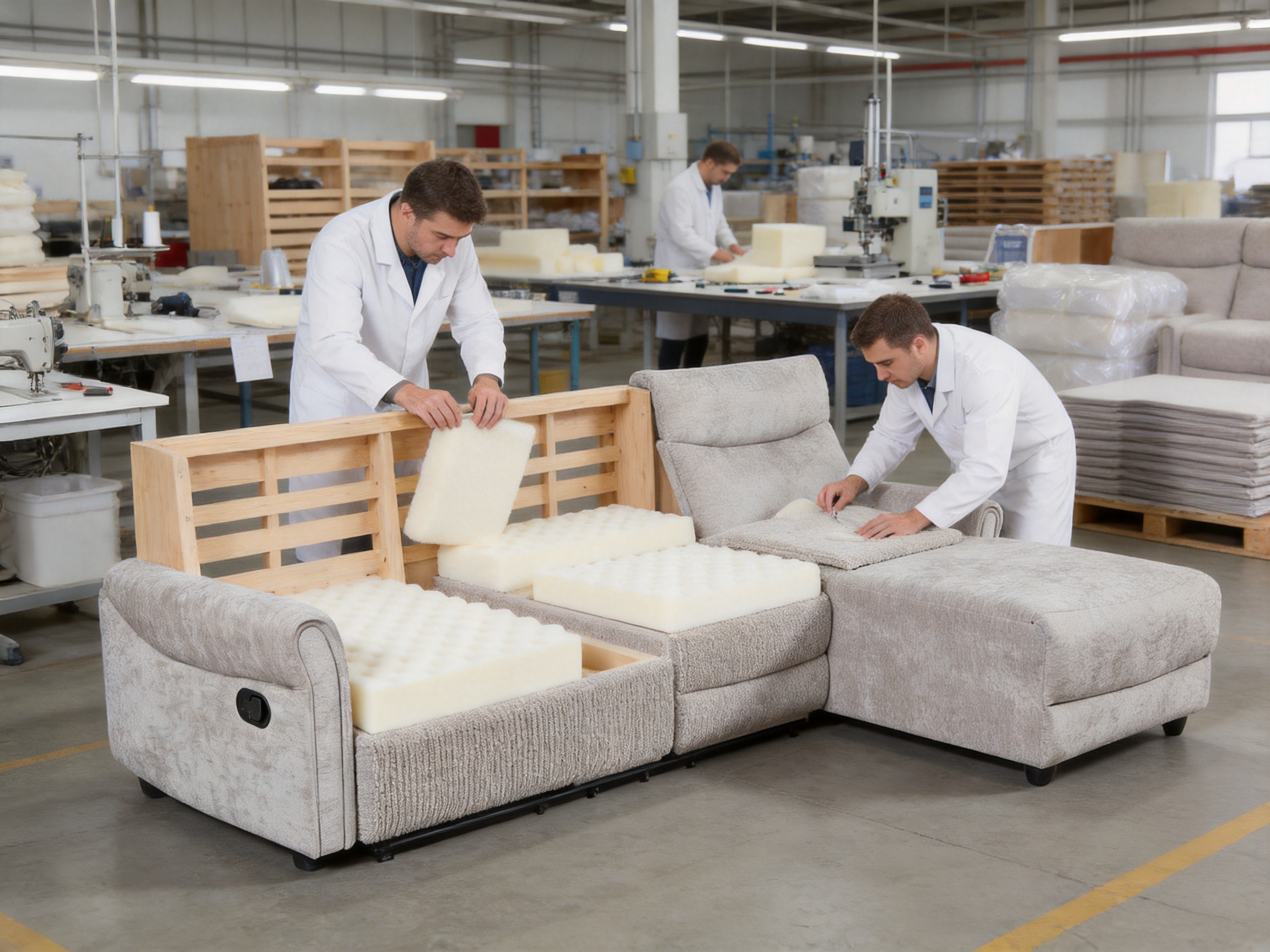
One stated advantage of the manufacturer is ownership of its own wooden frame factory. Internal frame production can improve control over a critical part of sofa construction. Instead of depending entirely on external frame suppliers, the company can coordinate material selection, cutting, shaping, joining, and inspection according to the requirements of each model.
The frame is the structural foundation of an upholstered sofa. It supports the seat, arms, back, and connection points between sectional components. Consistent frame dimensions are especially important for an L-shaped product because the individual sections must align correctly during installation. Accurate construction helps reduce gaps, uneven heights, or instability caused by mismatched components.
In-house frame capabilities may also improve customization efficiency. Buyers requesting changes to dimensions, orientation, material specifications, or structural details can work with a manufacturer that understands the relationship between frame engineering and final upholstery. This is useful for private-label programs, hospitality developments, showroom collections, and regional size requirements.
Internal Sponge Processing
The company also identifies its own sponge processing plant as part of its production advantages. Foam and sponge components affect the comfort, support, shape, and appearance of an upholstered sofa. Internal processing allows the manufacturer to coordinate foam cutting and shaping with the precise dimensions of the frame, seat cushion, back cushion, and armrests.
Accurate foam processing is important for maintaining symmetry. If foam pieces are cut inconsistently, the finished sofa may show irregular contours, uneven seams, or differences in cushion height. Coordinating foam production internally can help improve repeatability across production batches and reduce communication delays between separate suppliers.
For the 8076C model, foam is used together with pocket coil springs in the seat cushions. This requires coordination between the spring unit, foam layers, cushion cover, and final sewing dimensions. A controlled internal process can help ensure that these elements fit together as intended.
Research, Development, and Industrial Design
The manufacturer reports strong research and development and industrial design capabilities. In the modern furniture market, product development involves more than selecting an attractive shape. Designers must consider ergonomics, structural stability, production efficiency, material availability, packaging, transport, assembly, cleaning, and market positioning.
The 8076C design illustrates this integrated approach. Its contemporary appearance is supported by practical construction features, including medium-firm seat support, fitted cushions, pocket coil springs, and a sectional configuration. The design is visually current while remaining suitable for repeated use in a normal living environment.
Development teams may also use customer feedback, market analysis, sample evaluation, and production testing to refine details before mass manufacture. For buyers, this can reduce the risks associated with selecting a product that looks appealing in a drawing but proves difficult to produce consistently or ship efficiently.
Large-Scale Manufacturing and Process Coordination
Large-scale manufacturing capability is valuable for importers and distributors that need stable production quantities. A supplier with organized production planning can coordinate material purchasing, scheduling, staffing, assembly, inspection, and packing according to order requirements.
In-house control of key processes can create what the company describes as full-chain cost and capacity control. This does not simply mean lower pricing. It also refers to greater visibility into production timing, component availability, manufacturing capacity, and order coordination. Such visibility can help buyers plan product launches, inventory levels, showroom displays, and seasonal sales programs.
Process coordination is particularly important for upholstered furniture because the product contains numerous components. A delay in frame preparation can affect foam cutting; a foam change can affect upholstery sewing; a sewing change can affect assembly and packaging. An integrated production system helps these stages communicate more efficiently.
Quality Control and International Market Readiness
For international furniture buyers, quality control must cover both appearance and performance. A sofa can have attractive fabric and stitching yet fail to meet expectations if the frame is unstable, cushions are uneven, or sectional connectors do not align. The manufacturer states that it applies strict multi-stage quality inspection and that its products comply with international standards and certifications.
Although exact certifications and test reports should be confirmed for each order and destination market, the stated compliance focus is important. Different countries and regions may have specific requirements for flammability, chemical content, packaging, labeling, material safety, structural performance, and documentation. Buyers should communicate the intended market before production so the supplier can confirm applicable requirements.
Raw-Material Inspection
Quality control begins before assembly. Fabric, foam, spring units, timber, hardware, thread, zippers, connectors, and packaging materials should be checked against approved specifications. Fabric inspection may include color consistency, surface defects, width, texture, and lot matching. Timber inspection may involve dimensions, moisture condition, visible defects, and suitability for structural use.
Early inspection can prevent larger problems later in the production process. If a material defect is identified after upholstery, correcting the issue may require additional labor, rework, or even replacement of an entire component. Controlled incoming inspection helps reduce these risks.
Frame and Component Inspection
Frame inspection should verify dimensions, joints, reinforcement, alignment, and stability. Since a sectional is composed of multiple parts, each component must be checked not only by itself but also in relation to the complete configuration. The one-seat chaise section and the two-seat section should meet correctly and provide a stable, visually continuous arrangement.
Hardware and joining components also deserve attention. Sectional pieces may require connectors or other positioning devices to maintain alignment during use. Proper installation and inspection help ensure that the sofa remains stable after delivery and assembly.
Upholstery and Sewing Inspection
Upholstery inspection evaluates seam straightness, corner definition, tension, pattern or texture direction, surface cleanliness, cushion fit, and overall symmetry. Chenille fabrics require careful handling because their pile can reflect light differently depending on direction. Consistent cutting and upholstery techniques help create a uniform finished appearance.
Inspection should also confirm that the cushions are properly filled and that the covers do not create excessive wrinkling or unwanted looseness. Detached fitted cushions need to fit their designated spaces without excessive compression or movement.
Functional and Final Inspection
Final inspection can include checks of seat support, cushion placement, frame stability, armrest construction, overall dimensions, visual finish, labeling, and packaging. For export orders, the final process should also verify carton markings, product identification, accessories, assembly instructions, and documentation.
A multi-stage system is stronger than relying only on a final visual check. Inspections distributed throughout production can identify problems earlier, support corrective action, and improve consistency across batches. This approach is particularly valuable for buyers ordering multiple units for retail or commercial projects.
Customization for Global Buyers
Color customization is one of the clearest options offered with this model. White is presented as the reference color, while custom colors are supported. This gives buyers the ability to adapt the sectional to specific customer preferences, interior design programs, or regional market trends.
Customization may be relevant for wholesalers building a coordinated sofa collection. A distributor could select several chenille colors while retaining the same base design, allowing the product to reach different customer segments. A hospitality or property-development buyer might choose a shade that matches a broader interior specification. A private-label brand could request colors that align with its visual identity.
Potential customization should be discussed in detail before sampling or production. Important questions may include minimum order quantities, available fabric books, color-matching tolerances, sample approval procedures, lead times, packaging requirements, logo or label options, and the effect of customization on pricing.
Depending on the project, buyers may also wish to discuss sectional orientation, dimensions, cushion firmness, fabric composition, stitching, hardware, packaging, and country-specific compliance. Not every modification will be feasible for every order, but a manufacturer with internal frame, foam, design, and production capabilities is better positioned to evaluate requests efficiently.
Room-Planning Applications
Family Living Rooms
In a family living room, the sectional can serve as the primary gathering point. The two-seat portion provides conventional seating, while the chaise supports relaxed use. The arrangement can accommodate family conversations, entertainment, reading, and quiet rest without requiring separate furniture for each activity.
Its medium-firm support is suitable for users who spend extended periods seated. The pocket coil structure is designed to help preserve cushion shape through repeated use, although all upholstered furniture benefits from sensible weight distribution and routine care.
Open-Plan Interiors
Open-plan homes often need furniture that defines zones without closing them off. The L-shaped configuration can create a clear living area within a larger room. A rug placed beneath the front legs can visually unite the sectional with a coffee table, while the chaise can help establish the direction of the seating arrangement.
The straight-line design works well with contemporary architecture, including open kitchens, large windows, smooth flooring, and simple wall treatments. White or another light custom color can make the room feel bright, while darker or warmer upholstery can create a more grounded appearance.
Apartments and Compact Social Spaces
Although the sectional is generous in size, its integrated layout can be more efficient than combining a sofa, chair, ottoman, and side table. Buyers should measure doorways, elevators, corridors, stairways, and the intended room before ordering. The supplied dimensions provide a starting point, but packaging dimensions and access conditions are equally important.
For apartments, placement should allow adequate clearance around walkways, doors, radiators, windows, and entertainment equipment. The chaise orientation should be selected with the room’s traffic pattern in mind. A properly planned sectional can provide abundant seating while keeping the rest of the room visually organized.
Hospitality and Furnished Properties
The model may also suit selected hospitality, serviced-apartment, model-home, and furnished-property applications. Its contemporary styling can support a polished interior presentation, while the coordinated seating arrangement reduces the need to source several matching items.
Commercial buyers should evaluate expected usage intensity, cleaning requirements, local fire and safety regulations, warranty conditions, replacement parts, and maintenance procedures. Custom color selection can help align the sofa with a property’s interior design scheme.
Comfort, Care, and Long-Term Appearance
Good furniture performance depends on both construction and care. The 8076C sectional is designed with materials intended to provide comfort and shape retention, but users should follow the recommended care instructions to protect the chenille upholstery and internal components.
Recommended Fabric Care
The supplied instructions recommend cleaning with dry-cleaning solvent only. The fabric should not be saturated with water. Users should avoid applying unapproved detergents, bleach, abrasive products, or excessive moisture. Before using any cleaning product, it is advisable to test it on an inconspicuous area and follow professional upholstery-care guidance.
Pile fabrics may require brushing to restore their appearance. Brushing should be performed gently and in a consistent direction using a suitable upholstery brush. Excessive pressure can disturb the pile or create uneven areas. Regular, gentle removal of dust and surface debris can help preserve the fabric’s texture.
Routine Cushion Maintenance
Detached cushions can be repositioned periodically to help distribute normal wear. Users should avoid repeatedly sitting in exactly the same location if possible. Cushions should be lifted rather than dragged, and care should be taken not to place sharp objects, heavy concentrated loads, or unsuitable materials on the upholstery.
Because the sofa contains pocket coil springs, users should not jump on the seats or apply loads beyond the intended residential or commercial use. Proper use helps protect the spring system, frame, foam, stitching, and cushion covers.
Protection from Environmental Factors
Direct and prolonged sunlight may affect many upholstery fabrics over time. Positioning the sectional away from intense direct sunlight, or using window coverings, can help reduce uneven fading. Excessive humidity and heat may also influence upholstery materials and wooden components, so a stable indoor environment is preferable.
Spills should be addressed promptly according to professional cleaning recommendations. Rubbing aggressively can spread a stain or alter the fabric pile. If a spill is significant or uncertain, professional upholstery cleaning is generally safer than experimenting with household chemicals.
Export and Supply-Chain Advantages
International furniture purchasing involves more than manufacturing. Buyers need reliable communication, production planning, inspection coordination, documentation, packing, and delivery arrangements. The company’s location near Ningbo Beilun Port is presented as an advantage for export logistics.
Access to a major port can support more convenient container loading and international transportation planning. It may also help reduce inland transfer complexity compared with factories located farther from established export routes. Final freight cost and delivery time will depend on order quantity, destination, shipping method, port conditions, customs requirements, and seasonal factors.
The company exports to North America, Europe, the Middle East, and other regions. Experience across multiple markets can help a manufacturer understand different customer expectations and documentation practices. Nevertheless, each buyer should provide precise destination requirements, including labeling, packaging, testing, language, electrical requirements where relevant, and safety regulations.
For wholesale customers, stable communication is particularly important. A professional supplier should be able to discuss product specifications, material approvals, sample development, production schedules, inspection arrangements, loading plans, and after-sales questions. The manufacturer’s stated integration of R&D, production, marketing, and technical services is intended to support this complete purchasing process.
Why Work with an Integrated Sofa Manufacturer?
An integrated manufacturer can offer several advantages over a trading company that outsources every production stage. Direct access to frame production, foam processing, upholstery, assembly, and quality control may shorten communication channels and make technical problem-solving more direct.
It can also improve the accuracy of quotations and production discussions. When a buyer asks whether a design change is possible, an integrated supplier can consult the relevant internal departments more quickly. The frame team can review structural implications, the foam team can assess cushion changes, and the upholstery team can evaluate fabric and sewing requirements.
Integrated production may support better control of cost and capacity. Material purchasing can be coordinated with production schedules, while internal departments can plan around order priorities. This can be helpful for buyers who need repeat orders, seasonal launches, or several related models.
Another advantage is product consistency. When key components are produced under coordinated supervision, it may be easier to maintain similar dimensions, comfort characteristics, and appearance from one batch to the next. Buyers should still request approved samples, technical drawings, inspection standards, and production records where appropriate.
Product Specification Overview
| Specification | Provided Information |
|---|---|
| Model | 8076C |
| Product type | Modern chenille L-shaped sectional recliner with chaise |
| Category | Manual corner sofa |
| Style | Contemporary |
| Reference color | White |
| Color service | Custom colors supported |
| Upholstery | Chenille |
| Seat construction | Pocket coil springs inside seat cushions |
| Upholstery fill | Foam |
| Seat firmness | Medium-firm |
| Armrests | Flared and padded |
| Cushions | Detached fitted seat and back cushions |
| Approximate total size | 89.8 × 37/71.2 × 39.8 inches |
| Approximate one-seat section with ottoman | 28.8 × 71.7 × 39.8 inches |
| Approximate two-seat section | 61.02 × 37 × 39.8 inches |
| Cleaning guidance | Dry-cleaning solvent only; do not saturate with water |
Dimensions should be treated as product-guide information and confirmed against the final approved specification. Manufacturing tolerances, fabric thickness, cushion compression, packaging methods, and sectional orientation can influence final measurements.
Purchasing Considerations for Distributors and Project Buyers
Before purchasing, distributors should identify the target customer and intended use. A retail program may emphasize color selection, showroom appearance, packaging, price, and repeat-order capability. A project buyer may focus more heavily on specifications, compliance, durability, delivery schedules, cleaning procedures, and replacement support.
Sample approval is recommended for custom orders. A physical sample can help confirm chenille texture, color, cushion comfort, armrest proportions, stitching, and overall scale. For large orders, buyers may also request a pre-production sample or golden sample against which mass production can be compared.
Buyers should clarify whether the sectional is supplied fully assembled or requires connection and installation after delivery. They should also confirm the orientation of the chaise, the included hardware, carton contents, protection materials, and assembly instructions. These details are especially important when products are shipped internationally or delivered through third-party logistics providers.
Packaging should protect the fabric, corners, arms, cushions, and frame during handling. Suitable internal protection, moisture control, edge protection, and clear carton labeling can reduce transit-related damage. Container loading should be planned to use available space efficiently without placing excessive pressure on upholstery or structural components.
Warranty terms, claims procedures, spare-component availability, and responsibilities for transportation damage should be agreed upon in writing. A clear process benefits both the supplier and buyer by establishing how issues will be documented, assessed, and resolved.
Positioning the Sectional in a Furniture Collection
The 8076C sectional can be positioned as a central contemporary product within a broader sofa collection. Its design language can be coordinated with love seats, fixed sofas, lounge chairs, leisure chairs, and additional corner sofa models. This creates opportunities for retailers to present a consistent family of products while offering different sizes and seating functions.
A collection may use the same chenille color story across several models, or it may combine neutral upholstery with selected accent shades. The white version can serve as a clean showroom centerpiece, while custom colors can address local preferences and coordinated interior projects.
Product photography and showroom presentation should emphasize the sectional’s proportions, chaise function, cushion construction, armrest design, and fabric texture. A carefully arranged display can demonstrate how the product supports both social seating and relaxed lounging. Buyers should present care information clearly so customers understand how to maintain chenille upholstery.
Manufacturing Values and Long-Term Cooperation
The company describes its operating philosophy through commitments to quality, service, honesty, pragmatism, and continuous improvement. These values are relevant to international furniture partnerships because successful cooperation depends on more than a single shipment.
Long-term cooperation requires reliable communication when specifications change, materials become unavailable, regulations are updated, or delivery schedules need adjustment. A supplier that combines production resources with technical and marketing support may be better equipped to manage these changes.
The company’s stated customer base across North America, Europe, the Middle East, and other regions indicates an orientation toward global market development. Its professional management team, manufacturing capacity, design capabilities, and export logistics are intended to support buyers seeking a stable furniture production partner.
For buyers, the most useful approach is to establish measurable expectations. These may include approved materials, dimensional tolerances, sewing standards, cushion firmness, inspection procedures, acceptable defect limits, packaging specifications, delivery milestones, and documentation requirements. Clear standards turn general quality promises into practical production controls.
Frequently Asked Questions
What type of sofa is the 8076C model?
The 8076C is a modern L-shaped sectional sofa with a chaise. It is categorized as a manual corner sofa and is described as a sectional recliner with chaise. Buyers should confirm the exact manual reclining function, operating position, and included mechanisms when reviewing the final specification.
What upholstery material is used?
The model uses chenille upholstery. Chenille provides a soft hand feel and textured visual appearance. The reference color is white, and custom colors are supported for suitable orders.
What type of support is inside the seat cushions?
The bottom seat cushions contain pocket coil springs combined with foam upholstery fill. This construction is intended to provide medium-firm support, responsive comfort, and improved shape retention compared with simpler cushion systems.
Are the cushions removable?
The product information specifies detached fitted seat and back cushions. This format allows the cushions to be handled and adjusted more easily than permanently fixed cushions and supports more convenient routine maintenance.
Is the sofa suitable for contemporary interiors?
Yes. Straight lines, flared padded armrests, a restrained silhouette, and a clean sectional layout give the sofa a contemporary character. It may also coordinate with transitional interiors depending on the surrounding furniture, colors, and accessories.
What are the approximate dimensions?
The stated total size is approximately 89.8 by 37/71.2 by 39.8 inches. The one-seat section with ottoman is approximately 28.8 by 71.7 by 39.8 inches, and the two-seat section is approximately 61.02 by 37 by 39.8 inches. Final dimensions should be confirmed before ordering.
Can the upholstery color be customized?
Yes. White is listed as the reference color, while the manufacturer supports custom colors. Buyers should request available fabric samples, color options, minimum order quantities, and sample approval requirements.
How should the chenille fabric be cleaned?
The supplied instructions recommend cleaning with dry-cleaning solvent only and advise against saturating the fabric with water. Pile fabrics may require gentle brushing to restore their appearance. Professional upholstery advice should be followed for significant stains or spills.
What makes the sectional different from a basic foam sofa?
The sectional combines foam upholstery fill with pocket coil springs inside the seat cushions. This layered construction is intended to provide more responsive and resilient support than a basic foam-only cushion. Its L-shaped chaise configuration also provides a broader range of sitting and lounging positions.
What manufacturing capabilities does the supplier have?
The supplier operates an approximately 8,000-square-meter factory with more than 100 employees. Its stated capabilities include research and development, industrial design, large-scale manufacturing, independent marketing, technical services, its own wooden frame factory, and an internal sponge processing plant.
Does the company support export orders?
The company exports products to North America, Europe, the Middle East, and other regions. Its location near Ningbo Beilun Port is presented as an advantage for export logistics. Buyers should confirm destination-specific documentation, testing, labeling, packaging, and delivery requirements.
What should buyers confirm before placing a large order?
Buyers should confirm the final dimensions, chaise orientation, fabric composition, color, cushion specifications, reclining or manual mechanism details, packaging, assembly requirements, inspection standards, compliance documents, minimum order quantity, lead time, warranty terms, and shipping arrangements.
Conclusion
The Modern Chenille L-Shaped Sectional Recliner with Chaise is designed as a complete contemporary seating solution for modern living rooms and selected commercial interiors. Its key advantages include a spacious L-shaped arrangement, a practical chaise, soft chenille upholstery, medium-firm pocket coil seat support, foam filling, flared padded armrests, and detached fitted cushions.
Its competitive value is strengthened by the manufacturer’s integrated production resources. Independent wooden frame manufacturing, internal sponge processing, research and development, industrial design, large-scale production, multi-stage quality inspection, customization support, and export logistics create a foundation for consistent supply and international cooperation.
For retailers, the model offers a strong contemporary profile and opportunities for color customization. For distributors, it can serve as a versatile addition to a broader sofa collection. For designers and project buyers, it provides a coordinated seating centerpiece that combines conversation seating with relaxed chaise comfort.
As with any upholstered furniture purchase, final performance depends on approved materials, correct production, suitable installation, reasonable use, and proper care. Buyers who confirm technical details early, approve samples carefully, and establish clear quality standards can make the most of this sectional’s design and manufacturing advantages.
References
1. Product Specification Sheet, Model 8076C, Modern Chenille L-Shaped Sectional Recliner with Chaise.
2. Upholstered Furniture Construction and Performance Considerations, industry reference material.
3. Chenille Textile Care and Pile-Fabric Maintenance Guidelines, upholstery-care reference material.
4. General Principles of Pocket Coil Cushion Construction, furniture manufacturing reference material.
5. International Upholstered Furniture Quality-Control Practices, manufacturing and inspection reference material.
6. Company Profile and Manufacturing Capability Information, Anji Xuanbo Household Co., Ltd.
Product: Modern Chenille L-Shaped Sectional Recliner with Chaise

LET'S TALK

Bai Shuiwan Industrial Park, Tian Huangping Town, Anji County, Huzhou City, Zhejiang Province, China
More About Us 
-
+86 18257273741
-
[email protected]
CONTACT US
Copyright © Anji Xuanbo Household Co., Ltd. All Rights Reserved.
Custom Modern Upholstered Sofa Manufacturers


