Focus on the manufacturing and export of functional sofas
-
 +86 18257273741
-
 [email protected]

 English
 Español
Liu Yiran — After-Sales Service Specialist
 Home / Author / Liu Yiran — After-Sales Service Specialist / 39.8-Inch Manual Swivel Rocker Recliner Chair for Modern Comfort and Custom Upholstered Living
 39.8-Inch Manual Swivel Rocker Recliner Chair for Modern Comfort and Custom Upholstered Living
 2026.07.14
 Liu Yiran — After-Sales Service Specialist
Content
- 1 Product Overview: A Recliner Designed for Everyday Flexibility
- 2 Key Product Specifications
- 3 Why a Manual Recliner Still Matters in a Power-Driven Market
- 4 360-Degree Swivel: Freedom in Real Living Spaces
- 5 Gentle Rocking for Stress Relief and Comfort
- 6 Reclining Range from 120 to 150 Degrees
- 7 Chenille Upholstery: Soft Touch and Warm Visual Appeal
- 8 High-Resilience Foam and High-Elastic Sponge for Balanced Support
- 9 Sturdy Iron Frame for Stability and Long-Term Use
- 10 Comfort That Fits Multiple Rooms and Lifestyles
- 11 Advantages Over Common Competitor Recliners
- 12 Advanced Manufacturing Strength Behind the Product
- 13 Research, Development, and Industrial Design
- 14 Material Preparation and Component Control
- 15 Frame, Mechanism, and Structural Assembly
- 16 Cutting, Sewing, and Upholstery Craftsmanship
- 17 Multi-Stage Quality Inspection
- 18 Packaging and Export Logistics
- 19 Customization for Retailers, Importers, and Project Buyers
- 20 Practical Use and Footrest Operation Guidance
- 21 Fabric Care and Long-Term Appearance
- 22 Market Positioning and Sales Value
- 23 Company Strengths That Support Long-Term Cooperation
- 24 Why Manufacturing Process Matters to the End User
- 25 Frequently Asked Questions
- 25.1 What type of chair is this?
- 25.2 Does the chair need electricity?
- 25.3 How far does the backrest recline?
- 25.4 Can the chair swivel completely around?
- 25.5 Does it rock?
- 25.6 What material is used for the upholstery?
- 25.7 What is the weight capacity?
- 25.8 What are the product dimensions?
- 25.9 How should the footrest be closed?
- 25.10 How should the fabric be cleaned?
- 25.11 What makes this recliner different from many competitor products?
- 25.12 Can retailers or importers request custom versions?
- 26 Conclusion: A Multifunctional Recliner Built for Comfort and Commercial Value
- 27 References
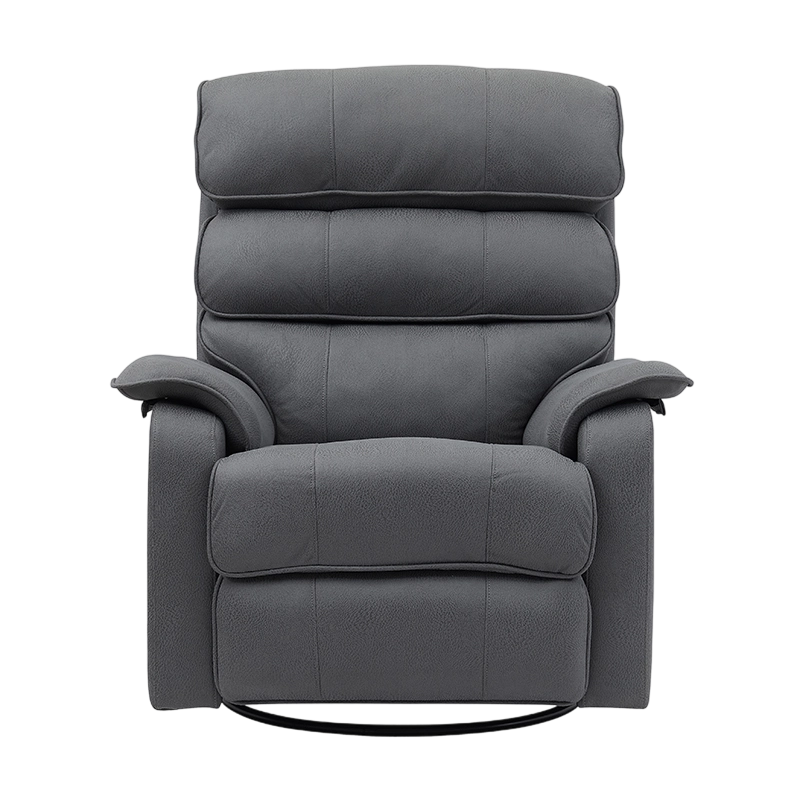
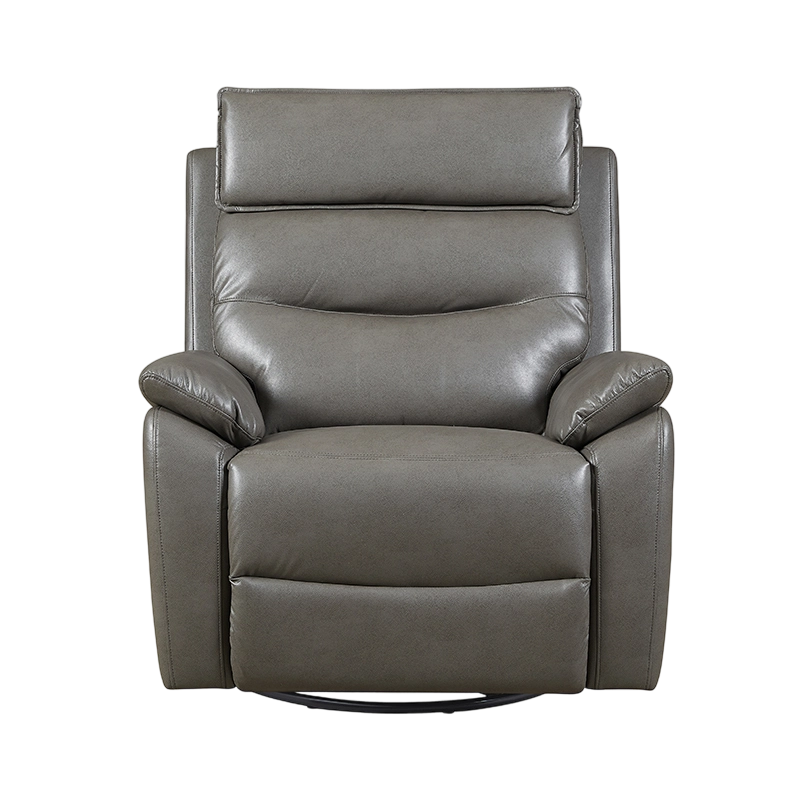
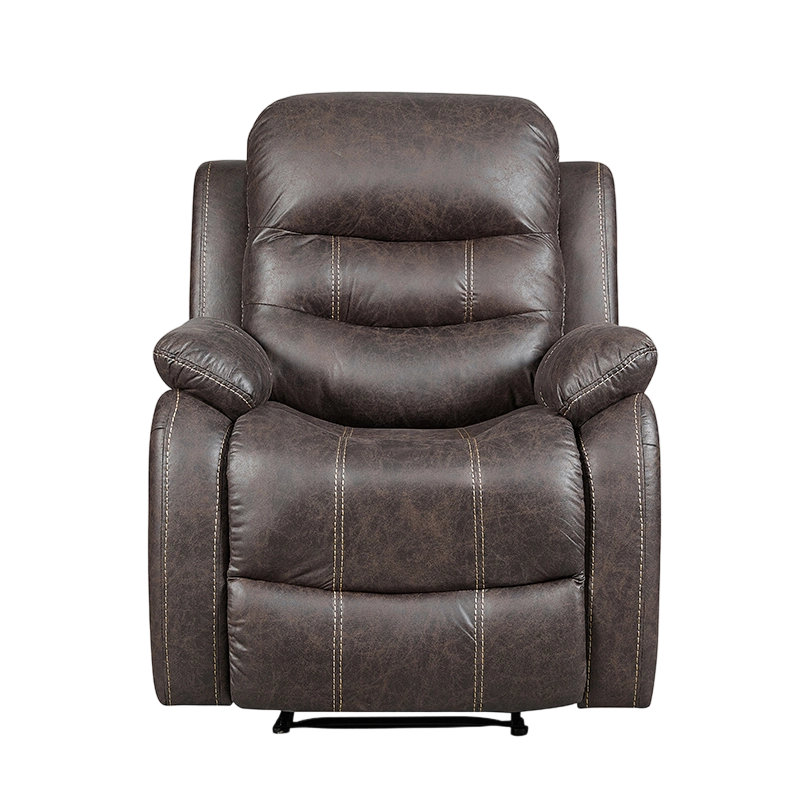
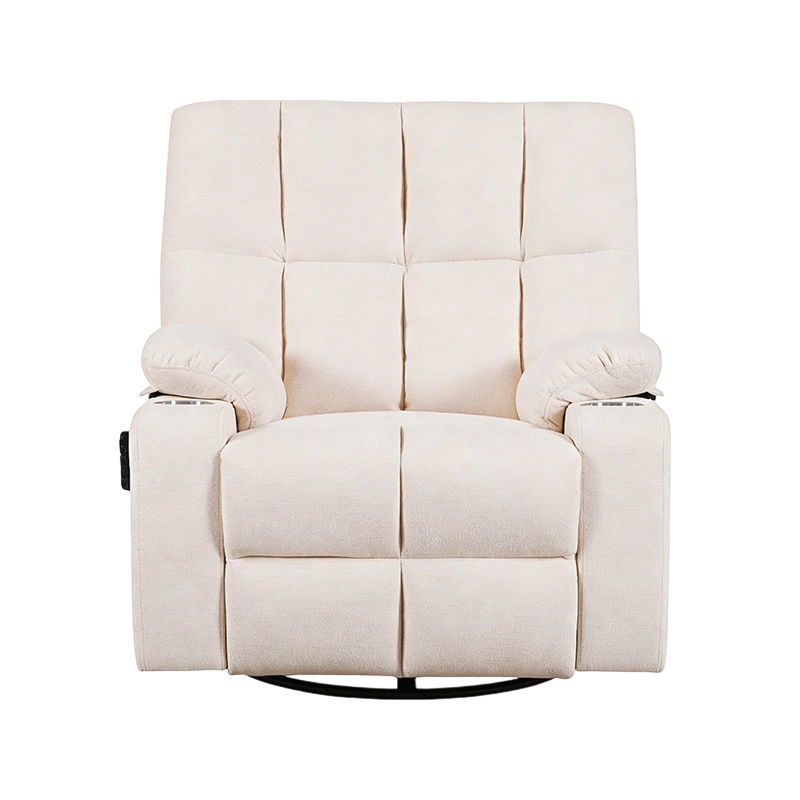
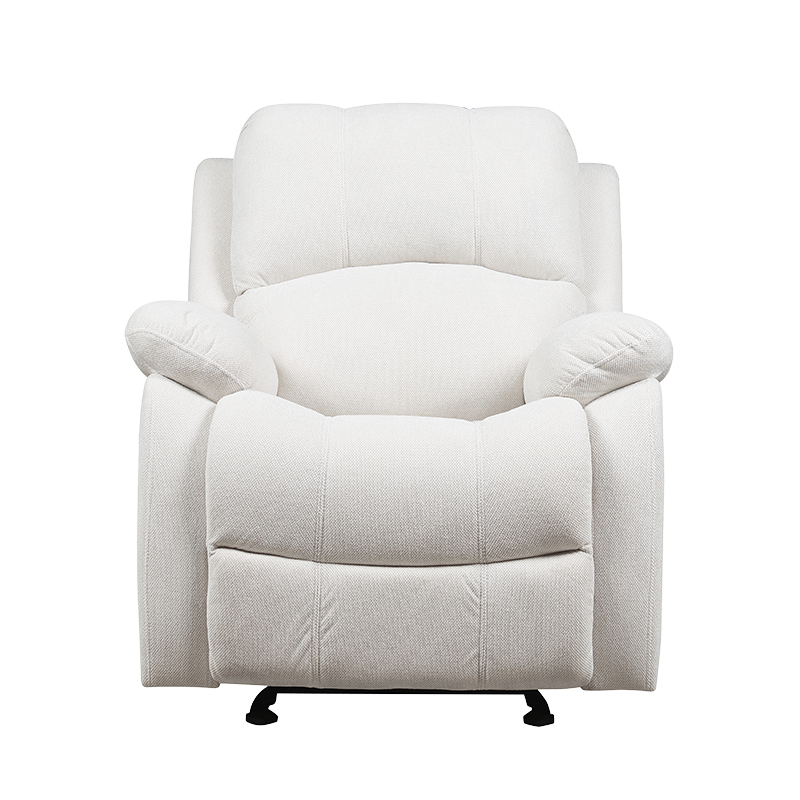
- 28 Product: 39.8''Manual Recliner Chair with Swivel and Rocker
The 39.8-inch manual recliner chair with swivel and rocker function is designed for people who want more from a single seating piece: more movement, more support, more everyday usability, and more long-term value. It combines a 360-degree swivel base, a soothing rocking motion, a manual reclining mechanism, a supportive high-resilience backrest, a high-elastic sponge seat, and comfortable chenille upholstery in one versatile chair. With a width of 39.8 inches, a depth of 39 inches, a height of 38.6 inches, and a weight capacity of 350 lb, this recliner is built for residential comfort while offering the stability, customization potential, and production quality expected from a professional upholstered furniture manufacturer.
In today’s furniture market, consumers and project buyers are no longer satisfied with a chair that simply looks soft. They expect a product that performs well every day, suits different room layouts, matches interior design trends, and remains dependable after repeated use. This manual swivel rocker recliner responds to that demand by integrating multiple comfort functions into a compact and practical format. It can face the television, turn toward a family conversation, rotate toward a window view, rock gently for stress relief, and recline for full-body relaxation. Its manual pull-lever design also makes it simple to operate without dependence on power outlets, wiring, motors, or complicated controls.
This article explores the product’s functions, materials, structural advantages, manufacturing process, quality control system, customization capability, competitive strengths, care guidance, and practical value for buyers. It also explains why advanced production strength matters in upholstered seating and how a well-managed factory can deliver consistency, comfort, and market-ready design for global customers.
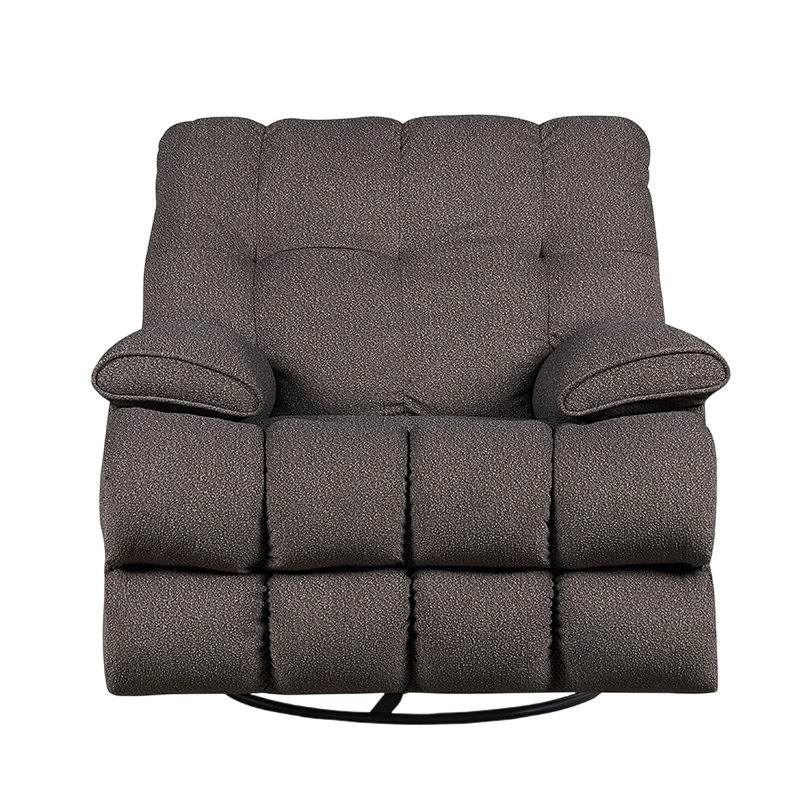
39.8''Manual Recliner Chair with Swivel and Rocker
Product Overview: A Recliner Designed for Everyday Flexibility
The chair is a manual recliner categorized under manual reclining seating, while also fitting naturally into the wider family of recliner sofas, leisure chairs, love seat companions, and living room accent seating. Its core purpose is to create a comfortable single-seat experience that can adapt to different moments throughout the day. In the morning, it can serve as a relaxed reading chair. In the afternoon, it can become a gentle rocker for resting. In the evening, it can swivel toward a television or conversation area. On weekends, it can recline into a comfortable position for movies, music, or quiet personal time.
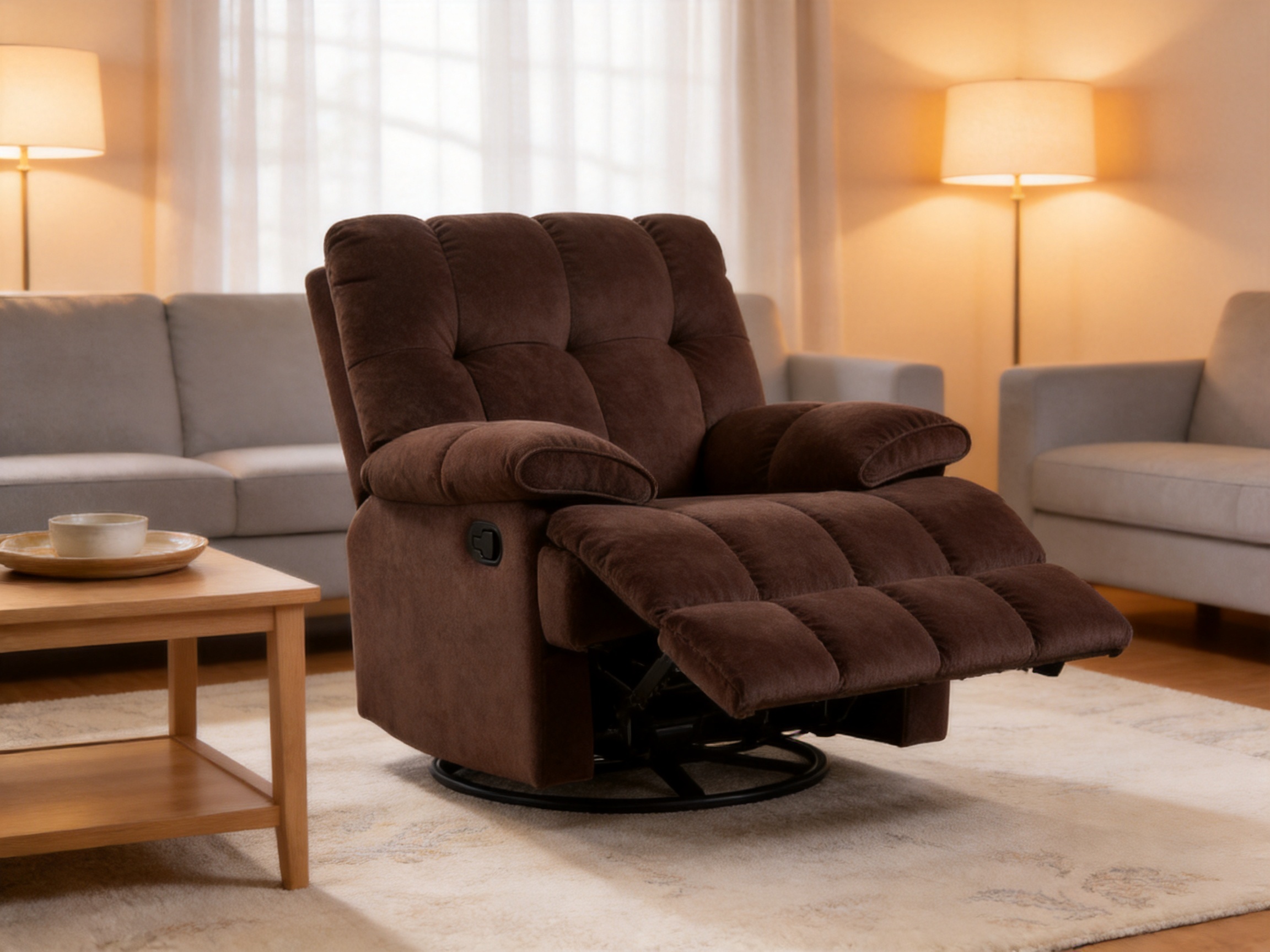
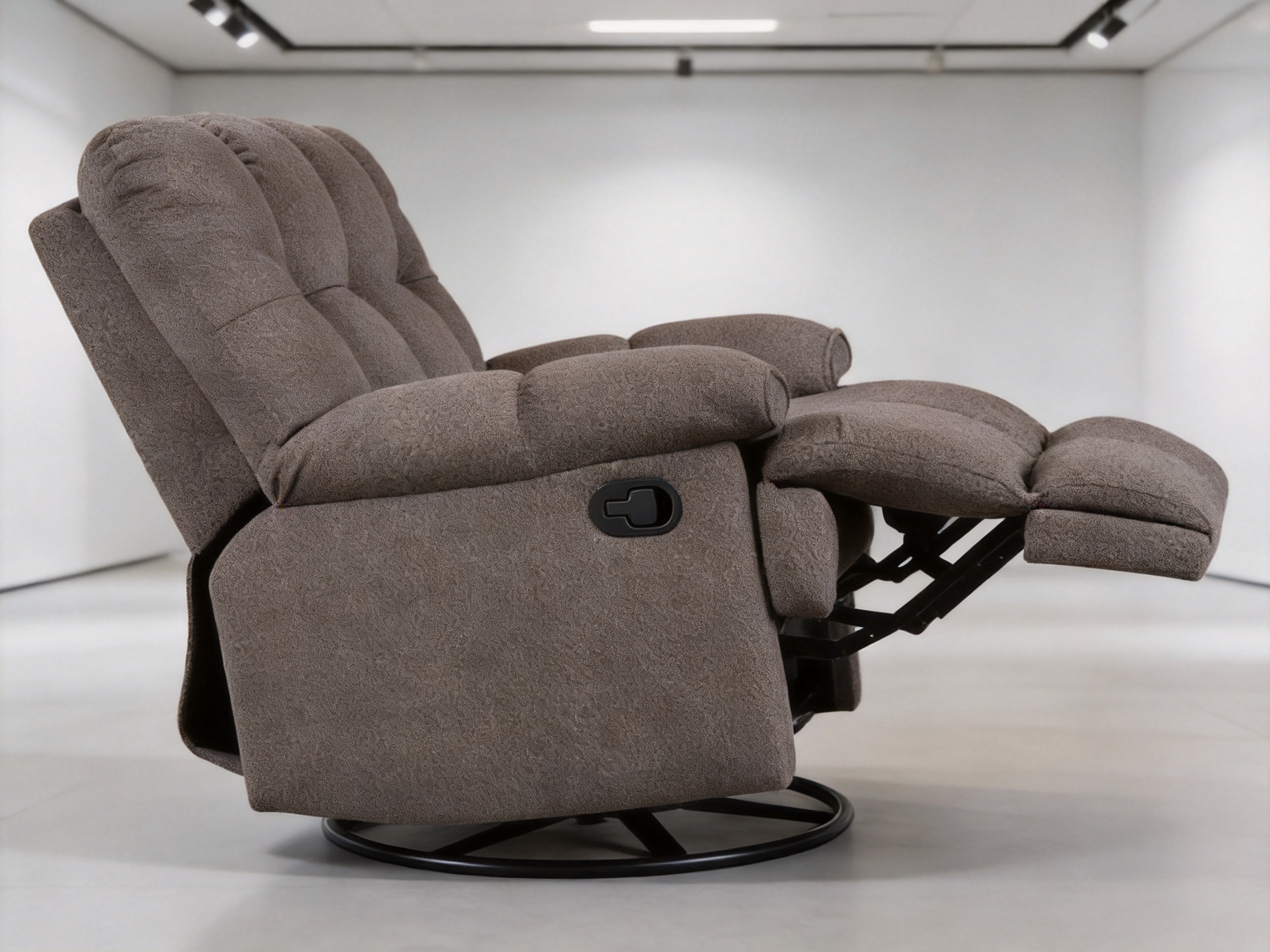
The product’s most notable functions include 360-degree swivel movement, rocker motion, manual reclining operation, and an adjustable backrest angle from approximately 120 degrees to 150 degrees. These features allow the chair to support several sitting postures rather than forcing the user into one fixed position. The footrest opens smoothly through the pull-lever mechanism, giving the legs a supported position when the user wants to stretch out. When the footrest needs to be retracted, the recommended method is to sit forward, lean slightly forward, and press the heels against the middle of the footrest. This method is more labor-saving and helps users close the footrest correctly.
The chair is upholstered in comfortable chenille material, selected for a soft tactile feel and warm residential appearance. The sample color is chocolate, a deep and practical tone that works well in many interiors. However, custom colors and fabrics are supported, which is especially important for distributors, furniture retailers, online sellers, interior project buyers, and private-label customers who need product lines tailored to specific markets.
The internal structure uses a sturdy iron frame, supporting dependable movement and load-bearing performance. The backrest uses high-resilience foam, while the seat uses high-elastic sponge. These cushioning choices are important because they determine not only first-touch softness but also long-term sitting support. The armrests are overstuffed and extended, providing a fuller area for the arms and helping the recliner deliver a more enveloping feeling of comfort.
Key Product Specifications
| Feature | Specification | Practical Benefit |
|---|---|---|
| Product Type | Manual recliner chair with swivel and rocker | Combines multiple comfort functions in one seating product |
| Dimensions | 39.8W x 39D x 38.6H inches | Spacious single-seat comfort suitable for living rooms and lounges |
| Reclining Range | Backrest adjustable from about 120 degrees to 150 degrees | Supports reading, relaxing, watching TV, and resting positions |
| Swivel Function | 360-degree rotation | Allows easy orientation toward different areas of a room |
| Rocker Function | Gentle rocking motion | Helps create a relaxing and soothing sitting experience |
| Frame | Sturdy iron frame | Provides reliable structural support and motion stability |
| Upholstery | Chenille fabric, chocolate color sample | Soft touch, warm visual texture, customizable appearance |
| Cushioning | High-resilience foam backrest and high-elastic sponge seat | Balances softness, support, and recovery performance |
| Armrests | Overstuffed and extended | Improves arm support and overall comfort |
| Weight Capacity | 350 lb | Designed for dependable everyday residential use |
| Customization | Custom colors and fabrics supported | Enables market-specific and project-specific product development |
Why a Manual Recliner Still Matters in a Power-Driven Market
Power recliners have become popular, but manual recliners continue to hold strong value for many customers. A manual reclining system avoids dependence on electrical components, which means it does not require a nearby outlet and does not add motor noise, power cables, control boxes, or electronic repair concerns. For many homes, apartments, rental properties, lounges, and retail markets, this simplicity is a major advantage.
The manual pull-lever mechanism used in this chair is straightforward. The user pulls the lever, and the footrest opens smoothly. The backrest can then move within a relaxed reclining range, allowing the user to choose a comfortable position. Because the chair does not rely on a motor, it can be placed more freely in a room. This is helpful in open-plan living spaces, bedrooms, reading corners, home theaters, nursery rooms, and compact apartments where outlet location may limit furniture placement.
Compared with some low-cost power recliners, a well-built manual recliner can also reduce the risk of electrical failure. A motorized chair may be attractive, but if the motor, control button, wiring, or adapter fails, the user experience is interrupted. A manual system is more direct. It is also often easier for retailers and distributors to explain, demonstrate, package, and service. For buyers seeking practical comfort with less complexity, manual reclining remains a smart category.
This product does not ask the user to choose between practicality and comfort. It keeps the reliable simplicity of manual operation while adding the swivel and rocker features that many fixed recliners lack. That combination gives it a strong competitive position: it is more versatile than a basic stationary recliner and less complex than a full power recliner.
360-Degree Swivel: Freedom in Real Living Spaces
One of the major selling points of this chair is its 360-degree swivel function. In modern homes, seating is rarely used in only one direction. A living room may have a television on one wall, a sofa on another side, a window view behind the chair, and a kitchen or dining area nearby. A fixed chair requires the user to twist the body or move the chair. A swivel chair allows the user to rotate smoothly instead.
This function improves daily convenience. A person can turn toward the television during a movie, rotate toward family members during conversation, face a coffee table when drinking tea, or turn toward natural light when reading. In a nursery or bedroom, the swivel function also makes it easier to reach nearby items without standing up repeatedly. In a lounge area, it makes the chair feel interactive rather than isolated.
Many competitor recliners provide reclining function only. Some offer rocking, but not swivel. Others swivel but lack a comfortable reclining backrest. This product’s advantage lies in combining the key movement functions into one chair. The 360-degree rotation adds spatial flexibility, while the rocker and reclining functions add physical relaxation. For end users, that means the product feels useful in more situations, increasing perceived value and long-term satisfaction.
Gentle Rocking for Stress Relief and Comfort
The rocking function gives the chair a soothing personality. Gentle motion has long been associated with relaxation, rest, and comfort. A rocker recliner is useful for people who enjoy subtle movement while reading, watching shows, listening to music, or taking a short break. It can also be attractive for family rooms and nursery spaces where a calm seating experience is valued.
Unlike a separate rocking chair, this product does not limit the user to only one function. It provides rocking when the user wants movement, reclining when the user wants a more stretched posture, and swivel when the user wants directional flexibility. That multifunctional experience can reduce the need for multiple chairs in one room. A single recliner can perform the role of a lounge chair, reading chair, rocker, and television chair.
From a competitive standpoint, this is important because furniture buyers increasingly evaluate products based on functional density. A chair that does only one thing may be easier to manufacture, but it may not stand out in a crowded market. A chair that offers several well-integrated functions can appeal to a broader range of consumers. The key is not simply adding features, but ensuring that those features feel natural and reliable in daily use. The sturdy iron frame and carefully assembled mechanism help support that goal.
Reclining Range from 120 to 150 Degrees
The backrest angle can be adjusted from approximately 120 degrees to 150 degrees. This range is well suited for leisure sitting because it covers common relaxation postures without turning the chair into a bed-like product. Around 120 degrees, the user can remain relatively upright for television watching, conversation, and reading. As the angle increases, the position becomes more restful, supporting movie nights, weekend relaxation, or a comfortable pause after work.
A good recliner should not force every user into the same angle. Different people have different preferences based on height, body shape, activity, and comfort needs. The adjustable backrest gives users the ability to find their preferred position. When paired with the footrest, the chair helps distribute body weight more comfortably and reduces the feeling of pressure on the legs during extended sitting.
Some lower-grade recliners may have limited reclining angles, stiff mechanisms, or unstable support at intermediate positions. This chair is designed to provide a smoother transition and practical angle range. The manual lever opens the footrest smoothly, while the backrest adjustment allows the user to settle into a comfortable posture. This balance between control and comfort is one of the reasons the product can be positioned as a practical upgrade over basic recliner chairs.
Chenille Upholstery: Soft Touch and Warm Visual Appeal
The chair uses comfortable chenille material, shown in a chocolate color. Chenille is widely appreciated in residential seating because of its soft surface and textured appearance. It can make a recliner feel warmer and more inviting than flatter fabrics. A recliner is a product that people touch frequently, so upholstery hand-feel matters as much as appearance. A pleasant fabric can improve the user’s first impression in a showroom and the long-term experience at home.
The chocolate tone is practical because it coordinates with many interior styles. It can pair with wood furniture, neutral carpets, warm lighting, leather-look décor, beige walls, gray sofas, or darker accent pieces. It is also a forgiving color for everyday family use. However, the product is not limited to chocolate. Custom colors and fabrics are supported, allowing buyers to develop versions for different regional markets and design trends.
Customization is a serious advantage in the upholstered furniture industry. Retailers may need one color palette for North America, another for Europe, and another for the Middle East. Online sellers may prefer neutral colors that photograph well and fit broad consumer demand. Project buyers may need fabrics that match a design specification. The ability to support custom upholstery helps the chair become a flexible platform rather than a single fixed item.
Fabric care is also important. The recommended care method is to clean with dry cleaning solvent only, avoid saturating the fabric with water, and brush pile fabrics when necessary to restore appearance. These instructions help maintain the upholstery’s texture and reduce the risk of damage from improper cleaning. For retailers, clear care guidance reduces after-sales confusion. For end users, it protects product appearance over time.
High-Resilience Foam and High-Elastic Sponge for Balanced Support
Comfort is not only about softness. A chair that feels soft for the first five minutes but collapses after longer sitting is not truly comfortable. Good seating needs a balance of softness, resilience, and support. This recliner uses high-resilience foam in the backrest and high-elastic sponge in the seat, creating a supportive sitting experience that can recover after pressure.
The backrest must support the shoulders, upper back, and lower back while allowing a relaxed reclining posture. High-resilience foam helps the backrest feel cushioned without becoming flat too quickly. The seat cushion carries most of the user’s body weight, so high-elastic sponge is important for supportive compression and rebound. When foam quality is controlled in production, the chair can maintain a more consistent comfort feel across batches.
Competitor products sometimes rely on low-density cushioning to reduce cost. Such products may look full in photos but lose shape quickly in real use. The difference becomes clear after repeated sitting, reclining, and standing. A well-cushioned recliner should continue to feel supportive, not hollow or uneven. By emphasizing high-resilience and high-elastic cushioning, this product offers a stronger comfort foundation.
The overstuffed and extended armrests further enhance the sitting experience. They give the arms a broad, padded resting area and add to the chair’s enveloping feel. Arm comfort is often overlooked, but it strongly affects relaxation during reading, television watching, and long conversations. A narrow or under-padded armrest can make a recliner feel less premium. This chair’s fuller arm design helps differentiate it from thinner, cost-cut competitors.
Sturdy Iron Frame for Stability and Long-Term Use
The frame is one of the most important parts of a recliner, even though it is hidden under upholstery. Recliners are more demanding than fixed chairs because they involve moving parts, shifting body weight, rocking movement, swivel rotation, and repeated opening and closing of the footrest. A weak structure can lead to instability, noise, misalignment, or shortened service life. This product uses a sturdy iron frame to provide reliable support for its motion functions.
An iron frame is especially valuable in a swivel rocker recliner because the chair must remain stable while rotating and rocking. The frame must handle dynamic load, not only static sitting weight. With a 350 lb weight capacity, the chair is designed for dependable everyday residential use. This capacity also gives retailers a clear specification to present to consumers who care about strength and safety.
Many inexpensive recliners compete mainly on appearance. They may use attractive fabric and thick-looking cushions but compromise on internal construction. Such shortcuts can result in customer dissatisfaction after purchase. A manufacturer focused on quality understands that internal durability is part of brand reputation, even if buyers cannot see it immediately. The sturdy frame, controlled mechanism assembly, and multi-stage inspection process are therefore central to the product’s real value.
Comfort That Fits Multiple Rooms and Lifestyles
This chair is suitable for a wide range of residential and light lounge environments. In a living room, it can serve as a main relaxation chair beside a sofa or sectional. In a media room, it can function as a movie-watching seat with footrest support and adjustable reclining. In a bedroom, it can create a private reading or resting corner. In a study, it can be a comfortable break chair. In a nursery, the swivel and rocker functions can provide useful gentle movement. In a senior-friendly sitting area, the manual operation and stable seating can support everyday comfort, provided users are able to operate the lever and footrest safely.
The chair’s 39.8-inch width gives it a generous presence without making it as large as a full recliner sofa. This size can make it attractive for homes that need a substantial single-seat recliner but do not have space for a large sectional or love seat. Its multifunctional design also means it can replace several narrower-use seating pieces. Instead of buying a fixed accent chair, a separate rocker, and a reclining lounge chair, a consumer can choose one product that covers multiple needs.
For distributors and furniture stores, this broad usability makes the chair easier to position. It is not limited to one age group or one interior style. It can be sold as a family room recliner, a home theater chair, a reading chair, a comfort chair, or a customizable upholstered leisure chair. Its chocolate chenille version offers a warm and classic appearance, while customized colors can make it modern, transitional, farmhouse-inspired, or market-specific.
Advantages Over Common Competitor Recliners
The recliner market includes many products that appear similar at first glance. However, detailed comparison reveals meaningful differences. This chair stands out because it integrates several comfort and quality elements rather than focusing on only one selling point.
First, it combines swivel, rocking, and reclining in one chair. Many competitor products provide only a fixed recline, while others may rock but do not rotate. The 360-degree swivel makes the chair more adaptable to real room layouts, while the rocker adds a relaxation function that fixed recliners cannot offer.
Second, the manual mechanism offers practical reliability. Compared with power recliners, it avoids electrical dependence and can be placed more freely. It is also simpler for customers who prefer direct operation. While power chairs have their own market, many buyers appreciate a manual recliner that does not require cords, outlets, or electronic troubleshooting.
Third, the chair uses a sturdy iron frame. In a product category where hidden construction determines long-term satisfaction, frame strength is a key advantage. The iron structure supports the chair’s dynamic movement and helps deliver stable performance.
Fourth, the cushioning system supports real comfort. High-resilience foam in the backrest and high-elastic sponge in the seat provide a better balance than thin or low-density cushioning. The overstuffed extended armrests enhance the feeling of full-body relaxation.
Fifth, customization capability helps the product serve different markets. Custom colors and fabrics allow buyers to adjust the product for regional preferences, retail strategies, e-commerce collections, or project needs. This is a major advantage over suppliers that offer only fixed fabrics and limited color choices.
Sixth, the chair is backed by an experienced manufacturer with integrated production advantages. Strong R&D, industrial design, frame and sponge processing support, strict quality inspection, and export experience all help reduce risk for buyers. A comfortable design is valuable, but consistent manufacturing is what turns that design into a successful product line.
Advanced Manufacturing Strength Behind the Product
A recliner is only as good as the manufacturing system behind it. Upholstered furniture production requires coordination among design, material selection, frame building, foam processing, cutting, sewing, upholstery, mechanism installation, assembly, inspection, packaging, and logistics. When these steps are poorly managed, even a good design can result in inconsistent products. When they are professionally controlled, the product can achieve repeatable quality and stable supply.
Anji Xuanbo Household Co., Ltd. is located in Anji County, Huzhou City, Zhejiang Province, an area known worldwide as the Capital of Chair Industry. The company was established in 2021 and focuses on high-quality sofas and chairs, integrating research and development, industrial design, large-scale manufacturing, independent marketing, and technical services. Its product range includes functional sofas, fixed sofas, corner sofas, lounge chairs, recliner sofas, love seats, and leisure chairs.
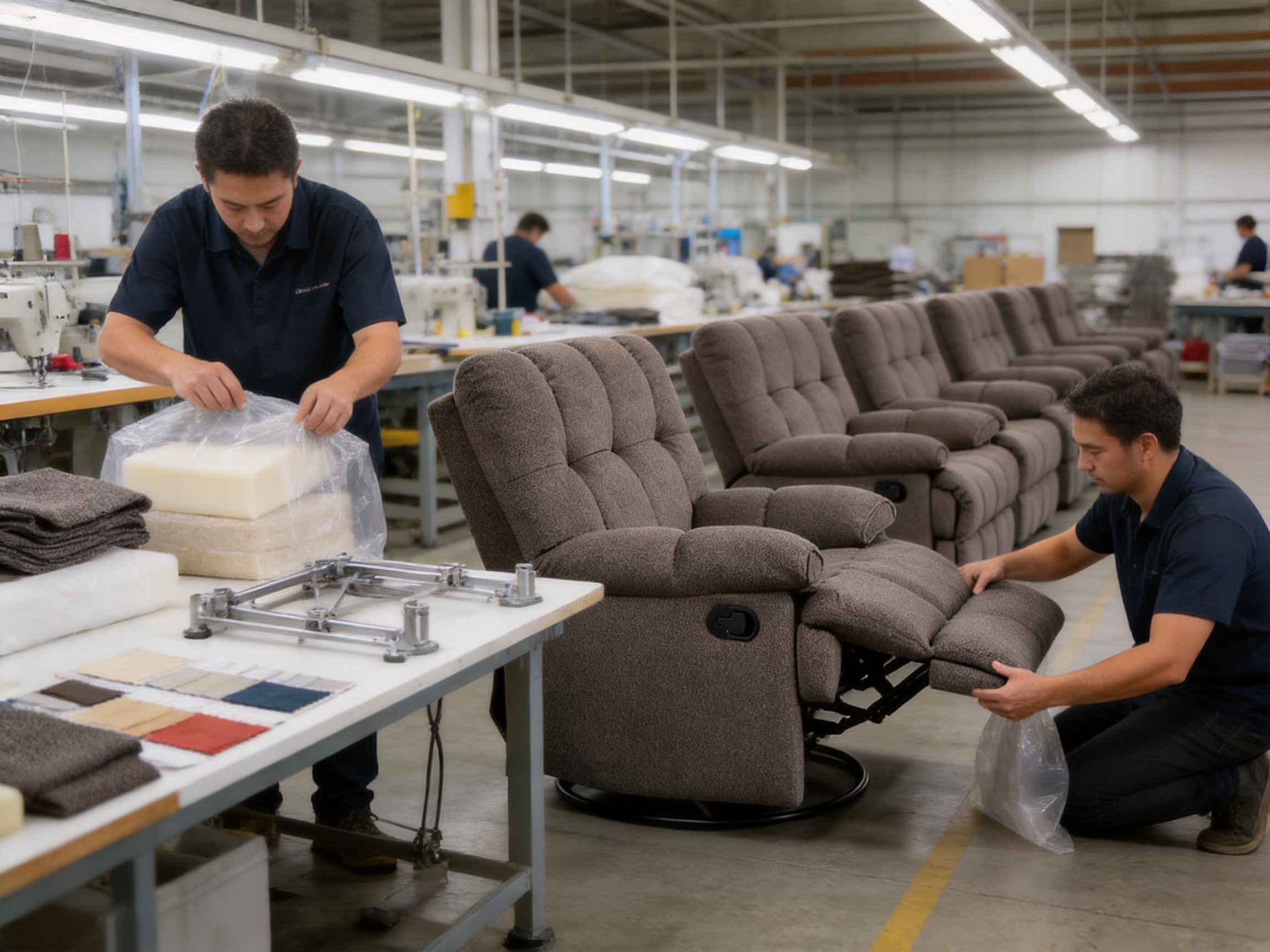
The factory covers approximately 8,000 square meters and has more than 100 employees. This scale allows the company to support batch production while maintaining flexibility for customized orders. A professional management team and manufacturing system help coordinate multiple processes, which is essential for upholstered seating because each product combines structural, soft-material, and aesthetic requirements.
One of the company’s strengths is full-chain cost and capacity control through its own wooden frame factory and sponge processing plant. Even when a product uses an iron frame, the broader manufacturing advantage remains important because it reflects integrated control over major furniture components. Sponge processing capability is especially relevant to recliners because foam quality directly affects comfort, resilience, and product consistency. Internal or closely controlled processing reduces dependence on unstable outside suppliers and helps the company respond quickly to custom requirements.
Research, Development, and Industrial Design
Product development begins with understanding user behavior and market demand. A recliner must look attractive, but it must also solve practical comfort problems. The design team considers seat width, backrest angle, armrest volume, cushion feel, upholstery style, mechanism placement, packaging feasibility, and cost efficiency. For a swivel rocker recliner, designers must also account for the relationship between movement functions and the chair’s center of gravity.
Research and development strength gives the manufacturer the ability to refine products rather than simply copy existing models. This matters in competitive markets where many recliners look similar. Small improvements in armrest shape, cushion layering, fabric choice, backrest support, or mechanism smoothness can make a significant difference in user satisfaction. Industrial design also affects production efficiency. A chair that is well designed for manufacturing can be assembled more consistently and packaged more safely.
For private-label buyers and importers, R&D capability supports product differentiation. A customer may want the same core function but a different fabric, color, stitching style, cushion profile, or market-specific detail. A manufacturer with design and technical service capability can evaluate whether these changes are feasible and how they affect cost, lead time, packaging, and compliance expectations.
Material Preparation and Component Control
Before assembly begins, materials must be selected, checked, and prepared. Upholstery fabric should meet appearance and handling requirements. Foam and sponge should be processed to the correct size, thickness, and comfort specification. Metal components and mechanisms should be inspected for structural integrity and smooth function. Thread, fasteners, filling material, and packaging materials must also be prepared according to production requirements.
In recliner production, small material inconsistencies can become noticeable in the finished chair. If foam density varies too much, one chair may feel firmer than another. If fabric cutting is inaccurate, seams may not align properly. If mechanism components are not stable, the reclining action may feel uneven. A strong manufacturing system controls these risks through standardized preparation and inspection.
The company’s capacity control and sponge processing advantages are particularly important here. Cushioning is central to the product experience. A chair can have a strong frame and good mechanism, but if the foam loses shape quickly, customers will not be satisfied. By controlling sponge processing more closely, the manufacturer can support stable seat comfort and respond to custom firmness or market preference requests.
Frame, Mechanism, and Structural Assembly
The structural stage is where the chair’s hidden strength is created. For this recliner, the sturdy iron frame supports the swivel, rocker, and reclining functions. The mechanism must be installed accurately so the footrest opens smoothly and the backrest movement feels comfortable. The swivel base must rotate properly, and the rocking function must remain controlled and stable.
Structural assembly requires trained workers and process discipline. Fasteners must be tightened correctly. Moving parts must align properly. The chair must be checked for balance, noise, and smooth motion. Because this product includes multiple motion functions, assembly accuracy is especially important. A fixed chair may tolerate slight structural variation more easily, but a swivel rocker recliner demands higher precision.
Compared with competitors that rely on low-cost assembly without strict process control, a professionally assembled recliner provides a better user experience. Smooth motion creates an immediate impression of quality. Stable rocking and swivel action make the chair feel secure. A well-installed manual reclining mechanism reduces frustration and improves confidence in daily use.
Cutting, Sewing, and Upholstery Craftsmanship
The visible quality of a recliner is shaped by cutting, sewing, and upholstery work. Chenille fabric must be cut according to pattern requirements, with attention to direction, texture, and consistency. Sewing must create strong seams and clean lines. Upholstery workers then apply the sewn cover over the cushioned structure, shaping the chair’s final appearance.
Good upholstery craftsmanship matters because a recliner has many curved and padded areas. The backrest, seat, arms, side panels, and footrest must all look full and balanced. Wrinkles, uneven seams, loose fabric, or misaligned panels can reduce perceived value even if the chair is structurally sound. Overstuffed armrests also require careful shaping so they look generous rather than bulky or uneven.
For custom colors and fabrics, upholstery control becomes even more important. Different fabrics behave differently during cutting, sewing, stretching, and fitting. Some have more pile direction, some are thicker, some are more elastic, and some show seam tension more clearly. A manufacturer with upholstery experience can adjust methods according to material characteristics, helping buyers achieve the desired look without sacrificing production consistency.
Multi-Stage Quality Inspection
Quality inspection should not occur only at the end of production. It should be integrated throughout the process. For a recliner chair, inspection may include material checks, frame checks, mechanism operation checks, sewing checks, upholstery appearance checks, dimension checks, function checks, load-related checks, and final packaging checks. Multi-stage inspection helps detect problems early, reducing waste and improving finished product reliability.
The chair’s key functions should be tested before shipment. The footrest should open smoothly with the manual lever. The recommended closing method should be practical and effective. The backrest should move within the expected range. The swivel function should rotate properly. The rocker function should feel stable. The upholstery should be clean and well fitted. The chair should meet the specified dimensions and visual standard.
Strict quality control is a major advantage for export furniture. International buyers need products that arrive in sellable condition and perform consistently for consumers. A single batch with poor quality can damage retailer trust, increase returns, and create after-sales costs. By implementing multi-stage quality inspection, the manufacturer supports stable long-term cooperation and reduces buyer risk.
Packaging and Export Logistics
Packaging is an often-overlooked part of furniture quality. A well-made recliner still needs to survive handling, warehousing, container loading, ocean transportation, unloading, and final delivery. Packaging design must protect the upholstery, frame, mechanism, corners, and moving parts. It must also consider carton strength, space efficiency, labeling, and assembly instructions where applicable.
The company benefits from convenient export logistics near Ningbo Beilun Port, one of the major advantages for international furniture supply. Efficient logistics can help reduce transportation complexity and improve shipping reliability. For overseas importers, stable logistics support is nearly as important as production capability because delayed or damaged shipments can disrupt sales plans.
Export experience also means understanding documentation, market requirements, packaging expectations, and customer communication. The company exports products to North America, Europe, the Middle East, and other regions, giving it insight into different consumer preferences and buyer standards. This international market experience supports better product development and smoother cooperation.
Customization for Retailers, Importers, and Project Buyers
Customization is one of the strongest commercial advantages of this recliner. The sample is chocolate chenille, but buyers can request custom colors and fabrics. This allows the same core chair to be adapted for different selling environments. A retailer may want warm neutral tones for a traditional collection, cool gray fabric for a modern collection, or lighter upholstery for a Scandinavian-inspired range. A project buyer may need a specific fabric texture to match a design concept.
Customization can also support brand differentiation. In a competitive online furniture market, many products look similar. A custom fabric, unique color, or refined detail can help a seller create a more distinctive listing. For brick-and-mortar stores, exclusive colorways can prevent direct price comparison with competitors. For importers, customization helps align the product with local taste and seasonal trends.
However, customization is only valuable when the manufacturer can control production. Fabric changes can affect cutting, sewing, upholstery fit, cost, lead time, and quality inspection. A supplier without enough technical experience may accept customization but struggle to deliver consistent results. The company’s integrated manufacturing, R&D support, and process management make customization more reliable and commercially useful.
Practical Use and Footrest Operation Guidance
For the best user experience, the chair should be placed on a level floor with enough surrounding clearance for rocking, swiveling, and reclining. Users should sit fully back in the chair before reclining and avoid forcing the mechanism. The pull lever should be used smoothly to open the footrest. When retracting the footrest, the recommended labor-saving method is to sit forward, lean forward slightly, and use the heels to press against the middle of the footrest. This helps close the footrest correctly and safely.
Clear operation guidance improves customer satisfaction. Some users are unfamiliar with manual recliners and may try to close the footrest from an awkward position. Providing simple instructions helps prevent frustration and unnecessary pressure on the mechanism. Retailers can include this guidance in product pages, manuals, or after-sales communication.
Because the chair includes moving functions, users should avoid allowing children to play with the mechanism unsupervised. They should also keep hands, feet, and loose objects away from moving parts during operation. Such precautions are standard for reclining furniture and help ensure safe everyday use.
Fabric Care and Long-Term Appearance
Proper care helps preserve the chair’s appearance. The recommended fabric care method is to clean with dry cleaning solvent only. Users should not saturate the fabric with water, as excessive moisture may affect upholstery appearance, internal materials, or fabric texture. Pile fabrics may require brushing to restore their appearance, especially after pressure, sitting, or cleaning.
Regular light maintenance can make a major difference. Users can vacuum gently with an upholstery attachment to remove dust and debris. Spills should be addressed promptly according to the recommended care instructions. The chair should be kept away from prolonged direct sunlight where possible, as strong sunlight may affect fabric color over time. It should also be positioned away from excessive moisture or heat sources.
For retailers, providing fabric care guidance helps set realistic expectations. Upholstered furniture is a long-term household item, and users who understand proper care are more likely to remain satisfied. Clear instructions also support the product’s premium positioning by showing that the manufacturer considers the full ownership experience, not just the initial sale.
Market Positioning and Sales Value
This recliner is positioned as a multifunctional manual comfort chair with custom upholstery potential. It is not merely a low-cost seat, and it is not an overly complicated electric recliner. Its value lies in the middle ground where comfort, movement, reliability, and customization meet. That position is attractive because it serves a wide customer base.
For consumers, the chair offers a comfortable place to relax without requiring a large sofa or powered system. For retailers, it offers multiple selling points that can be explained easily: swivel, rocker, recline, soft chenille, sturdy frame, generous arms, supportive cushioning, and 350 lb capacity. For importers, it offers customization and manufacturing support. For project buyers, it offers adaptable style and practical comfort.
The product can be marketed through lifestyle scenes such as movie night, weekend reading, afternoon rest, family conversation, and quiet personal time. Its chocolate chenille version can be styled in warm homes, rustic modern interiors, transitional living rooms, and cozy lounge settings. Custom fabrics can extend the product into more contemporary or region-specific collections.
Company Strengths That Support Long-Term Cooperation
Reliable furniture sourcing requires more than choosing an attractive product. Buyers need a manufacturer capable of consistent quality, stable capacity, responsive customization, and dependable communication. Anji Xuanbo Household Co., Ltd. brings together several strengths that support long-term cooperation.
The company has a professional management team and comprehensive manufacturing strength. Its factory scale of about 8,000 square meters and workforce of more than 100 employees provide a solid production foundation. Its integration of R&D, industrial design, manufacturing, marketing, and technical service allows it to support customers from product development through delivery.
The company’s own wooden frame factory and sponge processing plant contribute to full-chain cost and capacity control. This helps improve responsiveness and supports stable component supply. Strong customization capability allows the company to adapt products to customer requirements. Strict multi-stage quality inspection helps ensure that products comply with buyer expectations. International market experience supports exports to North America, Europe, the Middle East, and other regions.
The company’s philosophy emphasizes quality as a mission, development through service, honesty, practicality, and continuous improvement. These values are important in furniture manufacturing because successful cooperation depends on trust. Importers and retailers need confidence that specifications will be followed, problems will be addressed, and production quality will remain stable across orders.
Why Manufacturing Process Matters to the End User
Consumers may not see the factory process, but they feel its results every day. A well-designed frame affects stability when the chair rocks. Good mechanism installation affects how smoothly the footrest opens. Quality foam affects how the seat feels after months of use. Accurate sewing affects how the chair looks in the living room. Proper packaging affects whether the product arrives without damage. Each manufacturing step becomes part of the user experience.
This is why the chair’s advantages should not be described only in terms of surface comfort. Its real value comes from the combination of thoughtful design and controlled production. A recliner is a mechanical, structural, and upholstered product at the same time. It must move, support weight, feel soft, look attractive, and remain reliable. Achieving all of these outcomes requires manufacturing discipline.
Compared with competitors that focus mainly on price, a manufacturer with stronger process control can deliver better long-term satisfaction. Lower-cost alternatives may reduce material quality, simplify inspection, or limit customization. Such shortcuts may produce an attractive initial price but create hidden costs through returns, complaints, and shorter product life. This recliner’s balanced emphasis on function, comfort, structure, and production quality gives it a more sustainable value proposition.
Frequently Asked Questions
What type of chair is this?
It is a 39.8-inch manual recliner chair with 360-degree swivel, rocker motion, pull-lever footrest operation, and an adjustable reclining backrest. It is designed for living rooms, bedrooms, lounges, reading corners, media rooms, and other residential relaxation spaces.
Does the chair need electricity?
No. The chair uses a manual reclining mechanism, so it does not require a power outlet, motor, adapter, or electrical control. This makes placement more flexible and reduces dependence on electronic components.
How far does the backrest recline?
The backrest can be adjusted from approximately 120 degrees to 150 degrees, supporting upright relaxation, television watching, reading, and more reclined resting positions.
Can the chair swivel completely around?
Yes. The chair supports 360-degree swivel movement, allowing the user to turn toward the television, family members, a window view, or another area of the room without moving the entire chair.
Does it rock?
Yes. The chair includes a gentle rocker function, making it suitable for relaxed sitting, reading, resting, or creating a soothing motion experience.
What material is used for the upholstery?
The chair uses comfortable chenille material. The sample color is chocolate, and custom colors and fabrics are supported for buyers who need different styles or market-specific versions.
What is the weight capacity?
The chair has a weight capacity of 350 lb, supported by a sturdy iron frame designed for dependable everyday use.
What are the product dimensions?
The chair measures 39.8 inches wide, 39 inches deep, and 38.6 inches high. This gives it generous single-seat comfort while keeping it practical for many room layouts.
How should the footrest be closed?
The recommended method is to sit forward, lean forward slightly, and use the heels to press against the middle of the footrest. This is a more labor-saving way to retract the footrest correctly.
How should the fabric be cleaned?
The fabric should be cleaned with dry cleaning solvent only. Do not saturate it with water. Pile fabrics may require brushing to restore their appearance.
What makes this recliner different from many competitor products?
It combines swivel, rocker, and reclining functions in one manual chair. It also features a sturdy iron frame, high-resilience foam backrest, high-elastic sponge seat, overstuffed extended armrests, comfortable chenille upholstery, 350 lb capacity, and customization support.
Can retailers or importers request custom versions?
Yes. Custom colors and fabrics are supported. This helps retailers, importers, and project buyers develop products suited to different markets, interior styles, and customer preferences.
Conclusion: A Multifunctional Recliner Built for Comfort and Commercial Value
The 39.8-inch manual recliner chair with swivel and rocker function is a strong example of practical modern upholstered seating. It gives users the freedom to rotate, rock, recline, stretch their legs, rest their arms, and enjoy a soft chenille surface. Its adjustable 120-to-150-degree backrest, smooth manual footrest, sturdy iron frame, high-resilience backrest foam, high-elastic sponge seat, and generous armrests work together to create a comfortable and dependable relaxation experience.
Its advantages over many competitors are clear. It offers more motion functions than basic recliners, more placement freedom than electric models, better structural confidence than low-cost alternatives, and more customization flexibility than fixed-style products. For consumers, it is a comfortable chair for daily life. For retailers and importers, it is a product with strong selling points and adaptable design potential. For project buyers, it provides a practical seating solution that can be tailored through fabric and color choices.
Behind the chair is a manufacturer with R&D capability, industrial design strength, large-scale production resources, integrated component control, sponge processing support, professional management, strict quality inspection, international export experience, and convenient logistics access. These strengths matter because upholstered recliners require precise coordination of structure, motion, cushioning, upholstery, packaging, and service.
In a furniture market filled with similar-looking products, long-term value comes from the details that users feel every day. This recliner is designed to deliver those details: smooth movement, supportive comfort, soft touch, stable structure, attractive customization, and dependable production quality. It is not just a seat; it is a flexible comfort solution for modern living.
References
Furniture Industry Research Association. Principles of Upholstered Furniture Design and Comfort Evaluation.
International Furniture Manufacturing Standards Review. Quality Control Practices for Recliner and Motion Seating Production.
Textile Care and Upholstery Maintenance Handbook. Cleaning and Maintenance Guidance for Chenille and Pile Fabrics.
Ergonomics in Residential Seating. Posture, Reclining Angles, and User Comfort in Home Furniture.
Global Upholstered Furniture Market Report. Trends in Recliner Chairs, Motion Seating, and Custom Fabric Furniture.
Product: 39.8''Manual Recliner Chair with Swivel and Rocker

LET'S TALK

Bai Shuiwan Industrial Park, Tian Huangping Town, Anji County, Huzhou City, Zhejiang Province, China
More About Us 
-
+86 18257273741
-
[email protected]
CONTACT US
Copyright © Anji Xuanbo Household Co., Ltd. All Rights Reserved.
Custom Modern Upholstered Sofa Manufacturers


