Focus on the manufacturing and export of functional sofas
-
 +86 18257273741
-
 [email protected]

 English
 Español
Liu Yiran — After-Sales Service Specialist
 Home / Author / Liu Yiran — After-Sales Service Specialist / Classic Traditional Manual Recliner Chair with Overstuffed Comfort
 Classic Traditional Manual Recliner Chair with Overstuffed Comfort
 2026.08.17
 Liu Yiran — After-Sales Service Specialist
Content
- 1 1. Product Overview
- 2 2. Traditional Design with Broad Market Appeal
- 3 3. Comfort Designed for Extended Relaxation
- 4 4. Structural Strength and Stability
- 5 5. Microfiber Upholstery and Care Requirements
- 6 6. Correct Footrest Retraction Method
- 7 7. Advantages Over Narrowly Specialized Competitors
- 8 8. Manufacturing Expertise and Integrated Production Strength
- 9 9. Manufacturing Process from Concept to Finished Chair
- 10 10. Quality Control as a Product Advantage
- 11 11. Customization and Private-Label Opportunities
- 12 12. Suitable Residential Applications
- 13 13. Commercial Purchasing and Distribution Benefits
- 14 14. Installation, Placement, and User Guidance
- 15 15. Sustainability and Resource Efficiency Considerations
- 16 16. Why the Product Is a Practical Factory-Direct Choice
- 17 17. Buying Checklist for Importers and Retailers
- 18 18. Q&A
- 18.1 Q1: What type of chair is this product?
- 18.2 Q2: Does the chair require electricity?
- 18.3 Q3: How far does the chair recline?
- 18.4 Q4: What are the product dimensions?
- 18.5 Q5: What is the weight capacity?
- 18.6 Q6: What upholstery does the chair use?
- 18.7 Q7: How should the microfiber upholstery be cleaned?
- 18.8 Q8: How should the footrest be retracted?
- 18.9 Q9: Where can the recliner be used?
- 18.10 Q10: What makes the chair different from a basic lounge chair?
- 18.11 Q11: What makes it different from an electric recliner?
- 18.12 Q12: Can buyers request a custom color?
- 18.13 Q13: Does the manufacturer produce other furniture?
- 18.14 Q14: What manufacturing capabilities support this product?
- 18.15 Q15: Is the product suitable for commercial use?
- 18.16 Q16: What should be checked before placing an international order?
- 19 19. Conclusion
- 20 References
- 21 Product: Classic and Traditional Manual Recliner Chair with Overstuffed Arms and Back
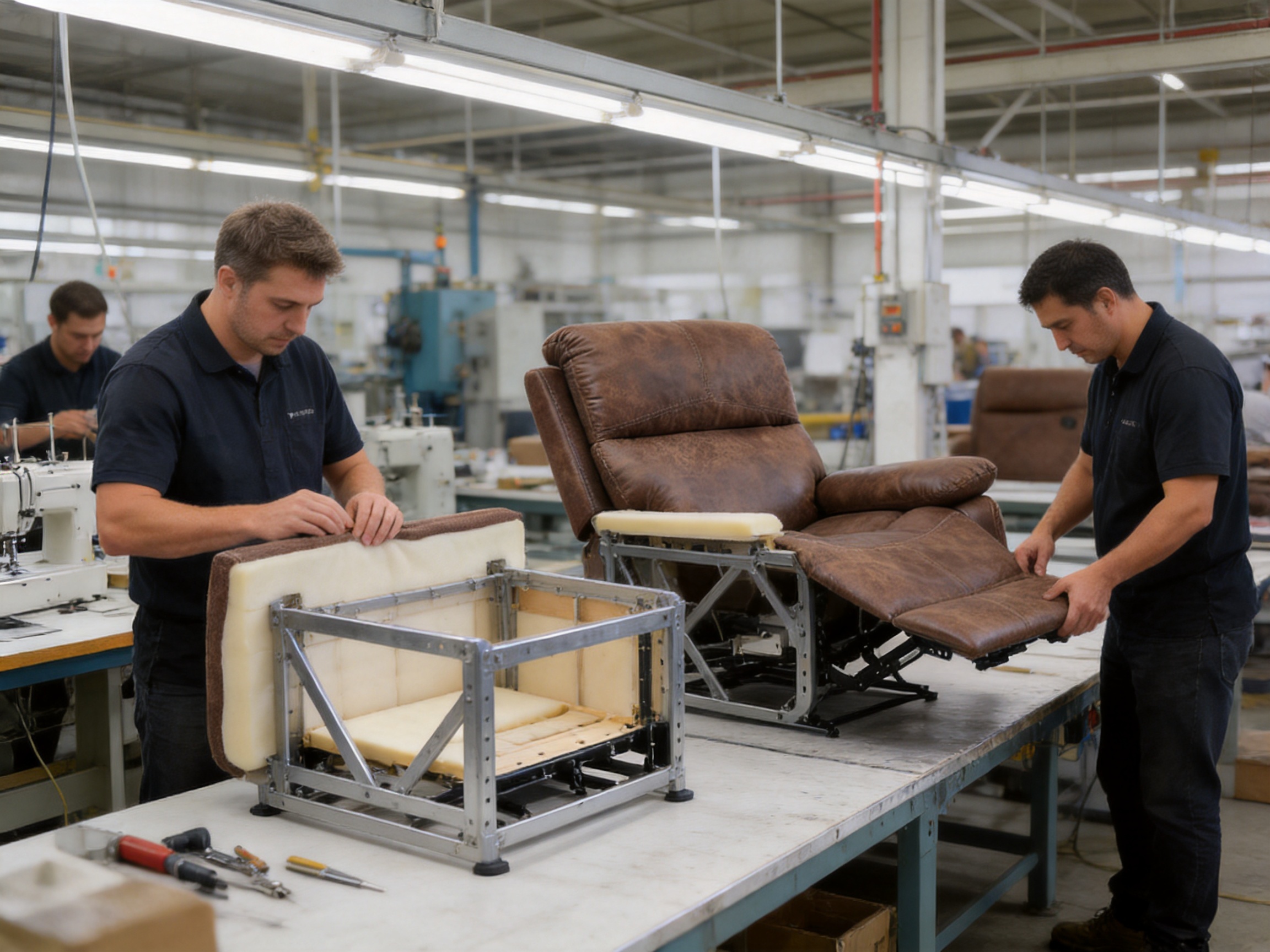
A recliner is more than an occasional seat. In a modern living space, it can become the preferred place for reading, watching television, resting after work, enjoying conversation, or taking a quiet break during a busy day. The Classic and Traditional Manual Recliner Chair with Overstuffed Arms and Back is designed around these everyday needs. It combines a familiar Americana-inspired appearance with generous cushioning, a supportive structure, a manually adjustable footrest, and a 165-degree lay-flat position.
Its design is deliberately versatile. The chair can be placed in a living room, home theater, nursery, study, bedroom, meeting room, or hospitality environment without requiring an elaborate interior scheme. The brown microfiber upholstery gives it a warm and approachable character, while the substantial arms and back create the enveloping comfort that many users expect from a traditional recliner.
Behind the visible upholstery is a heavy-duty construction intended for repeated daily use. A sturdy metal frame, steel reinforcement, supportive foam, carefully assembled upholstery, and a manually operated reclining mechanism work together to create a practical seating product. For buyers, importers, furniture retailers, hospitality purchasers, and project developers, this combination offers a balance between comfort, visual appeal, manufacturing flexibility, and long-term value.
This article examines the chair’s design, user benefits, construction, customization potential, manufacturing strengths, quality-control considerations, and suitability for different commercial and residential applications.
1. Product Overview
The product is a one-piece manual reclining chair intended for users who want adjustable leg support without the complexity of an electric mechanism. Its traditional silhouette is characterized by overstuffed arms, a cushioned backrest, a broad seat, and an integrated footrest. The manually operated structure keeps the user experience straightforward: the occupant shifts position and adjusts the footrest to achieve a preferred posture.
The chair measures approximately 32.7 inches wide, 37 inches deep, and 39.8 inches high. Its weight capacity is rated at up to 350 pounds. When fully reclined, it can reach an approximately 165-degree lay-flat position, making it suitable not only for upright sitting but also for extended relaxation and short periods of rest.
The standard finish is brown, although custom color support gives buyers an opportunity to coordinate the chair with a specific retail collection, interior project, or brand palette. The upholstery uses microfiber fabric, selected for its soft hand feel and comfortable appearance. The fabric also contributes to the chair’s cozy visual character, which is particularly suitable for domestic interiors and entertainment rooms.
| Product Feature | Specification or Benefit |
|---|---|
| Product type | Manual reclining chair |
| Quantity | One reclining chair |
| Upright and reclining use | Suitable for reading, television, conversation, and rest |
| Maximum reclining angle | Approximately 165 degrees |
| Frame construction | Sturdy metal frame with heavy-duty steel reinforcement |
| Upholstery | Soft microfiber fabric |
| Standard color | Brown, with custom color support |
| Dimensions | 32.7 inches wide by 37 inches deep by 39.8 inches high |
| Weight capacity | Up to 350 pounds |
| Style | Classic and traditional Americana-inspired design |
| Recommended locations | Living rooms, bedrooms, nurseries, studies, home theaters, and meeting rooms |
2. Traditional Design with Broad Market Appeal
Many contemporary recliners are designed around a highly specific aesthetic. Some feature pronounced modern angles, visible hardware, oversized controls, or a strongly specialized entertainment-chair appearance. Those designs can be attractive, but they may be difficult to coordinate with traditional interiors, transitional rooms, or mixed furniture collections.
This chair takes a more adaptable approach. Its overstuffed arms and rounded, supportive back create a familiar form that is easy to understand at a glance. The proportions suggest comfort without relying on excessive ornamentation. As a result, the chair can complement traditional wood furniture, transitional sofas, contemporary side tables, fabric sectionals, and practical family-room layouts.
The brown color supports this versatility. Brown is naturally compatible with warm wood tones, neutral walls, beige carpets, cream textiles, and many darker entertainment-room finishes. For manufacturers and distributors, the standard color can serve as a dependable core option, while custom colors can help create differentiated collections for particular markets.
The design also has broad demographic appeal. Older users may appreciate the familiar manual operation and supportive structure. Families may value the chair as a durable place for relaxation. Younger customers may select it for a reading corner, gaming room, nursery, or home office. Commercial purchasers can use it in waiting areas, executive rooms, hotel suites, or meeting spaces where a more residential and welcoming atmosphere is desired.
Compared with narrowly styled competitors, the traditional profile provides a practical advantage: it can be sold across multiple channels and placed in more types of rooms. A retailer does not need to position it only as a theater seat or only as a medical comfort product. It can be presented as an everyday living-room recliner, a personal reading chair, a family entertainment seat, or an attractive accent piece for a private room.
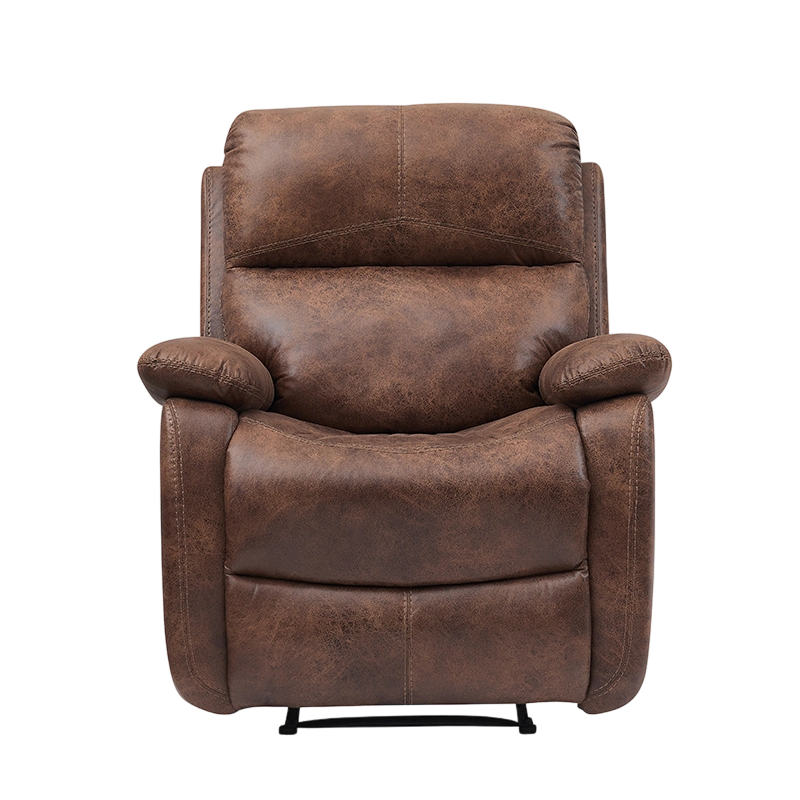
Classic and Traditional Manual Recliner Chair with Overstuffed Arms and Back
3. Comfort Designed for Extended Relaxation
The central purpose of a recliner is to help the body relax. This product addresses that purpose through several coordinated comfort features rather than relying on a single thick cushion. The overstuffed arms provide a broad resting surface for the forearms and elbows. The supportive backrest helps the upper body remain comfortably positioned in both upright and reclined modes. The seat is cushioned to provide a stable foundation while allowing the user to settle into the chair.
Overstuffed arms are particularly important in a traditional recliner because they shape the user’s perception of quality. Thin or sharply structured arms may make a chair feel formal but less inviting. In contrast, fuller arms create a sense of softness and enclosure. They also provide useful support when a user enters or exits the chair, although users should always move carefully and avoid putting excessive concentrated force on any single upholstered component.
The backrest is described as soft and supportive. This balance is valuable because an overly soft back may allow the body to sink into an unstable position, while an overly firm back may feel rigid during long periods of use. A supportive padded back can help the occupant maintain a comfortable posture for reading, watching television, or resting.
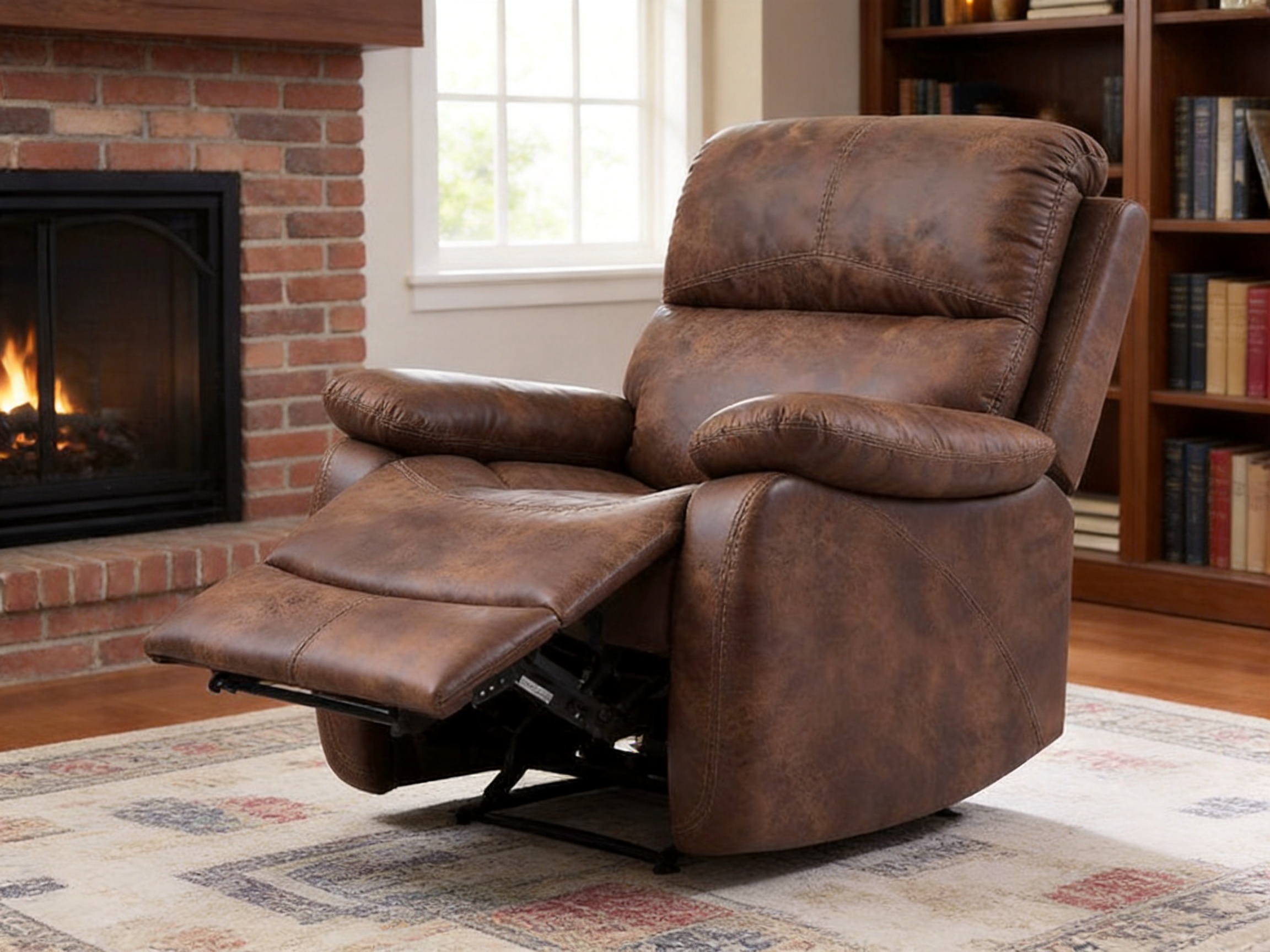
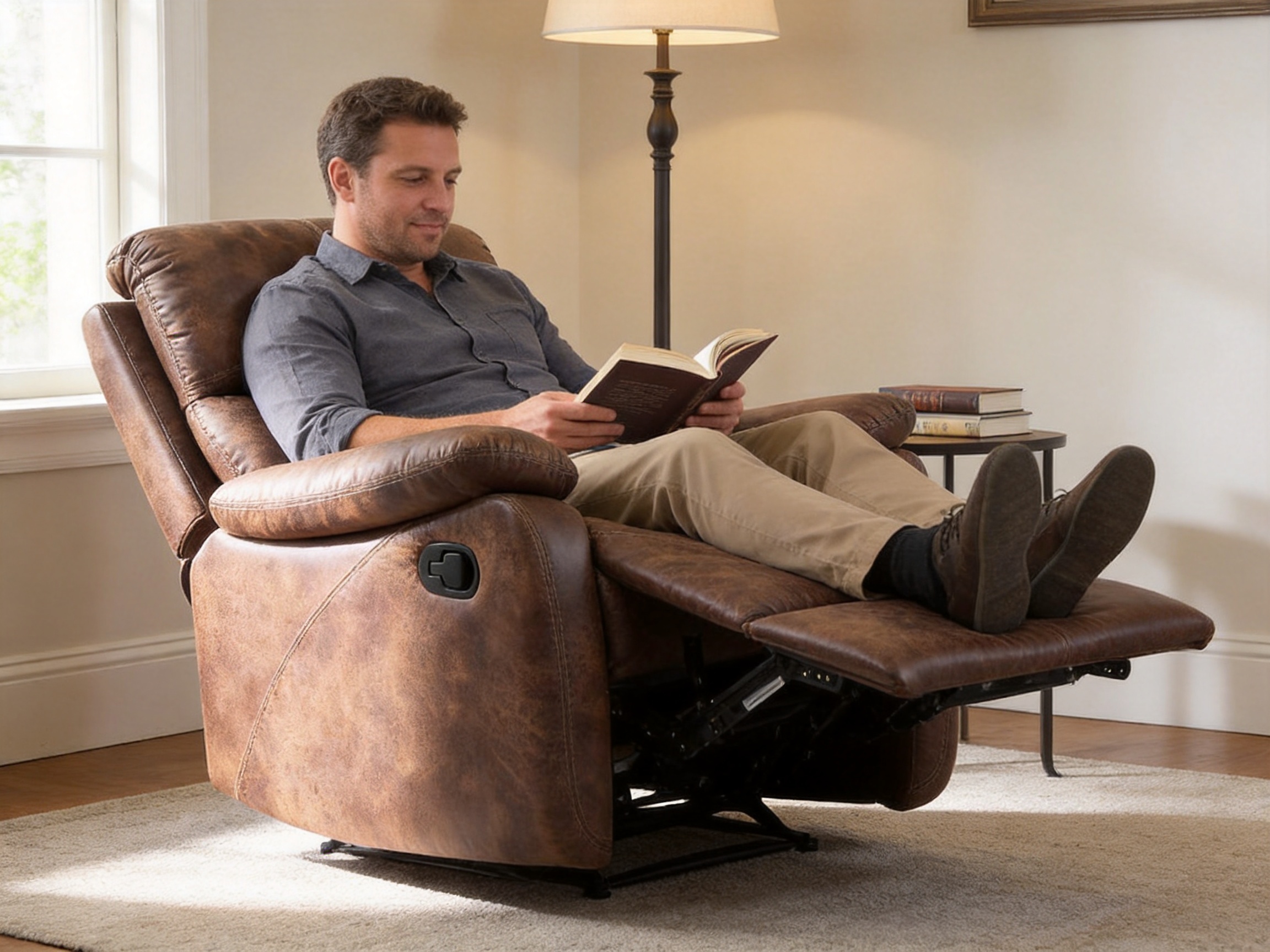
The integrated footrest extends the comfort experience from the upper body to the legs. When the footrest is raised, the lower legs receive support, reducing the need to place the feet on a separate ottoman. When the back and footrest are adjusted together, the chair becomes suitable for a more relaxed full-body posture.
The 165-degree lay-flat position is another major advantage. Some recliners offer only a modest backward tilt, which is adequate for television but less useful for resting. A near-flat position gives the user more flexibility. It can support quiet afternoon relaxation, reading at a lower angle, listening to music, or taking a short rest without transferring to a sofa or bed.
Comfort also depends on the relationship between the chair and the user’s room. The 32.7-inch width provides a substantial seating presence while remaining more space-conscious than many oversized theater recliners. Buyers should still allow additional clearance in front of the chair for footrest movement and behind the chair if the reclining mechanism requires rear space. Proper placement is essential for obtaining the full benefit of the reclining range.
Manual Adjustment for Simple Everyday Use
Manual reclining has a number of practical advantages. It does not require a power outlet, electrical cable, motor, control panel, or remote control. This makes placement easier and reduces the number of components that may require future maintenance. The chair can be positioned in a room without planning an electrical connection near the seat.
Manual operation can also feel immediate and intuitive. Users can adjust the chair through their own body movement rather than searching for a control. For spaces where electrical simplicity is preferred, such as a reading corner, guest room, nursery, or temporary furnishing project, this is a meaningful benefit.
Compared with electric competitors, the manual version may also provide a more accessible entry price, simpler packaging, and lower dependence on electrical components. It is particularly suitable for distributors who want to offer a traditional reclining function while keeping the product easy to explain and install.
4. Structural Strength and Stability
A recliner must support more than the user’s static weight. It must also withstand repeated sitting, standing, reclining, returning to an upright position, and movement across the seat. The chair’s sturdy metal frame and heavy-duty steel reinforcement are intended to create a stable foundation for these repeated actions.
Metal and steel components can provide useful structural consistency when properly engineered and assembled. They help support the seat, back, arm areas, and reclining mechanism. A reinforced frame can also reduce unwanted movement and improve the chair’s sense of solidity during operation. For users, a stable chair feels safer and more substantial. For commercial buyers, a strong foundation may help the product withstand the demands of frequent use.
The 350-pound weight-capacity rating communicates the intended strength level of the product. Weight capacity should always be understood as a product specification rather than a guarantee against misuse. Users should avoid jumping into the chair, standing on the footrest, placing concentrated loads on the arms, or operating the mechanism while objects are trapped underneath. Correct use allows the frame and mechanism to perform as intended.
Frame construction is also important from a manufacturing perspective. A structured metal foundation can support consistent dimensional control across production batches. When the frame is accurately formed, welded, reinforced, and checked, the upholstery team has a reliable foundation for installing foam, fabric, arms, back panels, and reclining components. This helps reduce variation between individual units.
A well-built frame must work in harmony with the cushioning materials. An extremely strong frame alone does not create comfort. The seat and back require appropriate padding density, resilient support, and accurate shaping. The product’s value comes from the combination of a durable internal structure and a soft external experience.
Important Construction Considerations
For buyers evaluating comparable products, the following points are particularly important: the consistency of the metal frame, the quality of welded or joined areas, the alignment of the reclining hardware, the durability of stress points, the fastening of the upholstery, the resilience of the foam, and the stability of the completed chair on the floor.
These considerations distinguish a carefully manufactured recliner from a product that only appears substantial in photographs. A professional factory should inspect components before assembly, monitor key dimensions during production, and test completed pieces for movement, appearance, and function.
5. Microfiber Upholstery and Care Requirements
The chair uses comfortable microfiber fabric. Microfiber is often selected for upholstered seating because it can provide a soft touch, a smooth visual surface, and a comfortable residential appearance. It also allows manufacturers to create a warm, fabric-covered alternative to leather or synthetic leather.
The fabric contributes to the chair’s traditional character. Unlike glossy surfaces that may make a recliner appear strongly commercial or technological, microfiber presents a softer and more welcoming image. This is helpful in family rooms, bedrooms, nurseries, studies, and hospitality settings where the furniture should feel comfortable rather than institutional.
Textile maintenance is important. The recommended care instructions specify cleaning with dry-cleaning solvent only and advise users not to saturate the fabric with water. Pile fabrics may require brushing to restore their appearance. These instructions should be communicated clearly to customers and included in product documentation.
Users should address spills promptly according to the care instructions and should avoid aggressive scrubbing, excessive moisture, unapproved detergents, or harsh chemicals. Before applying any cleaning product, it is prudent to test it on an inconspicuous area and follow the instructions supplied for the specific fabric. Routine dust removal with an appropriate soft attachment can help maintain the upholstery’s appearance.
For retailers and project buyers, fabric care information is part of product value. A chair that is accompanied by clear maintenance guidance is easier for customers to use correctly. It also helps reduce avoidable damage caused by unsuitable cleaning methods.
6. Correct Footrest Retraction Method
The footrest is designed to provide adjustable support, but it should be retracted using the correct method. The recommended procedure is to sit forward with the body, lean forward, and use the heels to press against the middle of the footrest. This approach is labor-saving and helps direct pressure toward the appropriate area of the mechanism.
Users should avoid forcing the footrest from the side, standing on it, pulling aggressively on the upholstery, or placing hands and objects near moving joints. Children should be supervised around the mechanism. A clear operating method protects the user, reduces unnecessary stress on the chair, and supports a longer service life.
Retailers can improve customer satisfaction by demonstrating the opening and closing process during delivery or by including a simple instruction card. For hospitality or commercial installations, staff training may be useful when the chair is placed in a shared environment.
The manual mechanism also benefits from an uncluttered operating area. Rugs, toys, cables, storage boxes, and other objects should not be placed beneath or directly in front of the footrest. The user should confirm that the footrest can extend and retract without obstruction.
7. Advantages Over Narrowly Specialized Competitors
The chair competes in a market that includes electric recliners, theater seats, oversized lounge chairs, low-cost manual recliners, and fashion-focused accent chairs. Its advantages are most evident when the buyer wants a practical blend of comfort, traditional styling, structural strength, and broad placement flexibility.
7.1 Simpler Than an Electric Recliner
An electric recliner can provide smooth motorized adjustment, but it also introduces electrical components, cables, power requirements, control switches, and additional service considerations. The manual design avoids these requirements. It can be placed in rooms where outlets are limited or where a cable would interfere with the visual appearance.
For customers who prefer direct physical control, the manual function may feel more natural. For distributors, fewer electrical components can simplify product explanations, reduce installation concerns, and support efficient handling for certain projects.
7.2 More Adaptable Than a Theater-Only Seat
Home theater seats often include cup holders, storage consoles, segmented cushions, and a strongly entertainment-oriented appearance. These features are useful in dedicated media rooms, but they can look out of place in a bedroom, study, nursery, or formal living room.
This chair offers reclining comfort without being visually restricted to a cinema environment. Its traditional profile can function as an individual living-room chair during the day and as a television or movie seat in the evening.
7.3 More Supportive Than a Basic Accent Chair
A standard lounge or accent chair may look attractive but generally does not provide an integrated footrest or a near-flat reclining position. Users who want to put their legs up must purchase a separate ottoman, which takes additional floor space and may not remain aligned with the chair.
The integrated footrest gives this product a functional advantage while keeping the overall design unified. The occupant can move from upright sitting to a more relaxed posture without rearranging separate furniture.
7.4 A Stronger Value Proposition Than Lightweight Alternatives
Some low-cost recliners rely on lightweight construction that may feel less stable during use. The heavy-duty steel-reinforced frame is intended to create a more substantial seating experience and support a higher rated capacity. Buyers looking beyond the lowest initial price may find greater value in a product that balances comfort with structural confidence.
7.5 A Broader Color and Customization Opportunity
The standard brown finish establishes a dependable market-ready option, while custom color support provides flexibility for private-label collections, hospitality schemes, retail programs, and project-specific interiors. This is particularly useful for buyers who need a consistent appearance across multiple furniture categories.
8. Manufacturing Expertise and Integrated Production Strength
Anji Xuanbo Household Co., Ltd. was established in 2021 and is located in Anji County, Huzhou City, Zhejiang Province. The area is widely recognized as an important center of chair manufacturing. The company specializes in sofas and chairs and integrates research and development, industrial design, large-scale manufacturing, independent marketing, and technical services.
This integrated structure is significant because a successful upholstered chair requires coordination across multiple disciplines. Product designers must understand user comfort and visual proportions. Engineers must consider frame strength, mechanism function, and packaging. Production teams must control cutting, sewing, foam shaping, assembly, and finishing. Quality personnel must verify both appearance and performance. When these functions communicate effectively, the factory can respond more efficiently to customer requirements.
The company’s product portfolio includes functional sofas, fixed sofas, corner sofas, lounge chairs, recliner sofas, love seats, and leisure chairs. This broad category experience supports the development of individual recliners because many manufacturing principles are shared across upholstered furniture: frame construction, foam processing, fabric cutting, sewing, assembly, inspection, and export packaging.
The factory covers approximately 8,000 square meters and employs more than 100 people. This scale provides a foundation for organized production while retaining the ability to support customized orders. A workforce of this size can assign specialized responsibilities to design, purchasing, production, quality control, warehouse management, and export coordination.
The company also operates its own wooden frame factory and sponge processing plant. Although the featured recliner uses a metal and steel-reinforced internal structure, experience with both wood-based and metal-based furniture construction creates a broader technical foundation. Internal control over frame-related and sponge-related processes can improve communication, help coordinate material specifications, and support better control of cost and production capacity.
For a buyer, integrated manufacturing does not simply mean that more processes are performed under one corporate structure. Its practical value lies in the ability to coordinate materials, schedules, specifications, and quality expectations. A factory that understands the complete product can address issues earlier than a fragmented supply chain in which frame, foam, upholstery, and assembly decisions are handled by unrelated suppliers.
Design and Research Capabilities
The company emphasizes research and development and industrial design. These capabilities are important for a product that must balance traditional styling with modern expectations. The chair needs to look classic without appearing outdated, provide ample padding without becoming excessively bulky, and offer a deep recline while remaining proportionate for residential spaces.
Design development may include the evaluation of seat depth, arm width, back height, footrest alignment, fabric appearance, frame dimensions, and packaging requirements. Even small adjustments can influence comfort and shipping efficiency. A professional design process considers not only how the chair appears in a showroom but also how it is produced, packed, transported, assembled, and used.
Material and Component Coordination
Upholstered furniture is a coordinated system. Fabric, foam, frame components, reclining hardware, fasteners, support materials, and packaging must work together. The company’s experience in sponge processing and furniture manufacturing supports the ability to manage these relationships.
Material coordination is especially important for custom orders. A change in fabric thickness can affect sewing allowances. A change in foam density can alter seat height. A change in frame dimensions can influence the reclining mechanism and carton size. A factory with integrated technical communication can evaluate these effects before mass production.
Large-Scale Manufacturing and Capacity Control
Large-scale manufacturing can provide advantages in purchasing, production planning, labor organization, and repeatability. It may allow the factory to obtain materials more efficiently, schedule orders according to capacity, and establish standardized work instructions for key operations.
The company describes its own frame and sponge-processing resources as supporting full-chain cost and capacity control. For importers and distributors, this can be valuable when planning recurring orders or coordinating a collection of related products. Consistent capacity planning helps reduce unexpected delays and makes it easier to discuss realistic lead times.
9. Manufacturing Process from Concept to Finished Chair
A high-quality recliner is the result of a sequence of controlled operations. The exact workflow may vary according to order specifications, but the major stages generally include product confirmation, material preparation, frame production, cushioning preparation, upholstery, mechanism installation, final assembly, inspection, and packaging.
9.1 Product Specification and Pre-Production Review
Before manufacturing begins, the factory reviews the product dimensions, color, fabric, frame requirements, reclining function, packaging details, labeling, and quantity. This stage helps ensure that the production team is working from a consistent specification.
For custom orders, pre-production review is especially important. Buyers may request a different color, private packaging, modified branding, alternative fabric, or coordinated products. Each change should be documented so that design, purchasing, production, and quality teams share the same information.
9.2 Frame Preparation
The metal frame and heavy-duty steel-reinforced components provide the chair’s structural foundation. At this stage, components are formed, joined, and prepared according to the approved design. Critical dimensions and connection points must be controlled because errors in the frame can affect the seat, backrest, arms, and footrest alignment.
Frame preparation should include inspection for dimensional accuracy, smoothness at relevant surfaces, secure joining, and compatibility with the reclining mechanism. A properly prepared frame supports efficient downstream assembly and helps maintain consistency between units.
9.3 Foam and Cushion Preparation
Foam is shaped and prepared for the seat, back, and arms. The goal is to create a balance between softness and support. Cushion components must fit the frame correctly and retain their intended form after upholstery.
Consistent foam processing is an important manufacturing strength. Variations in shape, thickness, or density can produce visible differences in the finished chair. Controlled cutting and inspection help ensure that the chair maintains the intended proportions and comfort profile.
9.4 Fabric Cutting and Sewing
Microfiber fabric is cut according to approved patterns. Accurate cutting supports efficient material use and helps maintain symmetry between the left and right sides of the chair. The pieces are then sewn into covers for the arms, back, seat, and other upholstered sections.
Stitching quality influences both appearance and service life. Seams should be straight, secure, and positioned according to the design. The fabric should be installed with sufficient tension to create a clean surface without excessive wrinkling or distortion. Overstuffed areas require particular care because the upholstery must follow the contours of the padding while preserving softness.
9.5 Mechanism and Upholstery Assembly
The reclining mechanism is installed and connected to the frame. The seat, backrest, footrest, and arms are assembled in sequence so that the completed chair can move correctly. Upholstery is attached while taking care not to interfere with moving parts.
At this point, workers check the alignment of the footrest, the movement of the backrest, the stability of the chair, and the visual appearance of the fabric. Correct assembly is essential because even a strong frame can perform poorly if the mechanism is misaligned or if upholstery restricts movement.
9.6 Final Inspection and Packaging
Completed chairs should undergo visual and functional inspection before packaging. Inspectors may review dimensions, color, fabric condition, seam quality, cushion placement, frame stability, reclining operation, footrest retraction, and packaging security.
Packaging must protect the upholstery, arms, back, and mechanism during handling and transportation. The chair may travel through several stages before reaching the final customer, including factory loading, port handling, container movement, warehouse storage, and last-mile delivery. Appropriate protective materials and carton design help reduce the risk of cosmetic or structural damage.
10. Quality Control as a Product Advantage
Quality control is one of the most important distinctions between a dependable furniture supplier and an inconsistent one. For a recliner, quality is not limited to whether the fabric looks attractive. It includes structure, comfort, operation, safety, durability, consistency, packaging, and compliance with the requirements of the destination market.
The company describes a strict multi-stage quality inspection process. A multi-stage system can begin with incoming-material inspection and continue through frame production, foam preparation, upholstery, assembly, final testing, and pre-shipment review.
Incoming Material Inspection
Fabric should be checked for color consistency, surface defects, width, and suitability for the approved design. Foam should be reviewed for dimensions and physical consistency. Metal and steel components should be checked for specifications, surface condition, and compatibility with the product design.
Early inspection helps prevent defective materials from entering later production stages. This is more efficient than discovering a problem after the chair has been fully upholstered and assembled.
In-Process Inspection
During production, quality personnel can verify frame dimensions, assembly points, cushion shaping, sewing quality, and upholstery tension. In-process checks help identify issues while corrections are still practical.
For example, a small frame-alignment issue can affect the way the seat and footrest move. A sewing problem can become more difficult to repair after a cover has been installed. Early detection supports both quality and production efficiency.
Finished Product Testing
Final inspection should confirm that the chair corresponds to the approved sample or specification. The backrest and footrest should move through their intended range. The chair should remain stable in upright and reclined positions. The fabric should be free of major stains, tears, loose threads, or obvious distortion.
Testing should also confirm that the footrest retracts using the recommended operating method. The finished unit should be checked for abnormal noise, unwanted looseness, and interference between moving components.
Export and Market Compliance
The company states that its products comply with international standards and certifications. Specific requirements can vary by country, product configuration, buyer contract, and sales channel. Importers should confirm the applicable standards, labeling requirements, packaging rules, testing documents, and documentation before placing an order.
A supplier with experience exporting to North America, Europe, the Middle East, and other regions is better positioned to understand the practical requirements of international furniture trade. Export experience can support communication about carton markings, shipping documentation, loading methods, product specifications, and destination-market expectations.
11. Customization and Private-Label Opportunities
The ability to support customization is a strong advantage for buyers who do not want to compete solely on identical stock products. The chair already offers a recognizable design, but its color, upholstery, packaging, and collection positioning can be adapted for different markets.
Custom color selection may be useful for retailers developing a coordinated living-room range. A neutral color can support broad appeal, while darker or warmer shades may suit traditional collections. Hospitality buyers may request colors that coordinate with wall finishes, carpet, curtains, or existing sofas.
Customization should be approached systematically. Buyers should define color references, fabric expectations, minimum order quantities, sampling requirements, packaging preferences, labels, carton marks, and inspection standards. A pre-production sample can help confirm the final appearance before a larger order is released.
Private-label customers may also request brand-specific documentation or packaging. These details should be discussed early because they can influence artwork approval, production scheduling, carton procurement, and warehouse handling.
The company’s product range creates opportunities for coordinated purchasing. A buyer may source a manual recliner together with fixed sofas, functional sofas, corner sofas, love seats, or leisure chairs. A broader collection can make it easier to create a unified showroom presentation and improve container utilization.
12. Suitable Residential Applications
Living Rooms
In a living room, the chair can serve as a personal relaxation seat or as an additional position for guests. Its traditional shape works well beside a sofa, sectional, coffee table, floor lamp, or side table. The brown microfiber finish can contribute warmth without demanding that every other piece use the same material.
Home Theaters
The near-flat reclining position and integrated footrest make the chair suitable for home entertainment. Although it does not depend on a theater-specific appearance, it can provide comfortable seating for movie nights, gaming, television viewing, and music listening.
Bedrooms
Placed in a bedroom, the chair can create a dedicated reading or resting corner. The manual design is useful where an electrical cable would be inconvenient. Buyers should allow adequate clearance for the footrest and ensure that the chair does not block wardrobes, doors, or circulation paths.
Nurseries and Family Spaces
The supportive back and broad arms may make the chair suitable for quiet seating in a nursery or family room. In these environments, users should pay close attention to the moving footrest and supervise children. The chair should be positioned away from hazards and operated only as intended.
Studies and Home Offices
A study or home office can benefit from a separate chair for breaks away from the desk. The recliner offers a change of posture during reading, phone calls, or informal work discussions. Its traditional design can also complement bookcases, wood finishes, and upholstered office furniture.
Meeting Rooms and Hospitality Areas
The chair’s residential character may help make meeting rooms, lounges, executive areas, and hospitality interiors feel more welcoming. It can be used as an individual seat within a larger furniture plan or as part of a relaxation area for guests.
13. Commercial Purchasing and Distribution Benefits
Commercial buyers evaluate more than the appearance of a single chair. They consider repeatability, lead time, packaging, product communication, customization, shipping, and after-sales support. The manufacturing capabilities associated with this product address several of these concerns.
A factory with experience in multiple upholstered furniture categories can support product expansion. A distributor may begin with the manual recliner and later add matching sofas, love seats, lounge chairs, or corner sofas. This reduces the need to establish separate supplier relationships for every category.
Export experience is another practical advantage. The company is located near Ningbo Beilun Port, which supports convenient export logistics. Port proximity does not remove all shipping variables, but it can help simplify inland transportation and coordination for international orders.
Production scale and internal material resources may support more predictable planning. Buyers should still confirm current capacity, lead times, order quantities, and shipping schedules for each project. However, an organized factory structure provides a stronger basis for those discussions than an informal workshop with limited production control.
Documentation is also important. Product specifications, care instructions, packing information, inspection records, and customization approvals should be managed clearly. Good documentation reduces misunderstandings between the supplier and buyer and supports smoother distribution after the goods leave the factory.
14. Installation, Placement, and User Guidance
Before delivery, buyers should measure doorways, corridors, elevators, stairways, and the final placement area. A recliner may fit within a room but still be difficult to move through a narrow entrance. The chair should be unpacked carefully, with attention to the upholstery and reclining components.
After placement, the chair should sit on a stable, level surface. The area in front of the footrest must remain clear. If the chair requires rear clearance for reclining, it should not be pushed tightly against a wall. Users should operate the footrest gently and follow the recommended retraction method.
Weight capacity should be respected, and the chair should not be used as a step, ladder, or standing platform. Children should not play with the footrest or place hands near moving gaps. Routine inspection can identify loose components, unusual sounds, fabric damage, or changes in mechanism movement before a minor issue becomes more serious.
For commercial installations, the purchasing organization should provide staff with basic operating and care guidance. This is especially useful in hotels, lounges, offices, healthcare-adjacent spaces, and other environments where many different users may operate the furniture.
15. Sustainability and Resource Efficiency Considerations
Furniture sustainability involves materials, durability, production efficiency, packaging, transportation, maintenance, and service life. A chair designed for repeated use can offer resource value when it remains functional and attractive for a longer period. Strong structural components, replaceable or serviceable mechanisms where applicable, and proper care can help extend the usable life of the product.
Integrated manufacturing can also support more efficient material coordination. The company’s control over frame-related and sponge-processing resources may help reduce unnecessary handling between suppliers and improve production planning. Efficient cutting and organized production can contribute to better material utilization.
Buyers seeking specific environmental claims should request relevant documentation and verify the requirements of their target market. Sustainability expectations can include fabric composition, foam information, packaging materials, restricted substances, factory practices, and end-of-life considerations. These details should be confirmed for the exact production configuration rather than assumed from general product descriptions.
From a user perspective, proper care is one of the simplest ways to support furniture longevity. Following the dry-cleaning-solvent instruction, avoiding water saturation, protecting the upholstery from harsh treatment, and keeping the mechanism free of obstructions can help preserve both appearance and function.
16. Why the Product Is a Practical Factory-Direct Choice
Factory-direct purchasing can give buyers more direct communication with the manufacturer. Instead of relying entirely on a trading intermediary, the buyer can discuss design details, materials, quality expectations, production schedules, packaging, and customization with a company involved in the manufacturing process.
Anji Xuanbo Household Co., Ltd. combines product development with manufacturing and technical service. This structure can be useful when a customer needs a clear answer about frame construction, upholstery choices, reclining operation, or production feasibility.
The company’s product positioning emphasizes quality, service, honesty, pragmatic development, and continuous improvement. These principles are relevant to long-term furniture cooperation because successful supply relationships depend on more than a single shipment. They require consistent communication, accurate specifications, responsive problem-solving, and a willingness to refine products according to market feedback.
Its international customer orientation is supported by exports to North America, Europe, the Middle East, and other regions. International experience can help a manufacturer understand different preferences in size, color, packaging, documentation, and product presentation. It also provides exposure to diverse quality expectations and sales channels.
For buyers comparing suppliers, the most useful evaluation is not based only on a factory’s stated capabilities. It should include sample review, factory communication, documentation, production inspection, packaging assessment, and confirmation of order-specific requirements. The product provides a strong starting point because its specifications are clearly defined and its manufacturing category aligns with the supplier’s core expertise.
17. Buying Checklist for Importers and Retailers
Before ordering, buyers should confirm the exact product dimensions, reclining angle, weight capacity, standard color, available custom colors, fabric composition, carton dimensions, net weight, gross weight, loading quantity, and delivery requirements.
Sample approval should cover the appearance of the brown microfiber or selected custom fabric, the fullness of the arms and back, the seat comfort, the stability of the frame, the operation of the footrest, and the overall finish.
Buyers should also confirm whether the order requires custom labels, instruction manuals, carton artwork, barcodes, replacement components, inspection reports, or destination-specific documentation. These requirements are easier to manage when communicated before production.
For larger orders, the purchaser may consider a staged inspection process. An initial inspection can review raw materials and frame production. A mid-production inspection can examine upholstery and assembly. A final inspection can verify completed products and packaging before shipment.
Clear communication is particularly important for custom color orders. A verbal description such as “dark brown” or “warm beige” may not be precise enough. Buyers should use agreed color references, approved samples, or documented standards to reduce differences between expectations and production.
18. Q&A
Q1: What type of chair is this product?
It is a manual reclining chair with overstuffed arms, a supportive backrest, an integrated adjustable footrest, and a traditional Americana-inspired appearance.
Q2: Does the chair require electricity?
No. It uses a manual reclining mechanism and does not require a power outlet, motor, remote control, or electrical cable.
Q3: How far does the chair recline?
The chair offers a full approximately 165-degree lay-flat position, allowing users to move from upright sitting to a deeply reclined posture suitable for relaxation and rest.
Q4: What are the product dimensions?
The listed dimensions are approximately 32.7 inches wide, 37 inches deep, and 39.8 inches high. Buyers should confirm packaging and clearance dimensions for specific orders.
Q5: What is the weight capacity?
The stated weight capacity is up to 350 pounds. The chair should be used according to the product instructions and should not be subjected to impact loads, standing, jumping, or misuse.
Q6: What upholstery does the chair use?
The chair uses soft microfiber fabric. The standard color is brown, and custom color support is available for qualifying orders.
Q7: How should the microfiber upholstery be cleaned?
The care instructions specify cleaning with dry-cleaning solvent only and advise users not to saturate the fabric with water. Pile fabrics may require brushing to restore their appearance.
Q8: How should the footrest be retracted?
The recommended method is to sit forward, lean forward, and use the heels to press against the middle of the footrest. Users should avoid forcing the footrest from the side or placing hands near moving parts.
Q9: Where can the recliner be used?
It is suitable for living rooms, bedrooms, nurseries, studies, home theaters, meeting rooms, and other areas where comfortable individual seating is required.
Q10: What makes the chair different from a basic lounge chair?
It combines the supportive structure of a dedicated recliner with an integrated footrest and a near-flat reclining position. A basic lounge chair generally does not provide these functions without a separate ottoman.
Q11: What makes it different from an electric recliner?
The manual chair does not require electricity or electrical controls. This can simplify placement, operation, installation, and maintenance while preserving adjustable reclining comfort.
Q12: Can buyers request a custom color?
Yes. Brown is the listed standard color, and the product information states that custom colors are supported. Exact color availability, minimum quantities, and sampling procedures should be confirmed with the manufacturer.
Q13: Does the manufacturer produce other furniture?
Yes. The company specializes in functional sofas, fixed sofas, corner sofas, lounge chairs, recliner sofas, love seats, and leisure chairs in addition to individual recliners.
Q14: What manufacturing capabilities support this product?
The company integrates research and development, industrial design, manufacturing, marketing, and technical services. It also has experience with wooden frame production, sponge processing, upholstered furniture assembly, quality inspection, and international export.
Q15: Is the product suitable for commercial use?
Its sturdy metal frame, steel reinforcement, traditional appearance, and versatile placement make it suitable for selected commercial applications, including meeting rooms, hospitality areas, lounges, and project interiors. Buyers should evaluate usage intensity and confirm the appropriate specifications for each project.
Q16: What should be checked before placing an international order?
Buyers should confirm specifications, fabric, color, capacity, packaging, carton markings, lead time, loading quantity, inspection requirements, documentation, and destination-market compliance. A sample and written specification are recommended for customized orders.
19. Conclusion
The Classic and Traditional Manual Recliner Chair with Overstuffed Arms and Back offers a well-rounded solution for buyers seeking comfortable, adaptable, and structurally substantial seating. Its soft microfiber upholstery, generous arm and back padding, integrated footrest, 165-degree reclining range, metal frame, and steel reinforcement address the primary requirements of a dependable everyday recliner.
Its greatest competitive strength is balance. It provides more functionality than a conventional accent chair, more visual flexibility than a theater-only seat, and simpler operation than an electric recliner. The brown traditional finish gives it immediate market appeal, while custom color support creates opportunities for private-label and project-specific collections.
The manufacturing foundation further strengthens the product proposition. Anji Xuanbo Household Co., Ltd. combines design, research and development, manufacturing, technical service, quality inspection, and international export experience. Its factory resources, product range, production scale, and customization capabilities support buyers who require more than a single standard chair.
For residential users, the recliner can become a comfortable daily retreat in a living room, bedroom, study, nursery, or home theater. For commercial purchasers, it can add warmth and practical comfort to meeting rooms, lounges, hospitality spaces, and other interiors. With correct placement, proper footrest operation, and appropriate microfiber care, the chair is designed to provide a dependable combination of relaxation, traditional style, and everyday usability.
References
1. Product specification and care information supplied for the Classic and Traditional Manual Recliner Chair with Overstuffed Arms and Back.
2. Company profile and manufacturing information supplied by Anji Xuanbo Household Co., Ltd.
3. General principles of upholstered furniture design, frame construction, cushioning, upholstery assembly, and quality inspection.
4. General guidance on residential and commercial furniture placement, manual recliner operation, textile care, and product maintenance.
5. General international furniture purchasing considerations, including sample approval, production inspection, packaging review, export documentation, and destination-market compliance.
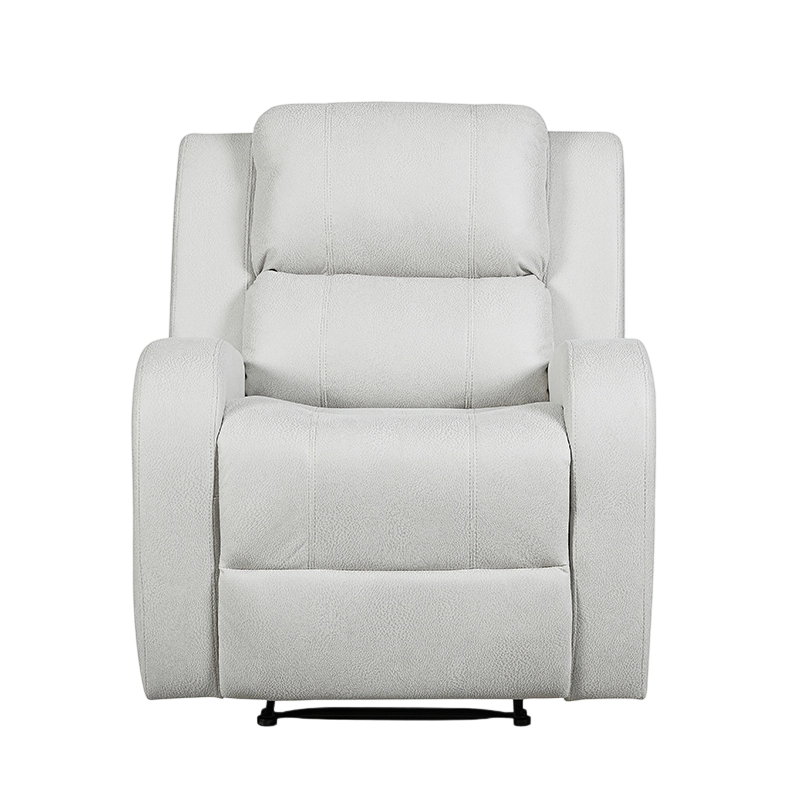
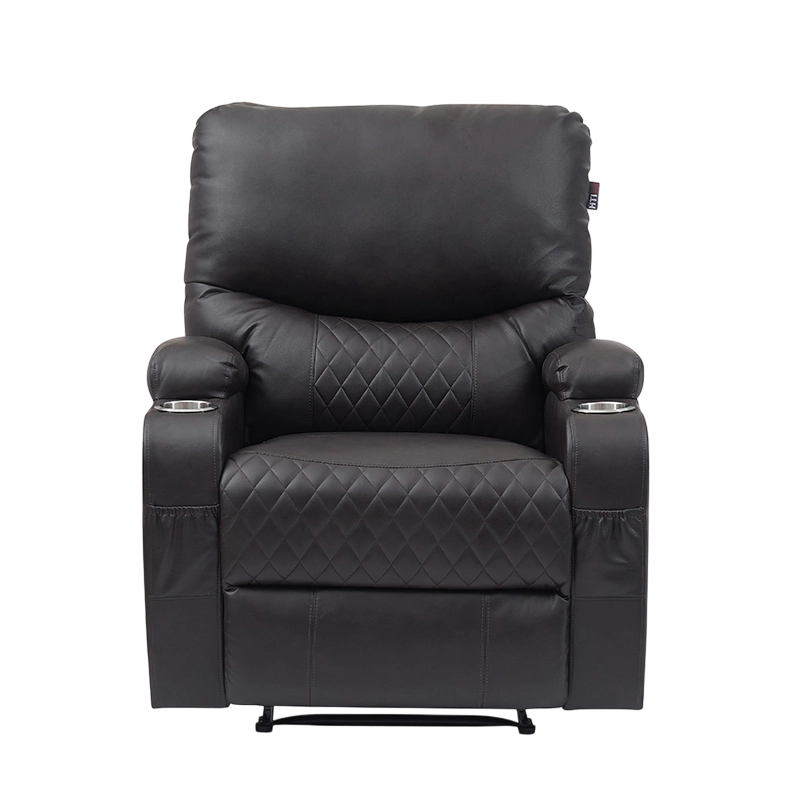
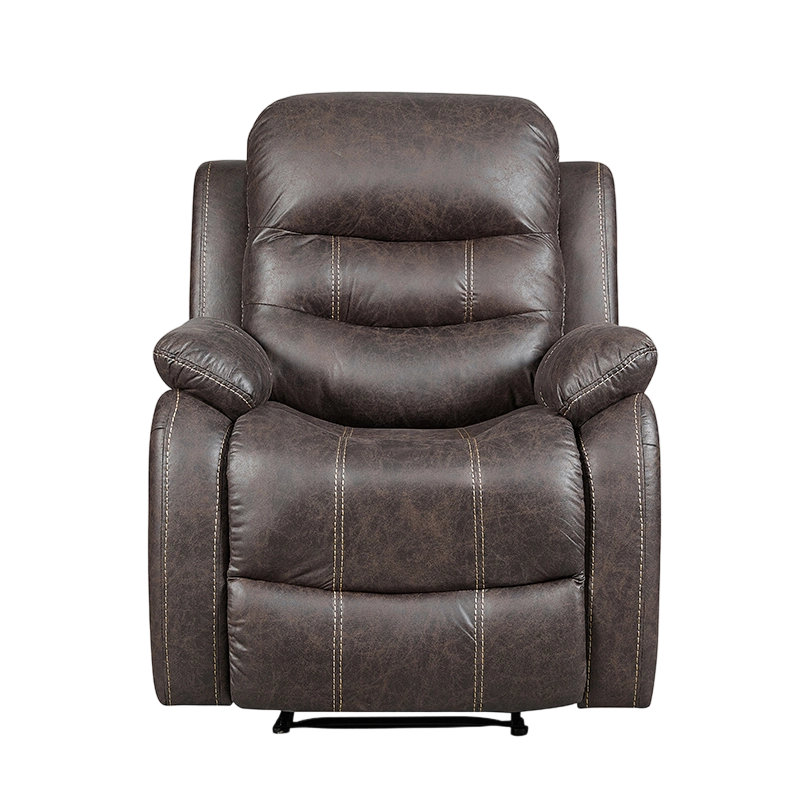
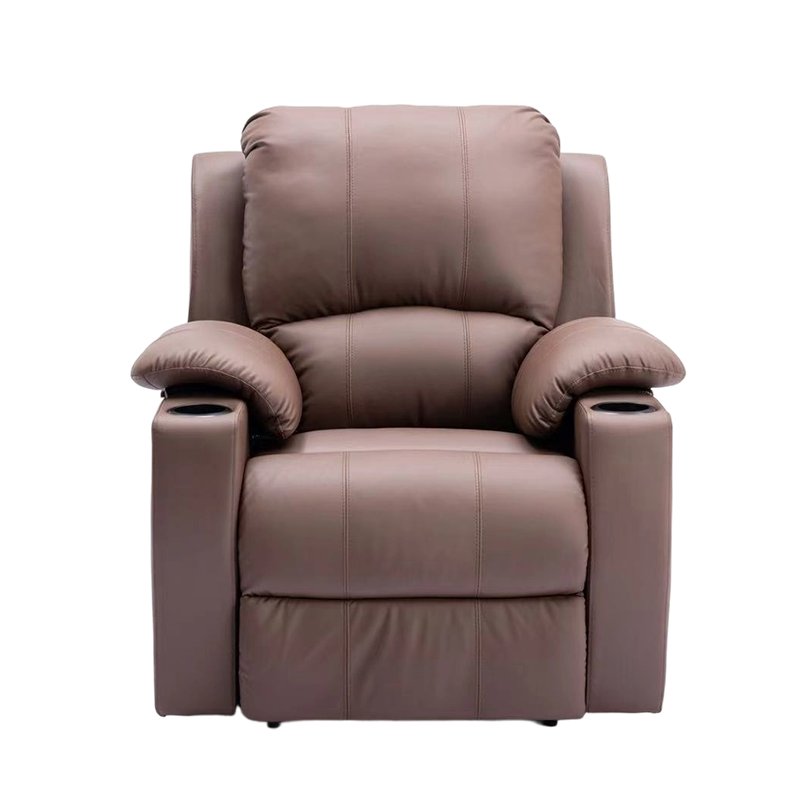
Product: Classic and Traditional Manual Recliner Chair with Overstuffed Arms and Back

LET'S TALK

Bai Shuiwan Industrial Park, Tian Huangping Town, Anji County, Huzhou City, Zhejiang Province, China
More About Us 
-
+86 18257273741
-
[email protected]
CONTACT US
Copyright © Anji Xuanbo Household Co., Ltd. All Rights Reserved.
Custom Modern Upholstered Sofa Manufacturers


