Focus on the manufacturing and export of functional sofas
-
 +86 18257273741
-
 [email protected]

 English
 Español
Liu Yiran — After-Sales Service Specialist
 Home / Author / Liu Yiran — After-Sales Service Specialist / 35.8-Inch Leather Manual Recliner Chair with Rolled Arms: Comfort, Craftsmanship, and Custom Manufacturing Advantages
 35.8-Inch Leather Manual Recliner Chair with Rolled Arms: Comfort, Craftsmanship, and Custom Manufacturing Advantages
 2026.08.29
 Liu Yiran — After-Sales Service Specialist
Content
- 1 Product Overview and Intended Use
- 2 Material Selection and Surface Comfort
- 3 Comfort Engineering: Foam, Pocket Coils, and Cushion Design
- 4 Manual Reclining Function and Everyday Convenience
- 5 Frame Construction and Structural Strength
- 6 Manufacturing Capabilities of the Supplier
- 7 Quality Control and Production Reliability
- 8 Advantages Compared with Common Competitor Offerings
- 9 Applications in Residential and Commercial Interiors
- 10 Customization and Private-Label Opportunities
- 11 Export Logistics and Supply Chain Advantages
- 12 Care, Handling, and Long-Term Use
- 13 Buyer Evaluation Checklist
- 14 Why Work with an Integrated Furniture Manufacturer?
- 15 Conclusion
- 16 Questions and Answers
- 16.1 What type of product is this chair?
- 16.2 What are the chair’s dimensions?
- 16.3 What materials are used?
- 16.4 Is the chair available in colors other than the listed option?
- 16.5 Does the chair require electricity?
- 16.6 How should the footrest be retracted?
- 16.7 What is the stated weight capacity?
- 16.8 Are the seat and back cushions removable?
- 16.9 Where can the chair be used?
- 16.10 What makes the chair different from a basic recliner?
- 16.11 Can the manufacturer develop customized furniture?
- 16.12 What care method is recommended?
- 16.13 What should commercial buyers confirm before ordering?
- 16.14 What manufacturing resources does the supplier have?
- 17 References
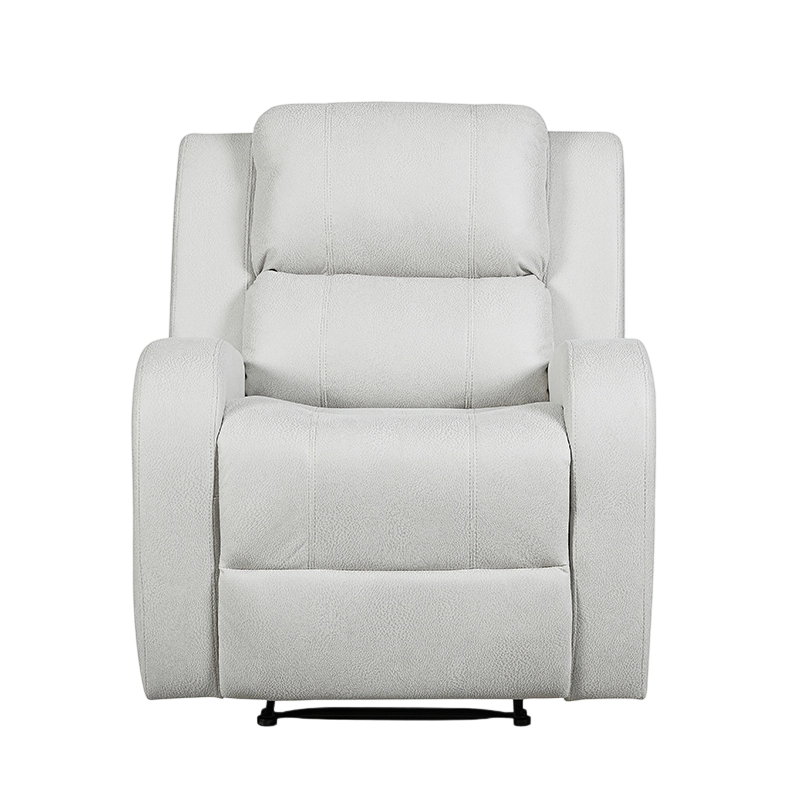
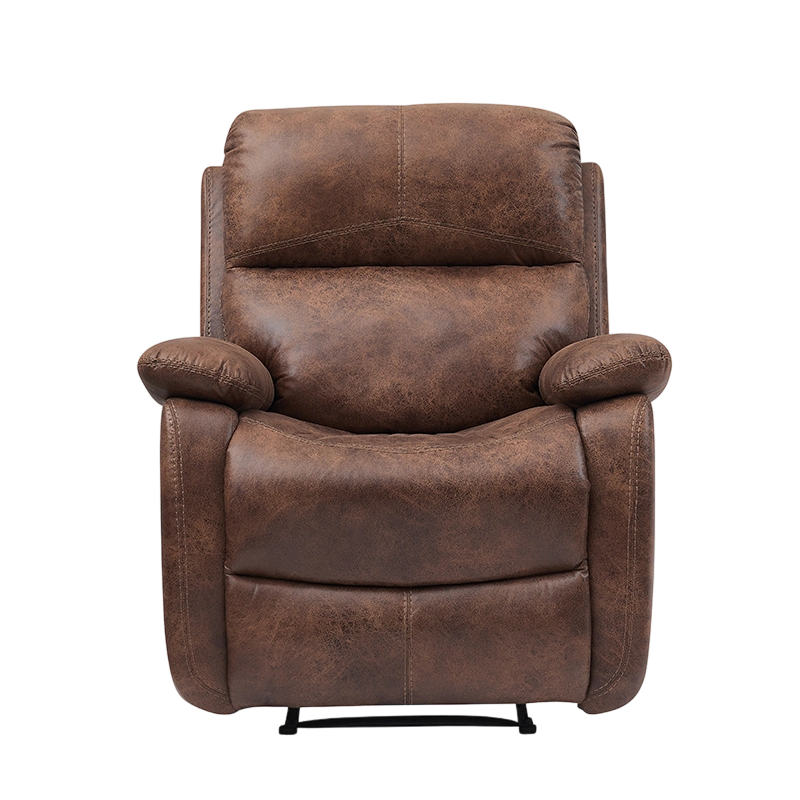
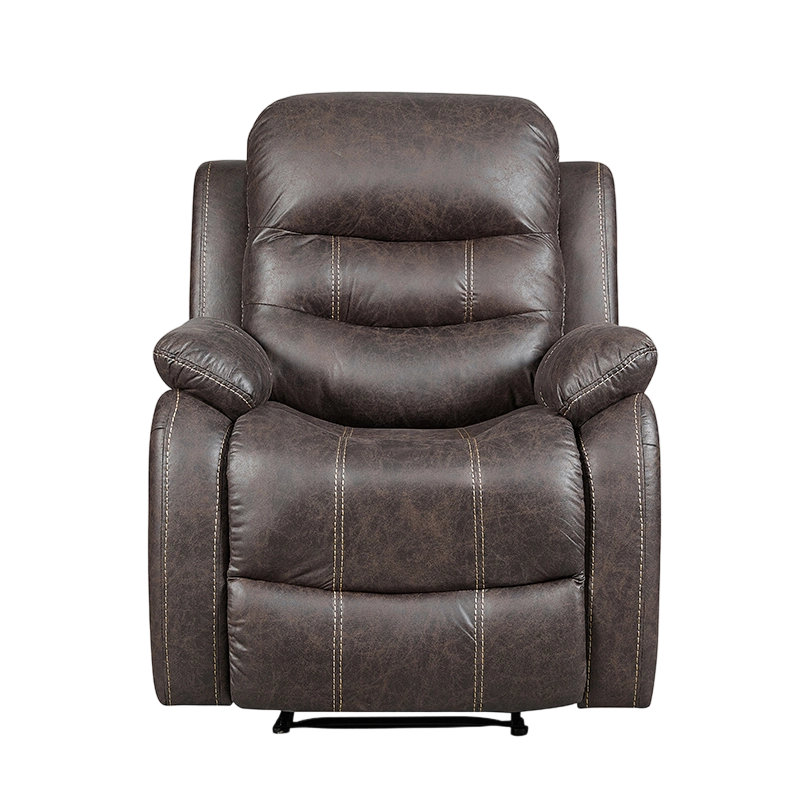
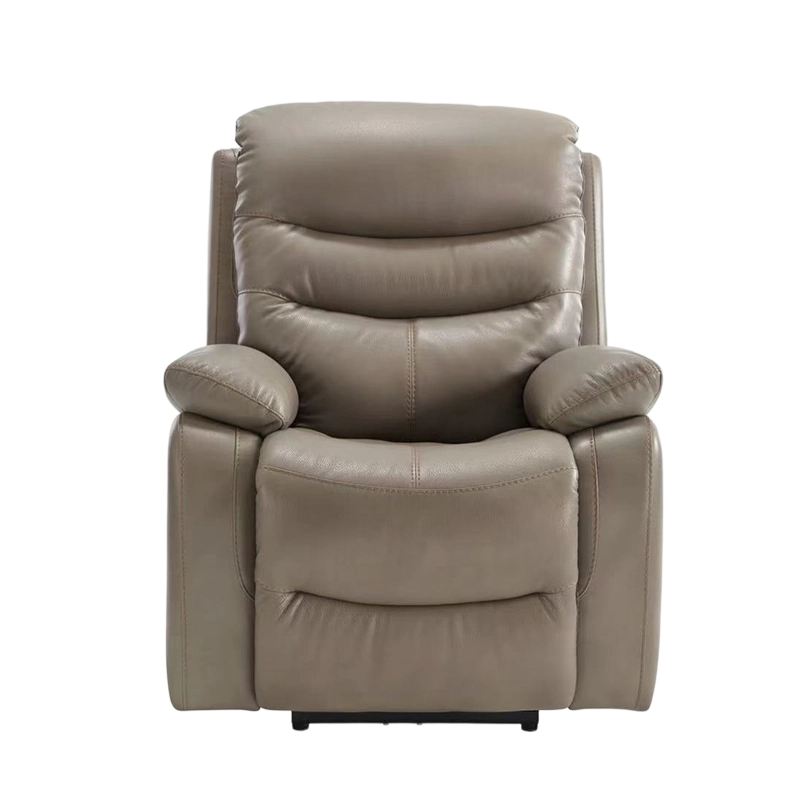
- 18 Product: 35.8''w Leather Manual Recliner Chair with Rolled Arms
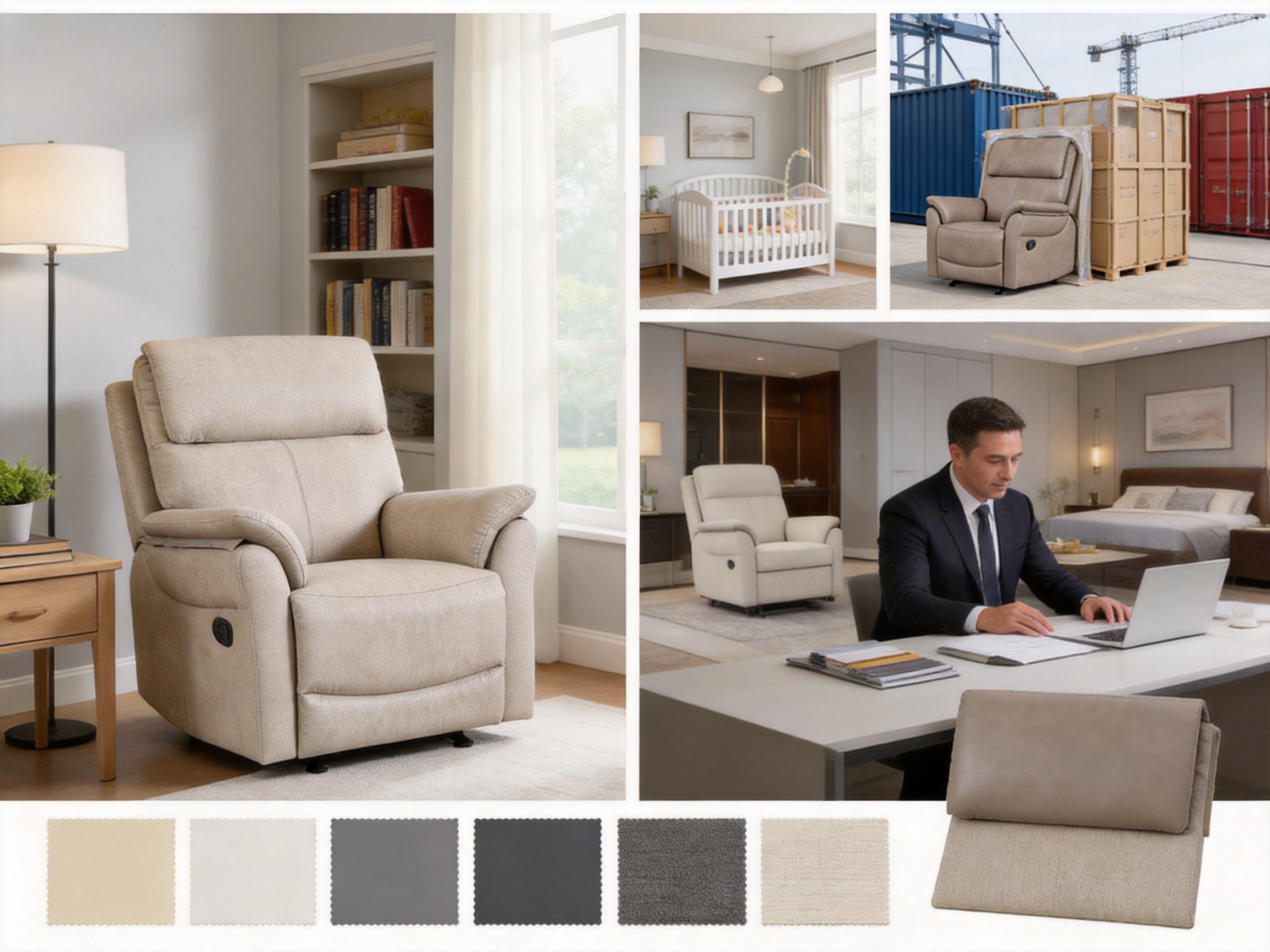
A well-designed recliner chair can transform an ordinary living room, reading corner, nursery, or entertainment space into a more comfortable and useful environment. The 35.8-inch-wide leather manual recliner chair with rolled arms is developed for buyers who want supportive seating, practical reclining functionality, durable construction, and an appearance that fits a wide range of interior styles. Its compact footprint, traditional rolled-arm profile, tailored upholstery, and smooth manual reclining mechanism make it suitable for residential projects, hospitality applications, furniture retailers, and customized furnishing programs.
This chair combines several features that are often difficult to find in one product. It offers a generous seating experience without occupying the floor area of a large sofa. It uses high-density foam over pocket coils to balance softness and support. It includes a manual tab-pull reclining system for simple operation without electrical wiring. Its body-touch surfaces are upholstered in leather, while the sides and back use coordinated faux leather to control cost and maintain a consistent visual appearance. A solid wood and plywood frame, together with a metal-reinforced seat, provides a stable foundation for daily use.
Behind the product is Anji Xuanbo Household Co., Ltd., a furniture manufacturer based in Anji County, Huzhou City, Zhejiang Province, China. The company focuses on sofas and chairs, including functional sofas, fixed sofas, corner sofas, lounge chairs, recliner sofas, love seats, and leisure chairs. Its capabilities include research and development, industrial design, frame manufacturing, sponge processing, upholstery, assembly, inspection, export logistics, and customer service. This integrated structure gives buyers a practical source for both standard products and customized furniture programs.
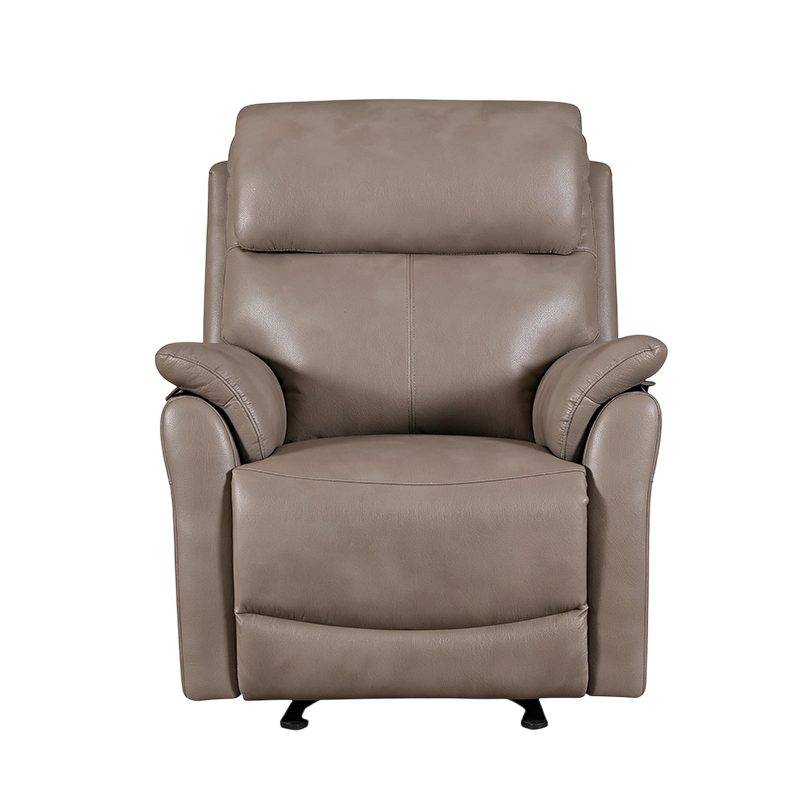
35.8''w Leather Manual Recliner Chair with Rolled Arms
Product Overview and Intended Use
The chair measures approximately 35.8 inches wide, 38.2 inches deep, and 41.7 inches high. This proportion gives it a substantial presence while keeping it more space-efficient than many oversized recliners. The relatively narrow width makes it easier to place beside a sofa, in a bedroom sitting area, near a bookcase, or within a compact media room. The rolled arms contribute to the chair’s traditional character while also creating a defined boundary for the sitter’s upper body.
The chair is designed as a single-piece manual recliner. It is delivered as one reclining chair, and the removable seat back helps simplify transport and installation. This detail is particularly useful for projects involving narrow doorways, staircases, elevators, apartment entrances, or rooms that are difficult to access with fully assembled furniture. Once the chair is positioned, the back can be installed securely for normal use.
The reclining function is controlled by a tab-pull handle. Instead of depending on a motor, battery, power cord, or wall outlet, the user operates the mechanism manually. This approach reduces electrical complexity and makes the chair suitable for locations where outlets are limited or where a clean, cable-free appearance is preferred. Manual operation can also reduce the number of components requiring service over the product’s lifetime.
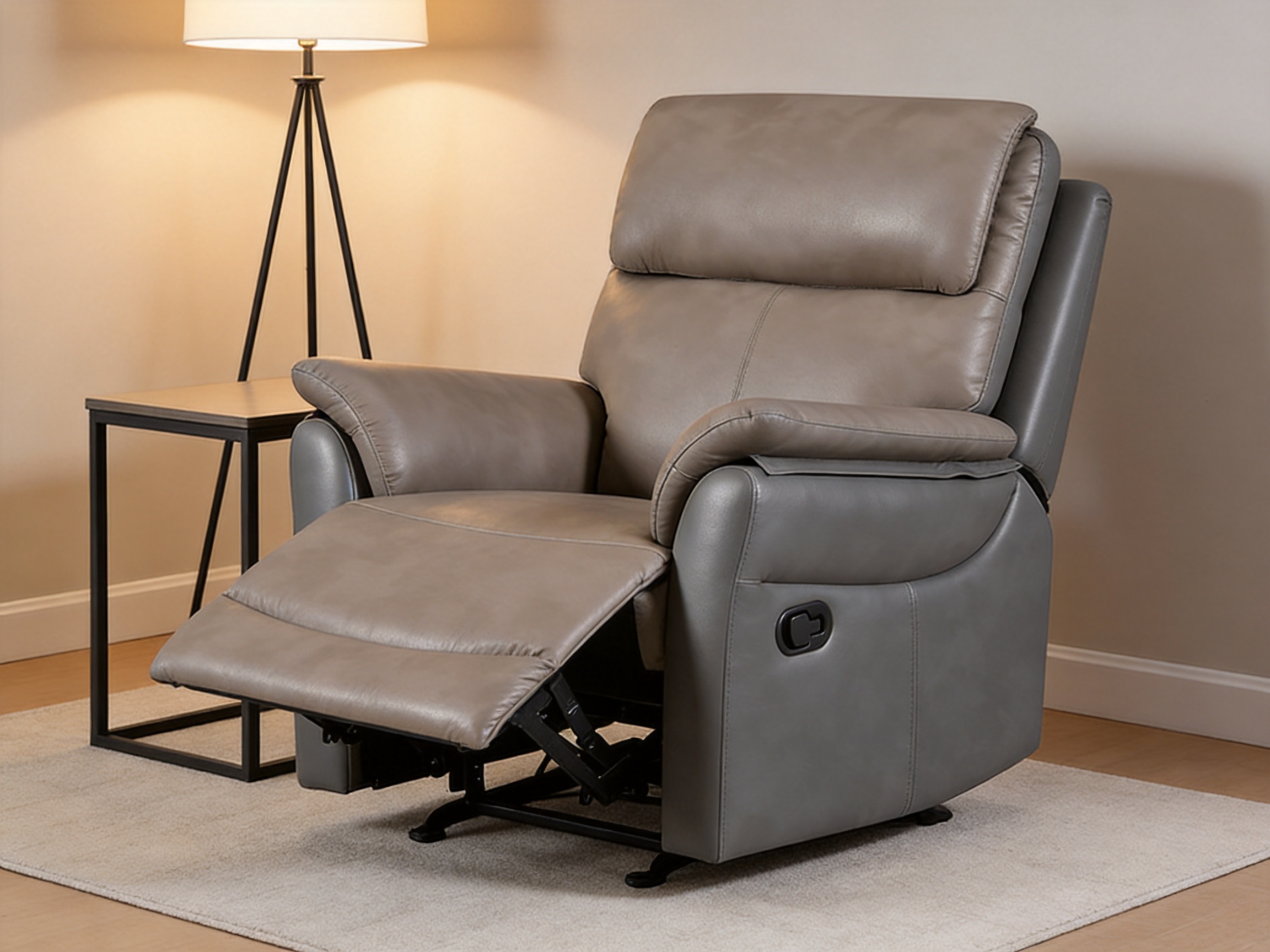
The footrest is designed to extend for relaxation and retract when the chair is returned to its upright position. The recommended retracting method is practical and important for proper use. The user should sit forward, lean forward, and use the heels to press against the middle of the footrest. Following this method helps return the footrest efficiently while reducing unnecessary strain on the mechanism.
With a stated weight capacity of up to 350 pounds, the chair is intended to provide dependable support for a broad range of users. Weight capacity should always be considered together with correct operation, level flooring, and normal residential use. Users should avoid standing on the footrest, placing excessive concentrated weight on the arms, or forcing the reclining mechanism beyond its designed range.
Material Selection and Surface Comfort
Material selection has a direct effect on how a recliner looks, feels, performs, and is priced. This model uses leather on the areas that contact the body and faux leather on the sides and back. The body-touch surfaces are the areas where the user is most likely to notice texture, softness, breathability, and tactile quality. Using leather in these zones helps create a more premium seating experience.
Faux leather on the exterior sides and back offers several manufacturing and commercial advantages. These areas generally experience less direct contact than the seat, back cushion, and arm surfaces. Coordinated faux leather allows the manufacturer to control material consumption and offer a more accessible price while preserving a unified leather-style appearance. It can also simplify color matching across large exterior panels.
The product information identifies a beige color option and also refers to slate gray top leather in the body-touch areas. Because upholstery colors may vary according to a specific order, collection, or customization request, buyers should confirm the final color and material combination before production. The manufacturer supports custom colors and fabrics, allowing distributors, interior designers, hospitality buyers, and project purchasers to request finishes suitable for their target market.
Custom upholstery is especially valuable when a chair must coordinate with an existing sofa, a hotel room palette, a senior living project, a healthcare waiting area, or a furniture retailer’s private-label collection. Color, texture, material composition, stitching details, and other upholstery specifications can be discussed during product development. The practical scope of customization depends on order quantity, material availability, testing requirements, and production scheduling.
Leather and Faux Leather in a Functional Chair
A reclining chair places repeated demands on its upholstery. The seat compresses and recovers, the back changes angle, and the footrest mechanism creates movement near the lower front edge. Upholstery must therefore be selected not only for appearance but also for flexibility, seam performance, abrasion resistance, and ease of maintenance.
Leather on body-contact areas gives the chair a refined appearance and a naturally distinctive surface. Faux leather on the sides and back creates a practical balance between visual continuity and production efficiency. This mixed-material construction is common in furniture programs that seek the visual impact of leather seating while keeping the overall product cost competitive.
Users should follow the supplied care guidance. The listed instructions specify cleaning with dry-cleaning solvent only and caution against saturating the upholstery with water. Pile fabrics may require brushing to restore their appearance. Since custom upholstery may involve different fabric or leather types, the final care instructions should be confirmed for the selected material before cleaning.
Comfort Engineering: Foam, Pocket Coils, and Cushion Design
Comfort is not created by softness alone. A chair that feels soft during the first few minutes may lack long-term support, while an overly firm chair may become uncomfortable during extended reading, television viewing, or rest. This recliner uses high-density foam padding over pocket coils to create a layered seating structure.
High-density foam contributes resilience, pressure distribution, and shape retention. It helps the cushion respond to the user’s weight without collapsing immediately. The foam also provides a controlled transition between the upholstery surface and the coil system below. The result is intended to feel supportive while retaining a comfortable level of cushioning.
Pocket coils consist of individual springs contained within fabric pockets. This construction allows the springs to respond more independently than a basic interconnected spring system. Independent movement can help distribute pressure across the seat and reduce the transmission of movement from one area to another. In a recliner, where the user may shift posture or extend the footrest, this support layer can contribute to a more stable seating feel.
The chair has attached back and seat cushions. Attached cushions provide a clean and tailored appearance because they are integrated into the chair rather than appearing loose or oversized. They also reduce the need for daily repositioning. A loose back cushion may require frequent adjustment, especially when the chair is reclined and returned to its upright position. The attached design keeps the visual profile consistent and supports a neat showroom presentation.
The seat back is removable for transportation and setup. This feature does not mean the back is loose during normal operation. It is a logistical feature that allows the chair to be handled more easily during delivery and installation. For commercial buyers, removable-back construction can make packaging, container loading, warehousing, and final-mile delivery more efficient.
Support in the Upright and Reclined Positions
A recliner must support the body through multiple positions rather than only one fixed posture. In the upright position, the seat and back should provide enough structure for reading, conversation, or ordinary sitting. As the chair reclines, the user’s weight distribution changes. The back must remain connected to the frame, the seat must stay stable, and the footrest must extend smoothly without making the chair feel unbalanced.
The combination of pocket coils, high-density foam, attached cushions, and a reinforced seat is intended to provide a balanced foundation for these movements. The chair’s proportions also help establish a familiar sitting posture. The rolled arms can provide lateral support, while the padded seat and back are designed to accommodate extended periods of use.
Comfort preferences differ significantly. Some users prefer a softer seat and more enveloping back, while others prefer firmer support. For this reason, buyers purchasing customized quantities should discuss foam density, cushion construction, upholstery thickness, and other comfort specifications with the manufacturer during the sampling stage.
Manual Reclining Function and Everyday Convenience
The manual tab-pull reclining system is one of the chair’s most practical features. A user can activate the mechanism by pulling the tab, allowing the chair to move toward a reclined position. Manual adjustment gives the user direct control and avoids dependence on a motorized control panel. It can be particularly suitable for reading rooms, guest rooms, family rooms, nursing areas, and spaces where a simple operating system is preferred.
Compared with a power recliner, a manual recliner typically has fewer electrical components. There is no transformer, power cable, switch assembly, or battery-powered control system required for ordinary operation. This can simplify placement because the chair does not need to be positioned near an outlet. It may also reduce concerns about visible wires across the floor.
A manual mechanism does require correct user technique. The tab should be pulled as designed, and the footrest should not be forced abruptly. To close the footrest, the user should follow the recommended method of sitting forward, leaning forward, and using the heels to press the center of the footrest. This method applies force in a controlled direction and helps avoid pushing on one side only.
Furniture retailers can improve customer satisfaction by demonstrating the operating method at the point of sale. A short explanation can help users understand that the chair is designed for deliberate manual adjustment rather than forceful movement. Retail staff can also explain the clearance needed around the footrest and the importance of keeping children, pets, and objects away from moving sections.
Manual Versus Power Reclining
Manual and power recliners serve different priorities. Power recliners may offer push-button positioning and can be useful for users who have difficulty operating a manual lever. However, they require access to electricity and contain additional components. Manual recliners are often selected for their straightforward operation, lower electrical dependence, and potentially easier logistics.
| Feature | Manual Recliner Chair | Power Recliner Chair |
|---|---|---|
| Operation | Tab-pull handle and user-controlled movement | Electric motor and control switch |
| Power requirement | No outlet required for normal operation | Requires a power source or compatible battery system |
| Placement flexibility | Can be positioned without managing a power cord | Must account for cable routing and outlet location |
| Mechanical complexity | Primarily mechanical reclining structure | Mechanical structure plus motor and electrical components |
| Maintenance considerations | Focus on mechanism, frame, upholstery, and fasteners | Includes mechanism, motor, wiring, controls, and upholstery |
| Best suited to | Buyers seeking simple, cable-free reclining functionality | Users prioritizing powered positioning and push-button control |
The best choice depends on the end user and the application. For buyers who value simple installation, flexible placement, and a traditional furniture experience, the manual format is highly practical. For specialized users requiring powered movement, a motorized model may be more appropriate. The manual design allows this chair to occupy a strong position in the market between fixed accent chairs and more complex power recliners.
Frame Construction and Structural Strength
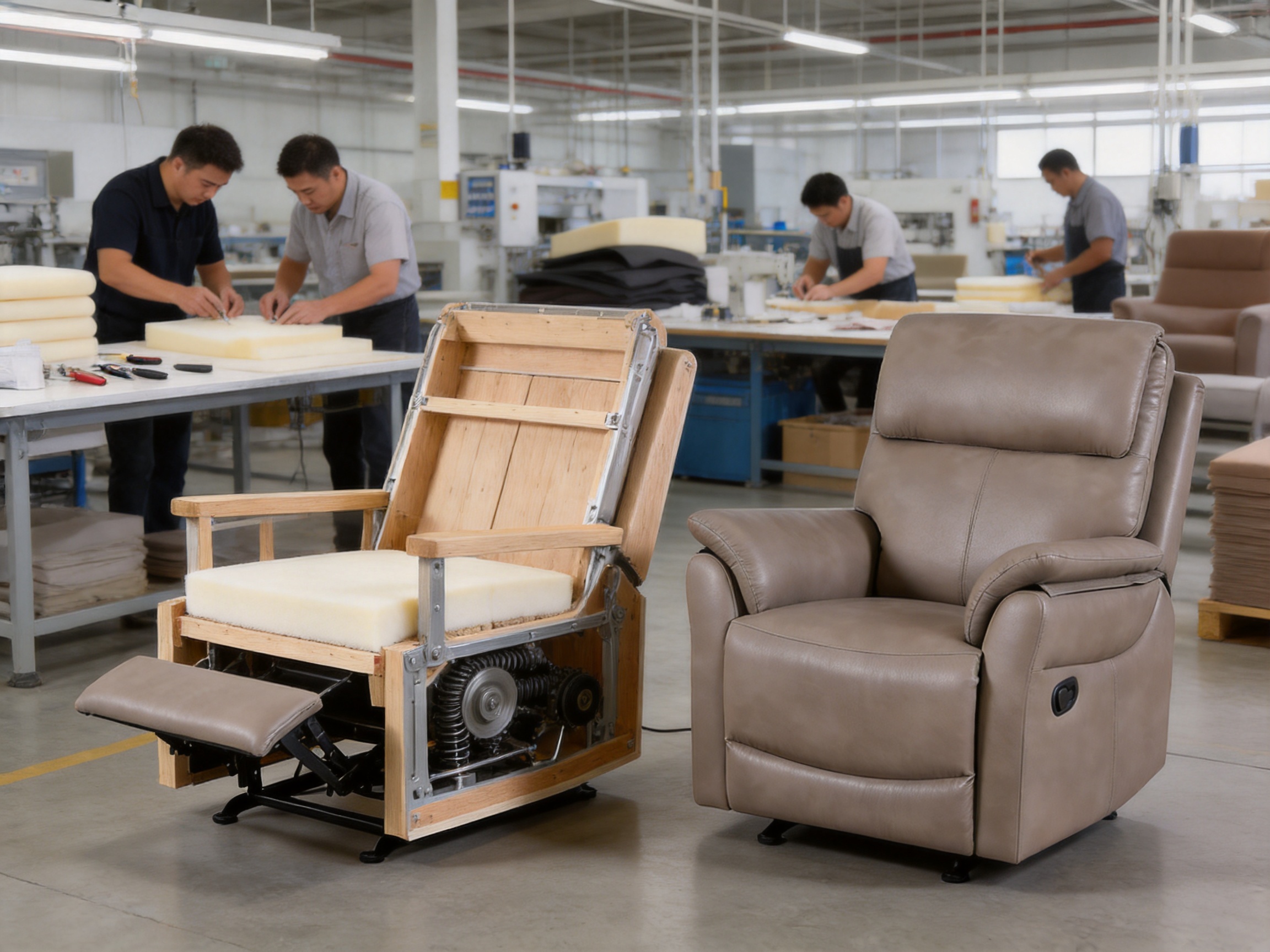
The internal frame is made from solid wood and plywood, with a metal-reinforced seat. These materials serve different structural purposes. Solid wood can provide dependable support at critical frame points, while plywood offers dimensional stability and efficient panel construction. The combination allows the manufacturer to balance strength, weight, material utilization, and production consistency.
A metal-reinforced seat is particularly relevant in a reclining chair. The seat experiences repeated loading as users sit down, shift position, recline, and stand. It also interacts with the reclining mechanism and footrest structure. Metal reinforcement can help distribute stress through the seat assembly and improve resistance to deformation when the chair is used correctly.
Frame construction is one of the areas where an experienced furniture manufacturer can create a meaningful difference. A visually attractive chair may still perform poorly if its frame joints, seat supports, or mechanism attachments are not engineered carefully. Manufacturing controls should therefore include material selection, moisture management where applicable, joint preparation, fastening, dimensional checking, and inspection before upholstery.
The company’s own wooden frame factory gives it greater control over this stage of production. Internal frame capability can improve communication between product designers and production technicians. It can also support faster modifications when a customer requests a change in arm profile, seat dimensions, back angle, leg configuration, or internal reinforcement.
Why Frame Integration Matters
When a manufacturer relies entirely on external frame suppliers, changes to a chair may require several rounds of communication. The supplier may have different tooling, scheduling priorities, or quality procedures. An integrated frame operation can shorten that communication chain. Design changes can be reviewed directly with the team responsible for cutting, assembly, and structural inspection.
For customized furniture, frame integration is especially valuable. A buyer may request a different width for a regional market, a modified seat height for a particular demographic, or a reinforced structure for a commercial setting. These changes require coordination between ergonomics, upholstery patterns, mechanism dimensions, packaging, and shipping. Internal production resources make that coordination more manageable.
Manufacturing Capabilities of the Supplier
Anji Xuanbo Household Co., Ltd. was established in 2021 and operates in Anji County, a region widely associated with the chair industry. The company’s product range includes functional sofas, fixed sofas, corner sofas, lounge chairs, recliner sofas, love seats, and leisure chairs. This category coverage supports buyers who want to source coordinated seating products from one manufacturing partner.
The factory covers approximately 8,000 square meters and employs more than 100 people. Its activities combine product research and development, industrial design, manufacturing, independent marketing, and technical services. This combination is important because modern furniture purchasing is rarely limited to a single finished item. Customers often need help with product adaptation, material selection, packaging, quality requirements, export documentation, and repeat-order consistency.
The company also maintains its own wooden frame factory and sponge processing plant. These resources create a full-chain approach to cost and capacity control. Frame and foam components are central to the performance of a recliner. Having closer control over these stages can make it easier to manage lead times, coordinate quality standards, and maintain consistency between samples and production units.
Manufacturing strength is not only a matter of equipment. It also depends on production organization, staff experience, inspection procedures, supply planning, and communication. The company describes a professional management team, strong research and design capabilities, and precise product positioning. These strengths help connect market requirements with actual production decisions.
Research and Development
Research and development in upholstered furniture involves more than creating an attractive exterior. The team must consider comfort, ergonomics, material behavior, mechanism compatibility, frame structure, assembly, packaging, and shipping. A recliner requires additional attention because moving components must operate within the upholstery and frame without causing friction or misalignment.
Product development may begin with market research, customer specifications, or an existing design direction. Designers and engineers then evaluate the overall dimensions, arm shape, back profile, seat depth, cushion construction, upholstery pattern, and reclining movement. Prototypes can be reviewed for appearance and function before the product is prepared for repeat production.
For overseas customers, development may also include regional preferences. Seat height, firmness, color, stitching, packaging, and carton dimensions can vary by market. A manufacturer serving North America, Europe, the Middle East, and other regions must be prepared to address different commercial expectations and logistics conditions.
Foam Processing and Comfort Consistency
The company’s sponge processing capability supports closer management of one of the most important comfort components. Foam must be cut accurately to match the cushion pattern and frame dimensions. Incorrect thickness, inconsistent density, or poor cutting can affect the chair’s appearance and seating feel.
Internal processing can support improved coordination between foam specifications and upholstery construction. When a buyer requests a different comfort level or cushion profile, the manufacturer can evaluate the effect on sewing patterns, seat height, back tension, and mechanism clearance. This type of coordination is more efficient when the relevant production stages communicate directly.
Upholstery and Sewing Operations
Upholstery production requires precision because the cover must fit around curves, arms, corners, seams, and moving areas. Rolled arms are visually distinctive but require careful pattern development to maintain symmetry. The upholstery must be stretched evenly without creating unwanted wrinkles or excessive tension.
In a mixed leather and faux-leather chair, the material transition must be planned carefully. Body-contact panels, side panels, back panels, and decorative seams should align with the design intent. Thread color, seam placement, edge finishing, and panel matching all influence the perceived quality of the completed chair.
Quality control during sewing can include checking stitch length, seam strength, panel orientation, surface defects, color consistency, and the absence of visible damage. Upholstery inspectors also need to confirm that the cover does not interfere with the reclining mechanism or footrest movement.
Quality Control and Production Reliability
Quality control is most effective when it takes place throughout production rather than only at the final inspection stage. A multi-stage approach can begin with incoming material checks and continue through frame assembly, foam preparation, sewing, upholstery, mechanism installation, final assembly, and packaging.
Incoming materials may be checked for dimensions, color, surface condition, density, moisture content where relevant, and conformity to approved specifications. Frame components can be inspected for proper cutting, joint alignment, fastener placement, and structural stability. Foam components should be checked for shape, thickness, and consistency.
After upholstery, the chair can be examined for appearance, seam quality, wrinkles, alignment, cushion fit, and surface cleanliness. The manual reclining system should be operated repeatedly to confirm that the tab, mechanism, seat, back, and footrest function together correctly. Final inspection can also include dimensional checks, stability checks, hardware verification, and packaging review.
For export orders, packaging quality is critical. The chair may pass through multiple handling stages before reaching the final customer. Protection should account for upholstery surfaces, frame corners, mechanism areas, removable backs, and carton stability. Packaging design should also balance protection with shipping efficiency. Excessive packaging increases material consumption and shipping volume, while insufficient protection can result in damage and costly claims.
The manufacturer’s stated advantages include strict multi-stage quality inspection and compliance with international market standards and certifications. Buyers should request the specific standards, test reports, or certification documents applicable to their order and destination market. Requirements may differ depending on the country, product category, upholstery materials, fire regulations, labeling rules, and intended application.
Advantages Compared with Common Competitor Offerings
The market includes many recliners that compete on price, appearance, or a single feature. This chair is differentiated by the way several practical advantages are combined in one design.
Compact Width with Full Reclining Function
At 35.8 inches wide, the chair is compact enough for many rooms while still providing a substantial personal seating area. Some large recliners can dominate a room and limit furniture placement. A narrower design can help retailers serve customers living in apartments, smaller houses, guest rooms, and multipurpose spaces.
The compact footprint can also benefit hospitality and residential development projects. More efficient room planning may allow designers to add a comfortable reclining seat without removing other essential furniture. The chair can be used beside a sofa, as part of a lounge grouping, or as an individual reading seat.
Leather Comfort Areas with Cost-Conscious Exterior Upholstery
All-leather construction may increase the cost substantially, while fabric-only construction may not deliver the desired appearance for certain customers. This chair uses leather in body-contact areas and faux leather on the sides and back. The approach focuses premium material where it matters most to daily touch while using a practical alternative on less-contacted surfaces.
This construction can give distributors more flexibility in price positioning. It may appeal to buyers who want a leather seating experience but need to manage project budgets. It also supports coordinated color programs and custom upholstery requests.
High-Density Foam over Pocket Coils
Some entry-level chairs rely on basic foam or inexpensive spring structures. The combination of high-density foam and pocket coils provides a more developed support system. It is intended to deliver resilience, pressure distribution, and a stable seating feel. This can be an important selling point for users who expect to spend significant time in the chair.
Metal-Reinforced Seat
The metal-reinforced seat adds structural support in an area subject to repeated movement and loading. This feature complements the solid wood and plywood frame. Together, these components offer a stronger construction story than a chair that focuses solely on exterior styling.
Removable Seat Back
A removable back can reduce delivery challenges. It is especially beneficial when the chair must pass through restricted entrances or when installation teams need to carry furniture up stairs. Retailers can also benefit from more efficient warehouse handling and potentially more compact packaging.
Manual Simplicity
The tab-pull mechanism provides reclining functionality without electrical dependence. Buyers who do not want cords or who prefer a simpler product can select this model over a power recliner. The absence of electrical components may also make product placement and basic service more straightforward.
Manufacturer-Level Customization
Many furniture sellers offer only fixed colors and dimensions. The manufacturer behind this product supports custom colors and fabrics, subject to order requirements. This capability can help customers build a collection that matches a brand identity, regional preference, interior design scheme, or contract specification.
Applications in Residential and Commercial Interiors
In a living room, the chair can serve as an individual comfort seat beside a sofa or coffee table. Its rolled arms and transitional profile allow it to coordinate with both traditional and contemporary furnishings. The chair can also function as a primary television seat, a reading chair, or a supplementary seat for guests.
In a reading nook, the reclining function provides more than decoration. Users can adjust their position for reading, resting, or listening to music. A small side table and floor lamp can complete a compact relaxation zone without requiring a large sectional sofa.
In a nursery, a recliner can support feeding, soothing, and quiet rest. Buyers should select upholstery that is appropriate for the intended cleaning requirements and should always follow relevant safety practices around children. The chair should be placed on stable flooring with sufficient clearance for the footrest.
In guest rooms and bedrooms, the compact width makes it easier to create a dedicated seating area. In senior living or assisted residential environments, purchasers should review applicable safety, accessibility, fire, and durability requirements before selecting the product. The manual tab-pull operation may be suitable for some users, while others may require a power-operated alternative.
In hospitality settings, the chair can be considered for suites, lounges, waiting rooms, and private relaxation areas. Commercial buyers should discuss expected usage intensity, upholstery performance, fire requirements, warranty terms, replacement components, and inspection documentation with the supplier.
Furniture retailers can display the chair as an example of a transitional manual recliner that bridges the gap between a decorative accent chair and a bulky home-theater recliner. Its proportions and upholstery options make it suitable for multiple customer profiles.
Customization and Private-Label Opportunities
Customization can take place at several levels. The most straightforward option is color selection. Custom colors may allow a retailer to coordinate the recliner with a sofa collection or match a contract interior. Fabric customization can expand the product’s appeal to customers who prefer textiles rather than leather-style surfaces.
Further development may involve changes to seat firmness, stitching, cushion profile, arm shape, dimensions, or packaging. Each modification should be evaluated for its effect on comfort, mechanism clearance, production cost, carton size, and shipping weight. A sample or pre-production approval is recommended before a large order is released.
Private-label customers may also request branded packaging, product labels, instruction sheets, fabric swatches, assembly instructions, or retail photography. These details can help create a consistent customer experience across an entire collection. The supplier’s experience in independent marketing and technical services can support communication during this process.
Customization is most successful when buyers provide complete information at the beginning of development. Useful information can include target market, expected annual volume, preferred materials, color references, performance standards, package limitations, delivery destination, and desired launch schedule. Clear specifications reduce revisions and help the factory prepare accurate quotations and samples.
Export Logistics and Supply Chain Advantages
Furniture is large, heavy, and vulnerable to handling damage, so export logistics must be planned carefully. The company is located near Ningbo Beilun Port, which provides a convenient shipping connection for international orders. Proximity to a major export port can help reduce inland transportation complexity and support more predictable container planning.
The removable seat back may also contribute to logistics efficiency. Components that can be separated safely may support more practical packaging and easier handling. However, packaging decisions should always be tested to ensure that improved space utilization does not compromise protection.
Supply chain control is strengthened when a manufacturer manages key internal components such as wooden frames and sponge processing. Internal resources can help the factory coordinate production schedules, respond to material changes, and maintain more consistent component availability. This is valuable for customers who need repeat orders across multiple seasons.
International buyers should confirm production lead time, minimum order quantity, sample policy, payment terms, loading plan, carton specifications, spare-parts policy, inspection arrangements, and shipping documents before placing an order. They should also verify destination-market requirements for materials, labeling, packaging, chemical restrictions, and fire performance.
Care, Handling, and Long-Term Use
Proper care helps preserve the appearance and function of an upholstered recliner. The supplied care information instructs users to clean with dry-cleaning solvent only and not to saturate the upholstery with water. This guidance should be followed carefully because excess moisture can affect surface materials, foam, seams, and internal components.
Before using any cleaning product, users should verify that it is appropriate for the exact upholstery material and test it in an inconspicuous area. Custom fabrics and leather alternatives may have different care requirements. Aggressive chemicals, abrasive tools, excessive rubbing, and unapproved conditioners should be avoided unless specifically recommended for the selected upholstery.
The chair should be placed on a level surface. The footrest needs sufficient front clearance, and the sides should not be pressed tightly against walls or other furniture if doing so restricts movement. Users should avoid sitting on the extended footrest, standing on the chair, pulling the chair by its movable parts, or forcing the tab-pull mechanism.
Periodic inspection can help identify loose hardware, unusual sounds, upholstery damage, or changes in reclining movement. If the mechanism becomes difficult to operate, users should stop forcing it and contact the seller or service provider. Corrective maintenance is generally more effective when a problem is addressed early.
Buyer Evaluation Checklist
Before selecting this recliner for a retail, residential, or commercial project, buyers should review several factors. First, verify the final dimensions and confirm that the chair can pass through all delivery access points. Measure doorways, corridors, elevators, stair turns, and the intended placement area.
Second, confirm the exact upholstery specification. The standard information references beige and slate gray descriptions, while custom colors and fabrics are supported. A physical swatch or approved sample should be used where color accuracy is important.
Third, clarify the material composition. The chair uses leather on body-contact areas and faux leather on the sides and back according to the product description. Buyers should confirm the exact leather type, coverage, backing, and labeling language required for their market.
Fourth, evaluate comfort through a sample whenever possible. Check seat firmness, back support, arm height, seat depth, footrest position, and the ease of the manual tab-pull operation. Product photographs cannot fully communicate seating comfort or operating force.
Fifth, request relevant inspection or testing information. Depending on the market and application, this may include frame strength, mechanism durability, upholstery performance, flammability, chemical compliance, packaging tests, or other standards. Documentation should correspond to the specific product and material configuration being ordered.
Sixth, review packaging and assembly instructions. Confirm whether the removable back is shipped separately, how it is installed, what tools are needed, and whether replacement hardware is included. Clear instructions can reduce installation errors and customer service inquiries.
Finally, discuss after-sales support. Important topics include warranty coverage, mechanism replacement, upholstery concerns, spare parts, claims procedures, and technical communication. A capable supplier should be able to explain how issues are documented and resolved.
Why Work with an Integrated Furniture Manufacturer?
An integrated manufacturer can offer advantages beyond the production of a single chair. When research, design, frame production, foam processing, upholstery, assembly, inspection, and export coordination are connected, buyers gain a more direct path from concept to finished product.
Communication is one of the most important benefits. Product requirements can be discussed with teams that understand both design intent and manufacturing limitations. If a customer wants a new arm shape, different upholstery, or revised proportions, the factory can evaluate the effect on the frame, foam, cover, mechanism, packaging, and cost.
Integration can also support consistency. Repeated orders are easier to manage when key components are produced under coordinated procedures. This is especially important for retailers building a long-term collection, because variations in seat height, firmness, color, or arm dimensions can affect customer perception.
Cost and capacity control are additional advantages. The company’s own wooden frame factory and sponge processing plant provide greater control over important cost drivers. This does not eliminate market fluctuations, but it can help the manufacturer respond more effectively to material planning, production scheduling, and customer volume requirements.
International experience is another relevant strength. The company exports to North America, Europe, the Middle East, and other regions. Serving multiple markets requires familiarity with different customer expectations, packaging concerns, design preferences, and export procedures. Buyers should still confirm the exact requirements for their destination, but an established international orientation can make cooperation more efficient.
Conclusion
The 35.8-inch-wide leather manual recliner chair with rolled arms is designed as a balanced solution for buyers seeking comfort, practical function, and adaptable styling. Its high-density foam over pocket coils supports a more refined seating experience, while the solid wood and plywood frame and metal-reinforced seat provide a dependable structural foundation. Attached cushions create a tailored appearance, and the removable seat back helps simplify delivery and setup.
The manual tab-pull reclining mechanism offers cable-free convenience and straightforward operation. The mixed use of leather on body-contact areas and faux leather on the sides and back provides a practical balance between tactile quality, appearance, and cost control. The compact dimensions allow the chair to fit into living rooms, reading areas, bedrooms, nurseries, hospitality spaces, and other interiors where a larger recliner may be unsuitable.
Its strongest commercial advantage is the combination of product performance and manufacturer capability. Anji Xuanbo Household Co., Ltd. brings together research and development, industrial design, frame production, sponge processing, upholstery manufacturing, quality inspection, customization, technical service, and export logistics. The company’s approximately 8,000-square-meter factory, workforce of more than 100 employees, and experience serving international markets create a foundation for both standard orders and customized programs.
For furniture retailers, importers, designers, and project purchasers, this recliner can serve as a reliable starting point for a broader seating collection. Buyers can request custom colors and fabrics, review material specifications, evaluate samples, and coordinate packaging and export requirements directly with the manufacturer. With appropriate product verification and care, the chair offers a durable, comfortable, and commercially flexible option for modern upholstered seating programs.
Questions and Answers
What type of product is this chair?
It is a single-seat manual recliner chair with rolled arms, upholstered seating, a tab-pull reclining mechanism, and an extending footrest. It is designed for residential and selected commercial interiors.
What are the chair’s dimensions?
The listed dimensions are approximately 35.8 inches wide, 38.2 inches deep, and 41.7 inches high. Buyers should confirm final packaged and assembled dimensions before planning delivery or installation.
What materials are used?
The product uses leather on the body-contact areas and faux leather on the sides and back according to the product description. Its internal construction includes solid wood, plywood, high-density foam, pocket coils, and a metal-reinforced seat.
Is the chair available in colors other than the listed option?
Yes. The product information identifies beige as a color option and states that custom colors and fabrics are supported. The final color and material combination should be confirmed with the manufacturer before production.
Does the chair require electricity?
No. It uses a manual tab-pull reclining system and does not require a power outlet for normal operation.
How should the footrest be retracted?
The recommended method is to sit forward, lean forward, and use the heels to press against the middle of the footrest. Users should avoid forcing one side of the footrest or standing on it.
What is the stated weight capacity?
The stated weight capacity is 350 pounds. The chair should be used on level flooring and operated according to the supplied instructions.
Are the seat and back cushions removable?
The seat and back cushions are attached for a tailored appearance. The seat back is removable to make transport and setup easier.
Where can the chair be used?
Potential applications include living rooms, reading nooks, nurseries, bedrooms, media rooms, hospitality suites, lounges, and other suitable residential or commercial environments.
What makes the chair different from a basic recliner?
Its distinguishing features include leather body-contact surfaces, faux leather exterior panels, high-density foam over pocket coils, a metal-reinforced seat, a removable seat back, compact dimensions, manual reclining, and access to manufacturer-supported customization.
Can the manufacturer develop customized furniture?
The company supports custom colors and fabrics and has research, design, frame, sponge, upholstery, and manufacturing capabilities. More extensive changes should be discussed during product development and confirmed through samples and specifications.
What care method is recommended?
The listed care instructions specify cleaning with dry-cleaning solvent only and advise users not to saturate the upholstery with water. Pile fabrics may require brushing to restore their appearance. The exact care method should be confirmed for the selected material.
What should commercial buyers confirm before ordering?
Commercial buyers should confirm upholstery performance, fire and safety requirements, applicable testing, warranty terms, packaging, lead time, minimum order quantity, spare parts, inspection procedures, labeling, and destination-market regulations.
What manufacturing resources does the supplier have?
The supplier operates an approximately 8,000-square-meter factory with more than 100 employees and maintains its own wooden frame factory and sponge processing plant. It also provides research and development, industrial design, manufacturing, quality inspection, technical service, and export coordination.
References
1. Product specification sheet for the 35.8-inch-wide leather manual recliner chair with rolled arms, including dimensions, materials, features, care instructions, and weight capacity.
2. Upholstered furniture design and manufacturing principles, including frame construction, foam selection, spring systems, upholstery methods, and quality inspection practices.
3. General furniture ergonomics guidance concerning seat support, reclining posture, arm positioning, footrest clearance, and user comfort.
4. General export furniture logistics practices concerning removable components, protective packaging, container loading, warehouse handling, and delivery access.
5. Manufacturer profile and company information supplied for Anji Xuanbo Household Co., Ltd., including its product categories, factory resources, customization capabilities, export markets, and service strengths.
Product: 35.8''w Leather Manual Recliner Chair with Rolled Arms

LET'S TALK

Bai Shuiwan Industrial Park, Tian Huangping Town, Anji County, Huzhou City, Zhejiang Province, China
More About Us 
-
+86 18257273741
-
[email protected]
CONTACT US
Copyright © Anji Xuanbo Household Co., Ltd. All Rights Reserved.
Custom Modern Upholstered Sofa Manufacturers


