Focus on the manufacturing and export of functional sofas
-
 +86 18257273741
-
 [email protected]

 English
 Español
Liu Yiran — After-Sales Service Specialist
 Home / Author / Liu Yiran — After-Sales Service Specialist / 35.8-Inch Leather Manual Recliner Chair: Comfort, Craftsmanship, and Custom Manufacturing Advantages
 35.8-Inch Leather Manual Recliner Chair: Comfort, Craftsmanship, and Custom Manufacturing Advantages
 2026.08.27
 Liu Yiran — After-Sales Service Specialist
Content
- 1 Product Overview and Design Purpose
- 2 Key Product Specifications
- 3 Layered Upholstery for Comfort and Value
- 4 Supportive Seating Construction
- 5 Manual Reclining Function
- 6 Frame Strength and Structural Reliability
- 7 Design Versatility Across Interior Settings
- 8 Advantages Compared with Competing Recliner Formats
- 9 Advanced Manufacturing Capabilities
- 10 Quality Inspection and International Market Readiness
- 11 Customization for Different Markets
- 12 Company Manufacturing Strengths
- 13 Recommended Buying and Evaluation Process
- 14 Comfort and Everyday User Experience
- 15 Safety, Care, and Responsible Use
- 16 Q&A
- 16.1 What type of chair is this product?
- 16.2 What are the overall dimensions?
- 16.3 Does the chair require electricity?
- 16.4 How is the footrest retracted?
- 16.5 What materials are used for the upholstery?
- 16.6 What supports the seat?
- 16.7 What is the weight capacity?
- 16.8 Can the upholstery be customized?
- 16.9 Is the back removable?
- 16.10 How does this chair compare with a power recliner?
- 16.11 How does the mixed upholstery compare with full leather?
- 16.12 What types of buyers may be interested in this product?
- 16.13 Where is the manufacturer located?
- 16.14 What should be confirmed before placing a large order?
- 17 Conclusion
- 18 References
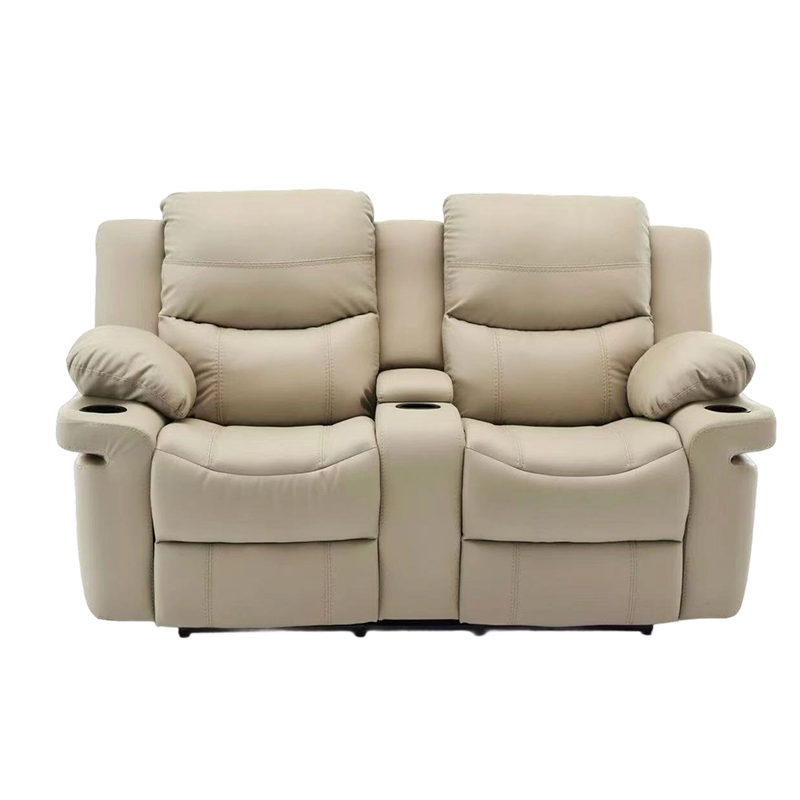
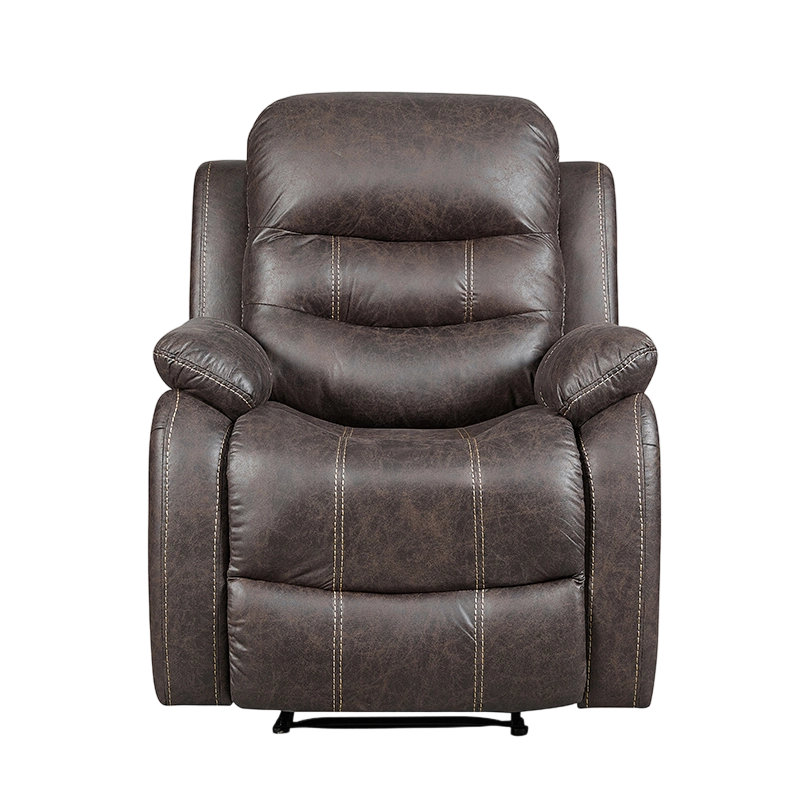
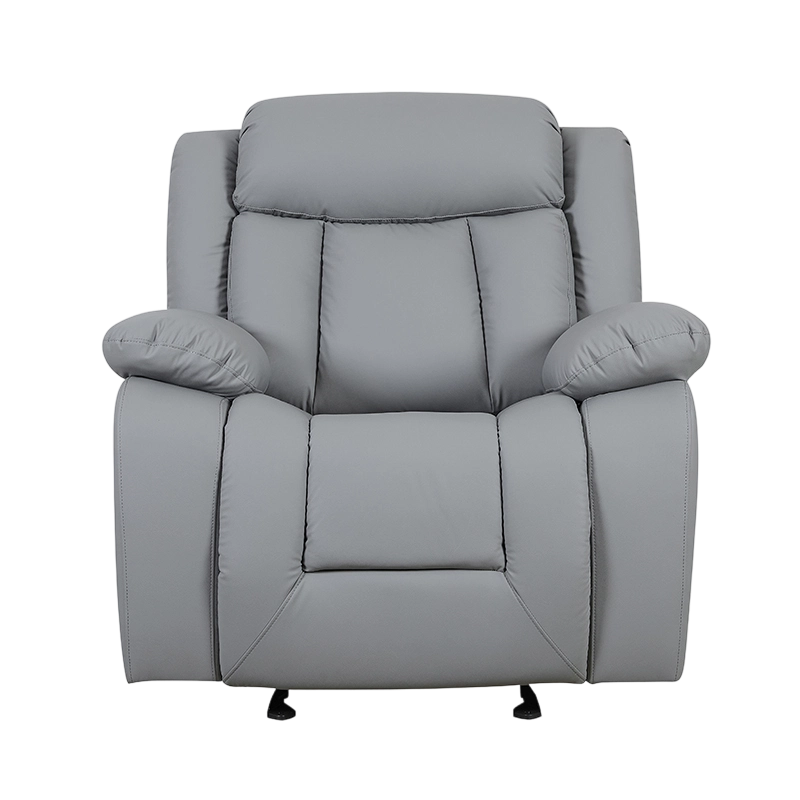
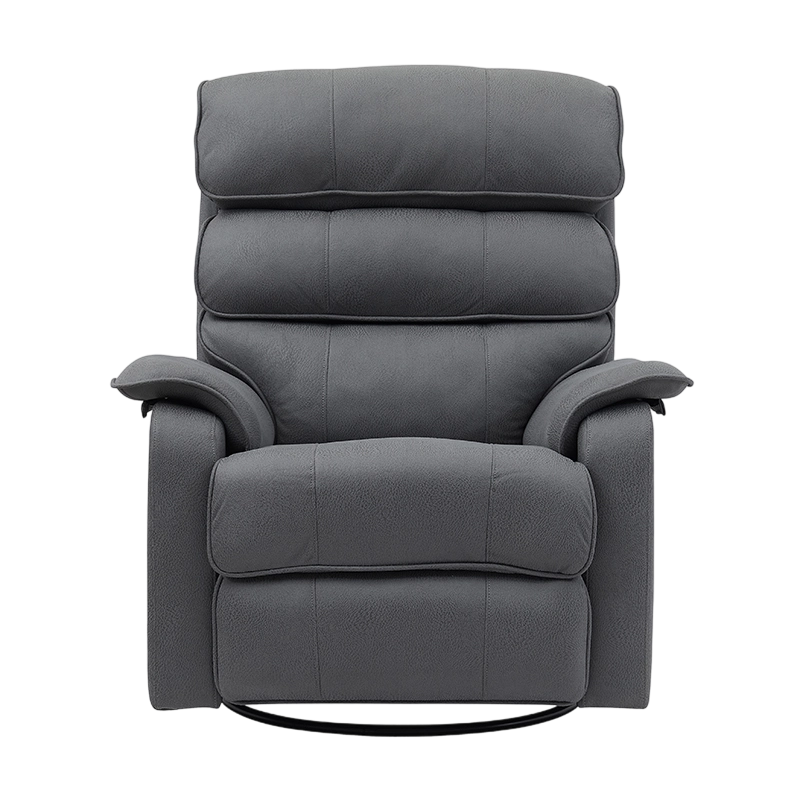
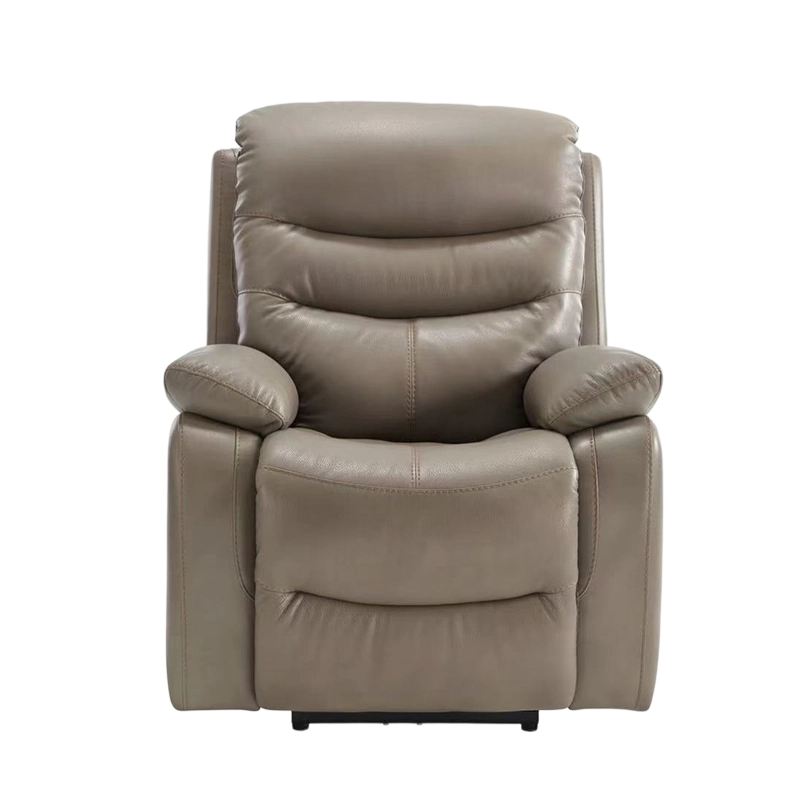
- 19 Product: 35.8''w Leather Manual Recliner Chair with Rolled Arms
A well-designed recliner should do more than provide a place to sit. It should support the body, encourage relaxation, fit naturally into the room, and remain dependable through years of everyday use. The 35.8-inch-wide leather manual recliner chair with rolled arms is developed around these practical and comfort-focused expectations. Its transitional silhouette, manual reclining function, layered upholstery construction, reinforced frame, and adaptable customization options make it suitable for residential interiors, reading areas, nurseries, hospitality settings, and furniture programs that require reliable quality at scale.
This recliner combines the familiar appeal of a classic armchair with the functional benefits of a manual footrest. A tab-pull mechanism allows the user to adjust the chair without relying on motors, electrical components, or remote controls. The result is a straightforward seating solution that offers controlled relaxation while maintaining a clean, uncluttered appearance. Its smooth body-touch upholstery, rolled arms, attached cushions, and supportive padding create a balanced product that is comfortable without appearing oversized or visually heavy.
Behind the finished product is a manufacturing system designed to support customization, quality control, and export-oriented production. Anji Xuanbo Household Co., Ltd. operates in Anji County, Zhejiang Province, an area widely recognized for its chair and furniture manufacturing expertise. The company integrates product research and development, industrial design, manufacturing, marketing, and technical service. Its own wooden frame factory and sponge processing plant help provide greater control over materials, production scheduling, and cost management than a business that relies entirely on external suppliers.
Product Overview and Design Purpose
The recliner is designed for consumers who want the comfort of a functional chair without the visual complexity of a large power recliner or sectional sofa. Measuring approximately 35.8 inches wide, 38.2 inches deep, and 41.7 inches high, it offers a substantial personal seating area while remaining suitable for many living-room layouts. The proportions are broad enough to support relaxed sitting but compact enough to work in reading nooks, nurseries, bedrooms, home offices, and smaller family rooms.
The rolled arms contribute to the chair’s traditional comfort appeal. They provide a soft visual transition from the back to the seat and create a supportive place for the arms while reading, watching television, or resting. At the same time, the overall shape remains sufficiently modern for contemporary interiors. This combination of transitional and modern styling gives the chair greater market flexibility than a highly ornate traditional recliner or an aggressively minimalist lounge chair.
The chair is supplied as one reclining chair. Its removable seat back helps simplify transportation, handling, and setup. This feature is particularly valuable for distributors, retailers, project buyers, and consumers who must move the chair through narrow doorways, staircases, elevators, or compact delivery routes. A removable back can also make packaging more efficient and may help reduce the difficulty of final assembly at the destination.
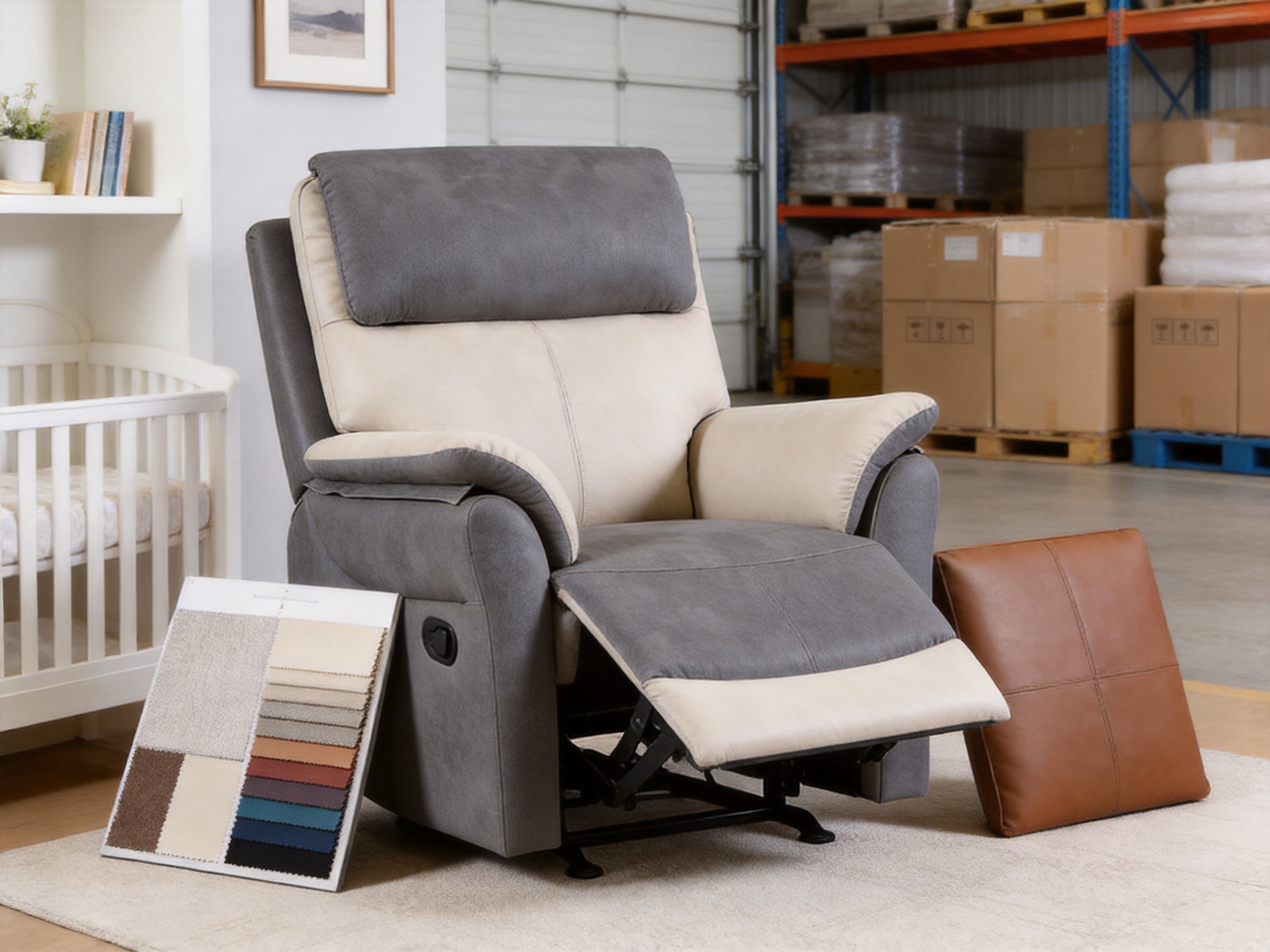
The product is available in a beige presentation according to the supplied product information, while the specification also refers to slate gray top leather on body-touch areas. This difference reflects the importance of confirming the final color and upholstery sample before production or ordering. Custom colors and fabrics are supported, allowing buyers to coordinate the recliner with a private-label collection, hospitality palette, interior design scheme, or regional market preference.
Key Product Specifications
| Specification | Details |
|---|---|
| Product type | Manual recliner chair |
| Primary style | Transitional with modern contemporary elements |
| Overall width | Approximately 35.8 inches |
| Overall depth | Approximately 38.2 inches |
| Overall height | Approximately 41.7 inches |
| Weight capacity | Up to 350 pounds |
| Reclining method | Manual tab-pull mechanism |
| Upholstery construction | Leather on body-touch areas with faux leather on sides and back, subject to confirmed specification |
| Seat support | High-density foam padding over pocket coils |
| Frame construction | Solid wood and plywood with a metal-reinforced seat |
| Back construction | Attached back cushion with removable seat back for transport and setup |
| Customization | Custom colors and fabrics available |
| Recommended uses | Living rooms, reading nooks, nurseries, bedrooms, lounges, and selected commercial interiors |
The specifications show that the recliner is built around a practical balance of function, comfort, durability, and shipping convenience. Rather than concentrating all value in decorative details, the design uses structural and ergonomic features that affect the daily seating experience. The pocket-coil foundation, high-density foam, reinforced seat, and manual mechanism are especially important because they influence how the chair feels and performs after repeated use.
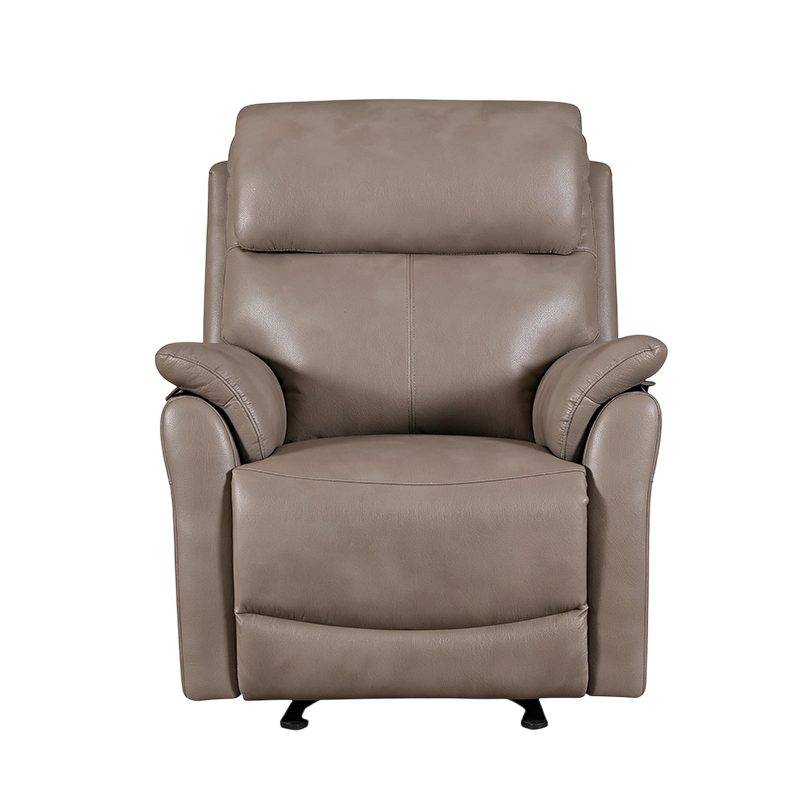
35.8''w Leather Manual Recliner Chair with Rolled Arms
Layered Upholstery for Comfort and Value
One of the product’s central advantages is its mixed upholstery construction. The surfaces that come into direct contact with the user are wrapped in smooth leather, while faux leather is used on the sides and back. This arrangement focuses the premium touch and appearance of leather where it matters most during normal use, while using a complementary material on areas that receive less direct contact.
This approach can offer several practical benefits. First, it helps create a comfortable and refined seating surface. Leather is valued for its smooth hand feel, distinctive appearance, and ability to contribute to an upscale furniture presentation. Second, the use of faux leather on the exterior sides and rear can support more efficient material planning and help control the overall product cost compared with a chair upholstered entirely in the same leather specification.
For retailers and contract buyers, mixed-material upholstery can make it easier to position the chair between entry-level fabric recliners and fully leather-covered premium recliners. It can deliver a more elevated appearance than a basic textile chair while maintaining a commercially accessible price structure, depending on the final material grade and order configuration. The result is a product that can serve several market segments without requiring the visual bulk or higher cost of a fully upgraded leather construction.
Material confirmation is important because upholstery performance depends on the exact grade, finish, backing, and production treatment. Buyers should approve color swatches and upholstery samples before mass production. This is especially relevant when a collection includes multiple furniture pieces that must match under showroom lighting or within a coordinated interior project.
Leather and Faux Leather Placement
The body-touch areas include the seat, back, arm contact zones, and other surfaces that users commonly touch while sitting. These areas are positioned to provide the direct comfort and visual character expected from a leather recliner. The sides and back are finished in faux leather, helping create a consistent exterior appearance while supporting production efficiency.
For many room layouts, the chair will be positioned with its front and sides visible. In these situations, the mixed upholstery arrangement provides the premium look where it is most noticeable. If the chair is intended for a floating layout, a lobby, or an open-plan space where the rear is prominently visible, buyers should confirm the final rear upholstery specification and color coordination.
Care and Maintenance Considerations
The supplied care guidance recommends cleaning with dry-cleaning solvent only and avoiding saturation with water. This instruction should be followed carefully because excessive moisture may affect upholstery appearance, backing materials, foam, or the structure beneath the cover. The product information also notes that pile fabrics may require brushing to restore their appearance. Although this recliner is described primarily with leather and faux leather surfaces, the care direction is relevant when fabric customization is selected.
Routine maintenance should begin with gentle dust removal using a soft, clean cloth or an approved upholstery tool. Spills should be addressed promptly according to the confirmed material supplier’s instructions. Strong household cleaners, abrasive tools, unapproved conditioners, and excessive rubbing should be avoided unless specifically authorized for the selected upholstery. For commercial installations, a written care schedule can help extend appearance and reduce preventable damage.
Supportive Seating Construction
The seat is constructed with high-density foam padding over pocket coils. This layered system is designed to provide a combination of softness, resilience, and underlying support. Foam creates the initial comfort layer, while pocket coils help distribute sitting pressure and contribute to a more structured seating feel. Compared with a simple loose-fill cushion, this combination can offer a more consistent seat profile and better support for repeated daily use.
High-density foam is commonly selected for furniture because it can maintain its shape more effectively than lower-density cushioning under comparable conditions. However, actual performance depends on foam density, compression characteristics, user weight, use frequency, temperature, and maintenance. The product’s stated weight capacity is 350 pounds, and users should observe that limit to support safe and appropriate operation.
The pocket-coil construction also helps distinguish the chair from basic recliners that rely solely on a foam block or an inexpensive elastic support system. Each pocketed coil can respond with a degree of localized movement, helping the seat conform to different pressure points. This can contribute to a more comfortable experience when sitting upright or reclining. The seat is further supported by a metal-reinforced structure, which is intended to provide additional strength in an area exposed to repeated loading and movement.
Attached Cushions and Tailored Appearance
The attached back and seat cushions create a clean, tailored look. Unlike loose cushions that may shift, require frequent adjustment, or interrupt the chair’s visual lines, attached cushions remain integrated with the frame. This is particularly useful for a recliner because the seat and back must work with the reclining motion while maintaining a controlled appearance.
An attached cushion design can also simplify daily care. Users do not need to repeatedly reposition cushions after standing up or reclining. For retailers and commercial buyers, the tailored profile can help the chair appear organized and showroom-ready with less styling effort. The structured look also supports the product’s transitional design, allowing it to fit into rooms that favor a neat, coordinated appearance.
Manual Reclining Function
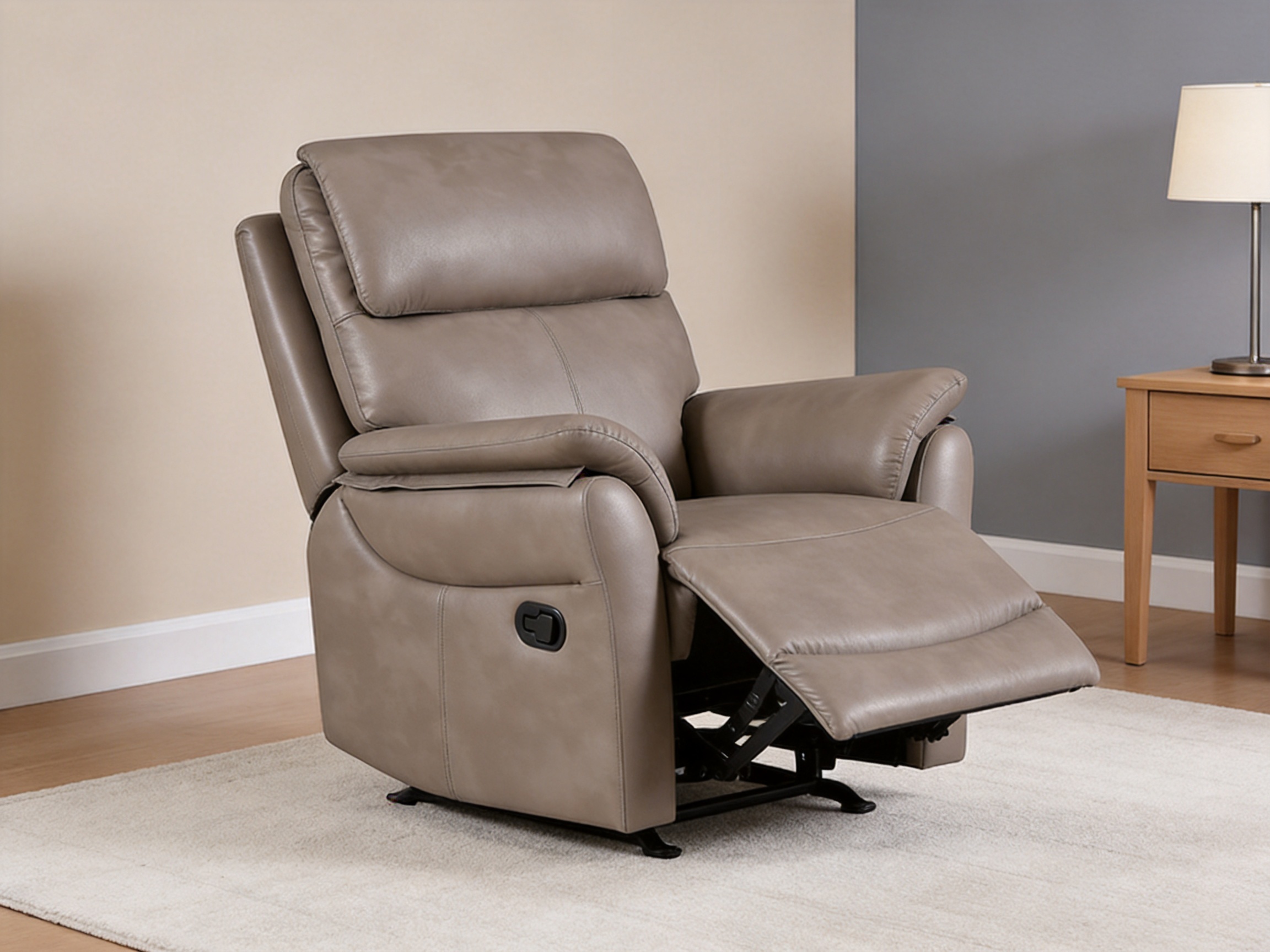
The manual tab-pull reclining mechanism is a straightforward alternative to a power-operated system. By pulling the tab, the user can release the footrest and move into a more relaxed position. Manual operation does not require an electrical outlet, power cord, motor, control panel, or remote battery. This allows the chair to be positioned more freely within the room and reduces the number of components that must be managed during installation and use.
A manual mechanism may be especially attractive for buyers seeking a dependable, easy-to-understand product. It is suitable for users who prefer physical control and for locations where electrical access is limited. The absence of a motor can also help maintain a simpler product architecture. While powered recliners offer additional adjustment possibilities, a manual recliner can provide the essential function of foot and leg elevation with fewer electronic parts.
The tab-pull control is positioned for convenient access. Its operation is intentionally uncomplicated: the user pulls the tab to open the reclining function and returns the footrest to the closed position when finished. As with any reclining furniture, the area around the footrest should remain clear of children, pets, loose objects, and other obstructions during operation.
Correct Footrest Retraction Method
The product information provides a labor-saving method for retracting the footrest. The user should sit forward, lean forward, and use the heels to press against the middle of the footrest. This motion helps guide the footrest back into its closed position without excessive force or awkward body movement.
Using the center of the footrest is preferable to pushing unevenly on one side. Balanced pressure can help the mechanism close more smoothly and reduce unnecessary stress on the linkage. Users should never force the footrest if an object is trapped underneath or if the mechanism does not move normally. The chair should be inspected and serviced by qualified personnel if unusual noise, resistance, or instability develops.
Frame Strength and Structural Reliability
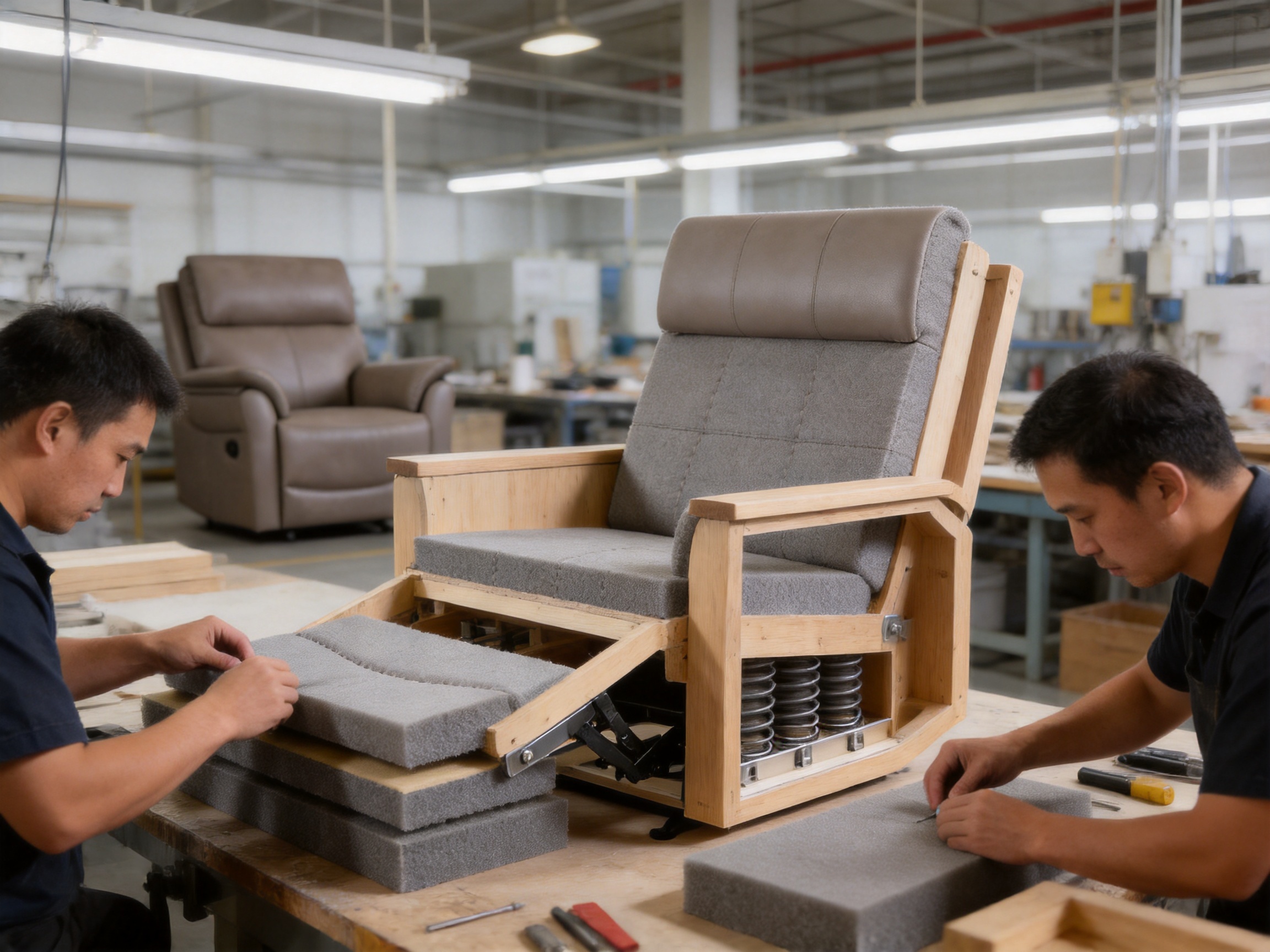
The frame combines solid wood and plywood with a metal-reinforced seat. This construction reflects a practical approach to furniture engineering. Solid wood can provide dependable structural support in selected frame areas, while plywood offers dimensional consistency and efficient panel construction. The metal reinforcement helps address the forces created when the user sits down, shifts position, reclines, and returns the footrest.
Reclining chairs experience more movement than fixed lounge chairs. The frame must accommodate the user’s weight as well as the mechanical action of the footrest and reclining linkage. Reinforcement in the seat area is therefore important. The specified construction is intended to provide a stable foundation for the cushioning and upholstery while supporting the product’s stated 350-pound weight capacity.
Durability is not determined by one material alone. It depends on the quality and moisture content of the wood, the accuracy of component cutting, joint design, hardware selection, adhesive application, mechanical installation, foam performance, upholstery tension, and final inspection. An integrated manufacturing organization can monitor these factors more consistently when key processes are coordinated within the same production system.
Transport-Friendly Design
The removable seat back is a practical feature for both logistics and consumer convenience. A complete recliner can be difficult to carry through narrow spaces because of its height and depth. Detaching the back can reduce the handling profile and make it easier for two people to move the chair safely.
For export furniture, transport-friendly design can also support packaging and container planning. Efficient packing may help improve loading utilization and reduce unnecessary handling during delivery. The exact logistics benefit depends on packaging design, order quantity, destination requirements, and shipping configuration, but the removable back provides a useful foundation for easier transportation.
Design Versatility Across Interior Settings
The chair’s dimensions and styling allow it to serve multiple interior applications. In a living room, it can function as an individual relaxation seat alongside a sofa or sectional. In a reading nook, the manual reclining feature supports extended reading or quiet rest. In a nursery, it can provide a comfortable adult seat for feeding, soothing, or nighttime care, subject to the buyer’s preferred upholstery and cleaning requirements.
In bedrooms and home offices, the recliner can provide an alternative to a traditional armchair. Its footrest creates a more relaxed posture during breaks, while its compact width helps preserve usable floor space. In hospitality or lounge environments, the chair may be considered for selected applications where a manual seating product is preferred and where the upholstery specification meets the project’s maintenance requirements.
The transitional styling is a significant commercial advantage. Highly specialized designs may appeal strongly to one narrow consumer group but become difficult to place in different collections. This chair combines rolled arms and a familiar recliner profile with a clean, contemporary finish. As a result, it can coordinate with traditional wood furniture, modern sofas, neutral décor, and mixed-style rooms.
Room Planning and Placement
Before placing the chair, buyers should allow adequate clearance for the footrest and reclining movement. The chair should not be pushed tightly against a wall or positioned where the extended footrest blocks a main walkway. A stable, level floor is recommended. Rugs should be secured where necessary to reduce the risk of movement during use.
The chair’s 35.8-inch width makes it easier to integrate into a room than many oversized recliners, but the overall depth and reclining clearance must still be considered. In a compact room, the chair may work best along a side wall, beside a reading lamp, or at an angle near a sofa. In a larger room, two matching chairs could create a balanced conversation area, subject to the selected color and project requirements.
Advantages Compared with Competing Recliner Formats
The product competes with several categories, including basic fabric recliners, full-leather recliners, power recliners, fixed lounge chairs, and oversized motion furniture. Its advantage is not that it replaces every category, but that it combines selected benefits in a balanced format.
| Comparison point | 35.8-inch manual recliner | Basic fixed armchair | Power recliner | Oversized recliner |
|---|---|---|---|---|
| Reclining function | Manual footrest and back adjustment | Not available | Motorized adjustment | Usually available, depending on model |
| Electrical requirement | None | None | Usually required | Often required if power-operated |
| Placement flexibility | High, because no power cord is needed | High | Dependent on outlet access and cable planning | Lower because of larger footprint |
| Seating support | High-density foam over pocket coils | Varies by model | Varies by model | Varies by model |
| Upholstery strategy | Leather body-touch areas with faux leather exterior areas, subject to confirmation | Often fabric or synthetic upholstery | Leather, faux leather, or fabric | Wide range of specifications |
| Room suitability | Living rooms, reading areas, nurseries, and compact spaces | General seating areas | Spaces with convenient electrical access | Larger rooms |
| Transport consideration | Removable seat back | Varies | Often heavier because of motors | Often more difficult to handle |
Compared with a fixed armchair, this product adds a footrest and reclining function without requiring a motor. Compared with a power recliner, it avoids electrical installation and can be placed in more locations. Compared with an oversized recliner, its dimensions are easier to integrate into rooms where floor space is limited. Compared with a basic synthetic recliner, the body-touch leather surfaces and pocket-coil seating can create a more premium experience.
Its mixed upholstery construction may also offer a cost and material advantage over a chair upholstered entirely in leather. For buyers who want leather contact surfaces but do not require full leather coverage on every exterior panel, this approach can provide a sensible specification balance. The exact commercial advantage depends on leather grade, faux leather quality, order volume, packaging, and destination market.
Advanced Manufacturing Capabilities
The manufacturing strength behind the product is based on vertical coordination and specialized furniture experience. The company was established in 2021 and operates in Anji County, Huzhou City, Zhejiang Province, a region known internationally for chair production. The factory covers approximately 8,000 square meters and employs more than 100 people. Its operations include research and development, industrial design, large-scale manufacturing, independent marketing, and technical services.
This combination of functions can shorten communication paths between product development and production. When design, engineering, sourcing, manufacturing, and service teams work within a coordinated organization, product feedback can be transferred more efficiently. A design adjustment can be assessed not only for appearance but also for material availability, assembly requirements, packaging, production time, and quality inspection.
The company’s own wooden frame factory and sponge processing plant are important advantages. The frame is the foundation of a recliner, and the foam directly influences seating comfort. Internal control over these areas can make it easier to manage specifications and production consistency. It can also support faster response when a buyer requests a change in frame detail, foam configuration, cushion firmness, or upholstery format.
Wooden Frame Production
Wooden frame manufacturing requires accurate cutting, stable material preparation, reliable joints, and careful dimensional control. Recliner frames must be produced to accommodate upholstery, cushions, hardware, and motion components. Small dimensional variations can affect the fit of covers, alignment of the seat, and operation of the footrest mechanism.
An in-house frame facility can help coordinate these factors from the beginning of the production process. Frame parts can be prepared according to approved technical drawings, assembled with attention to structural points, and reviewed before moving to later stages. This supports a more controlled transition from raw material to upholstered product.
The use of solid wood and plywood allows the frame to combine structural strength with efficient panel construction. Different frame areas can be assigned appropriate materials according to load, shape, connection, and production requirements. The metal-reinforced seat further supports the region that experiences repeated pressure and motion.
Sponge Processing and Cushion Control
The company’s sponge processing capabilities support control over foam cutting and cushion preparation. Foam components must be shaped accurately to fit the seat, back, and arm areas. Poorly cut foam may create uneven surfaces, irregular upholstery tension, or premature changes in appearance. Proper processing helps create a more consistent cushion profile.
High-density foam over pocket coils is selected for the seating area to provide a structured comfort experience. Cushion firmness can be an important customization consideration because preferences differ by market and application. A residential customer may prefer a softer initial feel, while a commercial project may prioritize a more supportive and resilient seating profile. Final foam specifications should be confirmed during product development and sample approval.
Upholstery and Assembly Coordination
Upholstery production brings together fabric or leather inspection, pattern cutting, sewing, foam fitting, frame preparation, and final covering. Each step affects the finished appearance. Rolled arms require accurate shaping and balanced cover tension. Attached cushions must be positioned correctly so that the seat and back maintain a clean appearance during use. The reclining mechanism must remain accessible and operate without interference from the upholstery.
Coordinated assembly helps reduce the risk of mismatched materials or inconsistent construction between production batches. It also allows quality personnel to check the product at several stages rather than relying solely on a final visual inspection. This is especially important for export orders, private-label collections, and large-volume furniture programs.
Quality Inspection and International Market Readiness
The company emphasizes multi-stage quality inspection and compliance with international market standards. Quality control for a recliner should cover more than surface appearance. A complete inspection program may review frame stability, hardware installation, seat alignment, upholstery stitching, cushion dimensions, reclining operation, footrest retraction, packaging integrity, and labeling requirements.
Appearance inspection is necessary because upholstery is the most visible part of the product. Inspectors can review color consistency, seam alignment, wrinkles, loose threads, surface marks, and the transition between leather and faux leather panels. Structural inspection is equally important. The chair should remain stable on the floor, and the frame should not produce abnormal movement or noise under normal use.
Functional inspection should confirm that the tab-pull mechanism engages correctly and that the footrest opens and closes smoothly. The attached cushions should remain properly positioned, while the removable back should be secure after installation. Packaging inspection helps ensure that the chair is protected during handling, loading, transportation, and final delivery.
International market readiness involves understanding that different regions may have different expectations for materials, dimensions, labeling, packaging, documentation, and product testing. The company’s experience exporting to North America, Europe, the Middle East, and other regions provides exposure to varied market requirements. Buyers should still confirm the exact standards and certifications required for their destination and product category before placing an order.
Export Logistics Advantages
The factory’s location near Ningbo Beilun Port provides a logistical advantage for export-oriented furniture programs. Access to a major port can support practical coordination of container loading, document processing, and international shipping schedules. For large furniture orders, shipping efficiency is influenced by product packaging, carton dimensions, loading plans, production completion dates, and port arrangements.
The removable seat back and organized packaging design can complement this export capability. Better product handling may help reduce delivery complications, although all transportation results depend on the carrier, route, packaging method, and destination conditions. Buyers should work with the manufacturer to confirm carton specifications, loading quantities, protective materials, and inspection procedures.
Customization for Different Markets
Custom colors and fabrics are supported, which expands the recliner’s usefulness for distributors, wholesalers, hospitality buyers, furniture brands, and interior design projects. Color customization can help align the chair with an existing sofa collection or a seasonal retail palette. Fabric customization can provide an alternative to leather and faux leather when softness, breathability, texture, or project-specific performance is preferred.
Customization may involve more than changing the upholstery. Depending on the order and engineering requirements, buyers may discuss cushion firmness, contrast stitching, logo labels, packaging artwork, carton marks, arm details, seat construction, or other product elements. Each change should be evaluated for tooling, minimum order quantity, lead time, material availability, and testing needs.
A clear sample approval process is essential. The buyer and manufacturer should confirm the final dimensions, upholstery material, color, stitching, cushion feel, reclining operation, packaging, and labeling before mass production. Written approval reduces the risk of differences between an initial concept and the completed production run.
Private-Label and Collection Development
The recliner can serve as a standalone item or as part of a broader upholstered furniture collection. Its transitional-modern design can be adapted to coordinate with sofas, love seats, corner sofas, lounge chairs, and other seating products. A coordinated collection may use matching upholstery, complementary colors, consistent stitching, or shared arm and cushion details.
For private-label customers, the manufacturer’s integrated R&D and industrial design capabilities can support the development of market-specific products. A buyer may require a narrower profile for urban apartments, a different material for a hospitality setting, or a more neutral palette for a broad retail audience. Product development is most efficient when the desired changes are identified early and incorporated into the technical design before production begins.
Company Manufacturing Strengths
Anji Xuanbo Household Co., Ltd. focuses on sofas and chairs, including functional sofas, fixed sofas, corner sofas, lounge chairs, recliner sofas, love seats, and leisure chairs. This product range provides experience across different upholstery structures, seating formats, and customer requirements. Knowledge gained from one product category can support improvements in another. For example, expertise in cushion preparation, frame construction, or upholstery fitting can be applied to both fixed and motion furniture.
The company’s approximately 8,000-square-meter factory and workforce of more than 100 employees provide a production foundation for both standard and customized furniture. A professional management team coordinates product positioning, manufacturing, quality control, and customer service. This is valuable for buyers who need an ongoing supply partner rather than a one-time product source.
Its stated business advantages include full-chain cost and capacity control through its own frame and sponge facilities, strong customization capabilities, multi-stage inspection, export logistics near Ningbo Beilun Port, and long-term industry experience. These strengths are especially relevant when purchasing upholstered furniture in volume. Buyers need confidence that the supplier can maintain product consistency, respond to changes, and support the order beyond the initial sample stage.
Research and Development
Research and development in upholstered furniture involves more than creating a new appearance. It includes improving comfort, examining frame construction, selecting materials, refining motion mechanisms, planning packaging, and responding to market preferences. A product such as this recliner must balance dimensions, sitting posture, reclining clearance, upholstery tension, structural strength, and manufacturing cost.
Industrial design adds another layer by ensuring that practical components do not compromise the appearance. The tab-pull mechanism must remain accessible without becoming visually distracting. The rolled arms must provide comfort while retaining an appropriate profile. The removable back must support transportation while remaining secure and visually integrated after installation.
Service and Long-Term Cooperation
Technical service is important when a product is customized or supplied across international markets. Buyers may need assistance with assembly instructions, upholstery selection, packaging requirements, quality documentation, loading plans, replacement components, or product adjustments. A manufacturer that combines technical knowledge with customer service can help resolve these matters more efficiently.
The company’s stated goal is to build a modern enterprise focused on quality and customer satisfaction. Its operating principles emphasize quality, service, honesty, practicality, and continuous improvement. For buyers, these values are most meaningful when reflected in clear communication, accurate samples, consistent production, realistic delivery schedules, and responsive after-sales support.
Recommended Buying and Evaluation Process
When evaluating this recliner for a retail or project order, buyers should begin by confirming the intended use. Residential, hospitality, nursery, and commercial applications may have different requirements for upholstery durability, cleaning, color consistency, packaging, and compliance documentation.
The next step is to review the technical specification. Confirm the overall dimensions, seat height, seat depth, reclined dimensions, weight capacity, material composition, cushion construction, frame materials, and mechanism type. The supplied dimensions are approximately 35.8 inches wide, 38.2 inches deep, and 41.7 inches high, but buyers should request a complete technical drawing if the chair must fit within a defined room or container plan.
Upholstery samples should be approved before production. This is particularly important because the supplied information references both beige and slate gray presentations, as well as leather and faux leather placement. The final purchase specification should clearly identify the body-touch material, exterior material, color codes, grain or texture, stitching color, and any custom fabric requirements.
A physical sample should then be reviewed for comfort and operation. The buyer should sit in the chair in both upright and reclined positions, test the tab-pull mechanism, observe footrest movement, inspect the seams and cushions, and verify that the removable back can be installed securely. If the product is intended for a collection, the sample should also be viewed beside the related sofa or chair designs.
Finally, the buyer should confirm packaging, carton markings, inspection procedures, shipping terms, production schedule, spare-part policy, and documentation. A carefully defined approval process helps protect both the buyer and manufacturer by establishing a shared reference for mass production.
Comfort and Everyday User Experience
The chair’s comfort comes from the interaction of several features rather than one isolated component. The rolled arms create a supportive side profile. The attached back and seat cushions preserve a tailored shape. High-density foam provides a resilient upper layer, while pocket coils create structured support beneath the seat. The reclining mechanism allows the user to shift from conventional upright sitting to a more relaxed leg-elevated position.
This combination makes the chair suitable for activities that involve extended sitting, including reading, watching programs, resting, listening to music, or spending quiet time with family. The manually controlled footrest gives the user an immediate physical response without requiring a remote or electrical adjustment system.
Comfort preferences vary substantially. Some users prefer a firm, supportive seat, while others favor a softer, deeper feel. The product’s base construction provides a strong platform for customization discussions, but the exact comfort experience should be assessed through an approved sample. Buyers ordering for a particular market should consider local expectations regarding seat firmness, arm height, back angle, and upholstery hand feel.
Safety, Care, and Responsible Use
The chair should be used on a stable surface and within its stated 350-pound weight capacity. Users should sit centrally rather than placing concentrated weight on the arm, footrest edge, or partially extended mechanism. Children should not play on the footrest, and pets should be kept away from moving parts during operation.
The footrest area should remain clear. Objects placed beneath the chair may interfere with retraction or damage the mechanism. When closing the footrest, users should follow the recommended method of leaning forward and pressing the middle of the footrest with the heels. Sudden impact, excessive force, or uneven side pressure should be avoided.
Upholstery should be maintained according to the confirmed material instructions. The supplied care guidance advises the use of dry-cleaning solvent only and warns against saturating the surface with water. Users should test any approved cleaning product on an inconspicuous area first and should consult the material supplier when dealing with difficult stains or customized fabrics.
Q&A
What type of chair is this product?
It is a manual recliner chair with rolled arms, a built-in footrest, and a tab-pull reclining mechanism. It is designed for individual seating in living rooms, reading areas, nurseries, bedrooms, and other suitable interiors.
What are the overall dimensions?
The listed dimensions are approximately 35.8 inches wide, 38.2 inches deep, and 41.7 inches high. Buyers should request a complete technical drawing for exact planning, especially when the chair must fit through restricted access points or into a precisely measured room.
Does the chair require electricity?
No. The chair uses a manual tab-pull mechanism, so it does not require a power outlet, motor, remote control, or electrical cable for reclining.
How is the footrest retracted?
The recommended method is to sit forward, lean forward, and use the heels to press against the middle of the footrest. Balanced pressure helps guide the footrest back into position. The area under the footrest should be clear before closing.
What materials are used for the upholstery?
The supplied specification describes leather on body-touch areas and faux leather on the sides and back. The information also references slate gray top leather and a beige color option, so the final color and material combination should be confirmed through the approved order specification and samples.
What supports the seat?
The seat uses high-density foam padding over pocket coils. This construction is intended to provide a combination of resilient comfort and underlying support. The seat also includes metal reinforcement as part of the structural construction.
What is the weight capacity?
The listed weight capacity is 350 pounds. Users should remain within this limit and operate the chair according to the supplied instructions.
Can the upholstery be customized?
Yes. Custom colors and fabrics are supported. The final possibilities, minimum order quantities, lead times, and material availability should be confirmed with the manufacturer before ordering.
Is the back removable?
Yes. The removable seat back is intended to make transport and setup easier. It can help with moving the chair through narrow doorways, stairways, elevators, and other restricted spaces.
How does this chair compare with a power recliner?
The manual design does not provide motorized adjustment, but it avoids the need for electricity and may offer greater placement flexibility. It also uses a simpler operating system and can be attractive to buyers who prefer direct physical control.
How does the mixed upholstery compare with full leather?
The leather body-touch areas provide a premium contact surface, while faux leather on the sides and back can support material efficiency and cost management. A full-leather specification may be available as a customization option, subject to confirmation.
What types of buyers may be interested in this product?
Potential buyers include furniture retailers, wholesalers, importers, interior designers, hospitality suppliers, private-label brands, and project purchasers seeking a compact manual recliner with customization options and export manufacturing support.
Where is the manufacturer located?
The manufacturer is located in Bai Shuiwan Industrial Park, Tian Huangping Town, Anji County, Huzhou City, Zhejiang Province, China. Anji is widely recognized for its chair manufacturing industry, and the factory is positioned near Ningbo Beilun Port for export logistics.
What should be confirmed before placing a large order?
Buyers should confirm the final upholstery materials and colors, dimensions, cushion firmness, reclining operation, packaging, labeling, quality requirements, certifications, production schedule, shipping terms, and sample approval details. These points are particularly important when the product is customized for a specific market.
Conclusion
The 35.8-inch leather manual recliner chair is a balanced solution for buyers seeking comfort, practical function, and broad interior compatibility. Its manual tab-pull mechanism provides reclining convenience without electrical dependence. Its leather body-touch surfaces and faux leather exterior areas create a premium-oriented upholstery presentation while supporting material and cost flexibility. High-density foam over pocket coils, attached cushions, a metal-reinforced seat, and a frame made from solid wood and plywood contribute to a supportive and dependable construction.
The chair also benefits from a transport-friendly removable back, a compact yet comfortable profile, rolled arms, and a style that combines transitional familiarity with contemporary simplicity. These characteristics help it compete across several furniture categories, from basic armchairs to power recliners and oversized motion seating.
Its commercial value is strengthened by the manufacturer’s integrated capabilities. In-house wooden frame and sponge processing, research and development, industrial design, multi-stage quality inspection, customization support, international market experience, and export logistics near Ningbo Beilun Port provide a solid foundation for both standard orders and customized programs.
For the best result, buyers should treat the chair as a complete furniture system rather than evaluating upholstery alone. Frame construction, foam preparation, pocket-coil support, mechanism performance, material selection, packaging, inspection, and after-sales service all contribute to the final product experience. With clear specifications and thorough sample approval, this manual recliner can become a practical addition to residential collections, commercial furniture programs, and global upholstered seating portfolios.
References
1. Product specification sheet for the 35.8-inch leather manual recliner chair with rolled arms.
2. Upholstered furniture construction and material selection guidelines.
3. General furniture upholstery care and maintenance recommendations.
4. Manual recliner mechanism operation and user safety guidance.
5. International upholstered furniture quality inspection principles.
6. Company profile and manufacturing capability information supplied by Anji Xuanbo Household Co., Ltd.
Product: 35.8''w Leather Manual Recliner Chair with Rolled Arms

LET'S TALK

Bai Shuiwan Industrial Park, Tian Huangping Town, Anji County, Huzhou City, Zhejiang Province, China
More About Us 
-
+86 18257273741
-
[email protected]
CONTACT US
Copyright © Anji Xuanbo Household Co., Ltd. All Rights Reserved.
Custom Modern Upholstered Sofa Manufacturers


