Focus on the manufacturing and export of functional sofas
-
 +86 18257273741
-
 [email protected]

 English
 Español

Liu Yiran — After-Sales Service Specialist
 Home / Author / Liu Yiran — After-Sales Service Specialist / 360-Degree Swivel Manual Rocking Recliner Sofa Chair: Comfort, Craftsmanship, and Custom Manufacturing Advantages
360-Degree Swivel Manual Rocking Recliner Sofa Chair: Comfort, Craftsmanship, and Custom Manufacturing Advantages
 2026.09.10
 Liu Yiran — After-Sales Service Specialist
Content
- 1 Introduction
- 2 Product Overview
- 3 Functional Comfort for Everyday Living
- 4 Materials and Structural Construction
- 5 Advantages Compared with Conventional Recliners
- 6 Manufacturing Strengths
- 7 Quality Control and Production Consistency
- 8 Customization for International Markets
- 9 Applications in Residential and Commercial Spaces
- 10 Care and Maintenance
- 11 Logistics and Export Readiness
- 12 Why Manufacturing Partnership Matters
- 13 Purchasing Considerations
- 14 Frequently Asked Questions
- 14.1 What type of product is this?
- 14.2 Does the chair require electricity?
- 14.3 How far does the backrest recline?
- 14.4 Can the chair swivel completely around?
- 14.5 Does it rock as well as recline?
- 14.6 What is the chair’s weight capacity?
- 14.7 What are the product dimensions?
- 14.8 What materials are used in the frame?
- 14.9 Is the seat cushion removable?
- 14.10 What upholstery is available?
- 14.11 How should the upholstery be cleaned?
- 14.12 How should the footrest be retracted?
- 14.13 What makes the product different from a basic recliner?
- 14.14 Can the chair be customized for a furniture collection?
- 14.15 What manufacturing advantages does the supplier offer?
- 14.16 Where can the chair be used?
- 15 Conclusion
- 16 References
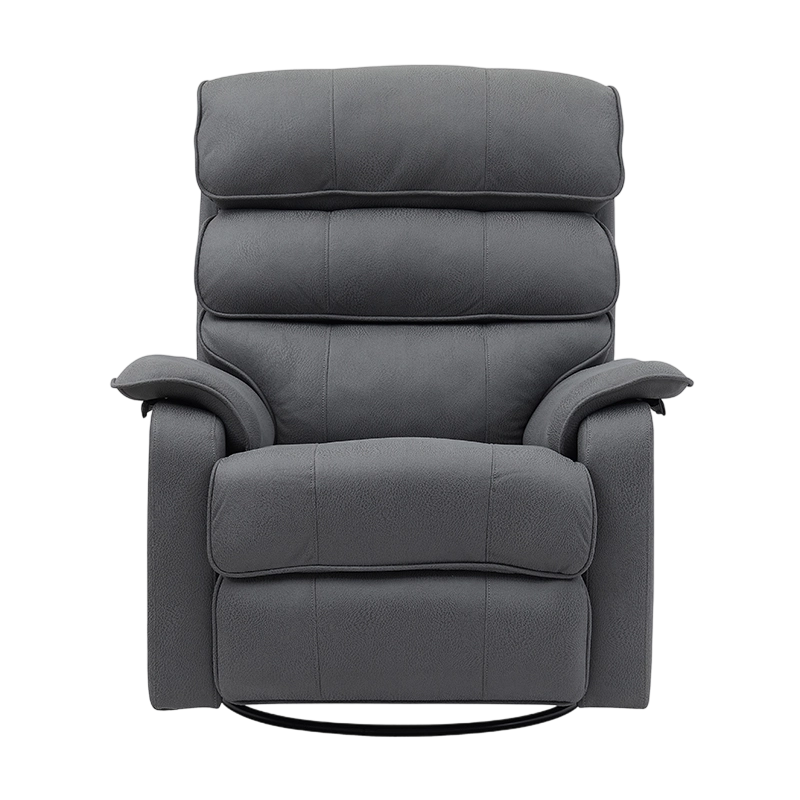
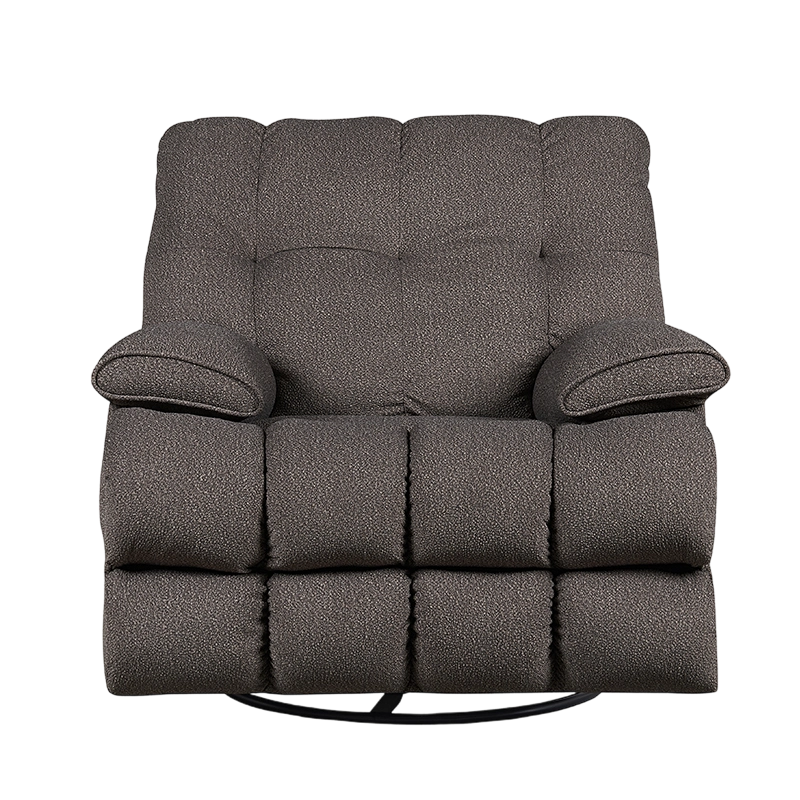
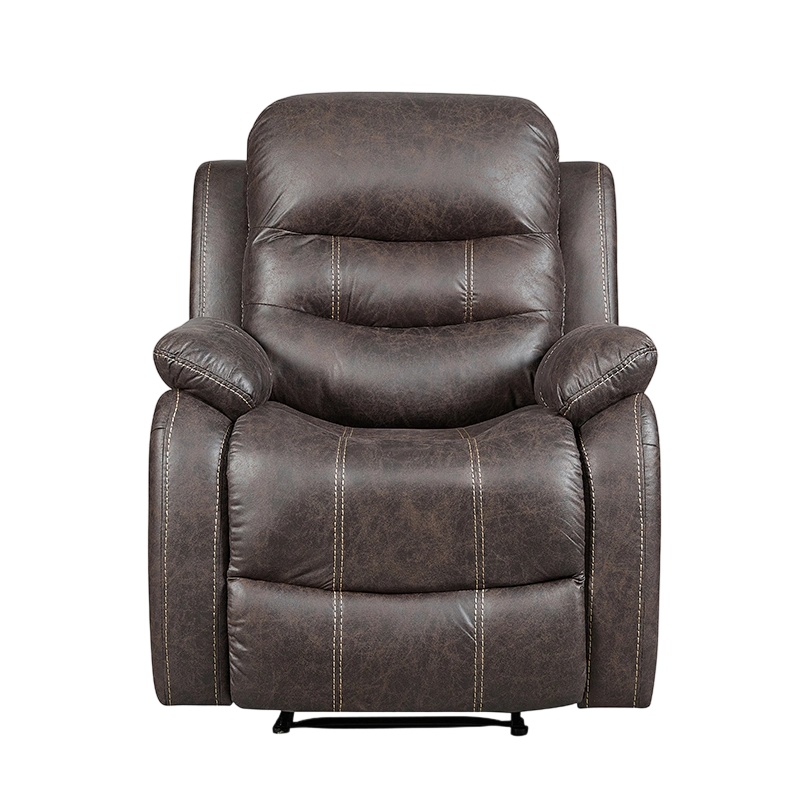
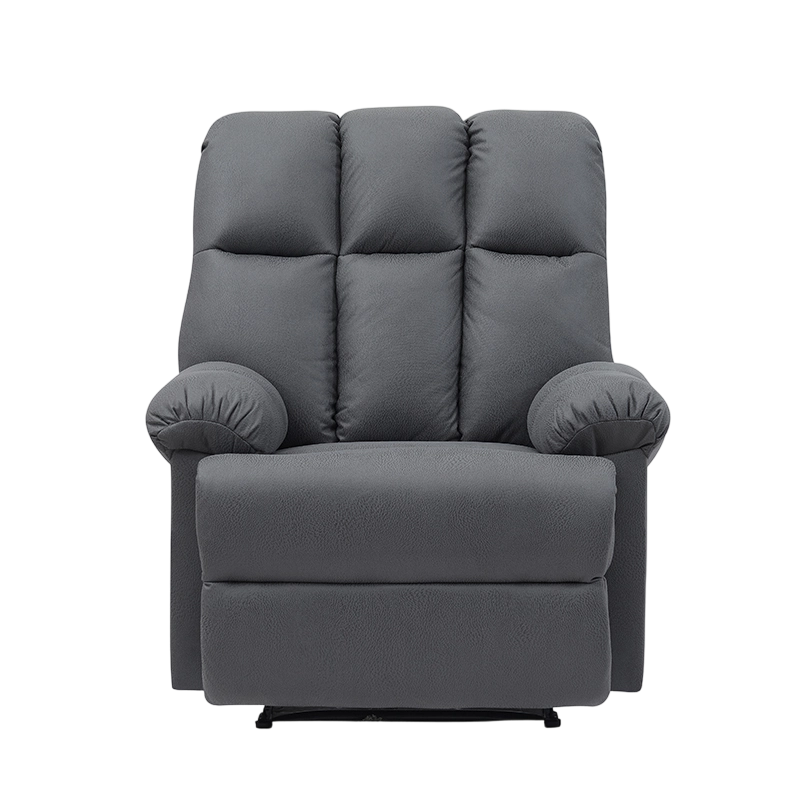
- 17 Product: 360 Degree Swivel Lazy Manual Rocking Recliner Sofa Chair for Living Rooms, Bedrooms
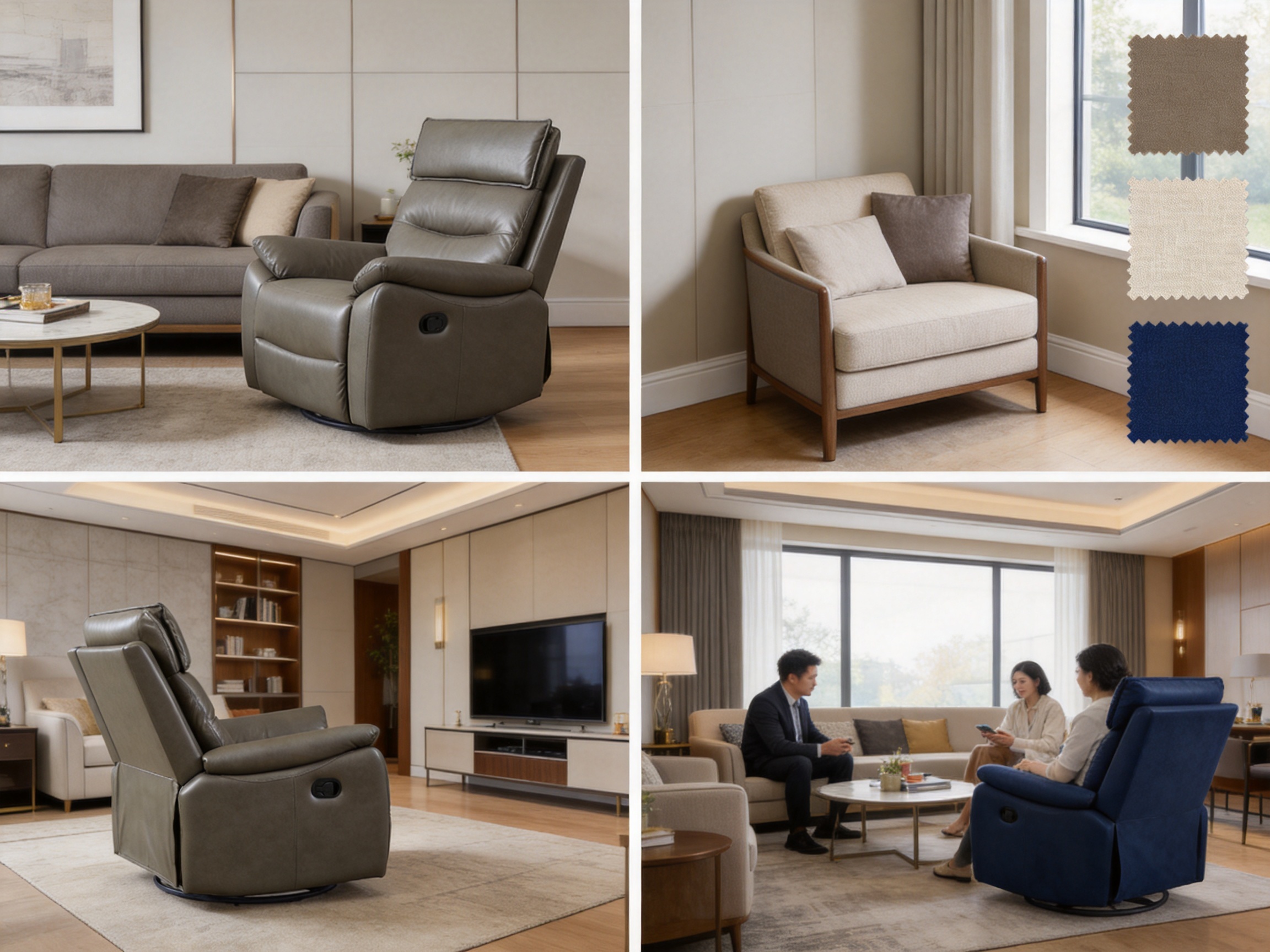
Introduction
Modern homes increasingly require furniture that performs more than one function. A living room chair should provide a comfortable place to sit, support relaxed conversation, offer a practical position for reading or watching television, and create a private space for rest. The 360-degree swivel lazy manual rocking recliner sofa chair is designed to meet these changing expectations through a combination of movement, cushioning, durable construction, and adaptable styling.
Unlike a conventional armchair that remains fixed in one position, this manual recliner is designed for multiple modes of relaxation. Its swivel function allows the user to turn smoothly toward different areas of a room, while the rocking base adds gentle motion. The reclining backrest offers two practical positions, approximately 110 degrees and 145 degrees, making the chair suitable for upright leisure, casual work, television viewing, reading, napping, and deeper relaxation.
The product is manufactured by Anji Xuanbo Household Co., Ltd., a professional furniture enterprise based in Anji County, Huzhou City, Zhejiang Province, China. The company specializes in functional sofas, fixed sofas, corner sofas, lounge chairs, recliner sofas, love seats, and leisure chairs. Its capabilities extend from research and development to industrial design, frame manufacturing, sponge processing, final assembly, quality inspection, and export logistics.
For buyers, distributors, interior designers, and project purchasers, the value of this recliner is not limited to its appearance. Its competitive strength comes from a carefully considered product structure, an efficient manufacturing system, customization support, and a production organization designed to control quality and cost from the inside. This makes the chair suitable for residential rooms, apartment developments, hospitality environments, leisure areas, showrooms, and furniture retail programs.
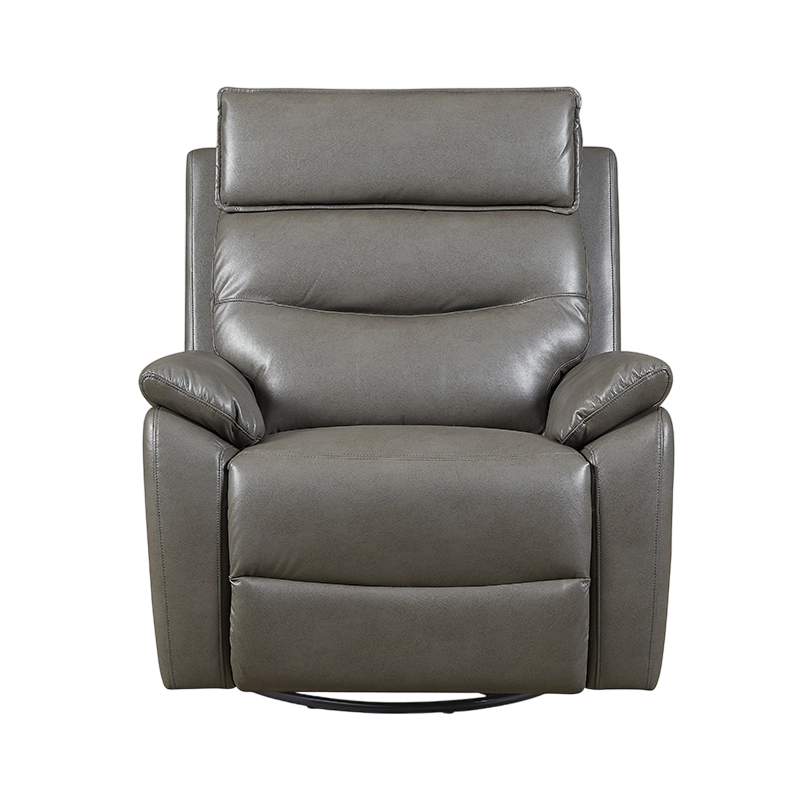
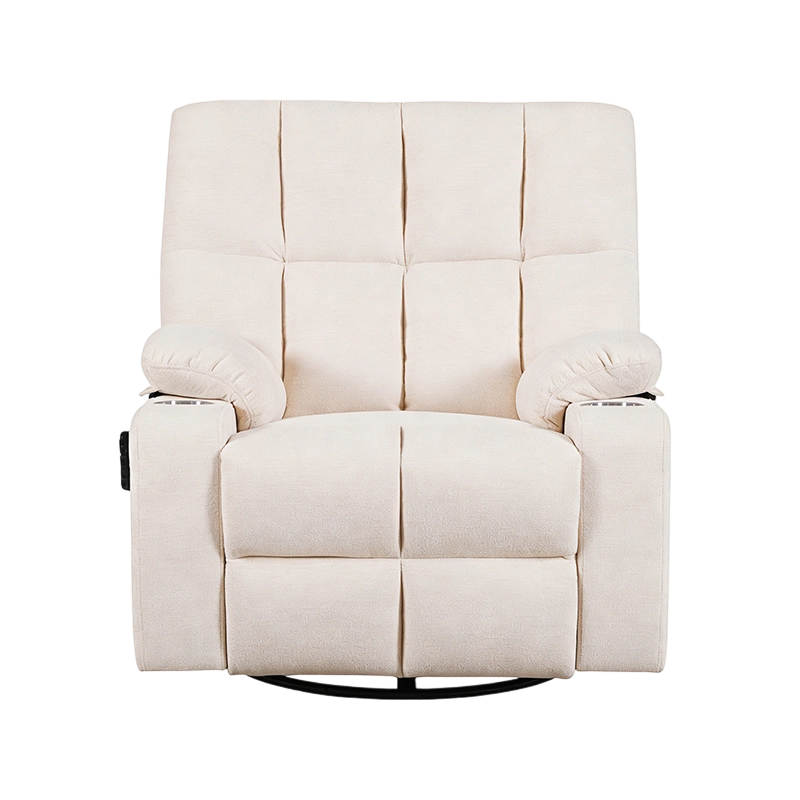
360 Degree Swivel Lazy Manual Rocking Recliner Sofa Chair for Living Rooms, Bedrooms
Product Overview
The 360-degree swivel lazy manual rocking recliner sofa chair is a single-seat reclining chair intended for living rooms, bedrooms, family rooms, reading corners, entertainment spaces, and other areas where comfort is important. It combines a generously padded form with a pull-tab reclining mechanism. The simple manual operation avoids the need for an electrical connection, which can make installation easier and reduce dependence on power outlets.
The chair is offered in dark gray as a standard visual option, while custom colors and fabrics can be supported according to project requirements. Its polished leather upholstery creates a smooth, refined appearance, and the overall design is enhanced by contrast piping. The piping gives definition to the chair’s contours while contributing to a more tailored furniture appearance.
A key feature is the balanced relationship between support and softness. The backrest and armrests are overstuffed to provide a comfortable, enveloping feeling. The seat uses foam padding over pocket coils, combining resilient support with a cushioned surface. This construction is intended to reduce the flat, compressed feeling that can occur in basic foam-only seating after repeated use.
The backrest is attached, and the seat cushion is also designed as an attached cushion. This helps maintain the intended appearance of the chair during daily use and reduces the need to reposition loose cushions. At the same time, the seat back is removable, which can assist with handling, delivery, and assembly.
The chair measures approximately 35.4 inches wide, 37 inches deep, and 41.3 inches high. Its stated weight capacity is 350 pounds. These dimensions give the chair a substantial presence without requiring the floor area of a full sofa. It can therefore serve as an individual comfort seat or be combined with other sofas and chairs to form a complete living-room arrangement.
Functional Comfort for Everyday Living
Swivel Movement
The 360-degree swivel function gives the user greater freedom than a stationary recliner. In an open-plan living room, the chair can be turned toward a sofa, coffee table, television, window, or conversation area. In a bedroom, it can face a bedside table, a reading lamp, or a particular view. This flexibility helps the chair adapt to changing activities without requiring the user to move the entire piece of furniture.
Swivel movement can also improve the practical use of compact rooms. A fixed chair may need to be positioned carefully to face one direction, while a swivel recliner can be placed more freely. This allows interior designers and homeowners to focus on circulation and visual balance instead of orienting every seat toward a single focal point.
Rocking Action
The rocking function introduces gentle motion for users who enjoy a more relaxed seating experience. Rocking can make the chair feel less rigid than a standard recliner and can support quiet activities such as reading, listening to music, resting, or settling down after a busy day. The rocking design also contributes to the chair’s “lazy” or lounge-oriented character without compromising its usefulness as an everyday seat.
Manual Reclining
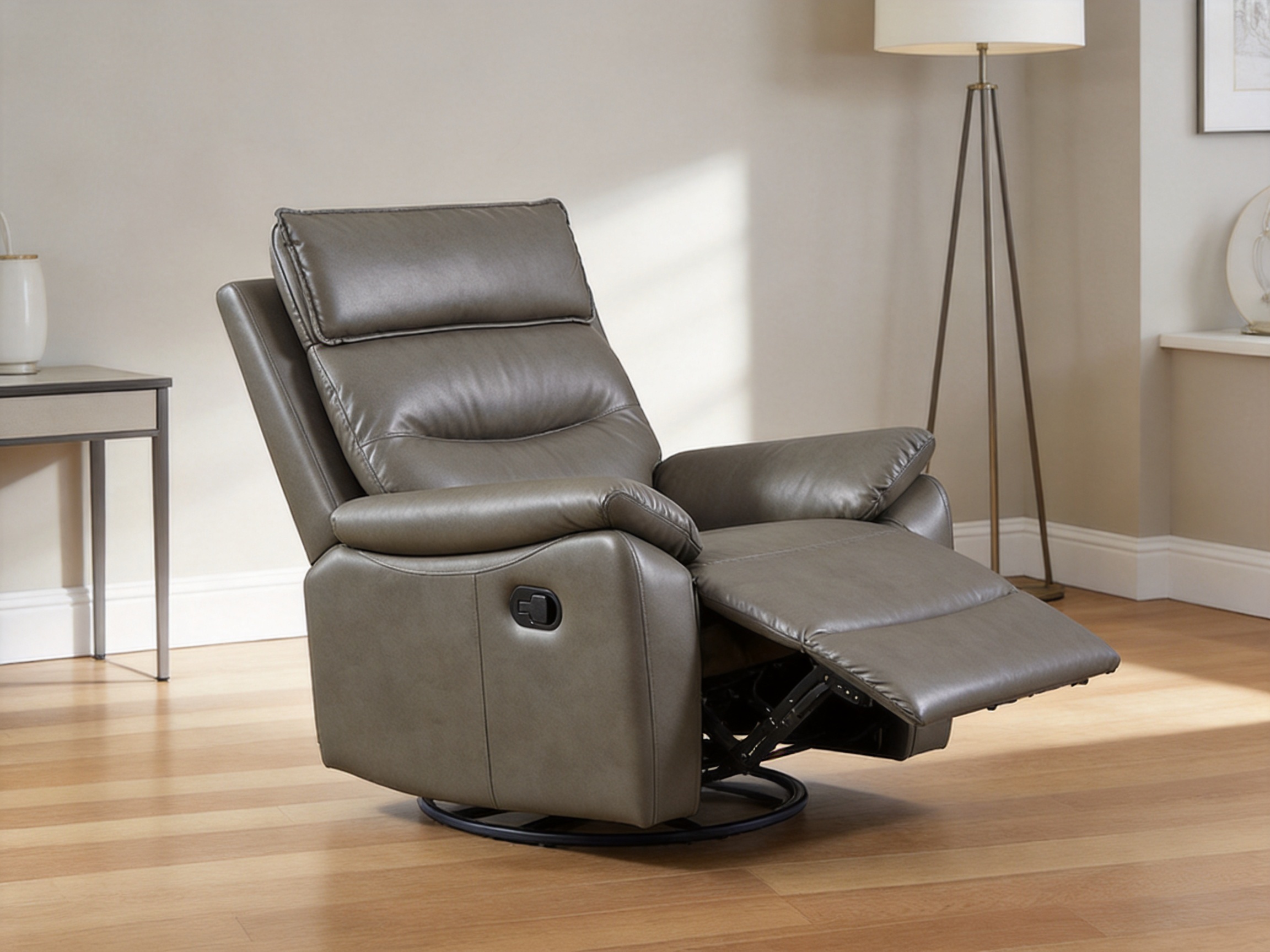
The one-pull reclining motion is straightforward to operate. By using the pull tab, the user can extend the footrest and move the backrest into a more open position. Manual reclining can be particularly attractive for buyers who prefer a simple mechanism and do not require powered adjustment. It also avoids the need to place cords across the floor or reserve a nearby outlet.
The backrest reclines to approximately 110 degrees or 145 degrees. The more upright angle can support conversation, reading, relaxed computer use, or television viewing. The deeper angle is more suitable for napping and extended rest. This range provides a practical transition from an ordinary lounge chair to a more private reclining space.
Footrest Retraction
Proper footrest operation is important for both convenience and long-term user satisfaction. The recommended retracting method is designed to be correct and labor-saving. The user should sit forward, lean forward, and use the heels to press against the middle of the footrest. This action helps guide the footrest back into its closed position without excessive force or awkward movement.
Including clear operating guidance is an important detail for furniture suppliers. When products are sold internationally, customers may not be familiar with the specific motion required by a manual recliner. Providing instructions helps reduce misuse, supports a better ownership experience, and can reduce unnecessary service inquiries.
Materials and Structural Construction
Frame Engineering
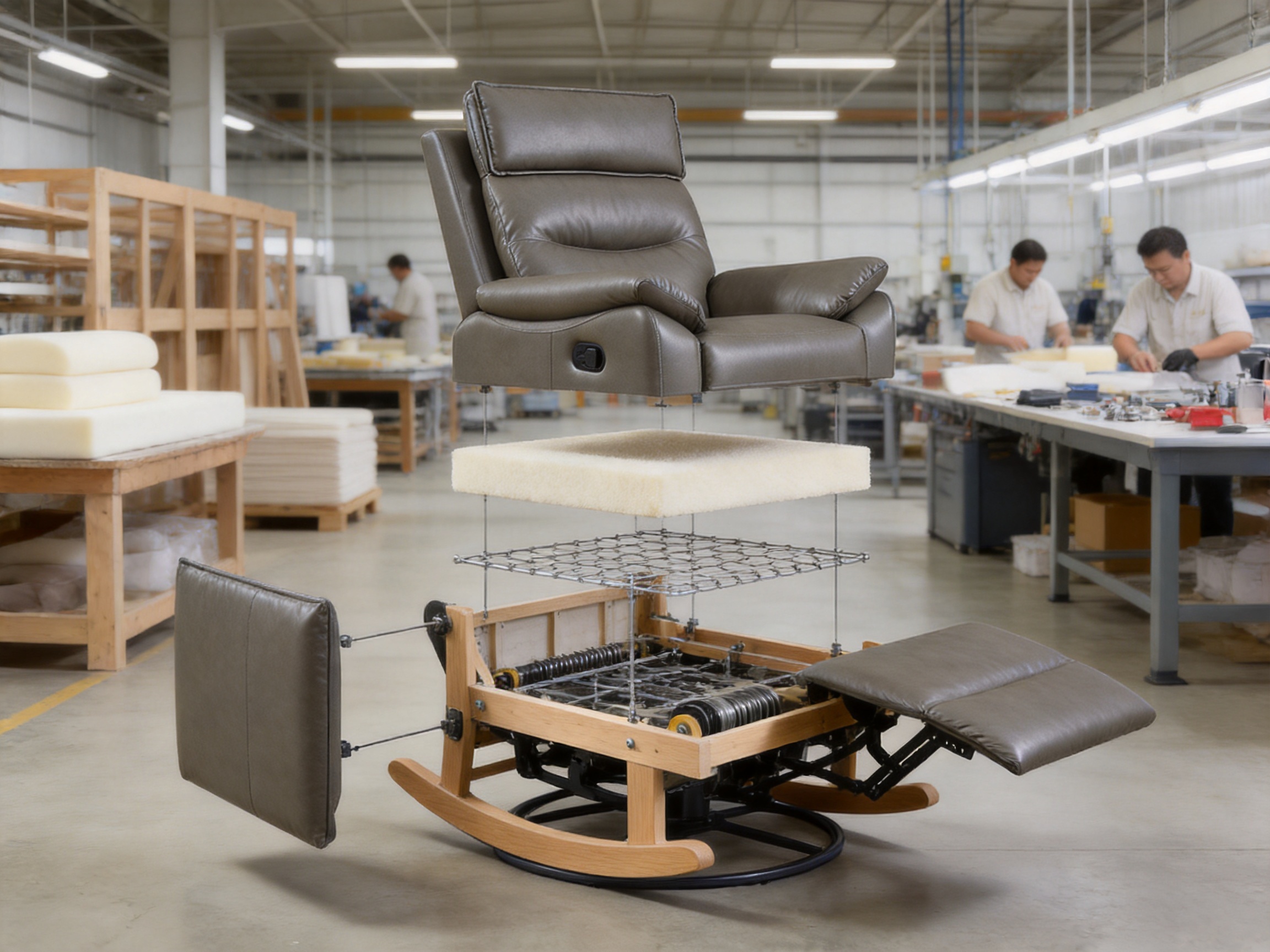
The internal frame is constructed from solid wood and plywood, with a metal-reinforced seat. This combination is intended to provide a practical balance between strength, weight, manufacturability, and cost. Solid wood can contribute to structural stability in key frame areas, while plywood supports consistent panel dimensions and efficient production. Metal reinforcement in the seat adds additional support in a zone that receives repeated loading.
Frame quality is one of the most important differences between a reliable recliner and a low-cost imitation. Upholstery and surface appearance may be immediately visible, but the frame determines how the chair handles everyday sitting, reclining, rocking, and movement. A properly prepared frame also supports accurate attachment of the mechanism, cushions, arms, and upholstery.
Because the manufacturer operates its own wooden frame factory, it can exercise greater control over frame specifications and production scheduling. This internal capability may reduce dependence on external frame suppliers and make it easier to implement design changes. It also allows the company to coordinate frame production with upholstery and final assembly requirements.
Seat Cushion System
The seat cushion uses pocket coil springs covered with premium foam. Pocket coils are individually enclosed spring elements that can provide resilient support and help distribute pressure across the seating surface. The foam layer adds softness and comfort above the spring system, creating a more substantial sitting experience than a thin cushion with limited internal support.
This construction is advantageous for a recliner because the seat must remain comfortable in more than one position. When the chair is upright, the cushion supports normal sitting. When the backrest reclines and the footrest extends, the seat and body position change. A resilient internal system can help the chair retain a stable and comfortable feel across these uses.
Backrest and Armrests
The overstuffed backrest provides cushioning for the shoulders and upper back. Its generous padding is appropriate for a product designed around extended rest rather than short-term occasional seating. The overstuffed armrests add side support and contribute to the chair’s soft visual character.
Attached back and seat cushions support a neat appearance. Loose cushions can shift during reclining and may require regular adjustment, while attached cushions remain aligned with the frame. The removable seat back adds a practical advantage during shipping, installation, and movement through narrow entrances.
Upholstery and Surface Appearance
The chair uses polished leather upholstery in the described configuration, with support for custom fabrics and colors. Bonded leather upholstery can provide a smooth surface, a coordinated appearance, and straightforward visual maintenance when cared for properly. The dark gray color is versatile and can complement contemporary, industrial, minimalist, transitional, and casual interior styles.
Custom upholstery support is especially important for commercial buyers and furniture brands. Different markets may prefer particular colors, textures, or materials. A retailer may require a collection that matches an existing product line, while a hotel or apartment project may need a specific palette. The ability to discuss alternative fabrics and colors makes the product more adaptable than a fixed, one-color offering.
Contrast piping gives the chair a defined outline. This detail can emphasize the shape of the arms, seat, and backrest while creating a more finished appearance. It also provides an opportunity for coordinated or contrasting customization when a buyer is developing a private-label or project-specific collection.
Advantages Compared with Conventional Recliners
More Movement in One Chair
A conventional stationary recliner normally points in one direction. The user must either accept that orientation or physically move the chair. By combining swivel and rocking functions with reclining, this product supports a wider range of room layouts and personal preferences. It offers the comfort of a recliner while responding more naturally to open-plan spaces and multi-purpose rooms.
The 360-degree swivel is especially useful when several activities take place in the same area. A user may rotate toward a family conversation, then turn toward a screen, and later face a window or side table. This multi-directional function improves the chair’s daily usability without requiring additional furniture.
More Complete Cushioning
Many basic chairs focus on appearance while using limited padding. This model is designed with an overstuffed backrest, padded armrests, and a foam-over-pocket-coil seat. The result is a more supportive and layered seating experience. Buyers who compare products based on long-duration comfort may find this construction more appealing than a thinly padded chair.
Manual Simplicity
Powered recliners can provide push-button adjustment, but they also require motors, wiring, controls, and power access. A manual recliner offers a simpler operating system. It can be positioned in locations where an outlet is unavailable, and its installation does not depend on electrical connections. For hospitality, rental, or high-volume residential projects, this simplicity may reduce installation complexity.
A manual mechanism also gives the user direct physical control. The pull-tab operation is familiar to many consumers and does not require learning a digital control system. This can be a practical advantage in guest rooms, senior living environments, family rooms, and other settings where ease of use is important.
Adaptable Aesthetic
The dark gray finish provides broad design compatibility, while custom fabrics and colors expand the product’s commercial potential. Some competing recliners are strongly associated with a single decorative style or a limited selection of materials. This chair’s clean lines, contrast piping, and flexible upholstery options allow it to move between casual home interiors and more coordinated contract furnishing programs.
Suitable Scale
At approximately 35.4 inches wide, the chair provides a generous seating area while remaining more space-efficient than a two-seat or three-seat recliner sofa. It can be used as a standalone accent chair, placed beside a sofa, or arranged in pairs. Its scale is suitable for bedrooms, reading corners, apartments, family rooms, and compact lounges where a full recliner sofa may be too large.
| Feature | 360-Degree Swivel Manual Recliner | Conventional Stationary Chair | Typical Powered Recliner |
|---|---|---|---|
| Movement | Swivels 360 degrees and rocks | Usually fixed in one direction | May recline electrically; swivel and rocking vary |
| Reclining operation | One-pull manual motion | Usually no reclining function | Motorized control |
| Power requirement | No electrical connection required | No electrical connection required | Normally requires an outlet or battery system |
| Seat construction | Foam padding over pocket coils | Varies; often basic foam or fixed padding | Varies by model |
| Upholstery options | Dark gray standard; custom colors and fabrics supported | Usually fixed by collection | Depends on supplier |
| Frame | Solid wood and plywood with metal-reinforced seat | Varies by manufacturer | Varies by manufacturer |
| Stated capacity | 350 pounds | Depends on product | Depends on product |
Manufacturing Strengths
Integrated Product Development
Anji Xuanbo Household Co., Ltd. combines research and development, industrial design, manufacturing, marketing, and technical services. This integrated structure allows product concepts to be evaluated from several perspectives before they reach the market. Comfort, appearance, assembly, material selection, production efficiency, and export requirements can be considered together instead of being managed as disconnected tasks.
For a functional recliner, integration is particularly valuable. A design must accommodate the reclining mechanism, frame structure, upholstery pattern, cushion dimensions, shipping requirements, and user operation. Changes to one component can affect several others. A coordinated product development process can help reduce such conflicts and improve consistency between the design concept and the finished product.
Own Wooden Frame Factory
The company’s own wooden frame factory is an important manufacturing advantage. The frame is the foundation of a recliner, and in-house production can provide greater control over wood selection, cutting, shaping, reinforcement, drilling, joining, and dimensional accuracy. It may also support more efficient customization for customers requiring changes to width, upholstery, or collection styling.
Internal frame manufacturing helps the company control cost and capacity throughout the supply chain. It can coordinate frame output with upholstery schedules and adjust production more quickly when order quantities change. For buyers, this can contribute to more dependable lead-time planning and better communication about product modifications.
Own Sponge Processing Plant
The company also operates its own sponge processing plant. Foam and sponge components influence seating comfort, cushion shape, recovery, and overall appearance. Internal processing allows the manufacturer to coordinate foam cutting and preparation with the dimensions of the frame, seat springs, backrest, and armrests.
In a recliner, foam accuracy matters because cushions must work with moving components. Excess material can interfere with the mechanism, while insufficient material can create visible gaps or reduce comfort. Coordinated sponge processing helps the factory maintain the intended relationship between softness, support, upholstery tension, and movement.
Full-Chain Cost and Capacity Control
Owning key production resources gives the company greater control over costs and capacity. Instead of relying entirely on multiple outside suppliers, it can manage important stages internally and coordinate purchased components with its own production departments. This structure can be beneficial for both standard orders and customized programs.
Cost control does not simply mean reducing material quality. It also involves reducing avoidable handling, improving production planning, limiting unnecessary transportation between suppliers, and using equipment and labor more efficiently. Capacity control helps the manufacturer evaluate whether a project can be produced consistently at the required volume and within the desired schedule.
Professional Management and Technical Services
The company employs a professional management team and provides technical services alongside manufacturing. This is valuable for international buyers who may require detailed product specifications, assembly guidance, packaging information, fabric details, and after-sales support. A product is more commercially useful when technical communication is clear and consistent from quotation through delivery.
Technical services are also important when a customer requests custom colors, fabrics, dimensions, or packaging. The manufacturer must understand how the requested changes affect materials, production steps, quality control, and shipping. A coordinated technical process helps transform a general design request into a manufacturable product specification.
Quality Control and Production Consistency
Quality control for a recliner should cover more than the final appearance. It should begin with incoming materials and continue through frame construction, spring and foam preparation, mechanism installation, upholstery, assembly, functional testing, and final inspection. The manufacturer emphasizes strict multi-stage quality inspection, which supports a systematic approach to product reliability.
Frame Inspection
Frame inspection may include checking dimensions, joints, reinforcement, surface preparation, and compatibility with the reclining mechanism. A frame that is not square or accurately assembled can create problems later, including uneven upholstery, movement noise, mechanism misalignment, or difficulty during final assembly.
Cushion and Foam Inspection
Foam components should be evaluated for size, shape, density consistency, and fit. The seat cushion must align with the pocket coil system and upholstery cover. Backrest and armrest padding must maintain the intended fullness without obstructing movement. Proper inspection helps ensure that the finished chair delivers a consistent seating experience across production batches.
Mechanism Testing
The manual reclining system should be checked for smooth operation, correct footrest extension, backrest movement, and secure retraction. Swivel and rocking functions should also be examined for stability and controlled motion. Functional testing is essential because a chair can have an attractive appearance while still failing to meet expectations if its moving components are stiff, noisy, or poorly aligned.
Upholstery Inspection
Upholstery inspection may focus on stitching, piping alignment, surface tension, color consistency, seam placement, and visible defects. The contrast piping is a noticeable design element, so its alignment can strongly influence the perceived quality of the chair. Careful finishing helps preserve the tailored appearance expected from a polished recliner.
Final Inspection
Before shipment, the complete chair should be checked for dimensions, appearance, accessories, labeling, packaging, and operating instructions. A final inspection provides an additional opportunity to identify issues before the product leaves the factory. For export customers, this step supports more reliable arrival conditions and can reduce avoidable claims.
Customization for International Markets
Customization is a significant advantage for furniture importers and brand owners. The standard dark gray model provides a practical starting point, but the manufacturer can support custom colors and fabrics. This makes it possible to adapt the chair to regional preferences, retail collections, hotel design concepts, and residential development specifications.
Color selection can influence the commercial position of the product. Dark gray may appeal to customers seeking a neutral, contemporary tone. Lighter neutrals can support Scandinavian or soft modern interiors, while warmer shades may work with traditional or transitional spaces. More expressive colors can help a retailer build a distinctive accent-chair collection.
Fabric selection can also change the perceived character of the chair. Leather-look upholstery may emphasize a polished and structured appearance, while woven textiles can create a softer, more casual impression. Performance-oriented fabrics may be appropriate for high-use family rooms or hospitality environments, subject to the technical specifications of the selected material.
Buyers should discuss customization requirements early in the order process. Important subjects may include minimum order quantities, sample approval, color standards, fabric availability, packaging, labeling, lead time, and inspection criteria. Early technical confirmation helps protect consistency between approved samples and mass production.
Applications in Residential and Commercial Spaces
Living Rooms
In a living room, the chair can function as a personal relaxation seat, a conversation seat, or a complementary piece beside a sofa. Its swivel function allows the user to participate in different activities without leaving the chair. When paired with a matching or contrasting sofa, it can create a balanced seating arrangement with an additional reclining option.
Bedrooms
The chair is also suitable for bedrooms where a comfortable reading or resting seat is needed. Its compact single-seat format can fit into a corner near a window, dresser, or bookcase. The reclining function offers an alternative to sitting on the bed, while the dark gray upholstery can coordinate with a wide range of bedroom furniture.
Family Rooms and Media Areas
Family rooms and media areas benefit from furniture that supports extended viewing and flexible positioning. A swivel recliner can be turned toward a television or toward other occupants during conversation. The overstuffed padding and deeper reclining angle make it appropriate for long periods of relaxed use.
Apartment and Residential Development Projects
For apartment developers and furnished housing projects, a single recliner can add a premium comfort feature without requiring the space of a larger motion sofa. Its manual operation reduces the need for electrical planning, and its standard dimensions make it easier to incorporate into repeated room layouts.
Hospitality and Leisure Areas
Hotels, guest residences, club lounges, and leisure facilities may use this type of chair in suites, private lounges, entertainment rooms, or relaxation areas. The ability to customize upholstery can help the chair match a specific interior concept. Buyers should confirm the required performance standards, cleaning expectations, and usage conditions for each commercial project.
Care and Maintenance
Proper care helps preserve the appearance and service life of upholstered furniture. The provided care guidance recommends cleaning with dry-cleaning solvent only and warns against saturating the material with water. Excess moisture can affect upholstery, padding, seams, and internal components, so liquid should not be applied casually.
Pile fabrics may require brushing to restore their appearance. This is particularly relevant when a custom fabric with a visible pile or directional surface is selected. Brushing should be performed gently and according to the fabric supplier’s recommendations. Before applying any cleaning product, users should test it in an inconspicuous area and confirm its suitability for the selected upholstery.
Daily maintenance should include removing dust and avoiding sharp objects, excessive friction, and improper use of the footrest. Users should not sit on the extended footrest or place loads on parts of the mechanism that are not designed to support body weight. The recommended footrest retraction method should be followed to reduce unnecessary stress on moving components.
Furniture should also be positioned with adequate clearance around the reclining area. The backrest and footrest need room to move freely. A suitable clearance zone helps prevent contact with walls, tables, cabinets, and other furniture, reducing the possibility of damage during normal operation.
Logistics and Export Readiness
Anji Xuanbo is located in Anji County, Huzhou City, Zhejiang Province, with convenient access to Ningbo Beilun Port. This location supports export logistics and can help facilitate international shipment planning. The company exports products to North America, Europe, the Middle East, and other regions, giving it experience with the requirements of global furniture buyers.
For an upholstered recliner, packaging must protect the frame, upholstery, arms, mechanism, and detachable components during handling. The removable seat back can support more efficient packaging and easier delivery through doorways. Buyers should confirm carton dimensions, protective materials, loading methods, container quantities, assembly instructions, and inspection procedures before shipment.
Export readiness also involves clear documentation. Product specifications, material information, care instructions, assembly details, packaging marks, and destination requirements should be confirmed in writing. A professional manufacturer can help buyers coordinate these details so that the finished product is easier to receive, distribute, and sell.
Why Manufacturing Partnership Matters
For a distributor or furniture brand, the supplier relationship has a direct effect on product consistency and business risk. A factory that can manage design, frames, foam, upholstery, assembly, inspection, and logistics internally may offer stronger coordination than a trading arrangement dependent on unrelated subcontractors.
Anji Xuanbo’s approximately 8,000-square-meter factory and workforce of more than 100 employees provide a substantial operating base for sofa and chair production. Its product range allows buyers to develop broader collections rather than sourcing every category from a different supplier. A customer may be able to coordinate recliners, fixed sofas, corner sofas, love seats, lounge chairs, and leisure chairs through one manufacturing partner.
The company’s approach is based on quality, service, honesty, practical development, and continuous improvement. These principles are relevant to international buyers because long-term cooperation depends on more than a single shipment. It requires reliable communication, consistent specifications, responsive problem-solving, and a willingness to improve products as market expectations change.
The factory’s customization capabilities also support product differentiation. Retailers face intense competition when selling generic furniture that looks similar to products available from many suppliers. A custom color, fabric, piping treatment, dimension, or collection combination can help create a more distinctive market offering.
Purchasing Considerations
Before placing an order, buyers should confirm the exact upholstery material, color, dimensions, mechanism, weight capacity, packaging, and assembly requirements. The standard product is described in dark gray with polished leather upholstery, but custom selections should be documented through approved samples or written specifications.
Buyers should also consider the intended market. Residential users may prioritize softness, appearance, and easy operation. Hospitality buyers may focus on durability, cleaning, repeatability, and replacement availability. Retailers may need product photography, carton information, display samples, and consistent delivery schedules. Project purchasers may require coordinated colors and quantities across multiple furniture categories.
It is also useful to clarify whether the final product will be shipped assembled or partially assembled. The removable seat back and easy-assembly design may make handling more convenient, but the precise assembly process should be confirmed for each order. Instructions should be available in a clear format for distributors, installers, and end users.
Finally, buyers should establish a quality inspection plan. This may include pre-production sample approval, first-piece inspection, in-process checks, final random inspection, or third-party inspection. Clear standards for upholstery, dimensions, mechanism operation, color, packaging, and labeling can help both parties evaluate the finished order objectively.
Frequently Asked Questions
What type of product is this?
It is a single-seat manual reclining chair with 360-degree swivel and rocking functions. It is designed for living rooms, bedrooms, family rooms, reading corners, entertainment spaces, and leisure areas.
Does the chair require electricity?
No. The chair uses a manual pull-tab reclining motion, so it does not require an electrical outlet or motorized control system.
How far does the backrest recline?
The backrest is described as reclining to approximately 110 degrees or 145 degrees. The more upright position is suitable for reading, conversation, and television viewing, while the deeper position supports napping and extended relaxation.
Can the chair swivel completely around?
Yes. The product is designed with a 360-degree swivel function, allowing the user to turn toward different areas of the room.
Does it rock as well as recline?
Yes. The chair combines rocking, swiveling, and manual reclining functions in one seating product.
What is the chair’s weight capacity?
The stated weight capacity is 350 pounds. Buyers should still follow the manufacturer’s usage instructions and avoid placing excessive loads on the footrest or other moving components.
What are the product dimensions?
The approximate dimensions are 35.4 inches wide, 37 inches deep, and 41.3 inches high.
What materials are used in the frame?
The frame uses solid wood and plywood, with a metal-reinforced seat. The seat cushion uses foam padding over pocket coil springs.
Is the seat cushion removable?
The product is described as having attached back and seat cushions, while the seat back is removable. The removable seat back can assist with handling, delivery, and assembly.
What upholstery is available?
The described configuration uses polished leather upholstery in dark gray. Custom colors and fabrics are supported, subject to confirmation with the manufacturer.
How should the upholstery be cleaned?
The provided care instructions recommend cleaning with dry-cleaning solvent only and advise users not to saturate the material with water. Pile fabrics may require gentle brushing to restore their appearance.
How should the footrest be retracted?
The recommended method is to sit forward, lean forward, and use the heels to press against the middle of the footrest. This is intended to provide a correct and labor-saving retraction motion.
What makes the product different from a basic recliner?
Its main differentiating features are the combination of 360-degree swivel, rocking movement, manual reclining, overstuffed cushioning, pocket coil seat support, contrast piping, custom upholstery support, and a metal-reinforced seat frame.
Can the chair be customized for a furniture collection?
Yes. The manufacturer supports custom colors and fabrics and can discuss additional project requirements. Buyers should confirm specifications, samples, minimum quantities, and production schedules before ordering.
What manufacturing advantages does the supplier offer?
The supplier integrates research and development, industrial design, manufacturing, marketing, and technical services. It also operates its own wooden frame factory and sponge processing plant, supports multi-stage quality inspection, and has experience exporting to international markets.
Where can the chair be used?
It can be used in residential living rooms, bedrooms, family rooms, media spaces, apartment projects, hotel suites, leisure areas, lounges, and other interiors requiring a comfortable individual recliner.
Conclusion
The 360-degree swivel lazy manual rocking recliner sofa chair offers a practical combination of comfort, movement, and adaptable design. Its swivel and rocking functions provide more freedom than a fixed chair, while the pull-tab reclining system delivers a simple alternative to powered furniture. The 110-degree and 145-degree reclining positions support a range of activities, from conversation and reading to television viewing and napping.
Its construction adds further value. The solid wood and plywood frame, metal-reinforced seat, pocket coil and foam cushion system, overstuffed backrest, padded armrests, attached cushions, contrast piping, and polished upholstery contribute to a complete furniture solution rather than a basic reclining seat.
From a manufacturing perspective, the product benefits from an integrated production structure. The company’s own wooden frame factory and sponge processing plant provide control over important components, while its research, design, assembly, inspection, technical service, and export capabilities support reliable cooperation with international customers.
For distributors, retailers, project purchasers, and private-label furniture brands, the chair represents an opportunity to offer a versatile motion product with customization potential. Its balanced scale, neutral dark gray option, international manufacturing support, and multi-function comfort make it suitable for a wide range of residential and commercial applications.
When the chair is matched with appropriate upholstery, carefully inspected, correctly packaged, and properly maintained, it can become a durable and attractive part of a broader sofa and seating collection. Its strongest advantage is the way several useful functions are combined in one thoughtfully manufactured product: swivel movement, gentle rocking, manual reclining, resilient cushioning, and flexible styling.
References
1. Product specification materials for the 360-Degree Swivel Lazy Manual Rocking Recliner Sofa Chair.
2. Manufacturer-provided information on frame construction, upholstery, cushion systems, dimensions, capacity, and care instructions.
3. Manufacturer profile and company information for Anji Xuanbo Household Co., Ltd.
4. General furniture manufacturing principles relating to upholstered seating, pocket coil cushions, wooden frames, and manual reclining mechanisms.
5. General upholstery care practices for leather-look materials and pile fabrics.
Product: 360 Degree Swivel Lazy Manual Rocking Recliner Sofa Chair for Living Rooms, Bedrooms

LET'S TALK

Bai Shuiwan Industrial Park, Tian Huangping Town, Anji County, Huzhou City, Zhejiang Province, China
More About Us 
-
+86 18257273741
-
[email protected]
CONTACT US
Copyright © Anji Xuanbo Household Co., Ltd. All Rights Reserved.
Custom Modern Upholstered Sofa Manufacturers


