Focus on the manufacturing and export of functional sofas
-
 +86 18257273741
-
 [email protected]

 English
 Español

Chen Meilin — International Sales Representative
 Home / Author / Chen Meilin — International Sales Representative / White Manual Recliner Chair: Comfort, Craftsmanship, and Custom Manufacturing Advantages
White Manual Recliner Chair: Comfort, Craftsmanship, and Custom Manufacturing Advantages
 2026.10.24
 Chen Meilin — International Sales Representative
Content
- 1 Introduction
- 2 Product Overview
- 3 Comfort-Focused Construction
- 4 Manual Reclining Performance
- 5 Advantages Over Basic Recliner Alternatives
- 6 Design Applications in Modern Interiors
- 7 Manufacturing Strengths and Integrated Production
- 8 Production Process for the Manual Recliner
- 8.1 1. Product Planning and Technical Preparation
- 8.2 2. Frame Material Preparation
- 8.3 3. Frame Assembly and Structural Checking
- 8.4 4. Sponge Processing and Cushion Preparation
- 8.5 5. Pocket Spring Integration
- 8.6 6. Mechanism Installation
- 8.7 7. Upholstery Cutting and Sewing
- 8.8 8. Upholstery Installation
- 8.9 9. Final Assembly and Inspection
- 9 Quality, Safety, and Use Considerations
- 10 Advantages for Wholesale and Project Buyers
- 11 How to Evaluate This Recliner Before Purchasing
- 12 Care and Maintenance Guidance
- 13 Why This Product Is a Strong Contemporary Choice
- 14 Q&A
- 14.1 What type of product is this?
- 14.2 What is the chair’s maximum reclining angle?
- 14.3 Does the chair require electricity?
- 14.4 What color is available?
- 14.5 What are the chair’s dimensions?
- 14.6 What is the weight capacity?
- 14.7 What makes the seating comfortable?
- 14.8 How should the footrest be retracted?
- 14.9 How should the fabric be cleaned?
- 14.10 Is the chair suitable for a living room?
- 14.11 Can it be used in commercial or hospitality projects?
- 14.12 What manufacturing strengths support this product?
- 14.13 Can the manufacturer supply other seating products?
- 15 Conclusion
- 16 References
- 17 Product: White Manual Recliner Chair With Breathable Skin Comfortable Fabric
White Manual Recliner Chair: Comfort, Craftsmanship, and Custom Manufacturing Advantages
Introduction
A well-designed recliner chair should do more than provide a place to sit. It should support the body, create a comfortable position for relaxation, complement the surrounding interior, and remain dependable through years of regular use. The White Manual Recliner Chair With Breathable Skin Comfortable Fabric is designed around these practical and aesthetic requirements. It combines a contemporary silhouette, generous padding, a manual reclining mechanism, supportive pocket springs, high-density sponge, and soft upholstery into a versatile chair for modern homes and hospitality environments.
This recliner is suitable for watching television, reading, resting, taking a short nap, or simply enjoying a quiet moment at the end of the day. Its manual backrest and footrest adjustment allows users to select a preferred position without relying on motors, electrical components, or remote controls. At the same time, its white finish and clean proportions make it suitable for living rooms, bedrooms, media rooms, lounges, reception areas, and other spaces where comfort and visual refinement are equally important.
The chair is manufactured by Anji Xuanbo Household Co., Ltd., a Chinese furniture producer specializing in sofas, recliners, lounge chairs, love seats, corner sofas, and leisure seating. The company combines product development, industrial design, manufacturing, marketing, and technical service. Its own wooden frame factory and sponge processing plant provide greater control over raw materials, production coordination, cost management, and capacity planning. This integrated approach supports consistent production for domestic and international customers.
For buyers comparing recliners from different suppliers, the value of this model is found in the complete product system rather than in a single feature. The chair offers a balanced combination of body support, flexible positioning, easy-care fabric, stable construction, customization potential, and factory-backed supply capability. These advantages make it relevant to furniture importers, retailers, project suppliers, hospitality buyers, and consumers seeking a dependable upholstered recliner.
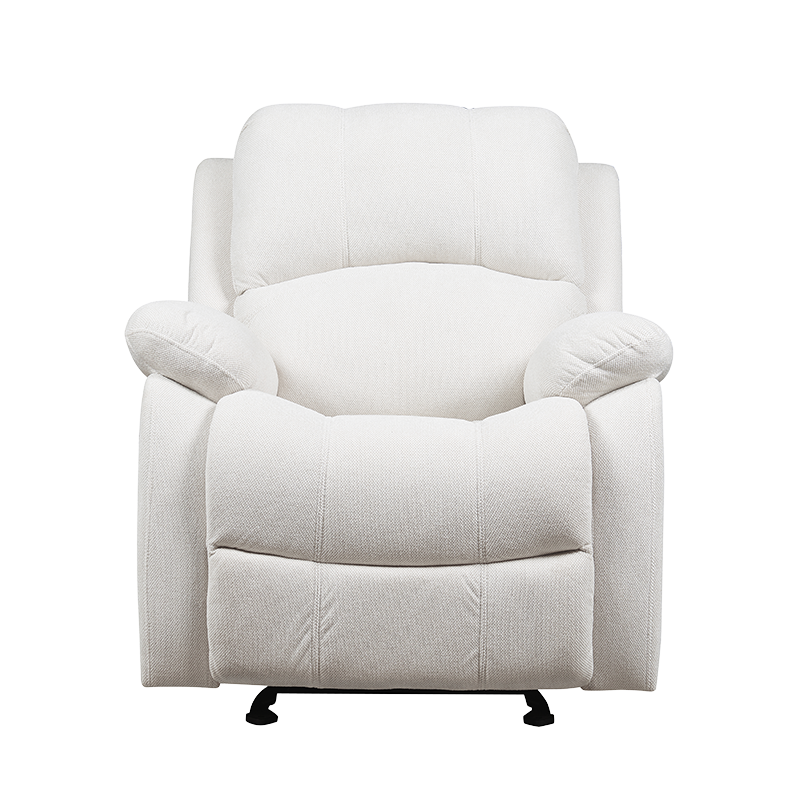
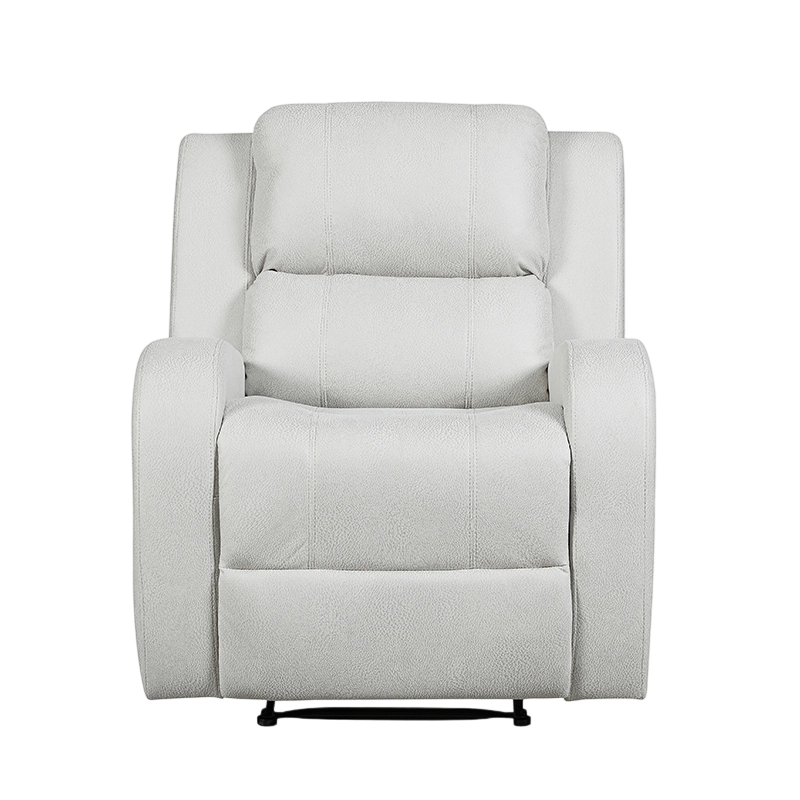
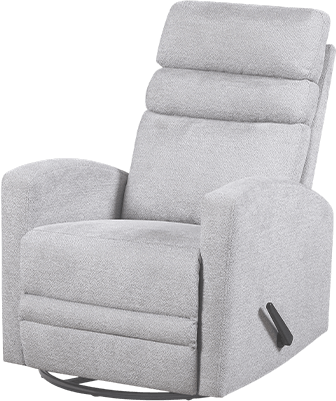
White Manual Recliner Chair With Breathable Skin Comfortable Fabric
Product Overview
The White Manual Recliner Chair is a single-seat recliner with a classic manual reclining structure and a contemporary upholstered appearance. It measures approximately 35.4 inches wide, 37 inches deep, and 38.2 inches high. Its maximum stated weight capacity is 350 pounds, giving it a solid user-support profile for a broad range of adults when used properly and on a suitable floor surface.
The chair uses a pull-tab manual reclining mechanism. By operating the pull tab, the user can release the reclining system and extend the footrest while the backrest moves into a more relaxed position. The maximum reclining angle is listed at 135 degrees. This position provides a practical balance between upright seating and deep relaxation, making the chair useful for conversations, reading, television viewing, and resting.
Unlike a powered recliner, a manual recliner does not require a power outlet, motor, transformer, remote control, or cable management. This simplifies placement and can reduce the number of components that require maintenance. The user can position the chair in a living room center, beside a window, in a bedroom, or in a media space without planning around electrical access. The absence of a motor also creates a straightforward operating experience for customers who prefer mechanical simplicity.
The chair is upholstered in a soft, breathable, skin-comfortable fabric. The white color produces a bright and refined appearance, while custom colors are supported for projects or collections that require a different palette. A light upholstery option can visually enlarge a room and coordinate with modern, classic, minimalist, Scandinavian, or transitional interiors.
Core Product Specifications
| Item | Specification |
|---|---|
| Product type | Manual recliner chair |
| Quantity | One recliner chair |
| Color shown | White |
| Color customization | Supported according to project requirements |
| Reclining operation | Pull-tab manual mechanism |
| Maximum reclining angle | 135 degrees |
| Dimensions | 35.4 W × 37 D × 38.2 H inches |
| Weight capacity | 350 pounds |
| Seat construction | Pocket springs and high-density sponge |
| Arms | Plush flared arms |
| Base feature | Non-slip bottom |
| Recommended applications | Living rooms, bedrooms, media rooms, lounges, reading areas, and hospitality spaces |
The specifications show how the chair is intended to function as a complete comfort product rather than a decorative accent alone. Its proportions provide a full seating experience without requiring the footprint of a large sofa. Its padded construction supports the user from the shoulders through the lower body, and its integrated footrest allows the legs to be elevated without requiring a separate ottoman.
Comfort-Focused Construction
Pocket Spring Support
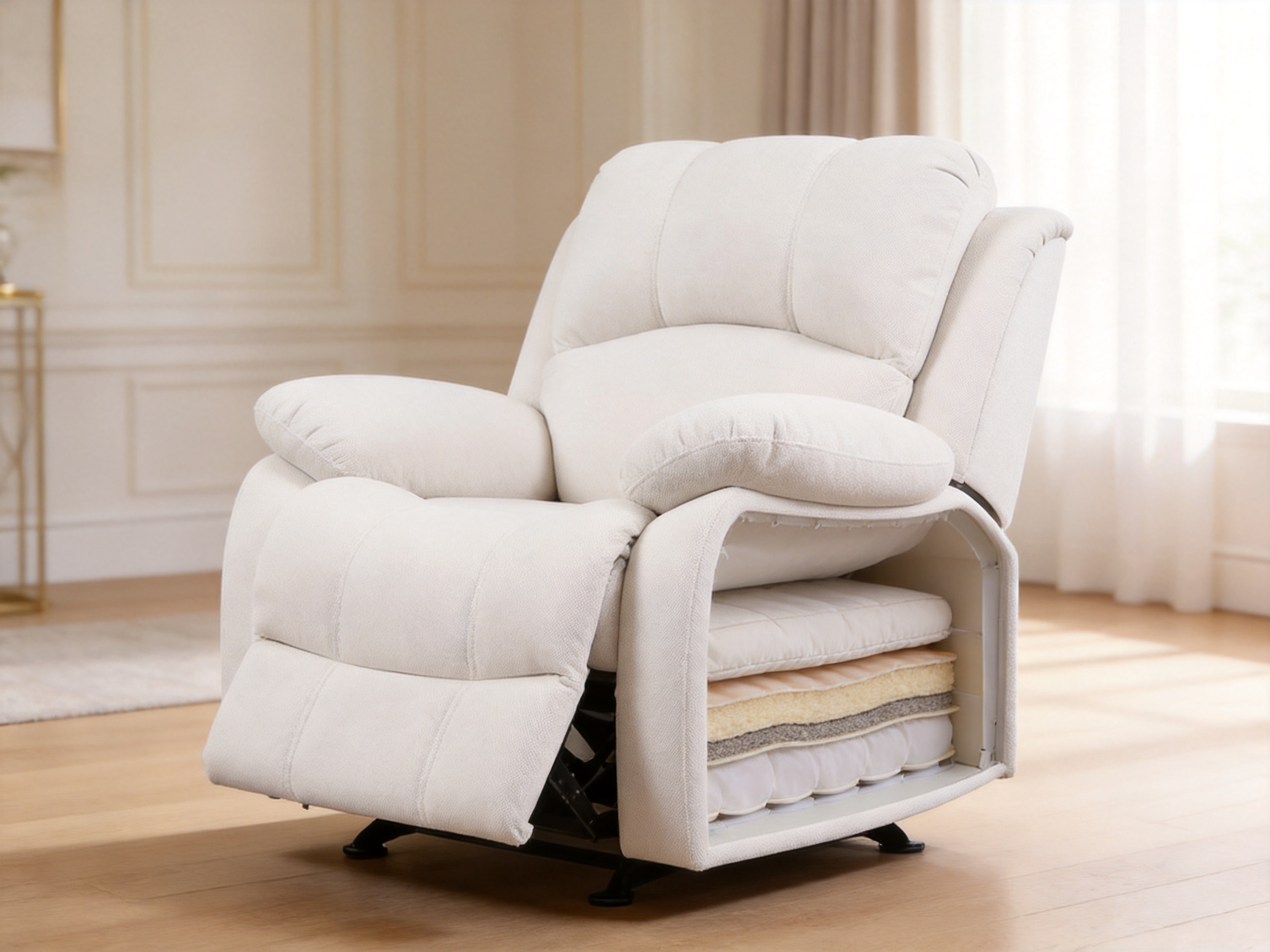
One of the key advantages of this recliner is its use of pocket springs within the generously padded seating structure. Pocket springs are individually enclosed spring units that can respond more independently to applied weight than a basic undivided support layer. In a recliner, this type of construction can help distribute pressure across the seat and create a more resilient sitting experience.
The pocket spring structure works together with the high-density sponge rather than replacing it. The springs contribute underlying support and recovery, while the sponge creates cushioning and surface comfort. This layered construction is important because a chair that is soft only at the surface may feel comfortable initially but lack support during longer periods of use. Conversely, a chair with insufficient cushioning may feel firm and tiring. The combination aims to provide a balanced feel for reading, watching television, relaxing, and occasional sleeping.
Supportive seat construction is especially valuable in a recliner because the body changes position as the backrest and footrest move. The seating surface must remain comfortable in an upright position and continue supporting the hips and thighs when the user reclines. A layered cushion system helps the chair adapt to these different positions while maintaining a cohesive seating experience.
High-Density Sponge
High-density sponge is used to provide cushioning in the seat, back, and surrounding upholstered areas. It helps the chair maintain a substantial, padded profile and supports the rounded appearance of the back cushions and arm sections. When combined with suitable upholstery and correct internal construction, high-density cushioning can contribute to shape retention and long-term seating comfort.
The design includes pillowed seat and back cushions. These cushions create a softer visual character than sharply tailored upholstery and help produce the enveloping sensation described for the chair. The user is supported by a combination of the back cushion, seat cushion, arm padding, and extended footrest. Together, these areas create a more complete relaxation zone than a basic upright accent chair.
Plush Flared Arms
The plush flared arms add both comfort and visual character. Their padded shape gives users a place to rest the forearms while reading or watching television, and the flared profile contributes to the chair’s classic recliner identity. Compared with narrow or rigid arms, generously padded arms can make the chair feel more welcoming and substantial.
The flared design also helps the chair transition between traditional comfort and contemporary styling. It avoids an overly technical appearance while retaining a clean overall silhouette. This makes the recliner suitable for homes where furniture must feel comfortable and inviting without appearing bulky or outdated.
Breathable, Skin-Comfortable Fabric
The upholstery is described as soft, breathable, and comfortable against the skin. Fabric selection strongly affects the daily experience of a recliner because the user may remain seated for extended periods. A surface that feels pleasant during direct contact can make the chair more suitable for reading, resting, and watching programs over several hours.
The fabric is also described as easy to care for when the recommended cleaning instructions are followed. The care guidance specifies the use of dry-cleaning solvent only, with a warning not to saturate the fabric with water. Pile fabrics may require brushing to restore their appearance. These instructions should be communicated clearly to end users, retailers, and hospitality staff so that the upholstery receives appropriate treatment.
The white color offers strong visual appeal but requires responsible care. Regular light maintenance, prompt treatment of spills according to the fabric instructions, and avoidance of unsuitable household cleaners can help preserve the appearance. For commercial projects or households seeking a different maintenance profile, custom color and fabric discussions can be considered during the product development process.
Manual Reclining Performance
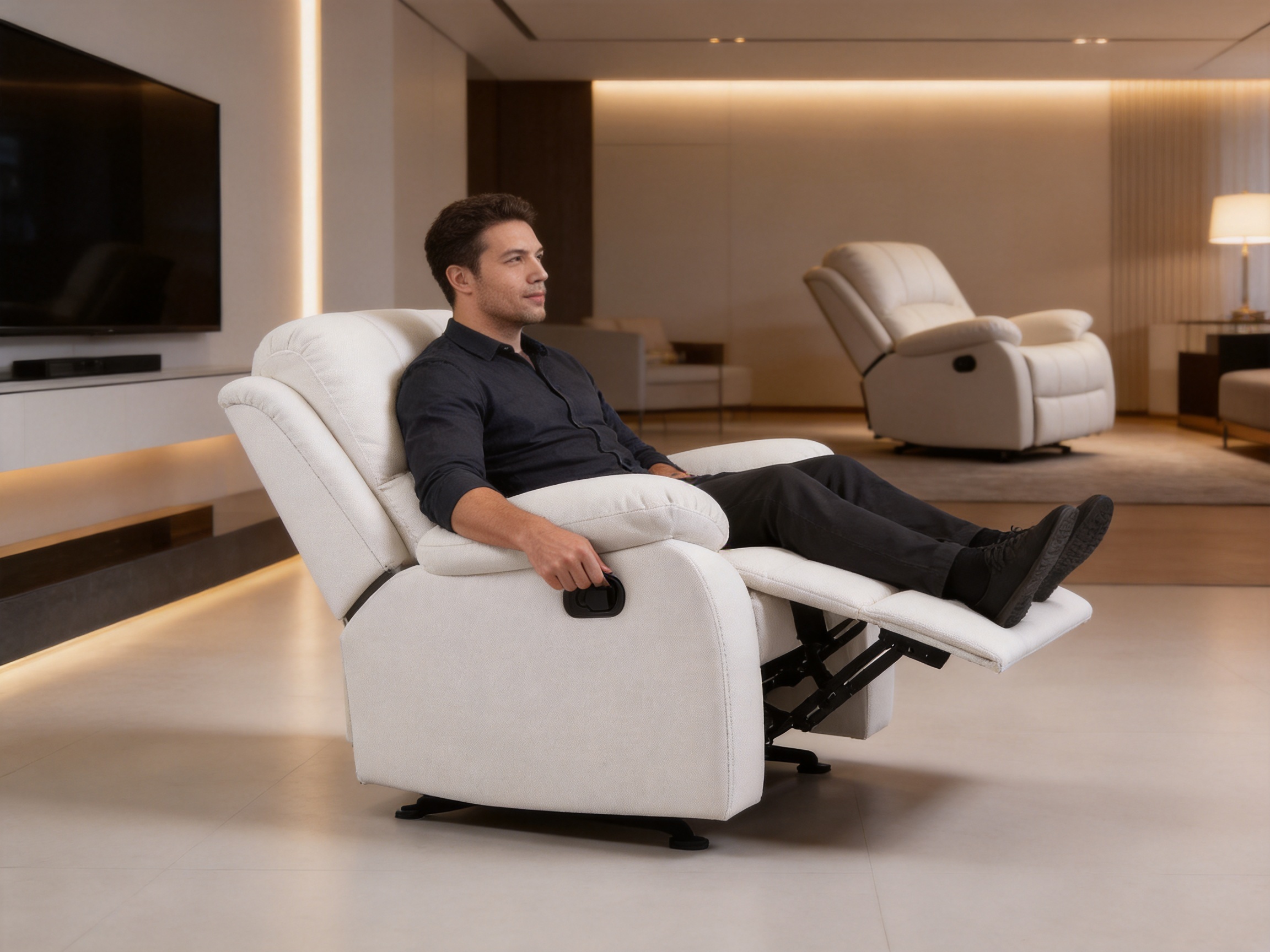
The manual reclining function is one of the chair’s most practical advantages. A pull-tab mechanism is easy to understand and does not require a separate instruction-heavy control system. The user can engage the mechanism from the seated position, extend the footrest, and shift into a more comfortable posture. The design is suitable for users who appreciate direct mechanical control.
The maximum angle of 135 degrees supports several common activities. In a relatively upright position, the chair can be used for conversation, reading, or light work. In a more open position, it becomes suitable for television viewing and extended relaxation. When the footrest is fully extended and the backrest is reclined, the chair can provide a comfortable resting posture for a short nap.
Manual operation may also offer advantages in environments where electrical simplicity matters. There is no need to position the chair near a wall outlet, and there are no power cords running across the floor. This helps maintain a cleaner room layout and can be useful in spaces where furniture is rearranged frequently. It may also appeal to buyers who prefer fewer electrical components in everyday furniture.
Correct Footrest Retraction Method
The product instructions include a labor-saving method for retracting the footrest. The user should sit forward with the body, lean forward, and use the heels to press against the middle of the footrest. This method helps return the footrest without excessive force or awkward hand positioning.
Retailers should include this guidance in product descriptions, assembly instructions, and customer service materials. Clear instructions can reduce incorrect operation and help users understand how to use the mechanism smoothly. The footrest should be operated deliberately, and users should keep hands, feet, pets, and other objects away from moving areas during adjustment.
As with any reclining furniture, the chair should be placed on a stable, level surface. Sufficient clearance should be left behind and in front of the chair so that the backrest and footrest can move without contacting walls, tables, cabinets, or other furniture. Proper placement helps protect the chair, surrounding objects, and users.
Advantages Over Basic Recliner Alternatives
More Complete Support Than a Simple Lounge Chair
A standard lounge chair may offer a comfortable seat but often requires a separate ottoman to support the legs. The White Manual Recliner integrates the footrest into the chair, creating a unified relaxation system. This saves space and eliminates the need to coordinate two separate pieces of furniture.
The integrated design also keeps the seating experience visually consistent. The footrest is upholstered to match the chair, and it extends from the lower structure when needed. When retracted, it allows the chair to occupy a more conventional footprint. This flexibility is valuable in rooms where space must be used efficiently.
Greater Simplicity Than a Powered Recliner
Powered recliners can provide convenient motorized adjustment, but they also depend on electrical components and power access. The manual version offers an alternative for buyers who prioritize straightforward operation and easier placement. It avoids dependence on remote controls and reduces concerns associated with motor noise, cable routing, or electrical failure.
Manual adjustment also gives the user an immediate physical connection with the chair. The pull-tab mechanism is direct and easy to understand. For many domestic and commercial applications, this uncomplicated design is a valuable advantage rather than a limitation.
More Structured Comfort Than a Light Accent Chair
Some accent chairs are designed primarily for appearance and may have limited reclining capability or minimal internal support. This model is built specifically for relaxation, with pocket springs, high-density sponge, padded arms, back and seat cushioning, and a movable footrest. It is therefore better suited to longer periods of use than a purely decorative chair.
More Versatility Than a Fixed Recliner
A fixed recliner may provide a comfortable angle but cannot adapt as readily to different activities. This model can be used in a more upright position or adjusted to a deeper angle. The ability to change the backrest and footrest configuration improves its usefulness in multi-purpose rooms.
Customization Potential for Buyers
The product is shown in white, but custom colors are supported. This provides an advantage for furniture distributors, hospitality projects, interior designers, and retailers developing coordinated collections. Custom color selection can help match a project’s branding, room palette, seasonal collection, or regional market preference.
Customization may also support different product strategies. A retailer can request a neutral color for broad consumer appeal, a darker color for high-use settings, or a coordinated series of shades for a complete living-room collection. Specific fabric availability, minimum order quantities, sampling, lead times, packaging, and production conditions should be confirmed with the manufacturer before finalizing a project.
Design Applications in Modern Interiors
The clean white upholstery gives the chair a bright, modern appearance. It can be paired with warm wood, natural flooring, glass tables, metal accents, neutral rugs, or soft textiles. Its contemporary design does not require a strictly minimalist room; the pillowed cushions and flared arms also allow it to coordinate with more traditional or transitional interiors.
Living Rooms
In a living room, the recliner can function as an individual comfort seat within a larger sofa arrangement. It may be positioned beside a fixed sofa, a coffee table, or an entertainment unit. The white finish can create contrast against darker flooring and emphasize the chair as a focal point.
For smaller apartments, the chair can provide a dedicated relaxation position without requiring a large sectional sofa. Its single-seat format also makes it easier to place in a corner, beside a bookshelf, or near a window. Buyers should still confirm the room’s access path and door clearances before delivery.
Bedrooms and Private Retreats
The chair can serve as a reading seat in a bedroom or private retreat. With the backrest partially reclined and the footrest extended, it offers an alternative to sitting on the bed. This can create a separate zone for reading, listening to music, or relaxing before sleep.
Media Rooms
A manual recliner is naturally suited to media rooms. The user can adjust the chair for an upright viewing position or a more relaxed posture during a longer film or program. Since the chair does not require a power outlet, placement can be planned according to viewing angles rather than electrical access.
Hospitality and Commercial Spaces
Hotels, serviced apartments, private clubs, lounges, and residential developments may use recliners as part of a comfort-oriented furnishing package. The product’s custom color capability can help project buyers maintain a consistent interior scheme. Commercial purchasers should evaluate cleaning protocols, expected usage intensity, delivery requirements, and applicable local standards when selecting upholstery and quantities.
Manufacturing Strengths and Integrated Production
An important part of the product’s value is the manufacturing capability behind it. Anji Xuanbo Household Co., Ltd. was established in 2021 and is located in Anji County, Huzhou City, Zhejiang Province. The region is widely known as the Capital of Chair Industry, providing access to furniture expertise, related suppliers, skilled labor, and an established production ecosystem.
The company operates a factory of approximately 8,000 square meters and has more than 100 employees. Its business scope includes research and development, industrial design, large-scale manufacturing, independent marketing, and technical services. This combination allows the company to participate in the full product cycle, from concept and structure development to production coordination and customer support.
Own Wooden Frame Factory
The company’s own wooden frame factory supports control over one of the most important structural stages in upholstered furniture production. The frame forms the foundation of a sofa or recliner. Control of this stage can help the manufacturer coordinate material selection, cutting, assembly, dimensional accuracy, and production scheduling more effectively.
Internal frame capability may also improve communication between design and manufacturing teams. When a product requires adjustments to dimensions, reinforcement, joint structure, or assembly sequence, the changes can be evaluated within the company’s production system. This can make customization and product improvement more practical than relying entirely on unrelated external suppliers.
Own Sponge Processing Plant
The company also has its own sponge processing plant. This is relevant to a product such as the White Manual Recliner because cushioning density, cutting accuracy, shape, and consistency directly influence comfort and appearance. Internal processing can help coordinate the sponge components with the chair’s seat, back, arm, and footrest geometry.
By controlling sponge processing, the manufacturer can better manage material utilization and production timing. It can also help reduce delays between frame completion and upholstery assembly. For buyers ordering multiple units or custom products, coordinated sponge processing may support more predictable production planning.
Research and Development
Research and development is central to producing functional upholstered furniture. A recliner must integrate appearance, comfort, structural support, moving components, upholstery, packaging, and user operation. Product development therefore requires cooperation between industrial design, engineering, sample making, material selection, and production teams.
The company’s stated R&D and design capabilities support the development of products across several categories, including functional sofas, fixed sofas, corner sofas, lounge chairs, recliner sofas, love seats, and leisure chairs. This broad category experience can help the manufacturer understand how different seating formats share common requirements while also demanding specific design solutions.
Multi-Stage Quality Inspection
The company emphasizes strict multi-stage quality inspection. For an upholstered recliner, inspection can logically include incoming material review, frame checking, sponge and cushion verification, mechanism assessment, upholstery evaluation, dimensional checking, appearance inspection, and final packaging review. Specific inspection procedures and acceptance criteria should be confirmed for each order, but a multi-stage approach is important because quality cannot be secured at the final stage alone.
Early inspection helps identify material or structural issues before they move further through the production line. In-process inspection can check whether components align correctly and whether the upholstery is properly fitted. Final inspection can verify the completed chair’s appearance, operation, dimensions, and packaging condition before shipment.
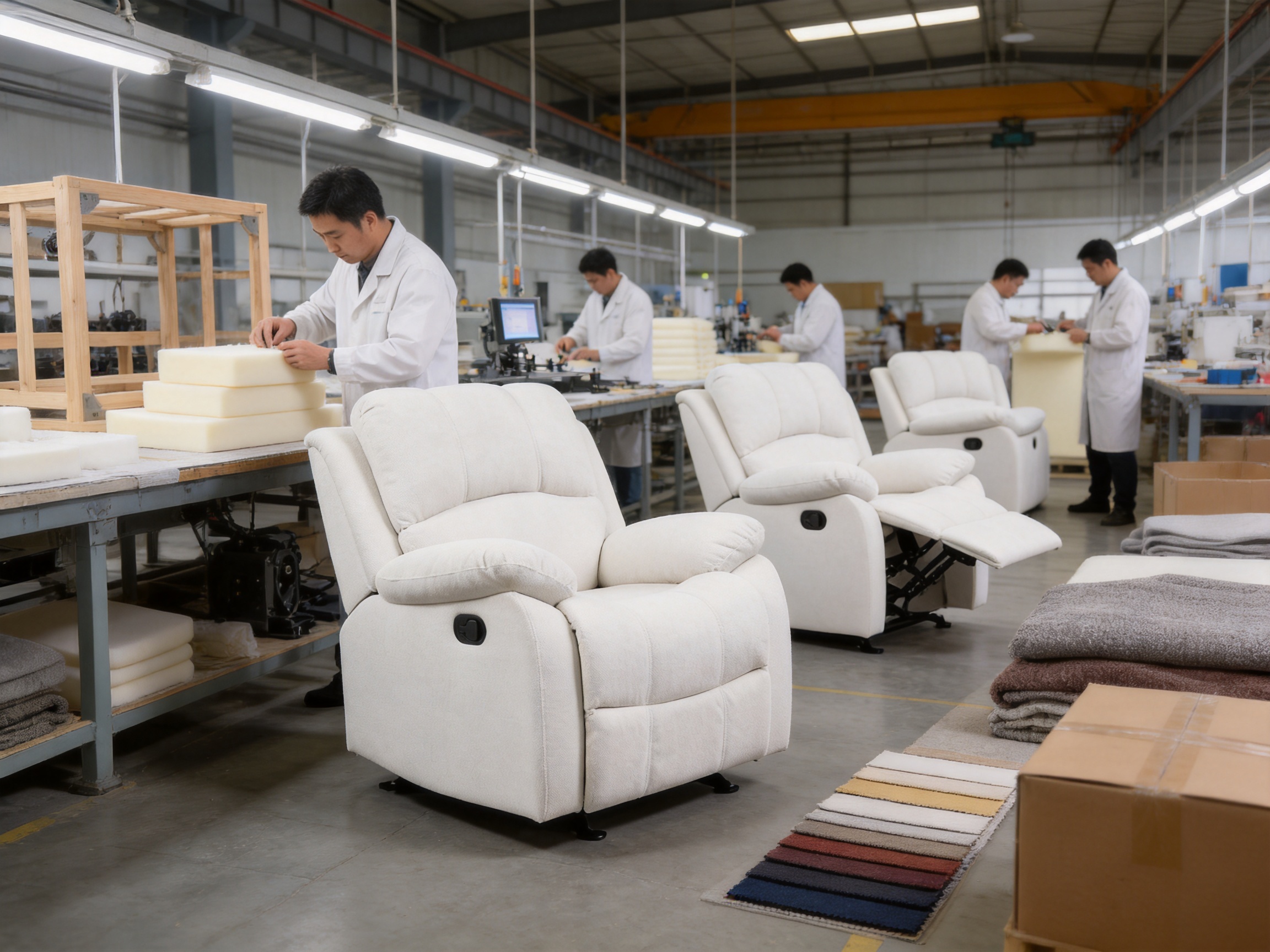
Production Process for the Manual Recliner
The following process represents the principal manufacturing stages associated with a product of this type. Exact production sequences may vary according to order specifications, fabric selection, packaging requirements, and customization details.
1. Product Planning and Technical Preparation
Production begins with confirmation of the product specification. This includes the chair’s dimensions, reclining function, upholstery, color, cushion structure, weight capacity, packaging format, and order quantity. Technical preparation helps ensure that design, purchasing, frame production, sponge processing, upholstery, assembly, and inspection teams work from the same requirements.
For customized orders, the preparation stage may also include color samples, fabric approval, labels, carton marks, product documentation, and shipping instructions. Confirming these details before mass production reduces the risk of inconsistent expectations between buyer and factory.
2. Frame Material Preparation
Wooden frame components are prepared according to the chair’s structural design. Cutting and shaping must be coordinated with the intended dimensions and the locations of the reclining mechanism, seat support, arm structures, and back assembly. The frame must provide a stable foundation for the padding and upholstery while allowing the moving components to operate correctly.
Frame inspection is important because dimensional deviations can affect the final appearance, seating geometry, and mechanism alignment. The factory’s internal frame capability gives it direct involvement in this foundational stage.
3. Frame Assembly and Structural Checking
Prepared components are assembled into the chair structure. Joints, support areas, and connection points are checked during this stage. The frame must be sufficiently stable for the intended use and compatible with the cushion and upholstery specifications.
Structural checking before padding and covering is efficient because any issue is easier to correct while the internal frame remains accessible. Once the chair has been fully upholstered, repairs or adjustments may require additional labor and can affect production efficiency.
4. Sponge Processing and Cushion Preparation
Sponge components are cut and shaped for the seat, back, arms, and footrest. The dimensions and profiles must correspond to the chair’s frame and upholstery patterns. The use of high-density sponge supports the chair’s padded appearance, while pocket springs contribute underlying resilience within the seating system.
Cushion preparation requires attention to thickness, contour, edge shape, and consistency. Properly prepared cushioning helps prevent uneven surfaces and supports a more uniform appearance across units in the same production batch.
5. Pocket Spring Integration
The pocket spring support system is incorporated into the seat construction. Its placement and coverage must be coordinated with the cushion layers and frame. The goal is to create a supportive seating foundation while preserving the comfort expected from a padded recliner.
Since the chair changes position during use, the spring and cushion structure must work with the reclining movement. The seat should remain properly supported when the chair is upright and when the footrest is extended.
6. Mechanism Installation
The manual reclining mechanism and pull tab are installed and aligned with the chair structure. The footrest must open and close smoothly, and the backrest must move through its intended range without unnecessary friction or obstruction.
Mechanism testing is an essential part of quality control. The factory can check the pull-tab response, reclining angle, footrest extension, retraction, and general operating feel. It is also important to verify that the mechanism does not interfere with upholstery or internal padding.
7. Upholstery Cutting and Sewing
Fabric panels are prepared according to the chair’s patterns. The white upholstery shown for this model requires careful handling because marks, dust, uneven seams, and tension variations may be more visible on a light surface. Sewing accuracy affects both appearance and durability.
The upholstery must be fitted over the chair’s contours, including the flared arms, pillowed back, seat, and lower footrest. Proper tension helps maintain a clean finish without creating excessive stress on seams. For custom colors, fabric shade consistency and approval samples become especially important.
8. Upholstery Installation
The prepared upholstery is installed over the padded structure. Workers must align seams, corners, cushion edges, arm profiles, and moving sections. This stage combines technical skill with visual judgment because the final appearance depends on both the pattern and the way the fabric is fitted.
Upholstery installation also requires attention to the reclining movement. Fabric should not restrict the footrest or backrest, and the finished chair should retain a neat appearance in both upright and reclined positions.
9. Final Assembly and Inspection
After the major components are assembled, the chair receives a final inspection. Inspectors can review dimensions, upholstery condition, cushion placement, frame stability, mechanism operation, footrest retraction, non-slip bottom installation, and overall appearance.
Packaging inspection is also important. The chair must be protected from abrasion, compression, dust, and impact during handling and export transportation. Packaging design should be coordinated with the chair’s dimensions and the buyer’s logistics requirements.
Quality, Safety, and Use Considerations
The stated maximum weight capacity is 350 pounds. Users should observe this specification and avoid standing on the footrest, armrests, or seat. The chair is designed for seated use, and misuse can place forces on the frame or reclining mechanism that differ from normal operation.
The non-slip bottom helps reduce unwanted movement on suitable flooring. It does not eliminate the need to place the chair on a level, stable surface. Buyers should inspect the floor condition and ensure that the chair does not obstruct walkways or create contact points with nearby furniture.
The moving footrest and reclining backrest require clearance. Users should keep children, pets, hands, and loose objects away from the mechanism while it is operating. Retailers should provide customers with clear operating instructions and encourage users to read the product documentation before regular use.
Fabric care is another important quality consideration. The product instructions specify dry-cleaning solvent only and advise against saturating the fabric with water. Improper cleaning can cause discoloration, shrinkage, texture changes, or damage to internal padding. Pile fabrics may need gentle brushing to restore their original appearance after use or cleaning.
Advantages for Wholesale and Project Buyers
For wholesale customers, a successful recliner program requires more than an attractive sample. Buyers need dependable communication, production capacity, consistent quality, customization support, packaging coordination, and export experience. The manufacturer’s product range and integrated facilities provide a foundation for these requirements.
Broad Product Portfolio
The company produces functional sofas, fixed sofas, corner sofas, lounge chairs, recliner sofas, love seats, and leisure chairs. A buyer can therefore explore a coordinated seating collection instead of sourcing every product category from a separate supplier. This may simplify communication, sampling, production planning, and shipping coordination.
Customization Support
The White Manual Recliner is available in a custom-color format. Depending on project requirements, buyers can discuss fabric, color, dimensions, packaging, labeling, and product configuration. Customization details should be agreed in writing before production, including approved samples and tolerance expectations.
Cost and Capacity Control
Ownership of the wooden frame factory and sponge processing plant supports full-chain cost and capacity control. Internal production of important components can reduce dependence on external scheduling and help the company coordinate larger orders. It may also support more responsive adjustments when buyers request changes to design or quantity.
Export-Oriented Location
The company is located near Ningbo Beilun Port, which provides a convenient logistics advantage for export shipments. Efficient access to port infrastructure can support international delivery planning for customers in North America, Europe, the Middle East, and other markets where the company exports products.
Buyers should still confirm shipping terms, production lead time, loading plans, documentation, carton dimensions, container utilization, and destination requirements for each order. A convenient manufacturing location is valuable, but effective export performance also depends on accurate coordination across the entire order process.
How to Evaluate This Recliner Before Purchasing
Buyers should first confirm the intended use. A household purchasing one chair may prioritize softness, color, room fit, and ease of operation. A retailer may focus on sample presentation, packaging, repeatability, and margin. A hospitality or project buyer may place greater emphasis on custom specifications, cleaning procedures, delivery scheduling, and long-term supply.
Room dimensions should be measured before ordering. The chair is approximately 35.4 inches wide and 37 inches deep in its upright dimensions, but additional front and rear clearance is required when the footrest and backrest are extended. Doorways, elevators, corridors, staircases, and installation locations should be checked in advance.
Buyers should review upholstery samples under the lighting conditions of the intended space. White fabric can appear warmer or cooler depending on surrounding colors and light sources. For a coordinated furniture collection, all colors should be approved against physical samples where possible.
Comfort preferences should also be considered. The chair uses high-density sponge and pocket spring support, but comfort is subjective. Retailers should explain that users may experience the chair differently depending on body size, posture, and personal preference. A sample chair can be especially useful for commercial buyers and showrooms.
Care and Maintenance Guidance
Routine care begins with preventing unnecessary contamination. Food, drinks, oily substances, sharp objects, and unsuitable cleaning chemicals should be kept away from the upholstery. Dust and surface particles should be removed using a method appropriate for the fabric without saturating the material.
For stains or deeper cleaning, the stated care instructions should be followed: use dry-cleaning solvent only and do not saturate the fabric with water. If the fabric has a pile, gentle brushing may help restore its appearance after cleaning. Users should test any approved cleaning product in an inconspicuous area and follow professional advice when the nature of the stain is uncertain.
The reclining mechanism should be operated smoothly rather than forced. The footrest should be retracted using the recommended forward-leaning and heel-press method. Users should not sit or stand on the raised footrest, and the chair should not be dragged while occupied.
Periodic inspection can help identify loose components, unusual sounds, fabric damage, or changes in the reclining action. If a problem appears, the chair should be removed from use until it can be evaluated. Retailers and project buyers should retain product documentation and supplier contact information for after-sales communication.
Why This Product Is a Strong Contemporary Choice
The White Manual Recliner Chair responds to several current furniture preferences at once. Consumers want comfortable seating that supports relaxation, but they also expect attractive styling and practical functionality. They may prefer a product that is easy to operate, does not require complicated installation, and can fit into flexible living spaces.
This chair addresses these expectations through its manual reclining system, integrated footrest, generous padding, pocket spring support, high-density sponge, plush arms, and contemporary profile. The white upholstery gives it a bright appearance, while custom color availability expands its potential beyond a single showroom configuration.
Its advantages are also relevant from a supply perspective. The manufacturer has a focused seating portfolio, an integrated frame and sponge production structure, internal R&D and design capabilities, a factory of approximately 8,000 square meters, and more than 100 employees. These strengths can help support product consistency, customization, and international order coordination.
Compared with a basic accent chair, the recliner provides more complete body support. Compared with a powered recliner, it offers mechanical simplicity and placement flexibility. Compared with a fixed recliner, it allows users to adjust the seating position. Compared with a separate lounge chair and ottoman, it provides an integrated and space-conscious solution.
Q&A
What type of product is this?
This is a single-seat manual recliner chair with a pull-tab reclining mechanism, integrated footrest, upholstered seat and back, padded arms, pocket spring support, and high-density sponge cushioning.
What is the chair’s maximum reclining angle?
The listed maximum reclining angle is 135 degrees. This allows the chair to move from a relatively upright seating position to a deeper relaxation position suitable for television viewing, reading, and resting.
Does the chair require electricity?
No. It uses a manual pull-tab mechanism rather than an electric motor. This means it does not require a power outlet, power cord, or remote control for normal reclining operation.
What color is available?
The shown chair is white. Custom colors are supported, subject to confirmation of fabric availability, sample approval, order quantity, and production conditions.
What are the chair’s dimensions?
The listed dimensions are approximately 35.4 inches wide, 37 inches deep, and 38.2 inches high. Buyers should also allow additional clearance for the backrest and footrest during reclining.
What is the weight capacity?
The stated weight capacity is 350 pounds. The chair should be used according to this specification and only for normal seated use.
What makes the seating comfortable?
The comfort system combines pocket springs, high-density sponge, pillowed seat and back cushions, plush flared arms, and a reclining footrest. These elements work together to support the body and provide a more enveloping seating experience.
How should the footrest be retracted?
The recommended method is to sit forward, lean forward, and use the heels to press against the middle of the footrest. This is described as a correct and labor-saving method for returning the footrest.
How should the fabric be cleaned?
The care instructions specify dry-cleaning solvent only and advise users not to saturate the fabric with water. Pile fabrics may require brushing to restore their appearance. Users should follow professional cleaning guidance when necessary.
Is the chair suitable for a living room?
Yes. Its contemporary form, white upholstery, integrated footrest, and adjustable backrest make it suitable for living rooms, media rooms, reading areas, bedrooms, and other residential spaces.
Can it be used in commercial or hospitality projects?
It may be considered for lounges, serviced apartments, hotels, clubs, and other commercial interiors. Commercial buyers should confirm the required upholstery, cleaning procedures, usage conditions, packaging, local requirements, and inspection standards before placing an order.
What manufacturing strengths support this product?
The manufacturer has R&D and industrial design capabilities, an approximately 8,000-square-meter factory, more than 100 employees, an own wooden frame factory, an own sponge processing plant, multi-stage quality inspection, customization support, and export experience in markets including North America, Europe, and the Middle East.
Can the manufacturer supply other seating products?
Yes. The company’s product categories include functional sofas, fixed sofas, corner sofas, lounge chairs, recliner sofas, love seats, leisure chairs, and manual recliners. Buyers can discuss coordinated product programs and collection development.
Conclusion
The White Manual Recliner Chair With Breathable Skin Comfortable Fabric is a balanced solution for buyers seeking comfort, practical adjustability, contemporary appearance, and manufacturing reliability. Its pocket spring seating foundation and high-density sponge create supportive cushioning, while the pillowed seat and back, plush flared arms, and soft fabric contribute to a welcoming user experience.
The manual reclining system provides direct, dependable adjustment without electrical components. The integrated footrest supports the legs and eliminates the need for a separate ottoman. The 135-degree maximum angle gives users a useful range of positions for reading, watching television, relaxing, and resting. A non-slip bottom, 350-pound stated weight capacity, and custom-color option further strengthen the product’s practical value.
Behind the chair is a manufacturer with integrated capabilities in wooden frame production, sponge processing, industrial design, R&D, large-scale manufacturing, technical service, and international export coordination. Its factory resources and multi-stage quality inspection approach provide a foundation for stable production and customization. For retailers, project buyers, and furniture importers, these capabilities can be as important as the appearance of the finished product.
With suitable placement, correct operation, and proper fabric care, this recliner can become a durable and attractive part of a modern seating collection. It demonstrates how a well-planned upholstered chair can combine everyday comfort, adaptable functionality, refined design, and factory-level supply strength in one practical product.
References
1. Product specification and care information supplied for the White Manual Recliner Chair With Breathable Skin Comfortable Fabric.
2. Manufacturer profile and company information supplied for Anji Xuanbo Household Co., Ltd.
3. General principles of upholstered furniture construction, including frame preparation, cushioning systems, upholstery installation, and quality inspection.
4. General furniture care guidance concerning fabric protection, dry-cleaning solvent use, pile restoration, and prevention of water saturation.
5. General product development practices for manual reclining furniture, including mechanism alignment, clearance planning, operational testing, and packaging inspection.
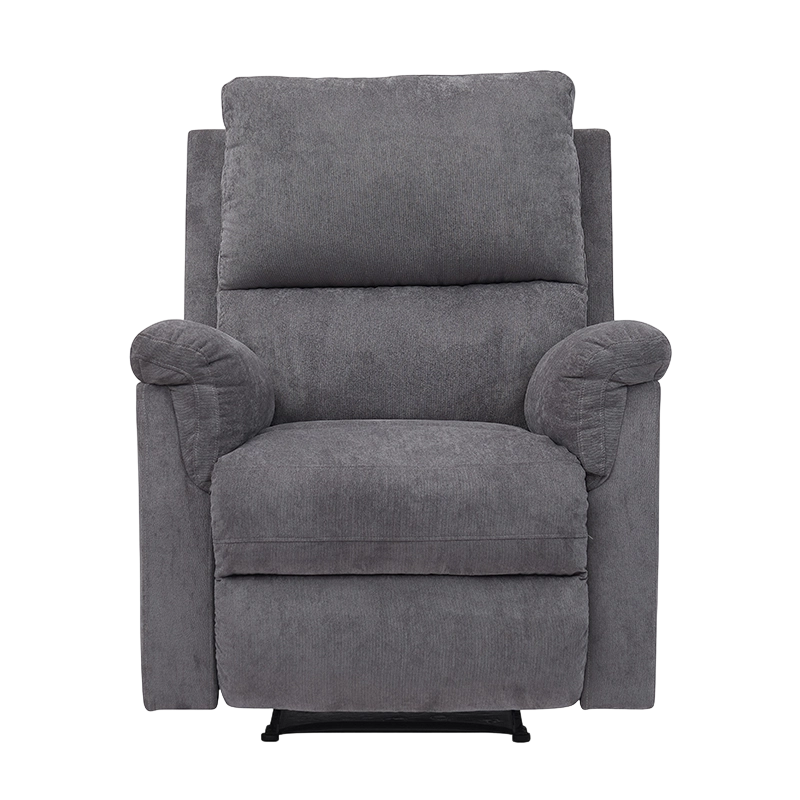
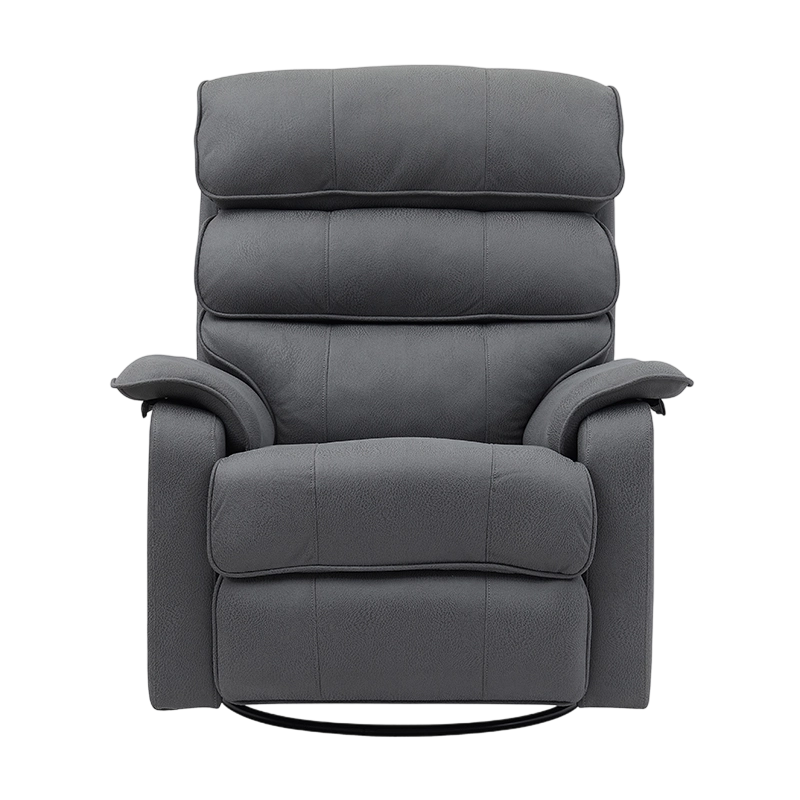
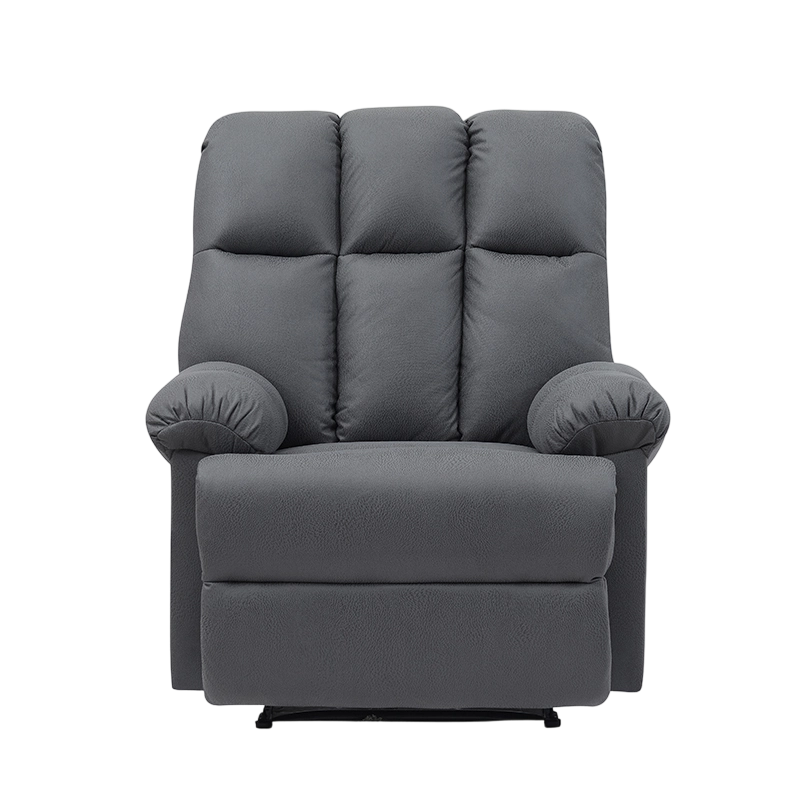
Product: White Manual Recliner Chair With Breathable Skin Comfortable Fabric

LET'S TALK

Bai Shuiwan Industrial Park, Tian Huangping Town, Anji County, Huzhou City, Zhejiang Province, China
More About Us 
-
+86 18257273741
-
[email protected]
CONTACT US
Copyright © Anji Xuanbo Household Co., Ltd. All Rights Reserved.
Custom Modern Upholstered Sofa Manufacturers


