Focus on the manufacturing and export of functional sofas
-
 +86 18257273741
-
 [email protected]

 English
 Español

Chen Meilin — International Sales Representative
 Home / Author / Chen Meilin — International Sales Representative / Power Recliner Chair with Remote Control: Comfort, Engineering, and Custom Manufacturing Value
Power Recliner Chair with Remote Control: Comfort, Engineering, and Custom Manufacturing Value
 2026.11.01
 Chen Meilin — International Sales Representative
Content
- 1 1. Product Overview and Intended Use
- 2 2. The Practical Advantage of Powered Reclining
- 3 3. Structural Design for Everyday Stability
- 4 4. Cushioning and Upholstery Comfort
- 5 5. Manufacturing Integration and Product Development Strength
- 6 6. Customization for Different Markets
- 7 7. Advantages for Retailers, Distributors, and Project Buyers
- 8 8. Care, Maintenance, and Product Longevity
- 9 9. Buyer Evaluation Guide
- 10 10. Why Manufacturing Capability Matters to Product Value
- 11 11. Product Specification Summary
- 12 12. Frequently Asked Questions
- 12.1 Q1: What is the main advantage of this power recliner?
- 12.2 Q2: Is the chair suitable for reading and watching television?
- 12.3 Q3: How far can the chair recline?
- 12.4 Q4: What materials support the chair’s structure?
- 12.5 Q5: What type of cushioning does the chair use?
- 12.6 Q6: What is the chair’s weight capacity?
- 12.7 Q7: Is the upholstery color customizable?
- 12.8 Q8: How should the upholstery be cleaned?
- 12.9 Q9: What are the product dimensions?
- 12.10 Q10: Can the chair be used in commercial environments?
- 12.11 Q11: What manufacturing capabilities support this product?
- 12.12 Q12: Can buyers order related furniture products?
- 12.13 Q13: What should be confirmed before a customized order?
- 12.14 Q14: Why is factory integration important?
- 13 13. Overall Assessment
- 14 References
- 15 Product: Power Recliner Chair with Remote Control
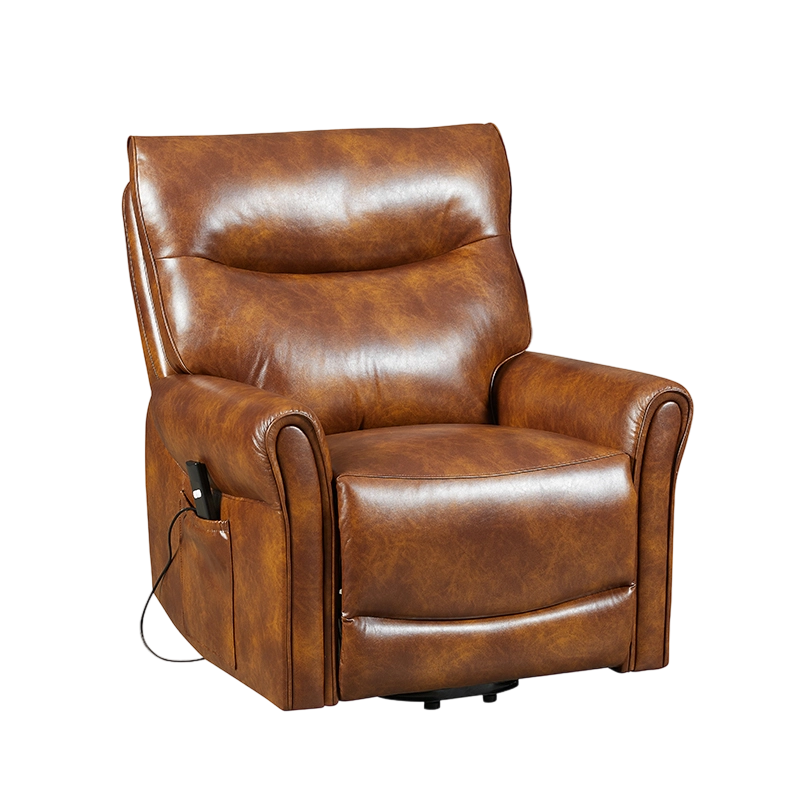
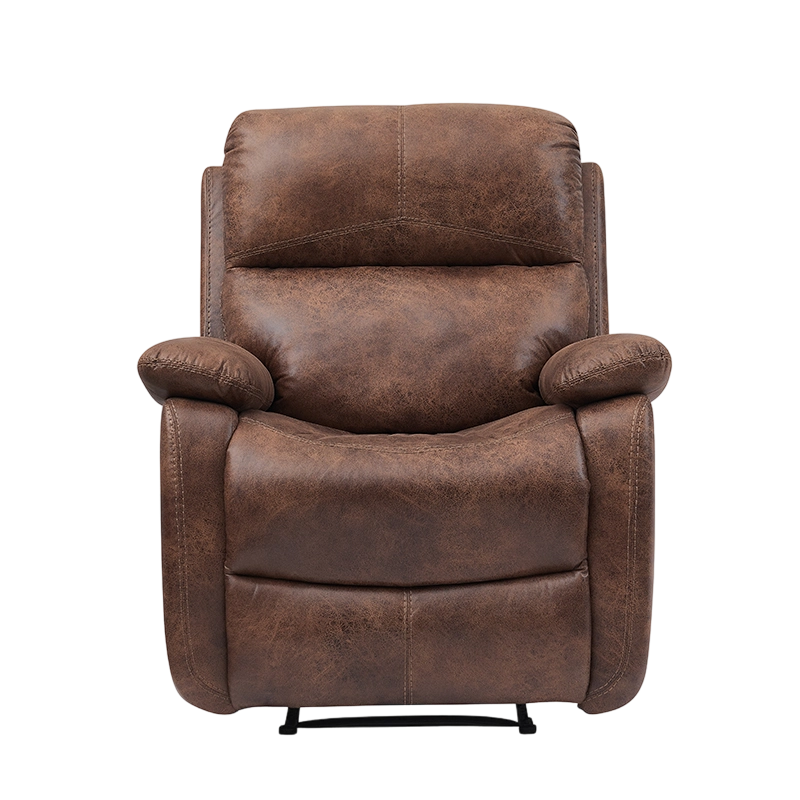
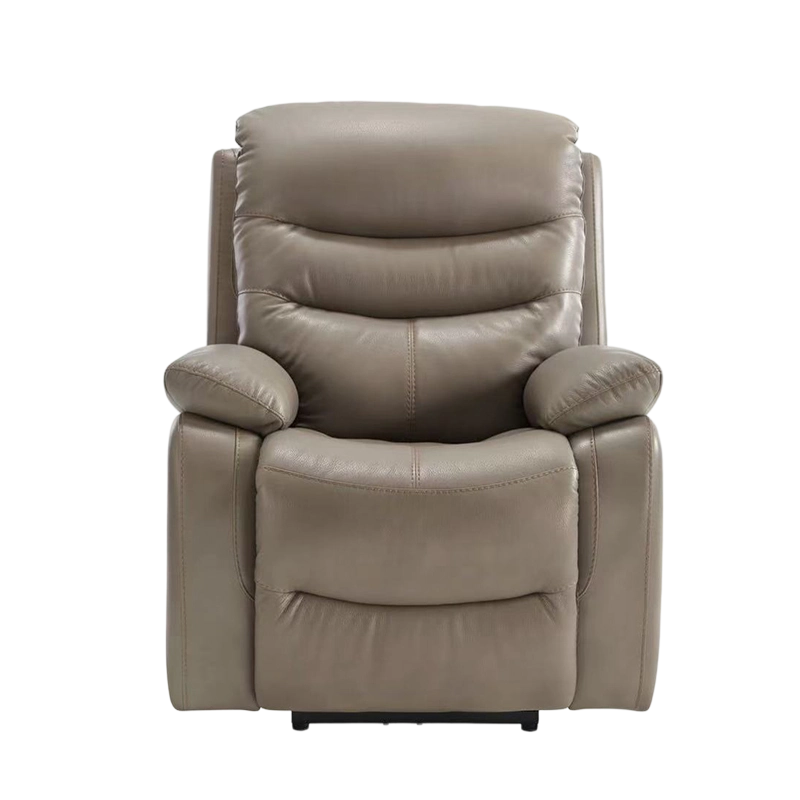
A well-designed recliner should do more than move from an upright position to a resting position. It should provide dependable support, operate quietly, remain stable during everyday use, and deliver comfort that feels natural rather than forced. The Power Recliner Chair with Remote Control is designed around these expectations. It combines powered positioning, a strong steel frame, high-density sponge, resilient foam cushioning, cushioned armrests, and soft upholstery in a practical chair intended for reading, television viewing, relaxation, and naps.
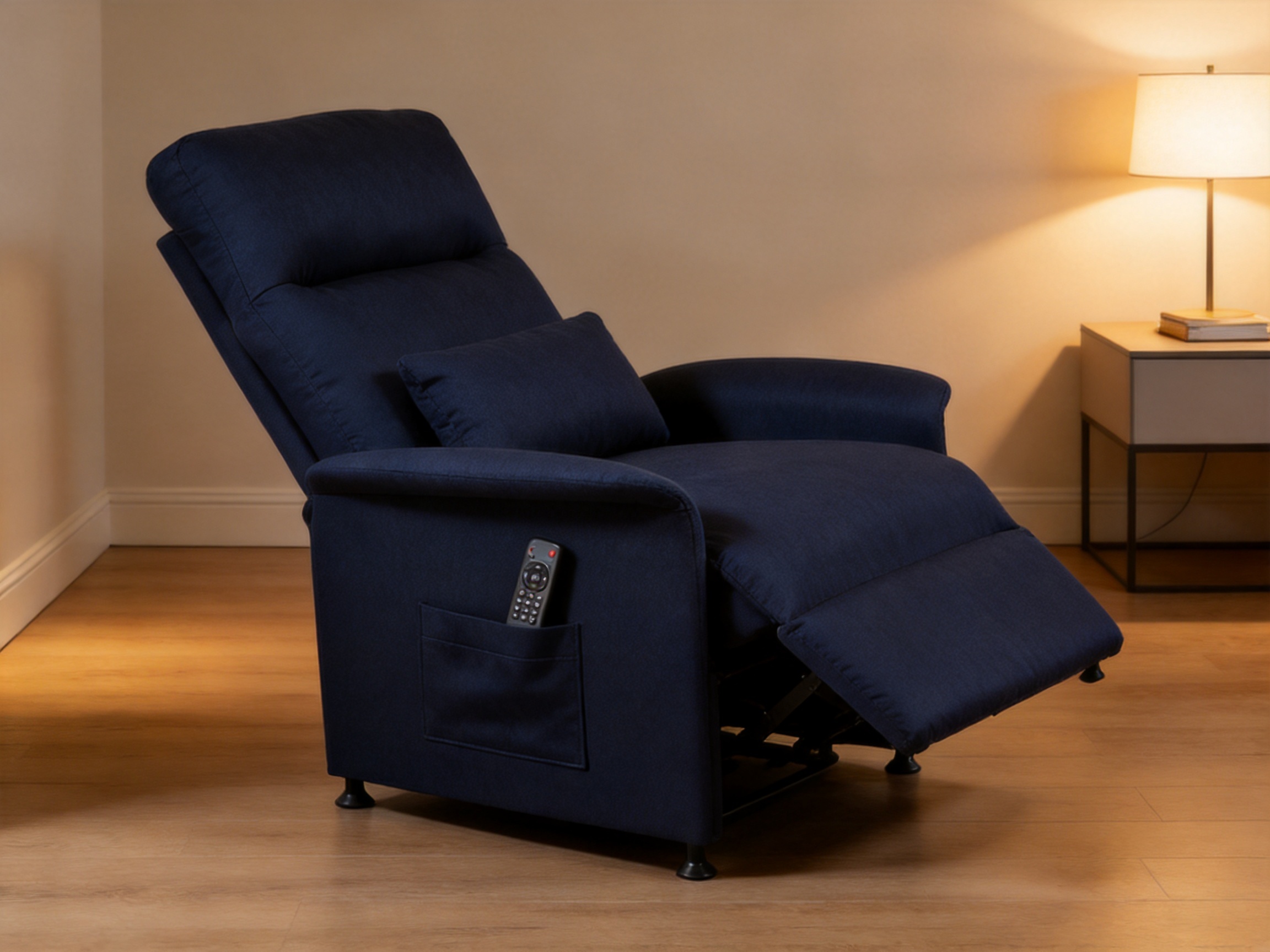
Its most important functional advantage is simple operation. Instead of requiring the user to push backward against a stiff mechanism or reach for a manual handle, the chair uses a convenient remote control. A button press allows the backrest and footrest to move smoothly between an approximately 90-degree upright sitting position and a reclining angle of up to 150 degrees. This makes the chair suitable for users who prioritize convenience, controlled movement, and reduced physical effort.
Behind the product is a furniture manufacturer with capabilities spanning research and development, industrial design, frame production, sponge processing, upholstery, assembly, quality inspection, customization, and export logistics. These capabilities help connect product design with manufacturing execution. Rather than treating comfort, structure, appearance, and production cost as separate concerns, an integrated manufacturing system can coordinate them from the earliest design stage through final inspection.
This article examines the product’s design, user benefits, construction features, manufacturing strengths, customization potential, care requirements, and suitability for different markets. It also compares the practical value of a powered recliner with common manual alternatives and explains why coordinated production can be important for distributors, retailers, hospitality buyers, and other furniture purchasers.
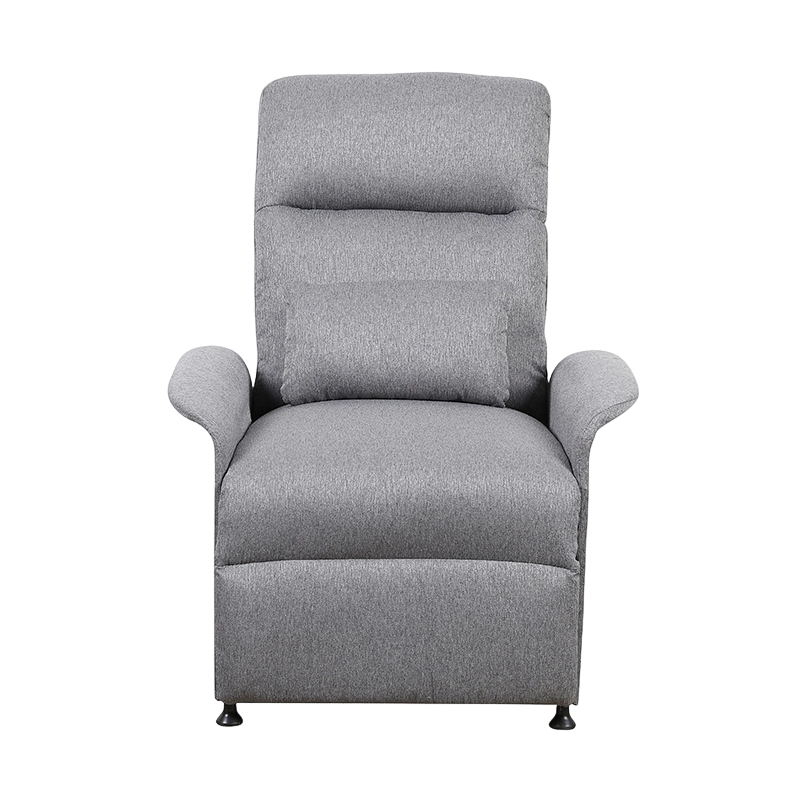
Power Recliner Chair with Remote Control
1. Product Overview and Intended Use
The Power Recliner Chair with Remote Control is a single-seat electric recliner categorized as an electric recliner. Its compact dimensions make it suitable for residential rooms, entertainment spaces, reading corners, guest rooms, home offices, and other areas where a dedicated relaxation seat is needed. The assembled length is approximately 30.7 inches, the assembled width is approximately 35 inches, and the assembled height is approximately 39.4 inches.
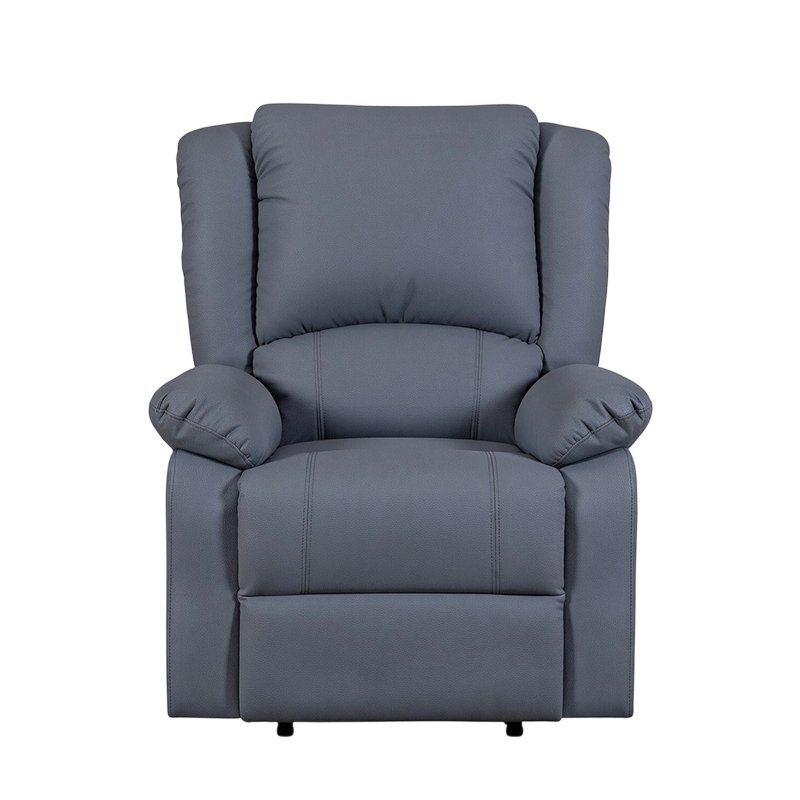
The chair is supplied as one piece. Its dark blue upholstery provides a distinctive appearance, while the available customization option allows buyers to explore alternative colors or upholstery directions according to market requirements. This flexibility can be valuable for furniture retailers, private-label programs, interior designers, and project buyers who need a coordinated visual style.
The basic operating concept is direct. In the upright position, the chair supports conventional sitting for conversation, reading, working on a mobile device, or watching television. As the user activates the remote control, the chair gradually changes position. The transition toward a reclined angle can create a more relaxed posture for entertainment, rest, or short naps.
The chair is rated for a weight capacity of 330 pounds. This specification provides a clear reference for product selection and purchasing decisions. Buyers should always consider the stated capacity together with the intended environment, usage frequency, floor conditions, and installation requirements. A correct match between product specifications and user expectations is essential for long-term satisfaction.
2. The Practical Advantage of Powered Reclining
Button-Based Operation
The most visible advantage over a conventional manual recliner is the remote-controlled operating system. A manual recliner generally requires the user to pull a lever, push against a footrest, or use body weight to initiate movement. While such systems can be effective, they may require more effort and can sometimes feel abrupt, especially when the mechanism is stiff or the user has limited mobility.
A powered system changes this experience. The user can activate the chair with a button rather than relying on forceful leg movement or reaching for a mechanical release. The control method is especially convenient for users who want to adjust their position while already seated. It also allows the chair to function as a more accessible relaxation product for people who prefer easier operation.
Smoother Position Adjustment
The chair is designed to move quietly and smoothly between approximately 90 degrees and 150 degrees. A controlled transition is important because it helps the user find a preferred position rather than being restricted to a small number of fixed settings. The upright position can support alert sitting, while the more open angle can support relaxation and rest.
Compared with a hard-to-push manual recliner, an electric recliner can reduce the effort required to change positions. This does not mean that every user needs powered movement, but it does create a clear product distinction. For retailers, the feature provides an easy-to-understand selling point: the chair offers adjustable comfort without requiring the user to operate a difficult lever or push forcefully against the footrest.
Useful Position Range
The range from approximately 90 degrees to 150 degrees covers several common activities. At around 90 degrees, the chair can be used for upright sitting, reading, conversation, and regular television viewing. At intermediate positions, the user can obtain a more relaxed posture while still maintaining an elevated upper body. At up to 150 degrees, the chair can support a substantially reclined position suitable for resting or taking a nap.
Position range is not simply a technical specification. It influences how often a chair will be used and whether it can serve multiple purposes in the home. A chair limited to one posture may be comfortable for a narrow activity. A powered chair with a broad adjustment range can become a more versatile piece of furniture for daily living.
Quiet operation is another meaningful advantage. A loud mechanical sound can interrupt a movie, disturb another person in the room, or make the product feel less refined. Smooth and quiet movement supports a calmer experience, particularly in family rooms, bedrooms, reading areas, and shared entertainment spaces.
For hospitality or commercial environments, reduced operating noise can also contribute to a more pleasant customer experience. Although the appropriate product selection depends on the project, a recliner that moves quietly can be easier to integrate into spaces where several people are relaxing at the same time.
3. Structural Design for Everyday Stability
Steel Frame Construction
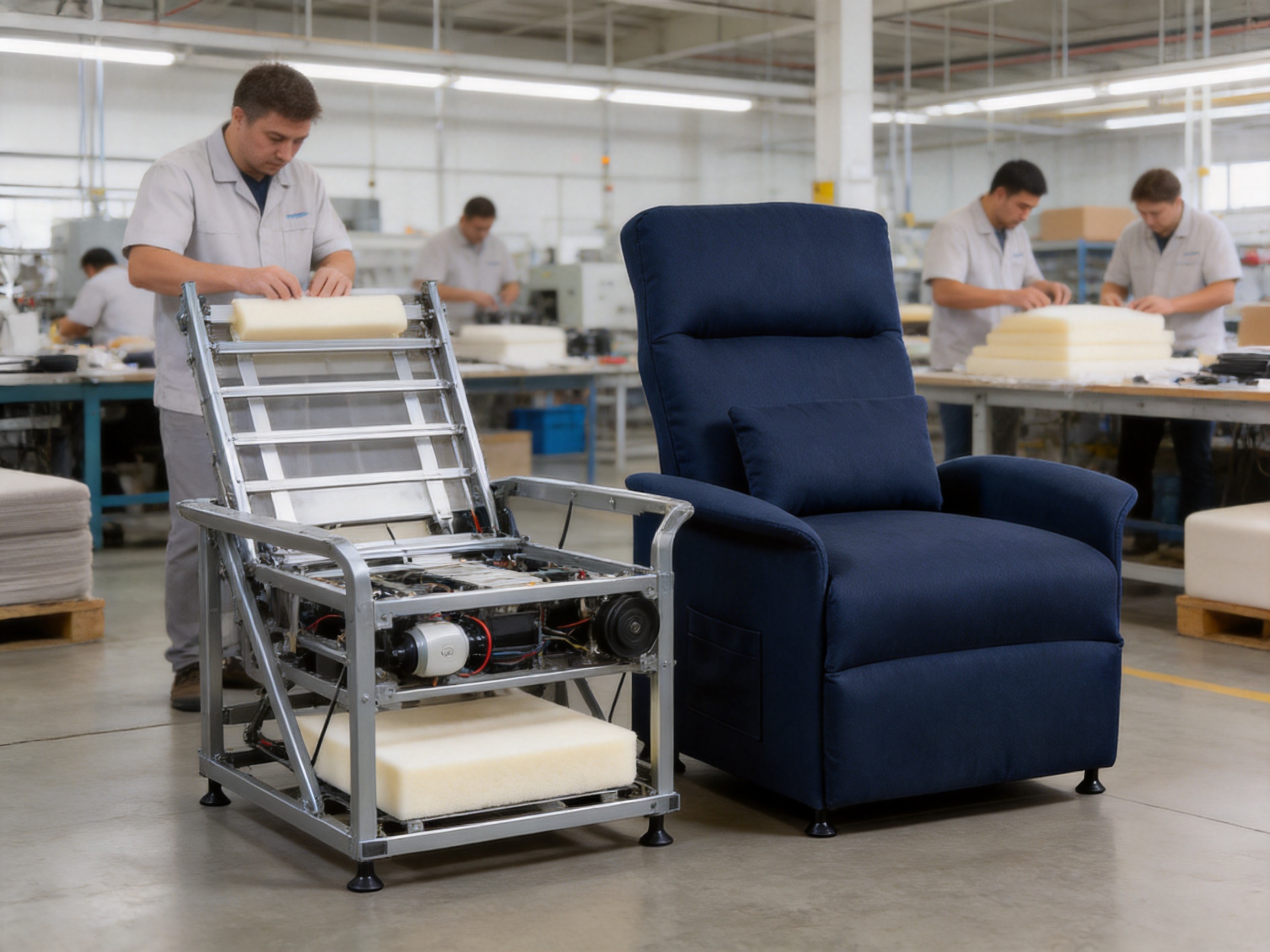
The chair is built with a strong steel frame. A steel structure offers an important foundation for a powered recliner because the frame must support the seat, backrest, armrests, reclining components, and the user’s body weight during movement. Stability is particularly important when the chair transitions between upright and reclined positions.
A strong frame can help the chair feel more secure during use. Users should not feel that the chair shifts unexpectedly when the footrest extends or when the backrest changes angle. Structural stability also supports the perception of quality. When a chair feels firm and controlled, users are more likely to regard it as dependable and well made.
The frame is one part of a complete structural system. It works together with the rack structure, the upholstery support, the motorized movement system, and the distribution of padding. Manufacturing accuracy is therefore important. A strong material alone cannot compensate for poor alignment, weak connections, or inconsistent assembly.
Stable Rack Structure
The stable rack structure is designed to help maintain the chair’s overall support. In a recliner, the rack must coordinate with moving components while preserving balance. The chair should remain steady when the user sits down, changes position, or reclines.
Stability also affects comfort. If a chair flexes excessively or feels unbalanced, the user may compensate with an awkward posture. A stable base allows the cushioning and backrest to perform their intended roles more effectively. This is why structural design should be considered part of the comfort system rather than a separate technical feature.
Cushioned Armrests
The armrests use a cushioned design to provide support at the sides of the body. Armrests can reduce pressure on the shoulders and help users maintain a relaxed position. They also contribute to the perceived width and softness of the chair.
For reading, watching television, or using a handheld device, comfortable arm support can make a meaningful difference. The arms should not be forced upward or left without support. A cushioned armrest helps create a more complete seating experience by supporting the upper body as well as the back and legs.
Balanced Proportions
The dimensions of the chair reflect a balance between personal comfort and space efficiency. With an assembled width of approximately 35 inches, the chair can serve as a dedicated seating unit without requiring the footprint of a large sofa. Its approximate height of 39.4 inches provides a substantial back area while maintaining a familiar lounge-chair profile.
At approximately 30.7 inches in assembled length, the chair is suitable for spaces where buyers want reclining functionality but need to manage available room. Even so, buyers should measure the intended location carefully, including the space behind and in front of the chair. A reclining product requires sufficient clearance for safe and comfortable movement.
4. Cushioning and Upholstery Comfort
High-Density Sponge
The use of high-density sponge is a central comfort feature. Cushioning must support the body without feeling excessively hard, while also resisting rapid loss of shape. High-density materials are commonly selected in upholstered furniture because they can provide a supportive seating foundation when properly designed and matched to the chair’s structure.
In this product, the sponge works with the seat shape, backrest contour, and upholstery to create a balanced feel. Comfort is not determined by softness alone. If a seat is too soft, the user may sink deeply and lose support. If it is too firm, the chair may feel uncomfortable during longer periods of use. A carefully selected high-density sponge can help provide both cushioning and stability.
High-Resilience Foam
The contoured back and thick seat cushion are filled with high-resilience foam. This combination is intended to provide supportive padding while helping the cushion return toward its original form after use. Resilience is especially useful in a recliner because the product may be used frequently and in several positions throughout the day.
The contoured back is shaped to follow the general form of the seated body. A contoured profile can support the back more naturally than a completely flat surface. When combined with the adjustable recline function, it helps the chair accommodate different postures instead of forcing the user to remain in one fixed position.
Premium Soft Fabric
The chair uses premium soft fabric upholstery. Fabric contributes to the first impression of a chair, but it also influences touch, breathability, visual warmth, and everyday usability. A soft surface can make the chair feel inviting and comfortable in living spaces, bedrooms, and reading areas.
The dark blue color gives the chair a strong visual identity. It can work as a focal point in a neutral interior or coordinate with darker furniture and entertainment equipment. Because the color can be customized, buyers can also request a direction that better matches a retailer’s assortment, a hospitality project, or a room-specific design scheme.
Upholstery selection should consider the intended environment. A residential chair may prioritize softness and visual character, while a commercial project may place greater emphasis on maintenance, color consistency, and replacement planning. Customization discussions can help align the fabric choice with the product’s expected use.
Comfort Through Layered Design
The overall comfort of the chair comes from the relationship between its components. The steel frame provides a stable foundation. The rack structure supports the moving system. The high-density sponge and high-resilience foam provide cushioning and recovery. The contoured back encourages a supported posture. The cushioned armrests support the upper body. The soft fabric creates a pleasant contact surface.
This layered approach is more reliable than focusing on one isolated specification. A thick cushion does not automatically provide good comfort if the frame is unstable. Soft fabric cannot compensate for poor body support. A powerful motor does not create a satisfying chair without appropriate padding and proportion. The product’s value comes from the way these elements are combined.
5. Manufacturing Integration and Product Development Strength
Experience Across the Furniture Value Chain
The manufacturer behind the product was established in 2021 in Anji County, Huzhou City, Zhejiang Province, an area widely recognized for its chair industry. The company focuses on sofas and chairs and combines research and development, industrial design, large-scale manufacturing, independent marketing, and technical services.
This combination is important because an upholstered recliner is a multi-disciplinary product. It requires knowledge of furniture styling, ergonomic support, structural engineering, upholstery, electric movement, assembly, inspection, packaging, and export handling. A company that coordinates these areas can respond more effectively to product requirements than a supplier focused on only one production stage.
Own Wooden Frame Factory and Sponge Processing Plant
One of the stated manufacturing advantages is control through an own wooden frame factory and sponge processing plant. Although this particular recliner uses a strong steel frame, access to internal or closely controlled furniture component production still provides broader benefits. It supports the manufacturer’s experience with frame design, upholstery support, foam selection, and the development of related sofa and chair products.
Control over key components can improve consistency. It may help the manufacturer coordinate dimensions, material specifications, production timing, and quality requirements across multiple product lines. It can also support cost and capacity control by reducing dependence on disconnected external processes.
For buyers, integrated component capability can simplify communication. Instead of discussing frame requirements, cushion specifications, upholstery, and finished assembly with multiple unrelated suppliers, a buyer can work with one manufacturing partner that understands how the pieces must function together.
Research and Development
Research and development supports the continuous improvement of furniture products. In a power recliner, development work may involve the relationship between seat dimensions, backrest contours, movement angles, motorized operation, frame stability, upholstery fit, and packaging requirements.
The company’s stated R&D and industrial design capabilities can help translate market needs into practical products. For example, buyers may request a particular color, a different visual style, a modified dimension, or a product family that includes recliners, sofas, love seats, corner sofas, and leisure chairs. A design and development team can evaluate these requests in relation to structure, materials, production feasibility, and target market expectations.
Large-Scale Manufacturing
The factory covers approximately 8,000 square meters and employs more than 100 people. This provides a production base for handling a range of furniture categories and order requirements. Scale does not replace quality control, but it can support more organized production planning, specialized workstations, and repeatable processes.
Large-scale manufacturing can also be useful for buyers who need consistent product supply. Retail programs, wholesale orders, and project-based purchases often require more than a single successful prototype. They require repeatability across batches. A structured factory environment can help manage material preparation, upholstery, assembly, inspection, and shipment scheduling.
Professional Management and Quality Inspection
The company describes a professional management team and strict multi-stage quality inspection. For a powered recliner, inspection should address both appearance and function. Upholstery should be checked for visible defects, stitching problems, wrinkles, color inconsistency, and fitting issues. Structural elements should be checked for stability and assembly accuracy. Powered movement should be evaluated for smooth operation and correct positioning.
Multi-stage inspection is valuable because quality problems can be easier to correct when discovered early. Checking components before final assembly can prevent defects from becoming hidden inside the finished product. Inspecting the assembled chair can confirm that the product performs as a complete unit rather than merely meeting individual component requirements.
A quality system is also important for export customers. International buyers often need dependable documentation, consistent specifications, repeatable packaging, and products suitable for the standards of their target markets. The company states that its products comply with international standards and certifications, and buyers can request the specific documentation relevant to their destination market and order.
6. Customization for Different Markets
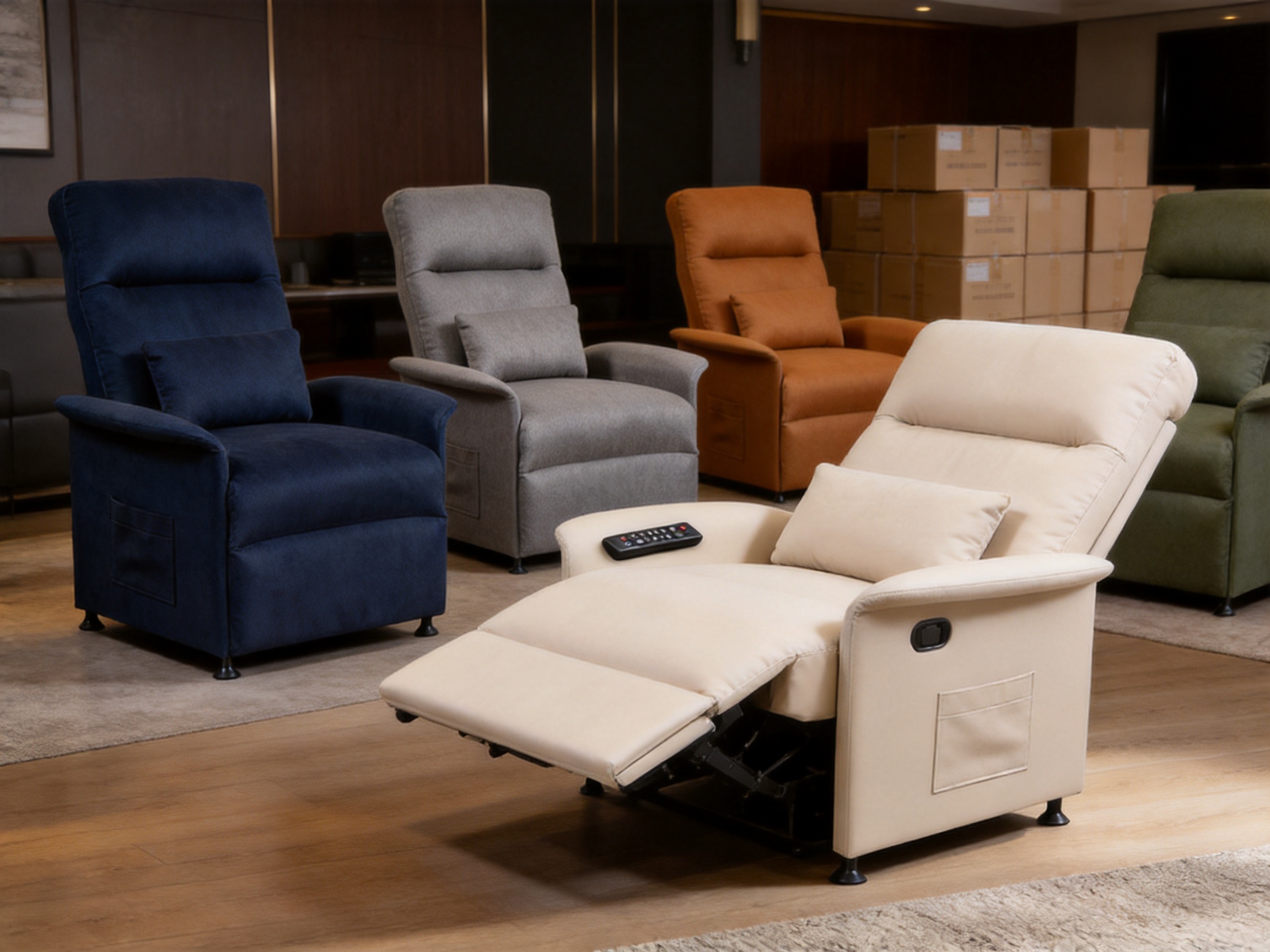
The chair is offered in dark blue, with customization available. Color customization is one of the most accessible ways to adapt a product to a buyer’s commercial or design strategy. A retailer may want colors that match its existing collection. A hotel, cinema, senior living facility, or residential development may need upholstery coordinated with a broader interior concept.
Customization may also involve product positioning. Some buyers may prefer to present the chair as a home entertainment recliner. Others may emphasize reading comfort, relaxation, accessible operation, or premium upholstered design. The same core product can be introduced with different merchandising language depending on the needs of the target customer.
When discussing customization, buyers should clarify the scope of the request. Important topics may include available fabric categories, color matching, minimum order quantities, sample approval, lead times, packaging, labeling, electrical requirements, and destination-market compliance. Clear communication at the beginning helps reduce misunderstanding later in the production process.
Customization is most effective when it respects the product’s underlying engineering. A change in upholstery or color may be relatively straightforward, while a change in dimensions, motor specifications, seat angle, frame design, or control placement may require additional development and testing. The manufacturer’s R&D and technical teams can help determine which modifications are practical.
7. Advantages for Retailers, Distributors, and Project Buyers
Clear Consumer Benefits
Retail products are easier to sell when their primary benefits can be explained simply. This chair offers several clear points: remote-controlled adjustment, quiet and smooth movement, a useful reclining range, cushioned armrests, high-density sponge, high-resilience foam, soft fabric, a steel frame, and a 330-pound weight capacity.
These features address common consumer questions. Is the chair difficult to operate? No, it uses a remote control. Can it be used for more than one activity? Yes, it can support upright sitting, television viewing, reading, reclining, and resting. Is it designed for stability? It includes a steel frame and stable rack structure. Is it comfortable? It includes contoured support and layered cushioning.
Positioning Against Manual Recliners
Manual recliners may appeal to buyers who prefer mechanical simplicity or a lower purchase price, but they can require more physical effort. The power recliner has a stronger convenience proposition because the user can adjust the chair with a button. This difference can be particularly relevant for customers who have difficulty operating a stiff lever or pushing out a footrest manually.
The powered design may also support a more premium retail position. A remote control, powered movement, and smooth transition can communicate greater functionality than a basic fixed chair. When combined with soft upholstery and supportive cushioning, the product can be positioned as an everyday comfort upgrade rather than merely another seat.
Product Family Opportunities
The manufacturer’s wider product range includes functional sofas, fixed sofas, corner sofas, lounge chairs, recliner sofas, love seats, and leisure chairs. This breadth can benefit buyers seeking coordinated furniture collections. A retailer may be able to develop a broader assortment with complementary products rather than sourcing every category from a different factory.
A coordinated product family can improve showroom presentation and simplify purchasing. It may also allow buyers to build room-based collections, such as a power recliner paired with a reclining sofa, a love seat, or a fixed sofa in matching or complementary upholstery.
Export and Logistics Support
The company is located near Ningbo Beilun Port and identifies convenient export logistics as one of its advantages. Port proximity can support shipping coordination and may help reduce the complexity of moving finished furniture into international supply chains. Export logistics remain dependent on order volume, destination, packaging, customs requirements, and shipping conditions, but a favorable manufacturing location is a practical benefit.
The company exports products to North America, Europe, the Middle East, and other regions. This international market experience may help the manufacturer understand the importance of documentation, packaging, communication, and destination-specific requirements. Buyers should still confirm all technical and regulatory details for their own market before placing an order.
8. Care, Maintenance, and Product Longevity
Proper care helps preserve the appearance and usability of upholstered furniture. The specified fabric care instructions recommend cleaning with dry-cleaning solvent only and advise users not to saturate the fabric with water. These directions should be followed carefully because excessive moisture can affect upholstery, padding, stitching, and underlying components.
Users should avoid pouring water or liquid cleaner directly onto the chair. Instead, any cleaning method should follow the fabric supplier’s instructions and be tested appropriately. If a pile fabric shows changes in appearance, brushing may be required to restore the surface direction. A soft, suitable brush can help refresh the pile, but aggressive scrubbing should be avoided.
Regular light maintenance is preferable to waiting until dirt becomes deeply embedded. Dust and loose particles can be removed gently using an appropriate upholstery attachment. Food, drink, and other spills should be addressed promptly in accordance with the care instructions. The chair should not be saturated, soaked, or exposed unnecessarily to harsh chemicals.
The power function also benefits from sensible use. The remote control should be kept where it can be reached easily but protected from crushing, liquid exposure, and unnecessary pulling. Users should keep the movement area clear so that the footrest and reclining components can operate without obstruction. Children and pets should be kept away from moving parts during adjustment.
Although the chair has a stated weight capacity of 330 pounds, users should avoid jumping onto it, standing on the footrest, or applying concentrated force to moving sections. Correct use helps protect the frame, motorized components, upholstery, and internal connections.
9. Buyer Evaluation Guide
Before purchasing the chair for a home, retail program, or project, buyers should evaluate the physical space. The assembled dimensions are approximately 30.7 inches in length, 35 inches in width, and 39.4 inches in height. In addition to the chair’s static dimensions, buyers should allow sufficient clearance for the reclining movement and for the user to enter and exit safely.
Buyers should also consider the user profile. The chair may be well suited to people who want simple powered adjustment, but comfort is personal. Seat height, seat depth, armrest position, cushion firmness, and back support should be reviewed in relation to the intended users. For larger projects, sample evaluation is recommended before finalizing a large order.
Electrical requirements should be confirmed for the destination market. Buyers should clarify the appropriate power configuration, control system, plug type, operating instructions, and any required certifications. These details can differ by country or region and should be settled before mass production.
For commercial use, purchasers should review expected traffic levels, cleaning conditions, replacement planning, packaging, and after-sales support. A chair in a private home may experience very different use from a chair placed in a waiting area, entertainment venue, or hospitality environment.
For customized orders, buyers should request material samples, color references, dimensional drawings, packaging information, and production schedules. Written confirmation of approved specifications can help ensure that the final batch matches the agreed design.
10. Why Manufacturing Capability Matters to Product Value
The quality of a power recliner depends not only on its visible features but also on the system used to produce it. A chair may look attractive in a photograph, yet its long-term value depends on structural consistency, accurate assembly, reliable movement, stable cushioning, and appropriate upholstery work.
An integrated manufacturer can coordinate these requirements more effectively. Research and development can define the product. Industrial design can shape its appearance and user experience. Frame and sponge capabilities can support material control. Upholstery teams can complete the exterior. Assembly workers can combine the components. Quality inspectors can evaluate the finished chair. Export and logistics teams can prepare the order for delivery.
This connected process can reduce communication gaps between separate suppliers. It can also make it easier to respond to revisions. If a buyer requests a different color, a modified cushion specification, or a related product, the manufacturer can assess the effect across design, materials, production, inspection, and delivery rather than treating the request as an isolated change.
Manufacturing strength is therefore part of the product proposition. The chair’s remote control, reclining range, steel frame, cushioning, and fabric are important, but the ability to reproduce these features consistently is equally important for professional buyers.
11. Product Specification Summary
| Specification | Details |
|---|---|
| Product type | Power recliner chair with remote control |
| Category | Electric recliner |
| Quantity | One piece of an electric recliner chair |
| Upright position | Approximately 90 degrees |
| Maximum reclining position | Approximately 150 degrees |
| Upholstery color | Dark blue; customization available |
| Frame | Strong steel frame |
| Cushioning | High-density sponge and high-resilience foam |
| Backrest | Contoured back design |
| Armrests | Cushioned armrest design |
| Weight capacity | 330 pounds |
| Assembled length | Approximately 30.7 inches |
| Assembled width | Approximately 35 inches |
| Assembled height | Approximately 39.4 inches |
| Fabric care | Clean with dry-cleaning solvent only; do not saturate with water |
12. Frequently Asked Questions
Q1: What is the main advantage of this power recliner?
The main advantage is convenient, button-based adjustment. The remote control allows the chair to move from an approximately 90-degree upright position to an approximately 150-degree reclined position without requiring the user to push hard against a manual mechanism.
Q2: Is the chair suitable for reading and watching television?
Yes. The upright position can support reading and television viewing, while intermediate or deeper reclining positions can provide a more relaxed posture. The cushioned armrests and contoured back are also useful for extended leisure activities.
Q3: How far can the chair recline?
The chair is designed to move from approximately 90 degrees to up to 150 degrees. The exact user experience may depend on operating conditions, clearance, and correct use of the chair.
Q4: What materials support the chair’s structure?
The product is built with a strong steel frame and a stable rack structure. These elements are intended to provide a secure foundation for the seat, backrest, armrests, and powered reclining movement.
Q5: What type of cushioning does the chair use?
The chair uses high-density sponge and high-resilience foam. Its thick seat cushion and contoured back are designed to combine support, softness, and recovery after use.
Q6: What is the chair’s weight capacity?
The stated weight capacity is 330 pounds. Users should also follow the recommended operating instructions and avoid standing on the chair or applying sudden force to its moving components.
Q7: Is the upholstery color customizable?
Yes. The standard color is dark blue, and customization is available. Buyers should confirm the available fabric options, color references, minimum quantities, and sample approval process with the manufacturer.
Q8: How should the upholstery be cleaned?
The specified care instructions recommend cleaning with dry-cleaning solvent only. The fabric should not be saturated with water. Pile fabrics may require careful brushing to restore their appearance.
Q9: What are the product dimensions?
The approximate assembled dimensions are 30.7 inches in length, 35 inches in width, and 39.4 inches in height. Buyers should also allow additional clearance for reclining movement and access.
Q10: Can the chair be used in commercial environments?
It may be considered for suitable commercial environments, depending on the project’s traffic level, cleaning requirements, electrical requirements, and compliance needs. Buyers should evaluate samples and confirm destination-market specifications before ordering.
Q11: What manufacturing capabilities support this product?
The manufacturer combines research and development, industrial design, large-scale production, technical services, and quality inspection. It also identifies control through its own wooden frame factory and sponge processing plant, customization capabilities, and export logistics near Ningbo Beilun Port.
The wider product range includes functional sofas, fixed sofas, corner sofas, lounge chairs, recliner sofas, love seats, and leisure chairs. This can support buyers seeking coordinated furniture collections or broader product programs.
Q13: What should be confirmed before a customized order?
Buyers should confirm upholstery materials, colors, dimensions, electrical specifications, control requirements, packaging, labeling, sample approval, minimum order quantities, production schedules, inspection procedures, and destination-market compliance.
Q14: Why is factory integration important?
Factory integration can improve coordination between design, structure, cushioning, upholstery, assembly, quality inspection, and logistics. It can also make customization and repeat production easier to manage.
13. Overall Assessment
The Power Recliner Chair with Remote Control is designed for users who want a comfortable, adjustable seat without the physical effort associated with a hard-to-push manual recliner. Its powered movement, quiet operation, and reclining range provide a practical advantage for reading, television viewing, relaxation, and naps.
Its value is reinforced by a strong steel frame, stable rack structure, cushioned armrests, high-density sponge, high-resilience foam, contoured back support, thick seat cushioning, and soft fabric upholstery. These elements work together to create a chair that combines function, comfort, and visual appeal.
For professional buyers, the product is also supported by broader manufacturing strengths. Research and development, industrial design, component control, large-scale production, customization, quality inspection, international market experience, and export logistics all contribute to the product’s commercial potential.
Compared with basic fixed chairs or effort-intensive manual recliners, the product offers a stronger convenience proposition. Compared with isolated component sourcing, an integrated manufacturing partner can provide a more coordinated path from product concept to finished furniture. These advantages make the chair suitable for residential furniture programs, retail collections, customized projects, and buyers seeking a practical powered seating solution.
As with any upholstered electric furniture, successful purchasing depends on matching the product to the intended users, room dimensions, electrical environment, care requirements, and market regulations. When these factors are reviewed carefully, the chair can serve as a versatile and appealing addition to a modern furniture assortment.
References
1. Product Specification Sheet. Power Recliner Chair with Remote Control, product description and dimensional information.
2. Upholstered Furniture Care Guidance. Fabric cleaning, moisture prevention, and pile restoration recommendations.
3. Furniture Ergonomics Principles. General considerations for posture, seat support, back contours, and armrest comfort.
4. Upholstered Seating Manufacturing Practices. General principles of frame construction, foam selection, upholstery, assembly, and inspection.
5. Export Furniture Quality Management Guidance. General considerations for sampling, batch consistency, documentation, packaging, and destination-market requirements.
6. Company Manufacturing Profile. Information regarding research and development, industrial design, production facilities, customization, quality control, product categories, and export capabilities.
Product: Power Recliner Chair with Remote Control

LET'S TALK

Bai Shuiwan Industrial Park, Tian Huangping Town, Anji County, Huzhou City, Zhejiang Province, China
More About Us 
-
+86 18257273741
-
[email protected]
CONTACT US
Copyright © Anji Xuanbo Household Co., Ltd. All Rights Reserved.
Custom Modern Upholstered Sofa Manufacturers


