Focus on the manufacturing and export of functional sofas
-
 +86 18257273741
-
 [email protected]

 English
 Español

Chen Meilin — International Sales Representative
 Home / Author / Chen Meilin — International Sales Representative / 37.4-Inch Manual Reclining Chair: Comfort, Craftsmanship, and Custom Manufacturing Advantages
37.4-Inch Manual Reclining Chair: Comfort, Craftsmanship, and Custom Manufacturing Advantages
 2026.09.24
 Chen Meilin — International Sales Representative
Content
- 1 Introduction
- 2 Product Overview
- 3 Comfort Designed for Everyday Use
- 4 Design Details That Increase Product Appeal
- 5 Structural Construction and Durability
- 6 Advantages Over Basic Competing Recliners
- 7 Manufacturing Strengths of the Producer
- 8 From Raw Materials to Finished Recliner
- 9 Customization and Market Applications
- 10 Care, Cleaning, and Long-Term Use
- 11 Installation and Delivery Considerations
- 12 Why Manufacturing Control Matters to Buyers
- 13 Quality, Compliance, and Partnership Potential
- 14 Q&A
- 14.1 What type of chair is the 8077A?
- 14.2 How does the reclining function operate?
- 14.3 What are the chair’s dimensions?
- 14.4 What is the chair’s weight capacity?
- 14.5 Does the chair include cup holders?
- 14.6 What materials are used in the frame?
- 14.7 What type of cushioning does the chair use?
- 14.8 Is the seat back removable?
- 14.9 Is assembly required?
- 14.10 Is grey the only available color?
- 14.11 How should the upholstery be cleaned?
- 14.12 What makes this chair different from a basic manual recliner?
- 14.13 Is the chair suitable for small rooms?
- 14.14 Can the product be used in commercial projects?
- 14.15 What manufacturing advantages does the producer offer?
- 15 Conclusion
- 16 References
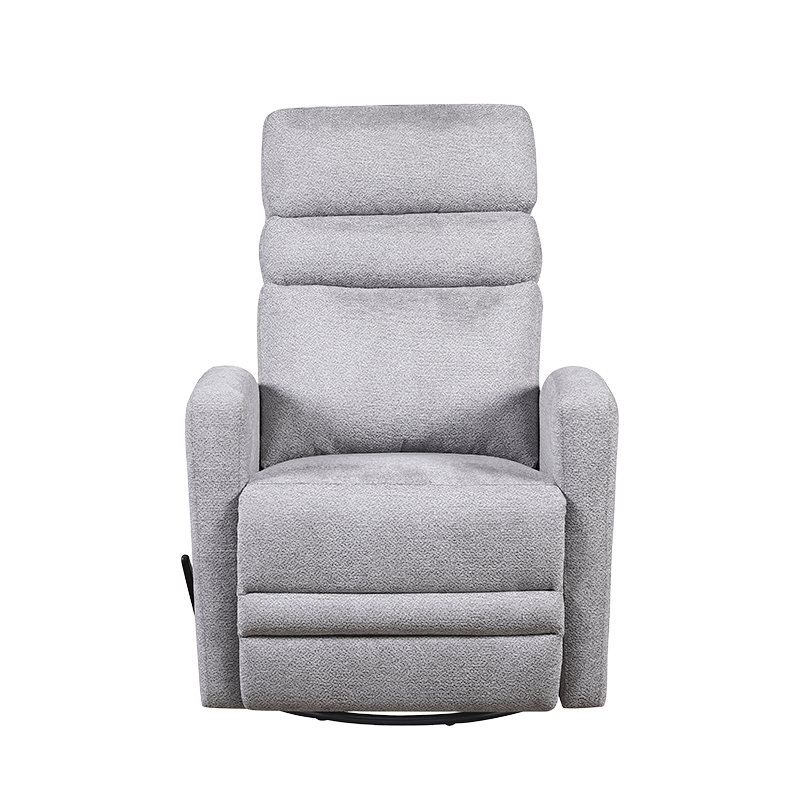
- 17 Product: 37.4 Wide Manual reclining chair with soft and comfortable cushions
Introduction
Modern living spaces increasingly demand furniture that combines comfort, practical function, attractive design, and dependable construction. A recliner is no longer viewed only as a traditional television chair. It has become a versatile piece of residential and commercial furniture that supports relaxation, reading, conversation, rest, and everyday leisure. The 37.4-inch manual reclining chair is designed around these changing expectations, offering a balanced combination of compact proportions, supportive cushioning, smooth manual reclining, swivel-glider movement, and refined upholstered styling.
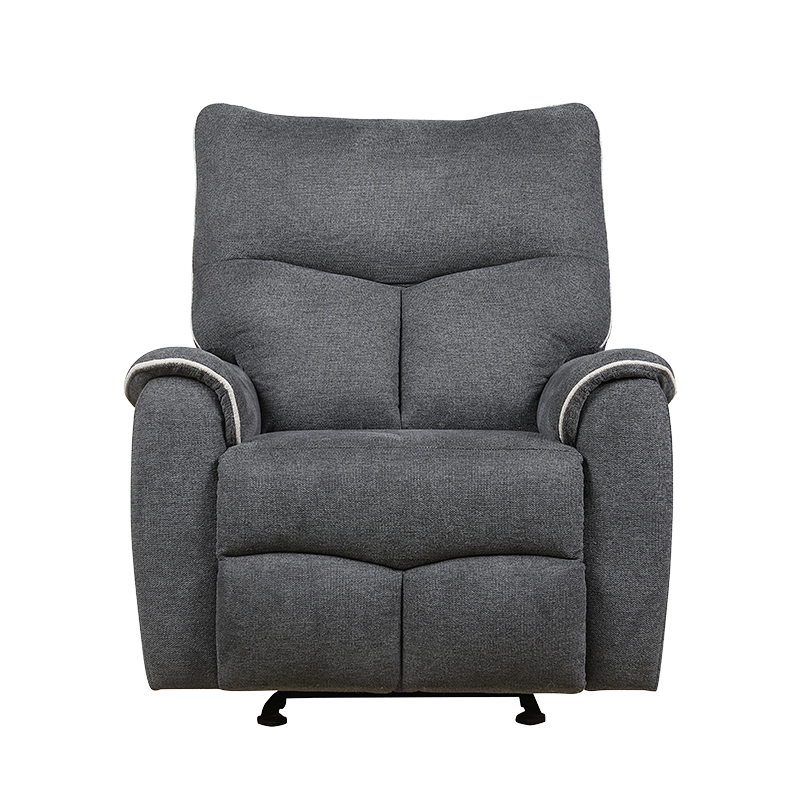
With its rich grey finish, distinctive armrest stitching, integrated cup holders, and generously padded seat, this recliner is suitable for living rooms, family rooms, home theaters, reading corners, bedrooms, hospitality spaces, and other environments where comfort matters. Its 37.4-inch width provides a spacious seating experience without taking up the excessive floor area associated with many oversized recliners. This makes it especially valuable for apartments, condominiums, compact homes, guest rooms, and furniture arrangements where space efficiency is important.
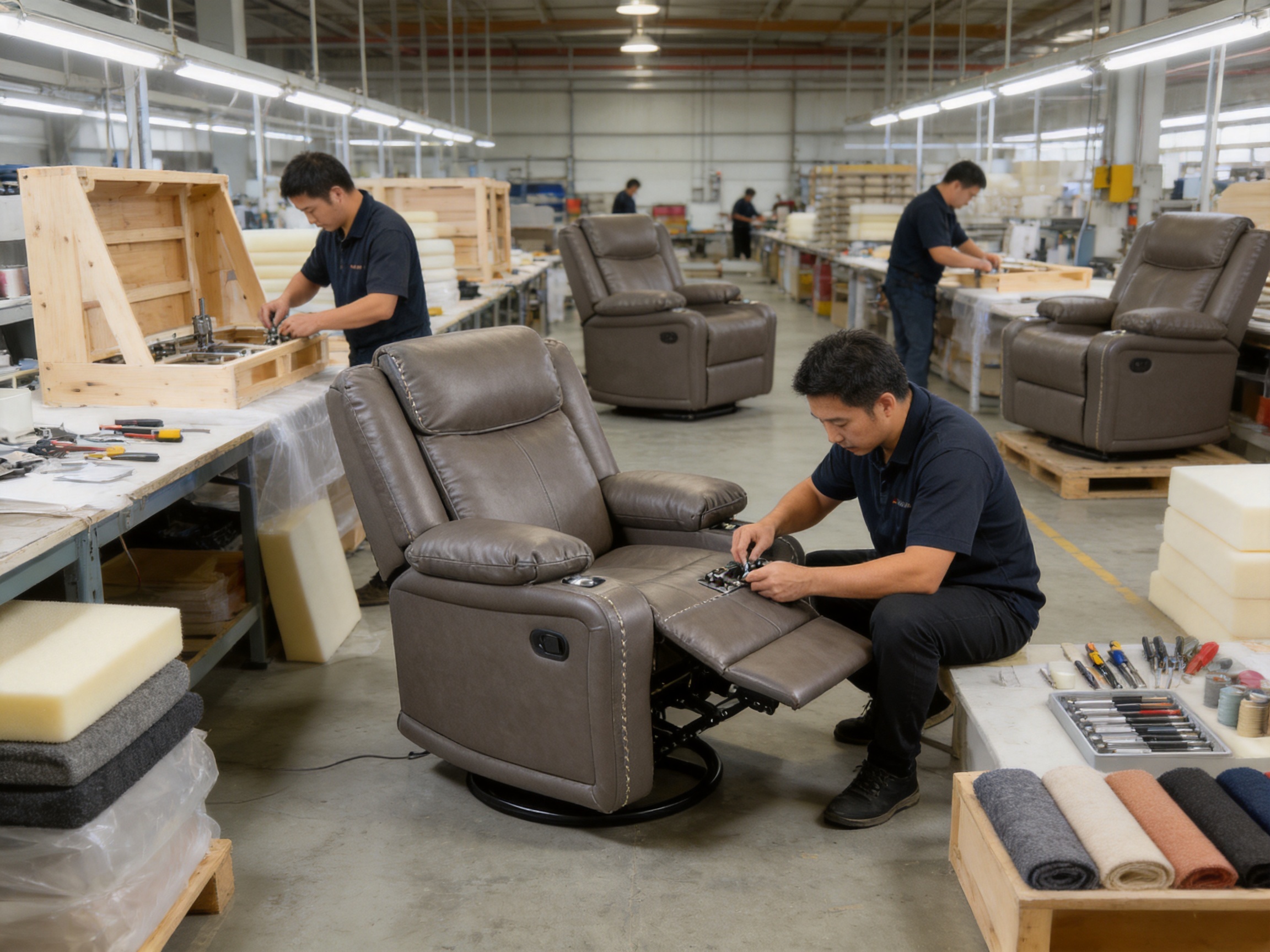
The chair is also supported by the manufacturing capabilities of Anji Xuanbo Household Co., Ltd., a professional Chinese furniture manufacturer specializing in functional sofas, fixed sofas, corner sofas, lounge chairs, recliner sofas, love seats, and leisure chairs. Located in Anji County, Zhejiang Province, the company operates in a region internationally recognized for its developed chair industry. Its integrated capabilities include product research and development, industrial design, wooden frame manufacturing, sponge processing, upholstery production, assembly, quality inspection, and export logistics.
This article examines the recliner’s design, comfort features, structural advantages, manufacturing process, customization potential, maintenance requirements, and suitability for different markets. It also explains why a professionally produced manual recliner can offer meaningful advantages over lower-cost competitors that may compromise on frame strength, cushioning consistency, reclining performance, or finishing quality.
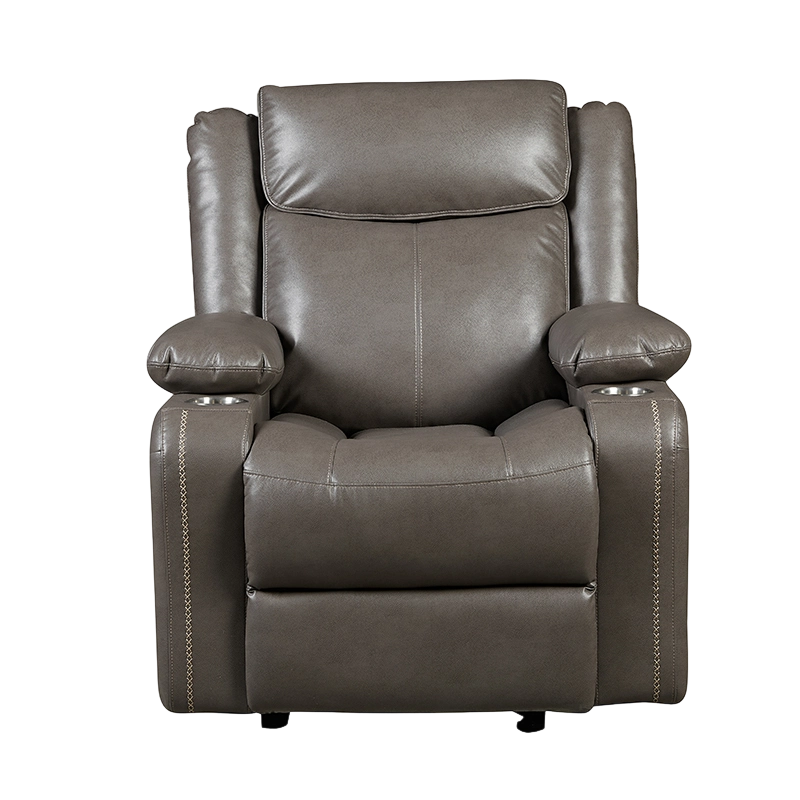
37.4 Wide Manual reclining chair with soft and comfortable cushions
Product Overview
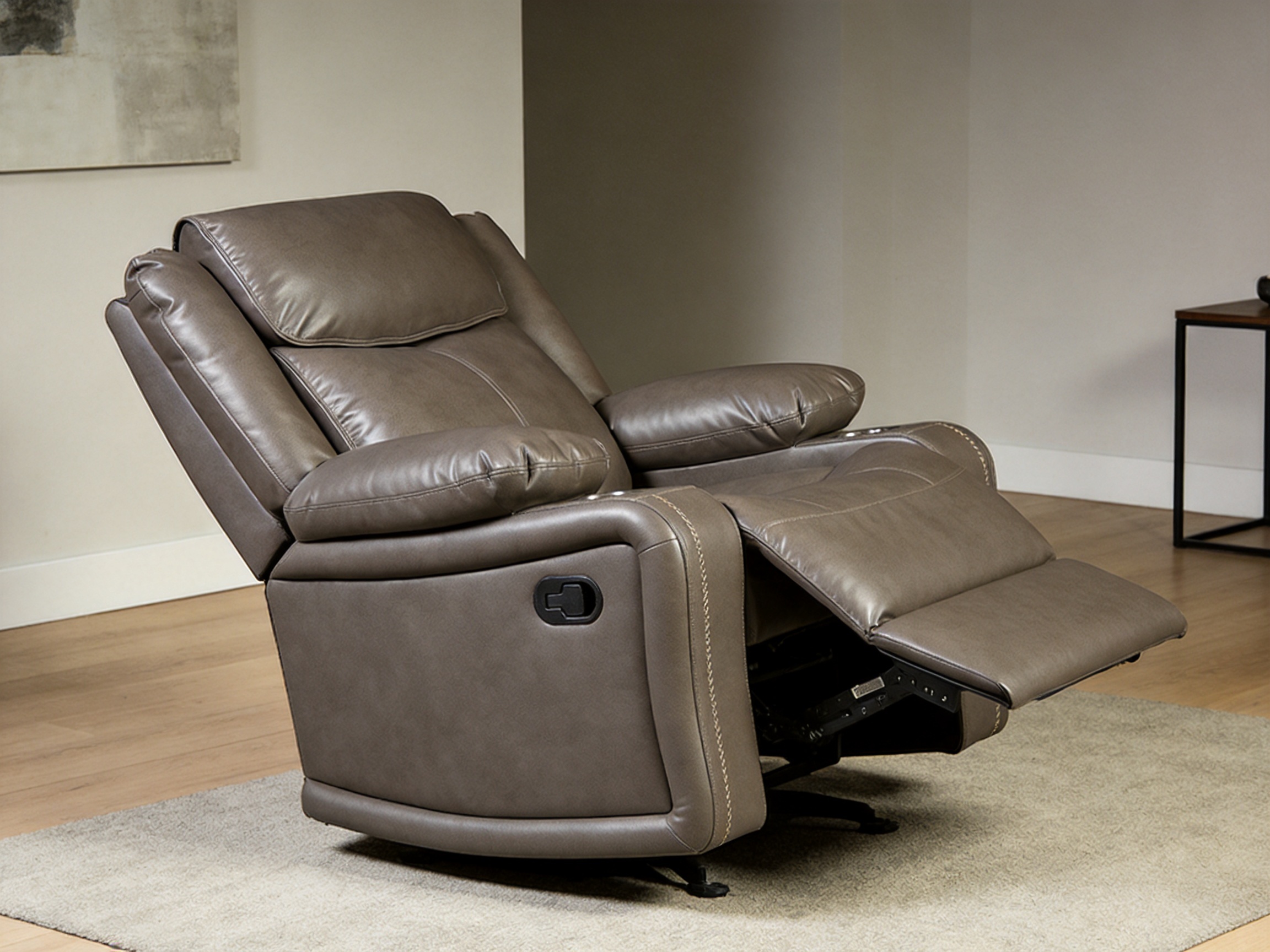
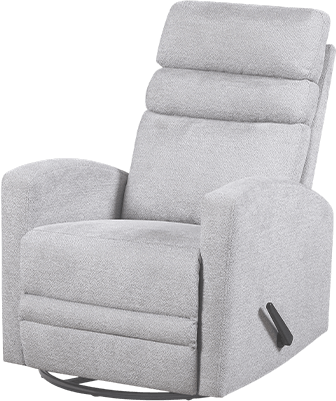
The product is a 37.4-inch-wide manual reclining chair identified as model 8077A. It is categorized as a manual recliner and is designed as a one-piece swivel glider recliner. The chair uses a tab-pull reclining mechanism that allows the user to activate the footrest and move into a more relaxed position without relying on electrical power, motors, remote controls, or wall outlets.
The product combines a stationary upholstered chair profile with motion functions that enhance relaxation. Its swivel function allows the user to turn gently from side to side, while the glider function creates a smooth forward-and-back movement. When combined with the reclining action, these features provide multiple ways to adjust posture and create a more personalized seating experience.
The chair has a soft grey upholstered appearance that can coordinate with a broad range of interior styles. Grey is particularly adaptable because it works with warm wood tones, cool metal finishes, neutral walls, patterned rugs, and contemporary decorative accessories. The manufacturer also supports custom colors, giving importers, retailers, hospitality projects, and private-label customers the opportunity to coordinate the recliner with specific collections or market preferences.
Under the upholstery, foam padding over pocket coils helps create a combination of surface softness and underlying support. The attached back and seat cushions maintain a neat appearance while reducing the likelihood of loose cushions shifting during use. A removable seat back supports easier handling during delivery and installation, which can be useful when the chair must pass through narrow doors, stairways, elevators, or compact corridors.
Core Product Specifications
| Specification | Product Detail |
|---|---|
| Product Type | Manual swivel glider recliner |
| Model | 8077A |
| Overall Width | 37.4 inches |
| Overall Depth | 38.1 inches |
| Overall Height | 40.9 inches |
| Primary Color | Grey, with custom colors available |
| Reclining Method | Manual tab-pull mechanism |
| Cushion Construction | Foam padding over pocket coils |
| Frame Materials | Solid wood and plywood with metal-reinforced seat |
| Additional Functions | Swivel, glider motion, two cup holders |
| Back Construction | Attached back cushion with removable seat back |
| Assembly | Assembly required |
| Weight Capacity | 300 pounds |
Comfort Designed for Everyday Use
The central advantage of a recliner is its ability to provide a more relaxed seating posture than a conventional upright chair. The 8077A supports this purpose through several coordinated design elements rather than relying on a single feature. The padded seat, supportive back, reclining footrest, glider movement, swivel base, and armrest construction all contribute to the overall experience.
Foam Padding Over Pocket Coils
The seat uses foam padding over pocket coils. This construction is valuable because it combines cushioning responsiveness with structured support. Foam helps create a soft and comfortable first impression, while pocket coils contribute resilience and help distribute seated weight across the seating surface. Compared with a chair made only from basic foam, a pocket-coil foundation can provide a more supportive sitting feel and help the cushion recover after repeated use.
Pocket coils also support individualized movement. Because the coils are separately enclosed, they can respond more independently to changes in pressure. This can improve comfort for users who shift position, lean back, or sit toward one side of the chair. The result is a seating surface intended to feel supportive without becoming overly rigid.
Attached Back and Seat Cushions
The attached back and seat cushions create a coordinated appearance and help keep the main comfort components in their intended positions. Loose cushions can move, bunch, or require frequent adjustment. Attached cushions reduce this inconvenience and maintain a cleaner visual profile, which is especially important in living rooms, showrooms, model homes, and hospitality environments.
Attached cushioning also simplifies daily use. Users can sit, recline, rise, and return to the chair without needing to reposition the seat or back cushion after every session. The design is therefore suitable for households where the chair will be used frequently by different family members.
Swivel and Glider Movement
The swivel function gives the user greater freedom to orient the chair toward a television, window, conversation area, bookcase, or another part of the room. This flexibility can make one chair serve several purposes. Instead of positioning the entire chair manually, the user can make small directional adjustments while seated.
The glider function provides gentle forward-and-back movement that can enhance rest. This motion is particularly useful for reading, listening to music, calming a child, or simply creating a more soothing seating experience. The glider action complements the reclining function, allowing the chair to provide more than one type of relaxation.
Manual Tab-Pull Reclining
The manual tab-pull mechanism is straightforward and convenient. The user pulls the tab to activate the reclining motion and extend the footrest. Unlike power recliners, manual chairs do not require electrical wiring, charging, a power adapter, or access to a nearby outlet. This makes placement easier and reduces the number of components that must be serviced over the product’s life.
A manual mechanism can also appeal to consumers who prefer simple furniture operation. The controls are easy to understand, and the chair can be used during power interruptions. For retailers and project buyers, the lack of electrical components may simplify packaging, installation, product education, and international distribution requirements.
Design Details That Increase Product Appeal
A successful recliner must provide comfort while also fitting naturally into a room. The 8077A uses several visual and functional details to create a more finished appearance than a basic utility recliner.
Adaptable Grey Upholstery
The grey upholstery offers a neutral foundation for multiple decorating styles. It can complement modern, transitional, minimalist, industrial, Scandinavian, and casual contemporary interiors. A grey chair can be paired with white walls and pale wood for a lighter appearance, or with darker tables and accent lighting for a more dramatic setting.
Neutral upholstery may also help retailers reach a broader customer base. Rather than limiting the chair to a highly specific color trend, grey provides a dependable option for consumers who want furniture that will remain compatible with future décor changes. For contract and project customers, the manufacturer’s ability to support custom colors expands the product’s usefulness beyond the standard version.
Distinctive Armrest Stitching
The unique stitching design on the armrests adds visual character to the chair. Stitching can emphasize the shape of upholstered panels, create a more tailored appearance, and distinguish the product from plain, mass-market designs. It also communicates attention to detail at the areas most visible to the user.
Well-planned stitching is more than decoration. It can help define panel transitions and contribute to a consistent upholstery finish. When executed correctly, it gives the chair a structured appearance while preserving the soft, inviting impression expected from a recliner.
Integrated Cup Holders
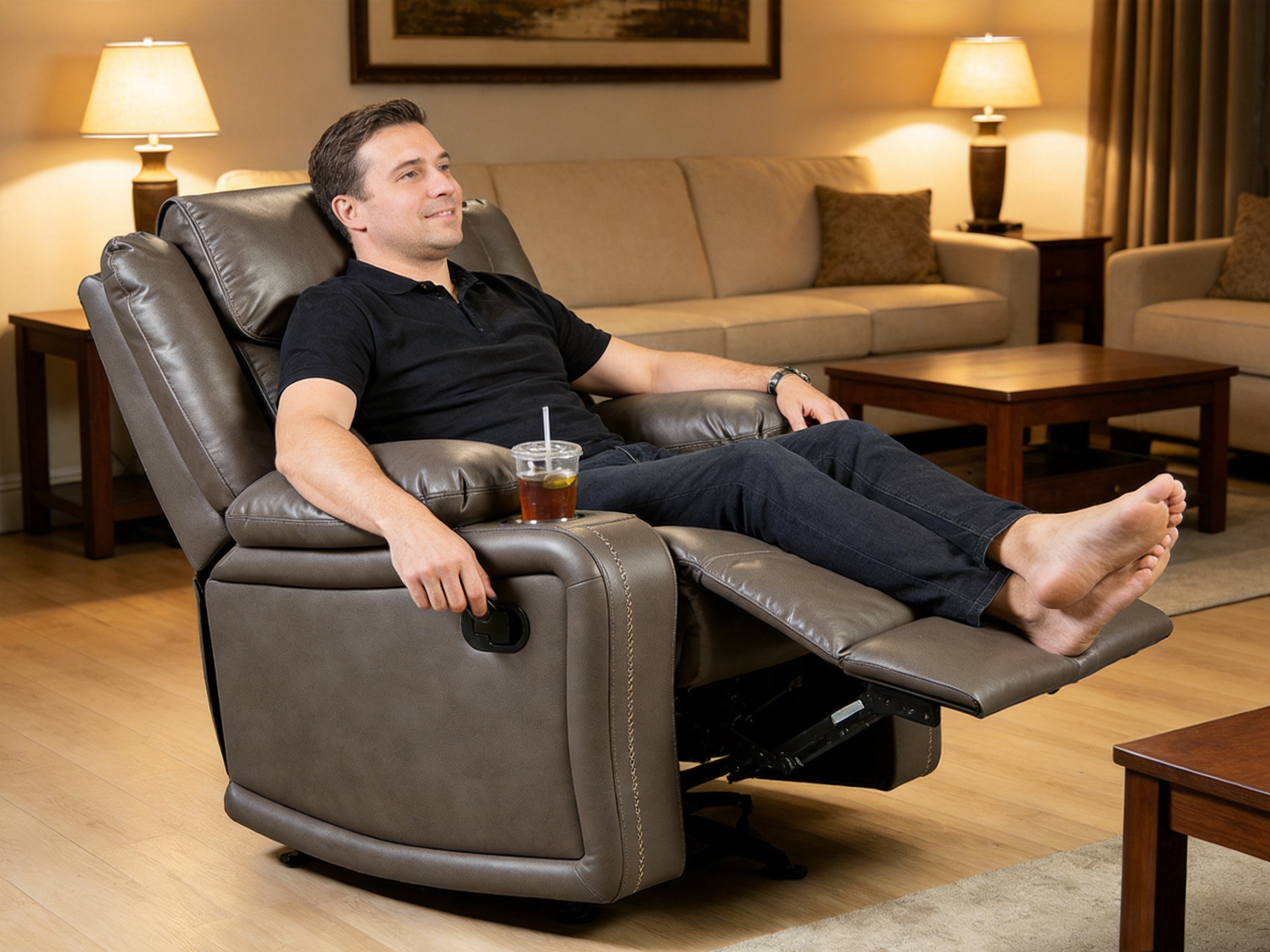
Two cup holders increase practical convenience. Users can keep beverages close at hand while watching films, reading, working on a tablet, or spending time with family. The cup holders reduce the need for a separate side table and help the chair function as a more complete relaxation station.
This feature is especially attractive in home theater environments and entertainment rooms. It can also appeal to customers who value storage and convenience in compact spaces. Combining drink storage with the chair itself makes better use of the product footprint.
Structural Construction and Durability
Long-term furniture performance depends heavily on the structure beneath the upholstery. A chair may look attractive when new, but its true value is determined by how well the frame, seat support, reclining components, and cushion materials withstand repeated use. The 8077A uses solid wood and plywood in the frame, together with a metal-reinforced seat.
Solid Wood and Plywood Frame
Solid wood provides a dependable base for key structural areas, while plywood can offer dimensional stability and efficient panel construction. The combination allows the manufacturer to balance strength, weight, material efficiency, and production consistency. Properly selected and assembled wood components help the chair maintain its shape and support under normal use.
Using multiple structural materials strategically is generally more effective than relying on one material throughout the chair. Solid wood can be used where concentrated strength is important, while engineered wood panels can provide stable surfaces and consistent dimensions. This approach supports repeatable manufacturing and helps reduce unnecessary material use.
Metal-Reinforced Seat
The metal-reinforced seat provides additional support in an area exposed to repeated loading. Every time a user sits down, shifts position, reclines, or rises, the seat structure experiences force. Metal reinforcement helps strengthen this high-use zone and contributes to a more stable seating platform.
The stated weight capacity is 300 pounds. Buyers should always use furniture within its specified capacity and follow the manufacturer’s assembly and usage guidance. Within normal residential and commercial applications, the reinforced seat construction is intended to support dependable everyday performance.
Removable Seat Back
The removable seat back is an important logistical advantage. Large upholstered furniture can be difficult to move through doorways and staircases, particularly in urban housing or older buildings. A removable back can reduce the chair’s handling profile and make delivery teams more efficient.
For retailers, removable components can also simplify warehouse organization and final-mile delivery. The chair can be handled more easily by installation personnel, while customers benefit from a smoother setup experience. The feature is particularly useful when the recliner is sold through online channels and delivered directly to the consumer.
Advantages Over Basic Competing Recliners
The furniture market includes a wide range of recliners, from simple fixed-back chairs to large power-operated models. The 8077A occupies a practical middle position: it offers multiple comfort functions and supportive construction without the complexity, size, or electrical dependence of a premium power recliner.
More Functions Than a Standard Manual Chair
A basic manual recliner may provide only a reclining footrest. This model adds swivel and glider movement, creating a broader range of seating experiences. The user can change orientation, rock gently, or recline, depending on the activity and personal preference.
Multiple functions also make the chair more adaptable to different rooms. In a living room, the swivel action can support conversation. In a media room, the recliner can face the screen. In a bedroom or reading area, the glider motion can provide a quieter form of relaxation. One product can therefore serve several roles without requiring additional furniture.
More Practical Than a Power Recliner in Certain Settings
Power recliners are popular because they offer motorized adjustment, but they also require access to electricity and may include more components that can require maintenance. The manual tab-pull design avoids those requirements. It can be placed away from walls, positioned in open floor plans, or used in rooms where electrical outlets are limited.
Manual operation may also be preferred by buyers seeking a lower-complexity product. It can reduce energy consumption during use and simplify transportation, installation, and international distribution. For hospitality, rental, and property furnishing applications, a simple mechanical operation may be easier for a wide range of users to understand.
More Space-Efficient Than Oversized Recliners
Many large recliners provide generous cushioning but require substantial floor space. At 37.4 inches wide, the 8077A offers a comfortable seating area while remaining suitable for tighter layouts. Its dimensions can help retailers offer a functional recliner to customers who do not have room for a wide theater-style chair.
Space efficiency is increasingly important in apartments, urban homes, guest suites, and multipurpose rooms. The chair can be positioned as an individual comfort seat without overwhelming nearby sofas, tables, or walkways. Buyers should still allow sufficient clearance for reclining and gliding movement, but the upright footprint remains practical.
More Supportive Than Low-Cost Foam-Only Products
Some inexpensive recliners depend on basic foam cushions and lightweight structural materials. While these products may have a low initial price, they may not offer the same combination of resilience, seating support, and structural confidence. The 8077A uses foam over pocket coils, a solid wood and plywood frame, and a metal-reinforced seat to create a more substantial construction profile.
These materials can improve the perceived quality of the chair at the point of sale. Customers can feel the difference in seating stability, cushion response, and overall solidity. For distributors and retailers, better construction can support stronger product positioning and reduce the risk of returns associated with disappointing comfort or perceived weakness.
Manufacturing Strengths of the Producer
The product’s performance is closely connected to the capabilities of its manufacturer. Anji Xuanbo Household Co., Ltd. was established in 2021 and is located in Anji County, Huzhou City, Zhejiang Province. The area is widely known as the “Capital of Chair Industry,” providing access to furniture expertise, component suppliers, skilled workers, logistics services, and established export channels.
The company specializes in the development and production of sofas and chairs. Its product range includes functional sofas, fixed sofas, corner sofas, lounge chairs, recliner sofas, love seats, and leisure chairs. This broad category experience is valuable because it allows the manufacturer to understand different furniture structures, seating requirements, upholstery methods, and market applications.
Integrated Research and Development
Product development begins with understanding consumer use, target markets, room sizes, construction requirements, and visual trends. The company integrates research and development with industrial design, allowing functional requirements and appearance to be considered together rather than separately.
For a recliner, this integrated approach is particularly important. The chair must balance external dimensions, internal mechanism space, cushion thickness, back angle, footrest movement, armrest proportions, frame strength, and upholstery tension. A design that looks attractive but does not provide comfortable movement will not succeed. Similarly, a chair with good mechanical performance but an outdated appearance may struggle in competitive retail channels.
By combining industrial design and manufacturing knowledge, the producer can refine details such as armrest stitching, cushion profiles, reclining access, cup-holder placement, and overall proportions. This supports a product that is both visually marketable and practical to manufacture.
Own Wooden Frame Factory
One of the company’s stated advantages is control over wooden frame production. Internal frame capability can improve coordination between design and manufacturing. Instead of depending entirely on external frame suppliers, the company can manage material selection, cutting, shaping, assembly, and inspection more directly.
Frame control can also support customization. When a buyer requests a revised width, altered proportions, modified reinforcement, or a new product format, an internal frame operation may respond more efficiently than a fragmented supply chain. It can help reduce communication delays and improve consistency between approved samples and mass production.
Own Sponge Processing Capability
The company also maintains sponge processing capability. Cushion materials strongly influence comfort, recovery, appearance, and long-term product perception. Internal processing can support more precise control over foam dimensions and cushion preparation.
For the 8077A, foam works together with pocket coils to create the finished seating feel. Consistent foam cutting and shaping are important because irregular dimensions can lead to uneven cushion surfaces, poor upholstery tension, or differences between products in the same shipment. Processing control helps the manufacturer maintain a more consistent output.
Large-Scale Production and Workforce
The factory covers approximately 8,000 square meters and has more than 100 employees. This scale supports organized production while remaining suitable for flexible furniture manufacturing. A workforce of this size can include personnel responsible for frame production, foam processing, sewing, upholstery, assembly, quality inspection, packaging, warehouse handling, and export coordination.
Scale is not measured only by factory size. It also involves the ability to coordinate multiple production stages, maintain schedules, respond to customer specifications, and manage quality across different product categories. The combination of facilities, personnel, and management systems supports the company’s ability to serve both standard and customized furniture programs.
From Raw Materials to Finished Recliner
A reliable recliner is created through a sequence of controlled manufacturing steps. Each stage influences the final product, so quality cannot be added only at the end of the process. It must be built into material selection, component preparation, assembly, upholstery, and inspection.
Material Selection
Production begins with the selection of structural wood, plywood, metal components, pocket coils, foam, upholstery materials, thread, hardware, and packaging materials. Each component must be appropriate for its intended function. Frame materials require strength and stability. Cushion materials require resilience and comfort. Upholstery materials require an attractive appearance and suitable resistance to normal use.
Material selection also affects cost control and product positioning. A manufacturer with direct control over multiple production stages can coordinate material choices with target market requirements instead of treating every product as a one-size-fits-all design.
Frame Preparation and Assembly
Wooden frame components are cut and prepared according to product drawings and production specifications. The parts are then assembled to establish the chair’s basic geometry. Accurate frame assembly is essential because small dimensional differences can affect cushion fit, upholstery tension, mechanism alignment, and final appearance.
The seat area receives metal reinforcement to support stability in a high-load zone. The frame must also accommodate the reclining structure, swivel-glider base, armrests, back support, and attachment points. Careful preparation at this stage reduces the possibility of movement, noise, or uneven alignment during later assembly.
Cushion and Pocket-Coil Preparation
The pocket-coil unit and foam components are prepared to work together. The foam must be shaped and positioned so that the seat feels comfortable while retaining a clean profile. The pocket coils provide underlying support, while the foam creates cushioning at the contact surface.
Consistent cushion preparation helps ensure that chairs from the same production batch have similar comfort characteristics. This is important for retailers and project buyers because customers expect a display model and delivered product to provide a comparable seating experience.
Upholstery and Stitching
Upholstery panels are cut, sewn, and fitted over the prepared structure. The distinctive armrest stitching is completed with attention to alignment, spacing, and tension. The upholstered cover must be fitted closely enough to maintain a tailored appearance while allowing the cushioning and reclining functions to operate correctly.
Color consistency is also important. Grey upholstery can vary in tone depending on material batches, lighting, and finishing conditions. Professional production management helps maintain a coordinated appearance across components and shipments. For custom-color orders, the approval of samples before mass production is an important part of the process.
Mechanism and Functional Assembly
The manual reclining mechanism, tab pull, swivel base, glider components, cup holders, and seat structure are assembled and aligned. The chair must move smoothly without excessive looseness, obstruction, or uneven resistance. The reclining action should be tested through its operating range, while the swivel and glider functions should be checked for stable movement.
Functional assembly requires coordination between mechanical components and upholstered parts. A mechanism may operate correctly before upholstery but become restricted if covers are fitted incorrectly. For this reason, final testing must occur after the complete chair has been assembled.
Inspection and Packaging
Quality inspection should address appearance, dimensions, stitching, upholstery fit, cushion installation, frame stability, reclining movement, swivel action, glider motion, cup-holder placement, and packaging condition. The removable seat back and assembly components should also be checked to support a clear and efficient installation process.
Packaging protects the chair during warehouse storage and international transportation. Appropriate packaging should help protect upholstery, armrests, mechanism areas, and exposed surfaces from abrasion, compression, moisture, and impact. Efficient packaging also supports better container utilization and reduces avoidable logistics costs.
Customization and Market Applications
The ability to support custom colors makes the 8077A suitable for more than one standard retail collection. Color customization can help distributors develop exclusive lines, coordinate furniture with regional preferences, or create a consistent identity across sofas, love seats, lounge chairs, and recliners.
Customization may also be valuable for hospitality and property development. Hotels, serviced apartments, senior living environments, home-staging companies, and furnished rental providers often need furniture that matches a predetermined interior scheme. A grey standard version may be appropriate for many projects, while custom colors can support a more coordinated design concept.
The chair is also relevant to online furniture sellers. Product dimensions, removable back construction, manual operation, and clear functional features make it suitable for e-commerce presentation. Retailers can highlight the compact width, cup holders, reclining action, grey upholstery, swivel-glider function, and 300-pound weight capacity in product listings.
For brick-and-mortar showrooms, the chair offers several features that customers can experience directly. Buyers can test the seat softness, activate the tab pull, observe the footrest, rotate the chair, and feel the glider movement. These interactive qualities can make the product more engaging than a fixed chair that must be evaluated only visually.
Residential Use
In residential spaces, the recliner can serve as a personal relaxation chair, a family-room seat, or part of a home theater arrangement. Its neutral styling allows it to coordinate with existing sofas and accent furniture. The two cup holders support convenient use during entertainment, while the manual mechanism keeps operation simple.
Commercial and Hospitality Use
In commercial settings, the chair can be used in waiting areas, lounges, private rooms, guest suites, and relaxation zones. Buyers should evaluate the expected traffic level, cleaning requirements, local safety standards, and installation conditions before selecting upholstery and configuration. The manufacturer’s customization and production capabilities may support project-specific requirements.
Compact-Space Use
The 37.4-inch width makes the chair attractive for rooms where every inch matters. It can be used in a reading corner, compact media room, apartment living area, or bedroom. The swivel function can make the chair more useful in multipurpose rooms because it can be directed toward different activity zones.
Care, Cleaning, and Long-Term Use
Proper care helps preserve upholstery appearance and supports the long-term performance of the chair. The specified fabric care guidance calls for dry-cleaning solvent only and advises users not to saturate the material with water. These instructions should be followed carefully, especially because excess moisture can penetrate cushioning, affect internal components, create drying problems, or leave visible marks.
Users should address spills promptly using an appropriate professional cleaning method. Rubbing aggressively may spread the mark or damage the surface. Before applying any cleaning product, it is advisable to follow the upholstery supplier’s guidance and test the method in a concealed area when appropriate.
Pile fabrics may require brushing to restore their appearance. Brushing should be performed gently and in a consistent direction. Heavy pressure or unsuitable tools may alter the surface texture. Routine light cleaning is generally preferable to waiting until dirt has accumulated deeply.
The reclining, swivel, and glider functions should be used according to the product’s intended operation. Users should keep hands, feet, toys, cables, and other objects away from moving areas. The chair should be placed on a suitable level surface, and the mechanism should not be forced if movement becomes obstructed.
Furniture should also be protected from prolonged exposure to direct sunlight, excessive heat, and high humidity whenever possible. Environmental conditions can influence upholstery color, wood components, foam performance, and metal hardware over time. A stable indoor environment supports better long-term appearance and function.
Installation and Delivery Considerations
The product requires assembly. Customers and project buyers should review the assembly instructions before installation and confirm that all components are present. Because the seat back is removable, delivery and installation may be easier than with a permanently assembled chair, but the product still requires adequate space for handling.
Before delivery, buyers should measure doorways, hallways, elevators, stairways, and the intended room position. The chair’s dimensions are 37.4 inches wide, 38.1 inches deep, and 40.9 inches high in its standard configuration. Additional clearance is needed for reclining and gliding. The chair should not be placed so close to a wall or another object that its movement is restricted.
For retailers, packaging and installation information should be communicated clearly to customers. Online listings can reduce delivery problems by publishing product dimensions, assembly requirements, weight capacity, and recommended clearance. Transparent information improves customer expectations and can reduce returns caused by unsuitable room conditions.
Why Manufacturing Control Matters to Buyers
Furniture buyers increasingly look beyond price and appearance. They want confidence that the supplier can maintain quality, repeat orders accurately, communicate effectively, and support customization when needed. A manufacturer with control over frame production and sponge processing can provide advantages in these areas.
Internal production capabilities can reduce dependence on multiple external suppliers. This may improve scheduling, simplify quality communication, and create better coordination between design revisions and manufacturing. It can also support more efficient troubleshooting when a product requires improvement.
Quality inspection at multiple stages helps identify issues before goods reach the customer. Checking materials, frames, cushioning, upholstery, mechanisms, assembly, and packaging creates several opportunities to correct problems. This approach is more reliable than depending only on a final visual inspection.
The company’s stated export experience also supports international business. Its products are exported to North America, Europe, the Middle East, and other regions. Experience with different markets can help the manufacturer understand varied expectations related to packaging, dimensions, documentation, product design, and delivery coordination.
Location near Ningbo Beilun Port provides a logistics advantage for export operations. Efficient access to an established port can support shipping coordination and help international buyers manage supply chains. Logistics is an important part of furniture procurement because the product’s final cost and delivery reliability depend on more than factory pricing alone.
Quality, Compliance, and Partnership Potential
The company states that its products comply with international standards and certifications. Buyers should confirm the specific standards, testing documents, certification scope, and market requirements applicable to their intended destination and product configuration. Verification is especially important for commercial projects or markets with specific fire, chemical, labeling, packaging, or safety regulations.
A dependable supplier relationship requires more than a single successful shipment. It depends on clear specifications, approved samples, consistent production, responsive communication, practical lead-time management, and documented inspection procedures. The manufacturer’s stated philosophy emphasizes quality, service, honesty, pragmatism, and continuous improvement.
For distributors, long-term cooperation can provide opportunities to develop coordinated product ranges. The manufacturer’s product portfolio includes sofas, corner sofas, recliner sofas, love seats, lounge chairs, and leisure chairs. A buyer can potentially source complementary products from one experienced supplier, simplifying collection development and communication.
The 8077A can therefore function as an individual product or as part of a broader upholstered furniture program. Its grey upholstery and contemporary proportions make it suitable for a coordinated collection, while custom colors can help distinguish different market lines.
Q&A
What type of chair is the 8077A?
The 8077A is a manual swivel glider recliner. It combines a manual reclining function with swivel and glider movement, allowing users to adjust both their seating position and direction.
How does the reclining function operate?
The chair uses a tab-pull mechanism. The user pulls the tab to activate the manual reclining motion. Because it is manually operated, the chair does not require electrical power or a remote control.
What are the chair’s dimensions?
The chair measures approximately 37.4 inches wide, 38.1 inches deep, and 40.9 inches high. Buyers should also allow additional space for reclining, gliding, delivery, and installation.
What is the chair’s weight capacity?
The stated weight capacity is 300 pounds. The chair should be assembled correctly and used within the specified capacity and intended application.
Does the chair include cup holders?
Yes. The chair includes two integrated cup holders for convenient beverage storage during reading, viewing, gaming, or other leisure activities.
What materials are used in the frame?
The frame is made from solid wood and plywood, with a metal-reinforced seat. This combination is designed to provide a stable structural foundation for everyday seating and reclining use.
What type of cushioning does the chair use?
The chair uses foam padding over pocket coils. This construction combines surface cushioning with underlying support and resilience.
Is the seat back removable?
Yes. The removable seat back can make handling, delivery, and installation easier, particularly in homes or buildings with narrow access points.
Is assembly required?
Yes. The product requires assembly. Buyers should follow the supplied instructions and confirm that all components are properly installed before use.
Is grey the only available color?
Grey is the standard listed color, and custom colors are supported. Buyers should discuss available upholstery options, minimum order quantities, sample approval, and production requirements with the manufacturer.
How should the upholstery be cleaned?
The stated care instructions recommend using dry-cleaning solvent only and advise users not to saturate the upholstery with water. Pile fabrics may require gentle brushing to restore their appearance.
What makes this chair different from a basic manual recliner?
In addition to manual reclining, it provides swivel and glider movement, two cup holders, pocket-coil cushioning, a metal-reinforced seat, distinctive armrest stitching, and a removable seat back. These features provide a broader combination of comfort, convenience, and practical functionality.
Is the chair suitable for small rooms?
Its 37.4-inch width makes it suitable for many compact living spaces, apartments, bedrooms, reading areas, and multipurpose rooms. The user must still provide adequate clearance for reclining and gliding movement.
Can the product be used in commercial projects?
It may be suitable for hospitality, furnished housing, offices, lounges, and other commercial applications, subject to the project’s traffic level, cleaning requirements, safety regulations, upholstery specifications, and required testing documentation.
What manufacturing advantages does the producer offer?
The manufacturer integrates research and development, industrial design, large-scale production, marketing, and technical services. Its stated strengths include an approximately 8,000-square-meter factory, more than 100 employees, internal wooden frame production, sponge processing, customization capability, multi-stage quality inspection, export experience, and convenient access to Ningbo Beilun Port.
Conclusion
The 37.4-inch manual reclining chair provides a well-balanced solution for buyers seeking comfort, functionality, and efficient use of space. Its manual tab-pull operation avoids the complexity of electrical reclining, while swivel and glider movement provide more flexibility than a basic manual chair. Foam padding over pocket coils supports a comfortable seating experience, and the solid wood, plywood, and metal-reinforced construction provide a dependable structural foundation.
Design details such as grey upholstery, distinctive armrest stitching, integrated cup holders, attached cushions, and a removable seat back strengthen the chair’s appeal for both residential and commercial environments. Its moderate width makes it practical for rooms where oversized recliners are unsuitable, while custom color support creates opportunities for retail collections, hospitality projects, and private-label programs.
The manufacturing capabilities behind the product add further value. Control over wooden frame production and sponge processing, supported by research and development, industrial design, organized assembly, quality inspection, and export logistics, gives buyers a stronger foundation for consistent sourcing. The company’s experience across sofas, recliners, lounge chairs, love seats, and leisure chairs also supports broader collection development.
For importers, distributors, retailers, and project buyers, the 8077A represents more than an individual chair. It is a practical example of how thoughtful product engineering, adaptable styling, integrated manufacturing, and disciplined quality management can combine to create upholstered furniture with broad market potential.
References
Anji Xuanbo Household Co., Ltd. Product information for model 8077A manual swivel glider recliner.
Anji Xuanbo Household Co., Ltd. Company profile and manufacturing capability information.
Upholstered Furniture Manufacturing Principles: Frame Construction, Cushion Systems, and Upholstery Quality Control.
Furniture Care and Maintenance Practices for Upholstered Seating Products.
General Product Development Guidelines for Residential and Commercial Reclining Furniture.
Product: 37.4 Wide Manual reclining chair with soft and comfortable cushions


LET'S TALK

Bai Shuiwan Industrial Park, Tian Huangping Town, Anji County, Huzhou City, Zhejiang Province, China
More About Us 
-
+86 18257273741
-
[email protected]
CONTACT US
Copyright © Anji Xuanbo Household Co., Ltd. All Rights Reserved.
Custom Modern Upholstered Sofa Manufacturers


