Focus on the manufacturing and export of functional sofas
-
 +86 18257273741
-
 [email protected]

 English
 Español
Chen Meilin — International Sales Representative
 Home / Author / Chen Meilin — International Sales Representative / Manual Faux Leather Glider Rocker Recliner: Comfort, Stability, and Custom Manufacturing Value
 Manual Faux Leather Glider Rocker Recliner: Comfort, Stability, and Custom Manufacturing Value
 2026.09.08
 Chen Meilin — International Sales Representative
Content
- 1 Product Overview
- 2 Key Product Specifications
- 3 Comfort Designed for Extended Sitting
- 4 Gliding and Rocking Functionality
- 5 Manual Operation Versus Powered Reclining
- 6 Material and Upholstery Considerations
- 7 Structural Stability and Load Support
- 8 Manufacturing Strengths Behind the Product
- 9 Customization and Private-Label Opportunities
- 10 Advantages for Retailers and Distributors
- 11 Advantages for Residential Users
- 12 Comparison with Basic Stationary Chairs
- 13 Comparison with Traditional Recliners
- 14 Packaging, Delivery, and Installation Considerations
- 15 Responsible Daily Use
- 16 Why Manufacturing Integration Matters
- 17 Purchasing Checklist
- 18 Q&A
- 18.1 What type of chair is this product?
- 18.2 How is the recliner operated?
- 18.3 Does the chair need electricity?
- 18.4 What is the stated weight capacity?
- 18.5 What are the approximate dimensions?
- 18.6 What color is available?
- 18.7 What upholstery material should buyers specify?
- 18.8 Does the chair include storage?
- 18.9 How should the footrest be retracted?
- 18.10 How should the upholstery be cleaned?
- 18.11 What makes the product different from a stationary chair?
- 18.12 What are the main advantages over a powered recliner?
- 18.13 What manufacturing capabilities support the product?
- 18.14 Can the product be customized for commercial orders?
- 18.15 Who may be suitable customers for this recliner?
- 19 Conclusion
- 20 References
- 21 Product: Manual faux Leather Glider Rocker Recliner
A recliner should do more than simply lean backward. It should provide dependable support, smooth operation, generous comfort, and a practical design that fits naturally into everyday living spaces. The Manual Faux Leather Glider Rocker Recliner combines these qualities in one versatile club chair. Designed for reading, resting, watching television, nursing, or taking a quiet break, this manual recliner offers a spacious seat, a supportive backrest, padded armrests, and a built-in footrest.
Its gliding and rocking functions add another dimension to the conventional recliner. Instead of remaining fixed in one position, the chair can help create a gentle, soothing motion while the user sits comfortably. The manual pull-tab mechanism keeps operation straightforward and does not require electrical power, making the chair suitable for living rooms, bedrooms, family rooms, nurseries, reception areas, and other interior environments.
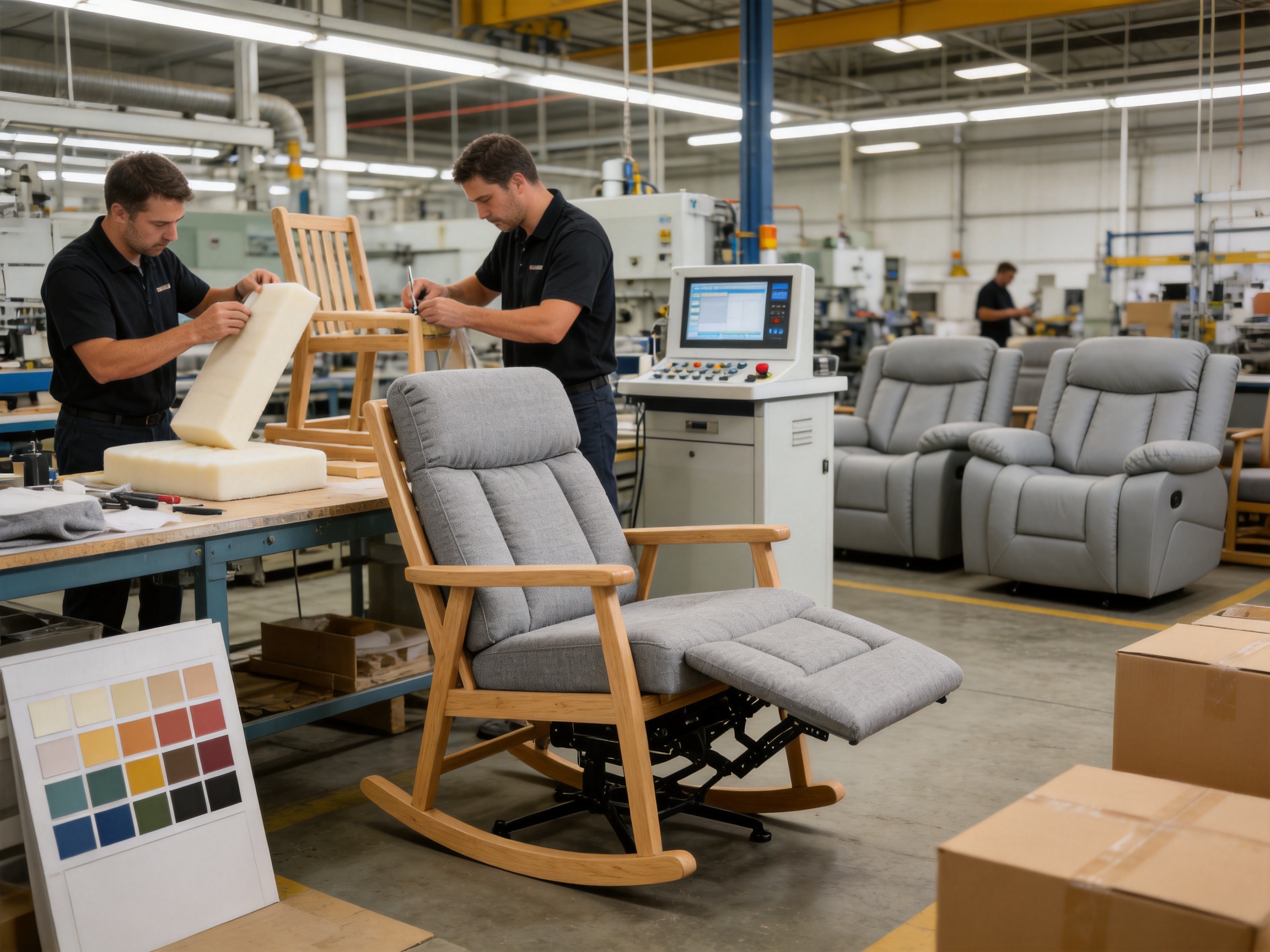
The product is manufactured by Anji Xuanbo Household Co., Ltd., a furniture company based in Anji County, Huzhou City, Zhejiang Province, China. The company specializes in functional sofas, fixed sofas, corner sofas, lounge chairs, recliner sofas, love seats, and leisure chairs. Its manufacturing capabilities include wooden frame production, sponge processing, upholstery, assembly, quality inspection, and export preparation.
This article examines the product’s construction, comfort, functionality, design advantages, maintenance requirements, customization potential, and the manufacturing strengths behind it. It also explains how the chair compares with basic stationary chairs and more complex powered recliners, while identifying important considerations for retailers, distributors, hospitality buyers, project purchasers, and end users.
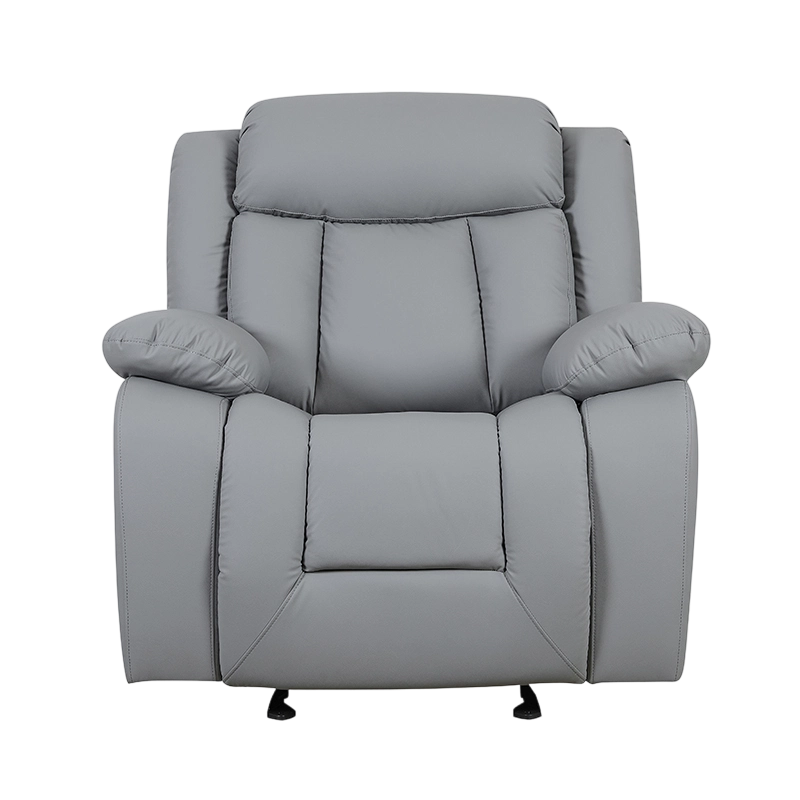
Manual faux Leather Glider Rocker Recliner
Product Overview
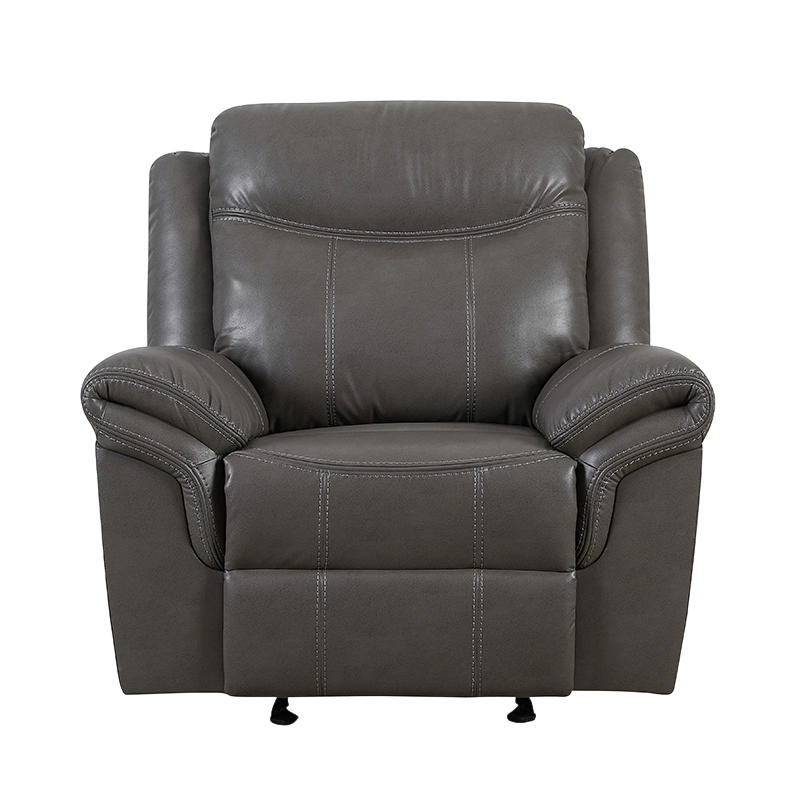
The Manual Faux Leather Glider Rocker Recliner is a one-piece reclining chair developed for users who want a comfortable seat with a practical manual mechanism. Its overall dimensions are approximately 40.2 inches wide, 38.2 inches deep, and 39.4 inches high. With a stated weight capacity of 350 pounds, the chair is designed to provide a broad and stable seating area for a wide range of users.
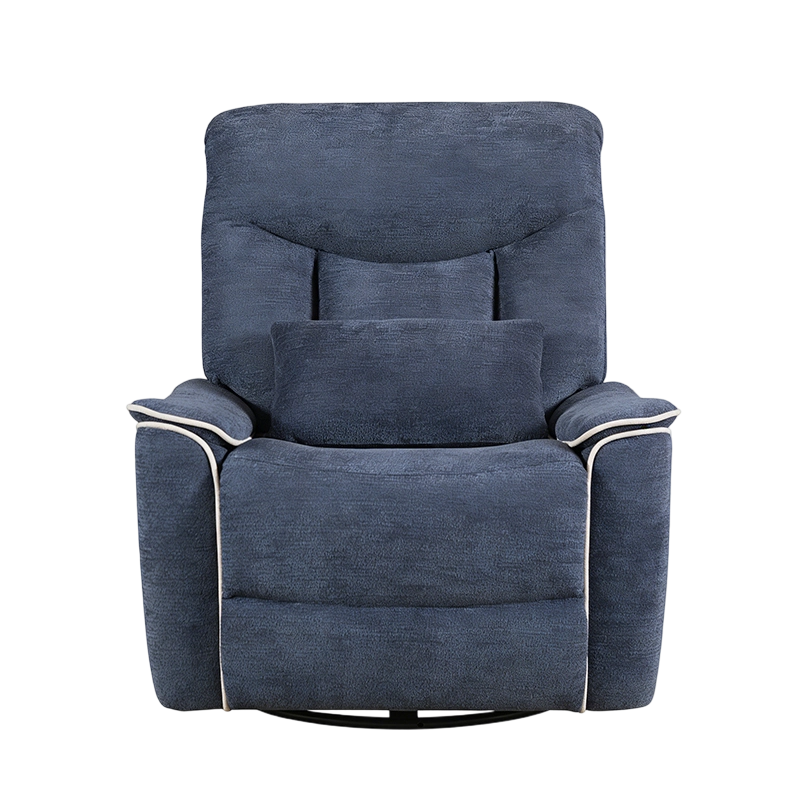
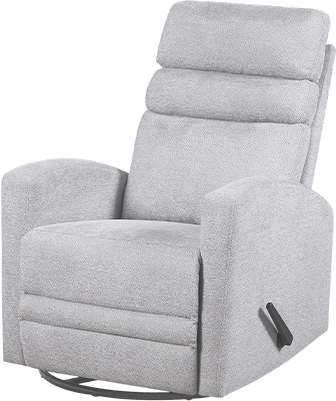
The chair is presented in gray, while custom colors are supported. This flexibility allows buyers to select a finish that matches a retailer’s collection, a hospitality interior, a residential design scheme, or a private-label product range. Gray is a particularly adaptable choice because it works with neutral, contemporary, industrial, minimalist, and transitional interiors.
The construction includes a wood frame intended to provide structural sturdiness. The internal frame is an important part of a recliner because it must support the seat, backrest, armrests, reclining mechanism, and repeated user movement. A chair may look attractive on the outside, but its long-term performance depends heavily on the quality and precision of the structure beneath the upholstery.
The seating system includes an overstuffed backrest and thickened armrests. These elements are central to the chair’s comfort profile. The backrest helps support the upper body and shoulders, while the armrests give users a more relaxed position when reading, resting, or watching television. The padding also helps soften the visual appearance of the chair, giving it a welcoming club-chair character rather than a purely mechanical look.
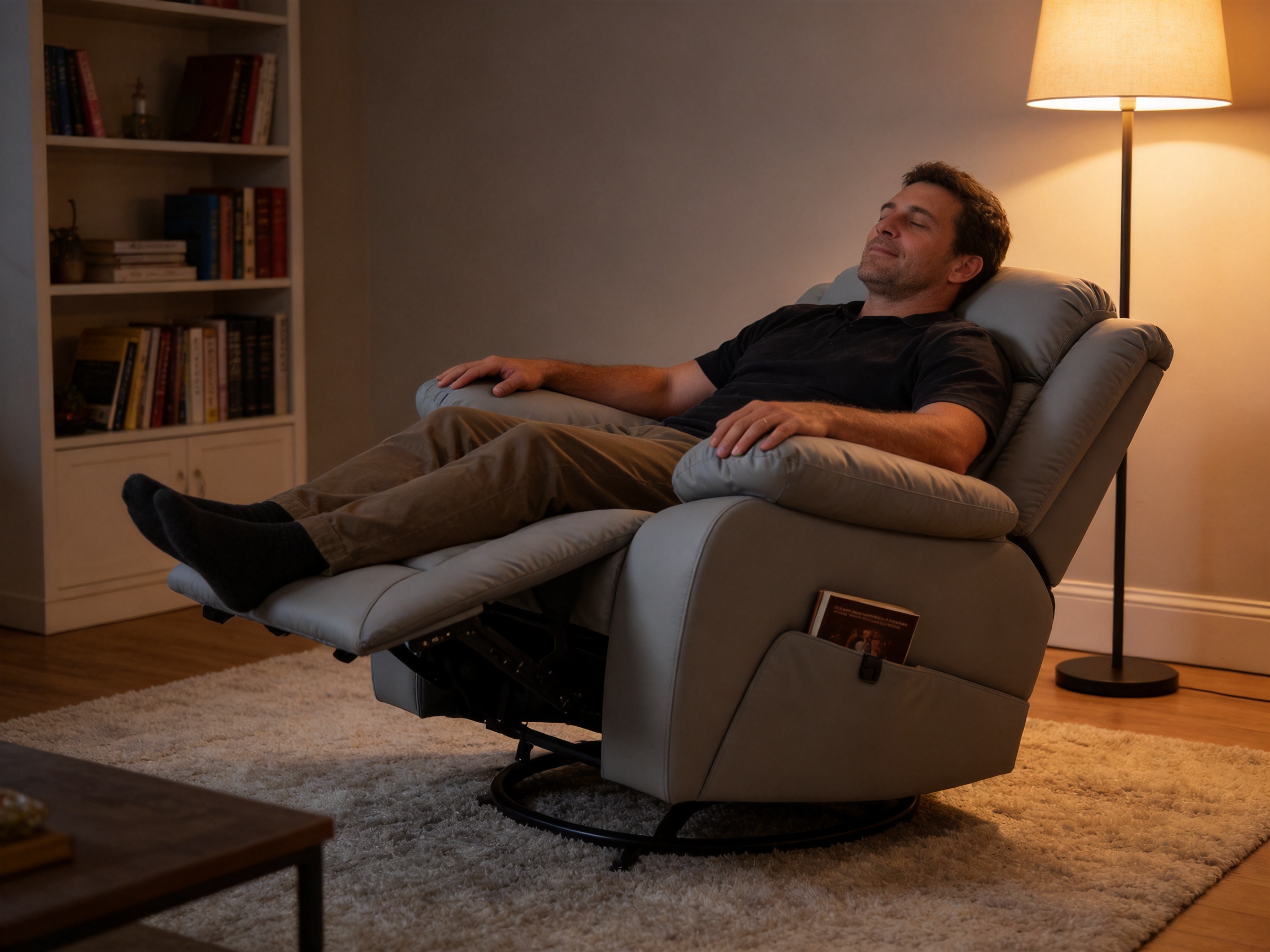
A side pocket is incorporated into the design for convenient storage. Users can place a remote control, reading glasses, a mobile phone, a small book, or other lightweight items within easy reach. This feature may appear simple, but it improves the everyday usability of the product and reduces the need for a separate side table.
The recliner is operated through a pull tab. A manual pull-tab mechanism is familiar to many consumers and is easy to understand without extensive instructions. Since the chair does not rely on a motor, power cord, or control panel, it can be positioned without planning around a wall outlet. This can be especially useful in rooms where flexible furniture placement is important.
Key Product Specifications
| Specification | Details |
|---|---|
| Product type | Manual glider rocker recliner |
| Product category | Manual recliner |
| Configuration | One reclining chair |
| Color shown | Gray |
| Customization | Custom colors supported |
| Approximate dimensions | 40.2 W × 38.2 D × 39.4 H inches |
| Stated weight capacity | 350 pounds |
| Frame | Wood frame for sturdiness and support |
| Operation | Manual pull-tab reclining mechanism |
| Comfort features | Overstuffed backrest and thickened armrests |
| Storage feature | Integrated side pocket |
| Recommended care | Dry-cleaning solvent only; do not saturate with water |
Comfort Designed for Extended Sitting
Many chairs are comfortable for a short period but become less supportive during longer use. A well-designed recliner must address the body from several points at once: the lower back, shoulders, arms, hips, thighs, and legs. The Manual Faux Leather Glider Rocker Recliner uses a combination of generous padding, a reclining back, and an extending footrest to create a more complete resting position.
Overstuffed Backrest
The overstuffed backrest provides a soft, cushioned surface for the user’s back. Its fuller construction is intended to create a comfortable feeling when the chair is used in an upright, partially reclined, or fully reclined position. The backrest also contributes to the visual identity of the product, making it appear substantial and inviting.
For users who spend time reading, streaming media, or talking with family members, the backrest can help create a supportive posture without the rigid appearance associated with some office-style seating. The chair is positioned as a leisure product, and its cushioning reflects that purpose.
Thickened Armrests
Thickened armrests provide a soft place to rest the forearms and elbows. They also help frame the seating area, giving the user a stronger sense of enclosure and comfort. Armrest padding is particularly important in a recliner because users often remain in the chair for longer periods than they would in a dining or occasional chair.
The armrests can also make it easier to enter or leave the chair by providing a stable area to hold when shifting position. Users should still operate the chair carefully and avoid placing excessive body weight on any individual upholstered component.
Wide Seating Area
The approximately 40.2-inch overall width creates a generous profile for a recliner. The product information describes the side area as large and suitable for different users. A broader chair can provide additional shoulder and elbow room, which may be especially appealing to consumers who find narrow recliners restrictive.
The wider silhouette also gives the chair a substantial presence in a room. For retailers, this can help position the product as a comfort-focused feature piece rather than a small occasional seat. For residential users, the chair can serve as an individual relaxation zone within a living room or bedroom.
Reclining Footrest
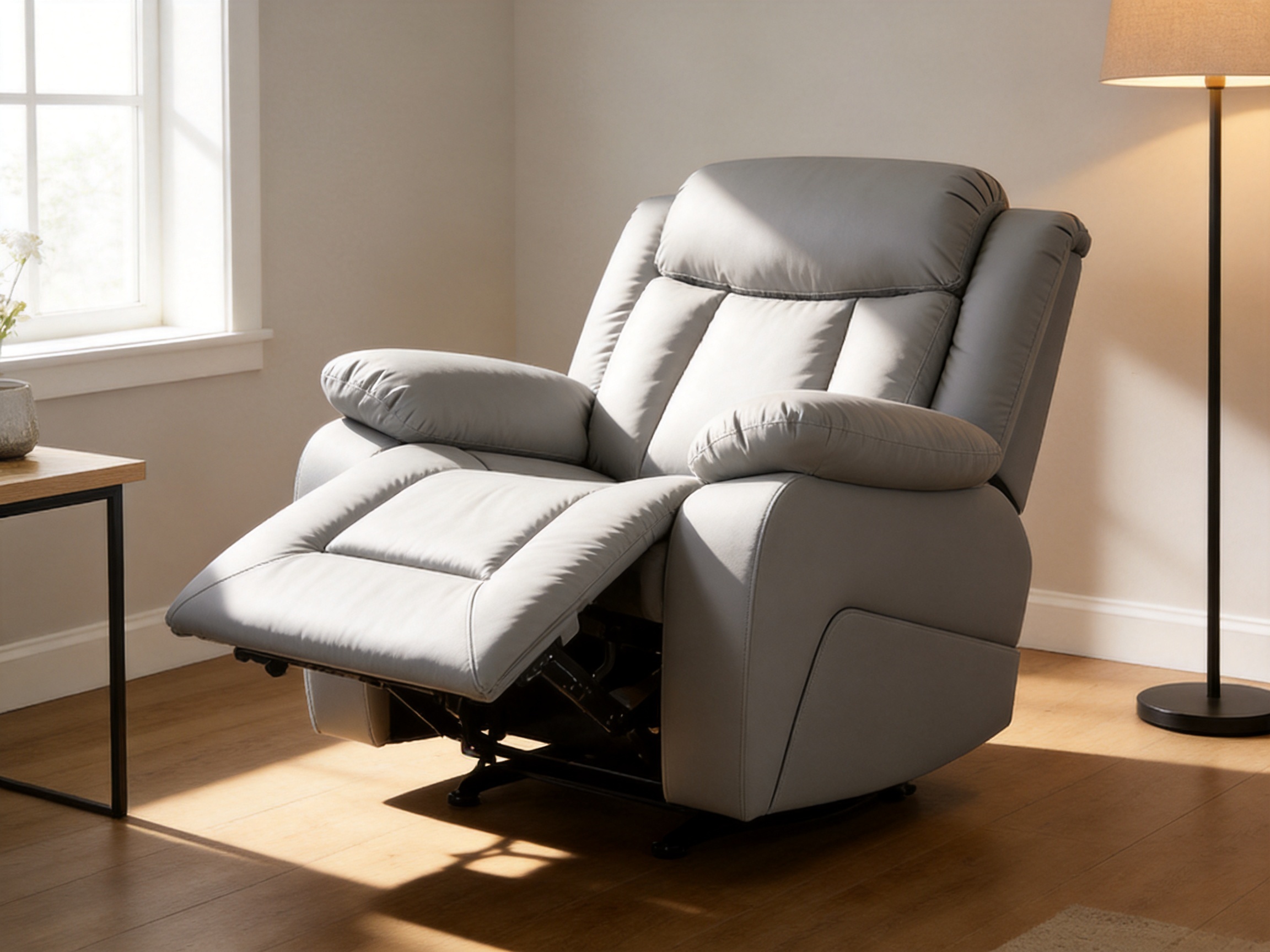
The built-in footrest allows users to raise their legs and stretch out after a long day. Elevating the legs can help create a more relaxed posture and transform the chair from an upright seat into a personal resting station. The footrest is integrated into the chair, eliminating the need to purchase and coordinate a separate ottoman.
Because the footrest is part of the manual reclining structure, correct operation is important. The product information provides a labor-saving method for retracting it: the user should sit forward, lean forward, and use the heels to press against the middle of the footrest. This technique helps return the footrest to its closed position with less effort than attempting to force it with the hands or abruptly shift body weight.
Users should keep feet, hands, children, and pets away from moving joints during opening and closing. Retailers should include operating guidance with the product so that customers understand how to use the footrest safely and correctly.
Gliding and Rocking Functionality
The glider rocker function distinguishes this chair from a conventional fixed recliner. Gentle movement can add a calming quality to the seating experience. It may be useful for reading, quiet reflection, soothing a child, or simply enjoying a more dynamic sitting position.
A gliding recliner can also feel more versatile than a stationary chair because it offers movement even when the backrest is not fully reclined. This gives the user additional choice: sit upright, glide gently, recline partially, or extend the footrest for a more relaxed posture.
The rocking and gliding action should be used on a level floor with sufficient clearance around the chair. Buyers should avoid placing the chair where it could strike a wall, cabinet, coffee table, or another seat during movement. A properly planned location helps protect both the furniture and the surrounding interior.
Compared with powered motion furniture, the manual glider design has a simpler user experience. There is no remote-control learning curve, no motor noise requirement, and no need to manage an electrical connection. This simplicity can be a competitive advantage for buyers who value reliability, low operating complexity, and flexible placement.
Manual Operation Versus Powered Reclining
Powered recliners can provide motorized movement and may be appropriate for users who need push-button operation. However, they also introduce additional components, including motors, wiring, switches, control systems, and power cables. These components can increase product complexity and may limit the placement of the chair in a room.
The manual pull-tab system takes a different approach. It focuses on direct operation and a reduced dependence on external power. A user can open the recliner using the side pull tab, and the chair can be positioned in locations where an outlet is unavailable or inconvenient.
| Comparison point | Manual glider rocker recliner | Typical powered recliner |
|---|---|---|
| Power requirement | No electrical connection required | Usually requires a power outlet |
| Operation | Pull-tab manual control | Electric switch or remote control |
| Placement flexibility | High, because there is no power cord | May depend on outlet location |
| Mechanical complexity | Focused on a manual reclining structure | Includes motorized components and wiring |
| Maintenance considerations | Mechanical inspection and upholstery care | Mechanical, electrical, and upholstery care |
| User experience | Direct, familiar, and straightforward | Push-button convenience |
The choice depends on the intended user. A manual chair may be particularly suitable for homes, rental properties, guest rooms, entertainment rooms, and commercial projects where straightforward use and flexible placement matter. A powered product may be preferred in situations where motorized positioning is a central requirement. The manual design provides a strong alternative for buyers who do not need electrical adjustment.
Material and Upholstery Considerations
The product title identifies the chair as a faux leather recliner, while the product description refers to soft polyester upholstery. This means material details should be confirmed for the specific purchase order, colorway, and production batch. Faux leather and polyester fabric have different visual and maintenance characteristics, even though both can be selected for durability, comfort, and practical interior use.
Faux leather can provide a smooth, contemporary surface with a leather-like appearance. It may be attractive for modern apartments, entertainment rooms, hospitality spaces, and commercial interiors that require a polished look. Polyester upholstery can offer a soft hand feel and a textile appearance. It may be selected when a warmer, more fabric-oriented aesthetic is preferred.
Regardless of the final upholstery material, buyers should request confirmation of the exact surface specification before production. Important points may include color, texture, sheen, abrasion expectations, seam appearance, cleaning requirements, and compatibility with the intended market.
Gray as a Versatile Finish
The shown gray color is easy to coordinate with many interior palettes. It can be paired with white walls, natural wood, black metal, warm beige, blue accents, green plants, or patterned textiles. Gray also helps the chair transition between contemporary and traditional settings.
For furniture distributors, a neutral gray option may be a useful core color for inventory planning. It can appeal to a broad customer base while allowing the product’s shape, padding, and reclining function to remain the primary visual focus. Custom colors provide additional opportunities for coordinated collections or project-specific orders.
Fabric Care
The stated fabric care instructions recommend cleaning with dry-cleaning solvent only and caution users not to saturate the upholstery with water. Pile fabrics may require brushing to restore their appearance. These instructions should be followed carefully because excessive moisture can affect upholstery, padding, seams, or internal materials.
Routine maintenance should begin with gentle removal of dust and loose debris. Spills should be addressed promptly using a method appropriate for the confirmed upholstery material. Harsh chemicals, abrasive brushes, soaking, and untested household cleaners should be avoided. Before applying any cleaning agent to a visible area, users should consult the care instructions and test the product on a concealed section if permitted.
Structural Stability and Load Support
The chair uses a wood frame intended to provide a stable foundation. In a recliner, the frame must work together with the reclining hardware and upholstery to manage repeated movement. The frame supports the body while the mechanism transfers motion between the seat, backrest, and footrest.
The stated weight capacity is 350 pounds. This figure is an important purchasing reference, but users should distribute their weight normally and avoid standing on the footrest, jumping onto the chair, or applying sudden force to the arms or back. The product should be placed on a stable, level surface and used according to the operating instructions.
Structural stability is not determined by the frame alone. Manufacturing accuracy, joinery, hardware installation, upholstery tension, mechanism alignment, packaging, and final inspection all contribute to the performance of the finished chair. This is why integrated manufacturing capabilities can be valuable to buyers seeking consistent production.
Manufacturing Strengths Behind the Product
Anji Xuanbo Household Co., Ltd. was established in 2021 and is located in Anji County, Huzhou City, Zhejiang Province. The region is internationally associated with the chair industry and provides access to furniture manufacturing knowledge, supporting suppliers, skilled labor, and export infrastructure.
The company operates a factory of approximately 8,000 square meters and has more than 100 employees. Its business model combines research and development, industrial design, large-scale manufacturing, independent marketing, and technical services. This combination allows the company to address more than the final appearance of a chair. It can also consider structure, production efficiency, customization, packaging, and market requirements during product development.
Integrated Wooden Frame Production
The company’s own wooden frame factory is a significant operational advantage. Internal frame production can provide greater control over material selection, cutting, shaping, assembly, and production scheduling. It can also make communication between product designers and frame technicians more direct.
For a reclining chair, frame accuracy is particularly important. The structure must accommodate the mechanism while maintaining the intended seating dimensions. When the frame is produced within the company’s broader manufacturing system, design adjustments can be evaluated more efficiently than when every structural component is purchased from an unrelated supplier.
Internal production may also support more consistent cost and capacity control. This is valuable for distributors that require repeat orders, stable specifications, and predictable lead-time planning. It can help the manufacturer respond to customized dimensions, colors, or structural requirements when those changes are technically feasible.
In-House Sponge Processing
The company also identifies sponge processing as part of its manufacturing strengths. Cushioning has a major influence on the comfort, appearance, and perceived quality of a recliner. Control over sponge processing can help coordinate cushion shape, padding thickness, backrest fullness, armrest structure, and upholstery fit.
The overstuffed backrest and thickened armrests require more than simply adding material. The internal cushioning must be shaped and fitted so that the chair retains an attractive appearance while supporting the intended body areas. In-house processing can help the manufacturer manage this relationship between comfort design and upholstery execution.
Research and Development
The company emphasizes research and development and industrial design. This is important in a competitive furniture market where consumers expect comfort products to be functional, attractive, and suitable for modern homes. Product development may involve reviewing dimensions, operating methods, material choices, frame structures, appearance, packaging, and target-market preferences.
The Manual Faux Leather Glider Rocker Recliner reflects a practical design philosophy: combine several desirable functions without making the user experience unnecessarily complicated. The chair includes gliding movement, rocking capability, reclining adjustment, a footrest, padded support, storage, and color customization within a single product concept.
Multi-Stage Quality Inspection
The company describes a strict, multi-stage quality inspection approach. For a recliner, quality control may involve checking the wood frame, mechanism installation, upholstery seams, cushion shape, color consistency, surface condition, armrest padding, footrest action, dimensions, packaging, and general appearance.
Inspection at multiple stages is more effective than waiting until the finished product is fully packed. Early checks can identify structural or component issues before they become more difficult to correct. Process checks can also support consistency across production batches, while final inspection helps confirm that the completed chair is suitable for shipment.
Buyers should request the quality standards and inspection procedures applicable to their specific order. Requirements may differ according to market, customer segment, upholstery choice, packaging method, and order quantity.
Customization and Private-Label Opportunities
Custom colors are supported, giving importers, retailers, interior designers, and project buyers an opportunity to create a product better aligned with their target market. Color customization can be used to match an existing sofa collection, coordinate with a hospitality brand, satisfy a contract project, or develop a differentiated private-label assortment.
Color approval should be managed carefully. A buyer should review physical samples or an agreed reference before mass production because digital images, monitors, lighting conditions, and photography can affect perceived color. The buyer should also confirm the upholstery material, grain or pile direction, stitching color, piping details if applicable, label requirements, carton markings, and packaging instructions.
Customization may also involve product presentation and export preparation. Depending on the order and technical feasibility, buyers may discuss instruction sheets, product labels, carton artwork, barcode placement, protective materials, assembly information, and palletization. These details can improve the product’s readiness for retail or distribution.
Because the company handles design, manufacturing, and technical services, it may be able to support communication across multiple stages of a customized project. Clear specifications remain essential. A written order confirmation should define all approved details before production begins.
Advantages for Retailers and Distributors
The product offers several qualities that can help retailers build a compelling furniture assortment. First, it combines multiple functions in a familiar and approachable format. The chair is not limited to a single sitting posture; it can support ordinary upright use, gentle gliding, reclining, and leg elevation.
Second, its gray finish and broad club-chair profile give it wide interior compatibility. Retailers can display it alongside sofas, occasional tables, entertainment units, lamps, and other living-room furniture. The product may also serve as an individual statement piece in a bedroom or home office.
Third, the manual operation reduces dependence on electrical infrastructure. This can simplify showroom placement, home delivery, and customer installation. A retailer does not need to explain motor controls or cable management to the same extent as with a powered model.
Fourth, custom colors can help distributors create exclusive or semi-exclusive product lines. Instead of offering only a standard catalog color, a buyer may select a shade that reinforces its brand identity or responds to local consumer preferences.
Finally, the manufacturer’s integrated capabilities may support more consistent sourcing. Control of wooden frames and sponge processing can help reduce dependence on multiple external suppliers and improve communication during repeat production.
Advantages for Residential Users
For homeowners, the chair offers a personal space for rest without requiring a large sectional sofa. It can be placed beside a window, near a television, next to a bookshelf, or in a quiet bedroom corner. The side pocket helps keep commonly used items nearby, while the manual recliner mechanism allows the user to adjust the chair without searching for a remote.
The generous dimensions may appeal to users who prefer a roomier seat. The padded backrest and armrests support a relaxed experience, while the footrest allows the legs to extend. The gliding function adds gentle movement for those who enjoy a more soothing seating experience.
Before purchase, homeowners should measure the intended room and consider the chair’s full operating clearance. The listed dimensions describe the product size, but additional space may be needed behind, in front of, or beside the chair depending on the movement of the backrest and footrest.
Comparison with Basic Stationary Chairs
A stationary lounge chair may have a lower level of mechanical complexity, but it does not provide the same range of positions. Users must remain upright or use a separate ottoman to elevate their legs. The manual glider rocker recliner integrates these functions into one piece of furniture.
The integrated footrest can save space compared with a chair-and-ottoman arrangement. It also keeps the leg-supporting surface connected to the seat, reducing the chance that the ottoman will move away or become visually separated from the chair.
The gliding and rocking functions provide movement that a fixed chair cannot offer. For consumers who value gentle motion, this can be an important advantage. The trade-off is that the recliner requires additional clearance and appropriate care for its moving mechanism.
Comparison with Traditional Recliners
Compared with a basic manual recliner, the glider rocker format offers more than backrest adjustment and foot elevation. The movement function adds another use mode when the chair is closed or partially reclined. The side pocket and broad seating profile further improve practical usability.
The overstuffed backrest and thickened armrests also give the product a more comfort-oriented appearance. Traditional recliners may emphasize a narrow silhouette or formal design, while this chair is designed to look plush and inviting.
For buyers comparing models, the most important evaluation points include frame quality, mechanism performance, upholstery consistency, cushion resilience, weight capacity, dimensions, care requirements, and after-sales support. Price alone does not provide a complete comparison.
Packaging, Delivery, and Installation Considerations
A recliner is a substantial furniture item, so delivery planning is important. Buyers should measure doorways, corridors, elevators, stairways, and room entrances before accepting delivery. Retailers should communicate the product dimensions and recommend that customers prepare a clear route from the delivery point to the final location.
Packaging should protect the upholstery, frame, armrests, footrest, and reclining mechanism during handling and transportation. Commercial buyers may wish to confirm carton specifications, protective materials, loading methods, stacking limitations, and inspection procedures before shipment.
If the product is delivered with any components requiring placement or attachment, the buyer should follow the supplied instructions. The chair should be inspected for visible damage, unusual mechanism resistance, loose components, or upholstery concerns before regular use. Any issue should be documented and reported through the appropriate seller or manufacturer service channel.
Responsible Daily Use
Users should operate the pull tab from a normal seated position and avoid forcing the mechanism. The footrest should not be used as a standing platform. Children should not play on or inside the moving parts of the chair, and pets should be kept away from the mechanism during operation.
The chair should remain on a stable, level surface. Excessive pushing, dragging, or twisting can affect the frame, upholstery, floor, or reclining structure. When moving the chair, users should obtain suitable assistance and lift or handle it according to safe furniture-moving practices rather than pulling on the footrest or armrest.
The stated weight capacity of 350 pounds should be respected. The capacity applies to normal seating use and should not be interpreted as permission for sudden impact loads, multiple occupants, or standing on the furniture.
Why Manufacturing Integration Matters
Furniture quality is shaped by the relationship between design, materials, production, inspection, and service. A manufacturer that only assembles purchased parts may have less control over structural consistency, cushioning, or customization. By contrast, integrated frame and sponge production can create a closer connection between the product concept and the finished chair.
Anji Xuanbo Household Co., Ltd. identifies its strengths as including full-chain cost and capacity control, its own wooden frame factory, its own sponge processing plant, customization capability, multi-stage quality inspection, and export logistics near Ningbo Beilun Port. These capabilities can be relevant to international buyers that need coordinated production and shipment planning.
The company exports products to North America, Europe, the Middle East, and other regions. International distribution requires attention to packaging, documentation, product consistency, communication, and market expectations. The company’s focus on international standards and certifications, as stated in its corporate materials, supports its positioning as an export-oriented furniture manufacturer. Buyers should confirm the exact standards and documentation applicable to each product and destination market.
Its product range includes functional sofas, fixed sofas, corner sofas, lounge chairs, recliner sofas, love seats, and leisure chairs. This broader category experience may help customers source complementary furniture from the same manufacturing partner, especially when developing coordinated collections.
Purchasing Checklist
Before placing an order, buyers should confirm the final upholstery material because the product information references both faux leather and polyester upholstery. They should also confirm the approved color, dimensions, weight capacity, packaging configuration, labeling, cleaning instructions, and target-market requirements.
For customized orders, buyers should request samples or production references and approve the sample in writing. They should confirm whether the requested color affects minimum order quantity, lead time, or price. Any branding, carton, instruction, or documentation requirements should be defined before production.
Buyers should also ask about the inspection process, spare parts policy, warranty terms, mechanism testing, and procedures for reporting transportation damage. These questions help establish clear expectations and reduce uncertainty during international purchasing.
| Purchasing area | Recommended confirmation |
|---|---|
| Product identity | Manual glider rocker recliner and one-piece configuration |
| Material | Final faux leather or polyester upholstery specification |
| Color | Gray standard option or approved custom color sample |
| Dimensions | Approximately 40.2 W × 38.2 D × 39.4 H inches |
| Capacity | Stated 350-pound weight capacity |
| Function | Pull-tab recline, gliding movement, rocking movement, and footrest operation |
| Care | Dry-cleaning solvent only; no water saturation |
| Quality | Inspection stages, acceptance criteria, and reporting process |
| Logistics | Packaging, carton dimensions, loading, delivery, and room access |
| Customization | Color, labels, packaging, documentation, and project requirements |
Q&A
What type of chair is this product?
It is a manual glider rocker recliner designed as a one-piece reclining chair. It combines a reclining backrest and extending footrest with gliding and rocking movement.
How is the recliner operated?
The chair uses a manual pull tab. The user opens the reclining function by pulling the tab, without using a motor, remote control, or electrical outlet.
Does the chair need electricity?
No. The manual design does not require an electrical connection. This provides flexible placement and eliminates the need to manage a power cable.
What is the stated weight capacity?
The stated weight capacity is 350 pounds. Users should follow normal seating practices and avoid standing on the footrest or applying sudden impact loads.
What are the approximate dimensions?
The listed dimensions are approximately 40.2 inches wide, 38.2 inches deep, and 39.4 inches high. Buyers should allow additional clearance for reclining and footrest movement.
What color is available?
The shown color is gray, and custom colors are supported. A physical sample or approved color reference should be confirmed for customized orders.
What upholstery material should buyers specify?
The product title identifies faux leather, while the description refers to soft polyester upholstery. Buyers should confirm the exact upholstery material for the selected model, color, and order before production.
Does the chair include storage?
Yes. An integrated side pocket provides convenient storage for items such as a remote control, mobile phone, reading glasses, or a small book.
How should the footrest be retracted?
The recommended method is to sit forward, lean forward, and use the heels to press against the middle of the footrest. This method is intended to make retraction easier and reduce unnecessary strain.
How should the upholstery be cleaned?
The care information recommends cleaning with dry-cleaning solvent only and warns against saturating the upholstery with water. Pile fabrics may require brushing to restore their appearance. The exact care method should also be checked against the confirmed upholstery material.
What makes the product different from a stationary chair?
It provides reclining adjustment, an integrated footrest, and gliding or rocking movement. A stationary chair generally does not provide this same combination of functions.
What are the main advantages over a powered recliner?
The manual design does not require electricity, has a straightforward pull-tab control, and can be positioned without planning around a power outlet. It may also appeal to buyers who prefer a simpler operating system.
What manufacturing capabilities support the product?
Anji Xuanbo Household Co., Ltd. describes capabilities in research and development, industrial design, wooden frame production, sponge processing, large-scale manufacturing, technical services, customization, and multi-stage quality inspection.
Can the product be customized for commercial orders?
Custom colors are supported, and buyers may discuss additional requirements such as labels, packaging, documentation, and project specifications. All custom details should be confirmed in writing before production.
Who may be suitable customers for this recliner?
Potential customers include homeowners, furniture retailers, importers, distributors, hospitality buyers, interior designers, rental-property operators, and project purchasers seeking a spacious manual recliner with movement and foot support.
Conclusion
The Manual Faux Leather Glider Rocker Recliner is designed to provide a broad, comfortable, and versatile seating experience. Its overstuffed backrest, thickened armrests, integrated footrest, manual pull tab, gliding and rocking functions, side pocket, and spacious dimensions make it more functional than a basic stationary chair.
The product’s manual construction offers an alternative to powered reclining furniture for users who value flexible placement and straightforward operation. Its gray finish suits a wide range of interiors, while custom colors create opportunities for retail collections, hospitality projects, and private-label programs.
Behind the product is a manufacturer with capabilities spanning research and development, industrial design, wooden frame production, sponge processing, upholstery-related manufacturing, inspection, customization, and export support. The company’s integrated resources can help buyers coordinate product development, quality control, cost management, and international delivery.
For the best purchasing result, buyers should confirm the final upholstery material, color, dimensions, care instructions, packaging, inspection requirements, and customization details before placing an order. With these points clearly defined, the chair can serve as a practical and attractive addition to residential, commercial, and hospitality furniture programs.
References
1. Product specification sheet for the Manual Faux Leather Glider Rocker Recliner, including dimensions, capacity, operation, color, features, and care instructions.
2. Manufacturer profile of Anji Xuanbo Household Co., Ltd., including company history, product categories, factory resources, employee scale, export markets, and manufacturing capabilities.
3. General furniture care principles for upholstered seating, manual recliners, gliding chairs, and fabric-covered furniture.
4. General product evaluation practices for furniture frame stability, reclining mechanisms, upholstery quality, packaging, and quality inspection.
5. General guidance for residential and commercial furniture placement, clearance planning, responsible operation, and delivery preparation.
Product: Manual faux Leather Glider Rocker Recliner

LET'S TALK

Bai Shuiwan Industrial Park, Tian Huangping Town, Anji County, Huzhou City, Zhejiang Province, China
More About Us 
-
+86 18257273741
-
[email protected]
CONTACT US
Copyright © Anji Xuanbo Household Co., Ltd. All Rights Reserved.
Custom Modern Upholstered Sofa Manufacturers


