Focus on the manufacturing and export of functional sofas
-
 +86 18257273741
-
 [email protected]

 English
 Español
Zhao Xinyi — Product Sales Consultant
 Home / Author / Zhao Xinyi — Product Sales Consultant / Why a Well-Designed Manual Recliner Chair Belongs in Every Comfortable Living Space
 Why a Well-Designed Manual Recliner Chair Belongs in Every Comfortable Living Space
 2026.07.30
 Zhao Xinyi — Product Sales Consultant
Content
- 1 1. The Growing Demand for Practical and Comfortable Reclining Furniture
- 2 2. Product Overview and Core Specifications
- 3 3. Overstuffed Upholstery for a Softer Sitting Experience
- 4 4. Three Flexible Modes for Different Daily Activities
- 5 5. Manual Reclining Without Dependence on Electricity
- 6 6. A Wall-Friendly Design for More Flexible Placement
- 7 7. Durable Steel-and-Wood Frame Construction
- 8 8. Manufacturing Strengths Behind the Product
- 9 9. Quality Control and International Market Readiness
- 10 10. Advantages Over Common Competing Seating Options
- 11 11. Suitable Applications in Residential and Commercial Environments
- 12 12. Fabric Care and Long-Term Appearance
- 13 13. Correct and Labor-Saving Footrest Retraction Method
- 14 14. Customization and Cooperation Opportunities
- 15 15. Why the Manufacturing Location Matters
- 16 16. A Quality-Oriented Company Philosophy
- 17 17. Buying Considerations for Distributors and Project Customers
- 18 18. Frequently Asked Questions
- 18.1 Q1: Is this chair a manual or electric recliner?
- 18.2 Q2: How far can the backrest recline?
- 18.3 Q3: Does the chair include a footrest?
- 18.4 Q4: What is the recommended way to retract the footrest?
- 18.5 Q5: What material is used for the upholstery?
- 18.6 Q6: Is the chair suitable for a nursery?
- 18.7 Q7: Can the chair be placed near a wall?
- 18.8 Q8: What is the chair’s weight capacity?
- 18.9 Q9: What are the overall dimensions?
- 18.10 Q10: How should the fabric be cleaned?
- 18.11 Q11: What makes the chair different from a fixed armchair?
- 18.12 Q12: What makes it different from a power recliner?
- 18.13 Q13: Can the manufacturer support custom furniture projects?
- 18.14 Q14: Which markets does the company serve?
- 18.15 Q15: What should buyers check before bulk production?
- 19 19. Conclusion
- 20 References
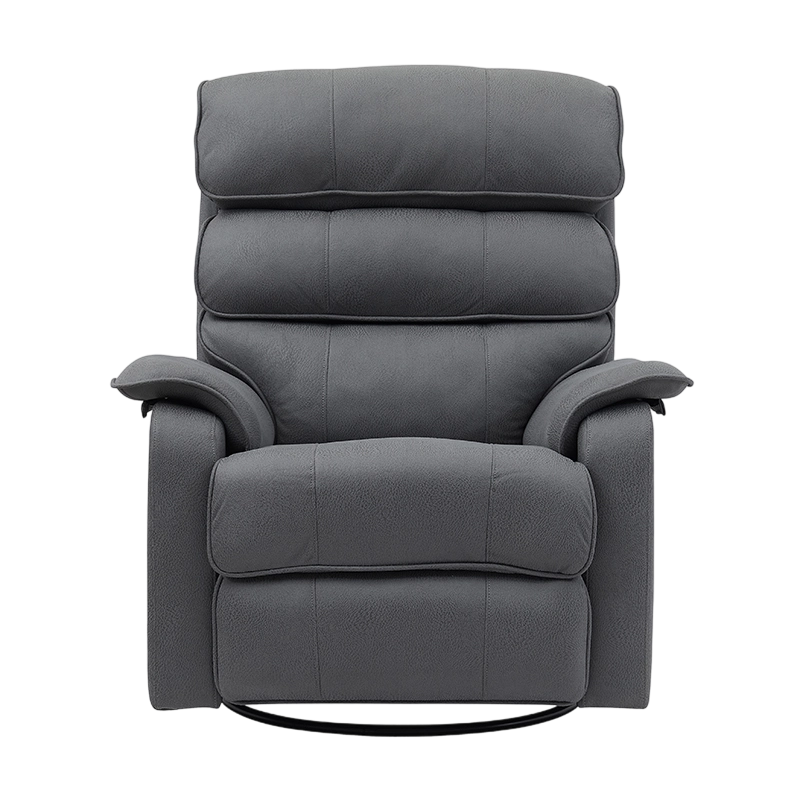
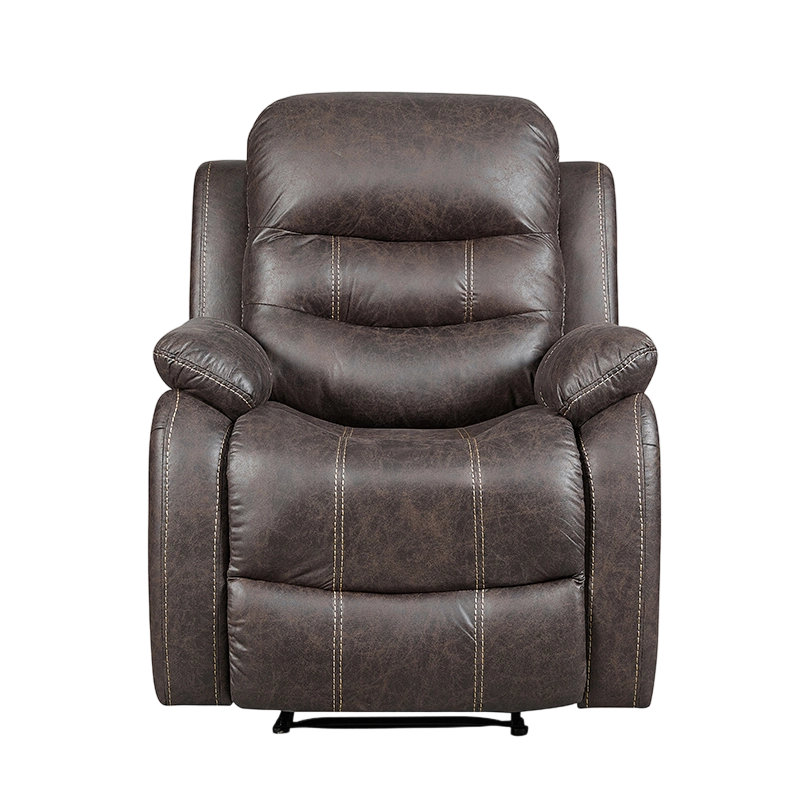
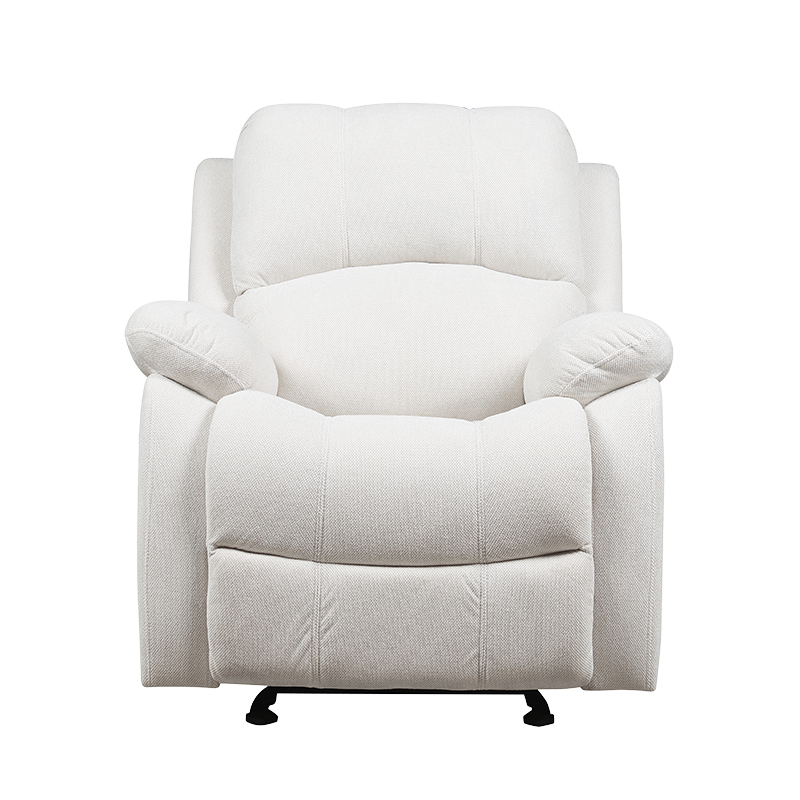
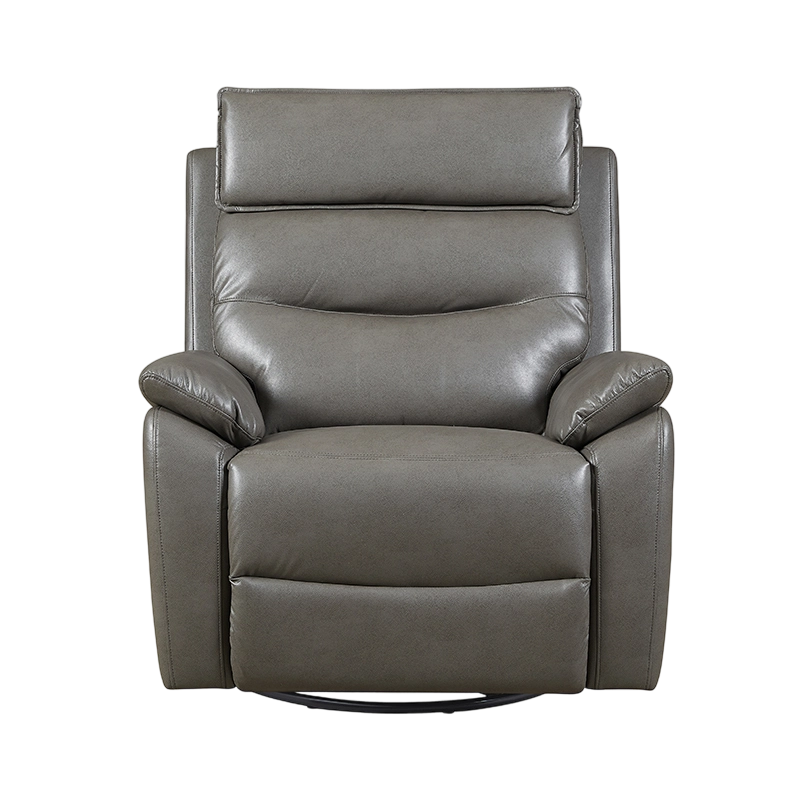
- 21 Product: Manual reclining chair with soft and comfortable fabric
A comfortable chair can transform the way people use a living room, nursery, reading corner, bedroom, or home office. While many seating products promise relaxation, a well-designed manual recliner must do more than simply lean backward. It should provide dependable support, an inviting appearance, smooth operation, durable construction, practical placement options, and enough versatility to suit different daily routines. The Fabric Overstuffed Manual Recliner Chair described in this article is developed around these essential requirements, combining a generously padded seat, ergonomic back support, soft breathable fabric, adjustable reclining positions, and a retractable footrest in one practical piece of furniture.
This chair is designed for users who want the comfort of a recliner without relying on motors, remote controls, or complicated electrical components. Its manual mechanism provides a direct and straightforward experience: the user adjusts the backrest and extends the footrest when it is time to rest, read, watch television, feed a baby, or simply take a quiet break. The reclining back can be adjusted from approximately 90 to 150 degrees, giving the chair enough flexibility for upright sitting, semi-reclined lounging, and deeper relaxation.
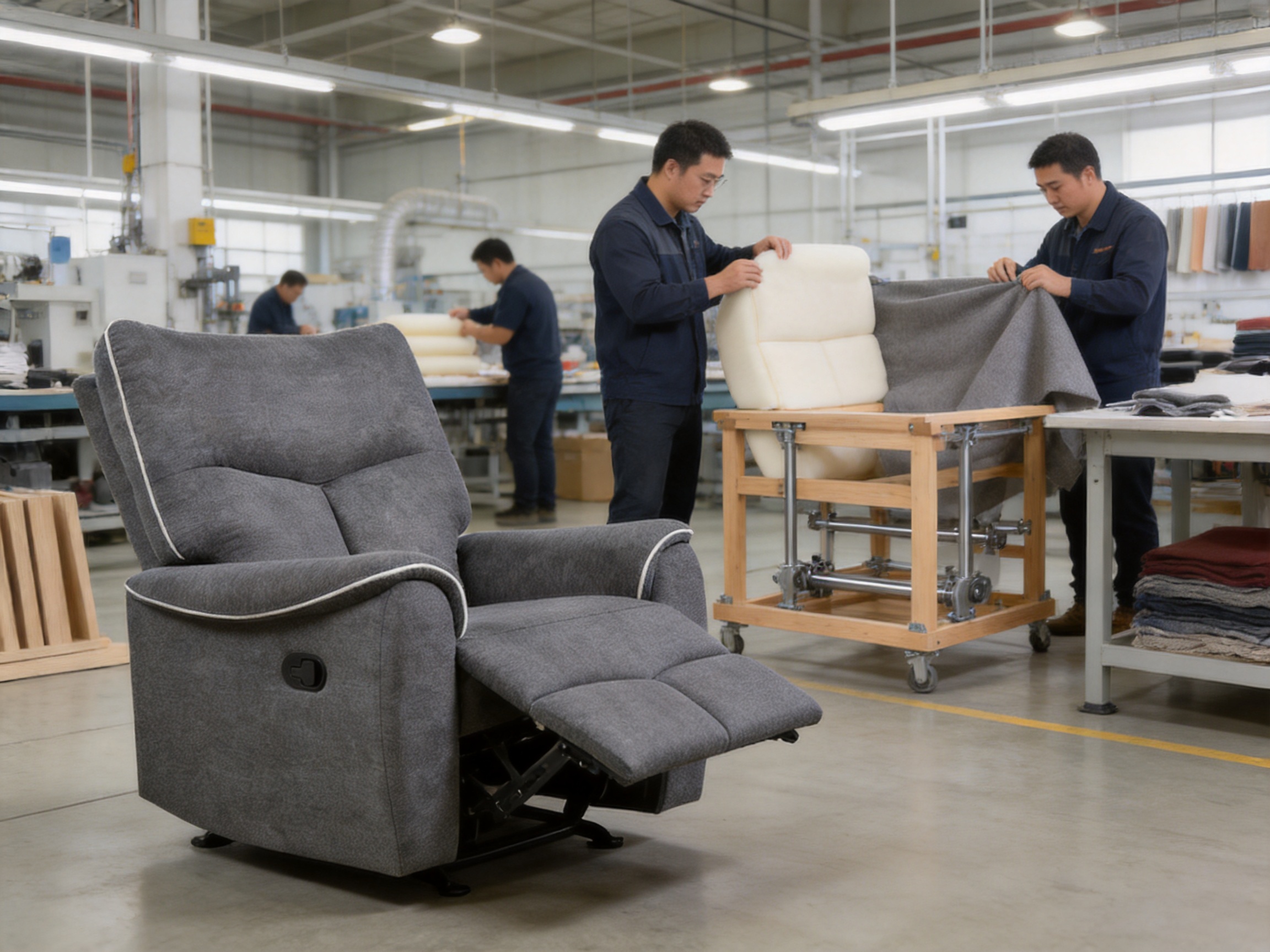
Beyond the individual product, the chair reflects the manufacturing strengths of a professional furniture producer located in Anji County, Zhejiang Province, one of China’s best-known furniture manufacturing regions. The company behind the product integrates research and development, industrial design, manufacturing, marketing, and technical services. Its production resources include an approximately 8,000-square-meter factory, a workforce of more than 100 employees, a wooden frame factory, and a sponge processing plant. These capabilities support consistent quality, customization, cost control, and reliable supply for overseas customers.
1. The Growing Demand for Practical and Comfortable Reclining Furniture
Modern homes increasingly require furniture that can serve several purposes at once. A living room may be used for family gatherings, remote work, entertainment, reading, and afternoon rest. In smaller homes and apartments, every chair must justify its floor space. A manual recliner is valuable because it changes from a conventional upright seat into a relaxation chair without requiring a separate ottoman or lounge bed.
The demand for upholstered seating is also influenced by changing lifestyle expectations. Consumers want furniture that looks welcoming but remains useful over many years. They expect thick cushions, supportive armrests, durable internal structures, comfortable upholstery, and an appearance that can coordinate with different decorative styles. At the same time, buyers increasingly consider maintenance, shipping efficiency, color availability, and the reputation of the manufacturer.
This manual reclining chair addresses these needs with a balanced design. It is not limited to one type of user or one room. In a family living room, it can become a personal television chair. In a nursery, it can support feeding, soothing, and late-night care. In a reading area, it can provide a more comfortable posture than a standard dining or accent chair. In a bedroom, it can function as a private resting seat without occupying the space required by a sofa.
The chair also offers a practical alternative to power recliners. Electric recliners may provide push-button operation, but they require access to a power source and contain additional components that may increase complexity. A manual chair is independent of electrical outlets, does not require a power cord across the floor, and can be placed more freely. For customers seeking simplicity, value, and flexible installation, this distinction can be important.
2. Product Overview and Core Specifications
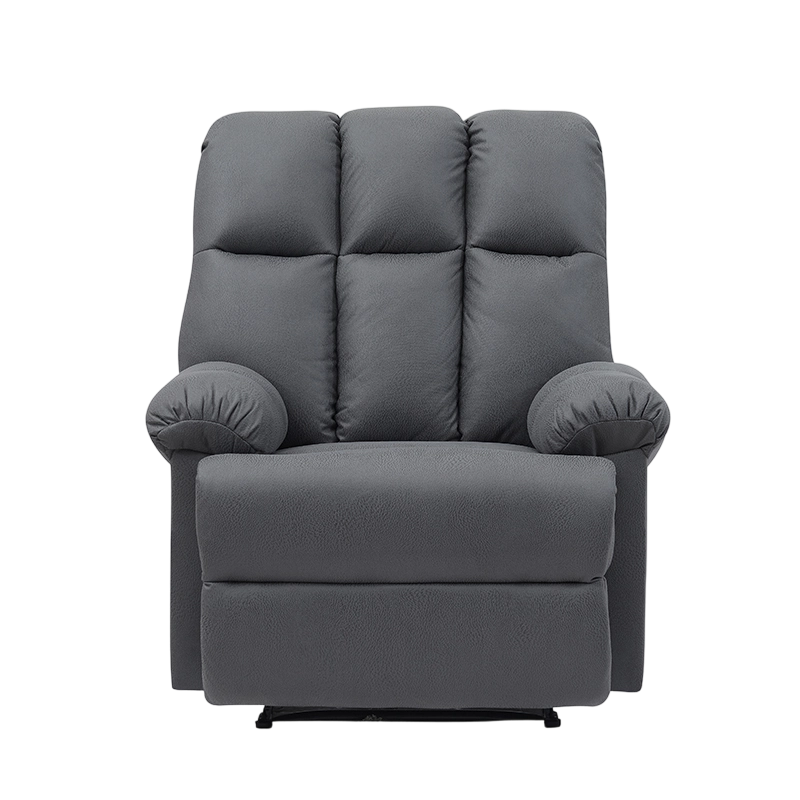
The product is a single Fabric Overstuffed Manual Recliner Chair in a dark gray finish, with support for custom colors. It combines a structured steel-and-wood frame with generous upholstery and a manual reclining mechanism. Its overall dimensions are approximately 37.4 inches wide, 38.6 inches deep, and 40.6 inches high. The stated weight capacity is 300 pounds, making the chair suitable for a broad range of everyday users when used according to appropriate furniture safety practices.
| Product Feature | Specification or Benefit |
|---|---|
| Product type | Manual reclining chair |
| Upholstery | Overstuffed breathable fabric |
| Standard color | Dark gray |
| Color service | Custom colors supported |
| Reclining range | Approximately 90 to 150 degrees |
| Frame construction | Steel and wood construction |
| Footrest | Retractable manual footrest |
| Overall size | 37.4 W x 38.6 D x 40.6 H inches |
| Weight capacity | 300 pounds |
| Recommended applications | Living rooms, nurseries, bedrooms, reading areas, and leisure spaces |
These specifications create a product positioned between a conventional upholstered armchair and a larger reclining sofa. It delivers personal reclining comfort while maintaining the footprint and independence of a single chair. This makes it especially attractive for furniture retailers, hospitality projects, residential developers, and distributors looking for a versatile seating product.
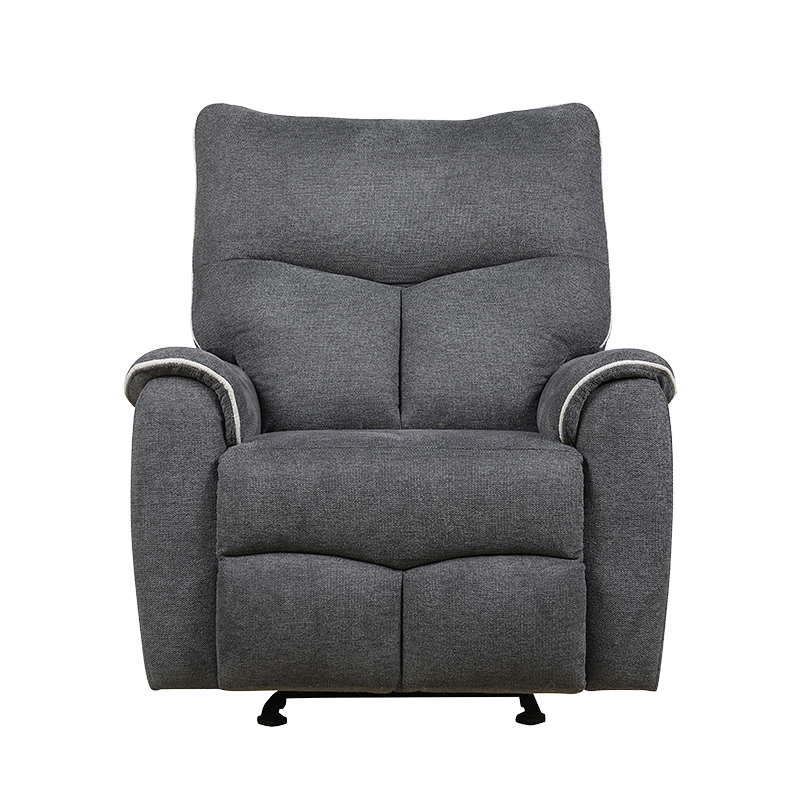
Manual reclining chair with soft and comfortable fabric
3. Overstuffed Upholstery for a Softer Sitting Experience
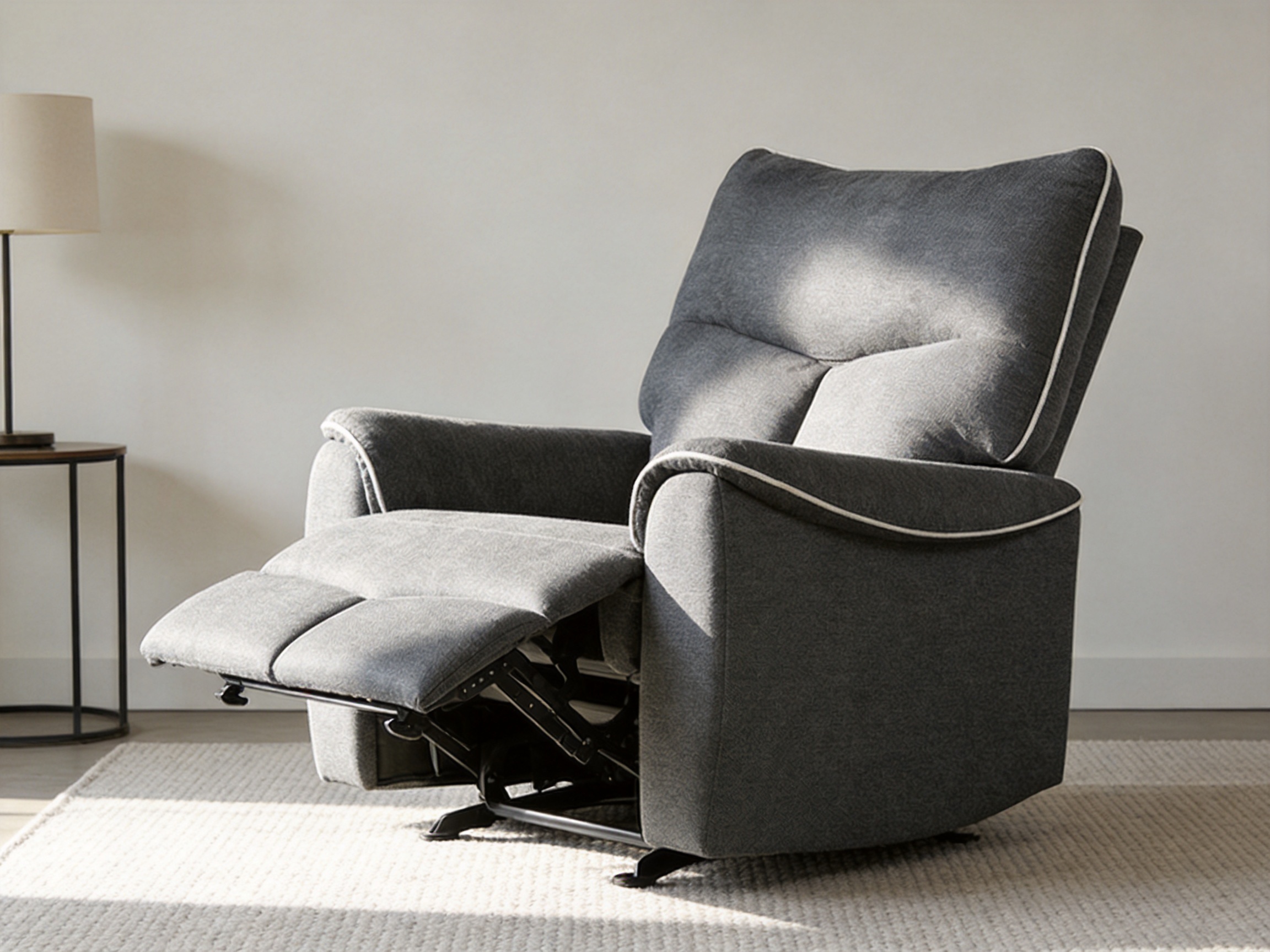
The most immediate advantage of this chair is its overstuffed upholstery. Thick cushioning creates a softer initial feel and helps surround the user in a more comfortable seating environment. The padded backrest, seat, and armrests work together instead of treating each area as an isolated component. This integrated cushioning is important because relaxation depends not only on the seat itself but also on the way the back, shoulders, elbows, and legs are supported.
Compared with a lightly padded accent chair, an overstuffed recliner offers a more substantial sense of comfort. It is designed for longer periods of use, such as watching a film, reading several chapters, taking a nap, or sitting with a child. The generous padding can also make the chair feel more inviting in a room, giving it a visually soft and approachable character.
The use of breathable fabric contributes to everyday comfort. Fabric upholstery generally provides a warm, familiar tactile experience and can be more visually relaxed than glossy leather or synthetic surfaces. Breathable upholstery is particularly helpful in environments where users may remain seated for extended periods. The dark gray color adds versatility, coordinating with neutral interiors, contemporary living spaces, family rooms, and commercial furniture schemes.
Custom color support gives distributors and project buyers greater flexibility. A standard dark gray option can simplify ordering and create a dependable neutral product line, while custom colors can be used to match a retailer’s collection, a hospitality interior, a residential development, or a specific design brief. The ability to discuss custom upholstery options with the manufacturer also supports more coherent room styling and differentiated product offerings.
Supportive Armrests and Padded Back Design
Armrests are sometimes treated as decorative additions, but they have a significant effect on perceived comfort. Thickly padded armrests give users a place to rest their forearms and can reduce the feeling of pressure during longer sitting sessions. They also help the chair feel more complete when the backrest is reclined, creating a supported seating enclosure.
The ergonomically padded backrest is designed to support the upper body in multiple positions. At approximately 90 degrees, the chair can support more upright activities such as conversation, reading, or using a mobile device. As the back moves toward 150 degrees, the seating position becomes more relaxed and suitable for television viewing, rest, or quiet personal time. This range allows users to adjust the chair according to their activity rather than remaining in one fixed posture.
4. Three Flexible Modes for Different Daily Activities
A major product advantage is the ability to use the chair in three practical modes. The first is the upright sitting mode, which is suitable for conversation, reading, nursing, or maintaining a more alert posture. The second is a partially reclined mode, which offers additional back support and reduces the upright angle for television viewing or casual relaxation. The third is a deeper reclined mode with the footrest extended, creating a more complete lounge position.
This flexibility gives the product greater everyday value than a fixed lounge chair. A fixed chair may be comfortable in one position but less adaptable when the user changes activities. The manual recliner can change with the moment. It can support an upright morning routine, a relaxed afternoon break, and an evening entertainment session without requiring additional furniture.
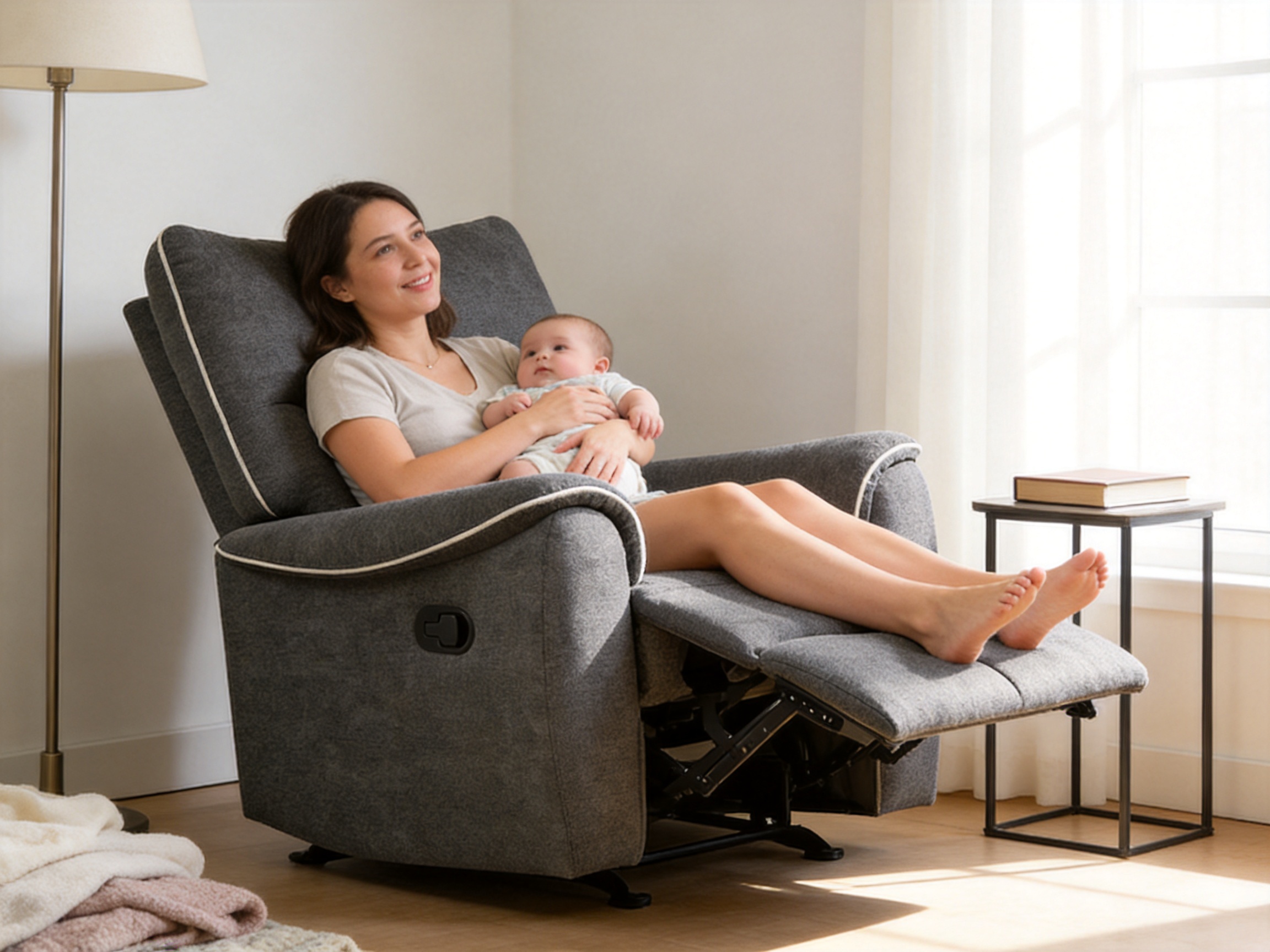
The three-mode concept is also useful for nurseries. A caregiver may need an upright position when holding a baby, a moderately reclined position for soothing, and a foot-supported position during quiet rest. The chair’s padded structure and independent placement make it suitable for creating a comfortable nursing or care corner. As with any nursery furniture, the surrounding area should remain clear and the chair should be used with appropriate adult supervision.
For retailers, this multi-position function is easy to communicate to customers. Instead of presenting the chair as a product with a single purpose, sales teams can describe how it supports reading, resting, television viewing, family time, and nursery use. This broader application can increase the chair’s appeal across multiple market segments.
5. Manual Reclining Without Dependence on Electricity
The manual operating system is one of the clearest ways this recliner differs from a power recliner. Manual adjustment does not depend on a wall outlet, battery, motor, or remote control. This makes the chair convenient in rooms where electrical access is limited or where customers want to avoid visible cords. It also allows more freedom when rearranging furniture.
Manual construction can be an advantage for buyers who prefer a straightforward product with fewer electrical components. A manual recliner is easy to understand and does not require users to keep a remote control nearby. It can be especially suitable for guest rooms, rental properties, family spaces, and commercial settings where simple operation is valued.
The manual mechanism also supports a more competitive price structure in many furniture categories. While final pricing depends on materials, order volume, customization, shipping, and market requirements, the absence of a motorized system can help reduce component complexity. This creates an opportunity for distributors to offer reclining functionality at a more accessible level than many electrically operated alternatives.
At the same time, a manual chair should be operated correctly. Users should avoid forcing the footrest, sitting heavily on the extended footrest, or allowing children to operate the mechanism without supervision. Proper use helps protect the internal mechanism and contributes to long-term performance.
6. A Wall-Friendly Design for More Flexible Placement
Many recliners require significant clearance behind the backrest. If positioned too close to a wall, the back may strike the wall when the chair reclines. This can limit room layouts and force users to place the chair far into the room, consuming valuable floor space. The product information identifies this chair as not hugging the wall, allowing more flexible placement.
This design benefit is especially useful in compact apartments, narrow living rooms, bedrooms, and shared family spaces. Users can position the chair closer to a wall while preserving a more efficient walking path. The result is a cleaner layout and greater freedom when arranging sofas, tables, bookshelves, and entertainment units.
For commercial buyers, efficient placement can improve the usability of model rooms, hotel suites, nursing areas, and other furnished spaces. Every inch matters in a carefully planned interior. A chair that does not require excessive rear clearance can provide reclining comfort without creating unnecessary circulation problems.
Although the chair offers flexible placement, users should still follow general installation guidance. The chair should stand on a stable, level surface, and adequate space should remain in front of it for the footrest to extend. Objects, rugs, cables, and children’s toys should not obstruct the moving parts.
7. Durable Steel-and-Wood Frame Construction
Comfort must be supported by a reliable internal structure. This recliner uses steel and wood frame construction to balance strength, stability, and practical furniture manufacturing. Wood can contribute to the frame’s form and structural foundation, while steel can support areas that benefit from additional rigidity and mechanical durability.
A combined frame approach is valuable in a reclining chair because the structure must support repeated changes in position. The backrest, seat, and footrest experience different forces during use. A well-built frame helps maintain alignment and reduces unwanted movement. It also supports the padded upholstery, allowing the exterior comfort to be matched by internal stability.
The company’s own wooden frame factory is an important manufacturing advantage. Internal control over frame production can improve coordination between design and manufacturing. Rather than relying entirely on external suppliers, the producer can better manage wood selection, frame specifications, production timing, and quality inspection. This may also support faster adjustments when a customer requests a modified design or customized product.
The same principle applies to the company’s sponge processing plant. Cushion materials strongly influence comfort, appearance, recovery, and product consistency. In-house or closely controlled sponge processing allows the manufacturer to coordinate cushion density, dimensions, cutting, and assembly more effectively. These capabilities support the overstuffed appearance and help maintain consistency across production batches.
8. Manufacturing Strengths Behind the Product
The product is supported by a complete furniture development and manufacturing structure. The company was established in 2021 and operates in Anji County, Huzhou City, Zhejiang Province, a region recognized internationally for its chair industry. Its product categories include functional sofas, fixed sofas, corner sofas, lounge chairs, recliner sofas, love seats, leisure chairs, and related upholstered furniture.
The factory covers approximately 8,000 square meters and employs more than 100 people. This scale allows the company to combine production capacity with the responsiveness of a specialized manufacturer. A buyer can work with a supplier that has meaningful industrial resources while still discussing product details, color requirements, packaging arrangements, and order specifications directly.
Research and development is another important strength. Furniture buyers increasingly seek products that are not simply copies of existing designs. They want improved comfort, updated proportions, practical mechanisms, new upholstery options, and designs that fit changing lifestyles. A manufacturer with industrial design and R&D capabilities can contribute during the development process rather than only producing a fixed specification.
The company also integrates independent marketing and technical services. This broader structure can improve communication between product development, manufacturing, sales, and after-sales support. For international buyers, technical communication is important because product requirements may involve packaging, assembly instructions, load specifications, fabric care, safety expectations, and market-specific documentation.
Its location near Ningbo Beilun Port offers a logistical advantage for export orders. Efficient access to a major port can simplify the movement of finished furniture to North America, Europe, the Middle East, and other destinations. Transportation schedules and costs depend on shipping conditions and order details, but proximity to export infrastructure can support more organized supply-chain planning.
9. Quality Control and International Market Readiness
Furniture intended for international markets must meet more than basic visual expectations. Buyers need confidence in the frame, upholstery, mechanism, packaging, dimensions, and production consistency. The company describes a strict multi-stage quality inspection system and states that its products comply with international standards and certifications. These claims should be confirmed through the relevant product documentation, testing reports, and order-specific requirements, but they indicate an established focus on export readiness.
Quality control can begin with incoming materials. Wood, steel components, foam, fabric, hardware, and packaging materials should be checked before entering production. Confirming material specifications at this stage helps prevent defects from moving further through the manufacturing process. It also supports consistency between approved samples and mass-production units.
During frame assembly, inspection can focus on dimensions, joints, structural alignment, and the placement of mechanical components. A reclining chair requires accurate assembly because small misalignments may affect the smoothness of the backrest or footrest. Frame inspection is therefore closely related to both safety and user experience.
Upholstery inspection is equally important. The fabric should be checked for color consistency, surface condition, sewing quality, tension, and alignment. Overstuffed furniture requires careful upholstery work because the fabric must follow rounded and padded contours without excessive wrinkling or unevenness. Well-controlled upholstery contributes to the chair’s appearance and its perceived quality at the point of sale.
Final inspection should assess the assembled chair as a complete product. This can include checking the reclining range, footrest movement, overall dimensions, stability, fabric finish, labeling, packaging, and accessories. Multi-stage quality control provides several opportunities to identify and correct issues before products are shipped.
Packaging and Export Considerations
Upholstered recliners must be protected during handling and transport. Packaging should help prevent fabric abrasion, frame damage, compression marks, moisture exposure, and contamination. Export buyers may also require specific carton markings, pallet arrangements, labels, assembly instructions, or documentation. A manufacturer experienced in overseas markets is better positioned to coordinate these details.
Because the company exports to North America, Europe, the Middle East, and other regions, it has experience serving diverse market requirements. Different regions may have distinct expectations regarding colors, dimensions, labeling, testing, packaging, and documentation. International experience supports clearer communication and reduces the risk of avoidable order problems.
10. Advantages Over Common Competing Seating Options
Comparing this chair with competing products requires considering the total user experience rather than focusing on one feature. A fixed armchair may be less expensive, but it cannot provide adjustable reclining and an integrated footrest. A basic recliner may offer movement but lack thick padding, breathable fabric, or an attractive contemporary appearance. A power recliner may provide push-button operation but require electricity and additional components. A reclining sofa may seat more people but needs substantially more floor space.
| Alternative | Possible Limitation | Advantage of This Manual Recliner |
|---|---|---|
| Fixed upholstered armchair | No reclining function or integrated leg support | Offers upright and reclined positions with a retractable footrest |
| Basic low-padding recliner | May provide less enveloping comfort | Uses overstuffed cushioning, padded armrests, and a padded backrest |
| Power recliner | Requires electricity and may have more complex components | Operates manually and can be placed without a power cord |
| Large reclining sofa | Requires more room and serves multiple users at once | Provides personal reclining comfort in a single-chair footprint |
| Leather recliner | May feel less breathable or less casual in some interiors | Uses soft breathable fabric with a welcoming upholstered appearance |
| Wall-dependent recliner | May require considerable rear clearance | Supports more flexible placement near walls and in compact layouts |
These comparisons do not mean that one product is suitable for every buyer. Instead, they show where the chair has a clear market position. It is designed for customers who prioritize comfort, simplicity, adaptable placement, and value. It can compete effectively by offering a thoughtful combination of features rather than relying on a single premium element.
11. Suitable Applications in Residential and Commercial Environments
Living Rooms
In a living room, the chair can work as an individual relaxation seat alongside a sofa or sectional. Its dark gray upholstery can blend with neutral color palettes, wood furniture, textured rugs, and contemporary decorative elements. When placed near a television, side table, or floor lamp, it creates a practical personal zone without requiring a complete room redesign.
Nurseries and Family Care Areas
The supportive backrest, padded arms, and reclining function make the chair suitable for nurseries and family care spaces. Caregivers can use the upright mode for holding a child and adjust the chair for longer periods of rest. The fabric surface offers a soft domestic appearance, while the manual design avoids the need to route power cables through a nursery.
Reading Corners
A comfortable reading corner requires more than attractive styling. The chair should support the back, provide a stable place for the arms, and allow the user to change position. The adjustable backrest and optional footrest make this chair appropriate for books, magazines, tablets, and quiet study. Adding a lamp and a small table can create a complete reading environment.
Bedrooms and Guest Rooms
A single recliner can add useful seating to a bedroom or guest room without the space requirements of a sofa. It can provide a place to put on shoes, read before bed, or rest during the day. In guest accommodation, the manual mechanism is easy to understand and does not depend on a remote control or outlet.
Hospitality and Residential Projects
Interior designers, property developers, and hospitality buyers may value the chair’s customizable colors and flexible positioning. A coordinated upholstery program can help match a project’s interior palette. The chair can be used in suites, lounges, family areas, model homes, and private consultation spaces where personal comfort is important.
12. Fabric Care and Long-Term Appearance
Correct care is essential for preserving the appearance of upholstered furniture. The recommended care information for this product specifies cleaning with dry-cleaning solvent only and advises users not to saturate the fabric with water. Excess moisture can penetrate the upholstery, affect internal materials, create drying problems, or leave visible marks.
Pile fabrics may require gentle brushing to restore their appearance. Brushing should be performed carefully and in accordance with the fabric’s direction and care requirements. Users should avoid aggressive scrubbing, unapproved chemical products, excessive friction, and sharp objects that could damage the surface.
Routine care can include removing dust with a suitable upholstery attachment, addressing spills promptly without soaking the material, and keeping the chair away from prolonged direct sunlight when possible. Furniture should also be positioned away from excessive heat sources. These simple practices can help maintain fabric color, texture, and overall presentation.
Owners should inspect the reclining mechanism periodically. If unusual resistance, noise, or instability develops, the chair should not be forced. The footrest should be retracted using the recommended method, and children should be kept away from moving gaps and mechanical areas. Proper care protects both the user and the furniture.
13. Correct and Labor-Saving Footrest Retraction Method
The product information provides a specific method for retracting the footrest. The user should sit forward, lean forward, and use the heels to press against the middle of the footrest. This technique is intended to make retraction more efficient and reduce unnecessary effort.
Using the correct method is important because reclining mechanisms are designed to respond to pressure in particular areas. Pulling, twisting, or pressing unevenly may make the footrest more difficult to close and could place unnecessary stress on the mechanism. Users should keep hands, feet, and other objects clear of the moving parts while operating the chair.
Retailers and distributors should include this guidance in product instructions or customer support materials. Demonstrating the correct operation at the point of sale can improve customer satisfaction and reduce avoidable complaints. Simple operating information can make a noticeable difference in the ownership experience.
14. Customization and Cooperation Opportunities
Customization is increasingly important in the furniture industry. Retailers want products that fit their own collections, while project buyers may need colors that coordinate with an interior concept. The availability of custom colors gives this manual recliner a useful starting point for private-label programs, coordinated room sets, and regional product lines.
Customization may involve more than color. Depending on project requirements and technical feasibility, buyers may discuss upholstery materials, packaging, labeling, dimensions, stitching details, cushion specifications, or other design elements with the manufacturer. Any proposed modification should be evaluated through sample approval, testing, and written production confirmation.
The company’s integrated resources can support this type of cooperation. Its R&D team, industrial design capability, wooden frame production, sponge processing, upholstery manufacturing, and technical service structure provide a foundation for product development. Buyers can therefore approach the manufacturer not only for a finished catalog item but also for discussion of customized furniture solutions.
For distributors, a customizable product can create stronger market differentiation. Instead of competing only on price with identical products, a distributor can offer a specific color collection, coordinated furniture series, or exclusive configuration. This may improve brand recognition and support longer-term customer relationships.
15. Why the Manufacturing Location Matters
Anji County has a long-standing reputation for chair manufacturing and furniture production. A manufacturing cluster can provide access to experienced labor, component suppliers, production knowledge, logistics services, and specialized equipment. These regional advantages can improve the efficiency of product development and large-scale production.
For a buyer, the value of a manufacturing location is not limited to geography. It also relates to the availability of skilled workers and supporting industries. Upholstery, foam processing, frame construction, hardware sourcing, packaging, and export handling all require practical expertise. A mature industry environment can help a company coordinate these stages more effectively.
The manufacturer’s proximity to Ningbo Beilun Port further supports export planning. International furniture orders require careful coordination from factory production to container loading and destination delivery. Access to established port infrastructure can help reduce unnecessary inland movement and support more predictable logistics discussions.
16. A Quality-Oriented Company Philosophy
The company describes its operating philosophy as regarding quality as its mission, seeking development through service, acting with honesty and practicality, and striving for excellence. These principles are relevant to furniture buyers because successful cooperation depends on more than a single shipment. It requires reliable communication, consistent production, accurate documentation, and a willingness to solve problems.
A quality-oriented approach should be visible in product development, material selection, process control, inspection, packaging, and customer service. For a recliner chair, this means paying attention to the details that users experience directly: the feel of the fabric, the softness of the padding, the alignment of the backrest, the smoothness of the footrest, and the stability of the chair on the floor.
The company’s goal of expanding global markets is supported by its export experience and product range. By supplying North America, Europe, the Middle East, and other regions, it has developed an understanding of the need for consistent quality and adaptable cooperation. Buyers can use this experience when evaluating the chair for their own distribution or project requirements.
17. Buying Considerations for Distributors and Project Customers
Before placing an order, buyers should confirm the exact upholstery fabric, color, dimensions, load requirements, packaging method, order quantity, lead time, sample approval procedure, and applicable testing documents. If custom colors are required, a physical or approved digital color reference should be established before bulk production.
Buyers should also confirm whether the quoted dimensions include any extended footrest position, how the product is packed, whether assembly is required, and what documentation is supplied. These details help retailers prepare accurate product listings and help project buyers plan room layouts.
For commercial or high-use environments, purchasers should discuss expected usage levels and any additional performance requirements. A residential recliner and a contract-grade recliner may be subject to different specifications. Clear communication at the beginning of the project allows the manufacturer to recommend appropriate materials and production arrangements.
Sample evaluation is strongly recommended. A sample allows buyers to assess fabric hand feel, color, cushioning, seat depth, back support, mechanism operation, footrest retraction, and overall appearance. It also provides a reference for mass production. Any approved sample should be documented clearly to reduce uncertainty during later manufacturing.
18. Frequently Asked Questions
Q1: Is this chair a manual or electric recliner?
It is a manual recliner. The backrest and retractable footrest are operated without an electric motor, remote control, or power connection.
Q2: How far can the backrest recline?
The backrest can be adjusted from approximately 90 degrees to 150 degrees. This range supports upright sitting, semi-reclined relaxation, and a deeper lounging position.
Q3: Does the chair include a footrest?
Yes. It includes a retractable footrest designed to provide additional leg support when the chair is reclined.
Q4: What is the recommended way to retract the footrest?
The recommended method is to sit forward, lean forward, and use the heels to press against the middle of the footrest. Users should keep hands and other objects away from moving parts.
Q5: What material is used for the upholstery?
The chair uses overstuffed breathable fabric. The standard color is dark gray, and custom colors are supported for suitable orders.
Q6: Is the chair suitable for a nursery?
Yes. Its padded backrest, armrests, and reclining positions make it suitable for nurseries and family living areas. It should be placed on a stable surface and used with appropriate adult supervision around children.
Q7: Can the chair be placed near a wall?
The product is designed not to hug the wall, allowing more flexible placement than many conventional recliners. Adequate space should still be kept in front of the chair for the footrest.
Q8: What is the chair’s weight capacity?
The stated weight capacity is 300 pounds. Users should avoid exceeding this rating and should use the chair only on a stable, level surface.
Q9: What are the overall dimensions?
The approximate dimensions are 37.4 inches wide, 38.6 inches deep, and 40.6 inches high.
Q10: How should the fabric be cleaned?
The care instructions specify cleaning with dry-cleaning solvent only and advise against saturating the fabric with water. Pile fabrics may require gentle brushing to restore their appearance.
Q11: What makes the chair different from a fixed armchair?
Unlike a fixed armchair, this product provides adjustable reclining positions and an integrated retractable footrest. It can therefore support more activities and posture preferences.
Q12: What makes it different from a power recliner?
It does not require electricity, a motor, or a remote control. This can simplify placement, operation, and maintenance while providing a more accessible manual reclining experience.
Q13: Can the manufacturer support custom furniture projects?
The company supports custom colors and has R&D, industrial design, frame production, sponge processing, manufacturing, and technical service capabilities. Specific customization options should be confirmed for each project.
Q14: Which markets does the company serve?
The company exports to North America, Europe, the Middle East, and other regions. Buyers should confirm market-specific compliance, documentation, packaging, and testing requirements before ordering.
Q15: What should buyers check before bulk production?
Buyers should confirm the approved sample, fabric and color, dimensions, weight capacity, reclining performance, packaging, labeling, documents, lead time, and any special testing or certification requirements.
19. Conclusion
The Fabric Overstuffed Manual Recliner Chair offers a strong combination of comfort, flexibility, simplicity, and practical design. Its breathable fabric, thick cushions, padded armrests, ergonomic backrest, adjustable 90-to-150-degree reclining range, and retractable footrest create a complete personal relaxation solution. The chair can support upright sitting, semi-reclined activities, and deeper rest, making it suitable for living rooms, nurseries, bedrooms, reading corners, and commercial interiors.
Its manual operation provides freedom from power cords and electrical components, while the wall-friendly design supports more efficient room planning. The steel-and-wood frame is intended to provide a stable foundation, and the 300-pound stated weight capacity gives buyers a clear reference for product selection. Custom color support further expands its potential for retail collections and design projects.
The manufacturer strengthens the product offering through integrated R&D, industrial design, frame production, sponge processing, upholstery manufacturing, quality inspection, export experience, and technical service. With an approximately 8,000-square-meter factory, more than 100 employees, and access to the furniture industry resources of Anji County, the company is positioned to support both standard orders and customized cooperation.
For buyers seeking a comfortable and versatile recliner with straightforward operation and professional manufacturing support, this product represents a practical choice. Its value lies not in one isolated feature, but in the way comfort, usability, structural design, customization, quality control, and international supply capability work together.
References
1. Product specification sheet for the Fabric Overstuffed Manual Recliner Chair, including dimensions, reclining range, materials, weight capacity, and care instructions.
2. Manufacturer-provided company profile describing research and development, industrial design, manufacturing capacity, export markets, and technical services.
3. Manufacturer-provided information regarding wooden frame production, sponge processing, multi-stage quality inspection, and customization capabilities.
4. General furniture design principles concerning ergonomic seating, upholstered comfort, reclining mechanisms, frame construction, and residential space planning.
5. General upholstery care guidance concerning dry-cleaning solvents, moisture avoidance, pile-fabric maintenance, and routine furniture protection.
Product: Manual reclining chair with soft and comfortable fabric

LET'S TALK

Bai Shuiwan Industrial Park, Tian Huangping Town, Anji County, Huzhou City, Zhejiang Province, China
More About Us 
-
+86 18257273741
-
[email protected]
CONTACT US
Copyright © Anji Xuanbo Household Co., Ltd. All Rights Reserved.
Custom Modern Upholstered Sofa Manufacturers


