Focus on the manufacturing and export of functional sofas
-
 +86 18257273741
-
 [email protected]

 English
 Español

Zhao Xinyi — Product Sales Consultant
 Home / Author / Zhao Xinyi — Product Sales Consultant / 96-Inch L-Shaped Sectional Recliner Sofa with Reversible Storage Chaise
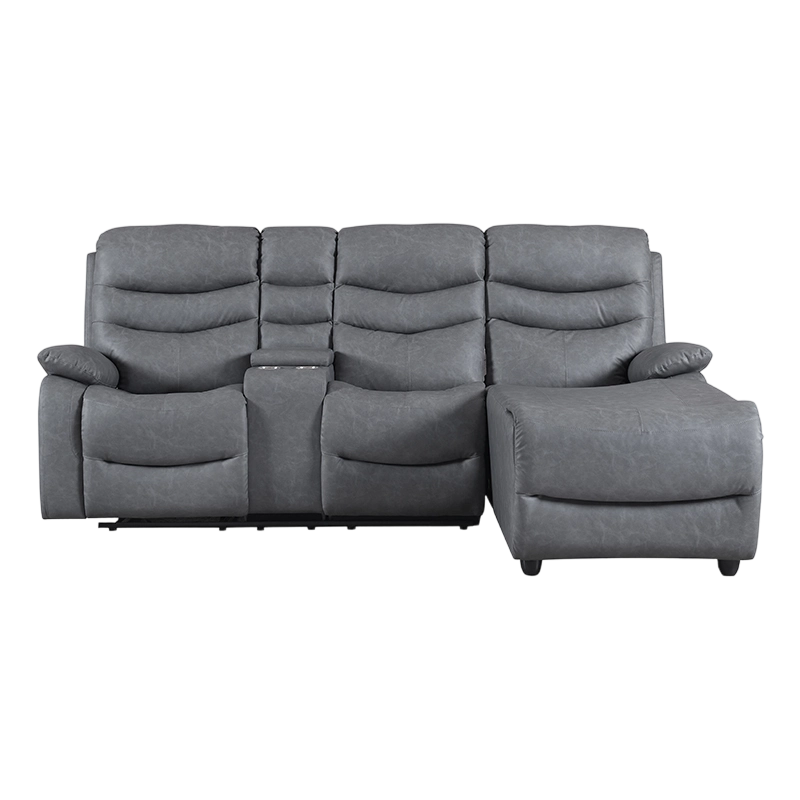
96-Inch L-Shaped Sectional Recliner Sofa with Reversible Storage Chaise
 2026.09.12
 Zhao Xinyi — Product Sales Consultant
Content
- 1 Designed for Flexible Modern Living
- 2 One Sofa, Several Daily Functions
- 3 Comfort System: Foam, Pocket Coils, and Reclining Support
- 4 Upholstery and Visual Appeal
- 5 Storage That Supports an Organized Room
- 6 Construction and Material Foundation
- 7 Advanced Manufacturing Strengths
- 8 Customization and International Market Capability
- 9 Advantages over Conventional Competitors
- 10 Applications for Different Buyer Groups
- 11 Ordering and Specification Considerations
- 12 Quality Inspection Recommendations
- 13 Product Summary
- 14 Questions and Answers
- 14.1 What type of product is this?
- 14.2 Is the chaise reversible?
- 14.3 Does the chaise include storage?
- 14.4 How are the recliners operated?
- 14.5 What materials are used in the seating structure?
- 14.6 What upholstery is used?
- 14.7 Can the upholstery cover be removed?
- 14.8 How should faux suede upholstery be maintained?
- 14.9 Is the sofa suitable for small apartments?
- 14.10 Can the sofa be customized?
- 14.11 Where is the sofa manufactured?
- 14.12 What are the manufacturer’s main strengths?
- 14.13 Which markets does the company serve?
- 14.14 What should be confirmed before ordering?
- 15 References
- 16 Product: 96" L-Shaped Sectional Recliner Sofa with Storage
Modern homes increasingly require furniture that performs more than one function. A sofa is no longer expected to provide only a place to sit. In apartments, condominiums, family rooms, guest rooms, and flexible living spaces, buyers want comfortable seating, practical storage, adaptable configurations, durable construction, and an appearance that complements contemporary interiors. The 96-inch L-Shaped Sectional Recliner Sofa with Storage is designed around these expectations. It combines the open layout of an L-shaped sectional, the comfort of manual reclining seats, the practicality of a reversible chaise, and the convenience of concealed storage in one coordinated furniture solution.
This product is particularly suitable for modern apartment living because it helps homeowners use limited floor space efficiently. Rather than purchasing a separate sofa, recliner, ottoman, storage bench, and occasional guest bed, consumers can organize several daily functions around one sectional design. The chaise provides an extended lounging area, the two lever-pull recliners allow users to adjust their seating position, and the storage compartment helps keep blankets, pillows, books, and other household items out of sight.
Manufactured by Anji Xuanbo Household Co., Ltd., the sofa reflects a combination of practical design, structured production, material selection, and customization capability. The manufacturer operates its own wooden frame factory and sponge processing plant, giving it greater control over important parts of the supply chain. This integrated approach supports consistency, cost management, production scheduling, and quality inspection. It also enables the company to respond to customized color, material, dimension, and market requirements more efficiently than a trading-oriented supplier with limited manufacturing control.
The following article examines the sectional sofa in detail, including its design, construction, comfort system, flexible layout, storage capacity, upholstery, maintenance requirements, manufacturing strengths, customization potential, and suitability for international furniture buyers.

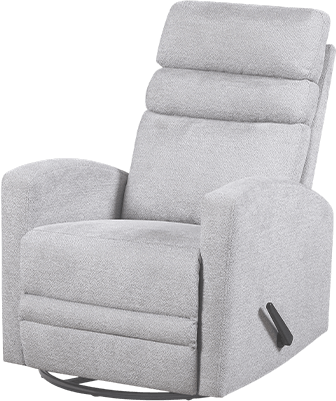
96" L-Shaped Sectional Recliner Sofa with Storage
Designed for Flexible Modern Living
The central design concept of this sectional is flexibility. Its L-shaped configuration creates a defined seating zone without requiring a separate room divider. This makes it suitable for open-plan apartments, compact family rooms, media rooms, and multifunctional guest areas. The sofa can be positioned against a wall, placed in a corner, or used to help separate a lounge area from a dining or work zone.
The reversible storage chaise is one of the most important features for buyers who frequently change their room arrangement. In a conventional fixed sectional, the chaise orientation determines where the product can be placed. A left-facing chaise may work in one apartment but become inconvenient after a move or renovation. This model is designed to provide greater arrangement freedom. The chaise can be configured on either side according to the room layout, allowing the same sofa to serve different floor plans and future homes.
This flexibility also benefits retailers and project buyers. A reversible design can appeal to a wider range of customers because the purchaser does not need to know the exact final layout before ordering. It is also easier to position in showrooms, model apartments, rental properties, and residential developments where floor plans may vary. For distributors, one adaptable configuration can reduce the need to stock multiple left-hand and right-hand versions.
The total sectional size is listed as approximately 84.25 by 67.8 by 36.6/37.7 inches, while the product is marketed as a 96-inch L-shaped sectional recliner sofa. Because sectional dimensions may be measured across different points or refer to different configuration standards, buyers should confirm final carton, assembled, and overall footprint measurements before placing a commercial order. The individual seating components are listed at approximately 38.9 by 67.7 by 37.7 inches for the seat with ottoman and 45.3 by 36.6 by 37.7 inches for the two-seat section.
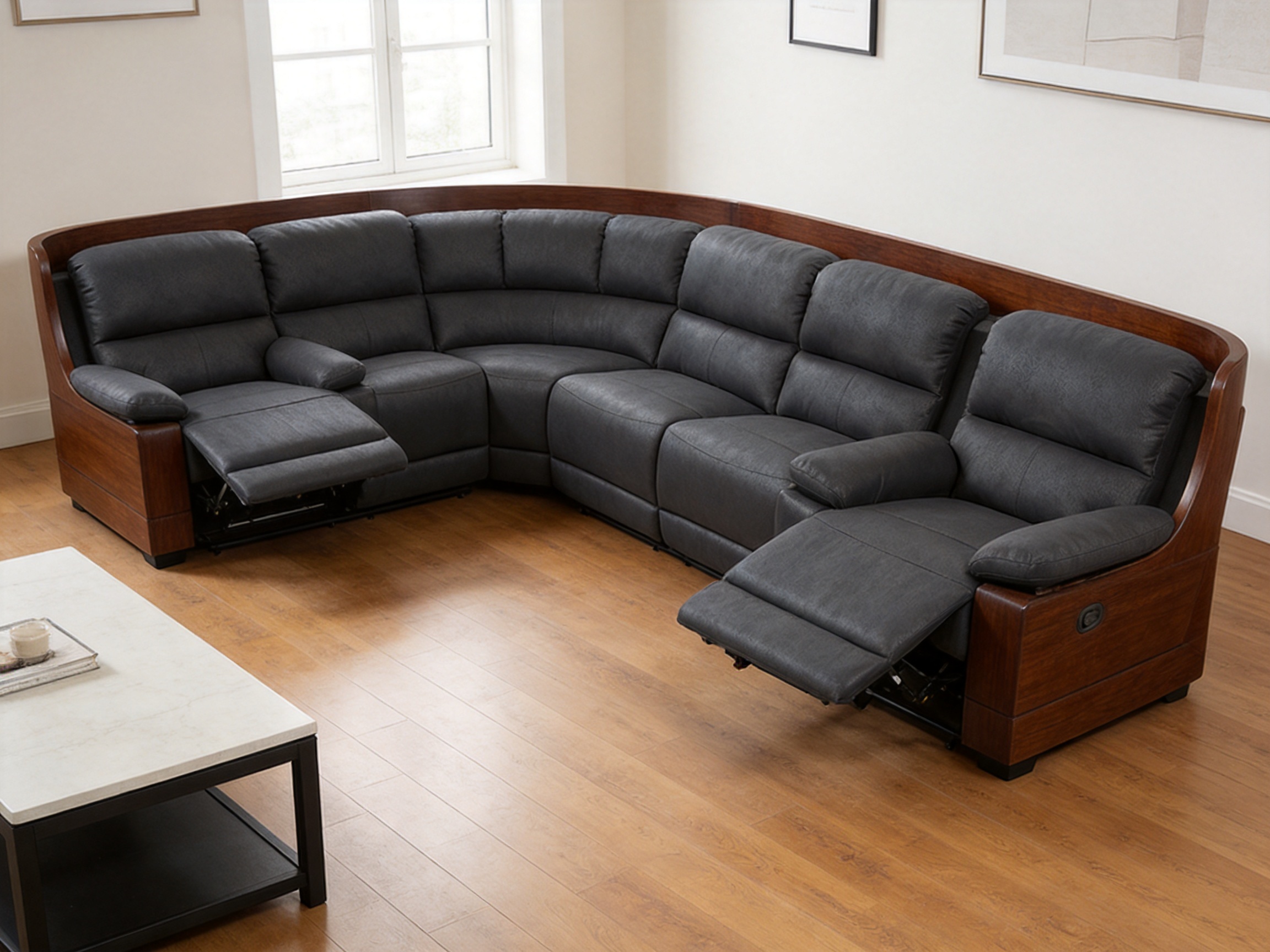
Although the sofa has a substantial seating presence, its clean sectional structure helps it remain visually organized. The curved solid wood back frame introduces a softer profile than a highly angular frame. This curve can make the sofa appear more inviting while supporting a modern interior style. The design is suitable for residential furniture collections seeking a balance between comfort-oriented detailing and a contemporary silhouette.
One Sofa, Several Daily Functions
The product description presents the sofa as a piece that can support daily lounging and occasional overnight use. During the day, it functions as an L-shaped sectional with room for couples, families, or guests to sit and stretch out. In the evening, the reclining sections can create a more relaxed position for reading, watching television, or resting after work. The extended chaise provides a place to lie back without occupying a separate recliner or daybed.
The sofa is also described as adaptable for guest accommodation. In homes without a dedicated guest room, multifunctional furniture can help create a more practical living environment. The sectional can offer a comfortable resting area for visitors while preserving the primary function of the room during normal daily use. Buyers should confirm the exact sleeper conversion mechanism and dimensions for their intended market, as the listed specifications primarily emphasize the sectional, chaise, and manual recliner functions.
The two lever-pull recliners are operated manually. Each lever allows the user to adjust the corresponding seat independently, so one person can recline while another remains upright. This independent operation is useful in households with different comfort preferences. It also avoids dependence on motors, electrical outlets, control panels, or replacement power components.
Manual reclining can offer several practical advantages over powered seating. The mechanism is straightforward, does not require a power cord, and can be placed in rooms where electrical access is limited. It may also help reduce energy use during ordinary operation. For hospitality projects, rental units, and export markets where maintenance simplicity is important, a manual mechanism can be an attractive alternative to electrically operated furniture.
Compared with a standard fixed sofa, this design offers more positioning options. Compared with a separate sofa and recliner combination, it can use the room footprint more efficiently. Compared with a conventional fixed chaise sectional, the reversible chaise provides additional layout flexibility. These combined functions are the product’s most important competitive advantages.
| Feature | Practical Benefit | Typical Buyer Value |
|---|---|---|
| L-shaped sectional structure | Creates generous seating and defines a lounge area | Efficient use of living-room space |
| Reversible chaise | Allows left- or right-side configuration | More placement freedom and broader market appeal |
| Built-in storage | Holds blankets, pillows, and everyday items | Less visible clutter and fewer additional storage pieces |
| Two manual recliners | Provides independent backrest adjustment | Personalized comfort without electrical operation |
| Faux suede upholstery | Offers a soft, contemporary surface appearance | Suitable for modern furniture collections |
| Pocket coil and foam seating | Combines resilient support with cushioned comfort | Improved seating experience for daily use |
| Removable zippered cover | Supports easier handling and maintenance | Practicality for households and commercial buyers |
| Engineered wood frame | Provides a structured foundation | Stable construction with controlled material use |
Comfort System: Foam, Pocket Coils, and Reclining Support
Comfort depends on more than the softness of the upholstery. A well-designed sofa must balance pressure relief, resilience, structural support, and long-term usability. This model uses foam-filled seats with pocket coil springs. The combination is intended to provide a more supportive sitting experience than a cushion made only from loose fiber or low-density filling.
Foam contributes immediate cushioning and helps shape the seat. High-density foam is used as part of the padded construction, providing a stable surface that can support regular sitting. Pocket coil springs work inside the seating structure as individually encased support elements. Because the coils operate with a degree of independence, the seating system can distribute pressure across the cushion area while helping limit the transfer of movement from one seating position to another.
For couples and families, independent support can improve everyday comfort. When one person shifts position, the movement may be less disruptive to another person than it would be on a single undivided support surface. Pocket coils can also contribute to a more resilient feel, helping the seat recover after use when the surrounding foam and upholstery are correctly matched.
The curved solid wood back frame supports the upper structure and contributes to the sofa’s visual identity. A curved frame can create a more ergonomic back profile than a completely flat frame, although the most comfortable position will vary according to each user’s height, posture, and preferred reclining angle. The back frame is combined with engineered wood construction, padding, and upholstery to produce a complete seating shell.
The two recliners add another level of adjustment. Users can move from a conventional upright posture to a more open position for relaxation. This is especially useful for television viewing, reading, resting, or spending extended periods in the living room. The manual lever mechanism gives users direct control rather than requiring a remote control or powered actuator.
Comfort is also influenced by seat depth, cushion dimensions, arm height, back angle, and the amount of clearance available behind the recliner. Retailers and project purchasers should review complete technical drawings before installation. The sofa should be positioned with adequate space for reclining movement and should not block doorways, heating equipment, walkways, or emergency exits.
Why the Seating Construction Matters
Many low-cost sofas are designed primarily around appearance. While an attractive silhouette is important, internal construction has a direct effect on the user experience. A frame that lacks stability may produce movement or noise. A cushion with insufficient resilience may flatten prematurely. A surface that is difficult to maintain may become unsuitable for high-use areas. By combining an engineered wood frame, high-density foam, pocket coil springs, and a removable zippered cover, this product addresses several practical concerns at the construction level.
For furniture importers, construction details also help distinguish a functional product from a basic upholstered sofa. Pocket coil seating and manual recliners create additional selling points for showroom staff. The reversible chaise and storage compartment provide tangible features that customers can understand immediately. The product can therefore be positioned as a value-oriented multifunctional sectional rather than as a simple fixed couch.
Upholstery and Visual Appeal
The standard color is dark gray, with custom colors supported. Dark gray is a versatile choice for contemporary residential interiors. It can coordinate with light wood, black metal, white walls, warm neutral décor, and many styles of flooring. It is also a practical commercial color because it can help reduce the visual impact of ordinary dust and minor marks between cleaning cycles.
The sofa uses faux suede upholstery. Faux suede is often selected for its soft hand feel and refined appearance. Its surface can create a warmer and more luxurious impression than smooth synthetic leather, while its textile character supports casual and comfortable interior styling. It is appropriate for furniture collections that want a modern appearance without relying on glossy or highly formal upholstery.
Because faux suede and other pile fabrics have a directional surface, appearance may change depending on how the fibers are brushed or compressed. This is normal for pile upholstery. The care instructions specifically note that pile fabrics may require brushing to restore their appearance. Routine maintenance should therefore include gentle surface grooming in addition to addressing spills or marks.
The removable cover with zipper is another practical feature. Removable components can simplify handling during production, packaging, installation, or replacement. For households, a removable cover can make certain maintenance tasks more manageable, although removal does not mean that every cover is machine washable. The stated care instructions require dry cleaning solvent only, prohibit saturating the fabric with water, and recommend care appropriate for pile fabrics.
Recommended Care Approach
Users should follow the supplied care instructions and test any cleaning solvent on an inconspicuous area before treating a visible section. The fabric should not be saturated with water. Excess moisture can affect the upholstery, padding, backing materials, or internal structure. Aggressive rubbing may also change the direction of the pile and create visible shading.
For everyday care, loose dust can be removed with a suitable upholstery attachment operated gently. Cushions and seating areas should be checked regularly for crumbs or debris. If a spill occurs, the affected area should be handled promptly according to the approved cleaning method rather than being scrubbed forcefully. The upholstery should be allowed to dry properly after approved treatment, and the sofa should not be used in a way that places concentrated weight on damp areas.
Retailers should provide customers with clear care information at the point of sale. This is particularly important for faux suede because consumers may incorrectly assume that water-based cleaning is always appropriate. Accurate care communication can preserve appearance, reduce avoidable complaints, and improve satisfaction after purchase.
Storage That Supports an Organized Room
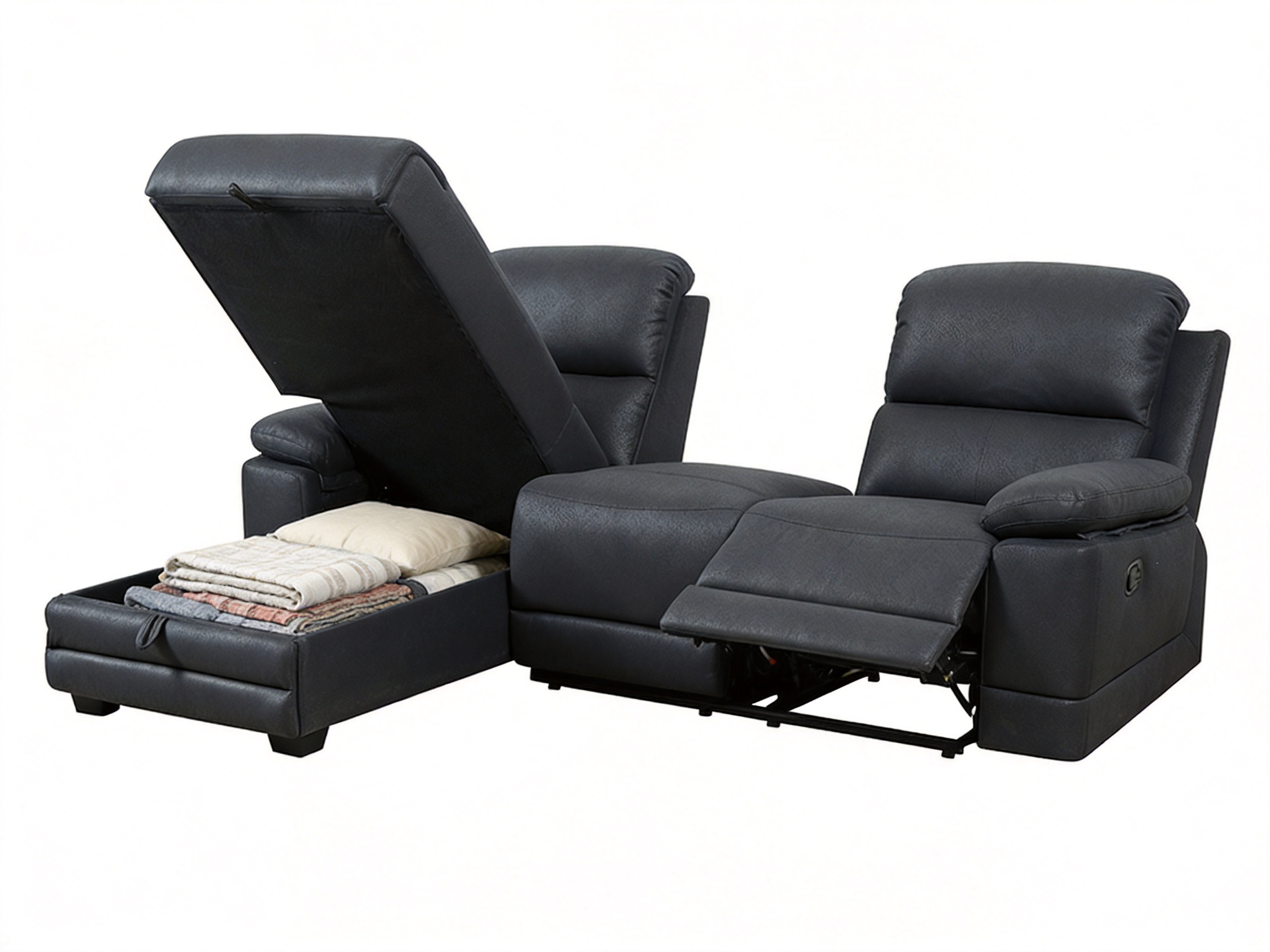
Storage is integrated into the chaise, allowing the sofa to serve as both seating and a household organization tool. The compartment can be used for items that are needed in the living room but do not need to remain visible, such as throw blankets, spare cushions, magazines, game accessories, remote controls, or seasonal textile goods.
Built-in storage is especially useful in apartments and smaller homes. When floor space is limited, a storage chaise can reduce dependence on separate baskets, cabinets, or storage ottomans. This can help preserve walking space and maintain a cleaner visual environment. It also allows frequently used items to remain close to the seating area without occupying the coffee table or open shelving.
For families, concealed storage can help manage everyday clutter. Blankets can be stored near the sofa instead of being carried between rooms. Guest bedding can be kept ready for occasional use. In rental properties and furnished apartments, integrated storage can make the room easier for occupants to organize without requiring additional furniture.
The storage feature also contributes to the product’s value proposition for retailers. A conventional sectional may compete mainly on size, fabric, and price. This model provides a clear functional benefit that can be demonstrated in a showroom. Sales staff can open the chaise compartment and show how the sofa addresses a common household problem: the need for convenient storage without sacrificing seating capacity.
Users should avoid overloading the compartment or placing sharp, wet, excessively heavy, or heat-sensitive items inside it. Storage areas should remain accessible and should not be used to store objects that could damage the lining or interfere with the chaise structure. Detailed internal storage measurements should be confirmed from the manufacturer’s technical documentation before promising a specific capacity to customers.
Construction and Material Foundation
The sofa is built around a solid engineered wood frame padded with high-density foam and pocket springs. Engineered wood is widely used in upholstered furniture because it allows manufacturers to produce consistent panels and structural components while controlling material utilization. When properly designed, joined, and reinforced, engineered wood can provide a stable foundation for seating furniture.
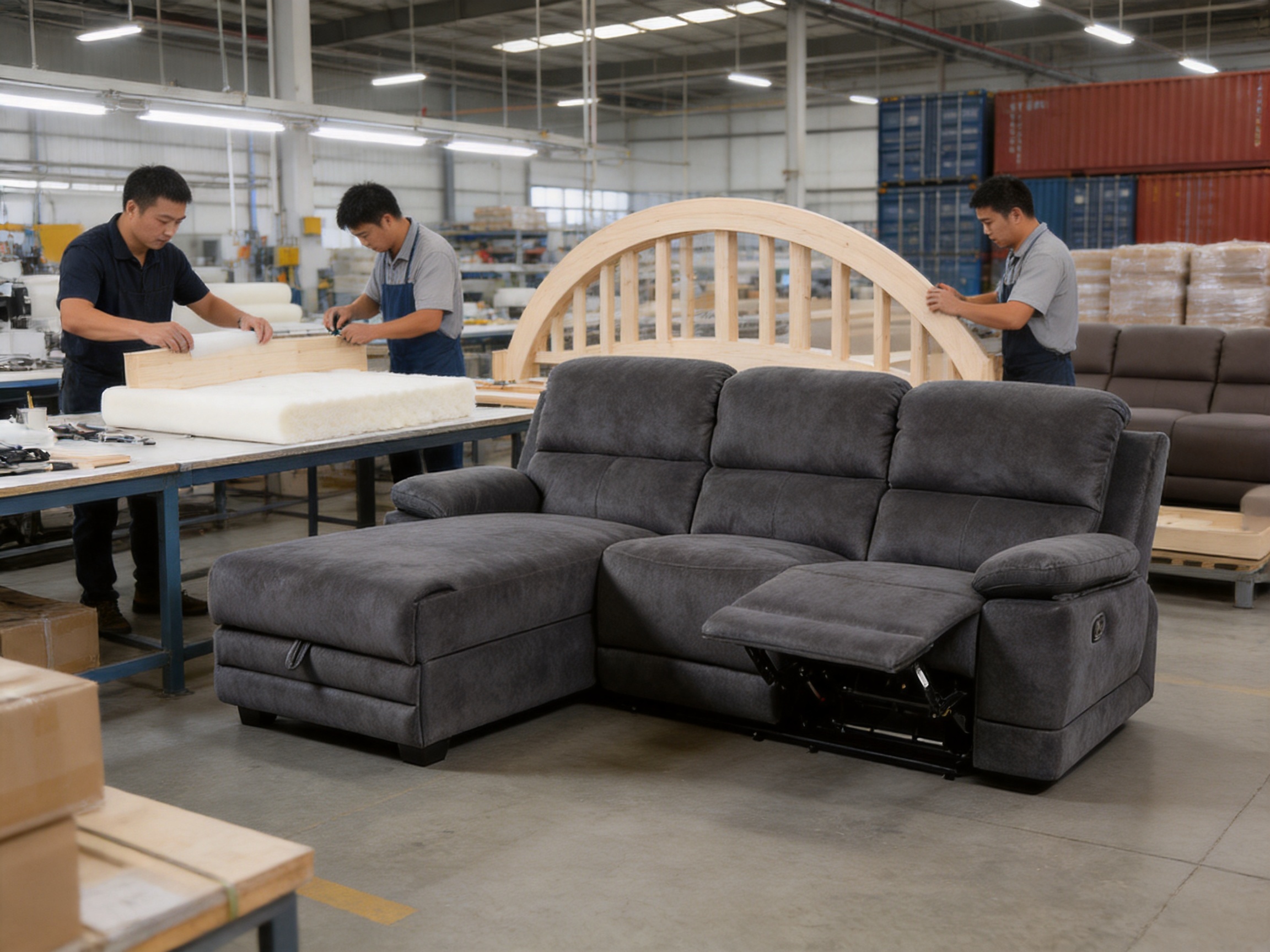
The frame must support the weight of the users, cushions, reclining components, and upholstery while maintaining alignment during daily operation. The performance of the final sofa depends not only on the selected board material but also on cutting accuracy, joint design, fastening, reinforcement, moisture control, and assembly inspection. This is why access to a dedicated wooden frame factory can be a meaningful manufacturing advantage.
The curved solid wood back frame adds a different material element to the design. Solid wood can be shaped to create the desired curved profile and can contribute to the back structure and visual finish. Combining solid wood detailing with engineered wood frame components allows the product to use each material where it is most appropriate.
Foam processing is equally important. Foam density, thickness, cutting precision, bonding, and placement influence seat comfort and appearance. An in-house sponge processing plant gives the manufacturer greater control over foam preparation and reduces dependence on external processing schedules. This may help improve production coordination when different orders require different specifications.
The pocket coil system must be installed and integrated with the foam and upholstery layers in a way that maintains the intended seating profile. Proper assembly helps prevent uneven surfaces, unwanted movement, or inconsistent comfort across the sofa. Quality inspection should cover the frame, reclining mechanism, coil support, foam placement, upholstery tension, seams, zippers, and final dimensions.
Advanced Manufacturing Strengths
Anji Xuanbo Household Co., Ltd. was established in 2021 and is located in Anji County, Huzhou City, Zhejiang Province. The region is widely recognized as the “Capital of Chair Industry,” giving the company access to an established furniture manufacturing environment, skilled labor, supporting suppliers, and industry experience.
The company specializes in sofas and chairs and integrates research and development, industrial design, large-scale manufacturing, independent marketing, and technical services. Its product range includes functional sofas, fixed sofas, corner sofas, lounge chairs, recliner sofas, love seats, and leisure chairs. This breadth gives the manufacturer experience across multiple seating categories rather than limiting its expertise to one narrow product type.
The factory covers approximately 8,000 square meters and employs more than 100 people. This production scale supports coordinated manufacturing while remaining suitable for customized furniture programs. A professional management team can organize purchasing, production, quality control, packaging, and export preparation in a structured manner.
One of the company’s notable strengths is full-chain cost and capacity control through its own wooden frame factory and sponge processing plant. Vertical control can reduce uncertainty in two critical areas of upholstered furniture production. First, the frame supplier affects structural consistency and assembly timing. Second, foam processing affects comfort, dimensions, and surface appearance. When these operations are managed within the company’s manufacturing system, engineering and production teams can communicate more directly.
In-house processing can also support product development. If a customer requests a revised seat profile, a different foam specification, a modified frame detail, or a new configuration, the manufacturer can evaluate the change through its own technical and production resources. This is valuable for private-label furniture, regional collections, hotel projects, rental developments, and retailers seeking products with differentiated features.
The company also emphasizes strict multi-stage quality inspection. For a sectional recliner, quality control should not be limited to a final visual check. It should include incoming material inspection, frame inspection, foam and spring checks, mechanism testing, upholstery review, dimensional verification, assembly checks, and packaging inspection.
| Manufacturing Stage | Primary Control Point | Importance to the Finished Sofa |
|---|---|---|
| Product development | Design drawings, function planning, and material selection | Ensures that comfort, appearance, storage, and reclining functions work together |
| Frame preparation | Engineered wood cutting, shaping, joining, and reinforcement | Creates the structural foundation for seating and mechanisms |
| Back-frame production | Curved solid wood shaping and finishing | Supports the distinctive back profile and structural stability |
| Foam processing | Density, cutting accuracy, thickness, and placement | Influences comfort, resilience, and upholstery appearance |
| Spring integration | Pocket coil installation and support alignment | Helps provide resilient, distributed seating support |
| Mechanism installation | Lever, linkage, and recliner operation testing | Ensures that manual adjustment is smooth and reliable |
| Upholstery | Fabric cutting, sewing, tension, seams, and zipper installation | Determines surface appearance, fit, and maintainability |
| Final inspection | Function, dimensions, appearance, and packaging review | Reduces the risk of defects reaching distributors or end users |
These controls are particularly important for export products. International buyers need consistent specifications across production batches. They also require packaging that protects upholstered surfaces, mechanisms, frame components, and hardware during inland transportation, port handling, container loading, and final delivery. A manufacturer with dedicated production management and export experience is better positioned to coordinate these requirements.
Customization and International Market Capability
The standard color is dark gray, while custom color support allows buyers to align the sofa with regional preferences or private-label collections. Color customization may be valuable for retailers building coordinated living-room ranges, developers furnishing multiple apartments, or hospitality clients seeking a consistent interior palette.
Customization can extend beyond color. Depending on technical feasibility and order requirements, buyers may discuss upholstery alternatives, dimensions, seating firmness, configuration details, packaging, labels, and other product specifications with the manufacturer. All changes should be documented through approved samples, drawings, material confirmations, and production specifications before mass manufacturing begins.
The company exports to North America, Europe, the Middle East, and other regions. These markets differ in consumer preferences, room sizes, upholstery expectations, packaging requirements, and compliance documentation. Experience across multiple regions can help a manufacturer anticipate practical export questions and coordinate product preparation more effectively.
The company states that its products comply with international standards and certifications. Specific certification requirements vary according to the destination market and product configuration. Importers should request current test reports, declarations, labeling requirements, material information, and any applicable documentation for the exact model and destination country. Confirming requirements before production is an important part of responsible international sourcing.
Export logistics are supported by the company’s location near Ningbo Beilun Port. Access to a major export port can simplify container planning and support more efficient coordination between factory production, inland transportation, customs preparation, and vessel schedules. For international buyers, logistics proximity can influence lead times, freight planning, and overall landed cost.
Advantages over Conventional Competitors
The product competes in a broad category that includes fixed sectionals, separate recliners, ordinary chaise sofas, and lower-cost multifunctional furniture. Its primary advantage is the number of functions integrated into one design. The user receives sectional seating, chaise lounging, concealed storage, manual reclining, and a contemporary upholstered appearance in a coordinated product.
Against a fixed sectional, the two manual recliners provide more individualized comfort. Users are not restricted to a single upright position or a shared back angle. Against a separate sofa and recliner combination, the sectional can create a more unified appearance and may use the room more efficiently. Against a fixed chaise sectional, the reversible chaise provides greater flexibility for installation and relocation.
Against storage furniture placed elsewhere in the room, the integrated chaise compartment keeps important items close to the seating zone. Against some powered recliners, manual operation avoids electrical cords and motor-related components. This may make the product easier to position and attractive to customers who prefer simple mechanical operation.
The seat construction is another differentiator. Foam-filled seating with pocket coil springs can offer a more structured and resilient feel than basic foam-only or fiber-filled seating, depending on the exact specifications and assembly quality. The engineered wood frame, curved solid wood back frame, and high-density foam add further substance to the construction story.
The removable zippered cover and faux suede upholstery support a practical yet refined market position. The sofa can be presented as comfortable and contemporary without appearing overly formal. Dark gray provides broad compatibility with existing interiors, while custom color availability gives distributors an opportunity to create distinct collections.
From a supplier perspective, the manufacturer’s own frame and sponge processing facilities are important competitive advantages. These resources support better coordination from design through production. They may also improve the manufacturer’s ability to manage custom orders, respond to revisions, and maintain stable quality compared with suppliers that outsource every major component.
Applications for Different Buyer Groups
Residential Retail
For furniture retailers, the sofa offers several features that can be demonstrated directly in a showroom. Customers can test the manual recliners, view the chaise storage, feel the faux suede upholstery, and assess the sectional footprint. Sales teams can explain the reversible layout and position the sofa as a solution for homes that need both comfort and practical organization.
Apartment and Condominium Projects
The product’s multifunctional design is well suited to apartments and condominiums. Developers and furnishing contractors can use the sofa in model units, furnished rentals, and compact living rooms. The sectional structure provides substantial seating without requiring numerous separate pieces, while the storage compartment helps occupants manage limited cabinetry.
Hospitality and Guest Accommodation
Hotels, serviced apartments, vacation rentals, and guest suites may benefit from seating that supports relaxation and occasional overnight accommodation. The recliners can enhance the guest experience, while the storage chaise provides a place for spare textiles. Purchasers should verify the exact durability, cleaning, fire-safety, and regulatory requirements for each hospitality market.
Private-Label Collections
Retailers and importers developing private-label collections can use the basic product as a foundation for a customized offering. Color changes, upholstery choices, packaging details, and approved dimensional adjustments may help the product fit a particular brand identity. The manufacturer’s industrial design and technical resources can support the development process.
Family Living Rooms
Families often need furniture that accommodates several activities at once. The sectional can support television viewing, reading, conversations, and resting. Independent recliners allow household members to select different positions, while the chaise creates an additional lounging surface. Integrated storage can help keep the family room orderly throughout the day.
Ordering and Specification Considerations
Before confirming an order, buyers should review the complete technical specification for the exact configuration. Important details include the assembled dimensions, seat height, seat depth, arm height, recliner clearance, chaise orientation, storage opening, carton dimensions, package quantity, net weight, gross weight, and container loading information.
Because the product includes movable and reclining components, the installation area should be measured carefully. Buyers should account for doorways, elevators, staircases, corridors, wall clearance, and the space required for the backrest and footrest to operate. A sectional that fits within a room’s floor plan may still be difficult to deliver if access routes are too narrow.
Material confirmations are also important. Buyers requesting custom colors should approve a physical fabric swatch or production sample where possible. Screen images may not accurately represent the color, pile direction, softness, or surface shading of faux suede. The approved sample should identify the fabric, color, backing, and any special treatment requirements.
Purchasers should discuss the expected usage environment. Residential, rental, hospitality, and commercial applications may require different performance expectations. The manufacturer can advise on available specifications, but the buyer remains responsible for confirming the requirements of the destination market and project.
Packaging should be reviewed for protection and handling efficiency. Upholstered surfaces should be protected from abrasion, moisture, and compression damage. Reclining components and removable parts should be secured to prevent movement during transport. Carton markings, assembly instructions, hardware bags, and product labels should be confirmed before mass production.
Quality Inspection Recommendations
A professional inspection program can be organized around several stages. Incoming material checks should verify fabric, foam, wood components, springs, mechanisms, zippers, fasteners, and packaging materials. Frame inspection should confirm dimensions, joints, reinforcement, and surface condition before upholstery begins.
During assembly, inspectors should check that foam and pocket coil components are correctly positioned and that upholstery is evenly fitted. Seams should be straight and secure. The faux suede surface should be free from obvious cuts, stains, bald areas, severe shading inconsistencies, or unacceptable tension marks. Zippers should open and close properly without catching.
Functional testing should include repeated operation of both manual recliners. The levers should be positioned correctly, the mechanisms should move through their intended range, and the seats should return appropriately. The chaise configuration and storage opening should be checked for alignment, access, and closure. Any sleeper-related function included in the final configuration should be tested according to the approved specification.
Final inspection should compare the finished product with the approved drawing, sample, color standard, and purchase order. Dimensions should be measured at defined points because upholstery compression and component alignment can affect readings. Packaging should be checked for labels, accessories, hardware, instructions, and protection of exposed surfaces.
Documented inspection records benefit both the factory and the buyer. They help identify recurring issues, improve production feedback, and provide evidence that the agreed standards were reviewed. For long-term cooperation, consistent inspection procedures are as important as the quality of any single shipment.
Product Summary
The 96-inch L-shaped sectional recliner sofa is designed for buyers who want more functionality from a single upholstered furniture item. Its reversible storage chaise supports adaptable room planning, while the two manual recliners provide separate seating adjustments. Foam-filled seats with pocket coil springs create a structured comfort system, and the engineered wood frame offers a stable foundation. The curved solid wood back frame contributes to the product’s distinctive appearance and support structure.
Faux suede upholstery in dark gray gives the sofa a contemporary, versatile look, while custom color support enables broader collection development. The removable zippered cover adds practical value, although users must follow the specified dry-cleaning-solvent-only care instructions and avoid saturating the fabric with water.
From a manufacturing standpoint, Anji Xuanbo Household Co., Ltd. offers integrated control over wooden frame production and sponge processing, supported by research and development, industrial design, organized manufacturing, technical service, and export experience. Its approximately 8,000-square-meter factory and workforce of more than 100 employees provide a foundation for both standard production and customized furniture programs.
For retailers, importers, property developers, and project buyers, the sofa presents a balanced combination of comfort, flexibility, storage, visual appeal, and manufacturing support. It is particularly competitive in markets where consumers value multifunctional furniture, efficient use of floor space, simple manual operation, and a contemporary upholstered finish.
Questions and Answers
What type of product is this?
It is an L-shaped sectional recliner sofa with a reversible storage chaise and two manual lever-pull recliners. It is designed for residential and selected commercial environments where seating flexibility and space efficiency are important.
Is the chaise reversible?
Yes. The reversible chaise can be configured to support different room layouts. Buyers should confirm the exact assembly method and configuration instructions for the ordered version.
Does the chaise include storage?
Yes. The chaise includes built-in storage intended for items such as blankets, pillows, books, and other living-room accessories. The exact internal capacity should be confirmed from the final technical drawing.
How are the recliners operated?
The two recliners use manual lever-pull mechanisms. Each seat can be adjusted independently, allowing different users to select their preferred position.
What materials are used in the seating structure?
The sofa uses a solid engineered wood frame, high-density foam padding, foam-filled seats, and pocket coil springs. A curved solid wood back frame is also included in the construction.
What upholstery is used?
The standard upholstery is faux suede. The standard color is dark gray, and custom colors are supported according to order requirements and production feasibility.
Can the upholstery cover be removed?
Yes. The product includes a removable cover with a zipper. Removability should not be interpreted as machine washability. The stated care instruction is to clean with dry-cleaning solvent only and not to saturate the fabric with water.
How should faux suede upholstery be maintained?
Users should avoid saturating the surface with water, use only an appropriate approved cleaning method, and gently brush pile fabric when necessary to restore its appearance. A hidden-area test is recommended before applying any cleaning solvent.
Is the sofa suitable for small apartments?
It is designed with modern apartment living in mind. Its sectional seating, chaise, recliners, and storage compartment combine several functions in one product. Buyers must still verify the overall footprint and delivery access for the intended room.
Can the sofa be customized?
Custom color is supported. Depending on order quantity and technical feasibility, buyers may also discuss upholstery, configuration, dimensions, packaging, and other specifications with the manufacturer. All custom details should be confirmed through approved drawings and samples.
Where is the sofa manufactured?
The sofa is manufactured by Anji Xuanbo Household Co., Ltd. in Anji County, Huzhou City, Zhejiang Province, China. The company operates an approximately 8,000-square-meter factory and has more than 100 employees.
What are the manufacturer’s main strengths?
The manufacturer integrates research and development, industrial design, manufacturing, marketing, and technical services. It also has its own wooden frame factory and sponge processing plant, supporting greater control over cost, capacity, production coordination, and customization.
Which markets does the company serve?
The company exports to North America, Europe, the Middle East, and other regions. Buyers should confirm destination-specific compliance, labeling, testing, and documentation requirements for the exact product configuration.
What should be confirmed before ordering?
Buyers should confirm final dimensions, configuration, upholstery, color, storage size, recliner clearance, carton details, weights, packaging, quality standards, sample approval, delivery schedule, and destination-market requirements.
References
1. Product specification sheet for the 96-Inch L-Shaped Sectional Recliner Sofa with Storage, model 8085C.
2. Manufacturer-provided information regarding upholstery, frame construction, pocket coil seating, manual reclining mechanisms, storage chaise design, and product dimensions.
3. Manufacturer profile for Anji Xuanbo Household Co., Ltd., including factory capacity, product categories, integrated production resources, export markets, and customization capabilities.
4. Upholstered furniture care guidance for faux suede and pile fabrics, including solvent-based cleaning, moisture avoidance, and brushing recommendations.
5. General furniture manufacturing quality-control practices for engineered wood frames, foam processing, pocket coil seating, upholstery assembly, reclining mechanisms, and export packaging.
Product: 96" L-Shaped Sectional Recliner Sofa with Storage


LET'S TALK

Bai Shuiwan Industrial Park, Tian Huangping Town, Anji County, Huzhou City, Zhejiang Province, China
More About Us 
-
+86 18257273741
-
[email protected]
CONTACT US
Copyright © Anji Xuanbo Household Co., Ltd. All Rights Reserved.
Custom Modern Upholstered Sofa Manufacturers


