Focus on the manufacturing and export of functional sofas
-
 +86 18257273741
-
 [email protected]

 English
 Español

Wang Qian — After-Sales Support Manager
 Home / Author / Wang Qian — After-Sales Support Manager / Leather Electric Power Recliner Chair with USB Ports: Comfort, Function, and Reliable Manufacturing
Leather Electric Power Recliner Chair with USB Ports: Comfort, Function, and Reliable Manufacturing
 2026.10.28
 Wang Qian — After-Sales Support Manager
Content
- 1 Product Overview
- 2 Core Features at a Glance
- 3 Comfort Designed for Everyday Use
- 4 One-Touch Power Reclining
- 5 Integrated USB Charging for Modern Living
- 6 Upholstery, Color, and Visual Adaptability
- 7 Structural Construction and Long-Term Value
- 8 Manufacturing Strengths Behind the Product
- 9 Research, Development, and Industrial Design
- 10 Quality Control and Production Management
- 11 Advantages Over Basic and Competing Recliner Designs
- 12 Suitable Applications
- 13 Dimensions, Placement, and Room Planning
- 14 Care and Maintenance Guidance
- 15 Advantages for Retailers and Distributors
- 16 Advantages for Project Buyers
- 17 Responsible Product Selection
- 18 Q&A
- 18.1 What type of product is this?
- 18.2 How does the reclining function work?
- 18.3 Does the chair include USB charging?
- 18.4 What color is the standard chair?
- 18.5 What materials are used in the frame?
- 18.6 What is the weight capacity?
- 18.7 What are the assembled dimensions?
- 18.8 Is the upholstery entirely leather?
- 18.9 Can the chair be used in a small room?
- 18.10 How should the upholstery be cleaned?
- 18.11 Can the chair be matched with other furniture?
- 18.12 What makes this chair different from a manual recliner?
- 18.13 What manufacturing capabilities support this product?
- 18.14 Can international buyers purchase customized versions?
- 19 Conclusion
- 20 References
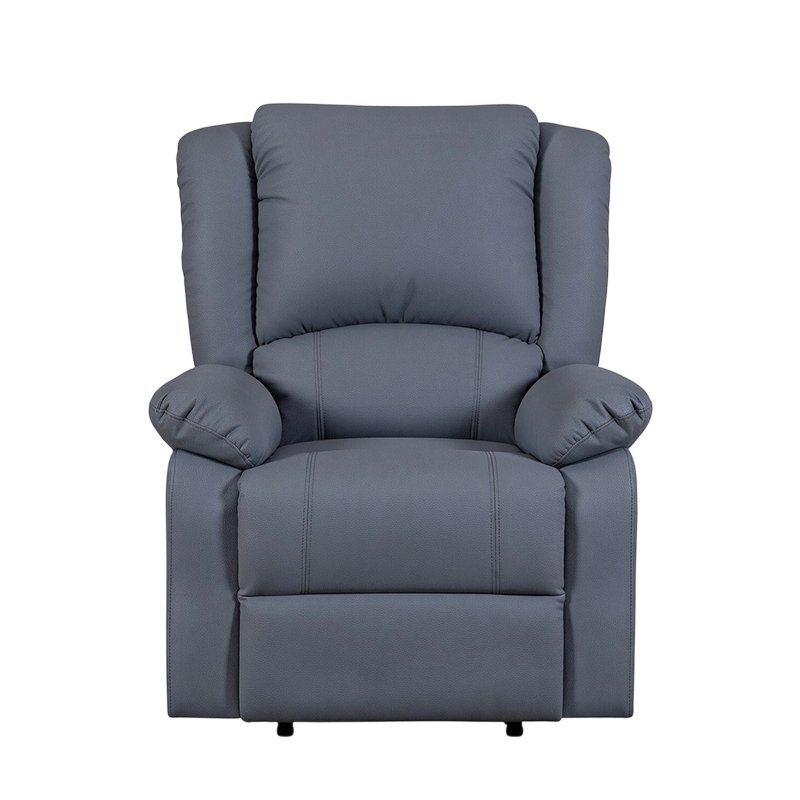
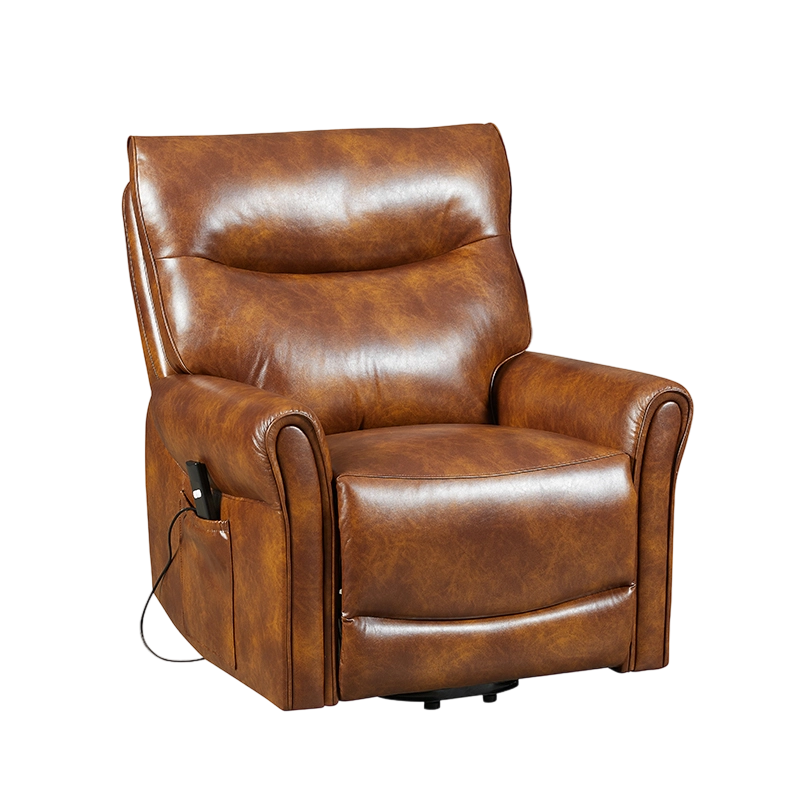
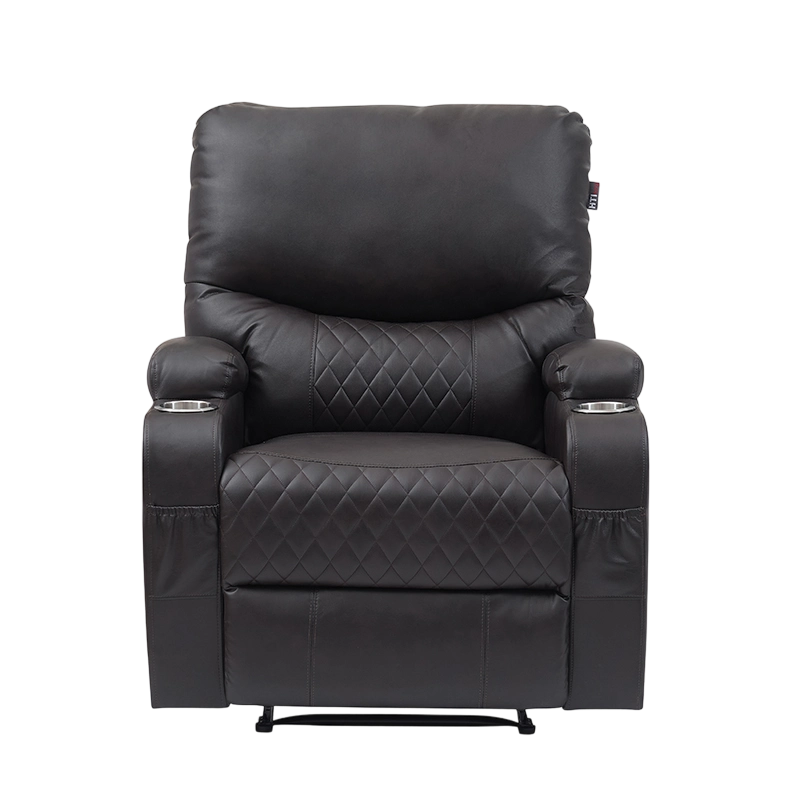
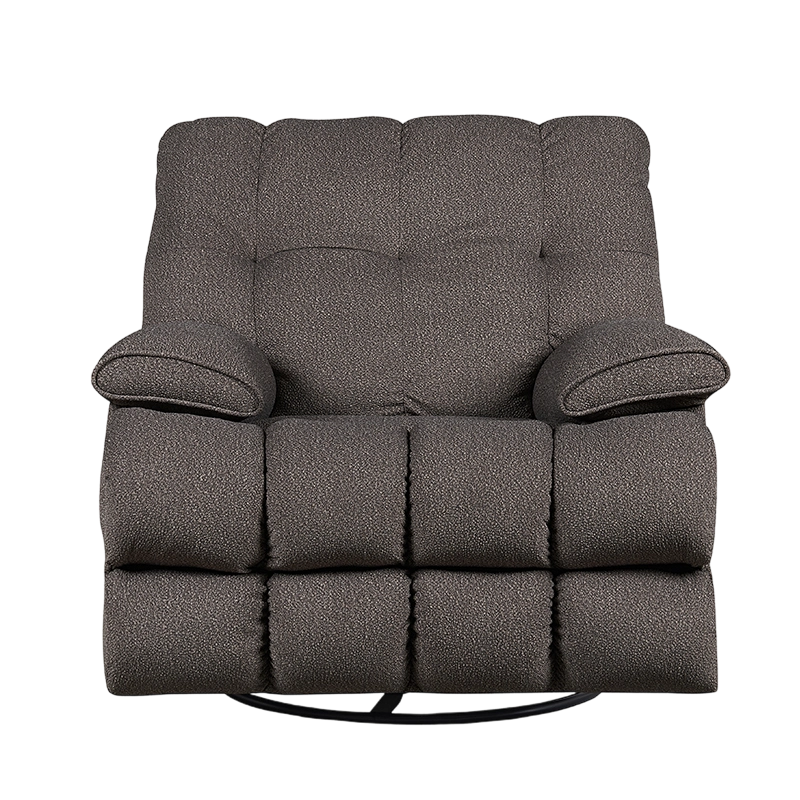
- 21 Product: Leather Electric Power Recliner Chair with USB Ports
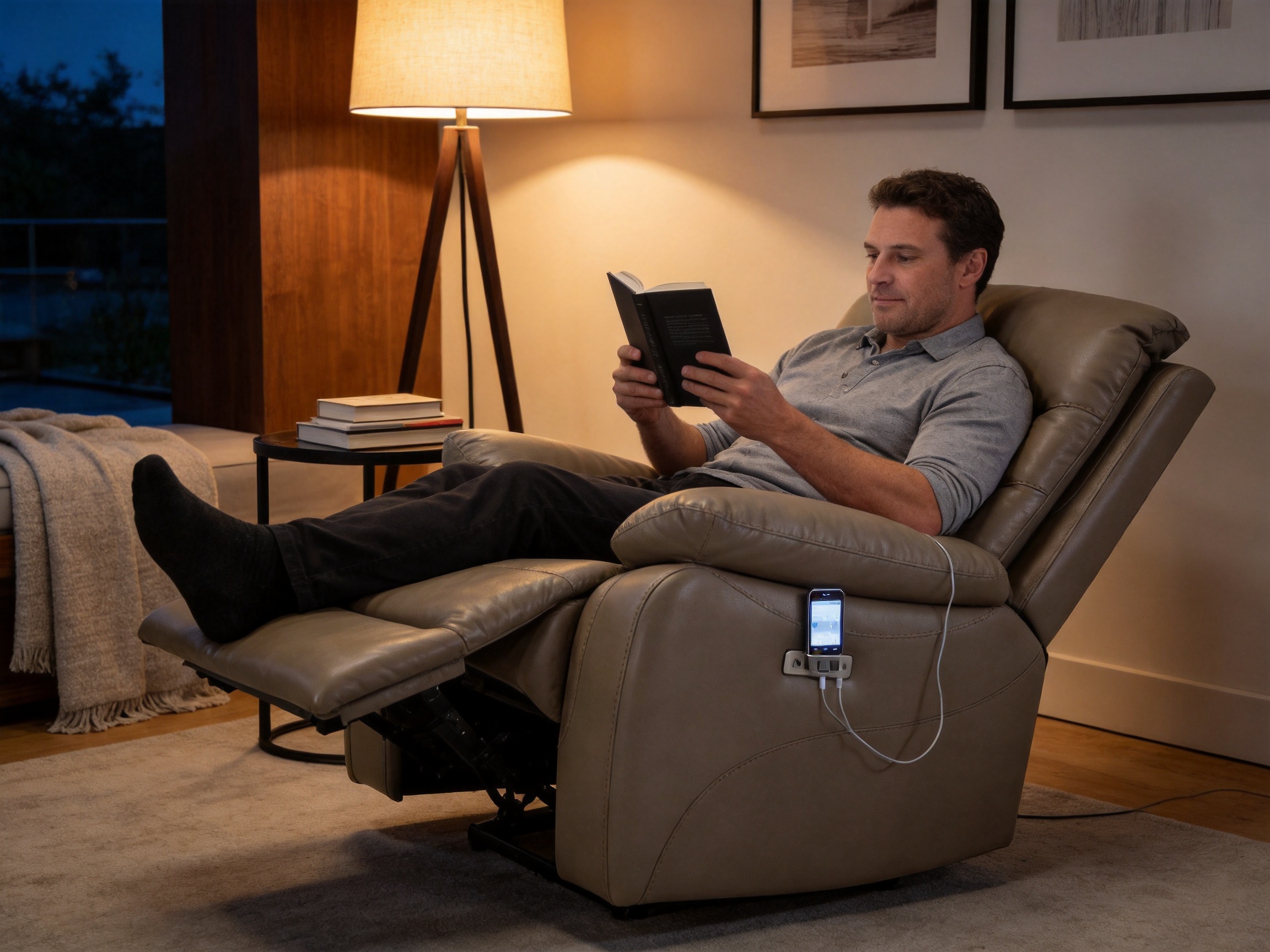
Modern homes increasingly require furniture to do more than fill a room. A chair must offer comfort, support daily routines, complement interior design, and provide useful features without becoming visually complicated. The Leather Electric Power Recliner Chair with USB Ports is designed around this combination of practical performance and refined appearance. It provides a dedicated personal seating solution for living rooms, media rooms, reading areas, bedrooms, hospitality spaces, and residential projects that require dependable relaxation furniture.
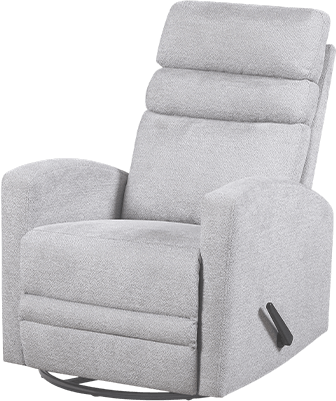
With a sleek upholstered profile, a soft seat and backrest, pillow-top arms, one-touch power adjustment, and integrated USB charging, this electric recliner brings several desirable functions into one compact piece. Its neutral camel color makes it easy to coordinate with contemporary, transitional, and classic interiors, while custom colors and fabric options support project-specific requirements. Beneath the upholstery, a kiln-dried hardwood and plywood frame creates a stable foundation for repeated everyday use.
The chair is also supported by the manufacturing capabilities of Anji Xuanbo Household Co., Ltd., a furniture producer based in Anji County, Zhejiang Province, China. The company focuses on sofas, recliners, lounge chairs, corner sofas, love seats, and other upholstered seating products. Its capabilities include product research and development, industrial design, frame production, sponge processing, large-scale manufacturing, quality inspection, customization, and export service.
This combination of user-oriented design and controlled manufacturing makes the recliner suitable for distributors, furniture retailers, hospitality buyers, project contractors, and consumers seeking a practical electric chair with a polished appearance.
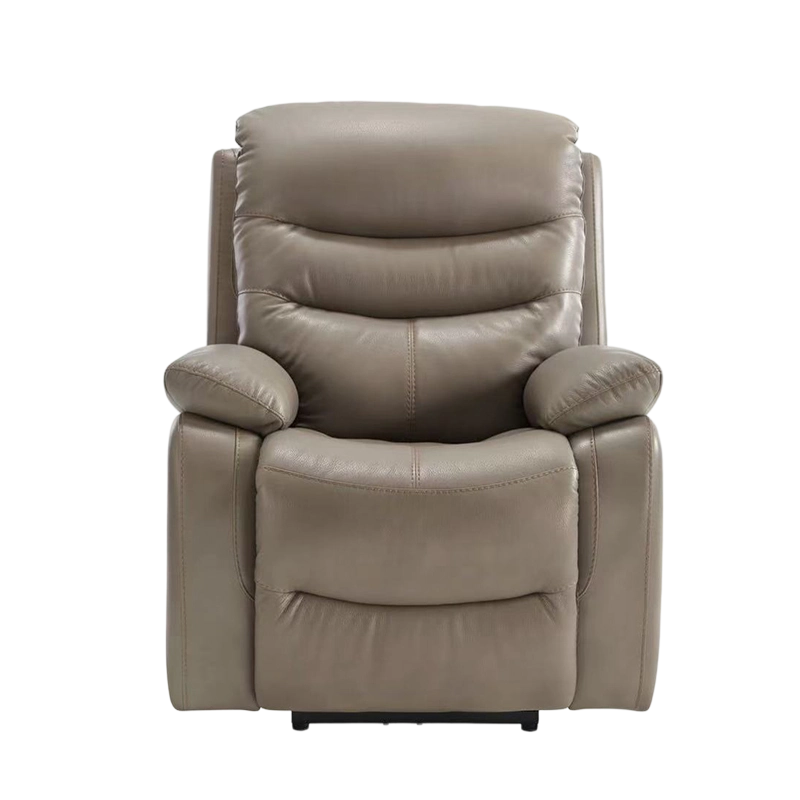
Leather Electric Power Recliner Chair with USB Ports
Product Overview
The Leather Electric Power Recliner Chair with USB Ports is a single-seat power recliner created for users who want smooth positioning and convenient access to personal devices. Instead of requiring a manual lever or a forceful push against the footrest, the chair uses a button control panel to operate its infinite-position reclining mechanism. This allows the user to adjust the chair gradually and select a position suited to reading, watching television, resting, or sleeping.
The product is supplied as one electric recliner chair. Its assembled dimensions are approximately 36.2 inches in length, 36.6 inches in width, and 42.5 inches in height. With a weight capacity of 350 pounds, it is designed to provide a substantial and supportive seating experience while maintaining the proportions of a single lounge chair.
The overall design is intentionally versatile. The solid-hue upholstery creates a clean visual field without excessive decoration, while stitching accents add definition to the cushions and arms. The neutral camel color can work with wood flooring, neutral walls, dark entertainment units, warm metallic accessories, and a wide selection of decorative fabrics.
Unlike a basic stationary accent chair, this model adds powered movement and integrated charging. Unlike a large sectional recliner, it occupies a more focused footprint and can be placed independently. This makes it useful for homes where an individual relaxation seat is preferred or where a living room requires additional seating without introducing a large sofa configuration.
Core Features at a Glance
| Feature | Product Information | User Benefit |
|---|---|---|
| Product type | Electric power recliner chair | Provides adjustable seating for relaxation, reading, media use, and rest |
| Upholstery | Leather seating area with leather-match upholstery | Offers a coordinated appearance and a smooth, refined furniture finish |
| Color | Camel, with custom colors and fabrics supported | Works with many interior styles and supports project customization |
| Frame | Kiln-dried hardwood and plywood construction | Creates a stable structural foundation for regular use |
| Reclining function | Infinite-position power reclining mechanism | Allows users to select a preferred angle instead of relying on fixed positions |
| Controls | Button control panel | Provides simple, direct operation |
| Charging | Integrated USB charging port | Helps keep compatible personal devices charged while lounging |
| Comfort details | Soft backrest, soft seat, pillow-top arms, stitching accents | Improves the relaxed feel and adds visual refinement |
| Weight capacity | 350 pounds | Supports a broad range of adult users |
| Approximate dimensions | 36.2 in. L × 36.6 in. W × 42.5 in. H | Provides a spacious personal seat while remaining suitable for individual placement |
Comfort Designed for Everyday Use
Comfort is the primary reason people choose a recliner, and this model addresses comfort through several coordinated elements rather than relying on a single thick cushion. The seat and backrest are designed to feel soft and welcoming, making the chair suitable for extended periods of sitting. The padded structure supports a relaxed posture while the reclining mechanism allows the user to reduce pressure associated with sitting upright for long periods.
The backrest is especially important in a power recliner. When the chair changes position, the back support must remain comfortable rather than forcing the user into a rigid angle. The soft backrest is intended to follow the relaxed posture created by the reclining action. This makes the chair appropriate for reading, streaming content, taking a break after work, or enjoying quiet personal time.
The seat provides a dedicated area for one person, allowing the cushioning to focus on individual support. A single-seat design also creates a more personal experience than a shared sofa. Users can adjust their own position without affecting another person seated nearby. For homes with different comfort preferences, this independence can be a meaningful advantage.
Pillow-top arms contribute both comfort and appearance. The additional padding gives the arms a softer place to rest while creating a fuller, more inviting silhouette. The arm treatment also helps the chair look more substantial than a basic utility recliner. Stitching accents provide visual structure around the upholstery and help define the chair’s contours.
Because comfort preferences vary, the infinite-position power mechanism is a central part of the design. The user is not limited to a small number of predetermined angles. Instead, the chair can be adjusted progressively until the desired position is reached. This is valuable for people who alternate between upright sitting, partially reclined rest, and deeper reclining.
One-Touch Power Reclining
The power reclining system is operated through a button control panel. This arrangement is simple and accessible, allowing users to control the chair without searching for a mechanical handle or applying significant body force. A button-based interface is also visually cleaner than a large external lever, helping preserve the chair’s streamlined appearance.
Infinite-position adjustment offers an advantage over fixed-position recliners. Fixed-position chairs may provide only an upright setting and one or two reclined settings. Those positions may not suit every user, activity, or body type. An infinite-position mechanism provides more flexibility, enabling the chair to stop at a preferred point within its operating range.
For reading, the user may prefer a moderately open backrest that maintains visual focus and supports the upper body. For watching television, a different angle may be more comfortable. For resting, the chair can be opened further. The same chair can therefore support several daily activities without requiring separate furniture for each use.
Powered movement can also be more convenient for users who find manual mechanisms difficult to operate. The control panel reduces the need to reach beside the chair and pull a rigid lever. As with all powered furniture, the chair should be placed where its moving sections have sufficient clearance and should be operated in accordance with appropriate household safety practices.
Integrated USB Charging for Modern Living
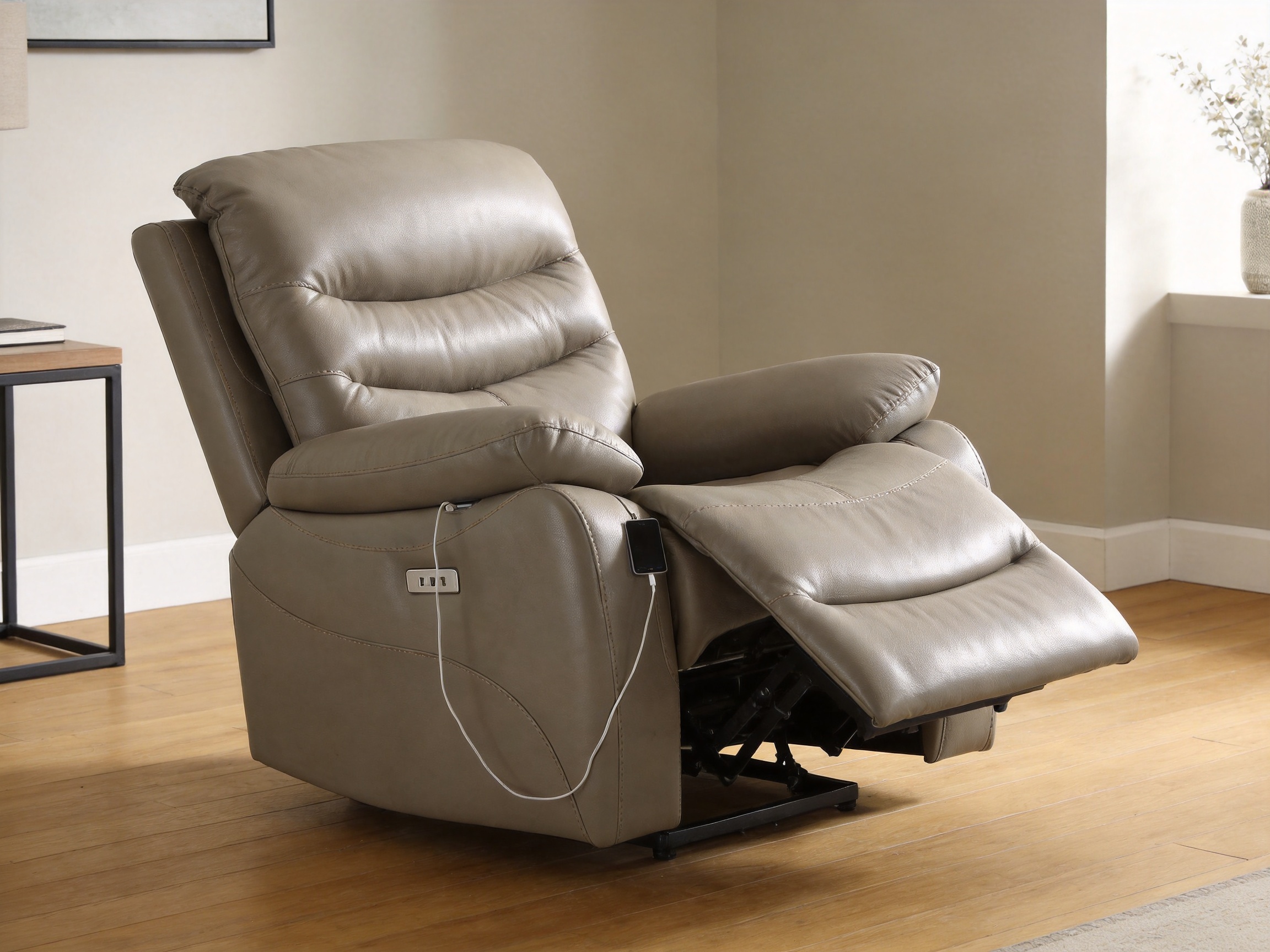
The addition of a USB charging port responds to a common need in contemporary homes. Phones, tablets, e-readers, and other compatible devices are frequently used while relaxing. Without an integrated charging point, users may need to leave the chair to find a wall outlet or use a long cable across the floor. The built-in USB port helps keep a personal device nearby and connected while the user remains seated.
This feature is especially useful in media rooms, family rooms, bedrooms, and reading corners. A person can charge a phone while browsing, listen to an audiobook on a tablet, or keep an e-reader ready for use. The charging port does not change the essential function of the recliner, but it adds practical value to the time spent in the chair.
The control panel and charging port are positioned as part of the chair’s functional design, keeping operation and device access close to the user. This reduces unnecessary movement and contributes to a more organized seating area. Retailers can also highlight the USB feature as a clear selling point for customers comparing traditional manual recliners with contemporary power models.
Users should use suitable charging cables and compatible devices, avoid overloading the port, and follow the instructions supplied with the finished product. The chair should also be connected to a properly maintained electrical outlet, with its power cable positioned away from areas where it could be pinched or damaged.
Upholstery, Color, and Visual Adaptability
The chair uses a leather seating area and coordinated leather-match upholstery. This creates a consistent, refined appearance across the visible surfaces while supporting the practical requirements of upholstered furniture production. The solid-hue finish is deliberately versatile. Instead of depending on a highly distinctive pattern, it provides a neutral foundation that can be integrated into many room designs.
Camel is a warm and adaptable color. It can soften rooms dominated by black, white, gray, or cool metal finishes, and it can also complement natural wood, beige textiles, brown flooring, and earth-tone decorations. For retailers, this color offers broad display potential because it can be presented in traditional, modern, transitional, or casual lifestyle settings.
The company also supports custom colors and fabrics. This is important for buyers working on coordinated furniture collections, residential developments, hotels, serviced apartments, senior living projects, or contract interiors. Customization can help a buyer match existing brand colors, comply with a project palette, or develop a product line that differs from standard market offerings.
Custom upholstery may also support different positioning strategies. A retailer could request a neutral collection for broad consumer appeal, while a hospitality buyer might select a specific fabric for a lounge environment. A designer could coordinate the chair with a sofa, love seat, or sectional produced within the same broader manufacturing system.
Any material selection should be evaluated for its intended environment, care requirements, color consistency, abrasion expectations, and production schedule. Customization adds flexibility, but it also requires clear confirmation of approved materials, sample standards, color references, packaging details, and order quantities before production begins.
Structural Construction and Long-Term Value
The frame uses kiln-dried hardwood and plywood construction. The frame is the underlying support system of the chair, carrying the load of the user and interacting with the reclining mechanism during operation. A stable frame helps the chair maintain its shape and functional alignment throughout regular use.
Kiln drying reduces excess moisture in wood before it is used in production. Controlled moisture content helps improve dimensional stability and reduces the possibility of unwanted movement associated with improperly prepared wood. Hardwood components can contribute strength in key structural areas, while plywood can provide consistent engineered panels and efficient material use.
The combination of hardwood and plywood is widely used in upholstered furniture because it balances structural performance, manufacturability, and material efficiency. The specific selection and placement of components are part of the manufacturer’s engineering and production process. For a power recliner, frame design must also accommodate the reclining hardware, electrical components, upholstery layers, and clearance requirements.
For buyers comparing products, construction details are more meaningful than appearance alone. Two chairs may look similar in a showroom but differ substantially in frame preparation, component fit, cushioning, electrical integration, and inspection procedures. The stated frame construction gives distributors and project buyers a clearer basis for evaluating the product’s value.
The 350-pound weight capacity provides an important product reference. It communicates the intended load range and helps retailers present the chair accurately. Buyers should always observe the stated capacity and avoid using the chair in ways that place unusual loads on the frame, arms, footrest, or reclining mechanism.
Manufacturing Strengths Behind the Product
Anji Xuanbo Household Co., Ltd. was established in 2021 and is located in Anji County, Huzhou City, Zhejiang Province. Anji is widely recognized as an important center of chair manufacturing. This industrial environment provides access to furniture supply chains, skilled labor, component resources, technical knowledge, and export-oriented production services.
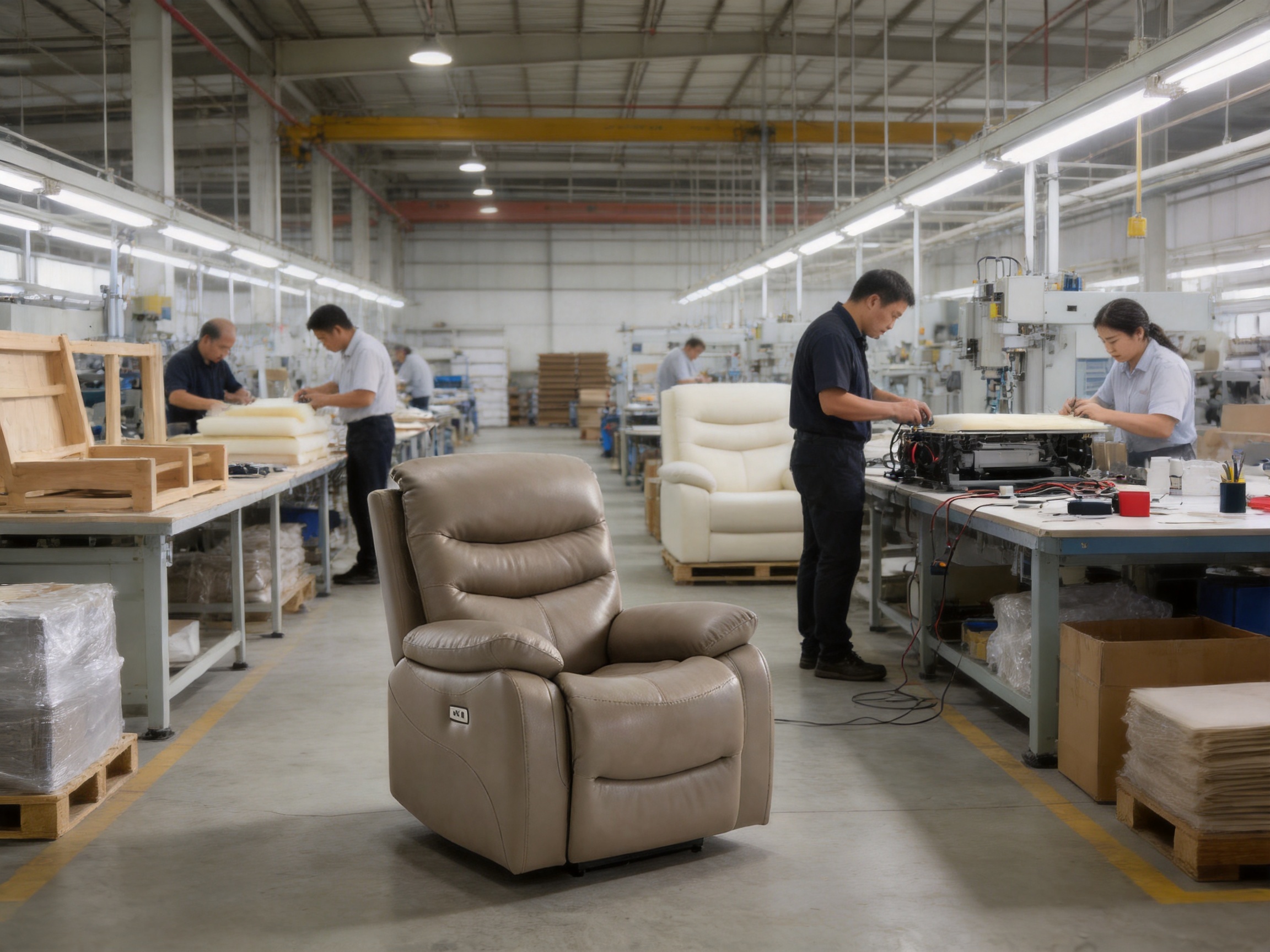
The company operates a factory of approximately 8,000 square meters and has more than 100 employees. Its business covers research and development, industrial design, manufacturing, independent marketing, and technical services. This integrated structure allows the company to manage more stages of a product’s development than a supplier focused only on final assembly.
One important advantage is the company’s own wooden frame factory and sponge processing plant. Internal control of these stages can improve coordination between design requirements and production execution. The frame factory can prepare structural components according to product specifications, while sponge processing capabilities support control over cushion shapes, density requirements, and comfort-related details.
Vertical coordination can also contribute to cost and capacity control. When frame, foam, upholstery, assembly, and inspection activities are managed through a connected production system, the manufacturer can respond more effectively to design changes, production schedules, and customer requirements. It may also reduce dependence on multiple external suppliers for critical product components.
For the power recliner, this kind of coordination is particularly valuable. The frame must work with the reclining mechanism, the cushions must fit the moving structure, and the upholstery must be applied without interfering with operation. Integrated production management helps ensure that these elements are considered together rather than treated as unrelated parts.
Research, Development, and Industrial Design
A successful recliner requires more than a functional mechanism. It must combine engineering, comfort, appearance, manufacturability, and user expectations. The company’s research and development and industrial design capabilities support this type of product integration.
During product development, design teams may evaluate the chair’s proportions, sitting posture, arm shape, cushion arrangement, control placement, upholstery appearance, and relationship between the chair and its intended room environment. Engineering considerations include frame strength, mechanism clearance, electrical routing, packaging, assembly efficiency, and load performance.
The product’s transitional visual language demonstrates an effort to balance familiar comfort with modern convenience. It is not designed as a highly technical piece of equipment. Instead, the power function and USB port are incorporated into a chair that can still appear at home in a conventional living room. This balance is important for consumers who want useful technology without a visually industrial design.
For wholesale customers, research and development capabilities can support private-label programs and product adaptation. Potential adjustments may involve upholstery, color, dimensions, comfort specifications, control configurations, packaging, or collection coordination. Final feasibility depends on technical review, material availability, tooling, order volume, and production planning.
Quality Control and Production Management
Quality control is essential for upholstered power furniture because the finished product contains multiple interacting systems. The frame, foam, upholstery, mechanism, electrical components, control panel, charging port, and packaging must all work together. A defect in any one area can affect the user’s perception of the entire chair.
The company emphasizes multi-stage quality inspection. In a coordinated production process, inspection may take place at different points, including incoming material review, frame assembly, cushioning preparation, upholstery, mechanism installation, electrical connection, final assembly, and pre-shipment evaluation. This approach is more reliable than waiting until the finished chair is complete before identifying problems.
Frame inspection helps confirm that structural parts are properly prepared and assembled. Cushion inspection helps evaluate shape, fit, and surface appearance. Upholstery inspection can identify wrinkles, stitching inconsistencies, color variation, or alignment problems. Functional inspection is important for verifying that the recliner operates correctly and that the control panel and USB charging feature are properly integrated.
Packaging inspection is also relevant to export furniture. A well-designed package should protect the chair from abrasion, impact, moisture exposure, and movement during handling. Export buyers benefit when packaging requirements are discussed early, especially for long-distance shipping and distribution through multiple warehouses.
The company’s stated focus on international market standards and certifications reflects the importance of compliance for global customers. Specific requirements can vary by destination, product configuration, electrical system, labeling rules, and customer program. Buyers should confirm the applicable standards, documentation, testing, and certification requirements for their market before placing an order.
Advantages Over Basic and Competing Recliner Designs
More Flexible Than a Manual Recliner
A manual recliner generally relies on a handle, lever, or body movement to open and close the footrest and backrest. While manual models can be economical and mechanically straightforward, they may require more physical effort and often provide fewer positioning options. The electric model offers button-controlled movement and infinite-position adjustment, giving users greater control over their seating angle.
More Convenient Than a Standard Power Chair Without USB
Many power recliners provide powered adjustment but do not include an integrated charging port. In those models, users still need a nearby wall outlet or extension cable for their devices. The USB feature adds everyday convenience and gives retailers a clear point of differentiation when presenting the product to technology-oriented consumers.
More Personal Than a Reclining Sofa
A reclining sofa is useful for families and shared spaces, but it occupies more room and may require users to coordinate seating preferences. A single recliner offers personal control, allowing one user to adjust the position independently. This makes it attractive for reading corners, bedrooms, compact apartments, home offices, and additional seating areas.
More Adaptable Than a Highly Specialized Accent Chair
A decorative accent chair may provide visual interest but often lacks reclining movement, charging, and extended comfort features. This model retains a polished appearance while adding functional capabilities. It can act as a comfortable lounge chair, a media chair, a reading chair, or a personal relaxation seat.
More Customizable for Commercial and Wholesale Programs
The availability of custom colors and fabrics gives the product greater potential for coordinated collections than a fixed-finish retail-only chair. Buyers can explore upholstery options that suit their market, project, or brand direction. Combined with the manufacturer’s frame and sponge processing capabilities, this creates a practical foundation for customized furniture programs.
Suitable Applications
In residential living rooms, the recliner can be placed beside a sofa, near a television, or in a dedicated conversation and relaxation area. Its camel upholstery can warm a neutral room and coordinate with other furniture without requiring an exact color match.
In media rooms, the electric adjustment supports comfortable viewing positions. The USB port is useful when users keep phones or tablets with them while watching content. The chair’s individual operation also allows different household members to use separate seating positions.
In bedrooms, the recliner can create a private reading or resting corner. Its power function is helpful when a user wants to change posture without leaving the chair. The compact single-seat format is generally easier to position than a large reclining sofa.
In home offices, the chair may serve as a separate break area away from the main desk. A comfortable lounge chair can encourage users to change posture and take short periods of rest during the day. It can also provide an additional seat for a visitor without making the office look like a formal reception room.
In hospitality and residential development projects, the product can be considered for suites, lounges, common areas, and furnished apartments. Custom upholstery may assist with coordination across a project. Commercial buyers should evaluate traffic levels, cleaning requirements, local electrical specifications, warranty expectations, and the suitability of the selected upholstery for the intended environment.
Dimensions, Placement, and Room Planning
The assembled dimensions are approximately 36.2 inches long, 36.6 inches wide, and 42.5 inches high. These measurements should be considered during room planning, delivery planning, and installation. The chair needs enough width for comfortable seating and enough surrounding space for safe movement of its reclining components.
Before purchase or installation, buyers should measure doorways, hallways, elevators, stairways, and the final placement area. The shipping dimensions may differ from the assembled dimensions, and the chair may require a particular orientation during delivery. Retailers and project managers should request packaging and carton information when arranging larger shipments.
The chair should be placed on a stable, level surface. Sufficient clearance should be maintained around the back and footrest areas so that the reclining movement is not obstructed. Power cords should be routed safely, away from pinch points, walkways, sharp edges, and areas where they may be exposed to excessive pressure.
Furniture placement also affects the visual impact of the chair. The camel color can be paired with darker side tables, light walls, natural wood, or textured area rugs. A nearby table can provide additional storage for books and beverages, while the built-in USB port reduces the need for a separate charging station.
Care and Maintenance Guidance
Proper care helps preserve the appearance and function of upholstered furniture. The supplied care information identifies fabric cleaning code S for the relevant fabric surfaces, meaning the surface should be cleaned with a dry-cleaning solvent only. It also identifies leather-match cleaning code P, for which professional dry cleaning is recommended.
Because cleaning codes depend on the specific surface, users should identify the applicable upholstery area before applying any product. A cleaning solution should never be used broadly without first checking the manufacturer’s care guidance. Always conduct a spot test in an inconspicuous area before cleaning the visible surface.
Routine maintenance should begin with prevention. Dust and loose particles can be removed using an appropriate soft brush or carefully controlled vacuum attachment, provided the method is suitable for the upholstery. Spills should be addressed promptly and gently rather than rubbed aggressively into the material.
Furniture should not be exposed directly to strong sunlight for prolonged periods. Direct sunlight can contribute to fading or uneven color change. The chair should also be kept away from heating outlets, air-conditioning outlets, radiators, and other sources of concentrated heat or airflow. These conditions can affect upholstery, adhesives, foam, wood components, and surface moisture balance.
The reclining mechanism should be kept clear of objects, blankets, toys, cables, and other items that could interfere with movement. Users should avoid standing on the footrest, sitting on moving sections, or placing excessive weight on the arms. These precautions help protect both the furniture and the people using it.
Advantages for Retailers and Distributors
For retailers, the product offers a clear and understandable feature set. Customers can immediately recognize the value of power adjustment, USB charging, soft seating, pillow-top arms, neutral upholstery, and a 350-pound weight capacity. These features are easy to demonstrate in a showroom and easy to communicate through product listings.
The camel finish supports broad merchandising because it does not limit the chair to one narrow decorative trend. It can be displayed with modern sofas, traditional occasional tables, wooden furniture, or neutral home accessories. This flexibility may reduce the need for separate color-specific marketing campaigns.
The chair can also be presented as a solution for several consumer needs. A retailer may position it as a television chair, reading chair, relaxation chair, bedroom chair, or technology-friendly lounge chair. Multiple use cases can broaden the product’s appeal without changing its basic design.
For distributors, customization can create opportunities for exclusive collections. Custom colors and fabrics may help establish a differentiated assortment rather than competing only on price with identical products. A distributor can coordinate this recliner with matching sofas, love seats, corner sofas, or other chairs produced through the manufacturer’s wider product capabilities.
Consistent supplier communication remains important. Buyers should confirm sample approval, upholstery specifications, electrical requirements, control details, packaging, lead times, minimum order quantities, inspection standards, spare parts, and after-sales support before finalizing a program.
Advantages for Project Buyers
Project buyers often need furniture that combines attractive design, repeatable production, practical function, and dependable supply. The manufacturer’s integrated capabilities can support these objectives by connecting product design with frame production, sponge processing, upholstery, assembly, and inspection.
The company’s location near major export logistics infrastructure is another practical advantage. The factory is positioned in Zhejiang Province, with access to Ningbo Beilun Port and established furniture export networks. Efficient logistics planning can help support shipments to North America, Europe, the Middle East, and other international markets.
Project buyers can also benefit from a supplier experienced in a range of upholstered seating categories. A project may require more than one chair or sofa type. The company’s product scope includes functional sofas, fixed sofas, corner sofas, lounge chairs, recliner sofas, love seats, and leisure chairs. This broader capability may simplify collection development and supplier coordination.
However, every project has specific technical and commercial requirements. Buyers should provide clear information about intended use, expected traffic, local regulations, electrical standards, upholstery performance, packaging, installation, cleaning, and warranty conditions. Early communication helps the manufacturer determine whether the standard product or a customized version is the better option.
Responsible Product Selection
Choosing a recliner responsibly involves looking beyond initial appearance and price. Buyers should consider the chair’s construction, function, serviceability, material requirements, expected life, cleaning method, and suitability for the intended user. A well-matched product is more likely to deliver satisfaction and reduce replacement needs.
The use of kiln-dried hardwood and plywood, internal production capabilities, and multi-stage quality inspection provides useful information for evaluating the product. These details do not replace market-specific testing or buyer due diligence, but they help explain how the chair is constructed and controlled.
Responsible selection also includes accurate product communication. Retailers should clearly state that the chair is an electric recliner, identify the USB feature, explain the approximate dimensions, display the weight capacity, and provide appropriate care instructions. Customers should understand the space and power requirements before purchase.
Q&A
What type of product is this?
It is a single-seat leather electric power recliner chair with an integrated USB charging port. It is designed for personal relaxation, reading, media viewing, and everyday seated use.
How does the reclining function work?
The chair uses a button control panel and an infinite-position power reclining mechanism. Users can adjust the chair gradually and stop at a preferred position rather than selecting only from a limited number of fixed angles.
Does the chair include USB charging?
Yes. The chair includes a USB charging port integrated into the button control panel. It is intended to help users charge compatible personal devices while seated.
What color is the standard chair?
The standard color is camel. Custom colors and fabrics are supported for buyers who need a different finish or want to coordinate the chair with a broader furniture collection.
What materials are used in the frame?
The frame is constructed from kiln-dried hardwood and plywood. This combination provides a stable foundation for the seat, upholstery, and power reclining mechanism.
What is the weight capacity?
The stated weight capacity is 350 pounds. Users should follow the capacity guidance and avoid placing unusual loads on the arms, footrest, or moving components.
What are the assembled dimensions?
The approximate assembled dimensions are 36.2 inches in length, 36.6 inches in width, and 42.5 inches in height.
Is the upholstery entirely leather?
The product information describes a leather seating area and leather-match upholstery. Buyers should confirm the precise material arrangement and any customized upholstery specification before ordering.
Can the chair be used in a small room?
It can be suitable for a personal seating area in a small or medium-sized room, but buyers must allow enough space for the chair’s width, height, reclining movement, electrical connection, and safe access. Exact placement should be based on the assembled and packaged dimensions.
How should the upholstery be cleaned?
The supplied care information identifies fabric cleaning code S, which calls for dry-cleaning solvent only, and leather-match cleaning code P, for which professional dry cleaning is recommended. Always perform a spot test before cleaning and confirm the care requirement for the specific surface.
Can the chair be matched with other furniture?
Yes. The camel finish and solid-hue design make it suitable for coordination with sofas, love seats, corner sofas, lounge chairs, and other living room furniture. Custom colors and fabrics can provide additional collection-matching options.
What makes this chair different from a manual recliner?
It provides button-controlled power movement, infinite-position adjustment, and integrated USB charging. These features offer more convenience and positioning flexibility than many basic manual recliners.
What manufacturing capabilities support this product?
The manufacturer provides research and development, industrial design, frame production, sponge processing, upholstery and furniture manufacturing, quality inspection, marketing, technical service, and export support. Its own wooden frame factory and sponge processing plant help strengthen control over important production stages.
Can international buyers purchase customized versions?
The company supports custom colors and fabrics and serves international markets. Buyers should discuss specifications, order quantities, samples, technical requirements, electrical standards, certifications, packaging, lead times, and inspection procedures before placing a customized order.
Conclusion
The Leather Electric Power Recliner Chair with USB Ports combines comfortable upholstery, practical technology, and a versatile appearance in one personal seating solution. Its soft seat and backrest, pillow-top arms, stitching accents, camel finish, and transitional styling make it suitable for a broad range of interiors. Its button-controlled infinite-position reclining mechanism adds flexible comfort, while the USB port supports the connected routines of modern users.
The product’s value also comes from the manufacturing system behind it. Kiln-dried hardwood and plywood frame construction provide a considered structural foundation. In-house wooden frame production and sponge processing strengthen manufacturing coordination. Research and development, industrial design, multi-stage inspection, customization capability, and export experience support the needs of retailers, distributors, and project buyers.
Compared with a basic manual recliner, the chair offers easier operation and more adjustable positioning. Compared with a standard power chair without charging, it adds a useful everyday feature. Compared with a large reclining sofa, it provides independent comfort in a focused single-seat format. These advantages make it a competitive option for residential, hospitality, and commercial furniture programs.
When properly specified, placed, operated, and maintained, this recliner can serve as a comfortable and functional addition to living rooms, media rooms, bedrooms, offices, and project interiors. Its combination of adaptable design and controlled manufacturing gives buyers a practical foundation for both standard purchasing and customized furniture development.
References
1. Product specification sheet for Leather Electric Power Recliner Chair with USB Ports, product code 8007.
2. Manufacturer-provided upholstery care instructions, including fabric cleaning code S and leather-match cleaning code P.
3. Manufacturer-provided company profile for Anji Xuanbo Household Co., Ltd.
4. Manufacturer-provided information regarding frame construction, sponge processing, quality inspection, customization, and export capabilities.
5. General furniture design and product-planning principles for upholstered seating, reclining mechanisms, electrical furniture, and residential space planning.
6. General upholstery maintenance principles concerning spot testing, sunlight protection, heat exposure, and professional cleaning.
Product: Leather Electric Power Recliner Chair with USB Ports


LET'S TALK

Bai Shuiwan Industrial Park, Tian Huangping Town, Anji County, Huzhou City, Zhejiang Province, China
More About Us 
-
+86 18257273741
-
[email protected]
CONTACT US
Copyright © Anji Xuanbo Household Co., Ltd. All Rights Reserved.
Custom Modern Upholstered Sofa Manufacturers


