Focus on the manufacturing and export of functional sofas
-
 +86 18257273741
-
 [email protected]

 English
 Español

Liu Yiran — After-Sales Service Specialist
 Home / Author / Liu Yiran — After-Sales Service Specialist / Modern Corduroy Armless Swivel Office Chair for Stylish and Comfortable Workspaces
Modern Corduroy Armless Swivel Office Chair for Stylish and Comfortable Workspaces
 2026.10.12
 Liu Yiran — After-Sales Service Specialist
Content
- 1 Product Overview and Design Concept
- 2 Key Product Specifications
- 3 Advantages of the Armless Structure
- 4 Corduroy Upholstery for Comfort and Style
- 5 Ergonomic Back and Foam-Filled Seat
- 6 Stable Metal Construction and Swivel Performance
- 7 Competitive Advantages Compared with Conventional Office Chairs
- 8 Manufacturing Capabilities and Factory Strengths
- 9 Advanced Production Process for the Chair
- 10 Quality Control and International Market Support
- 11 Customization Options for Wholesale and Project Buyers
- 12 Applications in Residential and Commercial Interiors
- 13 Care, Maintenance, and Long-Term Value
- 14 Why the Manufacturer Is a Strong Supply Partner
- 15 Purchasing Checklist for Buyers
- 16 Frequently Asked Questions
- 16.1 Is this chair suitable for a home office?
- 16.2 Does the chair have wheels?
- 16.3 Is the height adjustable?
- 16.4 What is the weight capacity?
- 16.5 What color is available?
- 16.6 What makes corduroy suitable for this product?
- 16.7 Can the chair be used as a vanity chair?
- 16.8 Can the product be customized?
- 16.9 What type of base does the chair use?
- 16.10 Where is the chair manufactured?
- 16.11 What should buyers confirm before mass production?
- 17 Conclusion
- 18 References
- 19 Product: Armless office desk chair no wheels, corduroy padded modern swivel vanity chair office chair
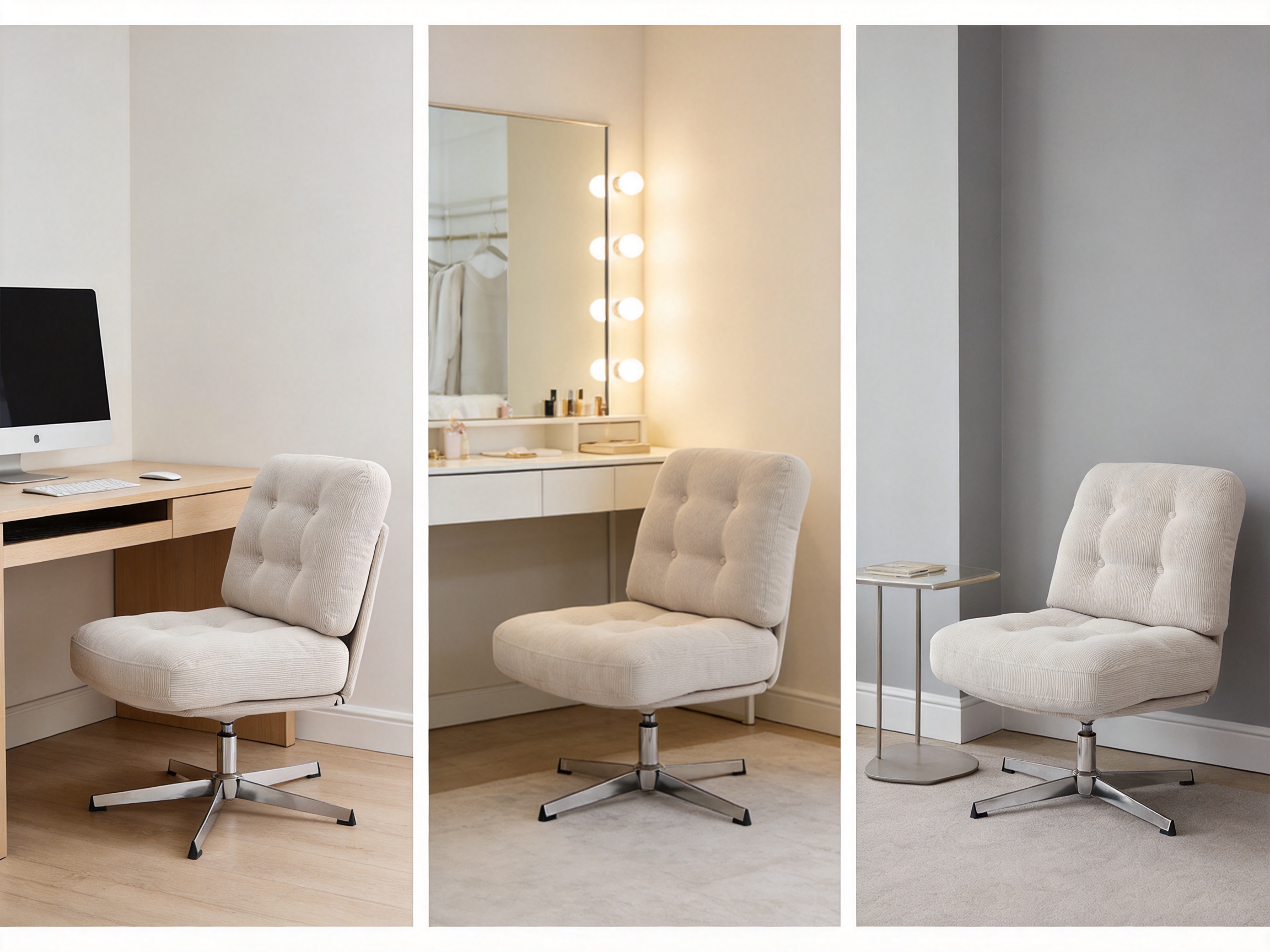
Choosing the right office chair is an important decision for home offices, bedrooms, dressing areas, reception spaces, studios, and modern commercial interiors. A chair must provide reliable support during daily use while also complementing the visual style of the room. The armless corduroy swivel office chair described in this article combines a soft upholstered appearance, a supportive ergonomic shape, a stable metal base, and a compact modern silhouette. It is designed for users who want the comfort of a padded chair without the bulky appearance of a traditional executive office chair.
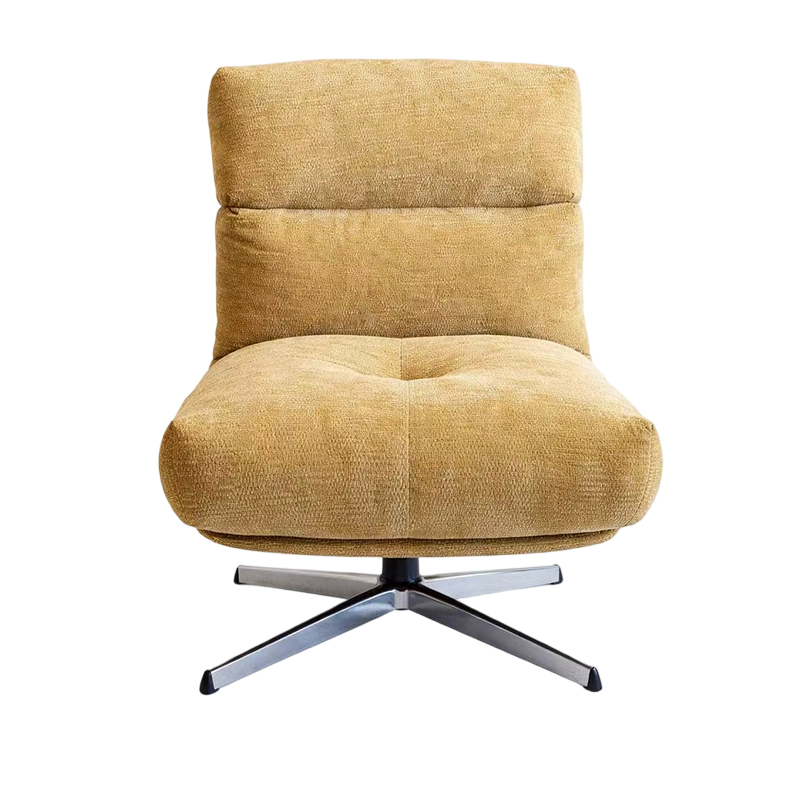
With its curved back, square foam-filled seat, armless structure, and smooth rotating function, this chair is suitable for work, study, makeup application, reading, computer use, and short periods of focused sitting. The design offers freedom of movement and allows the user to approach a desk, vanity, counter, or table from different angles. Its beige corduroy upholstery creates a warm, tactile appearance, while the metal structure contributes to the clean contemporary character required by current furniture markets.
The product is manufactured by Anji Xuanbo Household Co., Ltd., a professional furniture enterprise based in Anji County, Huzhou City, Zhejiang Province, China. The company specializes in sofas, functional seating, fixed sofas, corner sofas, recliner sofas, love seats, lounge chairs, and leisure chairs. Its factory combines product development, industrial design, production management, quality control, and export services to support customers in North America, Europe, the Middle East, and other international markets.
This article examines the chair’s design, construction, comfort, manufacturing value, customization potential, quality-control advantages, and commercial applications. It also explains why the product is a competitive choice for importers, wholesalers, project buyers, retailers, hospitality companies, and consumers seeking a stylish armless chair with practical performance.
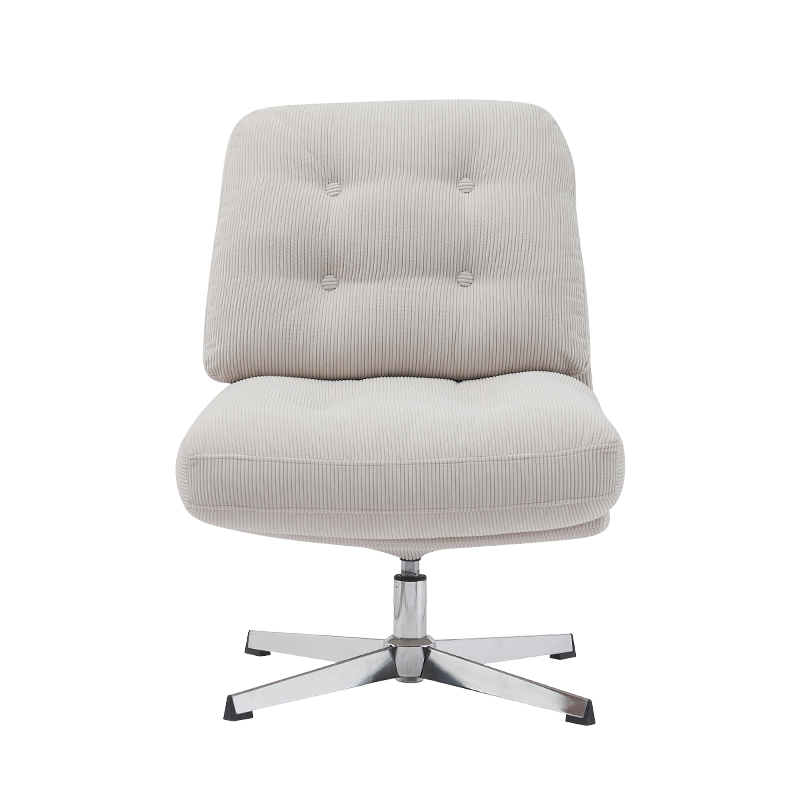
Armless office desk chair no wheels, corduroy padded modern swivel vanity chair office chair
Product Overview and Design Concept
The chair is an armless office and leisure chair with a compact upholstered body and a rotating base. Its design is based on the principle that an office chair does not need to appear mechanical or oversized. Instead of relying on a large back mechanism, visible casters, or a conventional five-wheel office-chair structure, it uses a simple fixed-height seating form with a central metal support system. This gives the chair a softer visual identity that can integrate naturally into residential and commercial environments.
The product title describes an armless office desk chair with no wheels, corduroy padding, modern styling, and swivel functionality. This combination addresses an important market demand. Many users want a chair that can rotate easily but do not need a rolling base. Wheels can be unsuitable for delicate flooring, small spaces, dressing areas, or desks positioned close to walls. A stationary base with a rotating seat allows directional movement without making the chair unstable or visually cluttered.
The chair has an item size of approximately 30.3 inches in depth, 24.8 inches in width, and 33.9 inches in height. This scale provides a generous enough seat and back structure for everyday use while remaining appropriate for compact rooms. It can be positioned beneath a desk when not in use, placed next to a vanity, or used as an accent chair in a bedroom, office, waiting area, or lounge.
The beige color shown in the product information offers broad decorative compatibility. Beige works well with white, natural wood, black, gray, cream, walnut, and light metallic finishes. For business customers, custom color support creates additional opportunities. Buyers can request upholstery colors that match a retail collection, hotel interior, office design program, seasonal catalog, or private-label furniture line.
The chair’s visual appeal comes from the combination of rounded upholstery and a structured base. The curved back softens the overall shape, while the square seat creates a neat and tailored appearance. The result is a product that can be positioned as a practical desk chair, a refined vanity chair, a bedroom chair, or a modern leisure chair.
Key Product Specifications
| Specification | Product Detail |
|---|---|
| Product type | Armless upholstered office and leisure chair |
| Primary upholstery | Corduroy fabric with foam padding |
| Shown color | Beige |
| Customization | Custom colors are supported |
| Frame material | Stainless steel metal frame |
| Base design | Five-pronged metal base |
| Movement | Rotating swivel design without wheels |
| Backrest | Curved ergonomic back |
| Seat construction | Foam-filled square upholstered seat |
| Height configuration | Fixed height; no adjustment function in the listed specification |
| Weight capacity | Up to 260 pounds |
| Product dimensions | 30.3 inches deep x 24.8 inches wide x 33.9 inches high |
| Country of origin | China |
Product specifications should always be confirmed against the final production sample, technical drawing, or purchase order before mass production. In particular, the available information includes a reference to a seat-height adjustment lever in the general description, while the detailed information identifies the chair as fixed height and not adjustable. The listed fixed-height specification should be treated as the current product configuration unless a buyer requests a different mechanism for a customized version.
Advantages of the Armless Structure
The armless design is one of the chair’s most important competitive advantages. Armrests can provide support, but they also increase the overall width of a chair and may prevent it from fitting beneath some desks or dressing tables. They can make a chair feel more restrictive when a user needs to turn, lean, reach, or move between a computer, notebook, and nearby objects.
By removing the armrests, this model creates a more open sitting position. Users can place their arms naturally on a desk, keyboard tray, vanity surface, or lap. The open sides also make it easier to enter and leave the chair, an important benefit in bedrooms, studios, reception zones, and commercial environments where furniture may be used frequently by different people.
The armless shape also supports efficient space planning. Several chairs can be placed around a table without the armrests colliding. A chair can be pushed closer to a desk or stored under a work surface when the room needs to be cleared. For retailers and project buyers, the compact visual profile makes the product easier to present in room settings, office displays, model apartments, and hospitality interiors.
Compared with bulky executive chairs, the armless form looks lighter and more contemporary. Compared with ordinary dining chairs, it provides deeper padding and a more supportive back. Compared with basic plastic office chairs, it offers a warmer material experience and a more decorative appearance. These differences allow the chair to occupy several market categories at once, including office seating, bedroom furniture, vanity seating, leisure seating, and occasional seating.
Corduroy Upholstery for Comfort and Style
Corduroy is an effective upholstery choice for a chair intended to combine comfort with visual texture. Its ribbed surface catches light differently across the fabric, creating depth and a soft, tactile appearance. This gives the chair more character than a completely flat woven fabric while retaining a clean and approachable look.
The corduroy upholstery contributes to the chair’s residential appeal. Many modern offices are designed to feel less institutional and more like comfortable living spaces. A textured fabric chair can support this trend by bringing warmth into work areas that might otherwise be dominated by hard surfaces, screens, and metal accessories.
The padded fabric surface also makes the chair suitable for leisure applications. A consumer may use it at a desk during the day, at a vanity in the evening, or as an occasional reading chair. This multi-purpose value is attractive to customers who prefer furniture that can adapt to different activities rather than serving only one function.
Beige corduroy is particularly versatile because it can coordinate with neutral interiors and natural materials. It can soften a black metal desk, complement a light wood table, or blend with a cream-colored sofa. When supplied in custom colors, the same chair design can be adapted for different collections and sales channels.
For long-term appearance, upholstery care should follow the fabric supplier’s cleaning recommendations. Regular vacuuming with a suitable upholstery attachment can help remove dust and fibers. Spills should be handled promptly using an appropriate fabric-cleaning method. Buyers serving hospitality or commercial markets may also request fabric specifications suited to their intended environment, including performance, abrasion, colorfastness, or stain-resistance requirements when available for the selected material.
Ergonomic Back and Foam-Filled Seat
The curved backrest is designed to follow the general shape of the user’s back. It provides a supportive surface without making the chair appear rigid or overly technical. This is important for a modern furniture product because ergonomic value must be balanced with visual appeal. A chair can provide useful support while still looking appropriate in a bedroom, lounge, or reception area.
The back curve helps create a more natural sitting posture than a completely flat panel. When the user sits centrally, the backrest can support the upper and middle back while encouraging a balanced position. The chair is suitable for routine desk tasks, computer work, writing, reading, and light administrative use. As with any fixed-height chair, the best ergonomic results depend on matching the chair to the desk or table height.
The square seat is filled with foam to provide cushioning and support. Foam creates a more comfortable seating experience than an unpadded hard surface, while the upholstered construction gives the product a finished and refined appearance. The seat shape also provides a defined sitting area, helping the chair maintain a tailored modern profile.
A comfortable seat should not be evaluated only by softness. Excessively soft cushioning may lose support over time, while overly firm cushioning may feel uncomfortable during extended use. The purpose of the foam-filled seat is to provide a balanced surface that supports the user while remaining pleasant for everyday sitting. Foam density, thickness, upholstery tension, and internal construction can be adjusted during product development according to customer requirements and target-market expectations.
The stated weight capacity is up to 260 pounds. This capacity provides useful guidance for buyers and should be considered together with the intended application, frequency of use, floor condition, assembly quality, and maintenance practices. For commercial projects with intensive use, buyers may request additional testing or customized structural specifications.
Stable Metal Construction and Swivel Performance
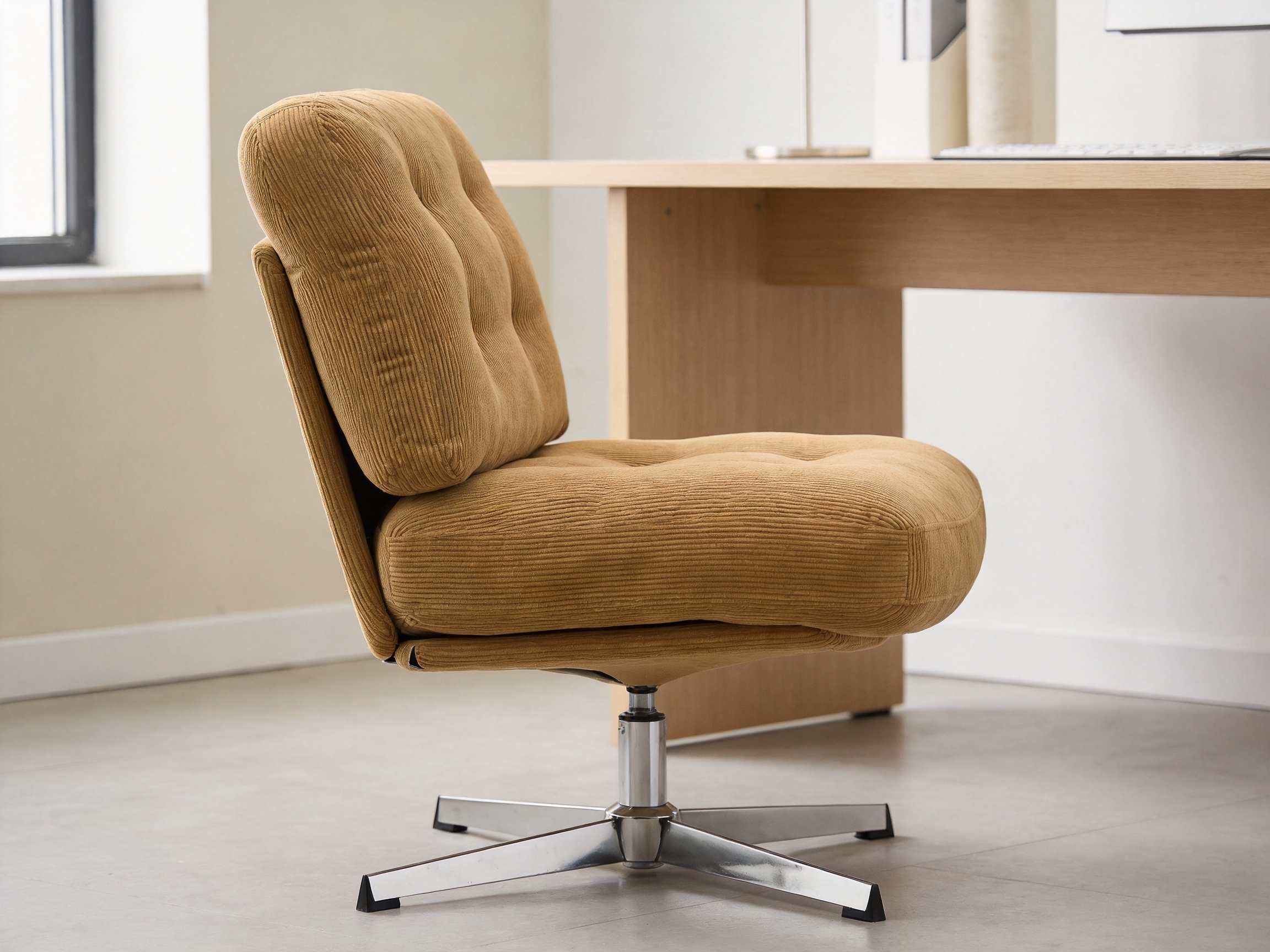
The chair uses a stainless steel frame and a five-pronged metal base. The metal structure provides a strong foundation for the upholstered seat and helps create the modern appearance associated with contemporary office and hospitality furniture. Stainless steel and finished metal components can also provide a clean, durable appearance when properly manufactured and maintained.
The five-pronged base distributes the chair’s load across a wider footprint than a narrow single-post support. This contributes to stability during normal sitting and rotating movements. The base is especially important because the chair is designed to swivel without wheels. A well-balanced stationary base allows the seat to rotate while keeping the chair positioned in its original area.
The absence of wheels provides several practical advantages. The chair is less likely to move away from the desk when the user sits down or stands up. It is also suitable for rooms where rolling furniture may damage delicate flooring, create unwanted movement, or interfere with a carefully arranged layout. The stationary base can be used on carpet and other suitable indoor surfaces, subject to the flooring manufacturer’s recommendations.
The swivel function gives the user access to different directions without requiring the entire base to be moved. This can be useful when turning from a monitor to a document, from a desk to a storage unit, or from a vanity surface to a nearby mirror. In a reception area or lounge, the rotating function can make the chair feel more flexible and interactive.
Compared with a conventional rolling office chair, this design offers a cleaner appearance and a more controlled footprint. Compared with a fixed lounge chair, it offers greater freedom of movement. This combination helps the product compete in a broad range of furniture categories.
Competitive Advantages Compared with Conventional Office Chairs
Traditional office chairs often prioritize mechanisms, wheels, armrests, and large back structures. Those features can be useful in certain workplaces, but they are not ideal for every room. The armless swivel chair offers an alternative for users who value visual simplicity, compact placement, and flexible interior use.
One competitive advantage is the reduced visual bulk. The chair can be paired with contemporary desks without overpowering the surrounding furniture. This is especially helpful in home offices, where the workspace may be located in a bedroom, living room, hallway, or multipurpose room.
A second advantage is its multi-room functionality. A conventional office chair may look out of place at a vanity or in a bedroom. This chair’s upholstered form allows it to move between work and leisure settings. Retailers can therefore market it under several search categories, including desk chair, vanity chair, makeup chair, swivel chair, bedroom chair, study chair, and leisure chair.
A third advantage is the combination of soft upholstery and metal stability. Some decorative chairs emphasize appearance but provide limited structure. Some office chairs provide structure but have a cold or technical appearance. This product is positioned between those two groups, offering a decorative exterior with a practical metal foundation.
A fourth advantage is the open armless profile. The chair can fit beneath more desks and can be arranged efficiently around tables. Its open sides are also suitable for users who prefer greater freedom of movement around the shoulders and elbows.
A fifth advantage is customization potential. Buyers can request color changes and may discuss upholstery, packaging, dimensions, structure, or branding requirements with the manufacturer. Customization allows distributors and project suppliers to develop a product that fits a specific market rather than competing only with standard stock furniture.
Manufacturing Capabilities and Factory Strengths
Anji Xuanbo Household Co., Ltd. was established in 2021 in Anji County, Huzhou City, Zhejiang Province. The region is internationally recognized as an important center of chair manufacturing. This location provides access to furniture suppliers, skilled production workers, material resources, engineering experience, logistics services, and export infrastructure.
The company operates a factory of approximately 8,000 square meters and employs more than 100 people. Its operation integrates research and development, industrial design, production, marketing, technical services, and export support. This integrated structure allows the company to coordinate product concepts with actual manufacturing requirements.
The manufacturer’s product range includes functional sofas, fixed sofas, corner sofas, lounge chairs, recliner sofas, love seats, and leisure chairs. Experience across these categories is valuable because many construction principles overlap. Upholstery management, foam processing, frame development, sewing, assembly, inspection, packaging, and loading practices can be applied across different chair and sofa programs.
One important company advantage is control over key stages of production. The company has its own wooden frame factory and sponge processing plant, giving it stronger control over costs, production capacity, and material coordination. Although the featured chair relies primarily on a metal frame and foam upholstery, internal control of foam-related processes can still support consistent comfort development and efficient product planning.
Vertical coordination can shorten communication cycles. When a customer requests a change to cushioning, dimensions, fabric, or construction, the design and production teams can evaluate the change more directly. This reduces dependence on multiple unrelated suppliers and can help improve the accuracy of prototypes and production samples.
The company also emphasizes professional management, product positioning, and independent marketing. These capabilities are important for international buyers who require more than basic production. A reliable supplier must understand product presentation, market differences, documentation, packaging, lead times, quality expectations, and communication throughout the order cycle.
Advanced Production Process for the Chair
Product Development and Engineering
Production begins with product planning and engineering. The design team evaluates the intended user, target price, application, dimensions, materials, visual style, and expected market. For the armless swivel chair, this process includes balancing seat comfort with a compact footprint and ensuring that the base provides adequate stability without making the chair visually heavy.
Engineering decisions include the shape of the seat shell, back support, frame connection, swivel interface, base geometry, foam dimensions, fabric allowance, stitching details, and packaging method. A production-ready drawing helps ensure that the design can be manufactured consistently rather than remaining only a visual concept.
For customized orders, the development stage may include digital drawings, material selection, color confirmation, prototype construction, sample evaluation, and revisions. This structured process helps customers make decisions before mass production begins.
Metal Component Preparation
The stainless steel frame and five-pronged metal base require accurate cutting, forming, welding, grinding, surface finishing, and inspection. Each operation affects the final appearance and structural performance of the chair. The base must be symmetrical and properly aligned so that the chair sits evenly on the floor.
Welded points should be checked for strength, smoothness, and visual consistency. Sharp edges and rough surfaces must be removed before finishing and assembly. Depending on the requested specification, the metal may receive polishing, plating, powder coating, or another suitable surface treatment.
Accurate metal preparation is especially important for a chair without wheels. Because the product remains in one location while the seat rotates, the base and swivel connection must work together smoothly. Uneven feet, incorrect alignment, or poorly finished joints can affect stability and customer satisfaction.
Foam Processing and Upholstery Preparation
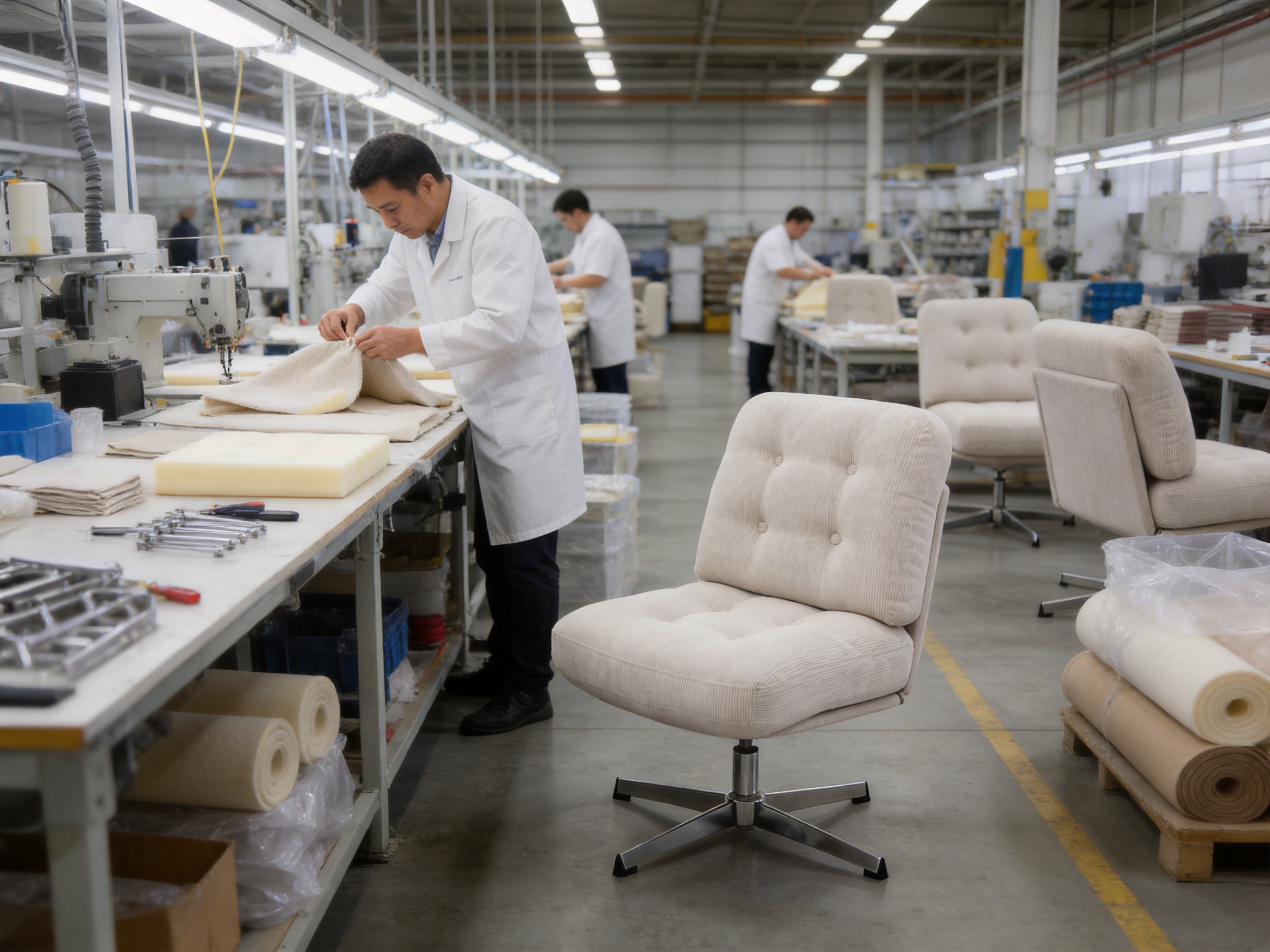
The foam seat and back components are cut according to approved dimensions. The foam shape must correspond closely to the upholstery pattern so that the finished chair has consistent padding and an attractive silhouette. Variations in foam size can create wrinkles, uneven edges, or differences in comfort between production batches.
Fabric panels are cut using approved patterns. Corduroy requires attention to the direction of its ribs, because reversing the nap or fabric orientation can create visible color differences. Consistent cutting direction is therefore important for a uniform appearance across the seat and back.
The fabric is sewn, fitted, and pulled over the foam and supporting structure. Upholstery workers must maintain even tension without overstretching the material. The seams should remain aligned, the corners should be neat, and the fabric should follow the intended curves of the backrest and seat.
Frame, Seat, and Base Assembly
After the upholstery components and metal parts are prepared, the seat, back, frame, swivel hardware, and base are assembled. The assembly sequence must allow technicians to access fasteners and inspect connection points. Correct tightening is important because loose components may create noise, movement, or safety concerns during use.
The swivel mechanism is tested for smooth rotation and correct alignment. The seat should turn without unnecessary resistance while remaining securely connected to the base. The chair is then checked for balance, level positioning, upholstery quality, and overall appearance.
Inspection and Packaging
Quality inspection takes place at multiple stages rather than only at the end of production. Incoming materials can be checked for color, dimensions, surface quality, and conformity with approved samples. In-process inspections can identify problems in welding, sewing, foam shaping, and assembly before a large quantity is completed.
Final inspection may include visual checks, dimensional checks, stability checks, swivel-function checks, upholstery review, hardware inspection, and packaging review. Products that do not meet the approved standard should be corrected or separated before shipment.
Packaging must protect the fabric, metal finish, foam, and structural components during handling and transportation. Appropriate protective materials, corner protection, internal spacing, outer cartons, and labeling help reduce damage risks. Export packaging can be discussed according to the customer’s shipping method, warehouse requirements, and retail presentation needs.
Quality Control and International Market Support
International furniture buyers often require consistency across repeated orders. A supplier must be able to maintain the approved color, dimensions, material specifications, stitching quality, base finish, and functional performance from one production run to the next. The company’s multi-stage inspection approach is designed to support this requirement.
Quality control is not limited to identifying defects. It also involves preventing defects through clear production instructions, approved samples, worker training, process supervision, and communication between engineering and manufacturing teams. This preventive approach can improve efficiency and reduce rework.
For international customers, compliance and documentation are also important. Different markets may have different expectations regarding materials, packaging, labeling, flammability, chemical content, structural testing, and product safety. Buyers should communicate their destination-market requirements at the beginning of the project so that suitable materials and testing plans can be considered.
The company states that its products comply with international standards and certifications. Specific certification requirements should be confirmed for each model, material, destination country, and application. A project for private residential use may require different documentation from a hotel, office, educational facility, or public-space installation.
Its location near Ningbo Beilun Port provides a practical logistics advantage. Access to a major export port can support more convenient shipment planning and help international buyers coordinate container loading. Logistics efficiency is influenced by product packaging, order quantity, shipping schedule, customs documentation, and destination requirements, but geographic proximity to export infrastructure remains beneficial.
Customization Options for Wholesale and Project Buyers
Color customization is specifically supported for this chair. A customer may select a beige standard version or discuss other colors for a specific program. Custom color development can help retailers create coordinated collections and help project buyers match interior design schemes.
Potential customization discussions may include fabric type, fabric color, foam firmness, stitching details, metal finish, dimensions, packaging, labels, cartons, and product identification. Not every change is suitable for every order quantity, so technical feasibility and minimum order requirements should be discussed before confirmation.
For private-label customers, packaging and labeling can be important components of the supply program. A product may need a specific carton mark, barcode, instruction sheet, care label, assembly guide, or brand presentation. The manufacturer can review these requirements as part of the order-development process.
Commercial projects may require modifications that are not necessary for ordinary residential use. For example, a hotel or office buyer may need higher abrasion resistance, stronger inspection requirements, specific fire-performance documentation, or a different packaging method. Early communication allows the factory to evaluate these requirements before production.
Customization should be managed through written specifications and approved samples. This helps prevent misunderstandings regarding color, dimensions, materials, functions, and packaging. A documented approval process is especially important when multiple parties are involved, such as designers, purchasing agents, distributors, and end customers.
Applications in Residential and Commercial Interiors
Home Office
In a home office, the chair provides a practical alternative to a large rolling office chair. Its armless profile can fit into a small workspace, while the swivel function makes it easier to turn between a desk, side table, printer, or storage unit. The corduroy upholstery adds a residential feel that can blend with the rest of the home.
Bedroom and Vanity Area
The chair can serve as a vanity chair or bedroom accent chair. Its rotating function allows the user to face a mirror, dressing table, or nearby storage area without dragging the chair across the floor. The beige upholstery can complement neutral bedroom furniture, upholstered beds, wood cabinets, and decorative lighting.
Study and Reading Space
The supportive curved back and padded seat make the chair suitable for study areas and reading corners. It can be placed at a writing desk, compact library table, or multipurpose workstation. The absence of wheels helps maintain a quiet and stable arrangement in rooms where excessive movement is undesirable.
Reception and Waiting Areas
Businesses can use the chair in reception areas, consultation rooms, studios, and waiting spaces. Its contemporary appearance can support a welcoming atmosphere, while the swivel function gives visitors a greater sense of flexibility. Multiple chairs can be arranged efficiently because the armless design reduces visual and physical crowding.
Hospitality and Retail Environments
Hotels, serviced apartments, beauty studios, showrooms, and retail fitting areas may use this chair as a decorative and functional seating option. Custom upholstery colors can help the chair match a property’s interior identity. Buyers should define the expected intensity of use and any required performance documentation before placing a commercial order.
Care, Maintenance, and Long-Term Value
Correct care helps preserve the chair’s appearance and performance. The upholstery should be protected from excessive moisture, sharp objects, direct heat, and prolonged exposure to strong sunlight. Dust can be removed with a soft brush or upholstery vacuum attachment, taking care not to damage the corduroy texture.
Spills should be treated promptly according to the fabric-care instructions. A cleaning product should be tested on an inconspicuous area before wider application. Strong chemicals, excessive water, aggressive scrubbing, and unapproved bleaching agents may affect color and fabric texture.
The metal base should be kept clean and dry. If the chair is placed on a hard floor, a suitable protective pad may help reduce contact marks and improve floor protection. On carpet, the base should be positioned on a stable, level surface.
Users should avoid standing on the seat, exceeding the stated weight capacity, dragging the chair by the upholstery, or applying sudden force to the backrest. Periodic inspection of the base, fasteners, swivel connection, and upholstery can help identify maintenance needs before they become larger problems.
Long-term value comes from the chair’s combination of multiple uses, adaptable styling, and durable structural design. A product that can function as an office chair, vanity chair, leisure chair, and occasional seat may remain useful even when the room’s purpose changes.
Why the Manufacturer Is a Strong Supply Partner
Anji Xuanbo Household Co., Ltd. offers more than a single furniture model. Its broader product expertise allows customers to develop coordinated seating programs across sofas, lounge chairs, recliners, love seats, corner sofas, and office or leisure chairs. This can simplify sourcing for buyers who want a consistent design language across multiple categories.
The company’s own wooden frame factory and sponge processing plant support control over important cost and capacity factors. Internal production resources can help the manufacturer coordinate materials, adjust development plans, and respond to customer requirements more efficiently than a company that depends entirely on unrelated subcontractors.
Its dedicated research and development and industrial design capabilities support product improvement and market adaptation. Furniture trends change quickly, and buyers increasingly need products that combine comfort, space efficiency, visual appeal, and customization. A supplier with design and engineering resources is better positioned to respond to these demands.
The company’s quality philosophy emphasizes quality, service, honesty, practicality, and continuous improvement. These principles are particularly important in furniture supply because quality is influenced by many linked processes. A chair can fail to satisfy customers if the fabric is attractive but the base is unstable, if the frame is strong but the stitching is inconsistent, or if the product is well made but poorly packaged.
The company’s export experience across North America, Europe, the Middle East, and other markets also provides insight into international purchasing requirements. Export cooperation involves more than manufacturing. It requires accurate communication, product documentation, packing coordination, loading planning, schedule management, and after-sales support.
Purchasing Checklist for Buyers
Before ordering, buyers should confirm the final product dimensions and make sure they match the intended desk, vanity, table, or project layout. The fixed-height configuration should be clearly identified so that there is no confusion about height adjustment.
Buyers should also confirm the upholstery material, corduroy direction, color reference, fabric performance, foam specification, metal finish, base design, weight capacity, and swivel function. A physical sample or approved production sample is recommended for larger orders.
For commercial projects, the purchaser should communicate anticipated daily use, user frequency, applicable safety requirements, fire-performance needs, packaging expectations, and inspection procedures. These factors can influence material selection and production planning.
Order documentation should include product drawings, material details, approved colors, packaging instructions, labeling requirements, tolerances, inspection criteria, and shipping information. Clear documentation reduces the risk of variation between expectations and delivered goods.
Buyers should also discuss minimum order quantities, sample charges, production lead time, payment terms, loading quantities, spare parts, warranty procedures, and after-sales communication. These commercial details are separate from the product’s design but are essential to a successful supply relationship.
Frequently Asked Questions
Is this chair suitable for a home office?
Yes. Its padded seat, curved back, armless structure, and swivel function make it suitable for home-office use. It is especially appropriate for users who want an office chair with a softer residential appearance and a stationary base rather than wheels.
Does the chair have wheels?
No. The listed design uses a five-pronged metal base without wheels. The seat can rotate, but the chair is not intended to roll across the floor like a conventional caster office chair.
Is the height adjustable?
The detailed product information identifies the chair as fixed height and states that the height cannot be adjusted. A general description references a height-adjustment lever, so buyers should confirm the final configuration before ordering. The fixed-height model should be treated as the standard specification unless a customized mechanism is approved.
What is the weight capacity?
The stated weight capacity is up to 260 pounds. Buyers using the chair in intensive commercial environments should discuss any additional structural or testing requirements with the manufacturer.
What color is available?
The standard listed color is beige. Custom colors are supported, allowing buyers to coordinate the chair with furniture collections, interior design schemes, hospitality projects, or private-label product lines.
What makes corduroy suitable for this product?
Corduroy provides a soft tactile surface and a distinctive ribbed texture. It gives the chair a warmer and more decorative appearance than many smooth technical upholstery materials. Care requirements should be reviewed before use, especially in high-traffic or commercial environments.
Can the chair be used as a vanity chair?
Yes. Its compact dimensions, armless profile, padded seat, and swivel movement make it suitable for vanity and dressing-table applications. The absence of wheels can also help keep the chair in position on the floor.
Can the product be customized?
Custom color support is available. Depending on order quantity and technical feasibility, buyers may also discuss upholstery, foam, dimensions, metal finish, packaging, labeling, and other product requirements.
What type of base does the chair use?
The listed specification identifies a stainless steel frame and a five-pronged metal base. The base is designed to provide stability while allowing the upholstered seat to rotate.
Where is the chair manufactured?
The chair is manufactured in China by Anji Xuanbo Household Co., Ltd., located in Anji County, Huzhou City, Zhejiang Province. The region is widely known for chair manufacturing and furniture production.
What should buyers confirm before mass production?
Buyers should confirm the final drawings, dimensions, upholstery, color, base finish, seat height, swivel mechanism, weight capacity, packaging, labeling, inspection requirements, and destination-market compliance needs. A signed sample approval is recommended.
Conclusion
The armless corduroy swivel office chair offers a balanced combination of comfort, visual warmth, space efficiency, and functional movement. Its curved ergonomic back and foam-filled square seat support everyday sitting, while the armless design makes it easier to place under desks and around tables. The five-pronged metal base provides a stable foundation, and the wheel-free swivel structure gives users directional flexibility without introducing uncontrolled rolling.
Compared with conventional office chairs, the model provides a softer and more residential appearance. Compared with ordinary accent chairs, it offers a more practical seating structure and swivel function. Its beige corduroy upholstery appeals to modern neutral interiors, while custom color support creates opportunities for retail collections, hospitality projects, and private-label programs.
The manufacturing strengths behind the product further improve its commercial value. Anji Xuanbo Household Co., Ltd. integrates research and development, industrial design, manufacturing, quality control, customization, and export support. Its approximately 8,000-square-meter factory, workforce of more than 100 employees, own wooden frame factory, sponge processing plant, and international market experience provide a solid foundation for customized furniture supply.
For importers, distributors, project buyers, and retailers seeking a modern upholstered chair with broad application potential, this product is a practical and attractive option. Its adaptable design allows it to serve as an office chair, vanity chair, study chair, bedroom chair, reception chair, or leisure chair. With clear specifications, approved samples, and coordinated production management, it can support both residential sales and larger commercial furniture programs.
References
1. Product specification sheet for the armless corduroy swivel office chair, including dimensions, materials, weight capacity, and color information.
2. Manufacturer-provided company profile for Anji Xuanbo Household Co., Ltd., including factory capability, product categories, export markets, and integrated production resources.
3. General furniture manufacturing practices for upholstered seating, including metal-frame preparation, foam processing, fabric cutting, sewing, assembly, inspection, and export packaging.
4. General ergonomic principles for office and leisure seating, including back support, seat cushioning, posture, workstation compatibility, and user movement.
5. General upholstery-care guidance for corduroy and other textured furniture fabrics.
6. General international furniture procurement practices covering sampling, customization, quality inspection, packaging, documentation, and destination-market requirements.
Product: Armless office desk chair no wheels, corduroy padded modern swivel vanity chair office chair



LET'S TALK

Bai Shuiwan Industrial Park, Tian Huangping Town, Anji County, Huzhou City, Zhejiang Province, China
More About Us 
-
+86 18257273741
-
[email protected]
CONTACT US
Copyright © Anji Xuanbo Household Co., Ltd. All Rights Reserved.
Custom Modern Upholstered Sofa Manufacturers


