Focus on the manufacturing and export of functional sofas
-
 +86 18257273741
-
 [email protected]

 English
 Español
Zhao Xinyi — Product Sales Consultant
 Home / Author / Zhao Xinyi — Product Sales Consultant / Classic Manual Recliner Chair for Comfortable Modern Living
 Classic Manual Recliner Chair for Comfortable Modern Living
 2026.06.16
 Zhao Xinyi — Product Sales Consultant
Content
- 1 Product Overview: A Single Recliner Designed for Everyday Relaxation
- 2 Comfort Architecture: More Than a Soft Seat
- 3 Manual Reclining Advantage: Simple, Reliable, and Flexible
- 4 Materials That Support Durability and Daily Use
- 5 Design Language: Classic, Traditional, and Transitional
- 6 Key Product Specifications
- 7 Advantages Over Common Competitor Recliners
- 8 Manufacturing Strength Behind the Recliner
- 9 Advanced Production Process: From Frame to Finished Recliner
- 10 Why Integrated Manufacturing Matters to Buyers
- 11 Applications in Residential and Commercial Spaces
- 12 Care and Use Recommendations
- 13 Customization Potential for Global Markets
- 14 Sustainability and Responsible Value
- 15 The Role of Quality Inspection
- 16 Business Value for Importers, Retailers, and Distributors
- 17 Q&A Section
- 17.1 What type of product is this recliner?
- 17.2 How does the reclining function work?
- 17.3 Does the chair require electricity?
- 17.4 What materials are used in the frame?
- 17.5 What makes the seat comfortable?
- 17.6 What is the standard color?
- 17.7 What are the product dimensions?
- 17.8 What is the weight capacity?
- 17.9 How should the footrest be closed?
- 17.10 How should the fabric be cleaned?
- 17.11 Why choose a manual recliner instead of a power recliner?
- 17.12 What advantages does this chair have over ordinary recliners?
- 17.13 Who manufactures this recliner?
- 17.14 What manufacturing strengths support the product?
- 18 Conclusion: A Practical Recliner Built for Comfort, Strength, and Market Value
- 19 References
- 20 Product: Classic and Traditional Manual Recliner Chair Single Sofa
In today’s furniture market, a recliner chair is no longer simply a seat with a footrest. It is a personal comfort zone, a living room centerpiece, a practical daily-use product, and a statement about how a home should feel. The Classic and Traditional Manual Recliner Chair Single Sofa is designed for this exact purpose: to combine dependable reclining function, supportive construction, transitional styling, and user-friendly comfort in one compact, attractive chair.
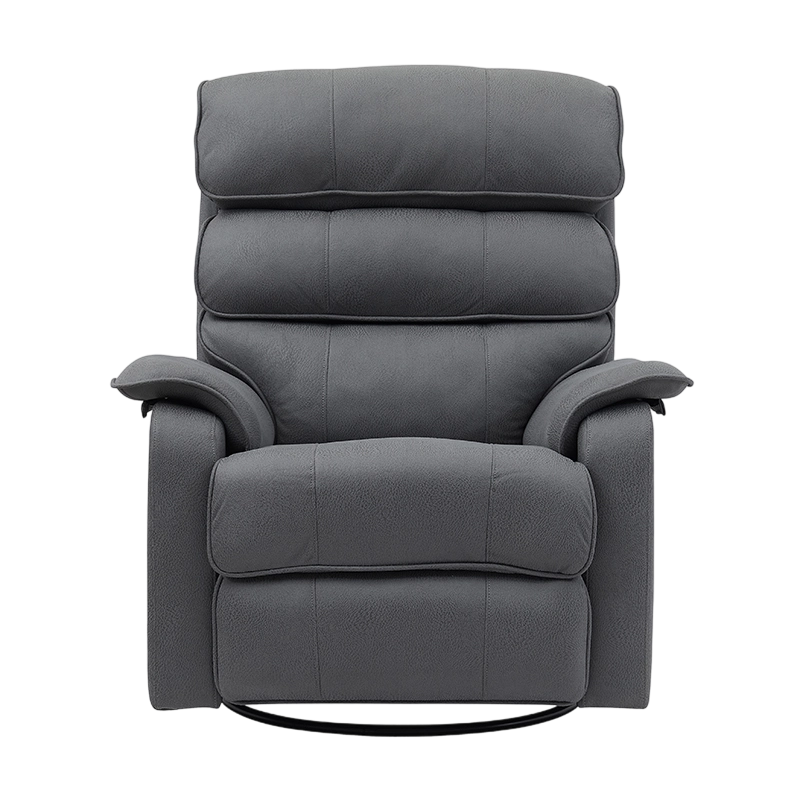
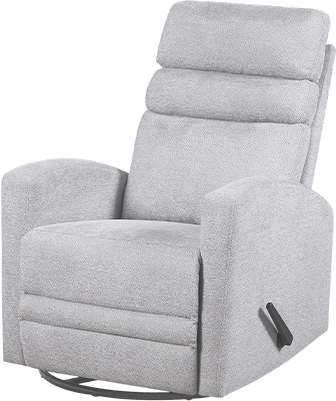
This manual recliner belongs to the manual recliner category and is suitable for living rooms, family rooms, apartments, lounge areas, reading corners, media rooms, and hospitality environments. With its gray microfiber upholstery, plush high-density foam, pocket coil support, pine wood and plywood frame construction, and smooth side-mounted pull handle, the chair offers a balanced combination of comfort, durability, and practical value.
Compared with many ordinary recliner chairs on the market, this model places stronger emphasis on full-body support, structural stability, cleanable fabric, customizable appearance, and reliable manufacturing. It is made for users who want a traditional reclining experience without unnecessary complication. Instead of relying on motors, cables, remote controls, or power supply placement, the chair uses a manual pull-tab reclining mechanism that is direct, simple, and convenient.
Behind the product is Anji Xuanbo Household Co., Ltd., a professional sofa and chair manufacturer located in Anji County, Huzhou City, Zhejiang Province, China. The company integrates research and development, industrial design, large-scale manufacturing, independent marketing, and technical service. Its core product range includes recliner sofas, fixed sofas, corner sofas, love seats, leisure chairs, lounge chairs, and related upholstered seating products. With a factory area of approximately 8,000 square meters and more than 100 employees, the company has the production foundation and technical experience needed to deliver consistent furniture solutions for global customers.
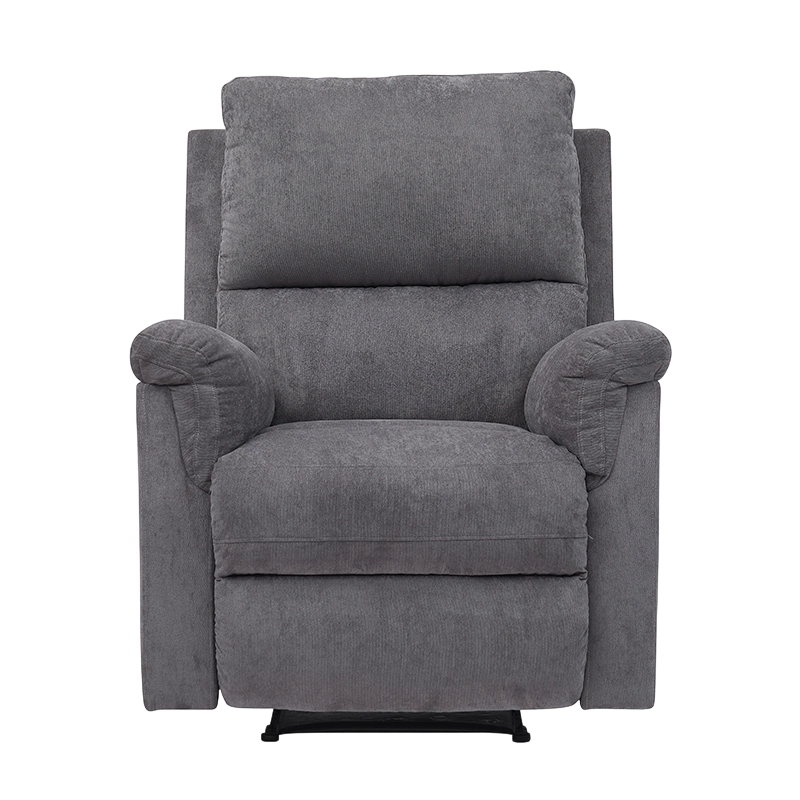
Classic and Traditional Manual Recliner Chair Single Sofa
Product Overview: A Single Recliner Designed for Everyday Relaxation
The Classic and Traditional Manual Recliner Chair Single Sofa is a one-piece reclining chair developed for users who value comfort, simplicity, and long-term dependability. Its measurements are approximately 33.1 inches wide, 35.4 inches deep, and 40.6 inches high, giving it a practical footprint that works well in many room layouts. It is spacious enough to provide comfortable seating, while still compact enough for apartments, smaller living rooms, and multi-chair arrangements.
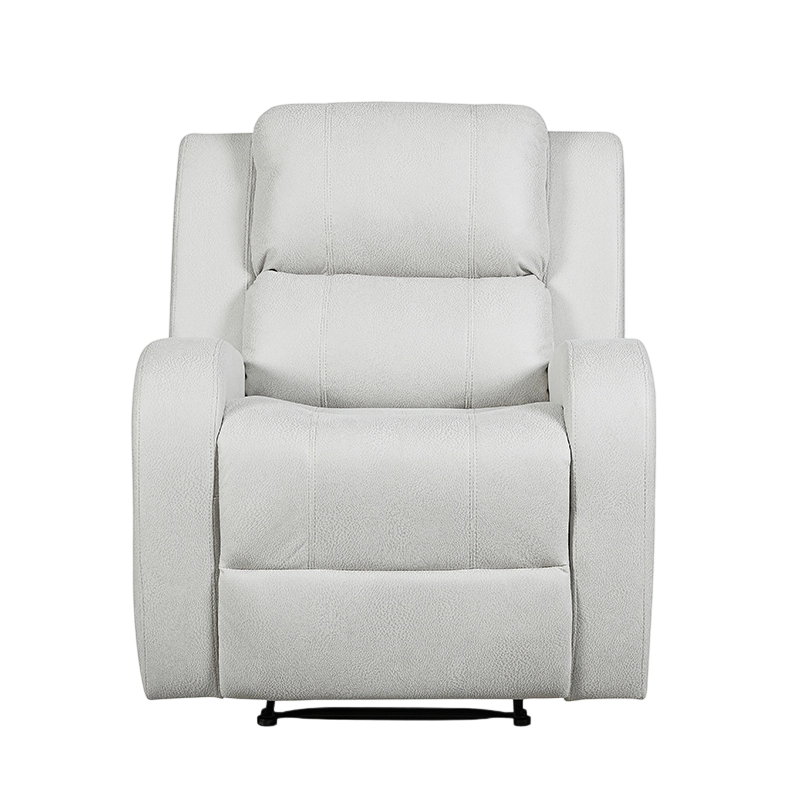
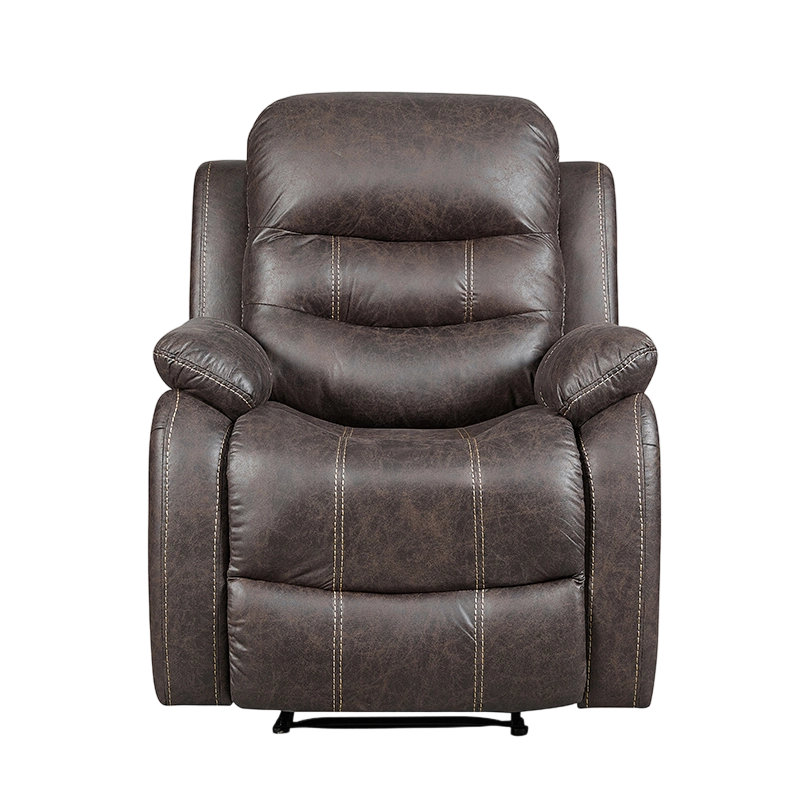
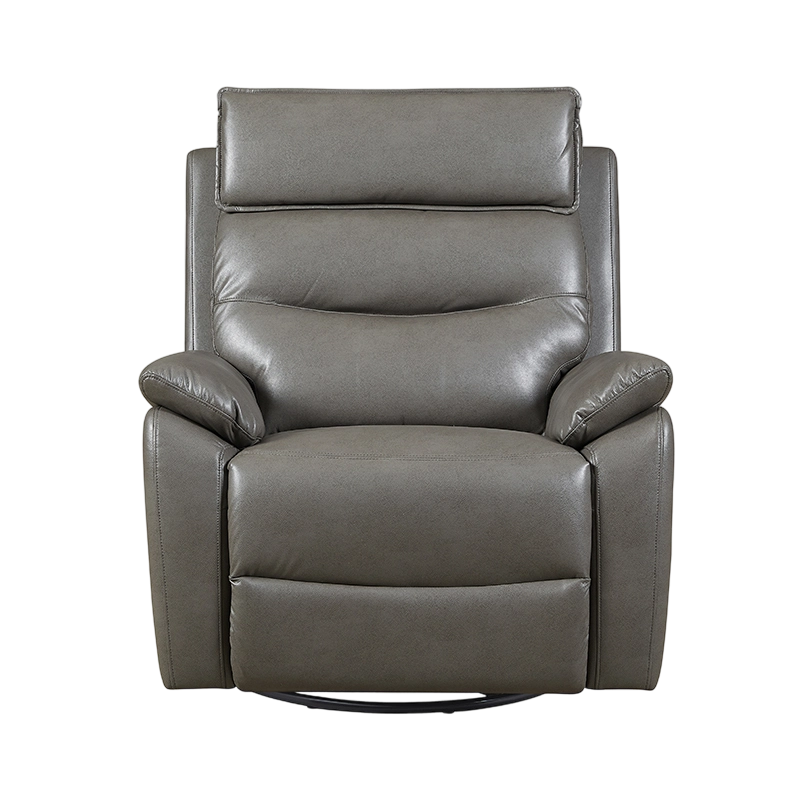
The chair uses a gray neutral hue as its standard color. Gray is a practical and widely accepted upholstery color because it coordinates easily with modern, transitional, and traditional interiors. It can match light wood floors, darker entertainment units, minimalist walls, patterned rugs, and both warm and cool decorative palettes. For buyers with specific design requirements, custom colors are supported, enabling the product to fit different market preferences, retail collections, and project-based interior schemes.
The frame is built with pine wood and plywood construction. This combination supports strength, weight distribution, and manufacturing consistency. Pine wood contributes a reliable natural structural base, while plywood helps improve dimensional stability and resistance to warping when compared with poorly selected low-grade materials. The result is a recliner that is made not only to look comfortable, but also to withstand repeated sitting, reclining, and daily household use.
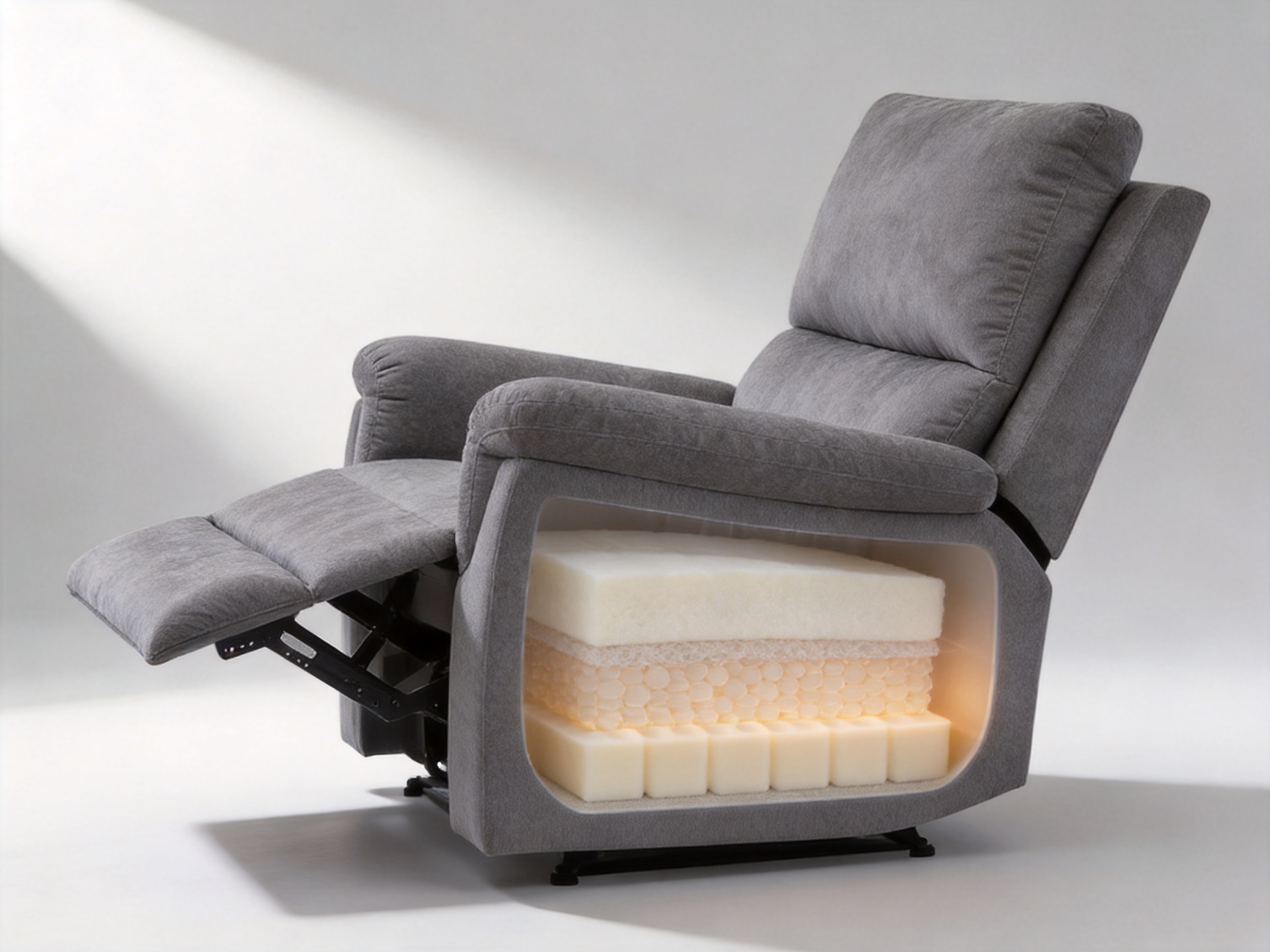
Inside the seat, plush high-density foam and pocket coil construction provide a responsive comfort layer. The foam offers softness and cushioning, while the pocket coils help deliver resilient support. This combination is especially valuable for a recliner because users often remain seated for extended periods while reading, watching television, resting, or talking with family. A chair that feels soft at first but collapses over time is not truly comfortable. This model is engineered to provide both immediate comfort and supportive performance.
The chair has a listed weight capacity of 350 pounds, which demonstrates the strength of its frame and seating structure. This capacity makes the product suitable for a wide range of users and adds confidence for retailers, distributors, and end customers seeking a dependable single-seat recliner. A strong weight rating is especially important in functional furniture because reclining motion places repeated stress on the seat, back, armrests, and mechanism.
The manual reclining function is operated by a side-mounted pull handle. This design keeps the user experience simple. With one pull, the chair transitions from upright seating to a more relaxed reclining position. Because it does not require electricity, it can be placed freely in the room without concern for socket position or power cord management. This is one of the major advantages of a manual recliner in homes where flexible layout and low-maintenance operation are important.
Comfort Architecture: More Than a Soft Seat
Comfort in a recliner depends on much more than thick padding. True comfort requires correct body support, pressure distribution, ergonomic seat shaping, stable reclining motion, proper arm height, and material softness. The Classic and Traditional Manual Recliner Chair Single Sofa addresses these needs through a thoughtful combination of seat contouring, pillowtop arms, foam density, coil support, and back cushioning.
The contoured seat structure helps guide the body into a natural seated position. A flat, unsupportive seat may feel acceptable for a few minutes but can become tiring over longer periods. In contrast, a contoured seat better supports the hips and thighs. This improves the overall sitting experience and helps reduce pressure concentration during extended use.
The pillowtop arms are another important comfort feature. Many users rest their forearms or elbows on the armrests while watching television, using a mobile device, reading, or simply relaxing. Hard, narrow arms can create discomfort over time. The plush pillowtop arm design provides a softer contact surface and contributes to the chair’s cozy visual appeal.
High-density foam is used to create a seat that is plush without feeling weak. Low-density foam may compress quickly, creating uneven surfaces and reduced support. High-density foam has better resilience and can maintain comfort over a longer product life. When paired with pocket coils, it creates a layered comfort system that is superior to simple foam-only seating in many low-cost competitors.
Pocket coil construction adds an additional level of support. Unlike basic webbing or simple spring systems, pocket coils respond individually to body weight and movement. This helps the seat adapt to the user while preserving shape and resilience. In a recliner, where the seat must perform in both upright and reclined positions, this type of responsive support is a valuable advantage.
The chair’s backrest is designed to complement the seat and arms. When the manual mechanism is activated, the user moves into a more relaxed position, allowing the back and legs to receive improved support. The chair is intended for multi-positional single-seat reclining, meaning users can enjoy more than one relaxation angle rather than being limited to a fixed upright posture.
For daily living, this comfort structure provides practical benefits. The chair can serve as a reading seat in the morning, a television chair in the evening, a resting seat after work, or a conversation chair when guests visit. Its blend of softness and support makes it suitable for households that want a recliner to function as a dependable everyday seating solution rather than an occasional accent piece.
Manual Reclining Advantage: Simple, Reliable, and Flexible
Manual recliners remain popular because they offer a direct and dependable user experience. While power recliners can be attractive for some users, they also introduce additional components such as motors, control panels, wires, adapters, and electrical dependence. For many households, hotels, rental properties, and furniture retailers, manual recliners provide a better balance of performance, affordability, and maintenance convenience.
The side-mounted pull handle on this chair is designed for smooth and effortless recline. Users do not need to search for a remote control or connect the chair to an electrical outlet. The reclining movement is controlled by a simple mechanical action, making it intuitive for most users. This is particularly useful in family homes where multiple people may use the same chair.
Placement flexibility is another major advantage. A power recliner usually needs to be positioned near a power source or used with visible cords. This can limit room layout and create cable management issues. A manual recliner can be positioned in a corner, near a window, beside a sofa, in a bedroom, or in a media room without requiring electrical planning.
Manual mechanisms also reduce long-term service concerns. Motors and electronic controls may fail, especially in high-use environments. A well-made manual recliner uses fewer complex parts, which can simplify maintenance and improve reliability. For commercial buyers or distributors, this can reduce after-sales pressure and improve customer satisfaction.
The footrest retraction method is also important for user safety and product longevity. The recommended method is to sit forward, lean the body forward, and press the heels against the middle of the footrest. This action helps close the footrest correctly and efficiently. Proper use protects the mechanism and creates a smoother daily experience.
Compared with low-quality manual recliners, the quality of the pull handle, the alignment of the mechanism, the frame connection, and the precision of assembly matter greatly. A poorly built mechanism can feel jerky or unstable. This chair is designed as part of a professional manufacturing system, where mechanical function, frame strength, and upholstery finishing are controlled during production.
Materials That Support Durability and Daily Use
A recliner chair must perform under repeated stress. Every time a user sits, shifts position, reclines, closes the footrest, or leans on the arms, the chair’s materials are tested. For this reason, the Classic and Traditional Manual Recliner Chair Single Sofa is built with practical materials selected for strength, comfort, and ease of care.
The pine wood and plywood frame construction forms the structural core of the chair. A recliner frame must support vertical weight, reclining forces, arm pressure, and movement stress. Pine wood offers dependable strength for furniture framing, while plywood helps provide stable panels and reinforced support areas. The combined structure helps the chair maintain shape and balance.
High-density foam improves seating comfort and long-term appearance. In furniture manufacturing, foam quality is one of the most important factors affecting customer satisfaction. Seats made from low-quality foam may sag or lose shape quickly. High-density foam is more capable of recovering after compression, helping the chair keep its comfortable feel over time.
Pocket coil support gives the chair a more resilient seating foundation. Each coil responds to pressure, helping distribute weight and improve seating comfort. This feature is especially beneficial for users who spend long periods in the chair. It helps prevent the sensation of sinking too deeply and creates a more balanced comfort profile.
The microfiber fabric is soft to the touch and easy to clean when handled according to proper care instructions. Microfiber is widely used in upholstered furniture because it can provide a pleasant hand feel, a refined appearance, and practical everyday performance. For families, landlords, hospitality projects, and retailers, easy-care fabric is a meaningful advantage.
The fabric care instructions specify cleaning with dry cleaning solvent only, avoiding saturation with water, and brushing pile fabrics when needed to restore appearance. These instructions help preserve the upholstery surface and maintain the visual quality of the chair. Proper care is essential for any upholstered furniture, especially in high-use spaces.
Compared with competitors using thin fabric, weak frame structures, or basic foam, this chair offers a more complete construction package. Its material system is not built around a single selling point, but around the interaction of frame, foam, coil, fabric, arms, and mechanism. This integrated approach is what allows the product to deliver comfort and dependability together.
Design Language: Classic, Traditional, and Transitional
The chair’s design is described as classic and traditional, yet it works well in transitional living rooms. Transitional furniture blends traditional comfort with cleaner modern adaptability. This is important because many consumers want furniture that feels welcoming without appearing outdated. The chair’s neutral gray upholstery, plush arms, and soft profile allow it to fit a wide range of homes.
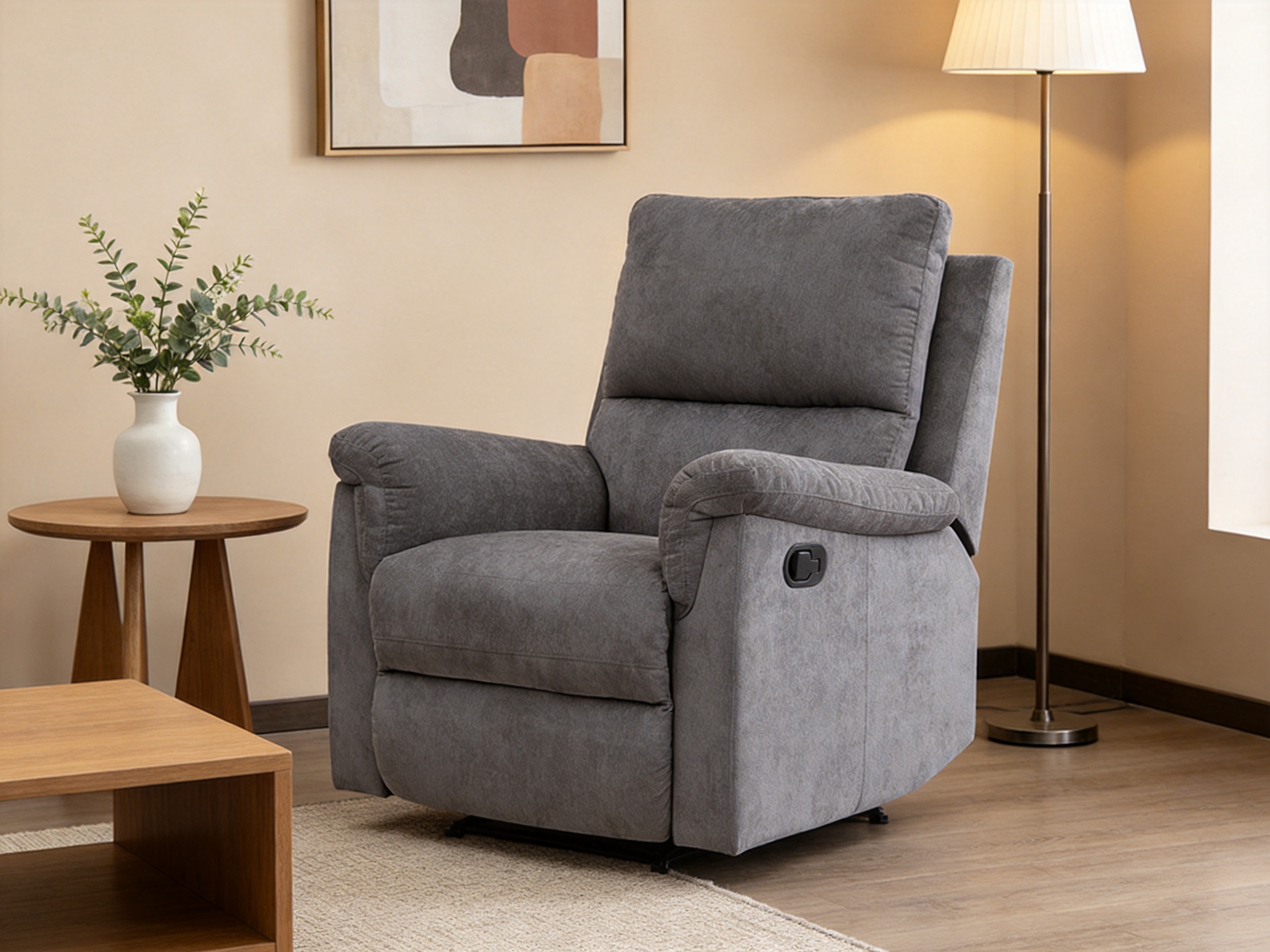
The silhouette is inviting rather than overly formal. Its pillowtop arms create a relaxed appearance, while the recliner function adds practical appeal. The proportions are suitable for a single-seat sofa experience, giving the user a personal seating space that feels substantial without overwhelming the room.
Gray is an intelligent standard color choice because it supports multiple design directions. In a modern apartment, it can pair with white walls, black metal accents, and minimalist furniture. In a traditional living room, it can blend with wooden tables, patterned curtains, and warm lighting. In a transitional space, it can act as a bridge between classic comfort and contemporary simplicity.
Custom color support expands the chair’s market potential. Furniture importers, wholesalers, and retailers often need color options for different regions. A North American living room collection may require gray, beige, brown, or charcoal tones. A European project may need lighter neutrals or fabric textures. A Middle Eastern customer may prefer richer shades. Customization helps the product become a flexible solution rather than a one-style-only item.
Because the chair can coordinate with recliner sofas, corner sofas, love seats, and leisure chairs, it can be included in broader living room programs. Retailers may position it as a standalone recliner or as part of a coordinated seating collection. This increases merchandising flexibility and supports different sales scenarios.
Key Product Specifications
The following table summarizes the main product information and practical value of each feature.
| Feature | Product Detail | User Benefit |
|---|---|---|
| Product Type | Manual recliner chair, single sofa | Personal comfort seating for living rooms, lounges, and media spaces |
| Standard Color | Gray, with custom colors supported | Easy coordination with many interiors and market preferences |
| Frame | Pine wood and plywood construction | Stable structure for daily sitting and reclining use |
| Seat Support | High-density foam and pocket coil construction | Soft comfort with resilient full-body support |
| Reclining Mechanism | Manual side-mounted pull handle | Smooth reclining without electrical dependence |
| Upholstery | Soft microfiber fabric | Comfortable touch and practical maintenance |
| Dimensions | 33.1W x 35.4D x 40.6H inches | Comfortable size with a practical room footprint |
| Weight Capacity | 350 pounds | Strong seating performance for a wide user range |
| Arm Design | Pillowtop arms | Enhanced comfort for resting arms and shoulders |
| Care Method | Dry cleaning solvent only; do not saturate with water | Helps preserve fabric appearance and service life |
Advantages Over Common Competitor Recliners
In the recliner market, products may appear similar at first glance. Many chairs have padded arms, a reclining back, and a footrest. However, the real differences become clear after months of use. A better recliner maintains comfort, operates smoothly, keeps its shape, and continues to look attractive. The Classic and Traditional Manual Recliner Chair Single Sofa is positioned to outperform many ordinary competitors in several important ways.
First, it offers a stronger comfort system. Some low-cost recliners rely mainly on soft foam that feels comfortable in a showroom but loses support quickly. This chair uses high-density foam combined with pocket coil construction. That combination helps the seat remain both plush and supportive, giving users a better long-term seating experience.
Second, the frame construction is more dependable than many entry-level alternatives. A recliner is a moving furniture product, and movement requires strength. Weak frames can develop noise, looseness, or instability. Pine wood and plywood construction provides a solid foundation, while professional assembly practices further support durability.
Third, the manual pull handle offers straightforward operation. Some competing products use complicated controls or low-quality manual levers that feel stiff or unreliable. A smooth side-mounted tab is easy to access and intuitive to use. This simplicity is especially valuable for customers who want comfort without electronics.
Fourth, the chair has practical upholstery. Microfiber fabric gives a soft feel and can be maintained with proper cleaning methods. For daily-use furniture, upholstery performance matters. A fabric that looks good but is difficult to maintain can become a problem for households and commercial buyers. This chair balances comfort, appearance, and care practicality.
Fifth, the neutral design creates wider market acceptance. Highly stylized recliners can become difficult to sell because they fit only certain interiors. This chair’s classic and transitional appearance gives it broader appeal. It can work as a single statement chair, a pair of recliners, or part of a sofa collection.
Sixth, the chair is backed by a manufacturer with integrated production strengths. Competitors who rely heavily on outsourced parts may struggle with consistency, cost control, and customization. Anji Xuanbo Household Co., Ltd. benefits from full-chain control through its own wooden frame factory and sponge processing plant. This supports better quality control, faster adjustment, and stronger cost-performance value.
Seventh, customization capability gives the product an advantage for business buyers. Retailers and importers often need tailored colors, fabrics, or structural adjustments based on market demand. A manufacturer with strong R&D, design, and production capacity can support these needs better than a trading-only supplier or a small workshop.
Manufacturing Strength Behind the Recliner
A good recliner is the result of coordinated manufacturing. Design, cutting, frame building, foam processing, upholstery sewing, assembly, inspection, packaging, and export logistics must all work together. The quality visible to the consumer begins with invisible discipline inside the factory.
Anji Xuanbo Household Co., Ltd. was established in 2021 in Anji County, a region known worldwide for chair manufacturing. This location provides access to an experienced furniture supply chain, skilled labor, industry knowledge, and export infrastructure. The company specializes in high-quality sofas and chairs, with product categories covering functional sofas, fixed sofas, corner sofas, lounge chairs, recliner sofas, love seats, and leisure chairs.
The factory covers approximately 8,000 square meters and employs more than 100 people. This scale allows the company to manage production orders with a balance of flexibility and capacity. It is large enough to support export-oriented manufacturing, yet focused enough to maintain attention to product quality and customer requirements.
One of the company’s major strengths is its integrated manufacturing capability. By operating its own wooden frame factory and sponge processing plant, the company can control essential parts of the furniture production chain. This is important because frame quality and foam quality are two of the biggest determinants of upholstered furniture performance. When these components are controlled internally, the manufacturer can better manage consistency, cost, lead time, and customization.
The R&D and design capabilities of the company allow it to respond to market trends and customer requirements. Furniture markets differ by region. North American buyers may focus on generous comfort, durable reclining mechanisms, and family room use. European buyers may emphasize compact proportions, neutral colors, and refined fabric options. Middle Eastern markets may value plush comfort and strong presentation. A manufacturer with design capability can adapt product details to match these preferences.
Professional management also contributes to quality. Furniture production involves many manual and semi-manual processes. Without organized management, small errors can accumulate: uneven stitching, poor foam alignment, inconsistent mechanism installation, weak frame joints, or packaging defects. A structured management system helps ensure that each production stage follows established standards.
The company conducts strict multi-stage quality inspection. Inspection is not only about finding defects at the end of production. Effective quality control begins with material checking, continues through frame assembly and foam preparation, and extends to final upholstery inspection, function testing, appearance review, and packaging confirmation. For a recliner, the reclining action must be checked carefully because mechanism performance directly affects the user experience.
Compliance with international market standards is another important strength. Export furniture must meet customer expectations for safety, durability, packaging, labeling, and documentation. A factory that understands global standards can better support importers, distributors, and retailers who sell into competitive markets.
The company’s location also provides export logistics advantages. Being near Ningbo Beilun Port supports efficient international shipping. For global buyers, logistics efficiency can affect delivery schedules, inventory planning, and total landed cost. A manufacturer with convenient port access offers practical value beyond the product itself.
Advanced Production Process: From Frame to Finished Recliner
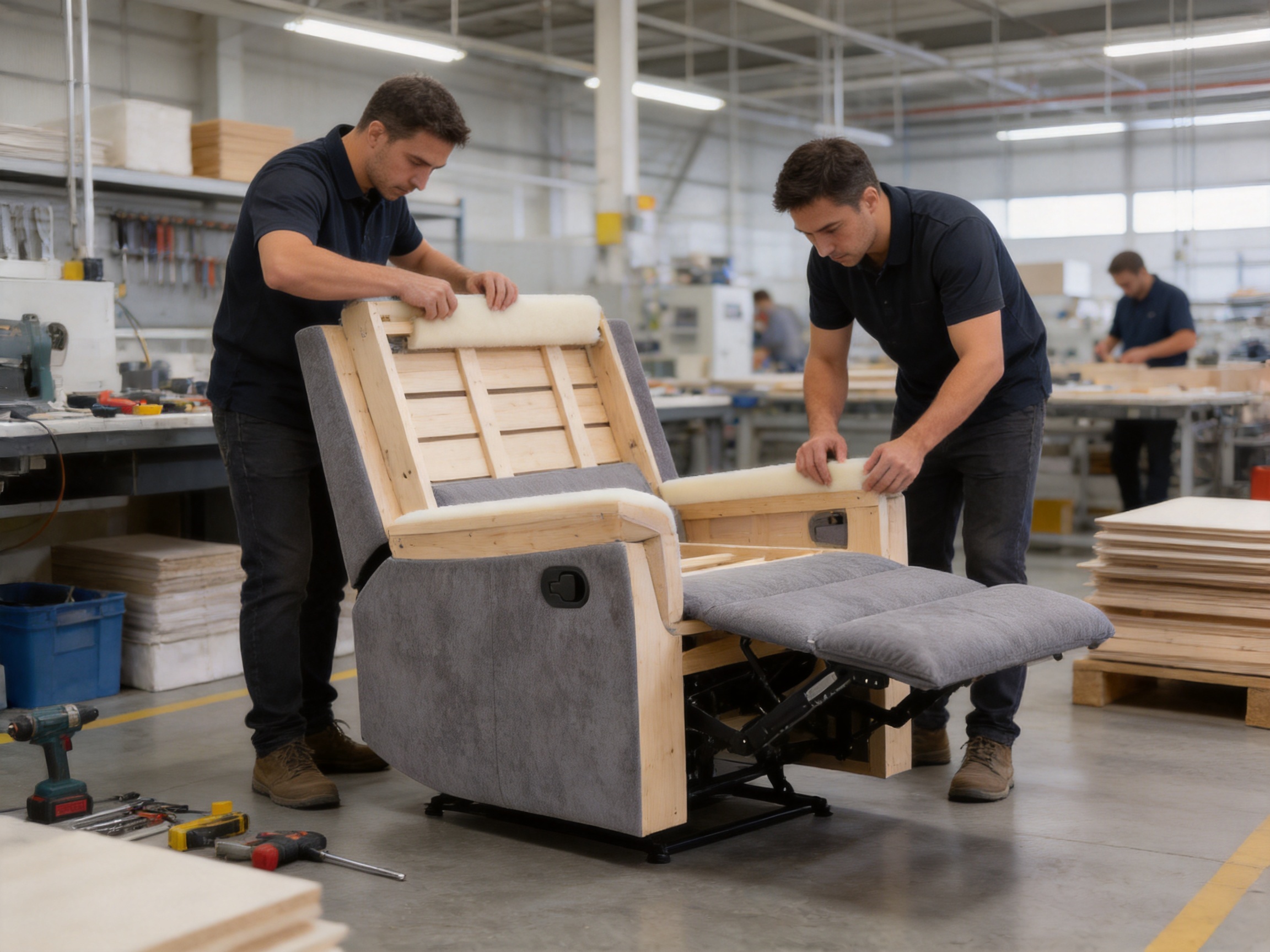
The production of a manual recliner chair requires several coordinated stages. Each stage influences the final comfort, appearance, strength, and reliability of the product. A professional factory does not treat these steps as isolated tasks; it manages them as one integrated process.
Frame Preparation
The frame is the hidden skeleton of the chair. In this product, pine wood and plywood are used to create a stable support structure. During frame preparation, wood components must be cut accurately and assembled securely. Proper angles, reinforced joints, and consistent dimensions are essential because the reclining mechanism, seat cushion, backrest, and arms all depend on the frame.
A weak frame can compromise the entire product. It may cause uneven seating, noise, wobbling, or early failure. By controlling frame production internally, the manufacturer can better maintain standards and adjust specifications when needed for different models or customer requirements.
Foam and Cushion Processing
Foam processing determines much of the chair’s comfort. High-density foam must be cut and shaped to match the seat structure, arm design, and backrest profile. Consistency is crucial. If foam pieces are uneven, the chair may feel lopsided or show wrinkles after upholstery.
The company’s sponge processing capability supports more accurate control over cushion comfort. Different markets may request different firmness levels, and internal foam processing allows the manufacturer to make controlled adjustments. For this manual recliner, plush comfort is balanced with supportive resilience.
Pocket Coil Integration
The pocket coil system is integrated into the seat structure to create resilient support. This step requires accurate positioning so that the coils work together with the foam and frame. The goal is not simply to add springs, but to create a supportive seating architecture where foam comfort and coil response complement each other.
Mechanism Installation
The manual reclining mechanism must be installed with precision. Alignment is essential for smooth operation. If the mechanism is not mounted correctly, the footrest may not open evenly, the reclining motion may feel rough, or the chair may not close properly. Skilled assembly and functional testing help prevent these issues.
The side-mounted pull handle must also be positioned for easy access. It should feel natural to reach while seated, and it should activate the mechanism smoothly. Because this component is used frequently, it must be securely attached and checked during inspection.
Upholstery Cutting and Sewing
Microfiber fabric is cut according to patterns designed for the chair’s shape. Accurate cutting reduces waste and improves appearance. Sewing must be consistent, with clean seams and proper tension. Upholstery quality is one of the first things customers notice, so this stage has a strong influence on perceived value.
Wrinkles, uneven seams, loose fabric, or mismatched panels can make even a structurally sound chair look low quality. Professional upholstery work gives the recliner a refined and inviting appearance.
Final Assembly and Inspection
Final assembly brings together the frame, foam, coils, mechanism, upholstery, arms, backrest, and finishing details. After assembly, the product should be inspected for appearance, dimensions, stability, reclining function, fabric condition, and packaging readiness.
For recliners, function testing is especially important. The chair should move from seated to reclined position smoothly. The footrest should extend and retract correctly. The back and seat should feel stable. The user should not experience unexpected looseness, harsh movement, or uneven support.
Packaging and Export Preparation
Packaging protects the recliner during storage, loading, ocean transport, unloading, and final delivery. Export furniture requires packaging that balances protection, cost, container efficiency, and customer handling needs. A factory experienced in global markets understands that product quality must survive the logistics journey, not only the production line.
Why Integrated Manufacturing Matters to Buyers
For furniture retailers, wholesalers, importers, and project buyers, choosing a supplier is not only about selecting a product. It is about selecting a manufacturing partner. A recliner chair must arrive on time, meet specifications, pass inspection, satisfy customers, and remain competitive in price. Integrated manufacturing helps achieve these goals.
Because Anji Xuanbo Household Co., Ltd. has full-chain cost and capacity control through its own wooden frame factory and sponge processing plant, it can better manage two key cost centers in upholstered furniture. This allows the company to offer competitive value without relying only on material reduction. In contrast, some competitors reduce price by using weaker frames, lower-density foam, or thinner upholstery. Such shortcuts may reduce initial cost but damage long-term customer satisfaction.
Integrated production also improves response speed. If a customer requests a custom color, adjusted foam feel, modified packaging, or a coordinated product set, the factory can communicate internally and make changes more efficiently. This is a major advantage over companies that must coordinate multiple outsourced suppliers for every adjustment.
Quality traceability is another benefit. When key components are produced in-house, quality problems can be identified and corrected more directly. If a seat feels too soft, the foam process can be reviewed. If a frame dimension needs improvement, the frame workshop can adjust. If assembly efficiency needs optimization, production management can coordinate across departments.
This kind of control supports long-term cooperation. Global furniture buyers value suppliers who can maintain stable quality across repeated orders. A successful first order is important, but consistent repeat production is what builds trust. The company’s emphasis on quality, service, honesty, pragmatism, and continuous improvement supports this long-term partnership approach.
Applications in Residential and Commercial Spaces
The Classic and Traditional Manual Recliner Chair Single Sofa is primarily designed for residential comfort, but its practical features also make it suitable for various commercial and project environments.
In a living room, the chair can serve as the preferred personal seat for relaxation. Its reclining function makes it suitable for television watching, reading, afternoon rest, or casual conversation. The gray upholstery allows it to coordinate with sofas, coffee tables, entertainment units, and rugs.
In a family room, the chair provides durable and comfortable seating for daily use. The manual mechanism is easy for different family members to understand, and the microfiber fabric supports practical maintenance when cared for properly.
In an apartment, the chair’s single-seat size is useful. Not every home has room for a large sectional or full recliner sofa. A compact recliner chair gives users the benefit of reclining comfort without requiring excessive floor space.
In a bedroom, the chair can become a reading corner or relaxation seat. Because it does not require power, it can be placed where it best fits the room layout. A side table and floor lamp can create a comfortable private retreat.
In senior living environments, manual recliners may be selected for their simplicity and supportive design. The strong frame, plush arms, and comfortable seat can provide everyday usability. Buyers should always evaluate user mobility needs, but the chair’s straightforward operation is a practical advantage.
In hospitality or lounge areas, the product can be used where comfortable single seating is required. Its classic style and neutral color are adaptable to hotel rooms, reception lounges, staff rest areas, or private waiting rooms.
For furniture retailers, the chair works well as a showroom item because its comfort can be experienced immediately. Customers can sit, pull the handle, feel the footrest rise, and evaluate the cushioning. The product’s features are easy to explain and demonstrate.
Care and Use Recommendations
Proper care helps extend the life and appearance of any upholstered recliner. This chair’s microfiber fabric should be cleaned with dry cleaning solvent only. Users should not saturate the fabric with water, as excessive moisture can affect the upholstery, foam, and internal structure. If the fabric pile needs refreshing, brushing may help restore appearance.
Users should also follow the correct method for retracting the footrest. The recommended approach is to sit forward, lean forward, and use the heels to press against the middle of the footrest. This method is labor-saving and helps the mechanism close correctly. Kicking or forcing the footrest from an awkward position may place unnecessary stress on the mechanism.
The chair should be placed on a stable, level surface. Uneven flooring can affect the feeling of stability. It is also advisable to leave enough clearance behind and in front of the chair for reclining movement. Although the chair has a compact footprint, reclining furniture requires movement space.
Sharp objects should be kept away from the upholstery. Pets, keys, metal accessories, and rough surfaces can damage fabric. Regular light maintenance, such as vacuuming with an appropriate upholstery attachment, can help remove dust and keep the chair looking fresh.
Users should avoid standing on the footrest or arms. The chair is designed for seated reclining comfort, not as a step stool or platform. Respecting the intended use helps preserve safety and durability.
Customization Potential for Global Markets
Customization is increasingly important in the upholstered furniture industry. Different markets have different preferences for color, fabric texture, seat firmness, size, and product presentation. The Classic and Traditional Manual Recliner Chair Single Sofa already offers custom color support, but the manufacturer’s broader capabilities create additional value for business buyers.
Color customization allows the recliner to match regional trends. Gray is a strong standard option, but beige, taupe, brown, charcoal, blue-gray, or other neutral tones may be requested based on retail strategy. For larger buyers, custom color programs can help create exclusive collections.
Fabric selection can also be adapted depending on customer requirements. While microfiber is practical and soft, some markets may request alternative upholstery options. A capable manufacturer can evaluate fabric compatibility with the chair’s structure and appearance.
Foam feel may be adjusted for different preferences. Some customers prefer a softer, sink-in recliner, while others prefer firmer support. Because the company has sponge processing capability, it can better manage such comfort adjustments.
Packaging customization may be required for retail, e-commerce, wholesale distribution, or project delivery. Export packaging must protect the chair while fitting logistics needs. A manufacturer experienced in international markets can support these requirements.
Branding and documentation support may also be important for importers and distributors. While the product itself is the core, business buyers often need labels, manuals, carton marks, and market-specific product information. Professional manufacturing service includes attention to these details.
Sustainability and Responsible Value
Modern furniture buyers increasingly consider not only price and appearance, but also resource efficiency, product longevity, and responsible manufacturing. A durable recliner that maintains comfort over time can be a more responsible purchase than a cheaply made chair that must be replaced quickly.
The use of a solid frame, high-density foam, and pocket coil support contributes to product life. When a chair remains comfortable and functional longer, it reduces waste and improves value for the consumer. Durability is therefore not only a quality issue but also a sustainability-related advantage.
Integrated manufacturing can also reduce inefficiencies. When frame production and sponge processing are controlled internally, the company can better manage material use, production scheduling, and quality consistency. Fewer defects mean less rework and less waste.
Customization can support responsible inventory planning. Retailers who order products suited to their market are less likely to face unsold inventory. A manufacturer able to adapt colors and specifications can help customers purchase more accurately.
Export logistics near Ningbo Beilun Port also supports efficient shipping routes. While logistics always involve environmental considerations, convenient port access can improve operational efficiency and reduce unnecessary inland transportation complexity.
The Role of Quality Inspection
Quality inspection is essential for reclining furniture because customers interact with the product physically and repeatedly. A recliner must look good, feel good, and function properly. Any defect in appearance or mechanism can quickly reduce customer satisfaction.
Material inspection verifies that fabric, foam, wood, plywood, and mechanism components meet requirements before production. This prevents defective materials from becoming finished products.
Frame inspection checks structural accuracy and joint security. Since the frame is hidden after upholstery, problems must be identified early. A strong frame supports the chair’s 350-pound weight capacity and reclining performance.
Foam and cushion inspection ensures comfort consistency. Uneven foam can create visible irregularities or uncomfortable seating. Proper foam shaping helps the final upholstery appear smooth and the seat feel balanced.
Mechanism inspection confirms that the manual reclining system operates smoothly. The pull handle, footrest movement, and reclined position should be tested. This helps ensure that users experience the easy operation promised by the product design.
Upholstery inspection reviews seams, fabric tension, surface cleanliness, color consistency, and overall appearance. Since upholstery is highly visible, this stage strongly affects market acceptance.
Final inspection confirms that the finished chair meets specifications, including dimensions, appearance, stability, and function. Packaging inspection then helps ensure safe delivery. Together, these steps reduce risk for customers and support reliable long-term cooperation.
Business Value for Importers, Retailers, and Distributors
The Classic and Traditional Manual Recliner Chair Single Sofa offers strong business value because it combines consumer-friendly features with manufacturer-backed reliability. For importers, the chair is easy to understand and position. It is a manual recliner with a classic appearance, comfortable construction, and practical dimensions. These attributes appeal to broad customer groups.
For retailers, the chair is highly demonstrable. A customer can sit in it, feel the cushioning, use the pull handle, and immediately understand the benefit. Products that require little explanation often perform well in showroom environments because comfort can sell itself.
For distributors, the chair’s neutral design reduces market risk. Gray upholstered recliners are easier to place across different retail channels than unusual colors or extreme styles. Custom color support further increases flexibility.
For project buyers, the chair’s manual operation and stable construction may be attractive for rooms where comfort and simplicity are priorities. The absence of electrical parts simplifies placement and maintenance planning.
The manufacturer’s export experience supports global cooperation. Products are exported to North America, Europe, the Middle East, and other regions. This indicates familiarity with different market expectations and international business requirements.
Reliable communication is also important. The company provides direct contact channels including email, phone, and WhatsApp. For business buyers managing samples, quotations, specifications, production schedules, and shipping arrangements, accessible communication supports smoother cooperation.
Q&A Section
What type of product is this recliner?
It is a single-seat manual recliner chair designed as a comfortable personal sofa for living rooms, family rooms, apartments, lounges, and similar spaces.
How does the reclining function work?
The chair uses a manual side-mounted pull handle. When the user pulls the handle, the reclining mechanism activates and allows the chair to move from an upright seated position into a more relaxed reclined position.
Does the chair require electricity?
No. This is a manual recliner, so it does not require a power outlet, motor, adapter, or remote control. This makes placement more flexible and reduces electrical maintenance concerns.
What materials are used in the frame?
The chair uses pine wood and plywood frame construction. This combination supports stability, strength, and reliable daily use.
What makes the seat comfortable?
The seat combines plush high-density foam with pocket coil construction. The foam provides cushioning, while the pocket coils add resilient support and help distribute body weight.
What is the standard color?
The standard color is gray. Custom colors are also supported, making the chair suitable for different interior styles and market needs.
What are the product dimensions?
The chair measures approximately 33.1 inches wide, 35.4 inches deep, and 40.6 inches high.
What is the weight capacity?
The chair has a listed weight capacity of 350 pounds, reflecting its strong structure and supportive seating design.
How should the footrest be closed?
The recommended method is to sit forward, lean forward, and use the heels to press against the middle of the footrest. This helps retract the footrest correctly and with less effort.
How should the fabric be cleaned?
The microfiber fabric should be cleaned with dry cleaning solvent only. It should not be saturated with water. Pile fabrics may require brushing to restore their appearance.
Why choose a manual recliner instead of a power recliner?
A manual recliner offers simple operation, flexible room placement, no electrical dependence, fewer electronic components, and often easier maintenance. It is a practical choice for many homes and commercial spaces.
What advantages does this chair have over ordinary recliners?
Its advantages include high-density foam, pocket coil support, pine wood and plywood frame construction, soft microfiber upholstery, pillowtop arms, a smooth manual pull handle, a 350-pound weight capacity, custom color support, and professional manufacturing quality control.
Who manufactures this recliner?
The recliner is manufactured by Anji Xuanbo Household Co., Ltd., a professional sofa and chair manufacturer located in Anji County, Huzhou City, Zhejiang Province, China.
What manufacturing strengths support the product?
The manufacturer has an approximately 8,000-square-meter factory, more than 100 employees, strong R&D and design capability, its own wooden frame factory, its own sponge processing plant, strict multi-stage quality inspection, customization capability, and convenient export logistics near Ningbo Beilun Port.
Conclusion: A Practical Recliner Built for Comfort, Strength, and Market Value
The Classic and Traditional Manual Recliner Chair Single Sofa is a strong example of practical upholstered furniture designed around real user needs. It provides a comfortable seat, supportive structure, smooth manual reclining, easy interior coordination, and dependable materials. Its gray microfiber upholstery, pillowtop arms, high-density foam, pocket coil system, and sturdy pine wood and plywood frame make it suitable for daily use in a wide range of spaces.
Its advantages over many competitors come from balance. It is not only soft, not only functional, and not only affordable. It combines comfort, support, durability, appearance, and manufacturing reliability. The manual pull handle gives users a simple and direct reclining experience, while the absence of electrical dependence improves placement flexibility.
The product is further strengthened by the manufacturing capabilities of Anji Xuanbo Household Co., Ltd. With integrated frame and sponge production, strong customization ability, multi-stage inspection, international market experience, and convenient export logistics, the company offers value not only as a product supplier but as a long-term manufacturing partner.
For homeowners, this recliner is a welcoming personal comfort chair. For retailers, it is an easy-to-demonstrate product with broad market appeal. For importers and distributors, it is a practical upholstered seating solution supported by professional production capacity. For project buyers, it offers simple operation, neutral styling, and reliable construction.
In a furniture market filled with similar-looking recliners, true value is found in the details: the frame hidden beneath the upholstery, the foam density inside the cushion, the coil support under the seat, the smoothness of the mechanism, the cleanliness of the sewing, the reliability of the supplier, and the consistency of production. This manual recliner chair brings those details together in a product made for everyday comfort and lasting satisfaction.
References
Furniture Industry Research Association. Upholstered Seating Construction and Quality Evaluation Guidelines.
International Furniture Manufacturing Review. Manual Recliner Mechanisms: Design, Durability, and Consumer Use Patterns.
Home Furnishings Materials Handbook. Foam Density, Pocket Coil Support, and Upholstery Performance in Residential Seating.
Global Upholstered Furniture Market Report. Trends in Recliner Sofas, Lounge Chairs, and Functional Seating.
Residential Interior Design Manual. Transitional Furniture Styling and Neutral Upholstery Applications.
Export Furniture Quality Control Guide. Inspection Standards for Upholstered Seating and Reclining Furniture.
Product: Classic and Traditional Manual Recliner Chair Single Sofa

LET'S TALK

Bai Shuiwan Industrial Park, Tian Huangping Town, Anji County, Huzhou City, Zhejiang Province, China
More About Us 
-
+86 18257273741
-
[email protected]
CONTACT US
Copyright © Anji Xuanbo Household Co., Ltd. All Rights Reserved.
Custom Modern Upholstered Sofa Manufacturers


