Focus on the manufacturing and export of functional sofas
-
 +86 18257273741
-
 [email protected]

 English
 Español
Wang Qian — After-Sales Support Manager
 Home / Author / Wang Qian — After-Sales Support Manager / Power Lift Recliner Chair for Elderly with Overstuffed Comfort and Dependable Support
 Power Lift Recliner Chair for Elderly with Overstuffed Comfort and Dependable Support
 2026.07.28
 Wang Qian — After-Sales Support Manager
Content
- 1 Designed Around Easier Sitting and Standing
- 2 Overstuffed Comfort for Extended Use
- 3 Reclining Up to 140 Degrees
- 4 Key Product Features at a Glance
- 5 Materials and Upholstery Options
- 6 Structural Stability and Everyday Durability
- 7 Practical Convenience from the Side Pocket
- 8 Manufacturing Strengths Behind the Product
- 9 Quality Inspection and Production Control
- 10 Customization for International Furniture Buyers
- 11 Advantages over Conventional Recliner Furniture
- 12 Advantages over Basic Power Recliners
- 13 Use in Different Settings
- 14 Installation and Assembly Considerations
- 15 Care and Maintenance Guidance
- 16 Product Specifications
- 17 How the Product Supports Independent Living
- 18 Why Manufacturing Integration Matters to Buyers
- 19 Ordering Questions for Distributors and Project Buyers
- 20 Positioning the Chair in a Competitive Furniture Market
- 21 Conclusion
- 22 Questions and Answers
- 22.1 What is a power lift recliner chair?
- 22.2 Who may benefit from this chair?
- 22.3 How far does the chair recline?
- 22.4 Is the chair controlled manually?
- 22.5 What materials support the seating comfort?
- 22.6 What is the frame made of?
- 22.7 What upholstery color is available?
- 22.8 Does the chair have storage?
- 22.9 Does the chair require assembly?
- 22.10 What are the assembled dimensions?
- 22.11 How should the upholstery be cleaned?
- 22.12 Where should the chair be placed?
- 22.13 Can the chair be used in senior living or recovery environments?
- 22.14 What customization can international buyers discuss?
- 22.15 What should buyers confirm before placing an export order?
- 23 References
- 24 Product: Power Lift Recliner Chair for Elderly with Overstuffed Design
Choosing a chair for everyday relaxation involves more than selecting an attractive piece of furniture. For older adults, people recovering from injuries, and anyone who experiences difficulty sitting down or standing up, a recliner must also provide dependable movement assistance, stable support, comfortable cushioning, and simple controls. The Power Lift Recliner Chair for Elderly with Overstuffed Design is developed to combine these practical needs with the familiar comfort of a generously padded recliner.
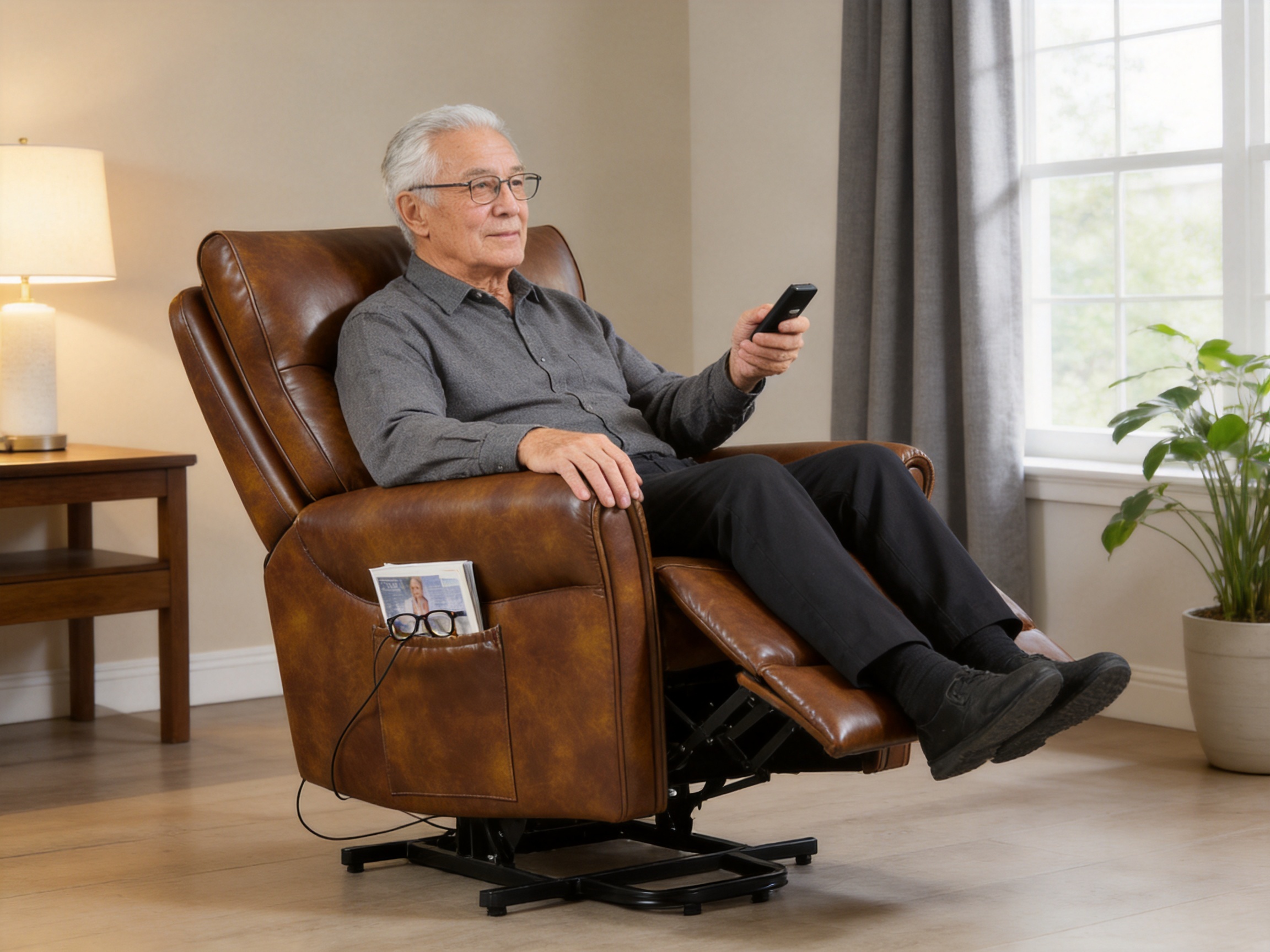
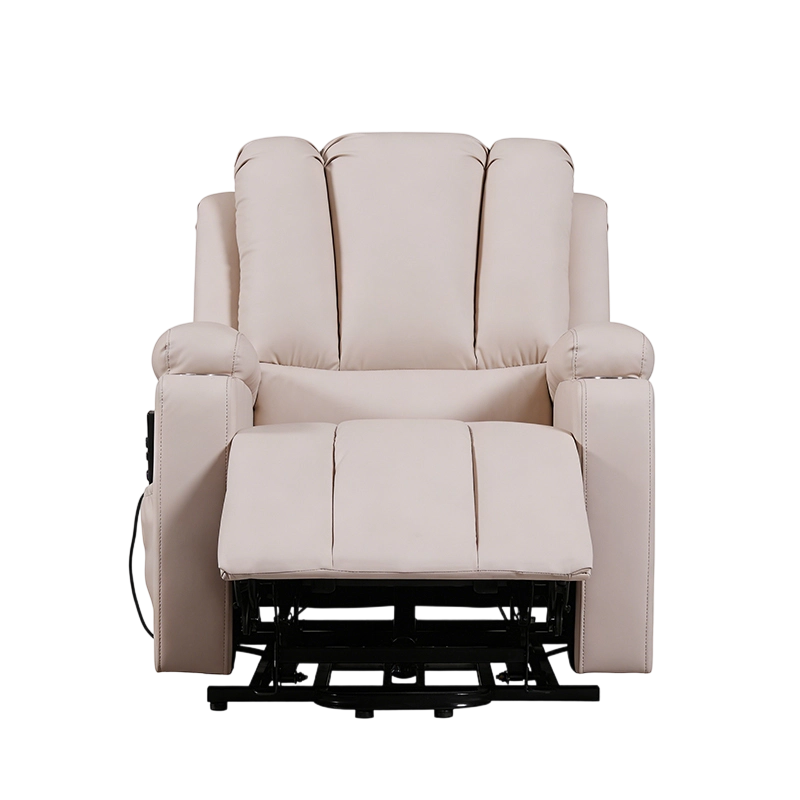
This power lift chair is designed to help users move from a seated position toward a near-standing position through an electrically powered lifting mechanism. With the push of a button, the chair can assist the user as they rise, reducing the need to bend, push against armrests, or place excessive strain on the knees and hips. When relaxation is the priority, the chair reclines smoothly to an angle of up to 140 degrees, creating a comfortable position for reading, watching television, resting, or taking a peaceful break during the day.
The chair is manufactured by Anji Xuanbo Household Co., Ltd., a Chinese furniture producer specializing in functional sofas, fixed sofas, corner sofas, lounge chairs, recliner sofas, love seats, and leisure chairs. The company combines product development, industrial design, manufacturing, marketing, and technical services. Its production capabilities, in-house component resources, quality inspection procedures, and export experience support the development of furniture intended for international markets.
Rather than treating a power lift recliner as a simple motorized seat, this product brings together several coordinated design features. A stable metal frame provides the structural foundation. Pocket springs and thick foam contribute to a supportive and comfortable seat. The overstuffed profile gives the chair a soft, welcoming appearance while helping create a cushioned sitting environment. The electric control system allows users to adjust the position without manually operating a lever, and the side pocket keeps commonly used items within reach.
For households, assisted-living environments, rehabilitation spaces, hospitality settings, and furniture distributors, this combination of comfort and function makes the chair a versatile product. It can serve as a personal relaxation chair while also addressing an important mobility requirement: helping the user transition between sitting and standing.
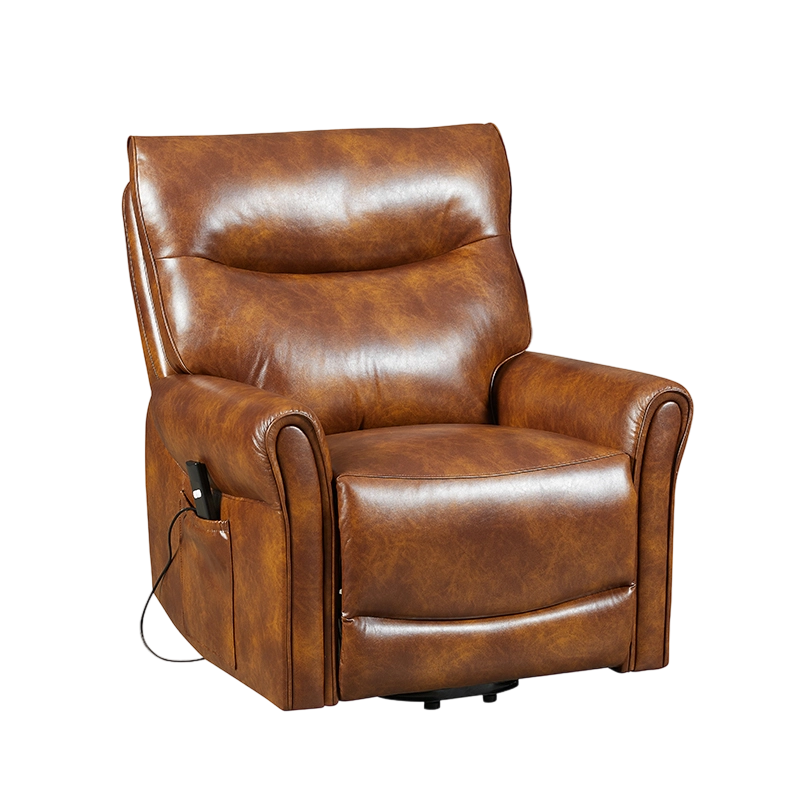
Power Lift Recliner Chair for Elderly with Overstuffed Design
Designed Around Easier Sitting and Standing
One of the most important advantages of a lift recliner is the assistance it offers during everyday movement. Sitting down and standing up may appear simple, but the action requires coordination, leg strength, balance, and confidence. Users with limited mobility may find the movement tiring or uncomfortable. A conventional low chair can make the process more difficult because it requires the user to lower the body into the seat and then push upward to leave it.
The lift function changes this experience. Instead of requiring the user to rely entirely on their legs and arms, the chair gently elevates the seat and backrest toward a near-standing position. The movement is controlled through the push-button remote, allowing the user to select the desired adjustment without reaching down to a mechanical handle. This design can be especially helpful for seniors, people with temporary mobility limitations, and individuals recovering from injuries.
The lift function is intended to provide assistance, not to replace safe movement practices. Users should operate the chair on a level surface, keep the area around the chair clear, and follow the product’s operating and assembly instructions. Caregivers may also appreciate the straightforward control arrangement because it makes the chair’s primary functions easy to understand.
Compared with a standard stationary lounge chair, the product offers a greater range of daily use. It can be positioned for sitting, reclining, resting, or rising. Compared with a manual recliner, it eliminates the need to pull a side lever or use body weight to push the footrest into position. Compared with a basic electric recliner without a lifting function, it adds an important mobility-oriented feature for users who need extra assistance when standing.
Overstuffed Comfort for Extended Use
A chair intended for extended daily use must provide more than mechanical movement. It must also feel comfortable after the user has been seated for a considerable period. The overstuffed design creates a soft, full-bodied appearance that supports the chair’s primary purpose as a relaxation product. Its generous padding helps provide a cushioned feel around the back, seat, and arm areas.
The seating system combines pocket springs with thick foam. Pocket springs are individually enclosed spring units that can respond more independently than a basic continuous spring structure. When paired with foam, they can help create a balance between resilience and softness. The springs contribute underlying support, while the foam supplies cushioning and helps soften the contact between the user and the internal structure.
This layered construction is an advantage over a chair made with only a thin foam pad. A thin, simple cushion may feel comfortable when new but can provide less structural support during repeated use. The combination of spring support and thick foam is intended to promote a more substantial seating experience and help the chair retain its comfort-focused character.
The overstuffed proportions also contribute to a welcoming visual impression. Many users want a lift chair that looks like a normal piece of living-room furniture rather than medical equipment. The cushioned profile and upholstered exterior allow the chair to fit naturally into home environments, family rooms, bedrooms, reading corners, and private rest areas.
Comfort is influenced by personal preference, body shape, clothing, room temperature, and sitting habits. Nevertheless, the design offers several features that support broad usability: padded construction, a reclining range of up to 140 degrees, a supportive metal frame, and a remote-controlled adjustment system. Together, these features make the chair suitable for short periods of relaxation as well as longer sessions of reading, watching media, or resting.
Reclining Up to 140 Degrees
The reclining function allows the chair to move beyond an upright seating posture into a more relaxed position. An angle of up to 140 degrees creates a useful middle ground between conventional sitting and a deeply reclined lounge position. Users can adjust the chair according to the activity at hand.
In a more upright setting, the chair can be used for conversation, reading, eating, or operating a mobile device. A moderate recline can reduce the feeling of sitting rigidly upright and offer a more relaxed posture for television viewing. A deeper setting can provide a comfortable environment for resting or taking a quiet break.
The electric control system is particularly useful because it allows the user to make gradual adjustments. Rather than selecting only a fixed upright or fully reclined position, the user can stop the movement when the preferred angle is reached. This provides a more personalized experience and can be valuable for users with different comfort requirements.
In comparison with manual reclining furniture, push-button operation reduces the effort needed to adjust the chair. The user does not need to reach for a lever, pull forcefully, or shift body weight to initiate movement. The remote is intended to make the chair’s functions clear and accessible, supporting independent use whenever the user is able to operate the controls safely.
Key Product Features at a Glance
| Feature | Product Benefit | Practical Value |
|---|---|---|
| Power lift function | Raises the chair toward a near-standing position | Assists users who have difficulty standing from a seated position |
| Electric reclining control | Adjusts the chair position with push-button operation | Reduces the need for manual levers and strenuous movement |
| Maximum reclining angle | Reclines up to 140 degrees | Supports reading, television viewing, resting, and relaxation |
| Overstuffed design | Creates a generously padded seating profile | Provides a soft, welcoming appearance and cushioned comfort |
| Pocket spring and thick foam construction | Combines resilient internal support with cushioning | Promotes a substantial and supportive seating experience |
| Stable metal frame | Provides a durable structural foundation | Supports regular operation and everyday seating use |
| Upholstered cover | Offers a comfortable surface and finished appearance | Helps the chair blend with residential and commercial interiors |
| Side pocket | Stores small personal items | Keeps remotes, reading materials, phones, and other essentials nearby |
| Custom color support | Allows color requests for suitable orders | Helps distributors and projects coordinate furniture with interior schemes |
| Assembly-required format | Ships in a form prepared for final assembly | Can support packaging and transportation efficiency |
Materials and Upholstery Options
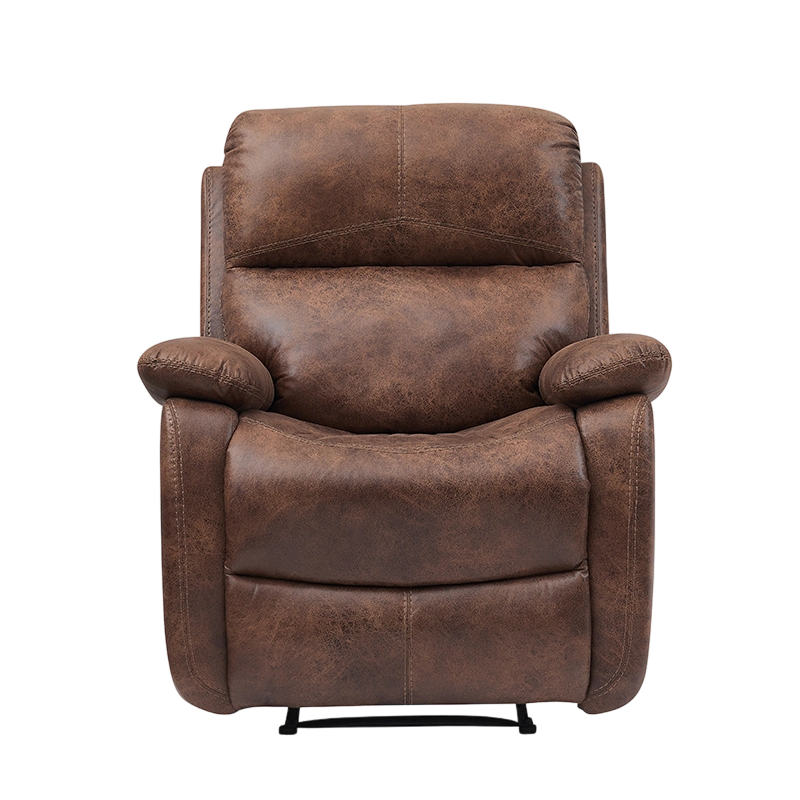
The listed product color is brown leather, with support for custom colors. The product information also refers to a breathable upholstery surface. Depending on the specific order configuration, buyers should confirm the exact upholstery composition, finish, and material specification with the supplier before production. This is especially important for projects that require a particular leather match, synthetic leather, textile, fire-performance standard, or cleaning classification.
A brown upholstery color offers a warm and adaptable appearance. It can coordinate with wood furniture, neutral walls, earth-tone flooring, and classic or contemporary interiors. For distributors, brown is often a practical core color because it can appeal to users looking for a traditional recliner appearance while remaining suitable for many room styles.
The support for custom colors creates additional possibilities for wholesale and project orders. A distributor may request a shade that aligns with an existing furniture collection. A senior living facility may prefer colors that coordinate with its interior design system. A hospitality or healthcare-related project may need upholstery selected for a specific visual environment. Customization should be discussed in advance because color availability, minimum order quantities, material selection, sampling, and lead times may vary.
Upholstery selection also affects cleaning and long-term maintenance. The supplied care information identifies a fabric cleaning code of S, which indicates cleaning with dry-cleaning solvent only, and a leather match cleaning code of P, for which professional dry cleaning is recommended. These instructions should be treated as important product-care requirements rather than optional suggestions.
Before applying any cleaning solution, users should perform a spot test in a concealed area. A small test can help identify possible discoloration, surface damage, or texture changes before the cleaner is applied to a visible section. Harsh household chemicals, excessive moisture, abrasive tools, and unapproved cleaning methods should be avoided.
Structural Stability and Everyday Durability
The stable metal frame is one of the chair’s central functional components. A lift recliner must support not only the user’s seated weight but also the changing forces created when the chair lifts, reclines, and returns to an upright position. A sound structural foundation helps the chair remain steady during regular operation.
Metal framing can provide a durable base for the moving mechanism and seating system. It is particularly relevant in a power lift chair because the frame must work together with the motorized components rather than simply hold a stationary cushion. The frame, lifting mechanism, springs, foam, upholstery, and fasteners must be integrated so that the chair performs as a coordinated product.
Durability does not depend on one component alone. It is influenced by material selection, welding or joining quality, dimensional accuracy, motor installation, upholstery tension, assembly practices, packaging, and final inspection. The manufacturer’s production approach is therefore an important part of the product’s overall value.
The chair is intended for normal household and commercial furniture use. Users should observe the supplier’s stated weight, electrical, and safety requirements when available, and should not overload the chair or use it for purposes outside its intended design. Keeping the mechanism clear of toys, blankets, cables, and other objects can also help support safe operation.
Practical Convenience from the Side Pocket
A side pocket may appear to be a small detail, but it contributes significantly to the convenience of a chair designed for relaxation and assisted mobility. Users can keep the remote control, reading glasses, magazines, books, phones, or other small items close to the chair. This reduces the need to bend down, stand up unnecessarily, or search for items across the room.
For older adults or users with limited movement, keeping personal items within reach can make the chair easier and more pleasant to use. The pocket also helps reduce clutter around tables and armrests. In a shared living space, it provides a designated place for the chair’s accessories and helps maintain a more organized appearance.
The storage pocket is located on the side of the chair, where it can be accessed without interrupting the reclining function. Users should avoid placing heavy, sharp, wet, or oversized items inside it. Its intended role is convenient storage for lightweight personal necessities.
Manufacturing Strengths Behind the Product
The product is supported by the manufacturing capabilities of Anji Xuanbo Household Co., Ltd., established in 2021 in Anji County, Huzhou City, Zhejiang Province. Anji is widely recognized as a major center of chair production. This regional concentration provides access to an experienced furniture supply chain, skilled labor, supporting component manufacturers, logistics resources, and industry knowledge.
The company operates a factory covering approximately 8,000 square meters and employs more than 100 people. Its activities include research and development, industrial design, large-scale manufacturing, independent marketing, and technical services. This integrated approach allows product ideas to be evaluated not only from an aesthetic perspective but also according to manufacturability, material availability, assembly requirements, and market needs.
One of the company’s notable strengths is its own wooden frame factory and sponge processing plant. Although the featured lift recliner uses a stable metal frame, access to internal frame and cushioning resources strengthens the company’s broader furniture manufacturing system. It can improve coordination among structural components, foam materials, upholstery, and finished products across different sofa and chair categories.
In-house or closely controlled component processing can also support better control over cost and production capacity. When a furniture manufacturer depends entirely on unrelated external suppliers, changes in material availability or production schedules may create delays and inconsistent specifications. A stronger internal production chain can make planning more predictable and help the manufacturer respond to customization requirements more efficiently.
The company’s design and research capabilities are important for functional furniture. A power lift recliner must combine mechanical movement with visual appeal and sitting comfort. Industrial design decisions affect the chair’s proportions, upholstery lines, armrest shape, pocket placement, control accessibility, and relationship between the lift and recline functions. Engineering decisions affect the frame, mechanism, motor installation, stability, and assembly procedure.
This interaction between design and manufacturing helps distinguish a purpose-developed lift recliner from a conventional chair that has been adapted with a motor. The product is presented as a coordinated functional seating solution, with assistance, comfort, convenience, and residential appearance considered together.
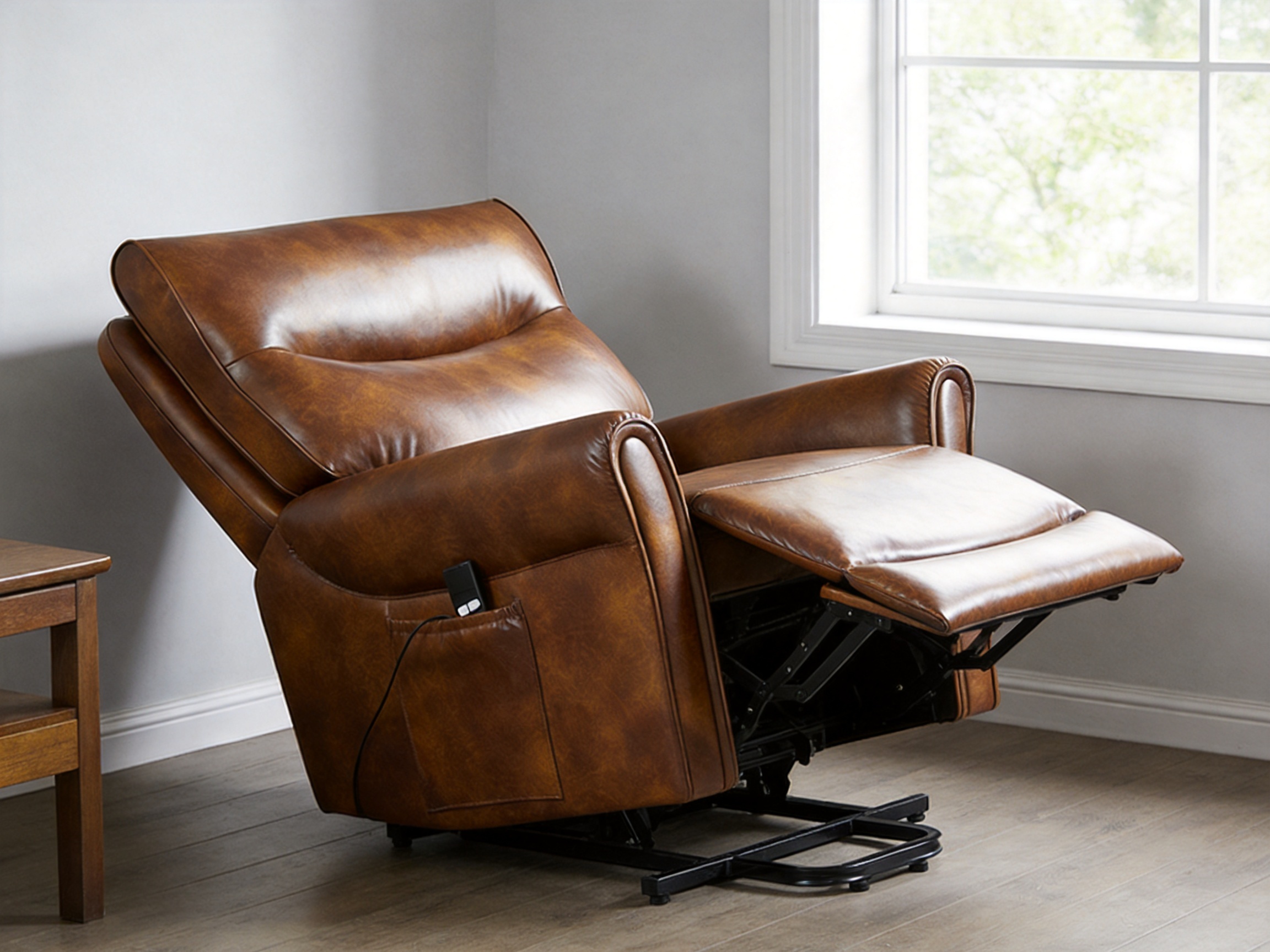
Quality Inspection and Production Control
Furniture quality is built through repeated checks across the production process. The manufacturer describes a multi-stage quality inspection approach. Such an approach may include incoming material checks, component inspection, frame evaluation, foam and upholstery review, mechanism testing, assembly inspection, appearance assessment, and final packaging checks.
For a power lift recliner, inspection should pay particular attention to moving and electrical functions. The lift and recline actions need to operate smoothly and consistently. Controls should respond appropriately, the chair should remain stable during movement, and the upholstery should be properly fitted around the mechanism. Cables and electrical components should be installed in a way that supports safe handling and reduces the possibility of interference with moving parts.
Visual quality is also important. Wrinkles, uneven seams, exposed staples, loose threads, color differences, and poorly aligned panels can affect the perceived value of an upholstered chair. A multi-stage inspection process helps identify these issues before the product is packed and shipped.
Structural quality and comfort quality must be evaluated together. A chair can have a strong frame but feel uncomfortable, or it can have soft cushioning but lack the stability expected from a lift product. Effective production control considers both performance and user experience.
The company states that its products comply with international standards and certifications. Buyers should request the specific certifications, test reports, electrical information, labeling requirements, and market documentation relevant to their destination country and order configuration. Compliance requirements can vary by region, voltage, plug type, material, and intended use.
Customization for International Furniture Buyers
Customization is a significant advantage for importers, distributors, retailers, hospitality buyers, and project contractors. The product supports custom colors, giving business customers the opportunity to adapt the chair to their own collections or target markets. In addition to color, commercial discussions may address upholstery materials, packaging, labeling, electrical specifications, control configuration, logo requirements, carton marks, and assembly documentation, subject to technical feasibility.
Custom production is most effective when requirements are defined early. Buyers should provide target colors, preferred materials, applicable standards, expected order volume, shipping destination, packaging preferences, and desired delivery schedule. Color samples and material samples should be approved before mass production where appearance consistency is important.
A manufacturer with experience in North American, European, Middle Eastern, and other export markets may be better prepared to discuss regional expectations. Different markets can have different preferences regarding chair dimensions, upholstery color, plug and voltage configuration, packaging information, safety instructions, and product documentation. Export experience can help shorten the communication process and reduce avoidable misunderstandings.
The featured chair has assembled dimensions of approximately 33.9 inches in length, 37.4 inches in width, and 40.6 inches in height. These measurements should be considered during room planning, display planning, and shipping preparation. The chair requires assembly, so buyers should also confirm carton dimensions, packaged weight, number of cartons, assembly tools, and installation instructions before placing a large order.
Advantages over Conventional Recliner Furniture
The clearest competitive advantage is the power lift function. A traditional recliner may provide a comfortable reclining posture but does not necessarily assist the user when standing. This distinction is important for customers who want both relaxation and mobility support in one product.
The second advantage is push-button control. Manual recliners require a physical lever or body movement to open and close the footrest. The electric system is designed to simplify the adjustment process, which can make the chair more accessible to users with reduced hand strength or limited range of motion.
The third advantage is the combination of function and home-furniture styling. Some mobility-oriented seating products have a strongly institutional appearance. This overstuffed upholstered chair is designed to feel more like a familiar residential recliner, making it easier to integrate into a living room or private bedroom.
The fourth advantage is the layered seating construction. Pocket springs and thick foam offer a more substantial support system than a basic cushion-only chair. The result is intended to provide a comfortable balance of softness and support for repeated use.
The fifth advantage is manufacturing flexibility. Custom colors, export experience, internal production resources, and multi-stage inspection can be valuable to buyers who need more than a standard stock product. A retailer may want a distinctive color assortment, while a project customer may need coordinated furniture across multiple spaces.
The chair is not positioned as a replacement for all specialized medical equipment. Its strength is practical home and furniture-market functionality: lifting assistance, electric reclining, cushioned support, and an approachable upholstered appearance. Buyers should evaluate the product against the requirements of their intended users and market.
Advantages over Basic Power Recliners
A basic power recliner commonly allows the user to adjust the backrest or footrest electronically. However, it may not include a lifting motion that helps the user rise from the seat. The featured product adds this movement, extending the chair’s role from relaxation furniture to assisted functional seating.
The distinction can be particularly meaningful for families purchasing furniture for older relatives. Instead of buying a separate relaxation chair and relying on another support solution for standing, a power lift recliner can address both needs within a single piece of furniture. This can save space and create a more consistent user experience.
The product’s side pocket also gives it a practical advantage over simpler recliner designs. The pocket supports independence by keeping essential items near the user. When combined with a remote-controlled mechanism, the chair is designed around convenience from sitting down to reclining and returning to an upright position.
Its stable metal frame and substantial cushioning further support everyday use. These features do not make the chair indestructible, but they reflect an effort to balance comfort with the structural demands of an electric lifting product.
Use in Different Settings
Residential Living Rooms
In a living room, the chair can function as a personal relaxation seat while maintaining a familiar furniture appearance. The brown upholstery can coordinate with neutral, traditional, rustic, or contemporary décor. Its side pocket can hold the remote and reading materials, helping keep the chair organized.
Bedrooms and Private Rest Areas
The chair may also be placed in a bedroom, guest room, or private rest area where a user needs a comfortable seat that can assist with standing. Its reclining function can support quiet reading or rest without requiring the user to move to another room.
Senior Living Environments
Senior living facilities may consider lift recliners for residents who need additional support during routine movement. In this setting, buyers should evaluate room dimensions, cleaning procedures, electrical requirements, staff training, and any applicable institutional standards before purchase.
Recovery and Rehabilitation Spaces
People recovering from certain injuries or temporary mobility challenges may benefit from a chair that reduces the physical effort of sitting and standing. The product should be used according to medical guidance where a healthcare professional is involved. It is a furniture product with lift assistance, not a substitute for professional rehabilitation equipment or clinical advice.
Retail and Distribution
For furniture retailers, the chair provides an opportunity to offer a functional product that responds to the growing demand for comfortable, accessible home furniture. Its combination of lift assistance, reclining movement, overstuffed comfort, custom color support, and export-oriented manufacturing can help distributors create a differentiated product category.
Installation and Assembly Considerations
The chair requires assembly. This format can help simplify transportation and packaging, but the final assembly must be completed carefully. Buyers should review the supplied instructions and check that all components, fasteners, cables, and accessories are present before beginning.
Assembly should take place on a clean, level surface with sufficient room to handle the chair sections safely. The person performing the installation should avoid dragging upholstered parts across rough flooring or forcing connectors into place. Electrical connections should be made only as instructed, and the chair should not be operated until the assembly has been checked.
For retailers and commercial buyers, clear assembly instructions are important because the product may be assembled by store staff, delivery teams, installers, or end customers. Buyers placing larger orders may wish to confirm whether manuals, diagrams, replacement parts, and technical support are available in the required language.
After assembly, the chair should be tested without a user seated in it. The lift and recline functions should be observed through their full intended range. The user should verify that the chair is stable, that the mechanism moves without unusual noise or obstruction, and that the remote responds as expected.
Care and Maintenance Guidance
Proper care can help preserve the chair’s appearance and comfort. The supplied instructions advise users to clean fabric upholstery with dry-cleaning solvent only and recommend professional dry cleaning for leather match surfaces. These cleaning codes should be followed carefully.
Always perform a spot test before cleaning the visible upholstery. Select a hidden area and apply a small amount of the approved product according to its instructions. Allow the area to dry and inspect it for changes in color, texture, or finish. If a problem occurs, professional assistance should be sought before cleaning the rest of the chair.
Dust and loose particles should be removed gently. Users should avoid soaking the upholstery, scrubbing aggressively, using bleach, or applying household products that have not been approved for the relevant material. Excess moisture can affect the upholstery, foam, internal components, and electrical parts.
The care information also recommends avoiding direct exposure to sunlight, heating outlets, and air-conditioning outlets. Prolonged sunlight can contribute to fading or uneven color. Direct heat may dry or damage some upholstery materials, while cold air or continuous airflow may influence the material over time. Positioning the chair away from these sources can help maintain a more stable environment.
The area beneath and around the chair should remain clear. Small objects, rugs with loose edges, cables, blankets, and toys can interfere with the moving mechanism. Periodically checking the power cord, remote, upholstery seams, frame connections, and visible mechanism areas can help identify issues early.
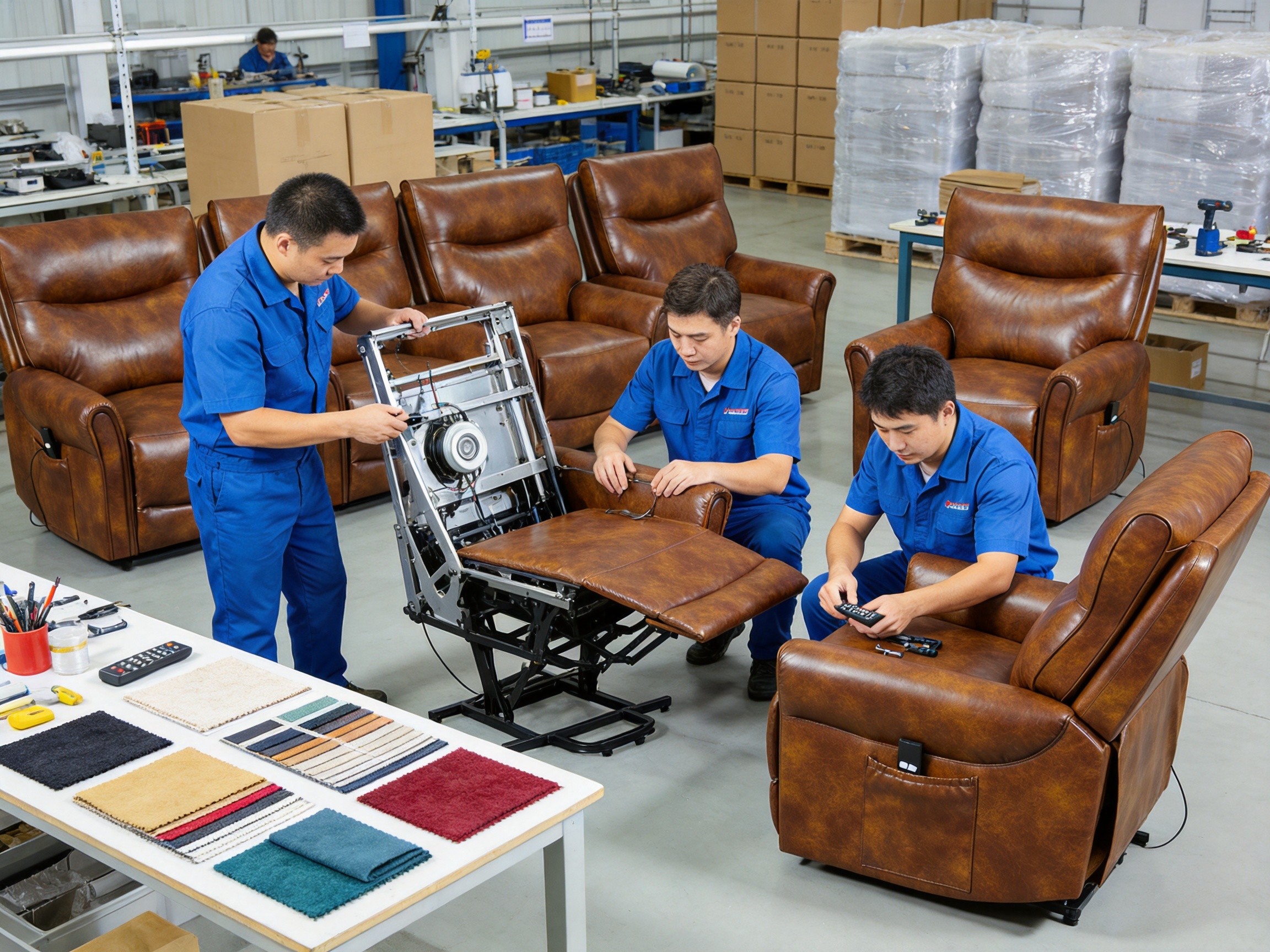
Product Specifications
| Specification | Details |
|---|---|
| Product type | Power lift recliner chair |
| Recommended user group | Adults, seniors, and users needing sitting and standing assistance |
| Reclining range | Up to 140 degrees |
| Control system | Push-button electric remote |
| Seat construction | Pocket springs combined with thick foam |
| Frame | Stable metal frame |
| Listed color | Brown leather |
| Color customization | Supported subject to order confirmation |
| Storage | Integrated side pocket |
| Assembled length | 33.9 inches |
| Assembled width | 37.4 inches |
| Assembled height | 40.6 inches |
| Assembly | Required |
| Fabric care classification | Code S: dry-cleaning solvent only |
| Leather match care classification | Code P: professional dry cleaning recommended |
How the Product Supports Independent Living
Independence is an important consideration in furniture design for older adults. A chair that requires frequent assistance for reclining, standing, or locating personal items may limit the user’s sense of control. The power lift recliner addresses several of these everyday interactions through electric operation and accessible storage.
The remote allows the user to control the chair without leaning forward to reach a low lever. The lift function can help reduce dependence on arm strength when standing. The side pocket helps keep necessary items nearby. These features work together to create a chair that is organized around user convenience.
Independence should always be balanced with safety. Users should understand the controls, keep the operating area clear, and stop using the chair if unusual movement, noise, odor, or electrical behavior occurs. A caregiver or family member can help with initial setup and explain the operating sequence to new users.
The chair’s value is therefore not limited to its appearance or comfort. It can contribute to a more convenient daily routine by reducing unnecessary transfers, minimizing reaching, and providing a dependable place to sit and rest.
Why Manufacturing Integration Matters to Buyers
For wholesale and project customers, the manufacturing organization behind a product can be as important as the product itself. A chair may have an appealing design, but buyers also need consistent quality, stable supply, technical communication, customization support, and export coordination.
Anji Xuanbo Household Co., Ltd. integrates research and development, industrial design, production, marketing, and technical services. This structure can improve communication between the people who design a chair and the people who manufacture it. Design changes can be reviewed for production feasibility, while manufacturing feedback can be used to refine future models.
The company’s own wooden frame factory and sponge processing plant provide additional control over important furniture inputs. Although the featured chair uses a metal frame, the broader internal resource system demonstrates experience with the structural and cushioning elements used across upholstered furniture. This can be helpful when a buyer is sourcing several product categories from the same supplier.
Factory capacity of approximately 8,000 square meters and a workforce of more than 100 employees provide a foundation for organized production. Capacity alone does not guarantee quality, but it can support dedicated production planning, process specialization, inspection checkpoints, and order coordination.
The company also exports to North America, Europe, the Middle East, and other regions. International experience may help with packaging, documentation, communication, and shipment preparation. Buyers should still confirm all destination-specific requirements for their individual products and markets.
Ordering Questions for Distributors and Project Buyers
Before placing an order, a buyer should confirm the exact upholstery material and whether the product will be supplied in brown leather, leather match, breathable synthetic leather, fabric, or another approved option. The care code can depend on the actual upholstery configuration, so the final material specification should be documented.
Buyers should also confirm the electrical configuration, including voltage, frequency, plug type, motor specifications, remote-control format, and any destination-market requirements. These details are especially important for export orders because electrical standards vary between regions.
Packaging information should include carton dimensions, packaged weight, number of cartons, assembly instructions, protection for upholstered surfaces, and shipping marks. The assembled dimensions are useful for display and room planning, but logistics decisions require packaged measurements as well.
For custom orders, color samples should be approved before production. Buyers should ask about minimum order quantities, sample procedures, production lead time, permissible color variation, and whether custom labels or packaging can be supplied.
Quality documentation may include inspection records, material information, product testing, certification documents, and warranty terms. The specific documents available will depend on the order and destination. Requesting them early can help avoid delays during import, retail listing, or project approval.
Positioning the Chair in a Competitive Furniture Market
The power lift recliner can be positioned as a comfort-focused functional chair rather than as a purely medical product. This distinction may appeal to consumers who want mobility assistance without compromising the visual warmth of their living space.
Retailers can highlight the product’s lift assistance, electric reclining, overstuffed appearance, pocket-spring and foam seating, metal frame, side pocket, custom colors, and approachable upholstered design. These features create several talking points for sales staff and online product listings.
For B2B buyers, the product can be included in collections aimed at senior comfort, accessible living, home relaxation, recovery furniture, and premium functional seating. It may also complement fixed sofas, love seats, corner sofas, lounge chairs, and other furniture categories supplied by the same manufacturer.
The chair’s strongest market message is the combination of movement assistance and comfort. A customer does not have to choose between a chair that helps with standing and a chair that feels inviting. The product is designed to provide both functions in one coordinated form.
Conclusion
The Power Lift Recliner Chair for Elderly with Overstuffed Design is a practical solution for users who want comfortable reclining and additional assistance when standing. Its electrically powered lift mechanism helps raise the user toward a near-standing position, while the recline function provides adjustment up to 140 degrees for reading, viewing, resting, and relaxation.
The chair’s overstuffed profile, pocket spring and thick foam construction, breathable upholstered surface, stable metal frame, and side pocket contribute to a complete everyday seating experience. Compared with a conventional recliner, it offers lift assistance. Compared with a manual recliner, it provides push-button adjustment. Compared with a basic power recliner, it combines electric reclining with a movement-supporting lift function.
The manufacturing background further strengthens the product’s value for international buyers. Anji Xuanbo Household Co., Ltd. brings together research and development, industrial design, furniture manufacturing, technical service, customization support, and export experience. Its approximately 8,000-square-meter factory, workforce of more than 100 employees, internal wooden frame and sponge processing resources, and multi-stage quality inspection approach provide a foundation for controlled production.
For consumers, the chair offers a supportive and convenient place to relax. For distributors and project buyers, it offers a customizable functional furniture product backed by a manufacturer with experience in global markets. Proper assembly, suitable operation, and correct upholstery care remain essential, but the overall design provides a strong combination of accessibility, comfort, convenience, and furniture-market appeal.
Questions and Answers
What is a power lift recliner chair?
A power lift recliner is an electrically operated chair that can recline and also raise the seat and backrest toward a near-standing position. This lifting movement is intended to assist users who have difficulty standing from a conventional seated position.
Who may benefit from this chair?
The chair may be useful for seniors, adults with limited mobility, people recovering from injuries, and users who want additional assistance when sitting down or standing up. It should be used according to individual needs and any relevant professional guidance.
How far does the chair recline?
The chair reclines up to 140 degrees. The user can operate the electric control and stop the chair at a preferred position within its intended movement range.
Is the chair controlled manually?
No. The chair uses a push-button remote and an electric control system. This reduces the need to pull a manual side lever or use body weight to adjust the recliner.
What materials support the seating comfort?
The seating system combines pocket springs with thick foam. This construction is intended to provide a balance of underlying support and cushioned comfort within the overstuffed chair design.
What is the frame made of?
The chair uses a stable metal frame. The frame provides the structural foundation for the seating system and powered movement mechanism.
What upholstery color is available?
The listed configuration is brown leather, and custom colors are supported subject to order confirmation. Buyers should verify the precise upholstery composition and color options before ordering.
Does the chair have storage?
Yes. A side pocket is included for small items such as the remote control, reading glasses, magazines, a mobile phone, or other personal essentials.
Does the chair require assembly?
Yes. Assembly is required. The chair should be assembled on a level surface according to the supplied instructions before it is operated.
What are the assembled dimensions?
The assembled length is approximately 33.9 inches, the assembled width is approximately 37.4 inches, and the assembled height is approximately 40.6 inches.
How should the upholstery be cleaned?
The supplied care instructions identify fabric cleaning code S, which means dry-cleaning solvent only, and leather match cleaning code P, for which professional dry cleaning is recommended. Users should always conduct a spot test before cleaning and follow the final material-specific instructions.
Where should the chair be placed?
The chair should be placed on a level surface with sufficient clearance for lifting and reclining movement. It should be kept away from direct sunlight, heating outlets, and air-conditioning outlets, and the mechanism area should remain free of objects.
Can the chair be used in senior living or recovery environments?
It may be considered for senior living, home recovery, and other supportive seating environments. Buyers should evaluate the user’s needs, facility requirements, electrical standards, cleaning procedures, and applicable regulations before selecting it for commercial or institutional use.
What customization can international buyers discuss?
Custom colors are specifically supported. Depending on order requirements and technical feasibility, buyers may also discuss upholstery, packaging, labeling, electrical configuration, documentation, and other project details with the manufacturer.
What should buyers confirm before placing an export order?
Buyers should confirm upholstery specifications, color samples, electrical requirements, packaged dimensions, shipping weight, assembly instructions, certifications, inspection documents, minimum order quantities, production schedule, warranty terms, and destination-market requirements.
References
1. Product specification and care information supplied for the Power Lift Recliner Chair for Elderly with Overstuffed Design.
2. Manufacturer-provided company profile and manufacturing capability summary for Anji Xuanbo Household Co., Ltd.
3. General furniture upholstery care guidance for cleaning codes S and P.
4. General principles of functional seating design, powered recliner operation, and furniture quality inspection.
Product: Power Lift Recliner Chair for Elderly with Overstuffed Design

LET'S TALK

Bai Shuiwan Industrial Park, Tian Huangping Town, Anji County, Huzhou City, Zhejiang Province, China
More About Us 
-
+86 18257273741
-
[email protected]
CONTACT US
Copyright © Anji Xuanbo Household Co., Ltd. All Rights Reserved.
Custom Modern Upholstered Sofa Manufacturers


