Focus on the manufacturing and export of functional sofas
-
 +86 18257273741
-
 [email protected]

 English
 Español
Wang Qian — After-Sales Support Manager
 Home / Author / Wang Qian — After-Sales Support Manager / Microfiber Push Back Recliner Club Chair for Modern Living
 Microfiber Push Back Recliner Club Chair for Modern Living
 2026.05.31
 Wang Qian — After-Sales Support Manager
Content
- 1 Product Overview: A Push Back Recliner Designed for Everyday Comfort
- 2 Main Product Specifications
- 3 Comfort Engineering: Why the Chair Feels Supportive
- 4 Microfiber Upholstery: Softness, Style, and Practical Appeal
- 5 Manual Push Back Operation: Simple, Reliable, and User Friendly
- 6 Structural Strength: Metal Mechanism, Protective Feet, and Stable Support
- 7 Design Style: Contemporary Comfort with a Club Chair Personality
- 8 Advantages Over Common Competing Recliners
- 9 Manufacturing Strength Behind the Product
- 10 Advanced Process Control for Consistent Quality
- 11 Customization Capability for Global Furniture Markets
- 12 Quality Inspection and International Standards Awareness
- 13 Export Logistics Advantage and Supply Reliability
- 14 Ideal Use Scenarios for the Recliner Chair
- 15 Retail and Wholesale Value
- 16 Care and Maintenance Guidance
- 17 Q&A Section
- 17.1 What type of recliner is this chair?
- 17.2 What rooms is this recliner suitable for?
- 17.3 What are the chair dimensions?
- 17.4 What is the weight capacity?
- 17.5 What is the upholstery material?
- 17.6 Can the color or fabric be customized?
- 17.7 How should the footrest be retracted?
- 17.8 What makes this chair different from a power recliner?
- 17.9 How does it compare with a regular accent chair?
- 17.10 How should the microfiber fabric be cleaned?
- 17.11 Why is the manufacturer’s production capability important?
- 17.12 Is this chair suitable for wholesale or private-label programs?
- 18 Conclusion: A Balanced Recliner for Modern Comfort and Global Supply
- 19 References
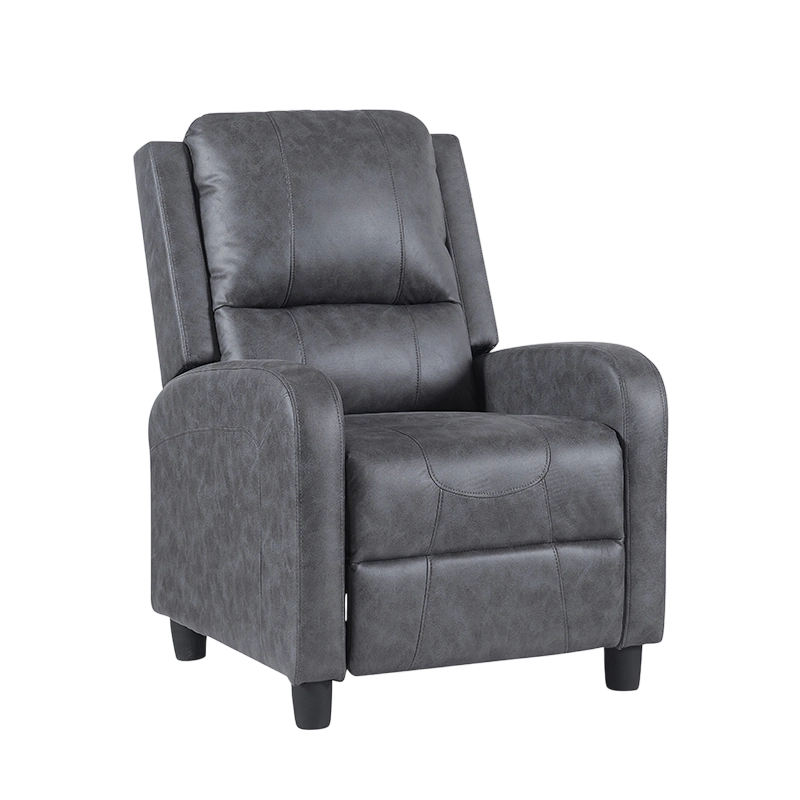
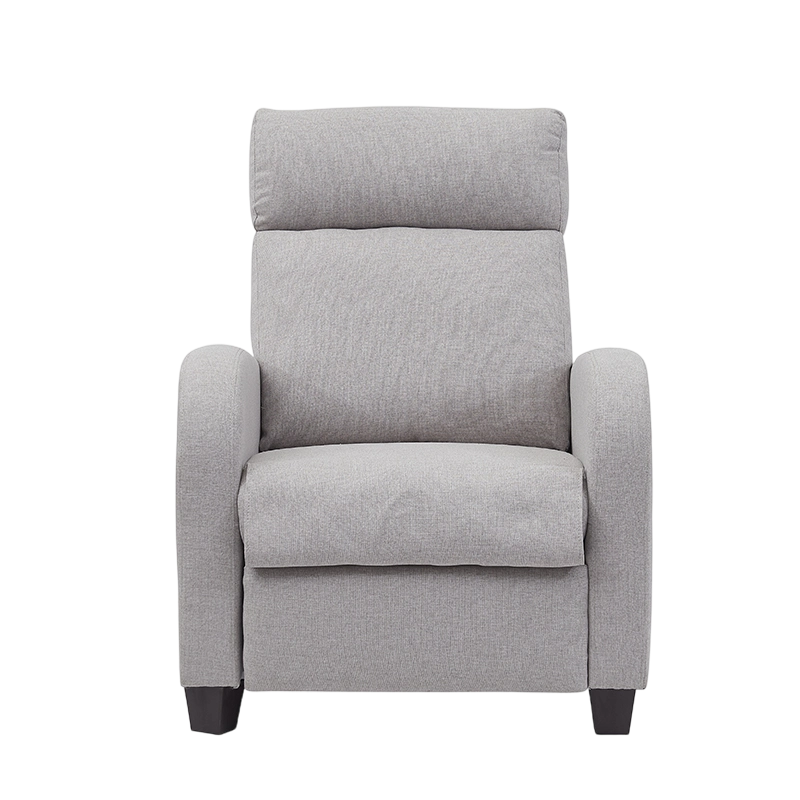
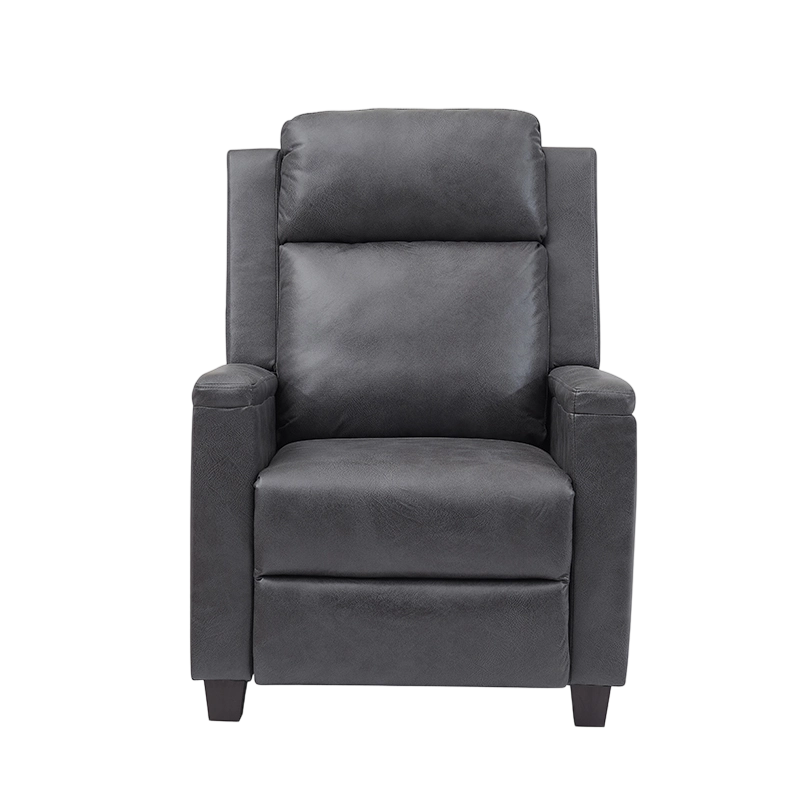
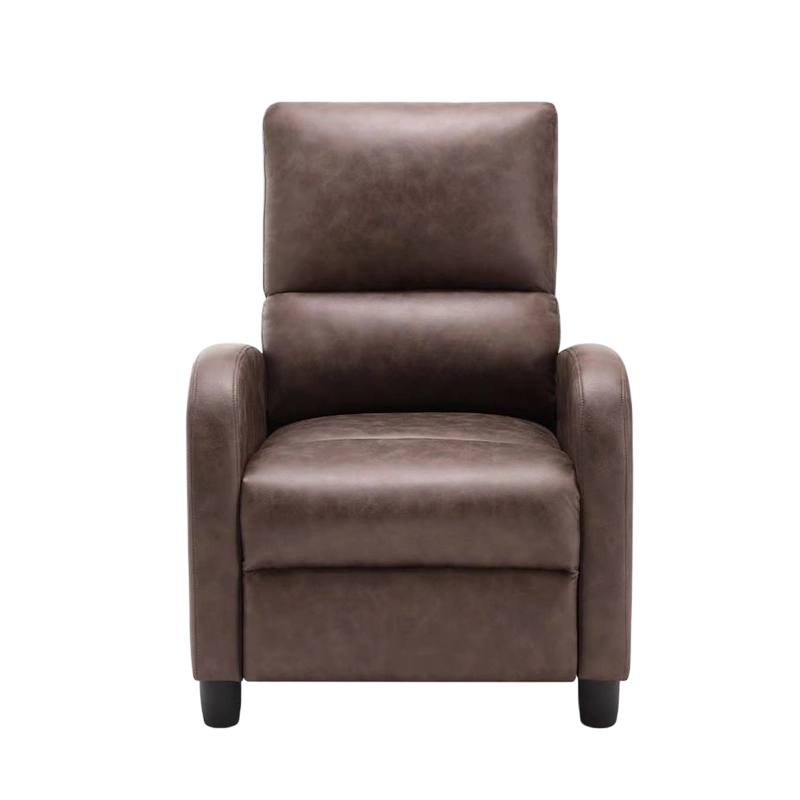
- 20 Product: Mircrofiber Recliner Push back Club Chair
In today’s home furniture market, customers expect a recliner to do more than provide a place to sit. A well-designed recliner should support the body, match modern interior styles, operate smoothly, and remain reliable through years of daily use. The microfiber push back club chair presented here is designed around those expectations. It combines a compact yet comfortable silhouette, soft microfiber upholstery, a sturdy metal reclining mechanism, a plush ergonomic backrest, wide curved armrests, a smoothly retractable footrest, and protective feet suitable for contemporary living rooms, media rooms, reading corners, guest rooms, master bedrooms, apartments, and leisure spaces.
This product belongs to the manual recliner category, but its value extends beyond simple reclining function. It is a practical leisure chair with the comfort language of a recliner sofa, the welcoming appearance of a club chair, and the customization potential required by modern furniture buyers. With a measured size of 29.9 inches wide, 34.3 inches deep, and 42.1 inches high, it is designed to fit comfortably into a variety of home layouts without overwhelming the room. A weight capacity of 300 pounds provides confidence for a broad range of users, while the khaki microfiber finish offers a warm, neutral tone that can blend easily with modern, transitional, and casual interiors.
For importers, wholesalers, retailers, project buyers, and private-label furniture brands, this chair also reflects the strengths of a manufacturer with integrated production capabilities. Anji Xuanbo Household Co., Ltd. is located in Anji County, Huzhou City, Zhejiang Province, a region widely recognized for its chair and furniture manufacturing ecosystem. The company focuses on sofas and chairs, including functional sofas, fixed sofas, corner sofas, lounge chairs, recliner sofas, love seats, and leisure chairs. Its manufacturing strengths include product research and development, industrial design, large-scale production, independent marketing, technical service, wooden frame production, sponge processing, strict quality inspection, customization, and export experience.
Mircrofiber Recliner Push back Club Chair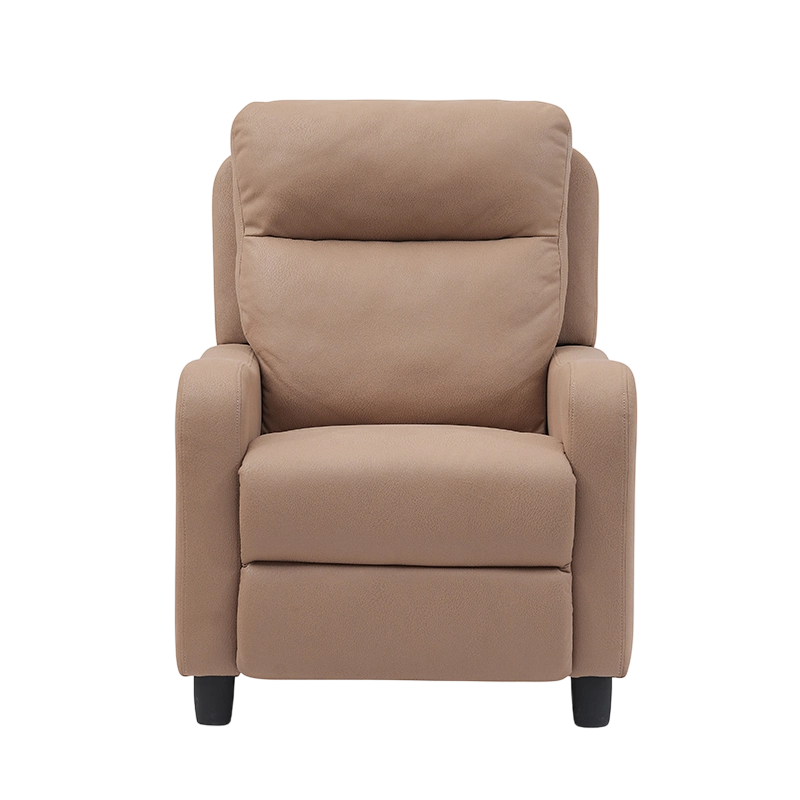
Product Overview: A Push Back Recliner Designed for Everyday Comfort
The microfiber push back club chair is built for users who want comfort without excessive complexity. Unlike power recliners that require motors, cords, or nearby outlets, this manual push back recliner uses body motion and an internal reclining mechanism to transition from upright seating to a relaxed lounging posture. The design is straightforward: the user leans back to activate the reclining movement, and the footrest extends smoothly to support the legs. When returning the footrest, the recommended method is to sit forward, lean forward, and use the heels to press the middle of the footrest. This method is more labor-saving and helps maintain the service life of the mechanism.
The chair’s upholstery is made with microfiber, a fabric appreciated for its soft hand feel, comfortable touch, and adaptable appearance. Microfiber is often selected for leisure furniture because it can create a cozy seating experience while maintaining a refined look. The khaki color gives the chair a calm and natural visual character. It does not appear too strong or too pale, making it suitable for neutral rooms, wood-tone interiors, media rooms, and homes with warm flooring or soft lighting. At the same time, the product supports custom color and fabric options, allowing buyers to match different regional preferences, retail collections, hospitality projects, or private-label programs.
The chair includes plush cushioning and interior springs for support. This is important because the comfort of a recliner is not created by upholstery alone. True comfort depends on a coordinated structure: a stable frame, suitable foam density, elastic internal support, ergonomic backrest shaping, properly positioned armrests, and a reclining mechanism that works with the body rather than against it. The wide curved armrests provide a comfortable place for the arms, while the protective feet help reduce direct contact damage to floors. These details make the chair more suitable for regular home use and retail presentation.
Main Product Specifications
The following table summarizes the key product information and practical benefits for buyers, distributors, and end users.
| Item | Specification | Practical Value |
|---|---|---|
| Product Type | Manual push back recliner club chair | Simple operation without electric power supply or complicated controls |
| Upholstery | Microfiber fabric | Soft touch, comfortable seating feel, and modern home appeal |
| Standard Color | Khaki | Neutral tone suitable for many living room and bedroom styles |
| Customization | Custom color and fabric supported | Suitable for private-label collections, regional markets, and project needs |
| Mechanism | Sturdy metal mechanism | Stable reclining action and dependable daily-use performance |
| Backrest | Plush ergonomic backrest | Improved support for relaxing, reading, watching television, and resting |
| Armrests | Wide curved armrests | Comfortable arm support and balanced club chair appearance |
| Footrest | Smoothly retractable footrest | Supports legs during reclining and returns with correct operation |
| Feet | Protective feet | Helps reduce floor scratching and improves stability |
| Dimensions | 29.9 W x 34.3 D x 42.1 H inches | Comfortable seating size with space-saving proportions |
| Weight Capacity | 300 pounds | Designed for a broad range of users |
| Care Method | Clean with dry cleaning solvent only | Encourages proper maintenance and long-term appearance care |
Comfort Engineering: Why the Chair Feels Supportive
A recliner may look comfortable in a showroom, but long-term user satisfaction depends on comfort engineering. This chair uses plush cushions, interior springs, and an ergonomic backrest to create a balanced seating experience. The cushions provide surface softness, while the springs help create resilience underneath the user’s body. This combination is especially important for recliners because the chair must perform in more than one position. In upright mode, it should support conversation, reading, or casual sitting. In reclined mode, it should distribute pressure more evenly across the back, seat, and legs.
The plush ergonomic backrest is one of the core strengths of the design. A flat or poorly angled backrest may feel acceptable for a few minutes but can become uncomfortable during longer sessions. The ergonomic shaping of this recliner backrest supports the natural resting posture of the user. It helps the body relax without requiring constant adjustment. For media rooms, this makes the chair suitable for watching films, sports, or long-form entertainment. For bedrooms or reading corners, it provides a comfortable position for quiet personal time. For living rooms, it offers a casual seat that can quickly become a place to rest.
The chair’s wide curved armrests also contribute to overall comfort. Armrests are sometimes treated as a decorative feature, but in a recliner they have a functional role. Properly designed armrests help the shoulders relax, reduce tension in the upper body, and give the chair a more secure feeling. Curved shaping improves the visual softness of the chair and prevents the boxy appearance common in many low-cost recliners. The result is a product that looks welcoming and feels supportive.
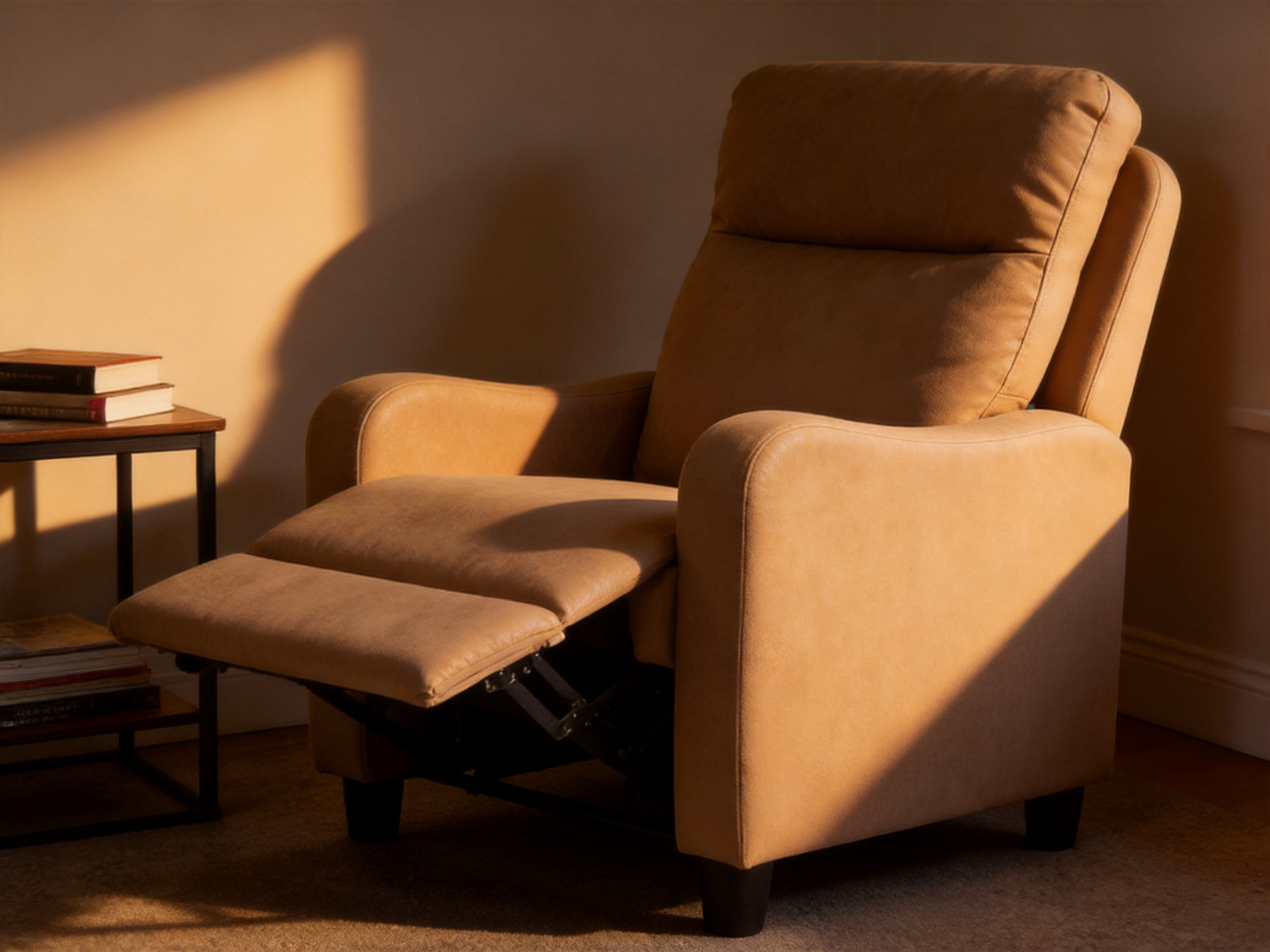
The smoothly retractable footrest enhances leg support. Many users choose recliners specifically because they want to elevate their legs after work, during leisure time, or while watching television. A footrest that extends smoothly and retracts correctly is essential to the user experience. The recommended retraction method is clear: sit forward, lean forward, and use the heels to press against the middle of the footrest. By guiding users toward correct operation, the product helps reduce misuse and improves long-term satisfaction.
Microfiber Upholstery: Softness, Style, and Practical Appeal
Microfiber upholstery plays a major role in the product’s value proposition. It gives the chair a soft, inviting surface that suits casual relaxation. Compared with some synthetic leather surfaces that may feel cool, slippery, or less breathable, microfiber can create a warmer tactile experience. Compared with certain coarse woven fabrics, microfiber often feels smoother and more refined. For a recliner club chair intended for living rooms and master bedrooms, this surface comfort can be a strong selling point.
The standard khaki color is another practical advantage. Khaki is a neutral shade that can coordinate with beige, brown, cream, gray, white, black, and natural wood tones. It fits many interior themes, including contemporary, modern casual, farmhouse-inspired, transitional, and relaxed urban styles. For retailers, a neutral standard color reduces the risk of mismatch with customer homes. For project buyers, it provides a calm palette suitable for apartments, rental spaces, lounges, and guest areas.
At the same time, customization is supported. This is a competitive advantage in the global furniture market because different regions often prefer different colors, textures, and fabric specifications. North American customers may favor warm neutrals, dark grays, or taupe tones. European buyers may prefer clean, understated shades and compact silhouettes. Middle Eastern buyers may request richer fabrics, stronger colors, or coordinated sets. Private-label brands may need upholstery options that match existing sofa collections. The ability to support custom color and fabric allows the chair to become part of a broader product strategy rather than a single fixed item.
Proper fabric care is also part of product performance. The recommended care instructions are to clean with dry cleaning solvent only, avoid saturation with water, and brush pile fabrics when necessary to restore appearance. These instructions help protect the upholstery surface and maintain the look of the chair. For retailers and distributors, clear care guidance can reduce after-sales misunderstandings and help end users maintain the product correctly.
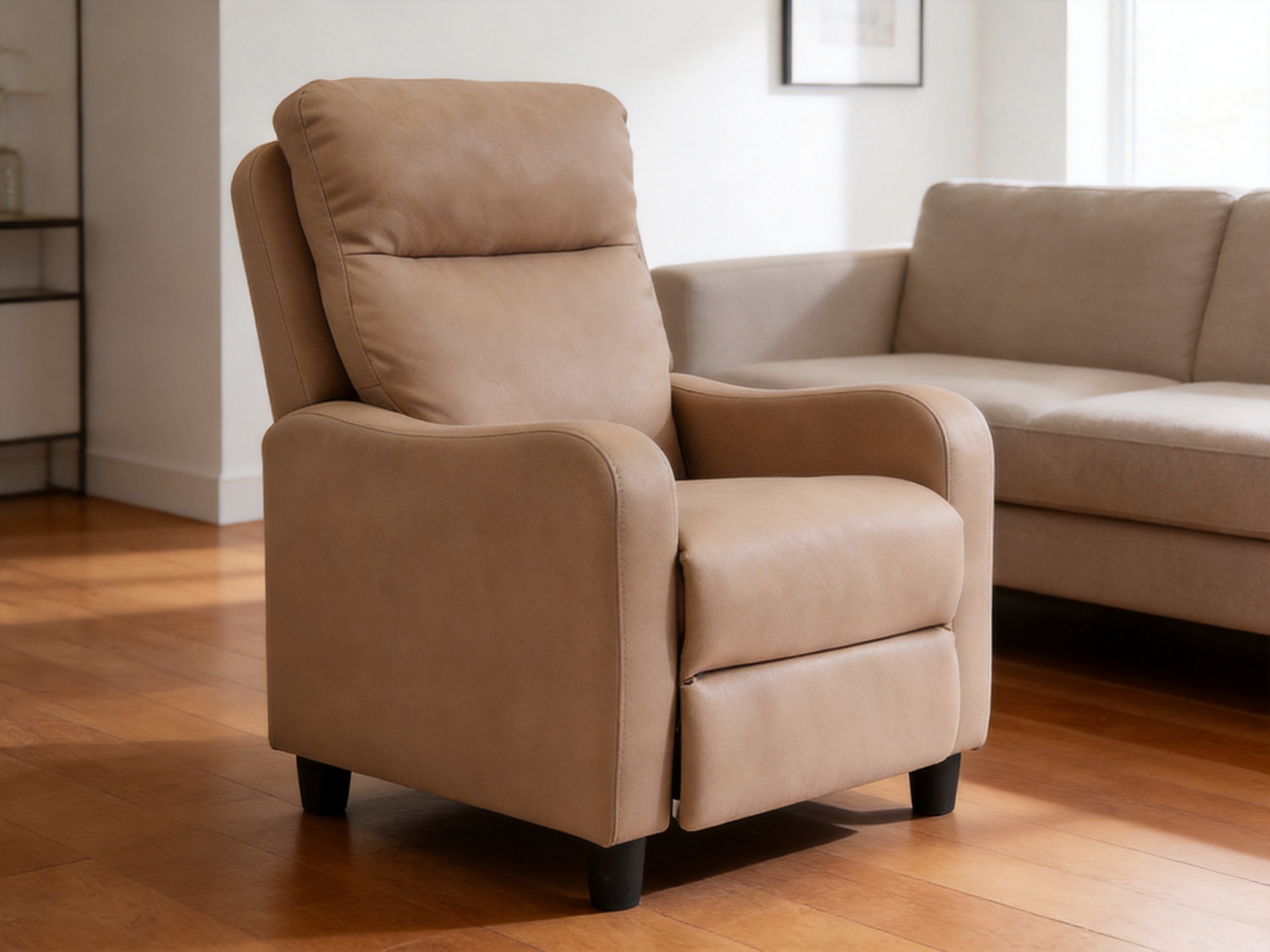
Manual Push Back Operation: Simple, Reliable, and User Friendly
Power recliners have their place in the market, but manual push back recliners remain highly relevant because of their simplicity and reliability. A manual mechanism does not require an electrical outlet, motor, transformer, remote control, or battery system. This reduces the number of components that can fail and makes the chair easier to place in different areas of the home. Users can position it in a living room corner, beside a window, in a bedroom, or in a media room without planning around power access.
The push back function is intuitive. Instead of searching for buttons or switches, the user simply applies body pressure to recline. This natural operation can be preferred by customers who want a clean exterior without visible levers or control panels. It also supports a more streamlined club chair appearance. In many modern homes, consumers want furniture that provides function while still looking elegant. A push back recliner offers that balance.
From a logistics and service perspective, manual recliners may also offer advantages. They can reduce electrical compliance concerns, simplify packaging, and lower the risk of motor-related after-sales service. For international buyers, this can be especially valuable. Products exported across regions must satisfy customer expectations while remaining practical to ship, assemble, display, and service. A sturdy manual metal mechanism supports this objective by offering dependable function in a simpler structure.
The chair’s correct footrest retraction method is also worth emphasizing. Users should sit forward, lean forward, and use the heels to press against the middle of the footrest. This method uses body movement efficiently and prevents unnecessary strain on the mechanism. It is a small but important detail because many recliner complaints arise not from design faults but from incorrect operation. By communicating the correct method clearly, sellers can improve the user experience and reduce after-sales issues.
Structural Strength: Metal Mechanism, Protective Feet, and Stable Support
The inner mechanism of a recliner is one of its most important components. While upholstery and appearance attract initial attention, the mechanism determines how the chair performs over time. This microfiber push back recliner uses a sturdy metal mechanism to support reclining movement. Metal construction is important because the mechanism must withstand repeated force, weight transfer, and movement as users sit, lean back, extend the footrest, and return to the upright position.
In lower-quality recliners, weak mechanisms may feel loose, noisy, or unstable after limited use. A more dependable metal mechanism improves user confidence. It also helps retailers protect their reputation because the reclining function is central to customer satisfaction. The user expects the motion to be smooth, the footrest to support the legs, and the chair to feel safe in both upright and reclined positions. A stable mechanism directly contributes to these results.
The chair also includes protective feet. This feature may appear minor, but it matters in real home environments. Many customers place recliners on wood floors, laminate, tile, vinyl, or area rugs. Protective feet help reduce direct damage, improve stability, and make the product feel more complete. They also support a cleaner presentation during showroom display and home delivery.
The 300-pound weight capacity expands the chair’s usability. Buyers want furniture that serves a wide audience, and a clear weight capacity provides practical guidance. It helps retailers communicate appropriate use and helps end users feel secure. Combined with the chair’s dimensions, the product offers a balance between comfortable seating and manageable scale. It is large enough to support relaxation but compact enough for apartments and modern homes where space efficiency is important.
Design Style: Contemporary Comfort with a Club Chair Personality
One of the distinguishing advantages of this recliner is its club chair identity. Many recliners are bulky, heavily padded, and visually dominant. While that style appeals to some customers, many modern consumers prefer furniture that looks lighter, cleaner, and more versatile. This chair delivers recliner comfort in a more refined format. The curved armrests, plush backrest, khaki microfiber surface, and compact proportions allow it to blend into different rooms without overpowering the interior.
In a living room, the chair can serve as an individual relaxation seat beside a sofa or sectional. In a media room, it can work as a comfortable viewing chair. In a master bedroom, it can become a reading or resting chair. In an apartment, it can provide full recliner function while occupying less visual space than oversized recliner sofas. For retailers, this versatility increases the number of customer scenarios in which the product can be sold.
The design also supports both contemporary and modern settings. Contemporary interiors often combine comfort with clean lines and soft textures. Modern living spaces value simplicity and functional elegance. This chair fits both directions because it is not overly decorative, yet it still feels warm and comfortable. The microfiber upholstery provides softness, while the push back mechanism keeps the outside appearance clean. The result is a chair that can appeal to a broad customer base.
Another advantage is its ability to coordinate with other product categories. Because the manufacturer produces recliner sofas, corner sofas, love seats, and leisure chairs, buyers can develop cohesive collections. A retailer may pair the chair with a matching sofa, a compact love seat, or a leisure seating collection. Project buyers can use the chair as part of a coordinated lounge or apartment package. This collection potential is stronger when a manufacturer supports custom fabrics and colors.
Advantages Over Common Competing Recliners
The recliner market includes a wide range of products, from low-cost occasional chairs to premium power recliners. This microfiber push back recliner holds a strong position because it balances comfort, simplicity, appearance, customization, and manufacturing reliability. Its advantages can be understood by comparing it with common competing options.
Compared with bulky traditional recliners, this chair has a more compact and modern profile. Oversized recliners can be comfortable, but they may not fit smaller living rooms or apartments. They can also look too heavy in contemporary interiors. This chair offers reclining function while maintaining a club chair appearance, making it easier to place in different home environments.
Compared with simple accent chairs, this product provides a functional footrest and reclining comfort. An accent chair may look attractive, but it often cannot deliver the same relaxation experience. This push back recliner can serve as both a stylish chair and a personal lounging seat, giving it stronger practical value.
Compared with power recliners, the manual push back design avoids dependence on motors and electrical systems. This makes placement easier and may reduce maintenance complexity. For customers who prefer straightforward operation, the push back function is more intuitive. For distributors, the absence of electrical components can simplify after-sales service and international product planning.
Compared with low-cost manual recliners, this chair emphasizes comfort details such as plush cushioning, interior springs, an ergonomic backrest, wide curved armrests, a sturdy metal mechanism, and protective feet. These features create a more complete product experience. Low-priced alternatives may cut corners in internal support, armrest design, or mechanism durability, which can lead to discomfort or reduced service life.
Compared with fixed lounge chairs, the retractable footrest provides greater flexibility. Users can sit upright when talking, reading, or working on a tablet, then recline and extend the footrest when they want deeper relaxation. This flexibility is valuable in homes where every furniture piece must serve multiple purposes.
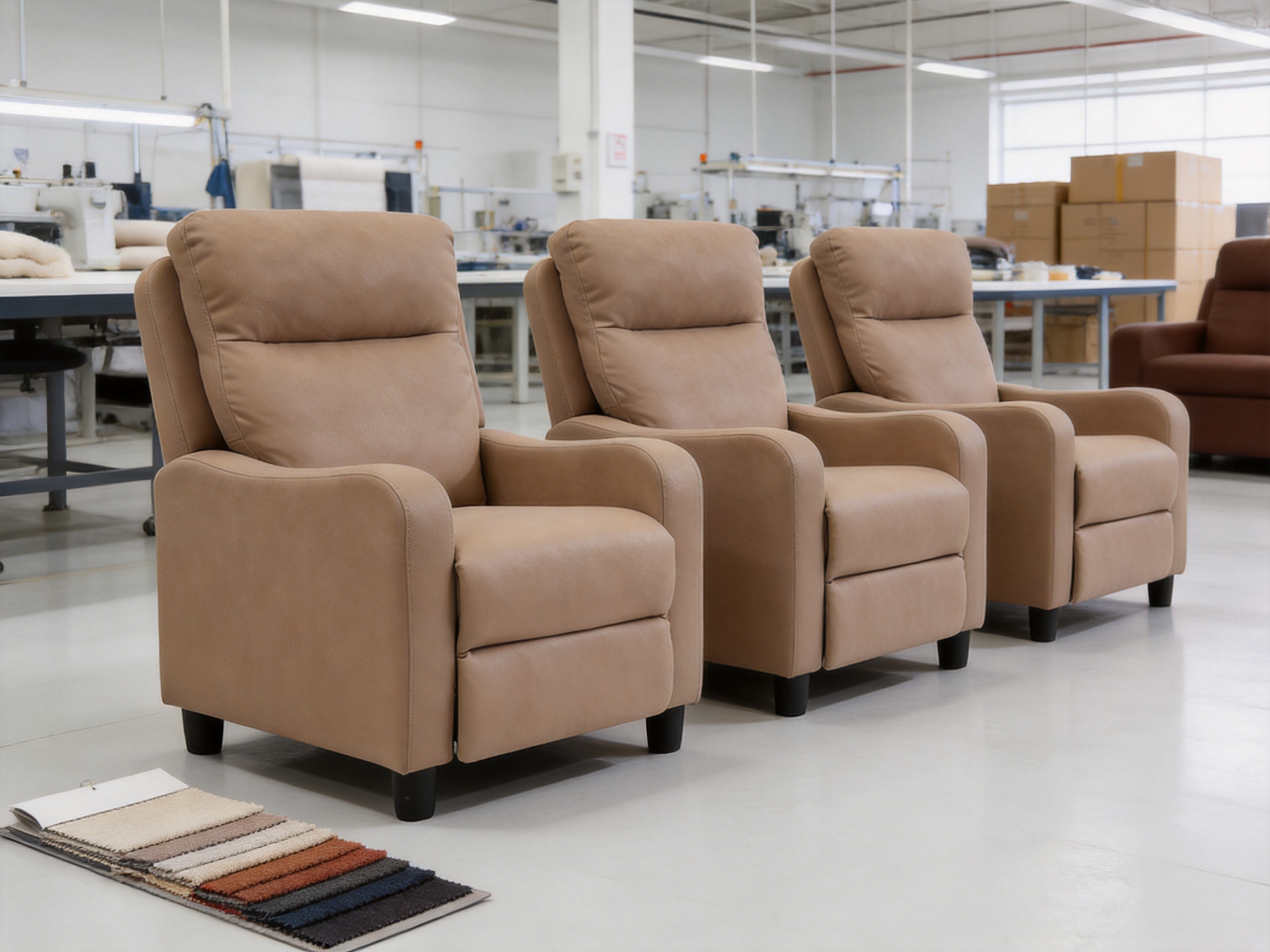
Manufacturing Strength Behind the Product
A good furniture product is not created by design alone. It depends on manufacturing control, material selection, skilled workers, process management, and quality inspection. Anji Xuanbo Household Co., Ltd. was established in 2021 and operates in Anji County, Huzhou City, Zhejiang Province, an area known internationally as the “Capital of Chair Industry.” This location gives the company access to a mature furniture supply chain, skilled labor resources, and export logistics advantages.
The company covers approximately 8,000 square meters and employs more than 100 people. Its business integrates research and development, industrial design, large-scale manufacturing, independent marketing, and technical services. This structure enables the company to respond to market demand more quickly than manufacturers that rely heavily on outsourced design or fragmented production. When buyers request new colors, fabric alternatives, adjusted dimensions, or collection development, an integrated manufacturer can evaluate feasibility, cost, lead time, and production planning more efficiently.
One of the company’s key strengths is full-chain cost and capacity control through its own wooden frame factory and sponge processing plant. This is highly important in upholstered furniture manufacturing. The wooden frame affects the chair’s structural stability, while the sponge and cushioning materials determine comfort, resilience, and long-term seating performance. By controlling these processes internally, the company can better manage consistency, quality, and cost. It can also respond more quickly to customization and volume production requirements.
The production of a recliner chair typically involves multiple stages: design review, material preparation, wood frame construction, foam cutting and shaping, spring or support installation, mechanism assembly, upholstery cutting and sewing, final upholstery fitting, functional testing, quality inspection, packaging, and shipment preparation. Each stage affects the final product. If the frame is inaccurate, the chair may not align correctly. If the foam is poorly shaped, comfort will suffer. If sewing is inconsistent, appearance will be affected. If the mechanism is not properly installed, reclining performance may be unreliable. A professional manufacturing system reduces these risks.
Advanced Process Control for Consistent Quality
Consistency is one of the biggest challenges in upholstered furniture. Unlike simple hard goods, each recliner includes soft materials, mechanical parts, fabric surfaces, and hand-finished upholstery. Even small variations can affect comfort, appearance, and function. A manufacturer with strong process control can reduce these variations and deliver products that meet buyer expectations shipment after shipment.
The company’s internal wooden frame production supports better dimensional control. A recliner frame must match the mechanism, foam parts, and upholstery patterns. If the frame geometry is inconsistent, the chair may show uneven seams, misaligned footrest movement, or unstable seating. In-house frame production allows closer monitoring of wood cutting, assembly, reinforcement, and inspection.
Sponge processing is equally important. Foam must be cut and shaped to fit the seat, back, arms, and other areas of the chair. Different parts may require different thicknesses and softness levels. A seat cushion needs supportive resilience, while a backrest may require a plush surface feel. Armrests need enough padding to feel comfortable while maintaining shape. By operating its own sponge processing facility, the company can improve control over comfort design and material utilization.
The upholstery process requires skilled sewing and fitting. Microfiber fabric must be cut accurately, sewn neatly, and applied smoothly. A well-upholstered chair should have balanced tension, clean edges, and a refined appearance. Wrinkles, uneven seams, and loose fabric can reduce perceived quality even when the internal structure is strong. Skilled upholstery workers and inspection procedures help ensure that the final product looks appropriate for modern retail environments.
Mechanism installation is another critical stage. The metal mechanism must be fixed securely, aligned properly, and tested for smooth operation. The footrest should extend and retract correctly, and the chair should feel stable during reclining. Quality control should verify both appearance and function. A chair that looks good but reclines poorly will not satisfy users. A chair that functions well but has visible upholstery defects will not meet retail standards. The best manufacturing systems evaluate both aspects.
Customization Capability for Global Furniture Markets
Modern furniture buyers increasingly require customization. Retailers want unique products that differentiate them from competitors. Importers need styles that match local market preferences. Online sellers need colors and fabrics that photograph well and fit customer search trends. Project buyers need specifications that align with interior concepts, budgets, and usage conditions. This microfiber push back recliner is built on a customizable platform, with support for custom color and fabric options.
Customization does not simply mean changing fabric. It requires communication, sample development, material sourcing, production testing, and order control. A reliable manufacturer must understand how a new fabric behaves during cutting, sewing, stretching, and use. Some fabrics may look attractive but be difficult to upholster smoothly. Others may require special handling to avoid shade variation or pile direction issues. The ability to provide custom fabric options indicates manufacturing flexibility and technical experience.
Color customization is especially valuable for international markets. In some regions, khaki and beige tones are popular because they make rooms feel warm and spacious. In other markets, dark gray or charcoal may be preferred for easier coordination and perceived practicality. Some buyers may request blue, green, brown, or cream shades to follow design trends. A manufacturer that can support such changes helps buyers build collections that match local consumer taste.
Customization can also support brand positioning. A budget-oriented retailer may choose a practical microfiber with a simple neutral tone. A mid-range retailer may request a richer texture or a coordinated fabric story across recliners and sofas. A project buyer may choose materials according to durability, cleaning requirements, and interior design specifications. The chair’s design platform allows these different strategies while maintaining the core structure and comfort features.
Quality Inspection and International Standards Awareness
For global buyers, quality assurance is as important as product design. A chair must arrive in good condition, perform as expected, and comply with market requirements. The company emphasizes strict multi-stage quality inspection and compliance with international market standards. This approach is essential for export-oriented upholstered furniture.
Quality inspection should begin before final assembly. Incoming materials such as fabric, foam, wood, metal mechanisms, and hardware need verification. During production, frame assembly, foam placement, mechanism installation, and upholstery workmanship should be monitored. Before packaging, the finished chair should be checked for appearance, dimensions, reclining function, footrest movement, stability, and cleanliness. Packaging should also be evaluated to reduce shipping damage.
International buyers often have specific requirements regarding labeling, packaging, carton strength, loading efficiency, documentation, and safety expectations. A manufacturer with export experience understands that furniture quality is not limited to the factory floor. Products must survive handling, container loading, sea transport, warehouse movement, and final delivery. Proper packaging helps protect corners, upholstery surfaces, mechanisms, and feet. Clear product identification helps distributors manage inventory and after-sales service.
Compliance awareness also supports long-term cooperation. Different markets may request different tests or documentation. While exact requirements vary by buyer and destination, a manufacturer familiar with international market expectations can respond more effectively. This reduces communication delays and supports smoother purchasing programs.
Export Logistics Advantage and Supply Reliability
Furniture is bulky, and logistics has a major impact on total landed cost. The company’s location offers convenient export logistics, including proximity to Ningbo Beilun Port. This advantage can support efficient shipment planning for international buyers. A manufacturer with export logistics experience can coordinate production schedules, packaging, container loading, and documentation more effectively.
Supply reliability also depends on production capacity and management. With an approximately 8,000-square-meter factory and more than 100 employees, the company has the scale to support ongoing production while maintaining flexibility. For buyers, this matters because furniture programs often require repeat orders, seasonal planning, and stable lead times. A supplier that can manage both customization and volume production helps reduce purchasing risk.
The company’s own wooden frame factory and sponge processing plant also support supply reliability. When key components are controlled internally, production is less vulnerable to delays from external suppliers. Cost control can also improve because the manufacturer can manage material usage and production scheduling more directly. For buyers facing competitive retail pricing, this type of vertical integration can help balance product quality and cost efficiency.
Long-term cooperation depends not only on price but also on trust. Buyers need a supplier that communicates clearly, understands product requirements, maintains quality, and supports after-sales problem solving. The company’s philosophy emphasizes quality, service, honesty, pragmatism, and excellence. These values are important in international trade, where cooperation often continues across multiple orders, product updates, and market changes.
Ideal Use Scenarios for the Recliner Chair
This chair is suitable for many home and commercial living environments. In a living room, it can be placed beside a sofa as a personal comfort seat. Its khaki microfiber upholstery can soften the overall room appearance and coordinate with neutral décor. Because the chair is not excessively oversized, it works well in both spacious homes and smaller apartments.
In a media room, the push back recliner function becomes especially valuable. Users can sit upright for conversation, then recline while watching movies or television. The footrest provides leg support, and the plush backrest helps users relax during longer viewing sessions. Since the chair does not require power, it can be arranged freely without planning around wall outlets.
In a master bedroom, the chair can serve as a reading seat, resting chair, or quiet corner for personal relaxation. Many bedrooms cannot accommodate a large recliner sofa, but a compact recliner club chair can fit near a window, beside a dresser, or in a corner. The neutral khaki tone helps create a calm atmosphere.
In rental apartments, serviced apartments, or guest rooms, the chair provides an upgraded seating experience without complicated operation. Manual push back function is easy for different users to understand. Protective feet help reduce floor damage concerns. A 300-pound weight capacity provides practical usability for a wide range of guests.
In retail showrooms, the chair can be displayed as an individual recliner, paired with a sofa, or included in a leisure chair collection. Its combination of soft microfiber, ergonomic comfort, and push back operation allows sales staff to demonstrate clear benefits quickly. Customers can immediately understand the comfort difference when they sit and recline.
Retail and Wholesale Value
For retailers, a successful recliner must be easy to explain, attractive to display, comfortable to test, and reliable after purchase. This microfiber push back club chair performs well in those areas. Its selling points are clear: soft microfiber, neutral khaki color, manual push back reclining, sturdy metal mechanism, plush ergonomic backrest, wide curved armrests, smooth footrest, protective feet, compact size, and 300-pound capacity.
For wholesalers and importers, the chair offers a strong balance between product features and manufacturing practicality. It avoids the complexity of power recliners while still delivering meaningful comfort. It can be customized in color and fabric, allowing buyers to create different versions for different channels. Its size supports container planning more efficiently than oversized recliners, while still offering a satisfying seating experience.
For online sellers, the product has several advantages. The features are easy to communicate in product listings, and the visual style is broad enough to appeal to many customers. Neutral microfiber upholstery photographs well and can be positioned in multiple room settings. The manual mechanism can be described as convenient and power-free. The dimensions and weight capacity provide clear decision-making information for customers.
For private-label brands, the manufacturer’s customization and production capabilities are especially relevant. A buyer can request specific fabric choices, color palettes, packaging requirements, and collection coordination. Because the company produces a broader range of sofas and chairs, it can support product line development beyond a single recliner model. This helps brands create a more complete furniture offering.
Care and Maintenance Guidance
Proper care helps preserve the chair’s appearance and function. The microfiber upholstery should be cleaned with dry cleaning solvent only. Users should avoid saturating the fabric with water because excessive moisture can affect the upholstery surface, padding, or internal materials. If the fabric has a pile texture, brushing may be required to restore its appearance after use or cleaning.
Users should also operate the footrest correctly. When closing the footrest, the recommended method is to sit forward, lean forward, and press the middle of the footrest with the heels. This distributes force properly and makes retraction easier. Forcing the footrest from an awkward position or applying uneven pressure may reduce smoothness over time.
The chair should be placed on a level floor. Although protective feet help reduce floor damage, users may still choose to use floor protectors or rugs depending on the flooring material. The chair should not be dragged roughly across delicate floors. Moving it carefully helps protect both the chair and the room surface.
Regular visual checks can also help. Users can look for loose threads, dust buildup, or objects caught near the footrest mechanism. Keeping the area around the reclining mechanism clear supports safe operation. These simple habits can extend the chair’s usable life and maintain customer satisfaction.
Q&A Section
What type of recliner is this chair?
It is a manual push back recliner club chair. The user reclines by leaning back, and the footrest extends to support the legs. It does not require electricity, motors, or remote controls.
What rooms is this recliner suitable for?
It is suitable for living rooms, media rooms, bedrooms, reading corners, apartments, guest rooms, and leisure spaces. Its compact size and neutral khaki microfiber upholstery make it easy to coordinate with different interiors.
What are the chair dimensions?
The chair measures 29.9 inches wide, 34.3 inches deep, and 42.1 inches high. These proportions provide comfortable seating while remaining manageable for modern homes and apartments.
What is the weight capacity?
The chair has a weight capacity of 300 pounds, making it suitable for a broad range of users when used according to normal seating guidelines.
What is the upholstery material?
The chair uses microfiber upholstery. Microfiber provides a soft touch, comfortable surface feel, and warm visual appearance suitable for everyday relaxation.
Can the color or fabric be customized?
Yes. The standard color is khaki, but custom color and fabric options are supported. This is useful for retailers, wholesalers, private-label brands, and project buyers who need specific design directions.
How should the footrest be retracted?
The correct method is to sit forward, lean forward, and use the heels to press against the middle of the footrest. This method is more labor-saving and supports smoother long-term operation.
What makes this chair different from a power recliner?
This chair does not require electricity. It uses a manual push back mechanism, which allows flexible placement, simpler operation, and fewer electrical components. It is ideal for users who want practical comfort without motorized complexity.
How does it compare with a regular accent chair?
A regular accent chair may provide style, but it usually does not include reclining function or a footrest. This chair combines the visual appeal of a club chair with the relaxation benefits of a recliner.
How should the microfiber fabric be cleaned?
The upholstery should be cleaned with dry cleaning solvent only. Users should not saturate it with water. If the fabric pile needs restoration, gentle brushing may help improve the appearance.
Why is the manufacturer’s production capability important?
Strong production capability supports consistent quality, customization, reliable delivery, and better cost control. The manufacturer’s wooden frame factory, sponge processing plant, quality inspection system, and export experience help create a more dependable product for global buyers.
Is this chair suitable for wholesale or private-label programs?
Yes. Its customizable upholstery, broad room suitability, manual mechanism, and manufacturer support make it suitable for wholesale distribution, retail collections, e-commerce channels, and private-label furniture programs.
Conclusion: A Balanced Recliner for Modern Comfort and Global Supply
The microfiber push back recliner club chair is a strong example of practical comfort furniture designed for today’s homes. It offers the relaxation benefits of a recliner while maintaining the approachable style of a club chair. Its soft microfiber upholstery, khaki color, plush ergonomic backrest, wide curved armrests, sturdy metal mechanism, smoothly retractable footrest, protective feet, compact dimensions, and 300-pound capacity create a well-rounded product for everyday use.
Its advantages over many competing products come from balance. It is more functional than a standard accent chair, less complicated than a power recliner, more space-efficient than bulky recliner sofas, and more customizable than many fixed retail models. The manual push back operation supports easy placement and reliable use, while the ergonomic comfort structure makes it suitable for living rooms, media rooms, bedrooms, apartments, and guest spaces.
Behind the product is a manufacturer with meaningful strengths in upholstered furniture production. Anji Xuanbo Household Co., Ltd. integrates research and development, industrial design, large-scale manufacturing, marketing, and technical services. Its own wooden frame factory and sponge processing plant support better control of structure, comfort, cost, and capacity. Multi-stage quality inspection, customization capability, export logistics advantages, and international market awareness make the company a reliable partner for buyers seeking recliner sofas, corner sofas, love seats, leisure chairs, and related upholstered seating products.
For end users, the chair provides a comfortable place to relax. For retailers, it offers clear selling points and broad style compatibility. For importers and wholesalers, it combines product appeal with manufacturing practicality. For private-label brands, it provides a flexible foundation for customized furniture programs. In a competitive market where customers demand comfort, style, reliability, and value, this microfiber push back recliner club chair stands out as a smart and versatile seating solution.
References
Furniture Industry Research Association. Upholstered Furniture Design and Comfort Principles.
International Association of Furniture Manufacturers. Quality Control Practices for Reclining Seating Products.
Home Furnishings Product Development Review. Consumer Preferences in Manual and Power Recliners.
Textile Care Standards Handbook. Maintenance Guidance for Microfiber and Pile Upholstery Fabrics.
Export Furniture Manufacturing Guide. Packaging, Inspection, and Logistics Considerations for Upholstered Seating.
Product: Mircrofiber Recliner Push back Club Chair

LET'S TALK

Bai Shuiwan Industrial Park, Tian Huangping Town, Anji County, Huzhou City, Zhejiang Province, China
More About Us 
-
+86 18257273741
-
[email protected]
CONTACT US
Copyright © Anji Xuanbo Household Co., Ltd. All Rights Reserved.
Custom Modern Upholstered Sofa Manufacturers


