Focus on the manufacturing and export of functional sofas
-
 +86 18257273741
-
 [email protected]

 English
 Español

Wang Qian — After-Sales Support Manager
 Home / Author / Wang Qian — After-Sales Support Manager / Manual Adjustable Oversized Recliner Chair: Comfort, Durability, and Custom Manufacturing Advantages
Manual Adjustable Oversized Recliner Chair: Comfort, Durability, and Custom Manufacturing Advantages
 2026.10.04
 Wang Qian — After-Sales Support Manager
Content
- 1 Product Overview
- 2 Oversized Comfort for Everyday Use
- 3 Manual Reclining Functionality
- 4 Materials and Structural Construction
- 5 Upholstery Appearance and Care
- 6 Advantages Compared with Conventional Recliners
- 7 Manufacturing Capabilities and Company Strengths
- 8 Research, Development, and Design Integration
- 9 Quality Control Considerations
- 10 Applications in Residential and Commercial Interiors
- 11 Ordering and Customization Opportunities
- 12 Packaging, Logistics, and Export Support
- 13 Why the Product Is a Practical Competitive Choice
- 14 Buyer Evaluation Checklist
- 15 Care, Use, and Longevity
- 16 Frequently Asked Questions
- 16.1 What type of product is this?
- 16.2 How does the reclining mechanism work?
- 16.3 Does the chair require electricity?
- 16.4 What is the standard color?
- 16.5 What are the chair’s dimensions?
- 16.6 What is the weight capacity?
- 16.7 What materials are used in the structure?
- 16.8 Is the chair suitable for reading?
- 16.9 Can the chair be used for sleeping?
- 16.10 How should the footrest be retracted?
- 16.11 How should the upholstery be cleaned?
- 16.12 What makes the chair different from a powered recliner?
- 16.13 Can retailers order custom upholstery?
- 16.14 Does the manufacturer produce other furniture?
- 16.15 What manufacturing strengths does the company offer?
- 16.16 Which markets does the company serve?
- 17 Conclusion
- 18 References
- 19 Product: Manual Adjustable Oversized Recliner Chair
A well-designed recliner chair should do more than provide a place to sit. It should support the body during everyday relaxation, offer smooth and dependable adjustment, remain attractive in a contemporary interior, and deliver lasting value for both residential and commercial buyers. The Manual Adjustable Oversized Recliner Chair is developed around these practical expectations. It combines a generous seating profile, soft upholstery, a supportive structure, a pull-tab manual reclining mechanism, and a pop-out footrest into one versatile piece of furniture.
Designed for reading, watching television, resting, and napping, this oversized manual recliner gives users the freedom to select a comfortable position without relying on an electric motor. Its back can adjust from approximately 90 degrees to 150 degrees, creating a natural progression from an upright seated position to a deeply reclined resting position. The result is a chair that can function as an everyday lounge seat, a personal reading chair, a family-room recliner, or a comfortable occasional sleeping chair.
The product is manufactured by Anji Xuanbo Household Co., Ltd., a furniture company based in Anji County, Huzhou City, Zhejiang Province, China. The manufacturer specializes in sofas and chairs, including functional sofas, fixed sofas, corner sofas, lounge chairs, recliner sofas, love seats, and leisure chairs. Its production capabilities support both standard product supply and customization for international customers.
Product Overview
The Manual Adjustable Oversized Recliner Chair is built for users who want more space than a conventional recliner can provide. Its 37-inch width and 40.9-inch depth create a substantial seating area, while the 40.6-inch overall height gives the chair a strong, comfortable presence in a living room, media room, bedroom, or hospitality environment.
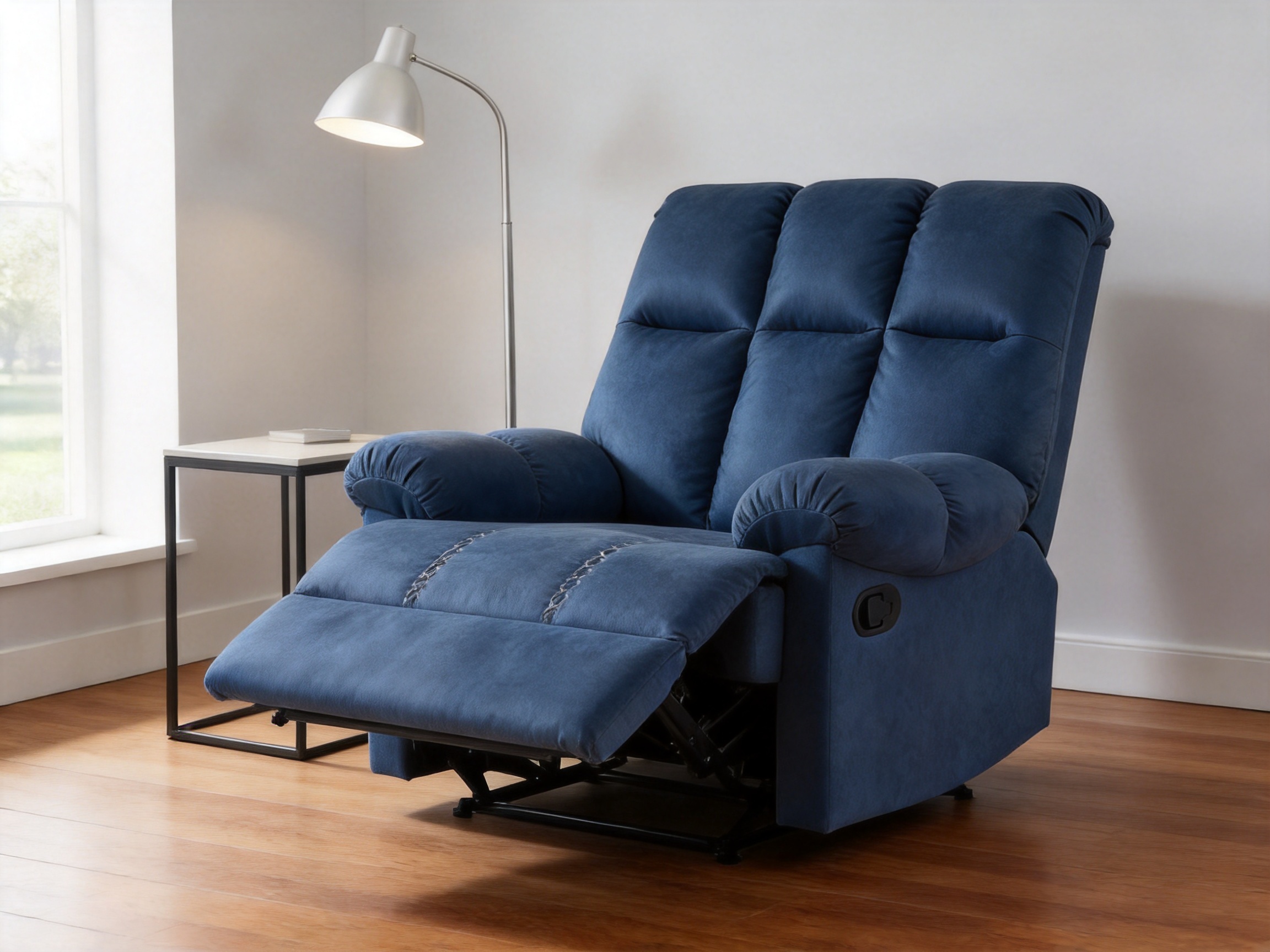
The chair uses a manual control system. After the control button is pulled, the footrest pops out automatically. The backrest then responds to the user’s body movement. By leaning backward with controlled pressure while the elbows rest on the armrests, the user can adjust the back into a preferred position. This straightforward operating method avoids the need for electrical connections, remote controls, motors, or charging systems.
The chair is upholstered in blue fabric as a standard presentation, while custom colors and fabric options are available. This flexibility allows buyers to coordinate the recliner with existing furniture collections, interior design schemes, retail programs, hotel projects, and private-label product lines.
| Product Feature | Specification or Benefit |
|---|---|
| Product type | Oversized manual adjustable recliner chair |
| Category | Manual recliner |
| Standard color | Blue |
| Customization | Custom colors and fabric options supported |
| Backrest adjustment | Approximately 90 to 150 degrees |
| Dimensions | 37 inches wide by 40.9 inches deep by 40.6 inches high |
| Weight capacity | Up to 350 pounds |
| Frame construction | Solid wood frame with sturdy wrought iron structure |
| Comfort materials | High-resilience foam, padded backrest, and soft armrests |
| Operating method | Pull-tab manual reclining mechanism |
| Recommended use | Seating, reading, television viewing, resting, and napping |
The combination of size, support, and manual functionality makes this product suitable for buyers who prioritize comfort without wanting the complexity of powered furniture. It also gives distributors a practical product to add to a broader seating portfolio.
Oversized Comfort for Everyday Use
One of the most important advantages of this recliner is its oversized seating design. Many standard recliners are built around a compact footprint, which can limit movement and create pressure around the shoulders, hips, or legs. An oversized chair gives the body more room to settle naturally. Users can sit upright, shift position, place their arms comfortably, or recline without feeling confined.
The generous proportions are particularly beneficial for larger users and for anyone who prefers a spacious lounge experience. A 350-pound weight capacity provides a clear indication that the chair is intended for substantial everyday use when properly assembled and used according to its design purpose. The solid wood frame and metal support structure work together to create a stable foundation beneath the cushions and upholstery.
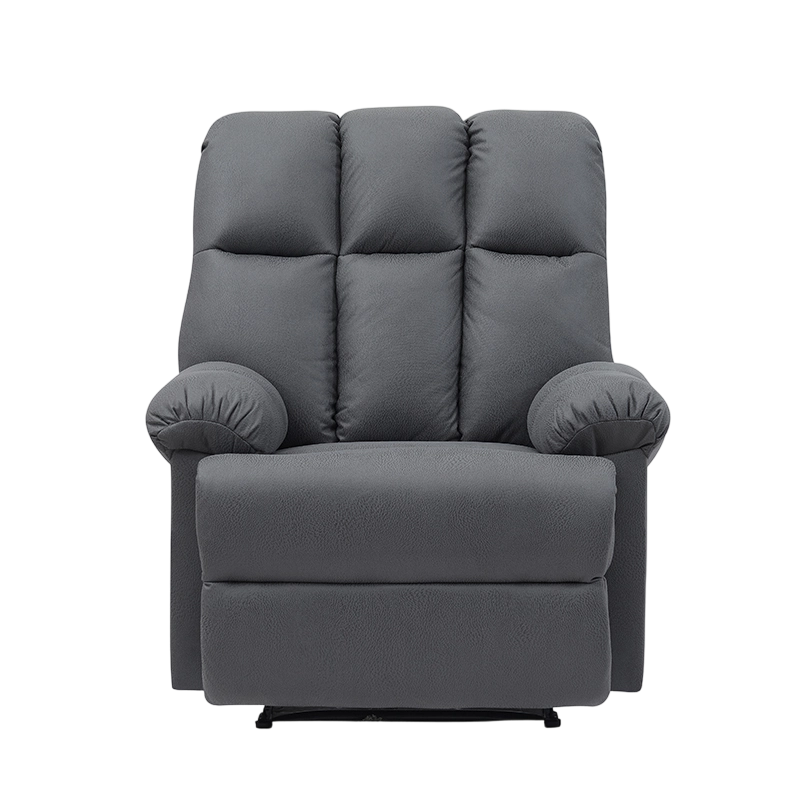
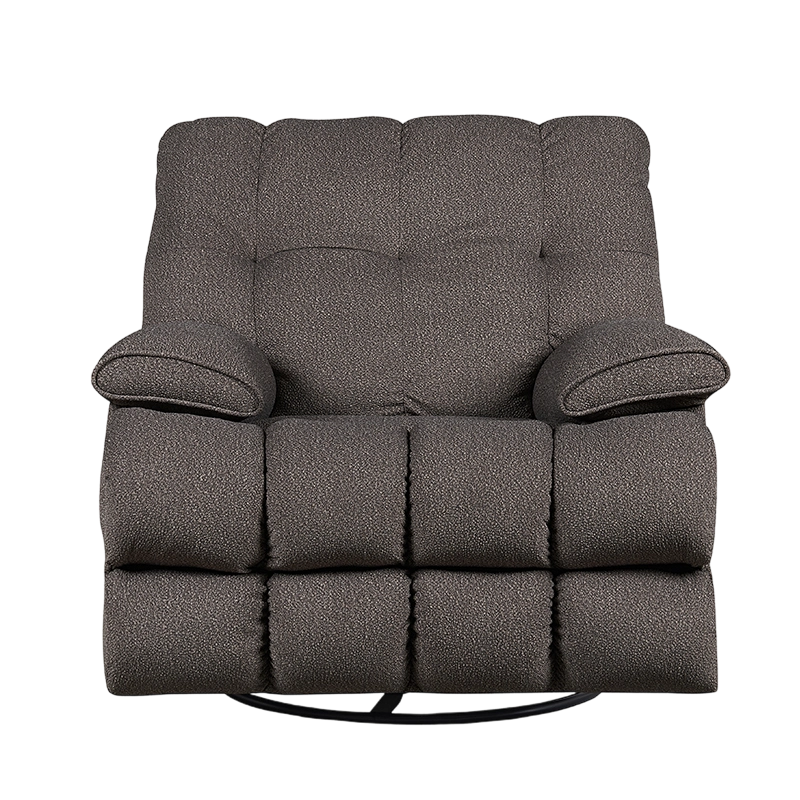
Comfort is also shaped by the details of the upper structure. The chair includes a comfortable backrest, a square tufted back, soft and plump armrests, and pillow-top arm and stitching accents. These features are not only visual decorations. They help create a more cushioned contact surface and contribute to the relaxed appearance expected from contemporary upholstered furniture.
The square tufted back adds surface definition and helps the chair maintain a structured look. In contrast to a completely flat back, tufting creates visual depth and gives the upholstery a more tailored appearance. The stitching accents reinforce the product’s crafted character, allowing it to fit comfortably into modern, transitional, and casual interior settings.
The pillow-top arms are especially useful for users who spend extended periods in the chair. Arm support can reduce the feeling of tension in the shoulders and provide a natural place to rest the elbows while operating the reclining function. This is consistent with the chair’s intended use: the user can sit back, place the arms comfortably, and adjust the position with controlled body movement.
Manual Adjustable Oversized Recliner Chair
Manual Reclining Functionality
The manual reclining system is one of the chair’s central product advantages. A pull-tab mechanism offers a direct and familiar method of operation. The user does not need to search for a remote control, connect the chair to a power outlet, replace batteries, or manage an electronic control panel. This makes the chair simple to operate in family rooms, bedrooms, guest spaces, reading areas, and locations where electrical access may be limited.
After the control button is pulled, the footrest releases and pops out automatically. The backrest can then be adjusted through body pressure. By leaning backward with an appropriate amount of strength, the user can move from an upright position toward a more relaxed angle. The adjustment range from approximately 90 degrees to 150 degrees supports several common activities.
| Chair Position | Typical Use | Practical Advantage |
|---|---|---|
| Approximately 90 degrees | Conversation, sitting, or standing up | Provides an upright posture and easy access to the front edge of the chair |
| Moderate recline | Reading or using a tablet | Supports the upper body while reducing the need to sit rigidly upright |
| Deeper recline | Watching television or relaxing | Creates a more relaxed angle for extended leisure time |
| Approximately 150 degrees | Resting or napping | Offers a near-flat resting position with the footrest extended |
A manual mechanism can also be attractive to buyers who value mechanical simplicity. Fewer electronic components can mean fewer concerns about motor noise, cable placement, remote loss, or electrical compatibility. For retailers and project purchasers, this can simplify product positioning and reduce the number of operating features that must be explained to customers.
Although the mechanism is easy to use, the footrest should be retracted correctly. The recommended method is to sit forward, lean forward, and use the heels to press against the middle of the footrest. This movement applies pressure in the appropriate area and helps the footrest return smoothly. Users should avoid forcing the footrest sideways or pushing against only one edge, as uneven pressure may place unnecessary strain on the mechanism.
Materials and Structural Construction
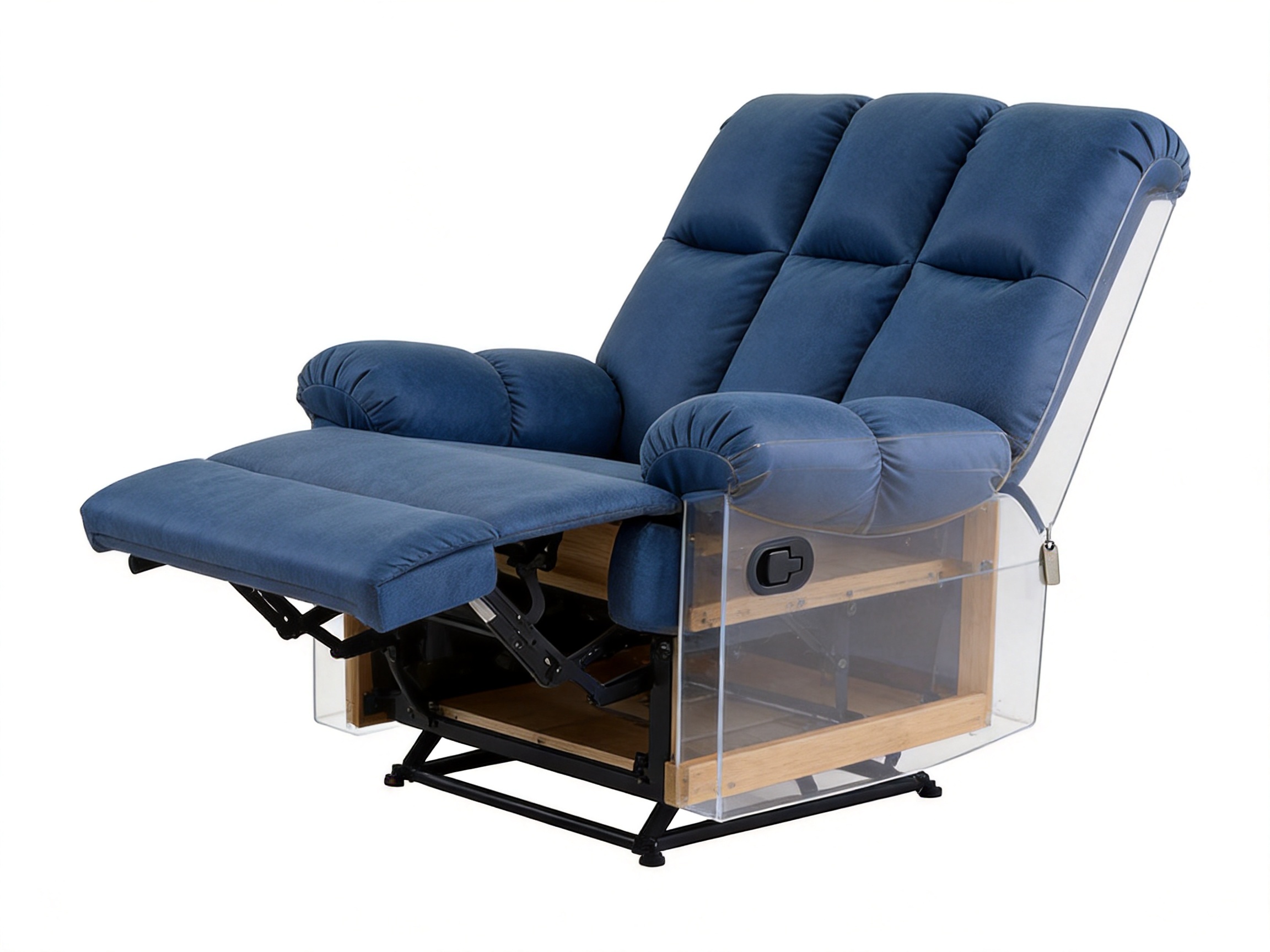
Long-term comfort depends on more than fabric and cushion softness. A recliner must also have a reliable internal structure capable of supporting repeated sitting, reclining, and returning to the upright position. This model uses a solid wood frame paired with a sturdy wrought iron structure. The wood provides a supportive base for the upholstered body, while the metal component contributes structural reinforcement for the reclining assembly and load-bearing areas.
This combination reflects an important furniture engineering principle: different materials can be used where their characteristics are most useful. Wood offers a familiar, stable foundation for upholstered furniture. Metal can provide additional rigidity and support in areas exposed to movement or concentrated loads. When properly integrated during manufacturing, the two materials create a balanced frame for a functional chair.
The high-resilience foam is selected to support durability and repeated use. Unlike very soft filling that may quickly lose its shape, high-resilience foam is intended to recover after compression and maintain a more consistent seating profile. It contributes to the chair’s supportive feel while helping the cushions remain comfortable over time.
The back, armrests, and seat must work together ergonomically. A backrest that is too rigid can make extended use uncomfortable, while a cushion that is too soft may provide insufficient support. The product’s padded back and plump arm construction are designed to create a balanced lounge experience. The user receives cushioning at the primary contact points while the frame maintains overall stability.
The upholstery is described as skin-friendly and delicate fabric. This type of surface is suitable for interiors where tactile comfort and a soft visual appearance are important. The fabric also allows the chair to be offered in multiple color and material options, creating opportunities for customization according to regional market preferences or customer specifications.
Upholstery Appearance and Care
Upholstery affects the first impression of a recliner. A blue fabric finish presents a calm and versatile appearance that can complement neutral walls, wood flooring, contemporary décor, and casual living spaces. The square tufted back and stitching accents give the chair additional visual structure, preventing the oversized silhouette from appearing plain or unfinished.
For customers seeking a coordinated furniture collection, custom fabric and color support is an important advantage. A retailer may request a specific shade for a seasonal assortment. A hospitality buyer may need upholstery that matches a design concept. A project purchaser may require several colors for different room types. Customization can also help private-label brands create a more distinctive range rather than selling an undifferentiated standard product.
The recommended care method should be followed carefully. The fabric care instructions specify cleaning with dry-cleaning solvent only and advise users not to saturate the upholstery with water. Pile fabrics may require brushing to restore their appearance. These instructions are important because excessive moisture can affect upholstery texture, internal padding, or the appearance of the pile.
Routine care should begin with prevention. Users can reduce wear by avoiding sharp objects, keeping pets from scratching the fabric, and addressing spills as soon as possible according to the fabric supplier’s recommendations. The chair should also be positioned away from extreme heat sources and prolonged direct sunlight when possible. Regular gentle brushing or vacuuming with a suitable upholstery attachment can help remove surface dust without applying excessive pressure.
Because fabric performance can vary by selected material, buyers placing customized orders should request the applicable care instructions for the final upholstery option. A clear care guide helps retailers and end users preserve the chair’s appearance and reduces the risk of using an unsuitable cleaning method.
Advantages Compared with Conventional Recliners
The Manual Adjustable Oversized Recliner Chair has several advantages when compared with compact fixed chairs, basic lounge chairs, and some powered recliners. Its main distinction is that it combines spacious proportions with functional adjustment. A fixed lounge chair may offer comfort but cannot provide a footrest or reclining back. A compact recliner may provide adjustment but feel restrictive for larger users. This model addresses both needs in one product.
More Space Than a Compact Recliner
The 37-inch width provides a broad seating area. This is useful for users who prefer to change posture, sit with additional personal space, or enjoy a less confined chair. The deeper 40.9-inch dimension also supports a more substantial seat profile, which is valuable when the chair is used for extended relaxation.
Simple Operation Without Electrical Dependence
Compared with power recliners, the manual design does not require a motor, power cord, or electrical outlet. This can make placement easier and reduce visible cables in a room. It can also be practical for markets where customers prefer mechanically operated furniture or where electrical compatibility is a concern.
Versatile Positioning
The adjustment range supports multiple activities rather than a single sitting posture. The chair can remain upright for conversation, move to a moderate angle for reading, and recline further for television viewing or naps. This versatility increases the chair’s functional value and can make it suitable for several rooms within the same home.
Strong Support for Frequent Use
The solid wood frame, wrought iron structure, and high-resilience foam are selected to support regular use. The product is not designed merely as a decorative accent. It is a functional seating product intended to withstand the normal demands of sitting and reclining when used appropriately.
Customization Potential
Color and fabric customization gives the product a wider market range than a single-finish chair. Buyers can adjust the appearance for different customer groups, interior styles, price tiers, and distribution channels. This is particularly useful for importers, furniture retailers, hospitality suppliers, and brands building a coordinated upholstery collection.
Comfort-Oriented Details
The tufted back, pillow-top arms, soft upholstery, and generous dimensions create a more complete comfort package than a chair with only a basic reclining frame. Each feature contributes to the overall user experience, from the first impression in a showroom to extended use at home.
Manufacturing Capabilities and Company Strengths
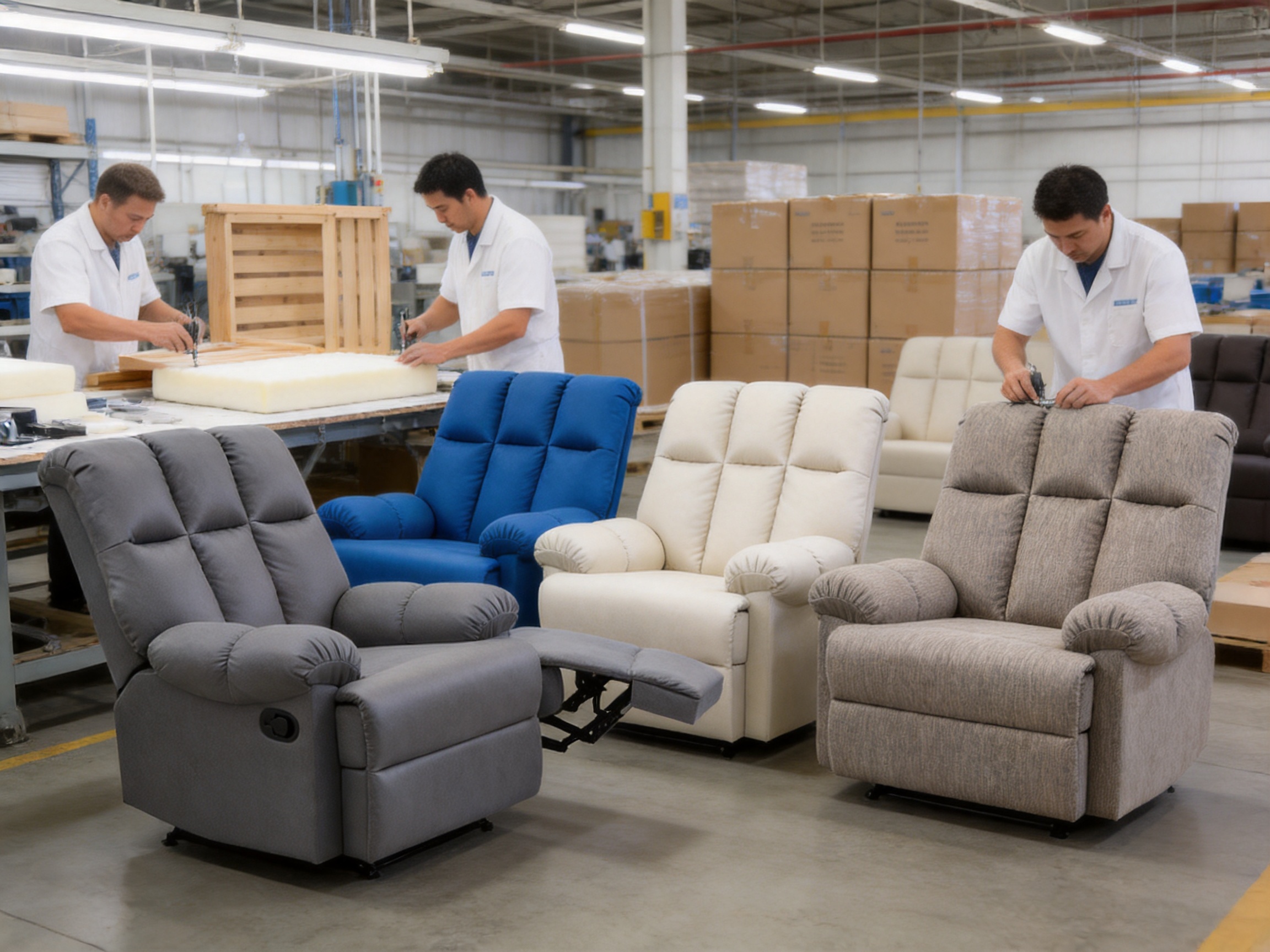
Anji Xuanbo Household Co., Ltd. was established in 2021 in Anji County, Huzhou City, Zhejiang Province. Anji is internationally recognized as an important center of chair manufacturing. The company operates from a factory of approximately 8,000 square meters and employs more than 100 people. Its business combines research and development, industrial design, large-scale manufacturing, independent marketing, and technical services.
This combination is significant for buyers seeking more than a single finished product. A supplier with design and manufacturing capabilities can participate earlier in the product development process. Instead of simply selecting an existing chair, customers can discuss dimensions, fabrics, colors, functions, packaging, and market positioning with a manufacturer familiar with the complete production chain.
The company’s product scope includes functional sofas, fixed sofas, corner sofas, lounge chairs, recliner sofas, love seats, and leisure chairs. This broad range supports coordinated sourcing. A buyer interested in the oversized recliner may also require matching sofas, accent chairs, or other seating products. Working with a manufacturer that understands multiple seating categories can help maintain a consistent design language across a collection.
One stated advantage is full-chain cost and capacity control through the company’s own wooden frame factory and sponge processing plant. Vertical control of these important components can improve coordination between design and production. It may also help the manufacturer respond more efficiently to custom dimensions, foam requirements, frame modifications, and production scheduling needs.
Internal control over key components can support quality consistency as well. The wooden frame and foam are central to the performance of an upholstered recliner. If these parts are sourced and processed without adequate coordination, variations in dimensions or material properties can affect assembly and comfort. A connected manufacturing system gives the company greater opportunity to monitor these stages and align them with the finished product.
The company also emphasizes strong customization capabilities and strict multi-stage quality inspection. For international furniture buyers, multi-stage inspection is valuable because quality should be evaluated throughout production rather than only at the end. Potential checkpoints may include frame assembly, mechanism installation, foam preparation, upholstery sewing, final appearance, functional movement, packaging, and loading readiness.
Specific inspection criteria should be agreed upon for each order. These may include dimensions, fabric color, seam alignment, surface appearance, mechanism operation, load-related requirements, carton labeling, hardware completeness, and packaging condition. Clear specifications help transform a general product request into a measurable production standard.
Research, Development, and Design Integration
Furniture design is most effective when appearance, ergonomics, structure, production efficiency, and market requirements are considered together. The Manual Adjustable Oversized Recliner Chair reflects this integrated approach. Its generous proportions provide a clear market position, while the manual function keeps operation straightforward. The tufted back and pillow-top arms add visual appeal without changing the chair’s essential usability.
Research and development in upholstered seating may involve evaluating sitting posture, cushion recovery, reclining movement, frame support, fabric compatibility, and assembly methods. A chair that looks attractive but is difficult to operate will not create a strong customer experience. Likewise, a chair with good mechanics but poor upholstery may not perform well in a retail environment. Product development must therefore address both visible and hidden elements.
Industrial design also affects shipping, assembly, storage, and display. Oversized recliners require careful planning because their dimensions influence carton size, warehouse space, container utilization, and delivery handling. Manufacturers with experience in both product design and large-scale production are better positioned to review these practical issues during development.
The company’s location near major furniture manufacturing resources and export infrastructure supports this integrated operating model. The business is situated in Zhejiang Province, with convenient access to Ningbo Beilun Port for export logistics. This location can support international shipment planning for customers in North America, Europe, the Middle East, and other markets served by the company.
Quality Control Considerations
Quality control for a manual recliner should cover more than appearance. Because the chair includes moving parts and a load-bearing frame, the product should be evaluated as a complete functional system. A practical quality program may include the following stages:
Frame Inspection
The solid wood frame should be checked for correct dimensions, secure joints, and visible defects that could affect strength or upholstery appearance. The wrought iron structure should be inspected for correct forming, stable attachment, and a finish appropriate for the internal application.
Foam and Cushion Inspection
Foam dimensions, resilience, density requirements, and placement should be reviewed according to the approved specification. The seat and back should be shaped consistently so that the finished chair maintains a balanced appearance and comfortable support.
Mechanism Inspection
The pull-tab mechanism and footrest should be checked for smooth movement. Inspectors should verify that the footrest extends correctly after the control is pulled and that the backrest responds appropriately to user pressure. The return method should also be tested to confirm that the footrest can retract using the recommended technique.
Upholstery Inspection
Fabric color, texture, cutting direction, seam quality, tufting, stitching, wrinkles, and overall fit should be evaluated. On a chair with a square tufted back and pillow-top arms, visual alignment is especially important because uneven lines may be noticeable in a showroom or finished room.
Final Assembly Inspection
The completed product should be checked for stability, dimensions, operating performance, surface finish, labeling, protective materials, and packaging readiness. A final inspection helps ensure that the chair presented to the customer matches the approved product sample and order requirements.
For customized orders, the approved sample should serve as a reference for color, fabric hand feel, stitching, dimensions, and overall appearance. Documentation is useful at each stage because it enables the buyer and manufacturer to share the same expectations.
Applications in Residential and Commercial Interiors
The chair is primarily suited to residential living rooms, family rooms, television rooms, home libraries, bedrooms, and personal relaxation spaces. Its oversized form makes it a natural choice for users who want a dedicated comfort chair rather than a small occasional seat.
It can also be considered for selected commercial and hospitality applications. Reading rooms, private lounges, serviced apartments, senior living environments, residential care settings, and entertainment areas may benefit from a chair that combines simple manual operation with a broad seating profile. Commercial buyers should evaluate traffic levels, cleaning requirements, fire and safety specifications, and local regulations when selecting upholstery and construction details.
For furniture retailers, the product can serve as a hero item in a recliner display. Its large scale is visually noticeable, while the reclining function allows customers to experience the product directly in a showroom. Demonstrating the pull-tab control and footrest operation can help shoppers understand the chair’s value more quickly than a static display would.
For online sellers, the product description should clearly communicate its dimensions, weight capacity, operating method, fabric care requirements, and recommended room size. Oversized furniture requires accurate information because customers need to measure doorways, stairways, elevators, and available floor space before purchase.
For project buyers, custom fabric and color options can support visual consistency across multiple rooms. The manufacturer’s ability to produce different seating categories may also help with full-room or multi-property sourcing. Buyers can discuss whether the recliner should coordinate with sofas, love seats, corner sofas, or leisure chairs in the same collection.
Ordering and Customization Opportunities
Customization begins with the selection of the upholstery. Customers may request a specific fabric family, color, texture, or finish subject to material availability and production requirements. The standard blue option provides a clear reference point, but custom colors can help products align with local preferences or a brand’s visual identity.
Buyers should also confirm the final dimensions, packaging requirements, product labeling, carton markings, hardware instructions, and any assembly expectations before production. If the chair is intended for a particular market, the buyer should provide the applicable compliance and documentation requirements at the beginning of the project.
Additional discussions may include sample approval, order quantity, production lead time, shipping terms, inspection arrangements, spare components, and after-sales support. Clear communication is particularly important for recliners because the product includes a moving mechanism that must be protected during packing and transportation.
A professional manufacturer can assist with the transition from concept to mass production. The process may begin with product selection and market discussion, continue through fabric and sample confirmation, and then proceed to manufacturing, inspection, packaging, and export. This structured process helps reduce misunderstandings and gives the buyer opportunities to review important details before a full order is completed.
Packaging, Logistics, and Export Support
Furniture logistics require attention to both protection and efficiency. An oversized recliner has a larger volume than a conventional chair, so packaging should protect the upholstery, armrests, back, footrest, and mechanism while avoiding unnecessary external space. Protective wrapping, corner protection, moisture control, and strong outer cartons may be considered according to the shipment method and destination.
The packaging design should prevent the footrest or reclining structure from receiving concentrated pressure during handling. The upholstery should be protected from abrasion, dust, and moisture. Carton labels should clearly identify the product, quantity, orientation, handling requirements, and buyer-specific information when needed.
Anji Xuanbo’s location in Zhejiang Province provides access to established furniture manufacturing networks and export routes. Convenient logistics near Ningbo Beilun Port can support container planning and international shipment coordination. The company states that it serves markets including North America, Europe, the Middle East, and other international regions.
Importers should still confirm all shipping details for each order, including packing dimensions, gross and net weight, container loading quantities, documentation, labeling, and destination requirements. These details can vary according to the selected fabric, packaging method, order quantity, and market.
Why the Product Is a Practical Competitive Choice
Competition in the upholstered furniture market is based on a combination of comfort, appearance, reliability, price, delivery capability, and customization. The Manual Adjustable Oversized Recliner Chair is competitive because it addresses several of these factors simultaneously.
First, it has a clear product identity. It is not simply a basic armchair and not merely a compact recliner. It is an oversized manual recliner designed for users who value roomier seating and multiple resting positions. This makes it easier for retailers and distributors to present to a defined customer group.
Second, it offers mechanical simplicity. Some customers prefer the convenience of powered movement, but others value a recliner that operates without electricity. The manual pull-tab function can be dependable, straightforward, and easier to place in different rooms. It also eliminates certain electronic components that may increase product complexity.
Third, it combines comfort details with a supportive structure. The tufted back, soft armrests, pillow-top treatment, high-resilience foam, solid wood frame, and wrought iron support are not isolated features. Together, they create a product intended for extended use and a visually complete presentation.
Fourth, it supports customization. A manufacturer that can adjust fabric and color gives buyers more control over market positioning. This is particularly important when competing products look similar. A distinct upholstery selection or coordinated furniture program can help a retailer create a recognizable assortment.
Fifth, it is backed by a company with manufacturing resources beyond final assembly. The company’s own wooden frame factory and sponge processing plant can support better coordination of core materials. Its approximately 8,000-square-meter factory, workforce of more than 100 employees, and multi-category product expertise provide a foundation for larger and repeat orders.
Finally, the company emphasizes quality, service, honest cooperation, and long-term development. For international buyers, supplier stability and communication are important competitive factors. Product performance matters, but so do production consistency, response speed, customization support, inspection procedures, and export coordination.
Buyer Evaluation Checklist
Before placing an order, buyers should assess the recliner according to the requirements of their market and customers. The following checklist can help organize the evaluation:
| Evaluation Area | Questions for Buyers |
|---|---|
| Dimensions | Will the chair fit the intended room, doorway, elevator, and delivery route? |
| Comfort | Does the seat, back, and armrest provide the desired level of support? |
| Reclining function | Does the pull-tab mechanism operate smoothly and consistently? |
| Footrest | Does the footrest extend and retract correctly using the recommended method? |
| Materials | Are the frame, metal structure, foam, and upholstery suitable for the expected use? |
| Appearance | Are the tufting, seams, stitching, fabric color, and overall finish acceptable? |
| Customization | Can the supplier provide the required fabric, color, labeling, or packaging? |
| Quality inspection | Are inspection standards and approval procedures clearly documented? |
| Logistics | Are packing dimensions, shipping quantities, and export documents confirmed? |
| After-sales support | Are operating instructions, care instructions, and replacement procedures available? |
A careful evaluation process helps buyers compare the chair with competing products on measurable criteria rather than appearance alone. It also encourages clear communication before production begins.
Care, Use, and Longevity
Correct use can extend the service life of a recliner. Users should operate the pull-tab control as intended and avoid placing excessive force on the armrests, backrest, or footrest. The chair should be used on a stable, level floor so that the frame and reclining mechanism remain properly supported.
When retracting the footrest, users should sit forward, lean forward, and press the middle of the footrest with the heels. This labor-saving method helps guide the footrest into the closed position. Pushing unevenly from one side or attempting to force the mechanism while standing may create unnecessary stress.
The upholstery should be maintained according to the supplied care instructions. Dry-cleaning solvent should be used only in the recommended manner, and the fabric should not be saturated with water. If the material has a pile, gentle brushing may restore its surface appearance after regular use.
Users should avoid standing on the footrest, sitting on the armrests, or exceeding the stated 350-pound weight capacity. These actions can place loads on parts of the chair that are not designed to support them. Basic care and responsible operation are important for preserving both safety and comfort.
Frequently Asked Questions
What type of product is this?
This is an oversized manual adjustable recliner chair. It includes a pull-tab reclining mechanism, an automatically extending footrest, a padded backrest, soft armrests, and a spacious seating profile.
How does the reclining mechanism work?
The user pulls the control button to release the footrest. The backrest can then be adjusted by leaning backward with controlled pressure while using the armrests for support. The reclining range is approximately 90 to 150 degrees.
Does the chair require electricity?
No. It is a manual recliner and does not require a motor, power cord, battery, or electrical outlet for normal operation.
What is the standard color?
The standard presentation is blue. Custom colors and fabric options are available for buyers who need a different appearance or coordinated furniture collection.
What are the chair’s dimensions?
The stated dimensions are approximately 37 inches wide, 40.9 inches deep, and 40.6 inches high. Buyers should confirm final packed and assembled dimensions for logistics and installation planning.
What is the weight capacity?
The stated weight capacity is 350 pounds. The chair should be used on a stable surface and should not be overloaded or used in ways outside its intended design.
What materials are used in the structure?
The chair uses a solid wood frame paired with a sturdy wrought iron structure. High-resilience foam, upholstered fabric, and padded arm and back components contribute to the comfort and finished appearance.
Is the chair suitable for reading?
Yes. The upright and moderate reclining positions are suitable for reading, using a tablet, or relaxing with a book. Users should select the angle that provides comfortable support for their posture.
Can the chair be used for sleeping?
The chair can provide a deeply reclined resting position and is described as suitable for napping. It should be regarded as a recliner for occasional rest rather than a replacement for a dedicated bed.
How should the footrest be retracted?
The recommended method is to sit forward, lean forward, and use the heels to press against the middle of the footrest. This helps retract the footrest with less effort and more even pressure.
How should the upholstery be cleaned?
The supplied instructions specify cleaning with dry-cleaning solvent only and advise users not to saturate the fabric with water. Pile fabrics may require brushing to restore their appearance. Buyers should confirm instructions for the final custom fabric selection.
What makes the chair different from a powered recliner?
The manual design does not depend on electricity or electronic controls. It may be easier to place, operate, and maintain in settings where customers prefer mechanical simplicity. Powered recliners may offer different features, so the best choice depends on the buyer’s target market.
Can retailers order custom upholstery?
Yes. The manufacturer supports custom colors and fabric options. Buyers should discuss available materials, minimum quantities, sample approval, production schedules, and care requirements before confirming an order.
Does the manufacturer produce other furniture?
Yes. The company specializes in functional sofas, fixed sofas, corner sofas, lounge chairs, recliner sofas, love seats, leisure chairs, and related upholstered seating products. This supports coordinated sourcing for broader furniture collections.
What manufacturing strengths does the company offer?
The company operates an approximately 8,000-square-meter factory, employs more than 100 people, and integrates research and development, industrial design, manufacturing, marketing, and technical services. It also has its own wooden frame factory and sponge processing plant, supporting control over important components.
Which markets does the company serve?
The company exports to North America, Europe, the Middle East, and other international regions. Specific shipping arrangements, documentation, and market requirements should be confirmed for each order.
Conclusion
The Manual Adjustable Oversized Recliner Chair is a practical combination of spacious comfort, straightforward manual operation, durable structural components, and adaptable upholstery design. Its broad 37-inch profile gives users room to relax, while the adjustable backrest and pop-out footrest support sitting, reading, television viewing, resting, and napping.
The product’s advantages over more basic seating options include a larger seating area, a functional reclining range, padded comfort details, high-resilience foam, a solid wood and wrought iron structure, and a 350-pound weight capacity. Compared with powered recliners, the manual design offers a simpler operating system without electrical dependence.
For buyers, the product is also supported by a manufacturer with experience across multiple upholstered furniture categories. Anji Xuanbo Household Co., Ltd. combines industrial design, research and development, manufacturing, customization, quality inspection, and export support. Its own wooden frame and sponge processing facilities provide greater control over key components, while its location in Anji supports access to the broader chair manufacturing ecosystem.
With custom fabric and color options, the chair can be adapted for furniture retailers, distributors, private-label brands, hospitality projects, and residential customers. When paired with correct operation, appropriate fabric care, clear quality standards, and careful logistics planning, it offers a strong foundation for a comfortable and commercially versatile recliner program.
References
1. Product specification and supplied information for the Manual Adjustable Oversized Recliner Chair, product code 8552.
2. Upholstered Furniture Construction and Performance Considerations, general furniture manufacturing reference material.
3. Textile and Upholstery Care Principles, general fabric maintenance reference material.
4. Ergonomic Seating Design Guidelines, general reference for posture, support, and reclined seating.
5. International Furniture Packaging and Export Handling Practices, general logistics reference material.
6. Company profile and manufacturing information supplied by Anji Xuanbo Household Co., Ltd.
7. General quality-control principles for upholstered furniture frames, foam components, upholstery, and reclining mechanisms.
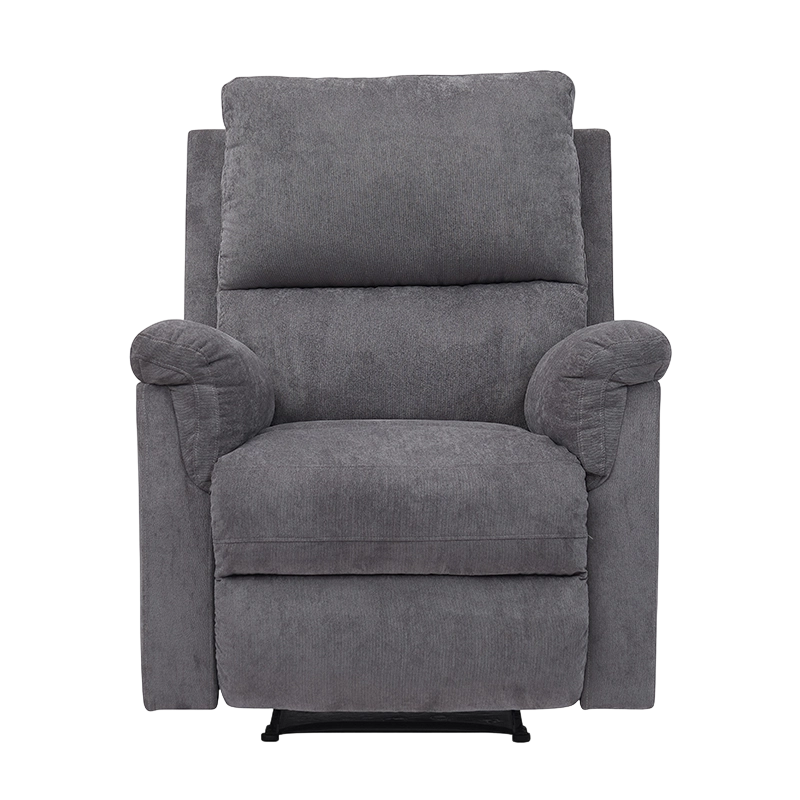
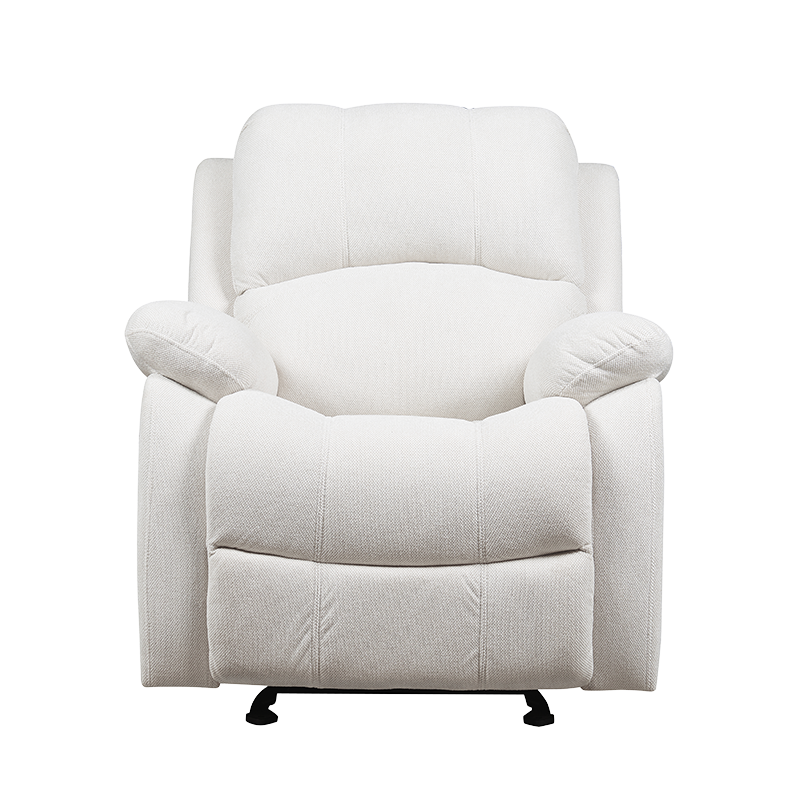
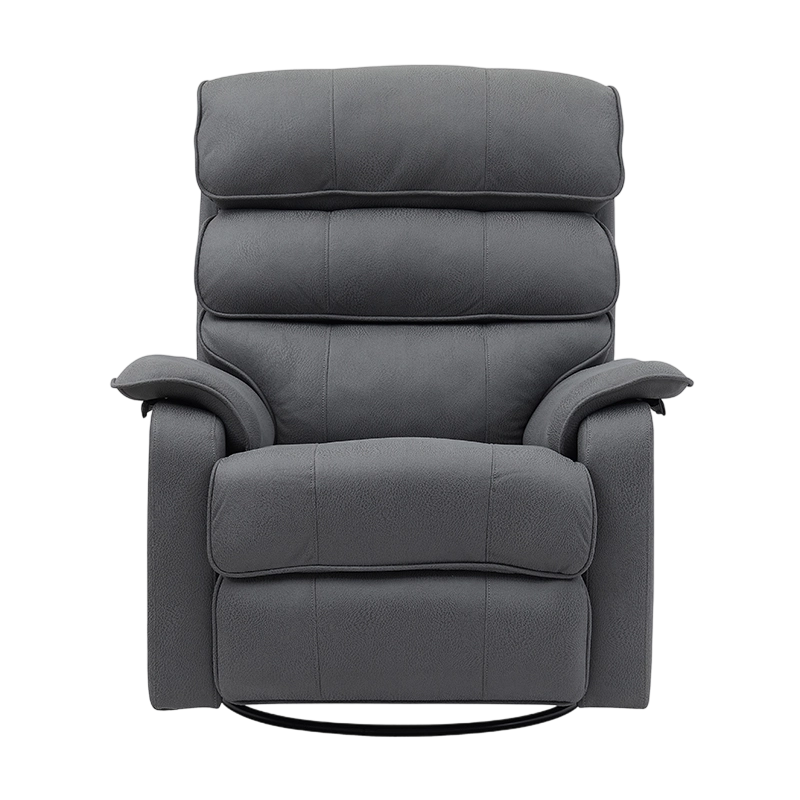
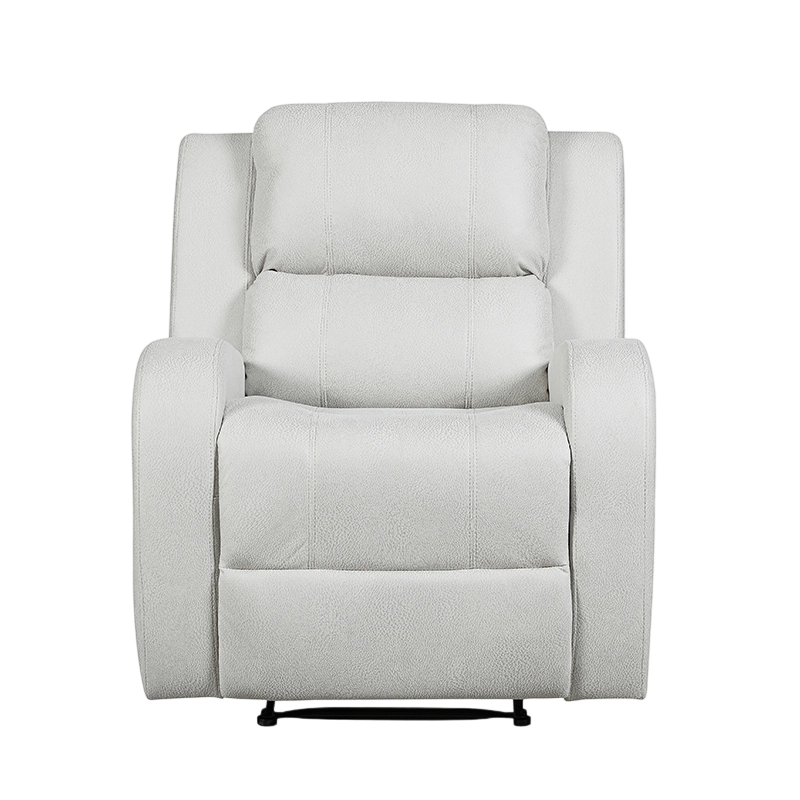
Product: Manual Adjustable Oversized Recliner Chair

LET'S TALK

Bai Shuiwan Industrial Park, Tian Huangping Town, Anji County, Huzhou City, Zhejiang Province, China
More About Us 
-
+86 18257273741
-
[email protected]
CONTACT US
Copyright © Anji Xuanbo Household Co., Ltd. All Rights Reserved.
Custom Modern Upholstered Sofa Manufacturers


