Focus on the manufacturing and export of functional sofas
-
 +86 18257273741
-
 [email protected]

 English
 Español
Chen Meilin — International Sales Representative
 Home / Author / Chen Meilin — International Sales Representative / Velvet Manual Reclining Chair with Swivel and Rocker: Comfort, Function, and Manufacturing Excellence
 Velvet Manual Reclining Chair with Swivel and Rocker: Comfort, Function, and Manufacturing Excellence
 2026.07.26
 Chen Meilin — International Sales Representative
Content
- 1 1. A Recliner Designed Around Everyday Comfort
- 2 2. Velvet Upholstery with Decorative Appeal
- 3 3. Three Movement Functions in One Chair
- 4 4. Adjustable Positions for Different Activities
- 5 5. Practical Features for Home and Commercial Use
- 6 6. Construction Focused on Stability and Product Consistency
- 7 7. Advanced Manufacturing Capabilities
- 8 8. Advantages Compared with Conventional Recliners
- 9 9. A Strong Product for International Buyers
- 10 10. Quality Control from Frame to Finished Upholstery
- 11 11. Packaging, Delivery, and Installation Considerations
- 12 12. Care and Maintenance of Velvet Upholstery
- 13 13. Suitable Applications and Target Markets
- 14 14. Customization and Product Development Support
- 15 15. Why Manufacturing Integration Matters
- 16 16. Product Specification Summary
- 17 17. Q&A: Frequently Asked Questions
- 17.1 Q1: What makes this chair different from a regular recliner?
- 17.2 Q2: Does the chair require electricity?
- 17.3 Q3: How far can the chair recline?
- 17.4 Q4: Can the chair swivel completely around?
- 17.5 Q5: Does the chair rock?
- 17.6 Q6: What color is available?
- 17.7 Q7: What type of upholstery does the chair use?
- 17.8 Q8: How should the velvet be cleaned?
- 17.9 Q9: What is the chair’s weight capacity?
- 17.10 Q10: What are the chair’s dimensions?
- 17.11 Q11: How is the footrest retracted?
- 17.12 Q12: Is the chair suitable for international wholesale orders?
- 17.13 Q13: Can the manufacturer support custom furniture projects?
- 17.14 Q14: What manufacturing advantages does the company provide?
- 17.15 Q15: Is the chair appropriate for hospitality interiors?
- 18 18. Overall Evaluation
- 19 References
- 20 Product: Velvet Manual Reclining Chair with Swivel and Rocker
Modern living spaces increasingly demand furniture that does more than fill a room. Homeowners, hospitality buyers, property developers, and furniture retailers are looking for seating that combines visual appeal, practical movement, dependable construction, and long-term comfort. The Velvet Manual Reclining Chair with Swivel and Rocker answers these needs with a balanced design that brings together upholstered style, ergonomic support, flexible positioning, and efficient manual operation.
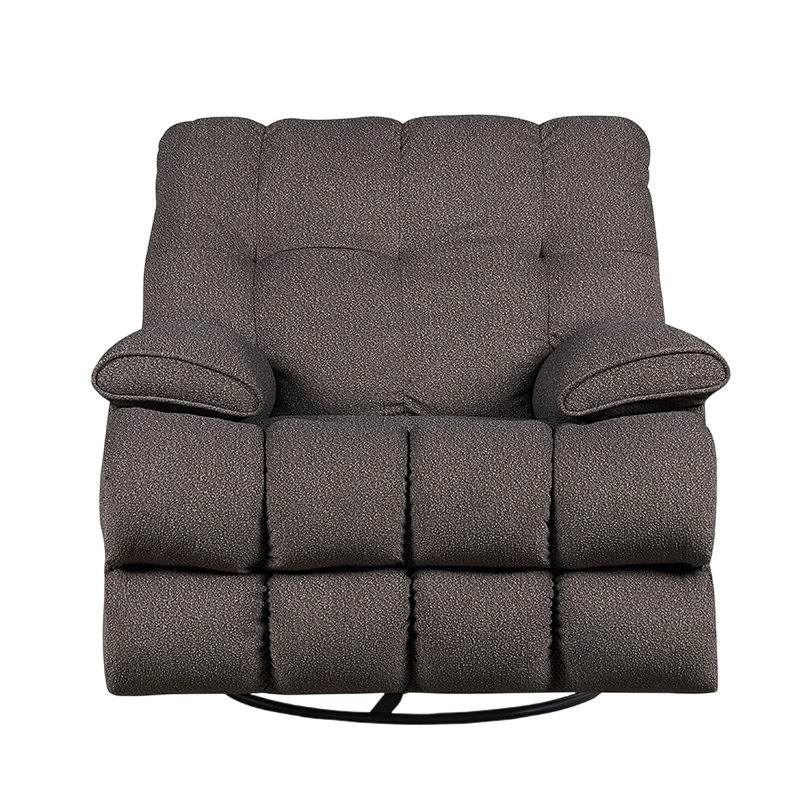
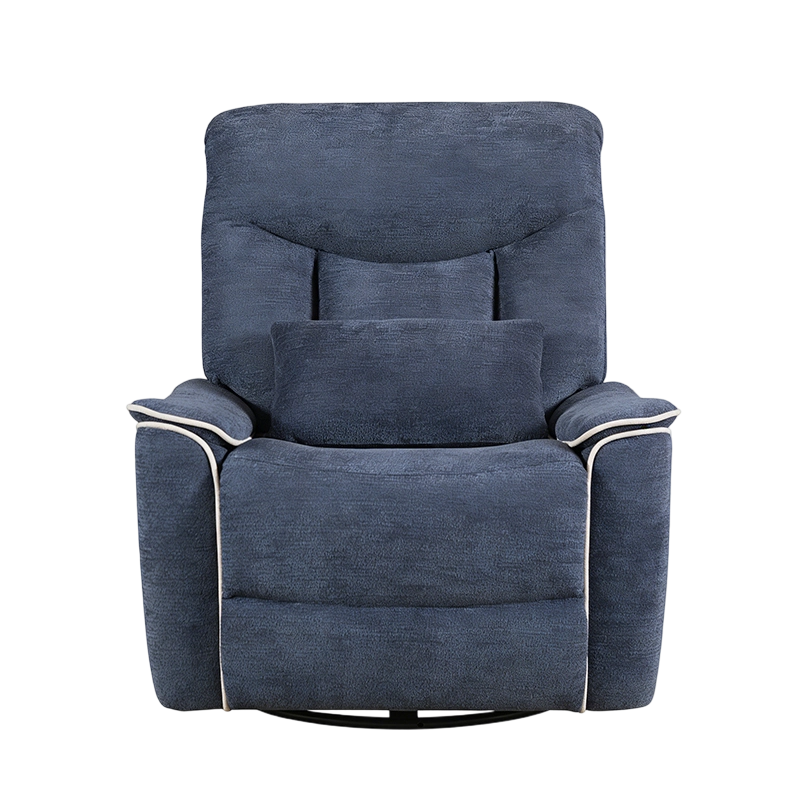
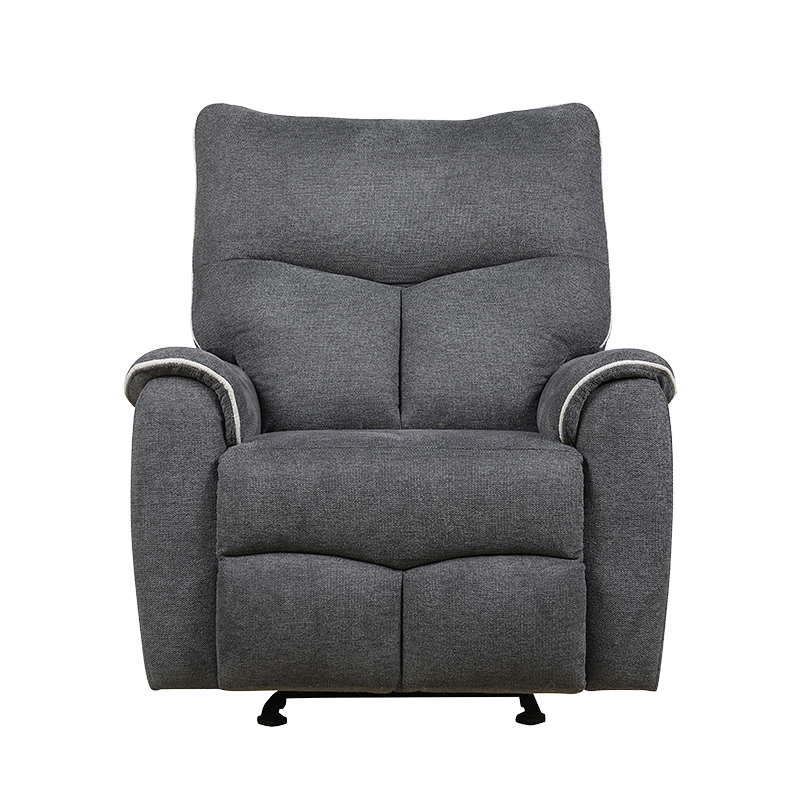
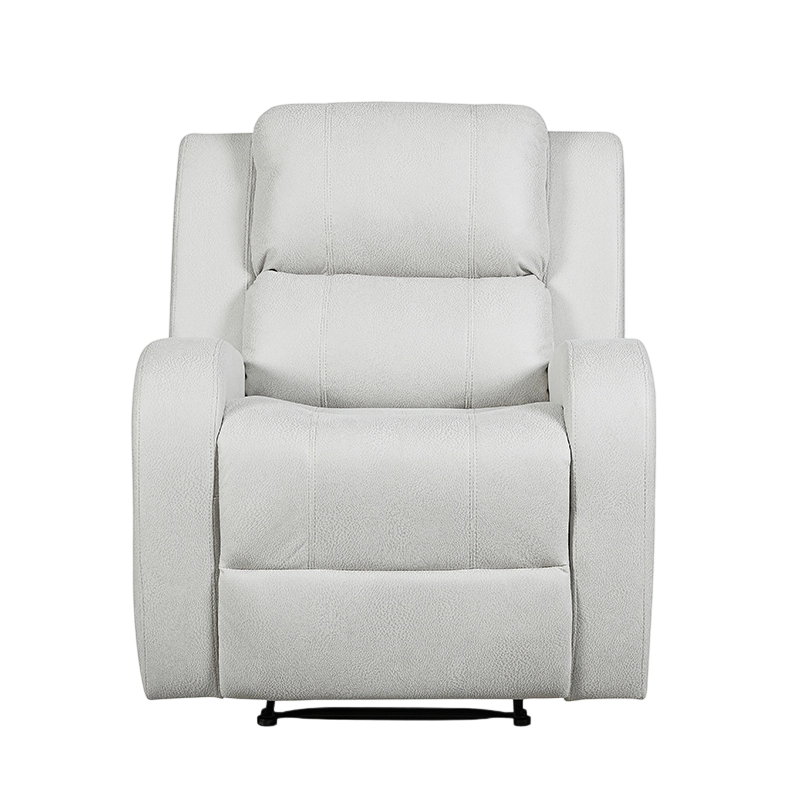
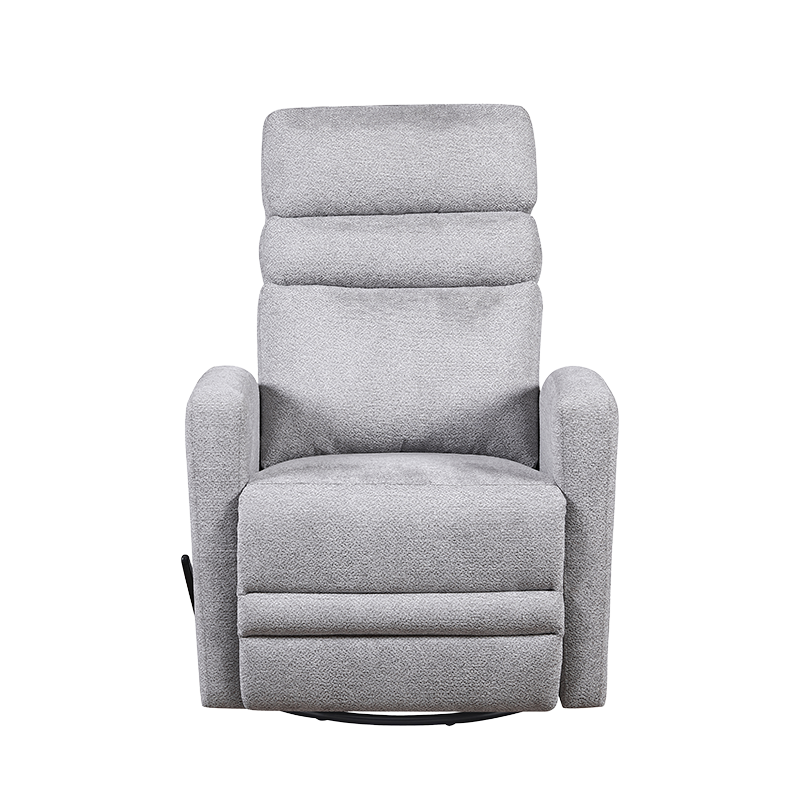
Designed for reading, watching television, relaxing, or taking a nap, this reclining chair is made to become a practical centerpiece of a living room, entertainment space, bedroom, lounge, or hospitality environment. Its solid-hue velvet upholstery gives the chair a refined appearance, while square tufted panels, pillowtop arms, and generous padding create a welcoming seating experience. Unlike a conventional stationary armchair, it combines reclining, rocking, and 360-degree swiveling in a single product.
The chair is also designed with commercial practicality in mind. Its plywood frame construction provides a stable foundation, the manual mechanism avoids dependence on electrical components, and the pull-tab control makes adjustment simple. The chair can be positioned between approximately 90 and 150 degrees, supporting upright sitting, relaxed reading, and more reclined resting positions.
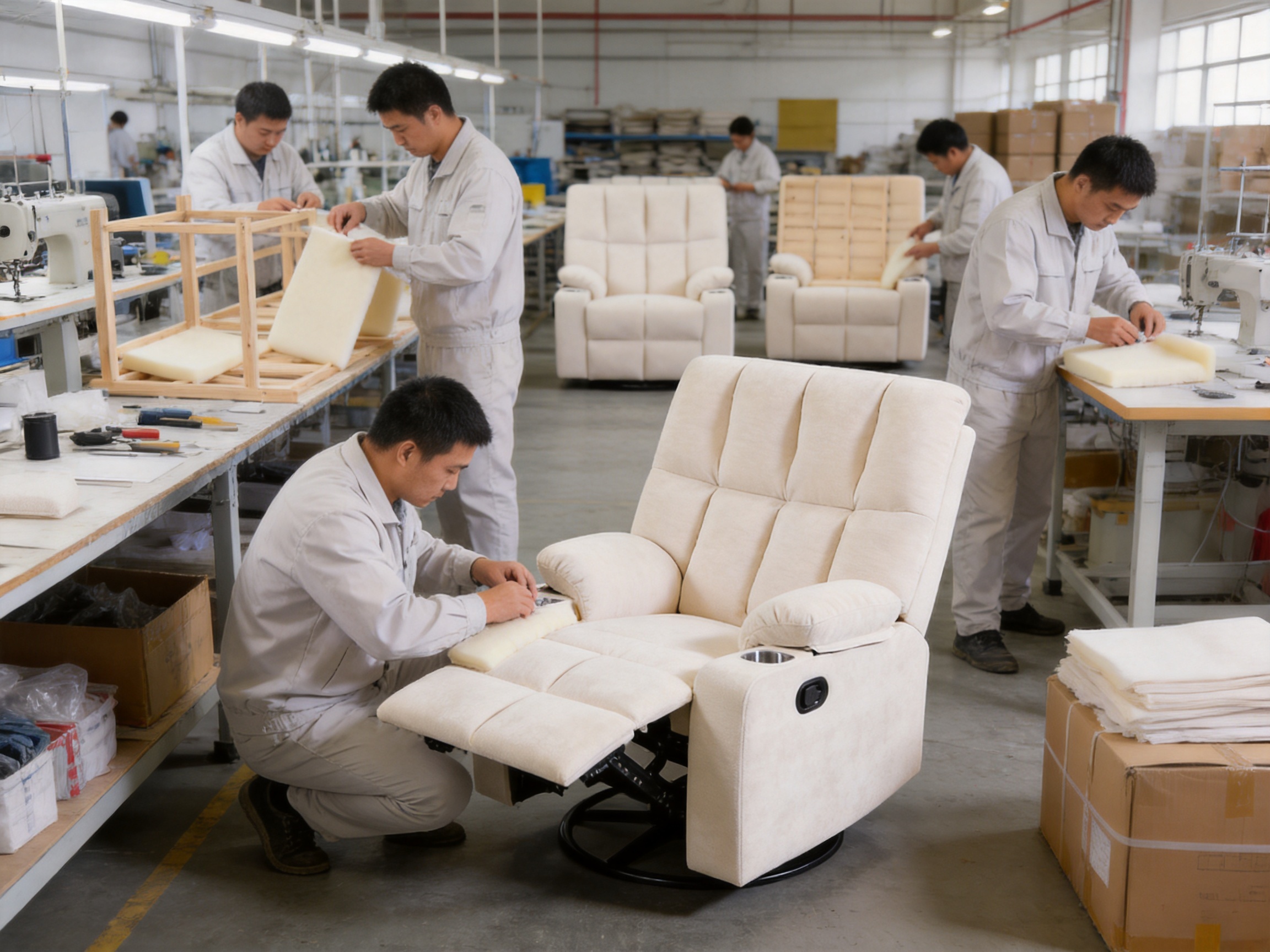
Behind the product is Anji Xuanbo Household Co., Ltd., a furniture manufacturer based in Anji County, Huzhou City, Zhejiang Province. Located in a region widely recognized for its chair manufacturing expertise, the company integrates research and development, industrial design, frame production, sponge processing, upholstery, quality inspection, and export services. This integrated approach supports product consistency, customization, and efficient cooperation with international buyers.
1. A Recliner Designed Around Everyday Comfort
The primary purpose of a recliner is to provide a more comfortable way to sit and rest. This chair achieves that purpose through the relationship between its seat, backrest, arms, footrest, and movement functions. Rather than relying on a rigid upright posture, the chair allows users to change their position according to the activity they are performing.
At approximately 90 degrees, the chair offers an upright position suitable for conversation, reading, or casual sitting. As the backrest moves toward a more open angle, the user can settle into a relaxed viewing position. At up to approximately 150 degrees, the chair supports a more extended posture for resting or napping. This range makes the product more adaptable than a fixed accent chair or ordinary lounge chair.
The thick padding is intended to provide additional comfort across the seat and back. Pillowtop arms soften the sides of the chair and provide support for the arms during long periods of use. The square tufted back design contributes to the chair’s appearance while helping organize the upholstery across the backrest.
Comfort is not limited to softness. A well-designed recliner must also support the body in a stable and natural position. The chair’s ergonomic form, padded contact surfaces, and adjustable recline angle work together to help users find a position that suits their individual preferences. The swivel and rocker functions add another level of movement, allowing users to turn toward a conversation, face a television, or gently rock while relaxing.
2. Velvet Upholstery with Decorative Appeal
Velvet is one of the defining visual features of this reclining chair. The fabric creates a soft surface with a distinctive pile that can reflect light differently depending on the viewing angle. This produces subtle changes in tone and depth, helping the chair appear richer than many basic woven upholstery options.
The solid-hue upholstery gives buyers a clean foundation for different interior styles. The specified color is light beige, while custom colors are supported. Light beige can complement neutral interiors, warm wood finishes, contemporary apartments, hotel lounges, and transitional living rooms. At the same time, the availability of custom colors allows retailers, project buyers, and furniture brands to coordinate the chair with their own collections or interior design programs.
The chair’s upholstery is paired with square tufted panels on the backrest. This detail gives the product a more structured and elevated appearance than a plain, unembellished recliner. The tufting can help the chair transition between functional furniture and statement furniture. It is suitable for buyers who want the comfort of a recliner without the bulky or overly traditional appearance associated with some reclining products.
Velvet also contributes to tactile comfort. Its surface feels soft against the skin and can create a more inviting seating experience. However, as with all pile fabrics, proper care is important. The recommended care method is to use dry-cleaning solvent only, avoid saturating the material with water, and brush the pile when necessary to restore its appearance. These instructions help preserve the texture and visual uniformity of the upholstery.
For retailers and project customers, the combination of a customizable color program and decorative upholstery is a significant advantage. It allows one chair design to serve multiple markets. A neutral version can be offered for broad retail appeal, while special colors can be used in hospitality projects, branded interiors, residential developments, and coordinated living-room collections.
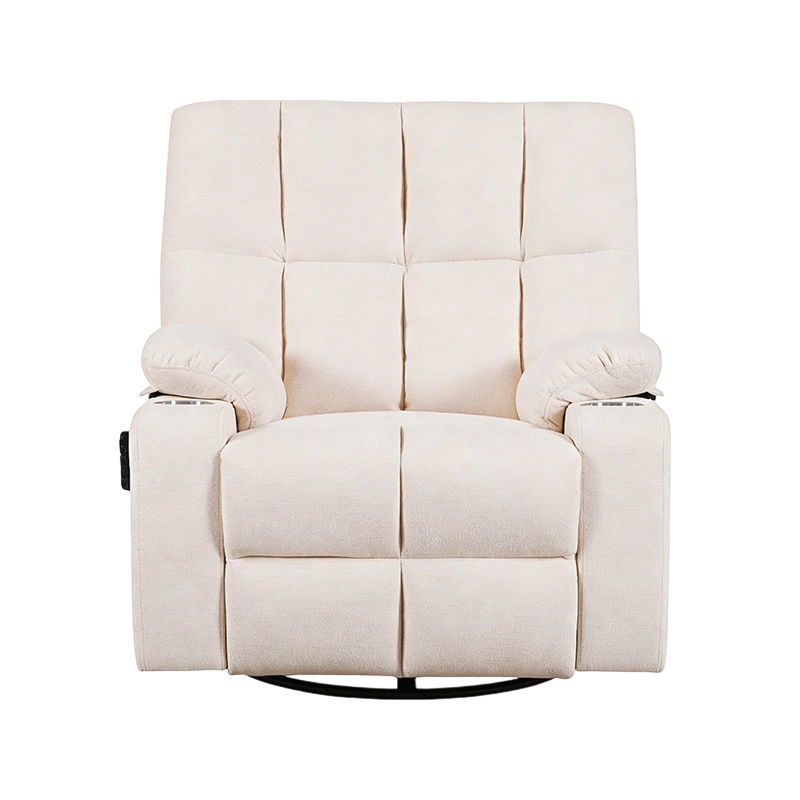
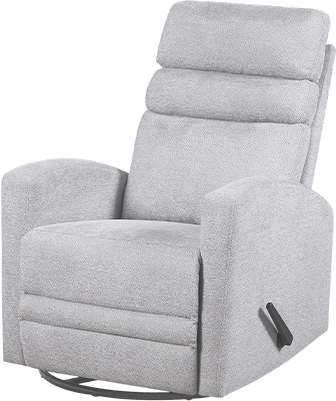
Velvet Manual Reclining Chair with Swivel and Rocker
3. Three Movement Functions in One Chair
Many chairs offer only one type of movement. A basic recliner may provide a reclining back and footrest, while a lounge chair may swivel without offering a reclining position. This product combines three practical movement functions: manual reclining, 360-degree swiveling, and rocking.
Manual Reclining
The manual reclining system is operated using a side-mounted pull tab. This arrangement keeps the control mechanism simple and accessible. With a light pull, the user can activate the reclining function and move from an upright seated position toward a more relaxed posture.
A manual mechanism can be especially attractive to buyers who prefer furniture without motors, power cords, or electrical controls. It does not require a nearby outlet and can be placed more freely within a room. It may also be a practical solution for guest rooms, reading corners, seasonal homes, and spaces where straightforward operation is preferred.
Manual operation also supports a clean product proposition. There are fewer visible controls, no remote control to misplace, and no requirement to manage wires. For furniture retailers, this can simplify product explanation and reduce the number of components associated with an electrically powered model.
360-Degree Swivel
The swivel base enables the chair to rotate through 360 degrees. This feature allows users to change their viewing direction without moving the entire chair. In an open-plan living room, the user can turn toward a television, a table, a window, or another person. In an office or lounge setting, the chair can be used more dynamically as the user changes tasks.
Swiveling also improves the practical use of space. A fixed chair may need to be pulled away from a wall or repositioned manually whenever the user changes direction. A swivel recliner allows the occupant to remain seated while adjusting orientation. This is particularly useful in rooms that combine entertainment, conversation, and reading areas.
Rocking Motion
The rocking function introduces gentle movement for relaxation. Some users enjoy rocking while reading, listening to music, thinking, or settling down before sleep. The rocking motion can make the chair feel more responsive and personal than a stationary recliner.
Combining swivel and rocking functions gives the chair a broader range of use than a conventional recliner. Users can turn, rock, or recline according to the moment. These functions are integrated into one seating product rather than requiring separate furniture pieces, which can help buyers make better use of available floor space.
4. Adjustable Positions for Different Activities
A recliner becomes more valuable when its positions correspond to real activities. The Velvet Manual Reclining Chair with Swivel and Rocker is designed for seated, reading, and napping positions, with adjustment from approximately 90 to 150 degrees.
| Position | Approximate Angle | Recommended Use | Key Benefit |
|---|---|---|---|
| Upright seated | About 90 degrees | Conversation, casual sitting, and reading at a table | Supports an upright posture and easy interaction |
| Relaxed reading | Intermediate setting | Books, tablets, television, and music | Reduces the need to remain rigidly upright |
| Resting position | Up to about 150 degrees | Relaxation and napping | Allows a more extended and comfortable posture |
The ability to select an intermediate position is important. Not every user wants to sit completely upright or fully reclined. An adjustable chair allows people to make small changes based on their height, activity, and preferred level of support.
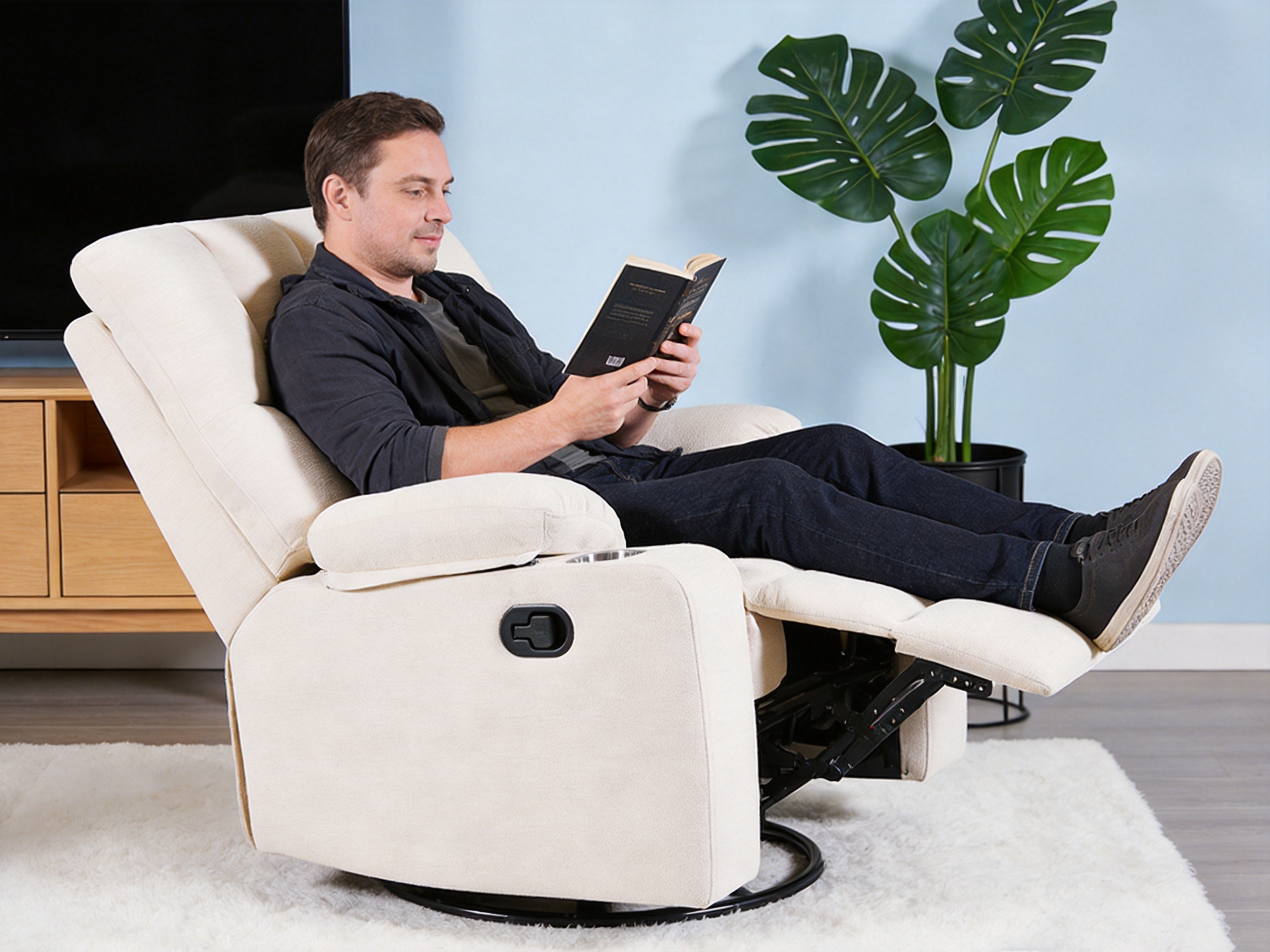
For reading, the chair can provide a comfortable semi-reclined position while the user holds a book or electronic device. For television viewing, the user can recline further and use the footrest to support the lower legs. For short naps, the more open angle allows the body to rest in a less compressed posture.
The adjustment range also supports different room arrangements. In a compact room, an upright position can be used when the chair is close to other furniture. In a larger space, the user can take advantage of the chair’s full reclining capability. This flexibility helps the chair function as both an everyday seat and a dedicated relaxation station.
5. Practical Features for Home and Commercial Use
The chair includes two cup holders, adding convenience during long periods of sitting. A cup holder allows the user to keep a beverage close without placing it on a side table or balancing it on an armrest. This can be especially useful during movie nights, sports broadcasts, gaming sessions, or extended reading.
Although small, cup holders can influence how often a chair is used. When common items such as water, coffee, or a soft drink can be kept within reach, users are less likely to interrupt their rest. In media rooms and home theaters, integrated cup holders reinforce the chair’s entertainment-focused function.
The pillowtop arms provide both visual softness and physical support. Armrests are important contact points because users often rely on them when sitting down, standing up, or changing position. Properly padded arms can make the chair feel more comfortable during extended use and help create a more substantial, upholstered appearance.
The product’s 350-pound weight capacity broadens its suitability for a wide range of adult users. Buyers should still consider room layout, access dimensions, flooring, and the intended usage environment when selecting and installing the chair. The stated capacity provides a clear reference for retailers and end users during product evaluation.
The dimensions are approximately 35.8 inches wide, 37.8 inches deep, and 40.6 inches high. This size gives the chair a generous presence while remaining suitable for many living rooms and personal relaxation spaces. Because the chair reclines and swivels, adequate clearance should be planned around it. The rear and front areas should remain sufficiently open for the backrest and footrest to operate comfortably.
6. Construction Focused on Stability and Product Consistency
The frame is constructed from plywood. In upholstered furniture, the frame provides the structural foundation that supports the seat, back, arms, and movement components. A properly prepared plywood frame can offer a consistent base for assembly and upholstery while supporting efficient production at scale.
Frame quality depends on more than the name of the material. It also depends on panel selection, cutting precision, joint preparation, reinforcement, assembly accuracy, and inspection. A manufacturer with dedicated frame production capability can maintain closer control over these stages than a business that purchases unrelated components from multiple sources.
Anji Xuanbo Household Co., Ltd. benefits from its own wooden frame factory and sponge processing plant. These facilities support full-chain cost and capacity control. Internal control over important components can help coordinate the frame, foam, upholstery, and assembly processes, reducing the risk of mismatched specifications or inconsistent production timing.
For international buyers, this integrated model can improve communication. Product changes can be discussed directly with the teams responsible for the frame, cushioning, and final assembly. When a buyer requests a revised dimension, fabric change, or structural adjustment, internal production resources can help evaluate feasibility more efficiently.
The frame must work together with the reclining and swivel mechanisms. A chair that looks attractive but lacks a stable structural base cannot deliver a dependable user experience. The design therefore requires coordination between the upholstered shell, support structure, movement components, and finishing processes.
7. Advanced Manufacturing Capabilities
The company was established in 2021 and operates in Anji County, an important center of chair production. Its factory covers approximately 8,000 square meters and employs more than 100 people. This scale provides a foundation for organized production, professional management, product development, and export-oriented manufacturing.
The company’s manufacturing model includes research and development, industrial design, large-scale manufacturing, independent marketing, and technical services. These capabilities are relevant to buyers who need more than a standard catalog product. They support the development of furniture that combines market trends with practical production requirements.
Research and Development
Research and development helps transform general furniture concepts into products that can be produced consistently. For a recliner, development may involve evaluating proportions, upholstery behavior, support angles, movement clearance, mechanism placement, and user interaction with the pull tab and footrest.
Product development also allows the manufacturer to respond to changing market preferences. Customers may request softer silhouettes, more contemporary colors, different fabric options, revised dimensions, or special packaging. A dedicated R&D capability creates a structured process for assessing these needs rather than relying only on informal production changes.
Industrial Design
Industrial design determines how the chair looks, feels, and functions as a complete product. The square tufted back, pillowtop arms, solid-color velvet, and compact recliner profile are not isolated features. They form a coordinated visual identity that can fit contemporary and transitional interiors.
Good industrial design also considers manufacturing efficiency. Decorative details should be compatible with upholstery processes, seams should be positioned accurately, and the completed chair should maintain a consistent appearance across production batches. The combination of design and manufacturing knowledge helps reduce the distance between an attractive sample and a reliable finished product.
In-House Frame and Sponge Processing
The company’s own wooden frame factory and sponge processing plant create an important supply-chain advantage. The frame and cushioning materials have a direct effect on comfort, appearance, and assembly. Producing or processing these components within the company’s broader manufacturing system enables closer coordination.
Internal sponge processing can help align cushion dimensions with the frame and upholstery patterns. This is particularly important for a chair with multiple padded areas, including the seat, back, and pillowtop arms. Correctly proportioned padding supports a more uniform appearance and helps ensure that the fabric sits properly over the underlying structure.
Multi-Stage Quality Inspection
The company applies strict multi-stage quality inspection. In a product such as this recliner, inspection may address visual upholstery quality, seam alignment, tufting consistency, frame assembly, mechanism operation, swivel movement, rocking performance, dimensions, and packaging condition.
Multi-stage inspection is more effective than checking only the final product. Early checks can identify frame or component issues before upholstery is applied. Process-stage checks can confirm that padding and fabric are correctly installed. Final checks can verify the complete chair before it is prepared for shipment.
For overseas buyers, quality consistency is especially important because products travel long distances and may be sold through retailers or delivered directly to end users. A structured inspection system helps reduce avoidable defects and supports a more dependable customer experience.
8. Advantages Compared with Conventional Recliners
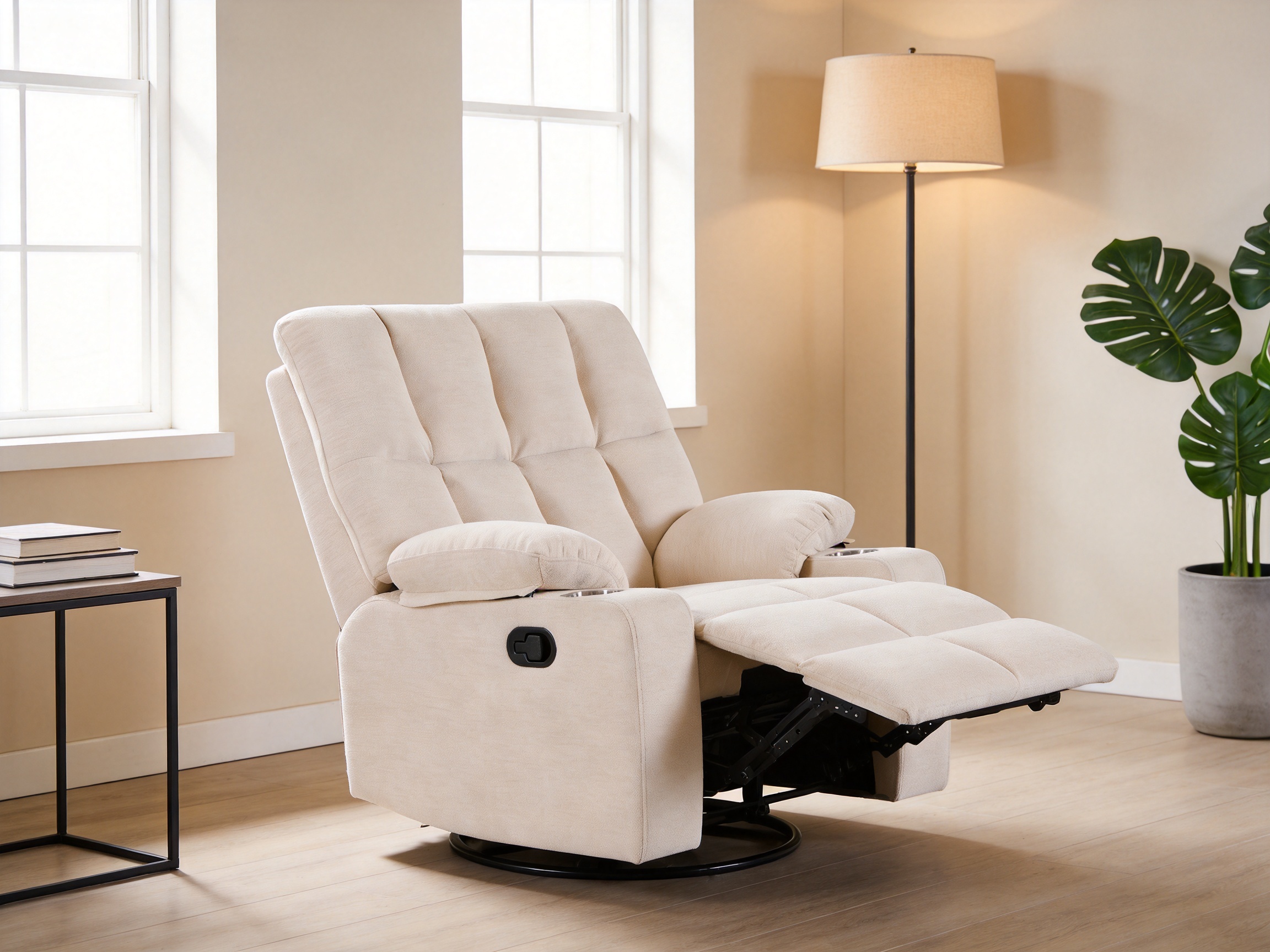
The chair offers several advantages over simpler or less versatile competitors. A basic upholstered chair may provide softness and visual appeal, but it cannot recline, swivel, or rock. A fixed lounge chair may offer a comfortable shape but lacks adjustable positioning. A conventional manual recliner may provide a footrest but remain fixed in one direction. This product combines the benefits of these furniture types.
More Flexible Than a Stationary Chair
A stationary chair locks the user into one orientation and one posture. This can be limiting in rooms where activities change throughout the day. The 360-degree swivel allows the user to face different directions without moving the entire chair, while the reclining function provides multiple seating positions.
More Independent Than a Power Recliner
Powered recliners can provide motorized adjustment, but they require electrical access and may involve remote controls, wiring, and additional electronic components. The manual mechanism in this chair offers a simpler alternative. It can be placed without considering outlet location and can be operated without a remote.
More Decorative Than a Basic Media Recliner
Some media recliners prioritize function but use plain upholstery and limited decorative treatment. This model uses velvet, tufted panels, and pillowtop arms to create a more refined appearance. It can be integrated into a living room or lounge without looking exclusively like theater seating.
More Versatile Than a Standard Rocking Chair
A traditional rocking chair provides movement but generally does not recline or swivel. The three-function design here gives the user more ways to relax. The chair can rock gently while upright, swivel toward another part of the room, or recline for more extended rest.
More Suitable for Coordinated Furniture Programs
Custom color support gives distributors and project buyers more flexibility. The product can be specified in light beige for a neutral collection or developed in other colors to match a particular interior concept. This can be more valuable than a single fixed color when serving multiple markets.
| Feature | This Reclining Chair | Stationary Lounge Chair | Basic Manual Recliner | Powered Recliner |
|---|---|---|---|---|
| Manual reclining | Yes | Usually no | Often yes | Usually no |
| 360-degree swivel | Yes | Sometimes | Not always | Not always |
| Rocking motion | Yes | Sometimes | Not always | Not always |
| Integrated cup holders | Two | Usually no | May vary | May vary |
| Velvet upholstery option | Yes | May vary | May vary | May vary |
| Electrical connection required | No | No | No | Usually yes |
| Custom color support | Supported | Depends on supplier | Depends on supplier | Depends on supplier |
9. A Strong Product for International Buyers
International furniture buyers often evaluate more than product appearance. They consider production capacity, customization, quality management, logistics, communication, and long-term supplier reliability. The manufacturer’s location and operating structure support these requirements.
The factory is located near Ningbo Beilun Port, providing a convenient basis for export logistics. Port access can help organize international shipments and support efficient movement of containerized furniture. Logistics performance still depends on order planning, documentation, carrier schedules, packaging, and destination requirements, but geographic proximity to a major export port is a practical advantage.
The company exports to North America, Europe, the Middle East, and other regions. Experience in multiple international markets can help a manufacturer understand the importance of packaging, product specifications, labeling, delivery coordination, and customer communication.
Its products are presented as complying with international standards and certifications. Buyers should confirm the specific standards, test reports, certifications, materials, and destination-market requirements that apply to their individual orders. This is particularly important for commercial projects and regulated markets.
Customization is another important strength. The company can support custom colors, and its design and production capabilities can assist with broader product development requirements. Depending on the project, buyers may discuss upholstery selection, dimensions, branding, packaging, quantities, and other specifications directly with the manufacturer.
For retailers, customization allows a distinctive product offering rather than a completely generic chair. For hospitality buyers, it can help align furniture with the visual identity of a hotel, resort, club, or serviced apartment. For distributors, it may support different collections for different regional markets.
10. Quality Control from Frame to Finished Upholstery
Quality in upholstered furniture is created through a sequence of decisions and inspections. It begins with the selection and preparation of the frame materials. The structure must be assembled accurately so that the chair maintains its shape and supports its functional components.
The next stage involves cushioning. Foam or sponge components need to be cut and processed to match the design. Variations in thickness or shape can affect comfort and appearance. Proper coordination between the cushioning and frame helps reduce unwanted gaps, wrinkles, and uneven surfaces.
Upholstery is another critical stage. Velvet shows surface direction and pile behavior, so fabric must be handled carefully. Pattern alignment, seam tension, corner finishing, and tufted-panel consistency all influence the final appearance. A professional upholstery process is especially important for light-colored fabrics, where marks and irregularities can be more noticeable.
After upholstery, the reclining, swivel, rocking, and footrest functions should be checked. The pull tab should be accessible and operate correctly. The chair should move through its intended range while maintaining a stable feel. The swivel should rotate appropriately, and the rocking motion should remain controlled.
Final inspection should also confirm dimensions, color, hardware, cup holders, stitching, labels, and packaging. A multi-stage approach creates opportunities to correct problems before the product reaches the customer. This is more efficient than discovering issues only after delivery.
The company’s integrated production resources make it possible to coordinate these stages through a unified manufacturing system. This supports clearer accountability and can help buyers receive products with more consistent specifications across repeated orders.
11. Packaging, Delivery, and Installation Considerations
A reclining chair contains moving components and upholstered surfaces, so packaging must protect both the structure and the fabric. Buyers should discuss packaging requirements according to the shipping method, destination, handling conditions, and retail or project delivery model.
Before delivery, the intended installation area should be measured. The chair is approximately 35.8 inches wide, 37.8 inches deep, and 40.6 inches high in its standard dimensions. Doorways, hallways, elevators, stairwells, and room entrances should be checked to ensure that the packaged and assembled product can pass through safely.
Clearance around the chair is equally important. Because the back reclines and the footrest extends forward, the product should not be placed tightly against a wall or directly next to a fixed obstruction. The swivel function also benefits from open space around the chair, especially when the user intends to rotate toward different areas of a room.
After placement, users should become familiar with the pull-tab mechanism and the footrest retracting method. To retract the footrest correctly and reduce effort, the user should sit forward, lean forward, and use the heels to press against the middle of the footrest. This method helps return the footrest in a controlled way.
Retailers can improve customer satisfaction by explaining these operating instructions at the point of sale or during delivery. Simple guidance can prevent users from pulling forcefully on the footrest or attempting to close it from an awkward position.
12. Care and Maintenance of Velvet Upholstery
Velvet requires thoughtful care because its pile can change appearance when compressed, brushed, or exposed to moisture. Regular light maintenance can help preserve the fabric’s softness and visual quality.
Recommended Care Practices
The supplied care instructions specify cleaning with dry-cleaning solvent only. The fabric should not be saturated with water. If the pile becomes flattened or develops visible directional changes, gentle brushing may help restore its appearance.
Spills should be addressed promptly and carefully. Instead of rubbing aggressively, users should follow the applicable upholstery-care guidance and avoid spreading the liquid across a larger area. Strong household cleaners should not be applied unless they are confirmed as suitable for the specific fabric.
Regular dust removal can be performed using an appropriate soft upholstery attachment. The goal is to remove surface particles without damaging the pile. Direct exposure to excessive heat or prolonged sunlight should also be considered, particularly for lighter or custom-colored velvet.
Protecting the Moving Components
The reclining and swivel functions should be operated smoothly and without excessive force. Users should avoid placing objects beneath the footrest or around the swivel base. Items trapped in the mechanism can interfere with movement or create unnecessary stress.
The chair should be used within its stated 350-pound weight capacity. It should not be used as a ladder, step, or standing platform. These practices help protect the structure and reduce the risk of accidents.
13. Suitable Applications and Target Markets
The chair is suitable for residential living rooms, family rooms, television rooms, reading corners, bedrooms, apartments, and home offices. Its appearance is refined enough for visible placement, while its movement functions make it practical for daily relaxation.
In a family room, the chair can serve as an individual seat for television viewing or gaming. In a reading corner, its adjustable recline and rocking motion can create a comfortable personal retreat. In a bedroom, it can be used for reading, resting, or sitting while getting ready for the day.
The chair may also suit hospitality and commercial environments. Hotels, serviced apartments, lounges, private clubs, waiting areas, and entertainment venues can use recliners to improve guest comfort. Custom colors may help project designers coordinate the chair with a particular interior palette.
Furniture retailers can position the product as a premium comfort chair rather than a purely functional recliner. The velvet upholstery, tufted back, cup holders, and three movement functions provide several talking points for sales teams. It can be displayed as an individual statement piece or included in a larger upholstered seating collection.
Distributors and importers may also benefit from the company’s ability to support international markets and custom requirements. A product with a clear feature set is easier to present in catalogs, showrooms, e-commerce listings, and project proposals.
14. Customization and Product Development Support
The standard product is offered in light beige, with support for custom colors. Color is one of the most visible ways to adapt upholstered furniture to different markets. Neutral colors can provide broad appeal, while stronger colors can create a distinctive focal point.
Custom color development should be managed through sample confirmation. Buyers may evaluate fabric swatches under different lighting conditions because velvet can appear to change tone according to pile direction and surrounding colors. A confirmed physical sample provides a more reliable reference than a digital image alone.
Beyond color, buyers may discuss product dimensions, fabric specifications, packaging, order quantities, and branding arrangements with the manufacturer. The feasibility of each change depends on the design, production process, minimum order requirements, and destination-market expectations.
The company’s R&D and industrial design capabilities support a collaborative approach. Buyers can communicate target market requirements, desired visual language, functional expectations, and cost objectives. The manufacturer can then assess how those requirements relate to materials, structure, production capacity, and quality control.
This type of collaboration is valuable for companies seeking a product that is recognizable but not indistinguishable from every other recliner in the market. A coordinated upholstery program, distinctive packaging, or carefully selected specifications can help create a stronger collection identity.
15. Why Manufacturing Integration Matters
Furniture quality and delivery performance are influenced by the relationship between suppliers and production stages. When frame production, sponge processing, upholstery, assembly, inspection, and logistics are separated among too many unrelated parties, communication may become slower and inconsistencies may be more difficult to resolve.
An integrated manufacturer can coordinate the primary stages more directly. The frame factory can work with the upholstery team, the sponge processing plant can align cushioning with the design, and the final assembly team can verify that the movement mechanisms function with the completed chair.
Integration can also support cost control. Internal production of key components may reduce dependency on outside suppliers and allow capacity to be planned more accurately. This does not eliminate all cost variables, since materials, shipping, labor, and market conditions continue to affect pricing, but it creates a stronger foundation for managing them.
For buyers, the result can be clearer communication and a more dependable path from product concept to finished shipment. It can also support repeat orders because the manufacturer has direct access to the processes used to produce the original sample or specification.
16. Product Specification Summary
| Specification | Details |
|---|---|
| Product type | Velvet manual reclining chair |
| Category | Manual recliner |
| Movement functions | Manual reclining, 360-degree swiveling, and rocking |
| Recline range | Approximately 90 to 150 degrees |
| Upholstery | Solid-hue velvet fabric |
| Standard color | Light beige |
| Color customization | Supported |
| Frame | Plywood construction |
| Arm design | Pillowtop arms with stitching accent |
| Back design | Square tufted panels |
| Control | Side-mounted pull-tab manual mechanism |
| Convenience features | Two cup holders |
| Dimensions | Approximately 35.8 inches wide by 37.8 inches deep by 40.6 inches high |
| Weight capacity | 350 pounds |
| Recommended use | Seated sitting, reading, television viewing, relaxation, and napping |
17. Q&A: Frequently Asked Questions
Q1: What makes this chair different from a regular recliner?
The chair combines manual reclining with 360-degree swiveling and rocking. It also includes velvet upholstery, square tufted panels, pillowtop arms, and two cup holders. This combination provides both decorative appeal and multiple forms of movement.
Q2: Does the chair require electricity?
No. It uses a manual reclining mechanism operated by a side-mounted pull tab. Because it does not require a motor or power connection, it can be placed without locating an electrical outlet nearby.
Q3: How far can the chair recline?
The chair can be adjusted from approximately 90 degrees to approximately 150 degrees. The upright setting is suitable for normal sitting, while more open settings can be used for reading, television viewing, relaxation, or napping.
Q4: Can the chair swivel completely around?
Yes. The chair is designed with a 360-degree swivel function, allowing the user to rotate toward different parts of the room without moving the entire chair.
Q5: Does the chair rock?
Yes. In addition to swiveling and reclining, the chair provides a rocking motion intended to support gentle relaxation.
Q6: What color is available?
The listed standard color is light beige. Custom colors are supported, making it possible to coordinate the chair with different interior designs, retail collections, or project requirements.
Q7: What type of upholstery does the chair use?
The chair uses solid-hue velvet fabric upholstery. Velvet provides a soft hand feel and a distinctive visual texture. It should be maintained according to the supplied care instructions.
Q8: How should the velvet be cleaned?
The care instructions recommend using dry-cleaning solvent only and avoiding saturation with water. Pile fabrics may require brushing to restore their appearance. Buyers should follow the specific care guidance provided for the selected fabric.
Q9: What is the chair’s weight capacity?
The stated weight capacity is 350 pounds. The chair should be used according to this specification and should not be used as a standing platform or step.
Q10: What are the chair’s dimensions?
The listed dimensions are approximately 35.8 inches wide, 37.8 inches deep, and 40.6 inches high. Buyers should also allow additional clearance for reclining, footrest extension, and swiveling.
Q11: How is the footrest retracted?
The recommended method is to sit forward, lean forward, and use the heels to press against the middle of the footrest. This approach is intended to make retraction more correct and labor-saving.
Q12: Is the chair suitable for international wholesale orders?
Yes. The manufacturer operates an export-oriented business serving North America, Europe, the Middle East, and other regions. Buyers should confirm order quantities, packaging, shipping terms, compliance requirements, and product specifications for their destination market.
Q13: Can the manufacturer support custom furniture projects?
The company supports custom colors and has R&D, industrial design, frame production, sponge processing, manufacturing, and technical service capabilities. Buyers can discuss additional customization requirements and confirm feasibility with the manufacturer.
Q14: What manufacturing advantages does the company provide?
The company operates an approximately 8,000-square-meter factory, employs more than 100 people, and controls important stages through its own wooden frame factory and sponge processing plant. It also applies multi-stage quality inspection and provides export logistics support near Ningbo Beilun Port.
Q15: Is the chair appropriate for hospitality interiors?
Its combination of upholstery, movement functions, cup holders, and customizable color makes it potentially suitable for hotels, serviced apartments, lounges, clubs, and other hospitality spaces. Project buyers should confirm durability, testing, fire-safety, and other requirements applicable to the intended location.
18. Overall Evaluation
The Velvet Manual Reclining Chair with Swivel and Rocker offers a well-rounded response to the needs of modern seating buyers. Its value comes from the combination of comfort, movement, appearance, and manufacturing support rather than from one isolated feature.
The manual reclining function provides practical adjustment without electrical dependence. The 360-degree swivel makes the chair more flexible in open-plan rooms and multi-use spaces. The rocking motion adds a gentle relaxation option. Velvet upholstery, tufted panels, and pillowtop arms help the product compete visually with more decorative lounge furniture, while two cup holders improve convenience during extended use.
From a manufacturing perspective, the company’s integrated resources are important. Its own frame factory and sponge processing plant help coordinate structural and comfort-related components. R&D and industrial design capabilities support product development and customization. Multi-stage inspection contributes to consistency, while export experience and port access support international supply.
For consumers, the chair provides a personal relaxation space that can be adjusted to suit sitting, reading, viewing, rocking, and napping. For retailers, it offers clear selling points and a distinctive appearance. For project buyers, custom color support and manufacturing collaboration can help meet interior design objectives.
As with any upholstered furniture purchase, buyers should verify fabric requirements, testing documentation, packaging details, dimensions, order quantities, and destination-market compliance before placing an order. With those factors confirmed, this recliner can serve as a versatile and attractive addition to residential, commercial, and hospitality furniture programs.
References
Product Specification Sheet for Velvet Manual Reclining Chair with Swivel and Rocker, model 8060.
Manufacturer-Provided Upholstery and Fabric Care Instructions.
Manufacturer-Provided Company Profile for Anji Xuanbo Household Co., Ltd.
Manufacturer-Provided Product Dimensions, Capacity, Movement, and Customization Information.
General Reference Principles for Upholstered Furniture Design, Recliner Ergonomics, and Quality Inspection.
Product: Velvet Manual Reclining Chair with Swivel and Rocker

LET'S TALK

Bai Shuiwan Industrial Park, Tian Huangping Town, Anji County, Huzhou City, Zhejiang Province, China
More About Us 
-
+86 18257273741
-
[email protected]
CONTACT US
Copyright © Anji Xuanbo Household Co., Ltd. All Rights Reserved.
Custom Modern Upholstered Sofa Manufacturers


